Avoda Zara 57a en français · עבודה זרה נ״ז א
Traduction française du daf 57a du traité Avoda Zara (Avodah Zarah 57a en anglais), avec le texte araméen, l’anglais de Sefaria et le scan de la page, pour étudier le Daf Yomi.
Ouvrir dans le lecteur interactifLire le daf du jour
Traduction française de Avoda Zara 57a
Les traductions françaises de Daf Study sont générées par IA à partir de l’édition anglaise de Sefaria. Elles peuvent contenir des erreurs : vérifie toujours un passage avec le texte source.
Je devrais différer ma décision : si je trouve un tanna qui interdit le vin conformément à l’opinion de Rabbi Natan, j’interdirai même d’en tirer profit, ce qui pose difficulté. Rabbi Natan interdit de tirer profit du vin touché par un non-Juif, comme l’enseigne une baraïta : Si un non-Juif a mesuré le vin d’un Juif, que ce soit avec sa main ou avec son pied, le vin peut être vendu. Rabbi Natan dit : S’il l’a mesuré avec sa main, le vin est interdit ; s’il l’a mesuré avec son pied, il est permis.
La Guemara explique pourquoi l’hypothèse selon laquelle Chmouel aurait différé sa décision en raison de l’opinion de Rabbi Natan pose difficulté : admettons que Rabbi Natan ait dit que le vin est interdit lorsque le non-Juif l’a mesuré avec sa main. A-t-il dit qu’il est interdit si celui-ci l’a mesuré avec son pied ? En réalité, Chmouel a différé sa décision parce qu’il s’est dit : si je trouve un autre tanna qui autorise le vin conformément à l’opinion de Rabbi Chimon, selon laquelle le vin est permis lorsqu’un non-Juif le touche sans avoir l’intention d’en faire une libation, je permettrai même de boire ce vin.
Un certain incident se produisit à Biram : un non-Juif était en train de grimper à un palmier et en redescendit avec une branche de palmier. Alors qu’il descendait de l’arbre, il toucha par inadvertance du vin avec l’extrémité de la branche. Rav autorisa les propriétaires à vendre le vin à des non-Juifs.
Rav Kahana et Rav Asi dirent à Rav : Mais n’est-ce pas vous, maître, qui avez dit que si un bébé non juif âgé d’un jour touche du vin, il en fait un vin destiné à une libation, même sans en avoir l’intention ? Rav leur répondit : Comprenez que j’ai dit que le bébé rend le vin interdit à la consommation. Ai-je dit qu’il est interdit d’en tirer profit ? Le vin peut donc être vendu.
§ La Guemara cite la déclaration de Rav afin d’examiner la question elle-même : Rav dit que si un bébé non juif âgé d’un jour touche du vin, il en fait un vin destiné à une libation, même sans en avoir l’intention.
Rav Chimi bar Ḥiyya objecta à la déclaration de Rav en citant une baraïta : Celui qui achète aux non-Juifs des esclaves circoncis mais qui ne se sont pas immergés dans un bain rituel, ainsi que les fils des servantes non juives qui ont grandi dans la maison d’un Juif et ont été circoncis sans s’être immergés dans un bain rituel, n’a pas encore achevé leur conversion. Ils ont le statut juridique de non-Juifs, qui transmettent l’impureté comme un zav, un homme souffrant d’un écoulement semblable à la gonorrhée. Leur salive et les objets qu’ils foulent, même s’ils sont trouvés sur le marché, sont rituellement impurs. Mais certains disent qu’ils sont rituellement purs.
La baraïta poursuit : Quant à leur vin, les adultes font du vin qu’ils touchent un vin destiné à une libation, mais les mineurs ne font pas du vin qu’ils touchent un vin destiné à une libation. Quels esclaves sont considérés comme adultes et lesquels sont considérés comme mineurs ? Les adultes sont ceux qui connaissent la nature du culte des idoles et de ses accessoires ; les mineurs sont ceux qui ne la connaissent pas.
Quoi qu’il en soit, la baraïta enseigne que le vin touché par les adultes, oui, devient interdit, tandis que celui touché par les mineurs, non, ne devient pas interdit. Cela contredit la déclaration de Rav. La Guemara répond : Interprétez la distinction entre adultes et mineurs comme concernant les fils des servantes. Puisqu’ils ont été élevés dans une maison juive, il y a moins lieu de craindre qu’ils ne fassent du vin une libation idolâtre ; les Sages n’ont donc pas interdit le vin touché par des mineurs. Cette distinction ne s’applique pas aux esclaves achetés à des non-Juifs.
La Guemara demande : La baraïta ne dit-elle pas que la halakha s’applique aux esclaves achetés à des non-Juifs ainsi qu’aux fils des servantes non juives, ce qui indique qu’il n’y a pas de distinction entre eux ? La Guemara répond : La baraïta met les deux cas sur le même plan uniquement en ce qui concerne l’impureté de leur salive et des objets qu’ils foulent.
La Guemara demande : Cela convient bien selon celui qui dit que leur salive et les objets qu’ils foulent sont impurs. Mais que peut-on répondre selon celui qui dit qu’ils sont purs ? Si la salive des esclaves et les objets qu’ils foulent sont purs, il est évident que la halakha est la même pour les fils des servantes, et il était inutile de le préciser. On peut donc conclure que la baraïta a mis les deux cas sur le même plan quant au statut du vin qu’ils touchent.
La Guemara répond : Même si la baraïta met les deux cas sur le même plan quant au statut du vin qu’ils touchent, elle ne les met pas sur le même plan quant à la distinction entre adultes et mineurs. Elle nous enseigne plutôt que la halakha concernant les esclaves est semblable à celle concernant les fils des servantes. De même que, dans le cas des fils des servantes, seuls ceux qui ont été circoncis mais ne se sont pas immergés font du vin qu’ils touchent un vin destiné à une libation, tandis que ceux qui ont été circoncis et se sont immergés ne le font pas, de même, dans le cas des esclaves, dès lors qu’ils se sont immergés dans un bain rituel, ils ne rendent pas le vin interdit.
Cette halakha exclut l’opinion de Rav Naḥman au nom de Chmouel. Rav Naḥman dit au nom de Chmouel : Celui qui achète des esclaves aux non-Juifs, même si ces esclaves ont été circoncis et se sont immergés dans un bain rituel, voit néanmoins ceux-ci faire du vin qu’ils touchent un vin destiné à une libation, car ils sont habitués aux pratiques idolâtres, jusqu’à ce que la référence au culte des idoles disparaisse de leur bouche. La baraïta nous enseigne que leur vin n’est pas interdit.
§ La Guemara cite la déclaration susmentionnée afin d’examiner la question elle-même : Rav Naḥman dit au nom de Chmouel que celui qui achète des esclaves aux non-Juifs, même si ces esclaves ont été circoncis et se sont immergés dans un bain rituel, voit néanmoins ceux-ci faire du vin qu’ils touchent un vin destiné à une libation, car ils sont habitués aux pratiques idolâtres, jusqu’à ce que la référence au culte des idoles disparaisse de leur bouche. Combien de temps cela prend-il ? Rabbi Yehochoua ben Lévi dit : On ne considère pas que l’esclave a oublié son culte idolâtre avant que douze mois ne se soient écoulés.
Rabba objecta à Rav Naḥman en citant la baraïta susmentionnée : Celui qui achète aux non-Juifs des esclaves circoncis mais qui ne se sont pas immergés dans un bain rituel, ainsi que les fils des servantes non juives qui ont grandi dans la maison d’un Juif et ont été circoncis sans s’être immergés dans un bain rituel, n’a pas achevé leur conversion et ils ont le statut juridique de non-Juifs. Leur salive et les objets qu’ils foulent,
Texte source et traduction anglaise
עבודה זרה נ״ז א · texte araméen et hébreu
דְּאִי מַשְׁכַּחְנָא תַּנָּא דְּאָסַר כְּרַבִּי נָתָן, אוֹסְרִינֵּיהּ אֲפִילּוּ בַּהֲנָאָה. דְּתַנְיָא: מְדָדוֹ, בֵּין בַּיָּד בֵּין בָּרֶגֶל — יִמָּכֵר. רַבִּי נָתָן אוֹמֵר: בַּיָּד — אָסוּר, בָּרֶגֶל — מוּתָּר.
אֵימַר דְּאָמַר רַבִּי נָתָן בַּיָּד, בָּרֶגֶל מִי אָמַר? אֶלָּא דְּאִי מַשְׁכַּחְנָא תַּנָּא דְּשָׁרֵי כְּרַבִּי שִׁמְעוֹן, אֶישְׁרְיֵיהּ אֲפִילּוּ בִּשְׁתִיָּיה.
הָהוּא עוֹבָדָא דַּהֲוָה בְּבֵירָם, דְּהָהוּא גּוֹי דַּהֲוָה קָא סָלֵיק בְּדִיקְלָא וְאַיְיתִי לוּלִיבָּא, בַּהֲדֵי דְּקָא נָחֵית נְגַע בְּרֵאשֵׁהּ דְּלוּלִיבָּא בְּחַמְרָא שֶׁלֹּא בְּכַוָּונָה, שַׁרְיֵיהּ רַב לְזַבּוֹנֵיהּ לְגוֹיִם.
אֲמַרוּ לֵיהּ רַב כָּהֲנָא וְרַב אַסִּי לְרַב, וְהָא מָר הוּא דְּאָמַר: תִּינוֹק בֶּן יוֹמוֹ הוּא עוֹשֶׂה יֵין נֶסֶךְ! אֲמַר לְהוּ: אֵימוֹר דַּאֲמַרִי אֲנָא בִּשְׁתִיָּיה, בַּהֲנָאָה מִי אֲמַרִי?
גּוּפָא, אָמַר רַב: תִּינוֹק בֶּן יוֹמוֹ עוֹשֶׂה יֵין נֶסֶךְ.
אֵיתִיבֵיהּ רַב שִׁימִי בַּר חִיָּיא לְרַב: הַלּוֹקֵחַ עֲבָדִים מִן הַגּוֹיִם, שֶׁמָּלוּ וְלֹא טָבְלוּ, וְכֵן בְּנֵי הַשְּׁפָחוֹת, שֶׁמָּלוּ וְלֹא טָבְלוּ — רוּקָּן וּמִדְרָסָן בַּשּׁוּק טָמֵא, וְאָמְרִי לַהּ: טָהוֹר.
יֵינָן — גְּדוֹלִים עוֹשִׂים יֵין נֶסֶךְ, קְטַנִּים אֵין עוֹשִׂים יֵין נֶסֶךְ. וְאֵלּוּ הֵן גְּדוֹלִים וְאֵלּוּ הֵן קְטַנִּים? גְּדוֹלִים — יוֹדְעִין בְּטִיב עֲבוֹדָה זָרָה וּמְשַׁמְּשֶׁיהָ, קְטַנִּים — אֵינָם יוֹדְעִין בְּטִיב עֲבוֹדָה זָרָה וּמְשַׁמְּשֶׁיהָ.
קָתָנֵי מִיהַת גְּדוֹלִים — אִין, קְטַנִּים — לָא! תַּרְגְּמַהּ אַבְּנֵי שְׁפָחוֹת.
הָא ״וְכֵן״ קָאָמַר! אַרוּקָּן וּמִדְרָסָן.
הָנִיחָא לְמַאן דְּאָמַר טָמֵא, אֶלָּא לְמַאן דְּאָמַר טָהוֹר, מַאי אִיכָּא לְמֵימַר?
הָא קָא מַשְׁמַע לַן, עֲבָדִים דֻּומְיָא דִּבְנֵי שְׁפָחוֹת, מָה בְּנֵי שְׁפָחוֹת מָלוּ וְלֹא טָבְלוּ הוּא דְּעוֹשִׂין יֵין נֶסֶךְ, מָלוּ וְטָבְלוּ לָא, אַף עֲבָדִים כֵּן.
לְאַפּוֹקֵי מִדְּרַב נַחְמָן אָמַר שְׁמוּאֵל, דְּאָמַר רַב נַחְמָן אָמַר שְׁמוּאֵל: הַלּוֹקֵחַ עֲבָדִים מִן הַגּוֹיִם, אַף עַל פִּי שֶׁמָּלוּ וְטָבְלוּ — עוֹשִׂין יֵין נֶסֶךְ עַד שֶׁתִּשְׁקַע עֲבוֹדָה זָרָה מִפִּיהֶם, קָא מַשְׁמַע לַן דְּלָא.
גּוּפָא, אָמַר רַב נַחְמָן אָמַר שְׁמוּאֵל: הַלּוֹקֵחַ עֲבָדִים מִן הַגּוֹיִם, אַף עַל פִּי שֶׁמָּלוּ וְטָבְלוּ — עוֹשִׂין יֵין נֶסֶךְ עַד שֶׁתִּשְׁקַע עֲבוֹדָה זָרָה מִפִּיהֶם. וְכַמָּה? אָמַר רַבִּי יְהוֹשֻׁעַ בֶּן לֵוִי: עַד שְׁנֵים עָשָׂר חֹדֶשׁ.
אֵיתִיבֵיהּ רַבָּה לְרַב נַחְמָן: הַלּוֹקֵחַ עֲבָדִים מִן הַגּוֹיִם שֶׁמָּלוּ וְלֹא טָבְלוּ, וְכֵן בְּנֵי הַשְּׁפָחוֹת שֶׁמָּלוּ וְלֹא טָבְלוּ — רוּקָּן וּמִדְרָסָן
Avodah Zarah 57a · traduction anglaise de Sefaria
I should delay my ruling, as if I find a tanna who prohibits the wine in accordance with the opinion of Rabbi Natan, I will prohibit even deriving benefit from it; this is difficult. Rabbi Natan prohibits one from deriving benefit from wine that was touched by a gentile, as it is taught in a baraita: If a gentile measured a Jew’s wine, whether he measured it with his hand or with his foot, it may be sold. Rabbi Natan says: If he measured it with his hand it is prohibited, but if he measured it with his foot it is permitted.
The Gemara explains why the suggestion that Shmuel delayed his ruling because of the opinion of Rabbi Natan is difficult: Say that Rabbi Natan said that the wine is forbidden when the gentile measured it with his hand. Did he say that the wine is forbidden if he measured it with his foot? Rather, Shmuel delayed ruling on the matter because he thought to himself: If I find another tanna who permits the wine in accordance with the opinion of Rabbi Shimon, who holds that if a gentile touches wine without intending to render it a libation, it is permitted, I will permit the wine even for drinking.
There was a certain incident in Biram that occurred as follows: There was a certain gentile who was climbing a palm tree and he brought down with him a palm branch. While he was descending from the tree he unintentionally touched some wine with the tip of the palm branch. Rav permitted the owners to sell the wine to gentiles.
Rav Kahana and Rav Asi said to Rav: But wasn’t it you, Master, who said: If a gentile baby who is one day old touches wine, he renders it wine used for a libation, even though he lacks any intent? Rav said to them: Say that I said that the baby renders the wine prohibited for drinking. Did I say that it is prohibited to derive benefit from it? It is therefore permitted to sell the wine.
§ The Gemara cites Rav’s statement in order to discuss the matter itself: Rav says: If a gentile baby who is one day old touches wine, he renders it wine used for a libation, even though he lacks any intent.
Rav Shimi bar Ḥiyya raised an objection to the statement of Rav from a baraita: With regard to one who purchases from the gentiles slaves who have been circumcised but have not immersed in a ritual bath, and also with regard to the sons of the gentile maidservants who grew up in a Jew’s home and were circumcised but did not immerse in a ritual bath, their conversion is not yet valid. They have the legal status of gentiles, who transmit impurity like a zav, a man who experiences a gonorrhea-like discharge. Their spittle and objects upon which they tread, even if they are found in the marketplace, are ritually impure. But some say that they are ritually pure.
The baraita continues: With regard to their wine, the adults render the wine that they touch wine used for a libation, but the minors do not render the wine that they touch wine used for a libation. And which slaves are considered adults, and which slaves are considered minors? The adults are those who know the nature of idol worship and its accessories, and the minors are those who do not know the nature of idol worship and its accessories.
In any event, the baraita teaches that with regard to adults, yes, the wine they touch is rendered prohibited, but with regard to minors, no, the wine they touch is not rendered prohibited. This contradicts the statement of Rav. The Gemara replies: Interpret the distinction between adults and minors as referring to the sons of maidservants. Since they were raised in a Jewish home, there is less reason for concern lest they render the wine an idolatrous libation, and therefore the Sages did not prohibit wine touched by minors. This distinction does not apply in the case of slaves that were purchased from gentiles.
The Gemara asks: Doesn’t the baraita say that the halakha applies to slaves purchased from gentiles and also to the sons of gentile maidservants, indicating that there is no differentiation between them? The Gemara replies: The baraita equates the two cases only with regard to the impurity of their spittle and of the objects upon which they tread.
The Gemara asks: This works out well according to the one who says that their spittle and the objects upon which they tread are impure. But according to the one who says that they are pure, what can be said? If the spittle of the slaves and the objects upon which they tread are pure, clearly the halakha is the same in the case of the sons of maidservants, and it is unnecessary to state this. One may therefore conclude that the baraita equated the two cases with regard to the status of the wine that they touch.
The Gemara replies: Even if the baraita is equating the two cases with regard to the status of the wine that they touch, it is not equating them with regard to the distinction between adults and minors. Rather, this teaches us that the halakha with regard to slaves is similar to the halakha with regard to the sons of maidservants. Just as in the case of the sons of maidservants, it is only those who were circumcised but did not immerse who render the wine that they touch wine used for a libation, but those who were circumcised and immersed do not; so too in the case of slaves, once they have immersed in a ritual bath they do not render wine prohibited.
This halakha is to the exclusion of that which Rav Naḥman says that Shmuel says, as Rav Naḥman says that Shmuel says: In the case of one who purchases slaves from the gentiles, even though the slaves were circumcised and immersed in a ritual bath, they still render the wine that they touch wine used for a libation, as they are accustomed to idolatrous practices, until reference to idol worship disappears from their mouths. The baraita teaches us that their wine is not prohibited.
§ The Gemara cites the aforementioned statement in order to discuss the matter itself: Rav Naḥman says that Shmuel says: In the case of one who purchases slaves from the gentiles, even though the slaves were circumcised and immersed in a ritual bath, they still render the wine that they touch wine used for a libation, as they are accustomed to idolatrous practices, until reference to idol worship disappears from their mouths. And how much time does this take? Rabbi Yehoshua ben Levi says: One does not assume that the slave has forgotten his idolatrous worship until twelve months have passed.
Rabba raised an objection to Rav Naḥman from the aforementioned baraita: With regard to one who purchases from the gentiles slaves that have been circumcised but have not immersed in a ritual bath, and also with regard to the sons of the gentile maidservants who grew up in a Jew’s home and were circumcised but did not immerse in a ritual bath, their conversion is not valid and they have the legal status of gentiles. Their spittle and objects upon which they tread,
Texte de Sefaria : William Davidson Edition - Vocalized Aramaic (CC BY NC) ; William Davidson Edition - English (CC BY NC).
Scan de Avoda Zara 57a
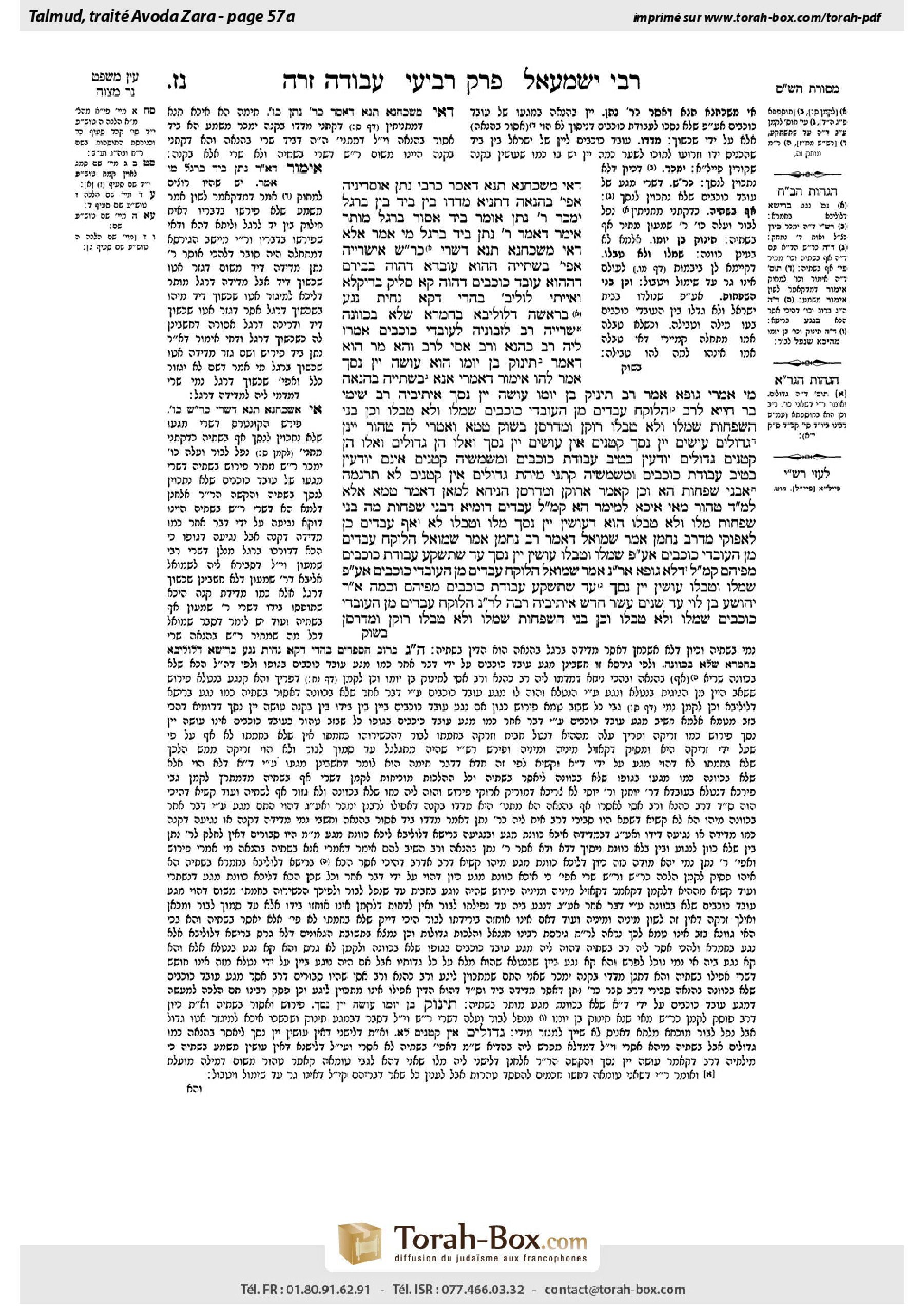
Scan : Torah-Box. Daf Study est un projet indépendant, sans affiliation ni approbation de Torah-Box ou de Sefaria.