Baba Kama 35a en français · בבא קמא ל״ה א
Traduction française du daf 35a du traité Baba Kama (Bava Kamma 35a en anglais), avec le texte araméen, l’anglais de Sefaria et le scan de la page, pour étudier le Daf Yomi.
Ouvrir dans le lecteur interactifLire le daf du jour
Traduction française de Baba Kama 35a
Les traductions françaises de Daf Study sont générées par IA à partir de l’édition anglaise de Sefaria. Elles peuvent contenir des erreurs : vérifie toujours un passage avec le texte source.
De même, dans le cas où il a allumé le feu, il s’agit vraisemblablement d’un cas où il n’a pas besoin des cendres. Pourtant, la Michna enseigne qu’il est exempt, car il est passible de la peine de mort. Il semble donc que celui qui allume un feu pendant Chabbat est passible d’une sanction même s’il n’a pas besoin des cendres, contrairement à l’opinion de Rabbi Yoḥanan.
La Guemara rejette cette preuve : non, la comparaison va dans l’autre sens ; le cas où son bœuf a allumé le feu est semblable à celui où il l’a allumé lui-même. De même que, lorsqu’il est passible d’une sanction pour avoir allumé un feu pendant Chabbat, il s’agit d’un cas où il a besoin des cendres, de même, lorsque son bœuf met le feu à la meule de foin, il s’agit d’un cas où celui-ci a besoin des cendres.
La Guemara demande : dans le cas où son bœuf a allumé le feu, comment peut-on imaginer de telles circonstances, où il l’aurait fait parce qu’il avait besoin des cendres ? Rav Avya lui dit : nous parlons ici d’un bœuf intelligent, qui a été mordu dans le dos et veut brûler la meule de foin, puis se rouler [iggandar] dans les cendres afin de soigner la morsure.
La Guemara demande : et d’où savons-nous que c’est pour cette raison qu’il a allumé le feu ? La Guemara répond : parce qu’après avoir brûlé la meule de foin, le bœuf s’est roulé dans les cendres.
La Guemara demande : un tel cas existe-t-il vraiment ? La Guemara répond : oui. Un certain bœuf qui se trouvait chez Rav Pappa avait mal aux dents. Il entra, brisa le couvercle d’un récipient, but le liquide qu’il contenait et fut guéri. Il est donc évident que certains bœufs possèdent un tel degré d’intelligence.
Les Sages dirent à Rav Pappa : comment peux-tu dire que le cas concernant son bœuf est semblable à celui qui le concerne lui-même ? La Michna n’enseigne-t-elle pas que si son bœuf a humilié une personne, il est exempt, mais que s’il a lui-même humilié quelqu’un, il est passible d’une sanction ? Si le cas de son bœuf est semblable à celui qui le concerne lui-même, comment peut-on imaginer que le bœuf ait eu l’intention d’humilier la personne ? On n’est passible d’une sanction pour avoir humilié quelqu’un que si l’on en avait l’intention, or un bœuf n’a jamais l’intention d’humilier.
La Guemara répond : il s’agit d’un cas où le bœuf avait l’intention de blesser. Si l’acte avait été commis par une personne, celle-ci aurait aussi été passible d’une sanction pour l’humiliation causée, car le Maître a dit : lorsqu’une personne a l’intention de blesser, elle est passible d’une sanction pour l’humiliation, même si elle n’avait pas l’intention d’humilier sa victime.
Rava propose une autre solution à la difficulté que la Michna soulève contre l’opinion de Rabbi Yoḥanan : la Michna parle d’un cas où quelqu’un a allumé un feu pendant Chabbat par inadvertance. Bien qu’il ne soit pas passible de la peine de mort, puisqu’il a néanmoins accompli un acte interdit qui entraînerait la peine de mort s’il était accompli délibérément, il est exempt de réparation pécuniaire.
La Guemara explique : cela est conforme à l’enseignement de l’école de Ḥizkiyya, qui a enseigné : le verset dit : « Celui qui tue un animal en paiera le prix, et celui qui tue un homme sera mis à mort » (Lévitique 24, 21), indiquant que celui qui tue un homme et celui qui tue un animal sont comparables.
Cela enseigne que, de même que, pour celui qui tue un animal, la Torah ne fait pas de distinction selon qu’il le fait intentionnellement ou non, avec ou sans discernement, en descendant ou en montant — et cela non pour l’exempter de toute réparation pécuniaire dans ces cas, mais au contraire pour le rendre passible d’une telle réparation, puisque celui qui tue un animal en est toujours passible —, de même, pour celui qui tue un homme, il ne faut pas faire de distinction selon qu’il le fait intentionnellement ou non, avec ou sans discernement, en descendant ou en montant. Mais cela ne le rend pas passible d’une réparation pécuniaire pour le dommage causé en tuant l’homme ; au contraire, cela l’en exempte dans tous les cas. On en déduit que celui qui commet une transgression passible de la peine de mort est exempt de payer des dommages pour son acte, même s’il ne reçoit pas effectivement la peine de mort.
Les Sages dirent à Rava : peux-tu vraiment interpréter la Michna comme parlant d’un cas où la transgression a été commise involontairement ? N’enseigne-t-elle pas que le transgresseur est exempt parce qu’il est passible de la peine de mort, ce qui n’est le cas que si la transgression a été commise intentionnellement ?
Rava répondit que voici ce que dit la Michna : il est exempt, car si cet acte était accompli intentionnellement, le transgresseur serait passible de la peine de mort. Et dans quelles circonstances est-on passible de la peine de mort pour avoir allumé délibérément un feu pendant Chabbat ? Lorsqu’on a besoin des cendres. Par conséquent, même ici, alors que la transgression a été commise involontairement, il est exempt de payer des dommages.
MICHNA : Au sujet d’un bœuf qui en poursuivait un autre, lequel a été blessé sans qu’il y ait de témoins de la manière dont il l’a été : le propriétaire du bœuf blessé dit au propriétaire du bœuf poursuivant : « Ton bœuf a blessé mon bœuf et tu dois m’indemniser », tandis que le propriétaire du bœuf poursuivant répond : « Non, il a été blessé par un rocher et je ne suis pas responsable. » Dans ce cas, la charge de la preuve incombe au demandeur. Tant que le propriétaire du bœuf blessé ne peut prouver que la blessure a été infligée par le bœuf poursuivant, le propriétaire de ce dernier n’est pas responsable.
Dans le cas où deux bœufs appartenant à deux propriétaires différents poursuivaient un bœuf appartenant à une troisième personne, et où ce bœuf a été blessé par l’un des bœufs poursuivants, le propriétaire de l’un des bœufs poursuivants dit à l’autre propriétaire : « C’est ton bœuf qui a causé la blessure », tandis que le propriétaire de l’autre bœuf poursuivant répond : « Non, c’est ton bœuf qui a causé la blessure »,
Texte source et traduction anglaise
בבא קמא ל״ה א · texte araméen et hébreu
אַף הוּא נָמֵי דְּלָא קָבָעֵי לֵיהּ; וְקָתָנֵי: פָּטוּר – מִפְּנֵי שֶׁהוּא נִדּוֹן בְּנַפְשׁוֹ!
לֹא; שׁוֹרוֹ דּוּמְיָא דִידֵיהּ – מָה הוּא דְּקָבָעֵי לֵיהּ, אַף שׁוֹרוֹ דְּקָבָעֵי לֵיהּ.
שׁוֹרוֹ הֵיכִי מַשְׁכַּחַתְּ לַהּ? אֲמַר לֵיהּ רַב אַוְיָא: הָכָא בְּמַאי עָסְקִינַן – בְּשׁוֹר פִּקֵּחַ שֶׁעָלְתָה לוֹ נְשִׁיכָה בְּגַבּוֹ, וְקָא בָּעֵי לְמִקְלְיֵיהּ וְאִיגַּנְדַּר בְּקִוטְמָא.
וּמְנָא יָדְעִינַן? דִּלְבָתַר דְּקַלְיֵיהּ קָמִגַּנְדַּר בְּקִוטְמָא.
וּמִי אִיכָּא כִּי הַאי גַוְונָא? אִין; דְּהָהוּא תּוֹרָא דַּהֲוָה בֵּי רַב פָּפָּא דַּהֲוָה כָּיְבִין לֵיהּ חִינְכֵיהּ, עָיֵיל וּפַתְקֵיהּ לְנָזְיָיתָא, וְשָׁתֵי שִׁיכְרָא וְאִיתַּסִּי.
אֲמַרוּ רַבָּנַן קַמֵּיהּ דְּרַב פָּפָּא: מִי מָצֵית אָמְרַתְּ שׁוֹרוֹ דּוּמְיָא דִידֵיהּ?! וְהָא קָתָנֵי: שׁוֹרוֹ שֶׁבִּיֵּישׁ – פָּטוּר, וְהוּא שֶׁבִּיֵּישׁ – חַיָּיב. שׁוֹרוֹ דּוּמְיָא דִידֵיהּ נִתְכַּוֵּון לְבַיֵּישׁ – הֵיכִי מַשְׁכַּחַתְּ לַהּ?
כְּגוֹן שֶׁנִּתְכַּוֵּון לְהַזִּיק. דְּאָמַר מָר: נִתְכַּוֵּון לְהַזִּיק – אַף עַל פִּי שֶׁלֹּא נִתְכַּוֵּון לְבַיֵּישׁ.
רָבָא אָמַר: מַתְנִיתִין בְּשׁוֹגֵג,
וְכִדְתָנָא דְּבֵי חִזְקִיָּה – דְּתָנָא דְּבֵי חִזְקִיָּה: מַכֵּה אָדָם וּמַכֵּה בְּהֵמָה;
מָה מַכֵּה בְּהֵמָה – לֹא חִלַּקְתָּ בָּהּ בֵּין שׁוֹגֵג בֵּין מֵזִיד, בֵּין מִתְכַּוֵּון לְשֶׁאֵין מִתְכַּוֵּון, בֵּין דֶּרֶךְ יְרִידָה לְדֶרֶךְ עֲלִיָּיה, לְפוֹטְרוֹ מָמוֹן אֶלָּא לְחַיְּיבוֹ מָמוֹן; אַף מַכֵּה אָדָם – לֹא תַּחְלוֹק בּוֹ בֵּין שׁוֹגֵג לְמֵזִיד, בֵּין מִתְכַּוֵּון לְשֶׁאֵין מִתְכַּוֵּון, בֵּין דֶּרֶךְ יְרִידָה לְדֶרֶךְ עֲלִיָּיה, לְחַיְּיבוֹ מָמוֹן אֶלָּא לְפוֹטְרוֹ מָמוֹן.
אֲמַרוּ לֵיהּ רַבָּנַן לְרָבָא: מִי מָצֵית מוֹקְמַתְּ לַהּ בְּשׁוֹגֵג? וְהָא ״מִפְּנֵי שֶׁנִּדּוֹן בְּנַפְשׁוֹ״ קָתָנֵי!
הָכִי קָאָמַר: כֵּיוָן דִּבְמֵזִיד נִדּוֹן בְּנַפְשׁוֹ, וְהֵיכִי דָּמֵי – דְּקָא בָּעֵי לְאֶפְרוֹ; הַשְׁתָּא בְּשׁוֹגֵג – פָּטוּר.
מַתְנִי׳ שׁוֹר שֶׁהָיָה רוֹדֵף אַחַר שׁוֹר אַחֵר, וְהוּזַּק; זֶה אוֹמֵר: ״שׁוֹרְךָ הִזִּיק״, וְזֶה אוֹמֵר: ״לֹא כִי, אֶלָּא בְּסֶלַע לָקָה״ – הַמּוֹצִיא מֵחֲבֵירוֹ עָלָיו הָרְאָיָה.
הָיוּ שְׁנַיִם רוֹדְפִים אַחַר אֶחָד, זֶה אוֹמֵר: ״שׁוֹרְךָ הִזִּיק״, וְזֶה אוֹמֵר: ״שׁוֹרְךָ הִזִּיק״ –
Bava Kamma 35a · traduction anglaise de Sefaria
so too, in the case where he set the fire, it is presumably a case where he does not need the ashes. And nevertheless, the mishna teaches that he is exempt because he is sentenced to death. Apparently, one who lights a fire on Shabbat is liable even if he does not need the ashes, contrary to the opinion of Rabbi Yoḥanan.
The Gemara rejects this proof: No, the comparison is the other way around; the case where his ox set the fire is similar to the case where he set the fire. Just as the case where he is liable for lighting a fire on Shabbat is one where he needs the ashes, so too, the case of his ox setting fire to the haystack is one where it needs the ashes.
The Gemara asks: In the case where his ox set the fire, how can you find these circumstances, where it did so because it needed the ashes? Rav Avya said to him: Here we are dealing with an intelligent ox that was bitten on its back and wants to burn down the haystack and then roll around [iggandar] in the ashes in order to heal the bite.
The Gemara asks: And from where do we know that this is the reason that it set the fire? The Gemara answers: Because after the ox burned the haystack, it was rolling around in the ashes.
The Gemara asks: And is there really a case like this? The Gemara answers: Yes, as a certain ox that was at the house of Rav Pappa had a toothache. It went inside, and broke the lid of a utensil, and drank the liquor inside and was cured. Evidently there are oxen with this level of intelligence.
The Sages said before Rav Pappa: How can you say that the case involving his ox is similar to the case involving him? But doesn’t the mishna teach: If his ox caused a person humiliation, he is exempt, but if he humiliated someone, he is liable? If the case of his ox is understood to be similar to the case involving him, how can you find a case where the ox intended to humiliate the person? One is liable for humiliating someone only when he intends to do so, and an ox never has intention to humiliate.
The Gemara answers: It is a case where the ox intended to cause injury. If it was the action of a person, he would be liable for the humiliation he caused as well, as the Master said: In a case where a person intended to cause injury, he is liable for humiliation even if he did not intend to humiliate his victim.
Rava said a different solution with regard to the difficulty that the mishna poses to the opinion of Rabbi Yoḥanan: The mishna is referring to a case where one lit a fire on Shabbat unintentionally. Although he is not liable to receive the death penalty, nevertheless, since he performed a prohibited action that would carry the death penalty were it to be performed deliberately, he is still exempt from monetary restitution.
The Gemara explains: This is in accordance with what the school of Ḥizkiyya taught, as the school of Ḥizkiyya taught: The verse states: “And he who kills an animal shall pay for it, and he who kills a man shall be put to death” (Leviticus 24:21), indicating that one who kills a man and one who kills an animal are comparable.
This teaches that just as with regard to one who kills an animal, the Torah did not differentiate between whether he does so unintentionally or whether he does so intentionally, whether advertently or inadvertently, whether by way of descent or by way of ascent, and this was not to exempt him from paying monetary restitution in all these cases but rather to render him liable to pay monetary restitution, as one who kills an animal is liable in any event, similarly, with regard to one who kills a man, do not differentiate between whether he does so intentionally or unintentionally, whether advertently or inadvertently, whether by way of descent or by way of ascent, and this was not to render him liable to pay monetary restitution for the damage he causes in the process of killing him, but rather to exempt him from paying monetary restitution in any event. It is derived from here that one who commits a transgression carrying the death penalty is exempt from paying damages for his action, even if he is not in practice given the death penalty.
The Sages said to Rava: Can you really interpret the mishna as referring to a case where the transgression was unintentional? But doesn’t it teach that the transgressor is exempt because he is sentenced to death, which is only the case if the transgression was intentional?
Rava answered that this is what the mishna is saying: He is exempt, since when this action is performed intentionally, the transgressor is liable to be sentenced to death. And what are the circumstances in which one is liable to receive the death penalty for deliberately lighting a fire on Shabbat? It is a case where he needs the ashes. Therefore, even now, when the transgression was unintentional, he is exempt from paying damages.
MISHNA: With regard to an ox that was pursuing another ox, and the ox being pursued became injured, but there are no witnesses as to how it was injured, and this one, the owner of the injured ox, says to the owner of the pursuing ox: Your ox injured my ox, and you are liable to pay me damages, and that one, the owner of the pursuing ox, says in response: No; rather, it was hurt by a rock, and I am not liable, then in this case, the burden of proof rests upon the claimant. As long as the owner of the injured ox cannot prove that the injury was inflicted by the pursuing ox, the owner of the pursuing ox is not liable.
In a case where two oxen, belonging to two different owners, were pursuing one ox belonging to a third person, and that ox was injured by one of the pursuing oxen, and this one, the owner of one of the pursuing oxen, says to the owner of the other: It was your ox that caused the injury, and that one, the owner of the other pursuing ox, says: No, it was your ox that caused the injury,
Texte de Sefaria : William Davidson Edition - Vocalized Aramaic (CC BY NC) ; William Davidson Edition - English (CC BY NC).
Scan de Baba Kama 35a
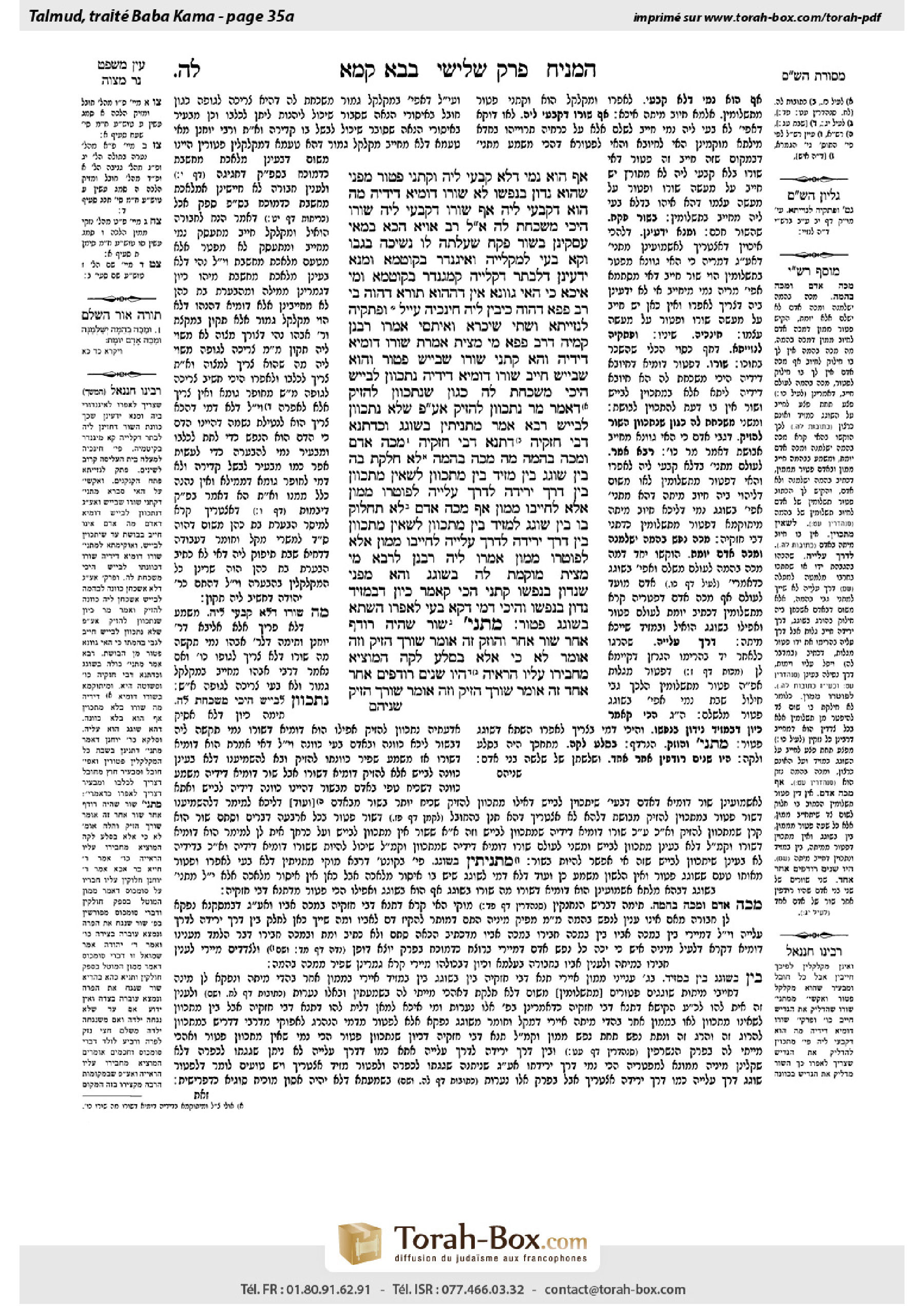
Scan : Torah-Box. Daf Study est un projet indépendant, sans affiliation ni approbation de Torah-Box ou de Sefaria.