Baba Metsia 50b en français · בבא מציעא נ׳ ב
Traduction française du daf 50b du traité Baba Metsia (Bava Metzia 50b en anglais), avec le texte araméen, l’anglais de Sefaria et le scan de la page, pour étudier le Daf Yomi.
Ouvrir dans le lecteur interactifLire le daf du jour
Traduction française de Baba Metsia 50b
Les traductions françaises de Daf Study sont générées par IA à partir de l’édition anglaise de Sefaria. Elles peuvent contenir des erreurs : vérifie toujours un passage avec le texte source.
Et selon Rabbi Tarfon aussi, l’écart inférieur à un tiers est annulé et la transaction est conclue immédiatement. Pourquoi sont-ils alors revenus à l’avis des Rabbins ? Dans ce cas, la décision de Rabbi Tarfon leur aurait été préférable, puisque ce que les Rabbins considèrent comme une lésion, à savoir un écart d’un sixième, est annulé selon Rabbi Tarfon.
La Guemara rejette cette preuve : Penses-tu que, selon Rabbi Tarfon, un écart inférieur à un tiers ait le même statut qu’un écart inférieur à un sixième selon les Rabbins ? Non : selon Rabbi Tarfon, un écart compris entre un sixième et un tiers a le même statut qu’un écart d’un sixième exactement selon les Rabbins, et la partie lésée reçoit le montant de la lésion. La Guemara demande : Si tel est le cas, pourquoi les marchands de Lod se sont-ils réjouis au départ ? Ils n’y gagnaient rien par rapport à la décision des Rabbins.
Résous, à partir de cette difficulté, le dilemme soulevé plus loin, et conclus que, dans les cas où les Rabbins permettent d’annuler la transaction, on peut toujours revenir sur celle-ci. La réaction des marchands de Lod devient donc compréhensible : lorsque Rabbi Tarfon leur avait dit qu’un écart compris entre un sixième et un tiers ne constituait qu’une lésion, ils s’étaient réjouis, car cela signifiait que l’acheteur ne pouvait revenir sur la transaction que pendant le temps nécessaire pour montrer la marchandise à un marchand ou à un parent. Lorsqu’il leur dit que la partie lésée pouvait revenir sur la transaction pendant toute la journée, ils revinrent à l’avis des Rabbins.
La Guemara explique pourquoi le dilemme est résolu ainsi : En effet, si tu envisages que, selon les Rabbins, l’annulation de la transaction n’est possible que pendant le temps nécessaire pour que l’acheteur montre la marchandise à un marchand ou à son parent, pourquoi se sont-ils réjouis de la décision de Rabbi Tarfon ? Sa décision ne leur permettait pas de vendre la marchandise plus cher que celle des Rabbins. La Guemara rejette cette preuve : Ils se réjouirent d’abord dans le cas d’un écart d’un sixième exactement, car selon Rabbi Tarfon cet écart est annulé, tandis que selon les Rabbins il constitue une lésion.
§ La Guemara cite le dilemme évoqué plus haut. Un dilemme fut soumis aux Sages : Lorsque, selon les Rabbins, la transaction peut être annulée, peut-on toujours revenir sur celle-ci ? Ou bien ne peut-on le faire que pendant le temps nécessaire pour montrer la marchandise à un marchand ou à son parent ? Et si tu dis que la transaction ne peut être annulée que pendant ce délai, quelle différence y a-t-il entre un écart d’un sixième et un écart supérieur à un sixième ? La Guemara répond : Il y a une différence : dans le cas d’un écart d’un sixième, seule la partie lésée peut revenir sur la transaction, tandis que si l’écart est supérieur à un sixième, les deux parties peuvent revenir sur celle-ci.
La Guemara revient au dilemme : Quelle est la halakha ? La Guemara propose : Viens et entends la réponse au dilemme tirée de la Michna : Les marchands de Lod revinrent à l’avis des Rabbins. Certes, si tu dis que, selon les Rabbins, on ne peut demander l’annulation de la transaction que pendant le temps nécessaire pour que l’acheteur montre la marchandise à un marchand ou à son parent, alors que selon Rabbi Tarfon on peut le faire pendant toute la journée, c’est pour cette raison qu’ils revinrent à l’avis des Rabbins. Mais si tu dis que, selon les Rabbins, on peut demander l’annulation de la transaction et toujours revenir sur celle-ci, pourquoi revinrent-ils à l’avis des Rabbins ? Dans ce cas, la décision de Rabbi Tarfon leur aurait été préférable, car il considère qu’un tel écart constitue une lésion et permet de demander l’annulation de la transaction pendant toute la journée, mais pas au-delà, ce qui est plus avantageux pour le marchand.
La Guemara répond : L’annulation d’une transaction est rare ; les marchands de Lod n’en tinrent donc pas compte lorsqu’ils évaluèrent quelle décision leur était la plus avantageuse.
La Guemara cite les conclusions halakhiques relatives à ces dilemmes. Rava dit : La halakha est la suivante : si l’écart est inférieur à un sixième, la marchandise est acquise immédiatement. Si l’écart est supérieur à un sixième, chacune des parties peut demander l’annulation de la transaction. Si l’écart est exactement d’un sixième, l’acheteur a acquis la marchandise et celui qui a tiré profit de la lésion restitue le montant correspondant. On ne peut demander ni ceci, l’annulation de la transaction, ni cela, la restitution du montant obtenu, que pendant le temps nécessaire pour montrer la marchandise à un marchand ou à son parent.
La Guemara fait remarquer : Une baraïta enseigne conformément à l’avis de Rava : En cas de lésion, si l’écart est inférieur à un sixième, la marchandise est acquise immédiatement. Si l’écart est supérieur à un sixième, la transaction est annulée. Si l’écart est exactement d’un sixième, l’acheteur a acquis la marchandise et celui qui a tiré profit de la lésion restitue le montant correspondant. Telle est la déclaration de Rabbi Natan. Rabbi Yehuda HaNasi dit : Lorsque le vendeur a été lésé, il est avantagé. S’il le souhaite, il revient sur la transaction et dit à l’acheteur : « Rends-moi ma marchandise », ou bien il peut dire : « Rends-moi le montant dont tu as tiré profit en me lésant. » On ne peut demander ni ceci, l’annulation de la transaction, ni cela, la restitution du montant obtenu, que pendant le temps nécessaire pour montrer la marchandise à un marchand ou à son parent.
§ La Michna enseigne : Jusqu’à quand l’acheteur est-il autorisé à restituer l’article ? Il ne peut le restituer que pendant le temps nécessaire pour montrer la marchandise à un marchand ou à son parent. Rav Naḥman dit : Les Sages n’ont enseigné cette halakha qu’au sujet de l’acheteur ; un vendeur, en revanche, peut toujours revenir sur la transaction. La Guemara propose : Disons que la Michna étaye son avis, car les marchands de Lod revinrent à l’avis des Rabbins. Certes, si tu dis qu’un vendeur peut toujours revenir sur une transaction,
Texte source et traduction anglaise
בבא מציעא נ׳ ב · texte araméen et hébreu
וּלְרַבִּי טַרְפוֹן נָמֵי לְאַלְתַּר הָוְיָא מְחִילָה, אַמַּאי חָזְרוּ? בִּדְרַבִּי טַרְפוֹן נִיחָא לְהוּ טְפֵי, דְּמַאי דְּרַבָּנַן קָא מְשַׁוֵּי לְהוּ אוֹנָאָה לְרַבִּי טַרְפוֹן הָוְיָא מְחִילָה?
מִי סָבְרַתְּ פָּחוֹת מִשְּׁלִישׁ לְרַבִּי טַרְפוֹן כְּפָחוֹת מִשְּׁתוּת לְרַבָּנַן דָּמֵי? לָא, מִשְּׁתוּת וְעַד שְׁלִישׁ לְרַבִּי טַרְפוֹן כִּשְׁתוּת עַצְמָהּ לְרַבָּנַן דָּמֵי. אִי הָכִי, בְּמַאי שָׂמְחוּ מֵעִיקָּרָא?
תִּפְשׁוֹט דְּבִטּוּל מִקָּח לְרַבָּנַן לְעוֹלָם חוֹזֵר, דְּכֵיוָן דַּאֲמַר לְהוּ רַבִּי טַרְפוֹן הָוְיָא אוֹנָאָה – שָׂמְחוּ, כִּי אֲמַר לְהוּ כׇּל הַיּוֹם – חָזְרוּ.
דְּאִי סָלְקָא דַעְתָּךְ דְּבִטּוּל מִקָּח לְרַבָּנַן בִּכְדֵי שֶׁיַּרְאֶה לַתַּגָּר אוֹ לִקְרוֹבוֹ, בְּמַאי שָׂמְחוּ? שָׂמְחוּ בְּשֶׁתּוּת עַצְמָהּ, דִּלְרַבִּי טַרְפוֹן מְחִילָה, וּלְרַבָּנַן אוֹנָאָה.
אִיבַּעְיָא לְהוּ: בִּטּוּל מִקָּח לְרַבָּנַן, לְעוֹלָם חוֹזֵר, אוֹ דִלְמָא בִּכְדֵי שֶׁיַּרְאֶה לַתַּגָּר אוֹ לִקְרוֹבוֹ? וְאִם תִּמְצָא לוֹמַר בִּכְדֵי שֶׁיַּרְאֶה לַתַּגָּר אוֹ לִקְרוֹבוֹ, מָה אִיכָּא בֵּין שְׁתוּת לְיָתֵר עַל שְׁתוּת? אִיכָּא: דְּאִילּוּ שְׁתוּת – מִי שֶׁנִּתְאַנָּה חוֹזֵר, וְאִילּוּ יָתֵר עַל שְׁתוּת – שְׁנֵיהֶם חוֹזְרִים.
מַאי? תָּא שְׁמַע, חָזְרוּ לְדִבְרֵי חֲכָמִים. אִי אָמְרַתְּ בִּשְׁלָמָא בִּטּוּל מִקָּח לְרַבָּנַן בִּכְדֵי שֶׁיַּרְאֶה לַתַּגָּר אוֹ לִקְרוֹבוֹ, וּלְרַבִּי טַרְפוֹן כׇּל הַיּוֹם – מִשּׁוּם הָכִי חָזְרוּ. אֶלָּא אִי אָמְרַתְּ בִּטּוּל מִקָּח לְרַבָּנַן לְעוֹלָם חוֹזֵר, אַמַּאי חָזְרוּ? בִּדְרַבִּי טַרְפוֹן נִיחָא לְהוּ טְפֵי, דְּקָא מְשַׁוֵּי לְהוּ אוֹנָאָה כׇּל הַיּוֹם וְתוּ לָא!
בִּטּוּל מִקָּח לָא שְׁכִיחַ.
אָמַר רָבָא, הִלְכְתָא: פָּחוֹת מִשְּׁתוּת – נִקְנֶה מִקָּח, יוֹתֵר עַל שְׁתוּת – בִּיטּוּל מִקָּח, שְׁתוּת – קָנָה וּמַחְזִיר אוֹנָאָה, וְזֶה וָזֶה – בִּכְדֵי שֶׁיַּרְאֶה לַתַּגָּר אוֹ לִקְרוֹבוֹ.
תַּנְיָא כְּווֹתֵיהּ דְּרָבָא: אוֹנָאָה פָּחוֹת מִשְּׁתוּת – נִקְנֶה מִקָּח. יָתֵר עַל שְׁתוּת – בָּטֵל מִקָּח. שְׁתוּת – קָנָה וּמַחְזִיר אוֹנָאָה, דִּבְרֵי רַבִּי נָתָן. רַבִּי יְהוּדָה הַנָּשִׂיא אוֹמֵר: יָד מוֹכֵר עַל הָעֶלְיוֹנָה, רוֹצֶה – אוֹמֵר לוֹ: ״תֵּן לִי מִקָּחִי״, אוֹ ״תֵּן לִי מַה שֶּׁאֹנֵיתַנִי״. וְזֶה וָזֶה בִּכְדֵי שֶׁיַּרְאֶה לַתַּגָּר אוֹ לִקְרוֹבוֹ.
עַד מָתַי מוּתָּר לְהַחֲזִיר כּוּ׳. אָמַר רַב נַחְמָן: לֹא שָׁנוּ אֶלָּא לוֹקֵחַ, אֲבָל מוֹכֵר – לְעוֹלָם חוֹזֵר. נֵימָא מְסַיַּיע לֵיהּ: חָזְרוּ לְדִבְרֵי חֲכָמִים. אִי אָמְרַתְּ בִּשְׁלָמָא מוֹכֵר לְעוֹלָם חוֹזֵר,
Bava Metzia 50b · traduction anglaise de Sefaria
and according to Rabbi Tarfon too, there is a waiver of the disparity of less than one-third and the transaction is finalized immediately, why did they revert to following the statement of the Rabbis? In that case, the ruling of Rabbi Tarfon would be preferable for them, as that which the Rabbis deem exploitation, i.e., a discrepancy of one-sixth, is waived according to Rabbi Tarfon.
The Gemara rejects this proof: Do you maintain that the legal status of a disparity of less than one-third according to the opinion of Rabbi Tarfon is like the legal status of a disparity of less than one-sixth according to the opinion of the Rabbis? No, the legal status of a disparity ranging from one-sixth until one-third according to the opinion of Rabbi Tarfon is like the legal status of a disparity of one-sixth itself according to the opinion of the Rabbis, and the exploited party receives the sum of the exploitation in return. The Gemara asks: If so, for what reason did the merchants of Lod rejoice initially? They gained nothing relative to the ruling of the Rabbis.
Resolve, based on this difficulty, the dilemma raised below, and conclude that in cases of nullification of the transaction according to the Rabbis, one may always renege on the transaction. Therefore, the reaction of the merchants of Lod is understandable, as, since Rabbi Tarfon said to them that a disparity between one-sixth and one-third is merely exploitation, they rejoiced, as this would mean that the buyer has only the time it takes to show the merchandise to a merchant or a relative to renege. When he said to them that the exploited person can renege on the transaction for the entire day, they reverted to following the statement of the Rabbis.
The Gemara explains why the dilemma is resolved: As, if it enters your mind to say that nullification of the transaction according to the Rabbis is limited to only within the time that it takes for the buyer to show the merchandise to a merchant or to his relative, for what reason did they rejoice over the ruling of Rabbi Tarfon? His ruling did not enable them to sell the merchandise at a higher price than the ruling of the Rabbis did. The Gemara rejects this proof: They initially rejoiced over the case of a disparity of one-sixth itself, as according to Rabbi Tarfon there is a waiver of the disparity, and according to the Rabbis it is exploitation.
§ The Gemara cites the dilemma referenced above. A dilemma was raised before the Sages: With regard to nullification of the transaction according to the Rabbis, may one always renege on the transaction? Or perhaps he can renege only within the time that it takes him to show the merchandise to a merchant or to his relative. And if you say that the transaction is nullified only within the time that it takes him to show the merchandise to a merchant or to his relative, what difference is there between a disparity of one-sixth and a disparity of greater than one-sixth? The Gemara answers: There is a difference, as in the case of a disparity of one-sixth, only the one who was exploited can renege on the transaction, while in the case where the disparity is greater than one-sixth, both can renege on the transaction.
The Gemara returns to discuss the dilemma: What is the halakha? The Gemara suggests: Come and hear a resolution of the dilemma from the mishna: The merchants of Lod reverted to following the statement of the Rabbis. Granted, if you say that one can claim nullification of the transaction according to the Rabbis only within the time that it takes the buyer to show the merchandise to a merchant or to his relative, and according to Rabbi Tarfon one can do so for the entire day, it is due to that reason that they reverted to following the statement of the Rabbis. But if you say that one can claim nullification of the transaction according to the Rabbis and always renege on the transaction, why did they revert to following the statement of the Rabbis? In that case, the ruling of Rabbi Tarfon is preferable for them, as he deems such a disparity exploitation and rules that one can claim nullification of the transaction for the entire day and no more, which is more beneficial to the merchant.
The Gemara answers: Nullification of the transaction is uncommon, and therefore the merchants of Lod did not take that into consideration when calculating which ruling was most advantageous.
The Gemara cites the halakhic resolutions of these dilemmas. Rava said: The halakha is that if the disparity is less than one-sixth, the merchandise is acquired immediately. If the disparity is greater than one-sixth, either party can demand nullification of the transaction. If the disparity is precisely one-sixth, the buyer has acquired the merchandise, and the one who benefited from the exploitation returns the sum gained by the exploitation. And one may claim both this, nullification of the transaction, and that, return of the sum gained, only within the time that it takes to show the merchandise to a merchant or to his relative.
The Gemara comments: It is taught in a baraita in accordance with the opinion of Rava: In cases of exploitation, if the disparity is less than one-sixth, the merchandise is acquired immediately. If the disparity is greater than one-sixth, the transaction is nullified. If the disparity is precisely one-sixth, the buyer has acquired the merchandise, and the one who benefited from the exploitation returns the sum gained by the exploitation. This is the statement of Rabbi Natan. Rabbi Yehuda HaNasi says: In a case where the seller was exploited, the seller is at an advantage. If he wishes, he reneges on the transaction and says to the buyer: Give me my merchandise, or he can say: Give me the sum that you gained by exploiting me. And one may claim both this, nullification of the transaction, and that, return of the sum gained, only within the time that it takes to show the merchandise to a merchant or to his relative.
§ The mishna teaches: Until when is it permitted for the buyer to return the item? He may return it only until a period of time has passed that would allow him to show the merchandise to a merchant or to his relative. Rav Naḥman says: The Sages taught this halakha only with regard to a buyer, but a seller may always renege on the transaction. The Gemara suggests: Let us say that the mishna supports his opinion, as the merchants of Lod reverted to following the statement of the Rabbis. Granted, if you say that a seller may always renege on a transaction,
Texte de Sefaria : William Davidson Edition - Vocalized Aramaic (CC BY NC) ; William Davidson Edition - English (CC BY NC).
Scan de Baba Metsia 50b
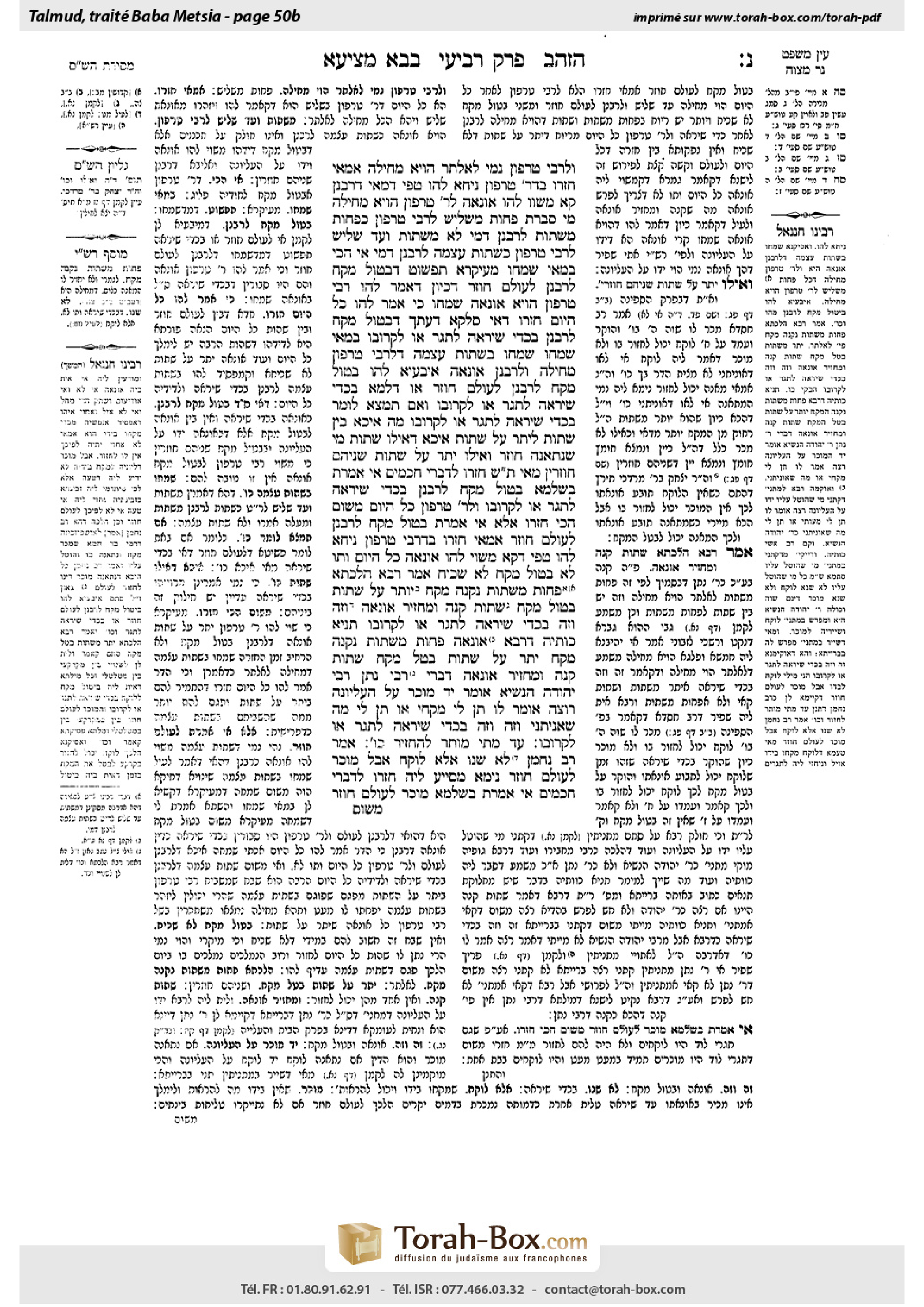
Scan : Torah-Box. Daf Study est un projet indépendant, sans affiliation ni approbation de Torah-Box ou de Sefaria.