Bekhorot 48a en français · בכורות מ״ח א
Traduction française du daf 48a du traité Bekhorot, avec le texte araméen, l’anglais de Sefaria et le scan de la page, pour étudier le Daf Yomi.
Ouvrir dans le lecteur interactifLire le daf du jour
Traduction française de Bekhorot 48a
Les traductions françaises de Daf Study sont générées par IA à partir de l’édition anglaise de Sefaria. Elles peuvent contenir des erreurs : vérifie toujours un passage avec le texte source.
MICHNA : Si un homme dont l’épouse n’avait encore jamais accouché a ensuite eu deux garçons, c’est-à-dire des jumeaux, et que l’on ignore lequel est l’aîné, il donne cinq sela au prêtre après l’écoulement de trente jours. Si l’un d’eux meurt dans les trente jours suivant sa naissance, avant que l’obligation de racheter l’aîné ne prenne effet, le père est dispensé du paiement en raison du doute, car il se peut que ce soit l’aîné qui soit mort.
Si le père est mort et que les fils sont vivants, Rabbi Meïr dit : s’ils ont donné les cinq sela au prêtre avant de se partager les biens de leur père, ils les ont donnés et ils restent en possession du prêtre. Mais s’ils ne l’ont pas fait, ils sont dispensés de donner au prêtre l’argent du rachat. Rabbi Yehouda dit : l’obligation de racheter l’aîné a déjà grevé les biens du père ; les fils, ses héritiers, doivent donc payer le prêtre dans les deux cas. Si l’épouse a donné naissance à un garçon et à une fille, et que l’on ignore lequel est né le premier, le prêtre n’a aucun droit ici, car il est possible que la fille soit née la première.
GUEMARA : La Michna enseigne que, si le père est mort et que les fils sont vivants, Rabbi Meïr dit : s’ils ont donné les cinq sela au prêtre avant de se partager les biens de leur père, ils les ont donnés ; mais s’ils ne l’ont pas fait, ils sont dispensés de donner l’argent du rachat. La Guemara demande : À quel moment le père est-il mort ? Si l’on dit qu’il est mort après les trente jours suivant la naissance de ses fils, Rabbi Meïr dit-il, dans ce cas, que s’ils se sont partagé les biens de leur père, ils sont dispensés de donner au prêtre l’argent du rachat ? Or les biens sont déjà grevés au profit de la mitsva du rachat.
Il faut plutôt parler d’un cas où le père est mort dans les trente jours suivant la naissance de ses fils : l’obligation de rachat incombe à l’aîné lui-même, dont l’identité est inconnue, mais ne grève pas les biens du père. Si tel est le cas, en quoi le fait qu’ils se soient déjà partagé les biens change-t-il la situation, au point que Rabbi Meïr les juge dispensés ? La raison doit être que le prêtre ira trouver l’un des fils, qui le repoussera en lui demandant de prouver qu’il est l’aîné ; il ira de même trouver l’autre fils, qui le repoussera lui aussi de la même manière. La Guemara objecte à cette explication : cela devrait s’appliquer même s’ils ne se sont pas partagé les biens. Que le prêtre aille trouver l’un des fils, qui le repoussera, puis l’autre fils, qui le repoussera lui aussi.
Rabbi Yirmeya dit : Cela signifie, autrement dit, on peut en déduire que, dans le cas de deux hommes nommés Yosef ben Shimon qui résidaient dans la même ville et avaient acquis un champ en partenariat, le créancier de l’un d’eux peut recouvrer sa créance auprès de l’un ou de l’autre, bien qu’il ignore lequel lui doit de l’argent. En effet, il peut dire à chacun d’eux : « Si j’ai une créance contre toi, je prends les cent dinars qui constituent ta part du champ détenu en commun ; et si ma créance concerne l’autre Yosef ben Shimon, je prends les cent dinars qui constituent sa part du champ. » Cela ressemble au cas de la Michna, car les frères qui ne se sont pas encore partagé les biens de leur père sont considérés comme des associés ; le prêtre peut donc réclamer sa créance sur ces biens.
Rava répondit : Considérons à présent le principe selon lequel les biens d’une personne constituent une garantie pour elle, c’est-à-dire qu’ils garantissent le prêt si le débiteur ne le rembourse pas. Existe-t-il un cas où l’on ne peut pas réclamer le remboursement au débiteur lui-même, mais où l’on pourrait pourtant le réclamer à un garant ? N’avons-nous pas appris dans une Michna (Bava Batra 173a) : celui qui prête de l’argent à autrui avec la garantie d’un garant ne peut pas réclamer le paiement de la dette au garant ? Et nous soutenons à ce sujet qu’il ne peut pas réclamer d’emblée le paiement au garant, avant d’avoir d’abord réclamé la dette au débiteur. Comment donc le prêtre pourrait-il ne réclamer l’argent du rachat à aucun des deux frères, tout en pouvant le prélever sur leurs biens ?
Rava dit plutôt : En réalité, la Michna parle d’un cas où le père est mort après les trente jours suivant la naissance de ses fils et où les biens sont déjà grevés au profit de la mitsva du rachat. S’il s’agit d’un cas où il y a beaucoup de biens, la halakha est également que le prêtre prélève les cinq sela sur ces biens, même après que les fils se les sont partagés, puisqu’ils sont tenus de payer, sur leur héritage, la dette de leur père. De quel cas s’agit-il donc ici ? D’un cas où il n’y a que les cinq sela reçus de leur père. C’était là toute la succession.
Rava poursuit : Tous admettent l’opinion de Rav Asi, car Rav Asi dit : lorsque des frères se partagent les biens qu’ils ont reçus en héritage, ils sont considérés comme héritiers pour la moitié de ces biens et comme acquéreurs l’un de l’autre pour l’autre moitié. En outre, tous conviennent qu’un prêt inscrit dans la Torah écrite, c’est-à-dire une obligation financière imposée par la Torah, telle que le rachat de l’aîné,
Texte source et traduction anglaise
בכורות מ״ח א · texte araméen et hébreu
מַתְנִי׳ מִי שֶׁלֹּא בִּכְּרָה אִשְׁתּוֹ וְיָלְדָה שְׁנֵי זְכָרִים — נוֹתֵן חָמֵשׁ סְלָעִים לְכֹהֵן. מֵת אֶחָד מֵהֶן בְּתוֹךְ שְׁלֹשִׁים יוֹם — הָאָב פָּטוּר.
מֵת הָאָב וְהַבָּנִים קַיָּימִים, רַבִּי מֵאִיר אוֹמֵר: אִם נָתְנוּ עַד שֶׁלֹּא חָלְקוּ — נָתָנוּ, וְאִם לָאו — פְּטוּרִין. רַבִּי יְהוּדָה אוֹמֵר: נִתְחַיְּיבוּ נְכָסִים. זָכָר וּנְקֵבָה — אֵין כָּאן לַכֹּהֵן כְּלוּם.
גְּמָ׳ דְּמִית הָאָב אֵימַת? אִילֵּימָא דְּמִית לְאַחַר שְׁלֹשִׁים יוֹם — בְּהָא אָמַר רַבִּי מֵאִיר כִּי חָלְקוּ פְּטוּרִין? וְהָא אִשְׁתַּעְבַּדוּ לְהוּ (לנכסי) [נִכְסֵי]!
אֶלָּא, דְּמִית בְּתוֹךְ שְׁלֹשִׁים יוֹם, מַאי שְׁנָא כִּי חָלְקוּ — דְּאָזֵיל לְגַבֵּי הַאי וּמְדַחֵי לֵיהּ, דְּאָזֵיל לְגַבֵּי הַאי וּמְדַחֵי לֵיהּ; כִּי לֹא חָלְקוּ נָמֵי — לֵיזִיל לְגַבֵּי הַאי וְלִידַחֲיֵיהּ, וְלֵיזִיל לְגַבֵּי הַאי וְלִידַחֲיֵיהּ!
אָמַר רַבִּי יִרְמְיָה: זֹאת אוֹמֶרֶת, שְׁנֵי יוֹסֵף בֶּן שִׁמְעוֹן שֶׁהָיוּ בְּעִיר אַחַת, וְלָקְחוּ שָׂדֶה בְּשׁוּתָּפוּת — בַּעַל חוֹב גּוֹבֶה אוֹתָהּ מֵהֶם, דְּאָמַר לֵיהּ: אִי בְּדִידָךְ מַסֵּיקְנָא — מְנָתָא דִּידָךְ קָא שָׁקֵילְנָא, וְאִי בְּחַבְרָךְ מַסֵּיקְנָא — מְנָתָא דְּחַבְרָךְ קָא שָׁקֵילְנָא.
אָמַר רָבָא: מִכְּדֵי נִכְסֵי דְּבַר אִינִישׁ אִינּוּן עָרְבִין בֵּיהּ, מִי אִיכָּא מִידֵּי דִּלְדִידֵיהּ לָא מָצֵי תָּבַע לֵיהּ, וּלְעָרֵב מָצֵי תָּבַע לֵיהּ? וְהָתְנַן: הַמַּלְוֶה אֶת חֲבֵירוֹ עַל יְדֵי עָרֵב — לֹא יִפָּרַע מִן הֶעָרֵב, וְקַיְימָא לַן דְּלֹא יִתְבַּע מִן הֶעָרֵב תְּחִלָּה!
אֶלָּא אָמַר רָבָא: לְעוֹלָם שֶׁמֵּת לְאַחַר שְׁלֹשִׁים יוֹם, וְאִי דְּאִיכָּא נִכְסֵי טוּבָא — הָכִי נָמֵי דְּשָׁקֵיל, וְהָכָא בְּמַאי עָסְקִינַן? כְּגוֹן דְּלֵיכָּא אֶלָּא חָמֵשׁ סְלָעִים.
וּדְכוּלֵּי עָלְמָא אִית לְהוּ דְּרַב אַסִּי, דְּאָמַר רַב אַסִּי: הָאַחִין שֶׁחָלְקוּ — מֶחֱצָה יוֹרְשִׁין וּמֶחֱצָה לָקוֹחוֹת, וּדְכוּלֵּי עָלְמָא מִלְוֶה הַכְּתוּבָה בַּתּוֹרָה
Bekhorot 48a · traduction anglaise de Sefaria
MISHNA: With regard to one whose wife had not previously given birth and then gave birth to two males, i.e., twin males, and it is unknown which is the firstborn, he gives five sela coins to the priest after thirty days have passed. If one of them dies within thirty days of birth, before the obligation to redeem the firstborn takes effect, the father is exempt from the payment due to uncertainty, as perhaps it was the firstborn who died.
In a case where the father died and the sons are alive, Rabbi Meir says: If they gave the five sela coins to the priest before they divided their father’s property between them, they gave it, and it remains in the possession of the priest. But if not, they are exempt from giving the redemption money to the priest. Rabbi Yehuda says: The obligation to redeem the firstborn already took effect on the property of the father; therefore, in either case the sons, his heirs, are required to pay the priest. If the wife gave birth to a male and a female and it is not known which was born first, the priest has nothing here, as it is possible that the female was born first.
GEMARA: The mishna teaches that in a case where the father died and the sons are alive, Rabbi Meir says: If they gave the five sela coins to the priest before they divided their father’s property, they gave it; but if not, they are exempt from giving the redemption money. The Gemara asks: When did the father die? If we say that he died after the thirty days following the birth of his sons, does Rabbi Meir say in this case that if they divided their father’s property they are exempt from giving the redemption money to the priest? But the property is already on lien for the mitzva of redemption.
Rather, it is referring to a case where the father died within thirty days of the birth of his sons, and the obligation of redemption applies to the firstborn himself, whose identity is unknown, but not to the father’s property. If so, what is different about a case where they already divided the property between them, that Rabbi Meir deems them exempt? The reason must be that the priest will go to this son, and the son will reject him by demanding that the priest prove he is the firstborn; and likewise he will go to that other son, and he too will reject him in the same manner. The Gemara challenges this explanation: The same should apply even in a case where they did not divide the property: Let the priest go to this son and he will reject him, and let him go to that son and he too will reject him.
Rabbi Yirmeya says: That is to say, i.e., it can be inferred from here, that in a case involving two people named Yosef ben Shimon who were residents of one city, and they acquired a field in partnership, a creditor of one of them can collect payment of his debt from either of them, despite the fact that he does not know which of them owes him the money. The reason is that he can say to each of them: If I have a claim against you, I am taking the one hundred dinars that is your share in the joint field, and if I have a claim against the other Yosef ben Shimon, I am taking the one hundred dinars that is his share in the field. This is similar to the case in the mishna, as the brothers who have yet to divide their father’s property are considered partners, and therefore the priest can claim his debt from that property.
Rava said in response: Now consider the principle that a person’s property is a guarantee for him, i.e., it serves as a guarantee for the loan if the debtor does not repay it. Is there any case where one cannot claim repayment from the debtor himself, and yet he can claim from a guarantor? But didn’t we learn in a mishna (Bava Batra 173a): In the case of one who lends money to another with the assurance of a guarantor, he cannot claim payment of the debt from the guarantor? And we maintain in this regard that he cannot claim payment of the debt from the guarantor at the outset, before first claiming the debt from the debtor. How, then, may the priest not claim the redemption money from either brother, and yet he can take it from their property?
Rather, Rava says: Actually, the mishna is referring to a case where the father died after thirty days following the birth of his sons and the property is already on lien for the mitzva of redemption. And if this is a case where there is a lot of property, so too, the halakha is that the priest takes the five sela coins from that property, even after the sons have divided it, as they are obligated to pay their father’s debt from their inheritance. And what are we dealing with here? With a case where there is only the five sela coins received from their father. That was the entire estate.
Rava continues: And everyone accepts the opinion of Rav Asi, as Rav Asi says: In the case of brothers who divided property they received as an inheritance, with regard to half of it they are considered heirs and with regard to the other half they are considered purchasers from each other. And furthermore, everyone agrees that a loan written in the Torah, i.e., a financial obligation by Torah law, such as the redemption of the firstborn,
Texte de Sefaria : William Davidson Edition - Vocalized Aramaic (CC BY NC) ; William Davidson Edition - English (CC BY NC).
Scan de Bekhorot 48a
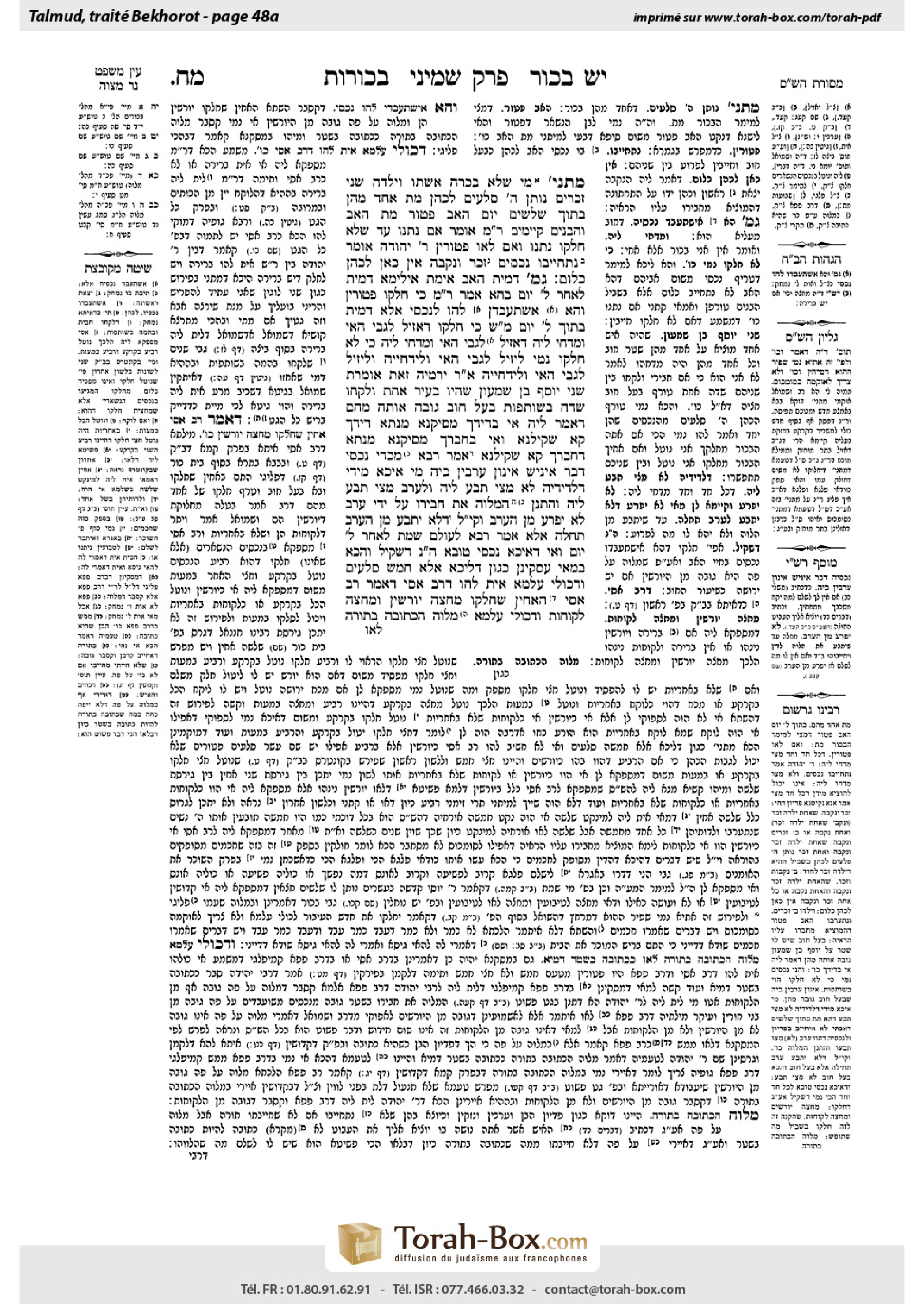
Scan : Torah-Box. Daf Study est un projet indépendant, sans affiliation ni approbation de Torah-Box ou de Sefaria.