Haguiga 24a en français · חגיגה כ״ד א
Traduction française du daf 24a du traité Haguiga (Chagigah 24a en anglais), avec le texte araméen, l’anglais de Sefaria et le scan de la page, pour étudier le Daf Yomi.
Ouvrir dans le lecteur interactifLire le daf du jour
Traduction française de Haguiga 24a
Les traductions françaises de Daf Study sont générées par IA à partir de l’édition anglaise de Sefaria. Elles peuvent contenir des erreurs : vérifie toujours un passage avec le texte source.
Le témoignage de Rabbi Akiva n’est pas nécessaire pour enseigner la halakha fondamentale selon laquelle un récipient réunit les éléments qu’il contient, ce qui relève de la Torah. Il n’est nécessaire que pour les restes de l’offrande végétale, c’est-à-dire la partie qui subsiste après que la poignée et l’encens ont été offerts sur l’autel et qui est consommée par un prêtre. Dans ce cas, la halakha de la réunion ne s’applique que par décret rabbinique. En effet, selon la Torah, un récipient réunit les éléments qu’il contient au regard de l’impureté uniquement lorsqu’un objet doit être placé dans un récipient pour être sanctifié, même si ses différentes parties ne se touchent pas. En revanche, si un objet n’a pas besoin d’un récipient, celui-ci ne le réunit pas. Les restes d’une offrande végétale n’ont plus besoin d’un récipient, puisqu’ils sont remis à un prêtre après que la poignée a été offerte ; la farine placée dans un récipient ne serait donc pas considérée comme réunie selon la Torah.
Les Sages vinrent alors et décrétèrent que même si une chose n’a pas besoin d’un récipient, comme la farine restant d’une offrande végétale, le récipient la réunit néanmoins.
La Guemara soulève une difficulté : cela s’explique bien dans le cas de la farine, qui peut désigner la farine restant des offrandes végétales ; mais que peut-on dire au sujet de l’encens et de l’oliban ? Dans ces cas, un récipient est certainement nécessaire. Or, si la halakha de la réunion s’applique à leur égard selon la Torah, pourquoi Rabbi Akiva les a-t-il inclus dans sa liste ? Rav Naḥman dit au nom de Rabba bar Avuh : par exemple, s’il les a entassés sur une planche de cuir [kartavla], plutôt que dans un récipient creux. Selon la Torah, un récipient doté d’une cavité réunit les éléments qu’il contient, mais un récipient plat, qui n’a pas de cavité, ne les réunit pas. Les Sages vinrent alors et décrétèrent que même un récipient sans cavité réunit néanmoins ce qui y est déposé.
La Guemara fait remarquer que l’opinion de Rabbi Ḥanin, selon laquelle l’impureté par réunion découle de la Torah, est en désaccord avec celle de Rabbi Ḥiyya bar Abba. En effet, Rabbi Ḥiyya bar Abba a dit que Rabbi Yoḥanan a dit, à propos de notre Michna : « Cette Michna a été enseignée conformément au témoignage de Rabbi Akiva. » Autrement dit, l’enseignement de la Michna selon lequel un récipient réunit ce qu’il contient suit la déclaration de Rabbi Akiva, ce qui indique qu’il s’agit d’un décret rabbinique, contrairement à l’opinion de Rabbi Ḥanin, qui affirme que cette halakha repose sur une source de la Torah.
§ Il a été enseigné dans la Michna que le quatrième degré d’impureté, en ce qui concerne les aliments consacrés, les disqualifie. Une baraïta enseigne : Rabbi Yosei a dit : D’où apprend-on que le quatrième degré d’impureté rituelle disqualifie les aliments consacrés ? Cela découle d’un raisonnement a fortiori : si celui qui doit encore obtenir l’expiation — une personne impure tenue d’apporter une offrande pour achever son processus de purification —, bien qu’il soit autorisé à consommer de la terouma, est néanmoins disqualifié pour la consommation d’aliments consacrés, comme le précise la Torah, alors n’est-il pas d’autant plus juste qu’un objet impur au troisième degré d’impureté rituelle, qui est disqualifié s’il s’agit de terouma, produise un quatrième degré d’impureté rituelle lorsqu’il touche un aliment consacré ? Nous avons donc appris que le troisième degré d’impureté des aliments consacrés découle de la Torah, tandis que le quatrième degré d’impureté découle d’un raisonnement a fortiori.
La baraïta ci-dessus enseignait que le troisième degré d’impureté des aliments consacrés découle de la Torah. La Guemara demande : D’où cela découle-t-il ? Car il est écrit : « La viande qui touche quoi que ce soit d’impur ne sera pas mangée » (Lévitique 7:19). N’est-il pas question dans ce verset de viande qui touche une « chose impure », même si elle a touché quelque chose qui est au deuxième degré d’impureté rituelle, également appelé « chose impure » ? Pourtant, le Miséricordieux déclare au sujet de cette viande qui, après avoir touché une chose au deuxième degré d’impureté, est désormais impure au troisième degré : « Elle ne sera pas mangée », ce qui signifie qu’elle a été rendue impropre par l’impureté. Quant à la déclaration de la baraïta selon laquelle le quatrième degré d’impureté se déduit par un raisonnement a fortiori, c’est comme nous l’avons dit juste auparavant : il s’agit du raisonnement a fortiori avancé par Rabbi Yosei.
§ Il a été enseigné dans la Michna : s’agissant de la terouma, si l’une des mains d’une personne est devenue impure en vertu d’une impureté rabbinique qui ne rend impures que les mains, l’autre main, son homologue, reste pure. Mais, s’agissant des aliments consacrés, si une main devient impure, la personne doit immerger ses deux mains. Rav Sheizevi a dit : lorsqu’ils ont dit qu’en ce qui concerne les aliments consacrés, une main rend également l’autre impure lorsqu’elle est elle-même rendue impure, ils n’ont enseigné cela que dans le cas où la main pure est en contact avec l’aliment consacré au moment où la main impure le touche. Mais si la main pure n’est pas en contact avec l’aliment consacré, alors elle n’est pas rendue impure par le contact avec la main impure. Selon Rav Sheizevi, les Sages ont institué ce décret — une main rend l’autre impure — parce qu’ils craignaient que la main impure ait touché directement l’aliment consacré sans que l’on s’en aperçoive. Le décret ne s’applique donc que lorsque la main pure touche l’aliment consacré.
Abaye objecta à Rav Sheizevi en citant l’enseignement suivant : même une main sèche et impure rend impure son homologue, c’est-à-dire l’autre main, au point que cette seconde main rendra alors impur tout aliment qu’elle touchera. Cela vaut pour les aliments consacrés, mais pas pour la terouma. Telle est la déclaration de Rabbi Yehouda HaNassi. Rabbi Yosei, fils de Rabbi Yehouda, dit : la seconde main n’est pas rendue impure à un degré aussi élevé. Elle peut seulement disqualifier l’aliment consacré qu’elle touche en le rendant impur au quatrième degré, mais elle ne peut pas le rendre impur au troisième degré.
Certes, si l’on dit que la seconde main devient impure même lorsqu’elle n’est pas en contact avec l’aliment consacré, on comprend pourquoi il est notable qu’une main sèche rende son homologue impure. Cela enseigne que, même si normalement une main sèche ne rendrait pas une autre main impure, les Sages l’ont néanmoins déclarée impure en ce qui concerne les aliments consacrés. Mais si l’on dit que lorsque la seconde main est en contact avec un aliment consacré, le décret selon lequel elle devient impure s’applique, de crainte que la main impure ne touche directement l’aliment consacré, tandis que lorsqu’elle n’est pas en contact, le décret ne s’applique pas, alors qu’y a-t-il de notable à préciser que cela s’applique dans le cas d’une main sèche ?
Il a également été rapporté que des amoraïm sont en désaccord sur une question similaire : Reish Lakish a dit : ils ont enseigné qu’une main rend l’autre impure uniquement si la seconde main est la sienne,
Texte source et traduction anglaise
חגיגה כ״ד א · texte araméen et hébreu
לֹא נִצְרְכָא אֶלָּא לִשְׁיָרֵי מִנְחָה. דְּאוֹרָיְיתָא, צָרִיךְ לִכְלִי — הַכְּלִי מְצָרְפוֹ, שֶׁאֵין צָרִיךְ לִכְלִי — אֵין כְּלִי מְצָרְפוֹ.
וַאֲתוֹ רַבָּנַן וּגְזַרוּ דְּאַף עַל גַּב דְּאֵינוֹ צָרִיךְ לִכְלִי — כְּלִי מְצָרְפוֹ.
תִּינַח סֹלֶת, קְטוֹרֶת וּלְבוֹנָה מַאי אִיכָּא לְמֵימַר? אָמַר רַב נַחְמָן אָמַר רַבָּה בַּר אֲבוּהּ: כְּגוֹן שֶׁצְּבָרָן עַל גַּבֵּי קַרְטְבֻלָא. דְּאוֹרָיְיתָא, יֵשׁ לוֹ תּוֹךְ — מְצָרֵף, אֵין לוֹ תּוֹךְ — אֵינוֹ מְצָרֵף, וַאֲתוֹ רַבָּנַן וְתַקִּינוּ דְּאַף עַל גַּב דְּאֵין לוֹ תּוֹךְ — מְצָרֵף.
וּפְלִיגָא דְּרַבִּי חָנִין אַדְּרַבִּי חִיָּיא בַּר אַבָּא. דְּאָמַר רַבִּי חִיָּיא בַּר אַבָּא אָמַר רַבִּי יוֹחָנָן: מֵעֵדוּתוֹ שֶׁל רַבִּי עֲקִיבָא נִשְׁנֵית מִשְׁנָה זוֹ.
הָרְבִיעִי בַּקֹּדֶשׁ פָּסוּל. תַּנְיָא, אָמַר רַבִּי יוֹסֵי: מִנַּיִן לָרְבִיעִי בַּקֹּדֶשׁ שֶׁהוּא פָּסוּל — וְדִין הוּא: וּמָה מְחוּסַּר כִּפּוּרִים שֶׁמּוּתָּר בַּתְּרוּמָה — פָּסוּל בַּקֹּדֶשׁ, שְׁלִישִׁי שֶׁפָּסוּל בַּתְּרוּמָה — אֵינוֹ דִּין שֶׁיַּעֲשֶׂה רְבִיעִי לַקֹּדֶשׁ? וְלָמַדְנוּ שְׁלִישִׁי לַקֹּדֶשׁ מִן הַתּוֹרָה, וּרְבִיעִי בְּקַל וָחוֹמֶר.
שְׁלִישִׁי לַקֹּדֶשׁ מִן הַתּוֹרָה מִנַּיִן? דִּכְתִיב: ״וְהַבָּשָׂר אֲשֶׁר יִגַּע בְּכׇל טָמֵא לֹא יֵאָכֵל״, מִי לָא עָסְקִינַן דִּנְגַע בְּשֵׁנִי, וְקָאָמַר רַחֲמָנָא ״לֹא יֵאָכֵל״. רְבִיעִי מִקַּל וָחוֹמֶר — הָא דַּאֲמַרַן.
וּבַתְּרוּמָה אִם נִטְמֵאת כּוּ׳. אָמַר רַב שֵׁיזְבִי: בְּחִיבּוּרִין שָׁנוּ, אֲבָל שֶׁלֹּא בְּחִיבּוּרִין — לֹא.
אֵיתִיבֵיהּ אַבָּיֵי: יָד נְגוּבָה מְטַמָּא חֲבֶירְתָּהּ לְטַמֵּא לַקֹּדֶשׁ, אֲבָל לֹא לַתְּרוּמָה, דִּבְרֵי רַבִּי. רַבִּי יוֹסֵי בְּרַבִּי יְהוּדָה אוֹמֵר: לִפְסוֹל, אֲבָל לֹא לְטַמֵּא.
אִי אָמְרַתְּ בִּשְׁלָמָא שֶׁלֹּא בְּחִיבּוּרִין — הַיְינוּ רְבוּתַיהּ דִּנְגוּבָה. אֶלָּא אִי אָמְרַתְּ בְּחִיבּוּרִין — אִין, שֶׁלֹּא בְּחִיבּוּרִין — לָא, מַאי רְבוּתָה דִּנְגוּבָה?
אִיתְּמַר נָמֵי, אָמַר רֵישׁ לָקִישׁ: לֹא שָׁנוּ אֶלָּא יָדוֹ,
Chagigah 24a · traduction anglaise de Sefaria
Rabbi Akiva’s testimony is not needed to teach the basic halakha that a vessel combines its ingredients, which is Torah law; it is necessary only for the remainders of the meal-offering, the part of a meal-offering left over after a fistful of it and its frankincense have been sacrificed on the altar, which is eaten by a priest. In such a case the halakha of combining applies only by rabbinic law, for by Torah law only when an item requires a vessel in order for it to be sanctified does the vessel combine it with regard to impurity, even if its parts are not touching each other. But in the case of something that does not require a vessel, the vessel does not combine it. The remainder of a meal-offering no longer requires a vessel, since it is given to a priest after the fistful is sacrificed, so the flour in a vessel would not be considered combined according to Torah law.
And the Sages came and decreed that even if something does not require a vessel, such as the leftover flour of the meal-offering, the vessel nevertheless combines it.
The Gemara raises a difficulty: It works out well in the case of flour, which can be said to refer to the flour left over from meal-offerings, but with regard to incense and frankincense, what is there to say? In these cases a vessel is certainly required, but if the halakha of combining applies to them from the Torah, why did Rabbi Akiva include them in his list? Rav Naḥman said that Rabba bar Avuh said: For example, if he piled them up on a leather board [kartavla], rather than in a containing vessel. By Torah law a vessel that has an inside combines its ingredients, but one that is flat and does not have an inside does not combine. And the Sages came and decreed that even if it does not have an inside it nevertheless combines what is placed on it.
The Gemara comments: And this opinion of Rabbi Ḥanin’s, that impurity by combining is derived from the Torah, disagrees with the opinion of Rabbi Ḥiyya bar Abba. For Rabbi Ḥiyya bar Abba said that Rabbi Yoḥanan said in reference to our mishna: This mishna was taught based on Rabbi Akiva’s testimony. In other words, the mishna’s teaching that a vessel combines its contents follows the statement of Rabbi Akiva, indicating that it is by rabbinic law, unlike Rabbi Ḥanin, who said that it is based on a source from the Torah.
§ It was taught in the mishna: The fourth degree of impurity, with regard to sacrificial food, is disqualified. It is taught in a baraita: Rabbi Yosei said: From where is it derived with regard to the fourth degree of ritual impurity, that with regard to sacrificial food it is disqualified? It is a logical derivation, by a fortiori: If one who is lacking atonement, an impure person who is obligated to bring an offering to complete his purification process, who is permitted to eat teruma, is nevertheless disqualified with regard to the consumption of sacrificial food, as specified in the Torah, then concerning something that is impure to the third degree of ritual impurity, which is disqualified if it is teruma, is it not right that it should engender a fourth degree of ritual impurity when it touches sacrificial food? Therefore, we have learned that there is a third degree of impurity with regard to sacrificial food from the Torah, and that there is a fourth degree of impurity from a fortiori reasoning.
The above baraita taught that there is a third degree of impurity for sacrificial food from the Torah. The Gemara asks: From where is this derived? As it is written: “And the meat that touches any impure thing shall not be eaten” (Leviticus 7:19). Is it not so that we are not dealing in that verse with meat that touches any “impure thing” at all, even if it touched something that is of the second degree of ritual impurity, which is also called an “impure thing”? And yet the Merciful One states with regard to that meat, which having touched a second-degree impurity is now impure to the third degree: “It shall not be eaten,” meaning that it has been rendered unfit due to impurity. And as for the baraita’s statement that the fourth level of impurity is derived by an a fortiori inference – it is as we said just above, the a fortiori inference put forth by Rabbi Yosei.
§ It was taught in the mishna: And with regard to teruma, if one of one’s hands became impure with impurity by rabbinic law that renders only the hands impure, its counterpart, the other hand, remains pure. But with regard to sacrificial food, if one hand becomes impure he must immerse them both. Rav Sheizevi said: When they said that with regard to sacrificial food a hand that is rendered impure renders the other hand impure as well, they taught this only for a situation when the pure hand is in contact with the sacrificial food when the impure hand touches it. But if the pure hand is not in contact with the sacrificial food, no, the pure hand is not rendered impure by touching the impure hand. According to Rav Sheizevi, the Sages enacted the decree that one hand renders the other impure because they were concerned that the impure hand may have touched the sacrificial food directly without being noticed. Therefore, the decree applies only when the pure hand is touching the sacrificial food.
Abaye raised an objection to Rav Sheizevi from the following teaching: Even a dry hand that is impure renders its counterpart, i.e., the other hand, impure, to the extent that the second hand will now render impure any food that it touches. This is true with regard to sacrificial food but not with regard to teruma. This is the statement of Rabbi Yehuda HaNasi. Rabbi Yosei, son of Rabbi Yehuda, says: The second hand is not rendered impure to such a severe extent. It can merely disqualify sacrificial food that it touches, by rendering it impure to the fourth degree, but not render it impure with third-degree impurity.
Granted, if you say that the second hand becomes impure even when it is not in contact with the sacrificial food, this would explain the noteworthiness of a dry hand rendering its counterpart impure. It teaches that even though normally a dry hand would not render another hand impure, the Sages nevertheless declared it impure with regard to sacrificial food. But if you say that when the second hand is in contact with sacrificial food, yes, the decree that the second hand becomes impure applies, lest the impure hand touch the sacrificial food directly, but when it is not in contact, no, the decree does not apply, then what is the noteworthiness of stating that it applies in the case of a dry hand?
It was also stated that amora’im disputed a similar issue: Reish Lakish said: They taught that one hand renders the other impure only if the second hand is his own hand,
Texte de Sefaria : William Davidson Edition - Vocalized Aramaic (CC BY NC) ; William Davidson Edition - English (CC BY NC).
Scan de Haguiga 24a
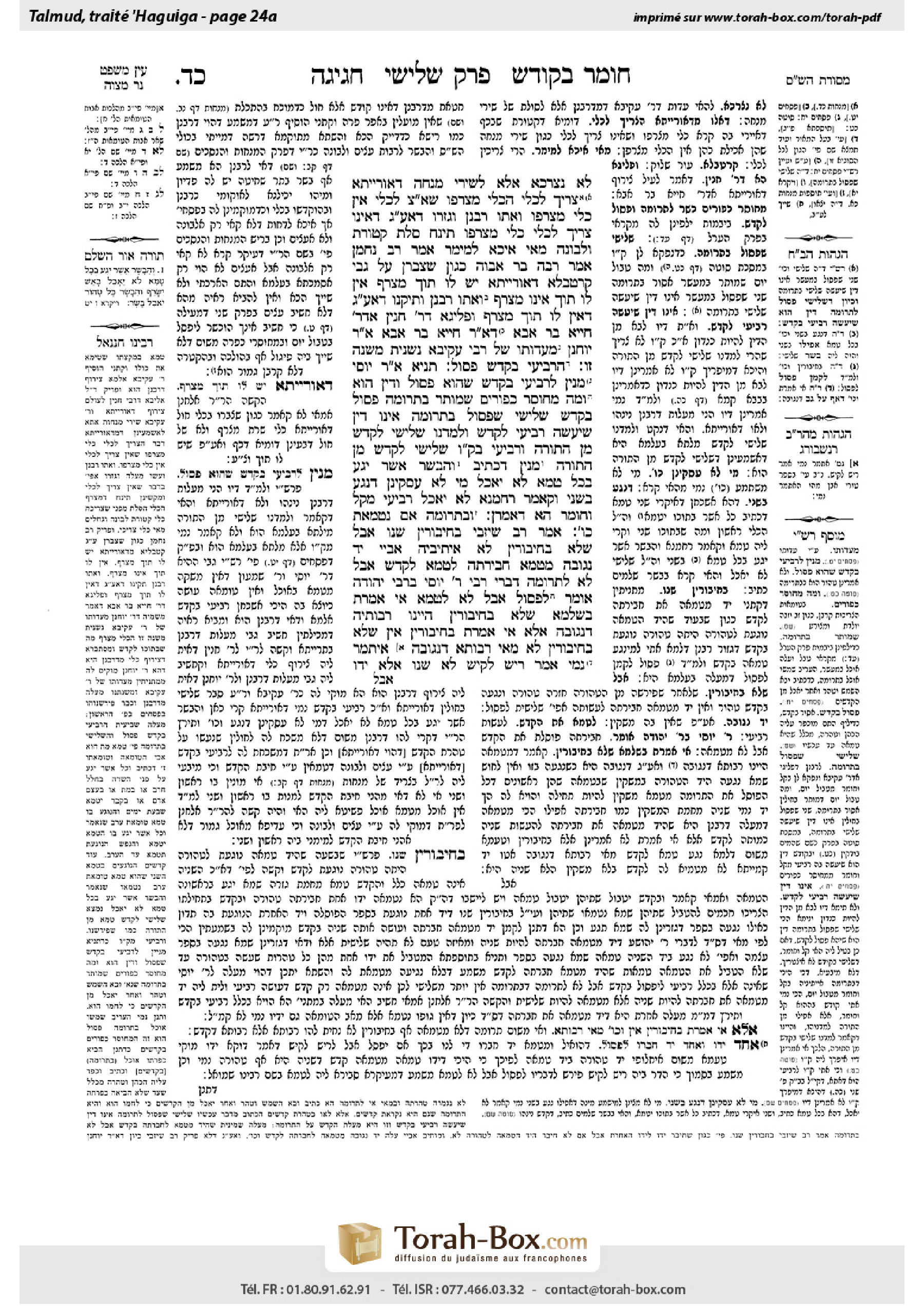
Scan : Torah-Box. Daf Study est un projet indépendant, sans affiliation ni approbation de Torah-Box ou de Sefaria.