Nedarim 80a en français · נדרים פ׳ א
Traduction française du daf 80a du traité Nedarim, avec le texte araméen, l’anglais de Sefaria et le scan de la page, pour étudier le Daf Yomi.
Ouvrir dans le lecteur interactifLire le daf du jour
Traduction française de Nedarim 80a
Les traductions françaises de Daf Study sont générées par IA à partir de l’édition anglaise de Sefaria. Elles peuvent contenir des erreurs : vérifie toujours un passage avec le texte source.
Mais explique plutôt qu’elle a dit : « Le bénéfice du bain m’est interdit à jamais comme un konam si je me baigne. » C’est pour cette raison qu’il peut annuler son vœu : que peut-elle faire si le vœu n’est pas annulé ? Si elle se baigne, le bénéfice du bain lui est alors interdit ; et si elle ne se baigne pas, elle subira une défiguration temporaire [nivvula]. Rabbi Yosei, qui estime qu’il ne s’agit pas d’un vœu de souffrance, considère qu’elle peut ne pas se baigner, car nous ne nous préoccupons pas de sa défiguration.
La Guemara soulève une difficulté : dans ce cas, que la Michna enseigne ainsi : Rabbi Yosei dit que cette condition n’entraîne pas de souffrance, car le contenu même du vœu est sans importance, puisqu’elle peut remplir la condition.
La Guemara propose une autre explication : explique plutôt qu’elle a dit : « Le bénéfice du bain m’est interdit à jamais comme un konam si je me baigne aujourd’hui. » Rabbi Yosei estime qu’il ne lui arrivera rien si elle s’abstient de se baigner aujourd’hui, car la défiguration résultant d’une seule journée sans bain n’est pas considérée comme une défiguration.
Texte source et traduction anglaise
נדרים פ׳ א · texte araméen et hébreu
וְאֶלָּא: דְּאָמְרָה ״קֻוֽנָּם הֲנָאַת רְחִיצָה עָלַי לְעוֹלָם אִם אֶרְחַץ״, מִשּׁוּם הָכִי מֵיפֵר לָהּ. דְּהֵיכִי תַּעֲבֵיד? תִּרְחַץ — מִתַּסְרָא הֲנָאַת רְחִיצָה עֲלַהּ, לָא תִּרְחַץ אִית לַהּ נִיוּוּלָא. וְרַבִּי יוֹסֵי סָבַר: אֶפְשָׁר דְּלָא רָחֲצָה, וּלְנִיוּוּל לָא חָיְישִׁינַן.
אִי הָכִי, לִיתְנֵי הָכִי, רַבִּי יוֹסֵי אוֹמֵר: תְּנַאי זֶה אֵין בּוֹ עִנּוּי נֶפֶשׁ!
אֶלָּא דְּאָמְרָה: ״הֲנָאַת רְחִיצָה עָלַי לְעוֹלָם אִם אֶרְחַץ הַיּוֹם״. וְרַבִּי יוֹסֵי סָבַר: נִיוּוּל דְּחַד יוֹמָא לָא שְׁמֵיהּ נִיוּוּל.
Nedarim 80a · traduction anglaise de Sefaria
But rather, explain that she said: The benefit of bathing is konam for me forever if I bathe. And it is due to that reason that he may nullify her vow, as what can she do if there is no nullification? If she bathes, the benefit of bathing is thereby forbidden to her. And if she does not bathe, she will suffer temporary disfigurement [nivvula]. And Rabbi Yosei, who maintains that this is not a vow of affliction, maintains that it is possible for her not to bathe, as we are not concerned about her disfigurement.
The Gemara raises a difficulty: If so, let the mishna teach like this: Rabbi Yosei says that this condition does not involve affliction, as the content of the vow itself is irrelevant, since she can fulfill the condition.
The Gemara offers another explanation: Rather, explain that she said: The benefit of bathing is konam for me forever if I bathe today. And Rabbi Yosei maintains that nothing will happen if she refrains from bathing today, as the disfigurement resulting from not bathing for one day is not called disfigurement.
Texte de Sefaria : William Davidson Edition - Vocalized Aramaic (CC BY NC) ; William Davidson Edition - English (CC BY NC).
Scan de Nedarim 80a
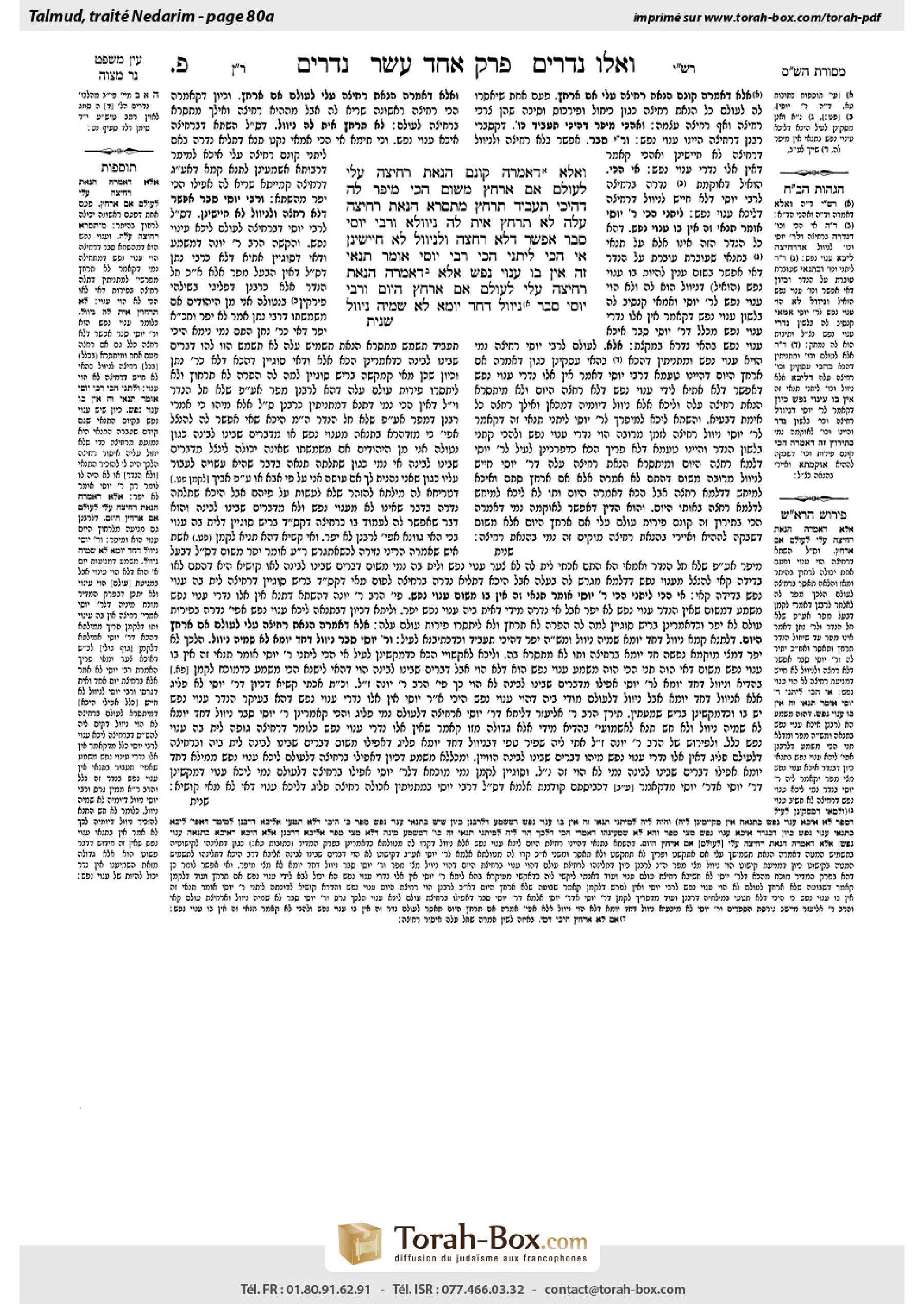
Scan : Torah-Box. Daf Study est un projet indépendant, sans affiliation ni approbation de Torah-Box ou de Sefaria.