Kiddushin 82b: Talmud study for Daf Yomi
Daf Yomi is the daily study of one Talmud folio. Explore 37 tractates with scans, Hebrew text, Sefaria English and AI-generated French translations where annotated.
Passage selection and English or AI-generated French translation are available where the scan has annotations. Daf Study is independent of Torah-Box and Sefaria.
Browse Kiddushin · קידושין · All tractatesKiddushin 82b text and translations
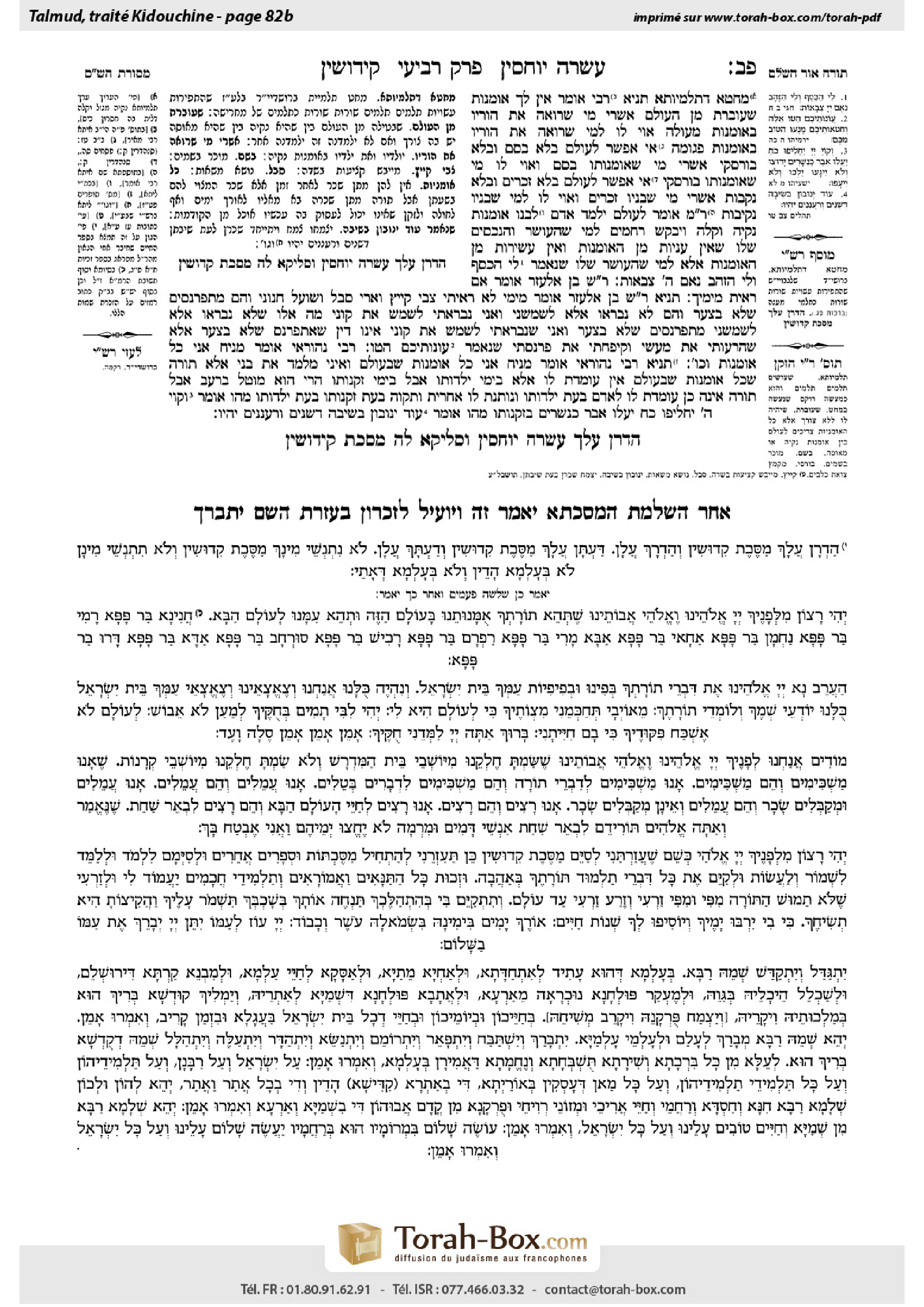
This page of Kiddushin includes the Aramaic text, an English translation and an AI-generated French translation, alongside the scan above.
קידושין פ״ב ב · Aramaic and Hebrew text
מַחְטָא דְתַלְמִיּוּתָא.
תַּנְיָא, רַבִּי אוֹמֵר: אֵין לְךָ אוּמָּנוּת שֶׁעוֹבֶרֶת מִן הָעוֹלָם. אַשְׁרֵי מִי שֶׁרוֹאֶה אֶת הוֹרָיו בְּאוּמָּנוּת מְעוּלָּה, אוֹי לוֹ לְמִי שֶׁרוֹאֶה אֶת הוֹרָיו בְּאוּמָּנוּת פְּגוּמָה. אִי אֶפְשָׁר לָעוֹלָם בְּלֹא בַּסָּם וּבְלֹא בּוּרְסְקִי. אַשְׁרֵי מִי שֶׁאוּמָּנוּתוֹ בַּסָּם, וְאוֹי לוֹ [לְ]מִי שֶׁאוּמָּנוּתוֹ בּוּרְסְקִי. אִי אֶפְשָׁר לְעוֹלָם בְּלֹא זְכָרִים וּבְלֹא נְקֵבוֹת, אַשְׁרֵי מִי שֶׁבָּנָיו זְכָרִים וְאוֹי לוֹ לְמִי שֶׁבָּנָיו נְקֵיבוֹת.
רַבִּי מֵאִיר אוֹמֵר: לְעוֹלָם יְלַמֵּד אָדָם לִבְנוֹ אוּמָּנוּת נְקִיָּה וְקַלָּה, וִיבַקֵּשׁ רַחֲמִים לְמִי שֶׁהָעוֹשֶׁר וְהַנְּכָסִים שֶׁלּוֹ, שֶׁאֵין עֲנִיּוּת מִן הָאוּמָּנוּת וְאֵין עֲשִׁירוּת מִן הָאוּמָּנוּת, אֶלָּא – לְמִי שֶׁהָעוֹשֶׁר שֶׁלּוֹ, שֶׁנֶּאֱמַר: ״לִי הַכֶּסֶף וְלִי הַזָּהָב נְאֻם ה׳ צְבָאוֹת״.
רַבִּי שִׁמְעוֹן בֶּן אֶלְעָזָר אוֹמֵר: אִם רָאִיתָ מִיָּמֶיךָ. תַּנְיָא, רַבִּי שִׁמְעוֹן בֶּן אֶלְעָזָר אוֹמֵר: מִיָּמַי לֹא רָאִיתִי צְבִי קַיָּיץ, וַאֲרִי סַבָּל, וְשׁוּעָל חֶנְוָנִי, וְהֵם מִתְפַּרְנְסִים שֶׁלֹּא בְּצַעַר. וְהֵם לֹא נִבְרְאוּ אֶלָּא לְשַׁמְּשֵׁנִי, וַאֲנִי נִבְרֵאתִי לְשַׁמֵּשׁ אֶת קוֹנִי. מָה אֵלּוּ שֶׁלֹּא נִבְרְאוּ אֶלָּא לְשַׁמְּשֵׁנִי מִתְפַּרְנְסִים שֶׁלֹּא בְּצַעַר, וַאֲנִי שֶׁנִּבְרֵאתִי לְשַׁמֵּשׁ אֶת קוֹנִי – אֵינוֹ דִּין שֶׁאֶתְפַּרְנֵס שֶׁלֹּא בְּצַעַר? אֶלָּא שֶׁהֲרֵעוֹתִי אֶת מַעֲשַׂי וְקִיפַּחְתִּי אֶת פַּרְנָסָתִי, שֶׁנֶּאֱמַר: ״עֲוֹנוֹתֵיכֶם הִטּוּ״.
רַבִּי נְהוֹרַאי אוֹמֵר: מַנִּיחַ אֲנִי כׇּל אוּמָּנוּת וְכוּ׳. תַּנְיָא: רַבִּי נְהוֹרַאי אוֹמֵר: מַנִּיחַ אֲנִי כׇּל אוּמָּנוּת שֶׁבָּעוֹלָם וְאֵינִי מְלַמֵּד אֶת בְּנִי אֶלָּא תּוֹרָה, שֶׁכׇּל אוּמָּנוּת שֶׁבָּעוֹלָם אֵין עוֹמֶדֶת לוֹ אֶלָּא בִּימֵי יַלְדוּתוֹ, אֲבָל בִּימֵי זִקְנוּתוֹ הֲרֵי הוּא מוּטָּל בָּרָעָב. אֲבָל תּוֹרָה אֵינָהּ כֵּן – עוֹמֶדֶת לוֹ לָאָדָם בְּעֵת יַלְדוּתוֹ, וְנוֹתֶנֶת לוֹ אַחֲרִית וְתִקְוָה בְּעֵת זִקְנוּתוֹ. בְּעֵת יַלְדוּתוֹ מַהוּ אוֹמֵר? ״וְקוֹיֵ ה׳ יַחֲלִיפוּ כֹחַ יַעֲלוּ אֵבֶר כַּנְּשָׁרִים״ בְּזִקְנוּתוֹ מַהוּ אוֹמֵר? ״עוֹד יְנוּבוּן בְּשֵׂיבָה דְּשֵׁנִים וְרַעֲנַנִּים יִהְיוּ״.
הֲדַרַן עֲלָךְ עֲשָׂרָה יוּחֲסִין וּסְלִיקָא לַהּ מַסֶּכֶת קִידּוּשִׁין
Kiddushin 82b · English translation
Needlework for embroidery is a clean and easy trade.
It is taught in the Tosefta (5:12): Rabbi Yehuda HaNasi says: There is no trade that disappears from the world, since all occupations are needed, but fortunate is he who sees his parents in an elevated trade; woe is he who sees his parents in a lowly trade and follows them into their trade. Similarly, it is impossible for the world to continue without a perfumer and without a tanner. Fortunate is he whose trade is as a perfumer, and woe is he whose trade is as a tanner, who works with materials that have a foul smell. Likewise, it is impossible for the world to exist without males and without females, yet fortunate is he whose children are males, and woe is he whose children are females.
Rabbi Meir says: A person should always teach his son a clean and easy trade, and he should request compassion from the One to Whom wealth and property belong, as poverty does not come from a trade, nor does wealth come from a trade; rather, they come from the One to Whom wealth belongs, as it is stated: “Mine is the silver, and Mine the gold, says the Lord of hosts” (Haggai 2:8).
The mishna taught that Rabbi Shimon ben Elazar says: Have you ever seen a beast or a bird that has a trade? It is taught in the Tosefta (5:13): Rabbi Shimon ben Elazar says: I never saw a deer work as one who dries figs, nor a lion work as a porter, nor a fox work as a storekeeper. And yet they earn their livelihood without anguish. But all these were created only to serve me, and I, a human being, was created to serve the One Who formed me. If these, who were created only to serve me, earn their livelihood without anguish, then is it not right that I, who was created to serve the One Who formed me, should earn my livelihood without anguish? But I, i.e., humanity, have committed evil actions and have lost my livelihood, as it is stated: “Your iniquities have turned away these things, and your sins have held back good from you” (Jeremiah 5:25).
The mishna taught that Rabbi Nehorai says: I set aside all the trades and I teach my son only Torah. It is taught in the Tosefta (5:14): Rabbi Nehorai says: I set aside all the trades in the world, and I teach my son only Torah, as all other trades serve one only in the days of his youth, when he has enough strength to work, but in the days of his old age, behold, he is left to lie in hunger. But Torah is not like this: It serves a person in the time of his youth and provides him with a future and hope in the time of his old age. With regard to the time of his youth, what does it say about a Torah scholar? “But they that wait for the Lord shall renew their strength” (Isaiah 40:31). With regard to the time of his old age, what does it say? “They shall still bring forth fruit in old age, they shall be full of sap and richness” (Psalms 92:15).
Kiddushin 82b · Traduction française (IA)
La broderie à l’aiguille est un métier propre et facile.
Il est enseigné dans la Tosefta (5:12) : Rabbi Yehuda HaNasi dit : Aucun métier ne disparaît du monde, car toutes les professions sont nécessaires. Mais heureux celui qui voit ses parents exercer un métier honorable ; malheur à celui qui les voit exercer un métier humble et les suit dans cette voie. De même, il est impossible au monde de subsister sans parfumeur ni tanneur. Heureux celui qui exerce le métier de parfumeur, et malheur à celui qui exerce celui de tanneur, car il travaille avec des matières qui dégagent une mauvaise odeur. De même, il est impossible au monde d’exister sans hommes ni femmes ; pourtant, heureux celui dont les enfants sont des garçons, et malheur à celui dont les enfants sont des filles.
Rabbi Meir dit : Qu’un homme enseigne toujours à son fils un métier propre et facile, et qu’il implore la miséricorde de Celui à qui appartiennent la richesse et les biens, car la pauvreté ne vient pas d’un métier, pas plus que la richesse ne vient d’un métier ; elles viennent plutôt de Celui à qui appartient la richesse, comme il est dit : « L’argent est à Moi, et l’or est à Moi, dit le Seigneur des armées » (Aggée 2:8).
La Michna enseigne que Rabbi Shimon ben Elazar dit : As-tu jamais vu une bête ou un oiseau exercer un métier ? Il est enseigné dans la Tosefta (5:13) : Rabbi Shimon ben Elazar dit : Je n’ai jamais vu un cerf travailler à sécher des figues, ni un lion travailler comme portefaix, ni un renard travailler comme boutiquier. Pourtant, ils gagnent leur subsistance sans angoisse. Or, tous ceux-là n’ont été créés que pour me servir, tandis que moi, être humain, j’ai été créé pour servir Celui qui m’a formé. Si ceux qui n’ont été créés que pour me servir gagnent leur subsistance sans angoisse, ne convient-il pas que moi, qui ai été créé pour servir Celui qui m’a formé, je gagne ma subsistance sans angoisse ? Mais moi, c’est-à-dire l’humanité, j’ai commis de mauvaises actions et j’ai perdu ma subsistance, comme il est dit : « Vos iniquités ont détourné ces choses, et vos péchés vous ont privés du bien » (Jérémie 5:25).
La Michna enseigne que Rabbi Nehorai dit : J’abandonne tous les métiers et n’enseigne à mon fils que la Torah. Il est enseigné dans la Tosefta (5:14) : Rabbi Nehorai dit : J’abandonne tous les métiers du monde et n’enseigne à mon fils que la Torah, car tous les autres métiers ne sont utiles qu’à l’homme dans sa jeunesse, lorsqu’il a assez de force pour travailler ; mais, dans sa vieillesse, le voilà réduit à mourir de faim. La Torah, en revanche, n’est pas ainsi : elle est utile à l’homme durant sa jeunesse et lui assure un avenir et de l’espoir dans sa vieillesse. Que dit-on au sujet du talmid hakham dans sa jeunesse ? « Mais ceux qui espèrent en le Seigneur renouvelleront leur force » (Isaïe 40:31). Et que dit-on au sujet de sa vieillesse ? « Ils porteront encore des fruits dans la vieillesse, ils seront pleins de sève et de vigueur » (Psaumes 92:15).
Traduction française générée par IA à partir de l’édition anglaise de Sefaria. Vérifie toujours un passage avec le texte source.
Text from Sefaria: William Davidson Edition - Vocalized Aramaic (CC BY NC); William Davidson Edition - English (CC BY NC).