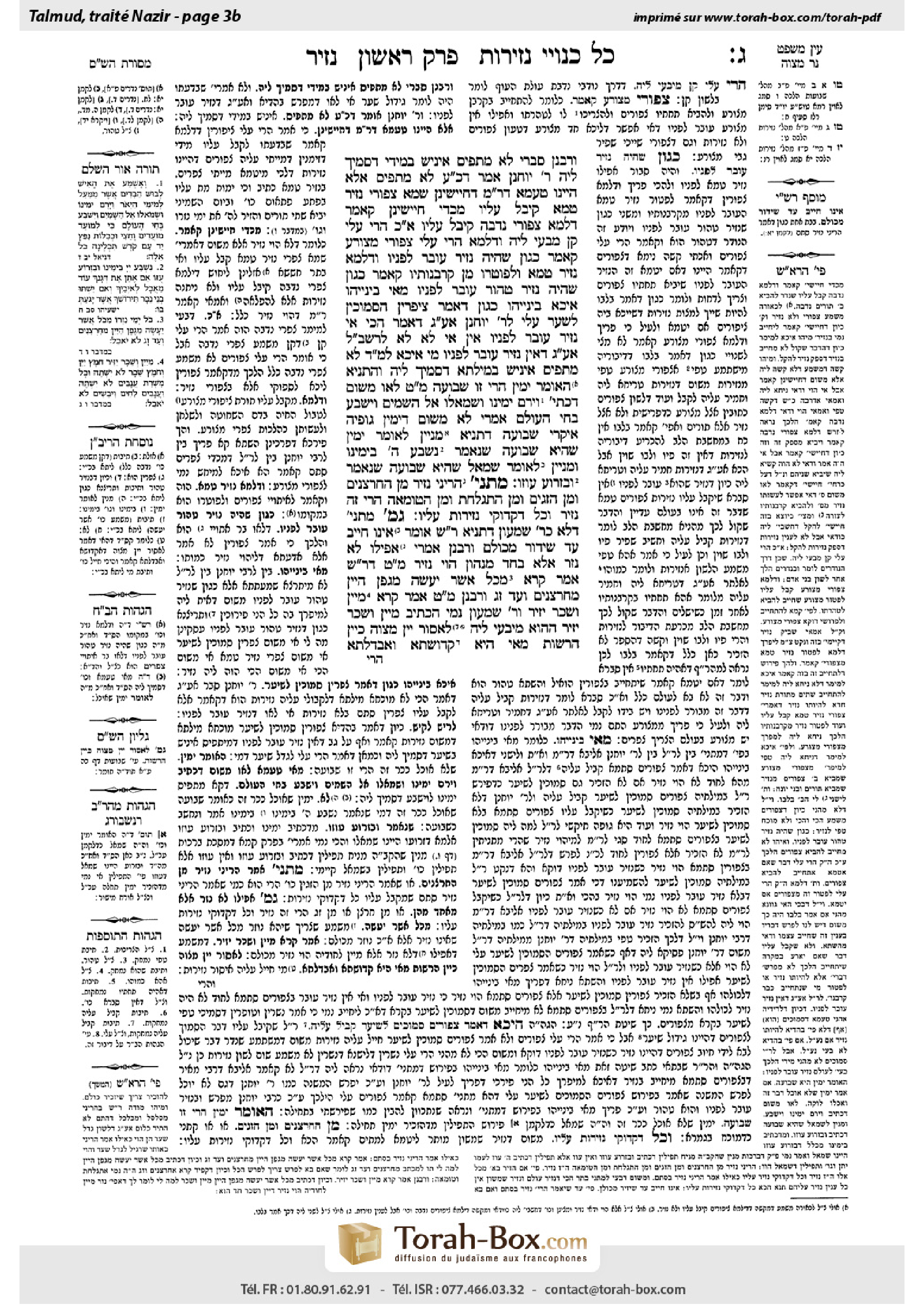
Nazir 3b: Talmud study for Daf Yomi
Daf Yomi is the daily study of one Talmud folio. Explore 37 tractates with scans, Hebrew text, Sefaria English and AI-generated French translations where annotated.
Passage selection and English or AI-generated French translation are available where the scan has annotations. Daf Study is independent of Torah-Box and Sefaria.
Browse Nazir · נזיר · All tractatesNazir 3b text and translations
This page of Nazir includes the Aramaic text, an English translation and an AI-generated French translation, alongside the scan above.
נזיר ג׳ ב · Aramaic and Hebrew text
וְרַבָּנַן סָבְרִי: לָא מַתְפֵּיס אִינִישׁ בְּמִידֵּי דִּסְמִיךְ לֵיהּ.
רַבִּי יוֹחָנָן אֲמַר: דְּכוּלֵּי עָלְמָא לָא מַתְפֵּיס. אֶלָּא, הַיְינוּ טַעְמָא דְּרַבִּי מֵאִיר: דְּחָיְישִׁינַן שֶׁמָּא צִפּוֹרֵי נָזִיר טָמֵא קִיבֵּל עָלָיו.
מִכְּדֵי ״חָיְישִׁינַן״ קָאָמַר, דִּלְמָא צִפּוֹרֵי נְדָבָה קִיבֵּל עָלָיו? אִם כֵּן, ״הֲרֵי עָלַי קֵן״ מִבְּעֵי לֵיהּ.
וְדִלְמָא ״הֲרֵי עָלַי צִפּוֹרֵי מְצוֹרָע״ קָאָמַר? כְּגוֹן שֶׁהָיָה נָזִיר עוֹבֵר לְפָנָיו. וְדִלְמָא נָזִיר טָמֵא, וּלְפוֹטְרוֹ מִן קׇרְבְּנוֹתָיו קָאָמַר?! כְּגוֹן שֶׁהָיָה נָזִיר טָהוֹר עוֹבֵר לְפָנָיו.
מַאי בֵּינַיְיהוּ?
אִיכָּא בֵּינַיְיהוּ כְּגוֹן דְּאָמַר ״צִיפֳּרִין הַסְּמוּכִין לְשֵׂעָר עָלַי״, לְרַבִּי יוֹחָנָן, אַף עַל גַּב דְּאָמַר הָכִי, אִי נָזִיר עוֹבֵר לְפָנָיו — אִין, אִי לָא — לָא. לְרַבִּי שִׁמְעוֹן בֶּן לָקִישׁ, אַף עַל גַּב דְּאֵין נָזִיר עוֹבֵר לְפָנָיו.
מִי אִיכָּא לְמַאן דְּאָמַר לָא מַתְפֵּיס אִינִישׁ בְּמִילְּתָא דִּסְמִיךְ לֵיהּ? וְהָתַנְיָא: הָאוֹמֵר ״יָמִין״ — הֲרֵי זוֹ שְׁבוּעָה. מַאי טַעְמָא, לָאו מִשּׁוּם דִּכְתִיב ״וַיָּרֶם יְמִינוֹ וּשְׂמֹאלוֹ אֶל הַשָּׁמַיִם וַיִּשָּׁבַע בְּחֵי הָעוֹלָם״?
אָמְרִי: לָא, מִשּׁוּם דְּיָמִין גּוּפֵיהּ אִיקְּרִי שְׁבוּעָה. דְּתַנְיָא: מִנַּיִין לָאוֹמֵר ״יָמִין״ שֶׁהִיא שְׁבוּעָה, שֶׁנֶּאֱמַר: ״נִשְׁבַּע ה׳ בִּימִינוֹ״, וּמִנַּיִין לָאוֹמֵר שְׂמֹאל שֶׁהִיא שְׁבוּעָה, שֶׁנֶּאֱמַר: ״וּבִזְרוֹעַ עוּזּוֹ״.
מַתְנִי׳ ״הֲרֵינִי נָזִיר מִן הַחַרְצַנִּים״ וּ״מִן הַזַּגִּים״ וּ״מִן הַתִּגְלַחַת״ וּ״מִן הַטּוּמְאָה״ — הֲרֵי זֶה נָזִיר, וְכׇל דִּקְדּוּקֵי נְזִירוּת עָלָיו.
גְּמָ׳ מַתְנִיתִין דְּלָא כְּרַבִּי שִׁמְעוֹן. דְּתַנְיָא, רַבִּי שִׁמְעוֹן אוֹמֵר: אֵינוֹ חַיָּיב עַד שֶׁיִּדּוֹר מִכּוּלָּם. וְרַבָּנַן אָמְרִי: אֲפִילּוּ לָא נְזַר אֶלָּא בְּחַד מִנְּהוֹן — הָוֵי נָזִיר.
מַאי טַעְמָא דְּרַבִּי שִׁמְעוֹן — אָמַר קְרָא: ״מִכֹּל אֲשֶׁר יֵעָשֶׂה מִגֶּפֶן הַיַּיִן מֵחַרְצַנִּים וְעַד זָג״. וְרַבָּנַן, מַאי טַעְמָא — אָמַר קְרָא: ״מִיַּיִן וְשֵׁכָר יַזִּיר״.
וְרַבִּי שִׁמְעוֹן נָמֵי, הָכְתִיב: ״מִיַּיִן וְשֵׁכָר יַזִּיר״! הַהוּא מִיבְּעֵי לֵיהּ — לֶאֱסוֹר יֵין מִצְוָה כְּיֵין הָרְשׁוּת.
מַאי הִיא — קִדּוּשְׁתָּא וְאַבְדָּלְתָּא?
Nazir 3b · English translation
And the Rabbis hold that a person does not associate the object of his vow with something that is juxtaposed to it in a verse, and the individual did not mean to take a nazirite vow.
Rabbi Yoḥanan said: Everyone agrees that one does not associate the object of his vow with something juxtaposed to it in a verse. Rather, this is the reason of Rabbi Meir: We are concerned that perhaps he accepted upon himself the birds of an impure nazirite. Since an impure nazirite must bring two birds as offerings if he inadvertently becomes impure from a corpse (Numbers 6:10), when the individual accepts upon himself an obligation pertaining to birds, he means that he is becoming a nazirite and will be responsible for bringing an offering of birds if he becomes impure.
The Gemara asks: Since Rabbi Yoḥanan said that, even according to Rabbi Meir, we are concerned that the individual intended to become a nazirite, but it is not clear that this was his intention, it can be argued that perhaps he accepted upon himself a gift offering of birds as a burnt-offering. Consequently, why is he considered a nazirite? The Gemara answers: If it was so, that his intention was to bring a gift offering, he should have said: It is hereby incumbent upon me to bring a nest, which is the common expression used to accept an obligation to bring a gift offering of birds.
The Gemara asks further: But perhaps he was saying: It is incumbent upon me to bring the birds of a leper, rendering himself liable to bring a leper’s offerings on a leper’s behalf (see Leviticus 14:4). The Gemara answers: This is a case where a nazirite was passing before him when he spoke, and he clearly had naziriteship in mind. The Gemara asks: But perhaps it was an impure nazirite, and he was saying that he accepts the obligation to exempt the nazirite from his offerings by sacrificing them on the nazirite’s behalf. The Gemara answers: This is a case where a pure nazirite was passing before him.
The Gemara asks: What is the difference between the opinions of Reish Lakish and Rabbi Yoḥanan? After all, according to both explanations it is necessary to say that this is a case where a nazirite was passing before him.
The Gemara answers: There is a practical difference between them in a case where he explicitly said: An obligation is hereby incumbent upon me with regard to the birds juxtaposed in the verse to hair. According to Rabbi Yoḥanan, although he said this, if a nazirite was passing before him, yes, Rabbi Meir considers it a nazirite vow; if not, no, it is not considered a nazirite vow. Conversely, according to Rabbi Shimon ben Lakish, although no nazirite was passing before him, Rabbi Meir considers it a nazirite vow, as he holds that according to Rabbi Meir, one associates the object of his vow with something juxtaposed to it in a verse.
The Gemara asks: Is there, in fact, anyone who says that a person does not associate the object of his vow with something juxtaposed to it in a verse? Isn’t it taught in a baraita that in the case of one who says: Right [yamin], that is an expression of an oath? What is the reason for this? Is it not because it is written: “When he lifted up his right hand and his left hand unto heaven, and swore by Him that lives forever” (Daniel 12:7)? It seems evident that the term “right” indicates an oath merely because in the verse it is juxtaposed to an oath.
The Gemara rejects this: Say no, it is because the right hand itself is called an oath, as it is taught in a baraita: From where is it derived that in the case of one who says: Right, that it is an oath? It is derived from the verse where it is stated: “The Lord has sworn by His right hand” (Isaiah 62:8). And from where is it derived that in the case of one who says: Left, that it is an oath? It is derived from the continuation of that verse, where it is stated: “And by the arm of His strength” (Isaiah 62:8). Since this is the complementary phrase for the right hand, it must refer to the left hand. It is clear from here that both right and left are themselves expressions of an oath and do not indicate an oath merely because they are juxtaposed in a verse to an expression of an oath.
MISHNA: If one said: I am hereby a nazirite and therefore will refrain from grape seeds, or: I am hereby a nazirite and therefore will refrain from grape skins, or: From shaving, or: From impurity, he is a nazirite. And all details of naziriteship are incumbent upon him. Not only does the prohibition he mentioned take effect, he is bound by all of the strictures of naziriteship.
GEMARA: The Gemara comments: The mishna is not in accordance with the opinion of Rabbi Shimon, as it is taught in a baraita that Rabbi Shimon says: One is not obligated as a nazirite until he vows that all items and actions forbidden to a nazirite are forbidden to him. And the Rabbis say: Even if he vowed to abstain from only one of them, he is a nazirite.
The Gemara explains: What is the reason for the opinion of Rabbi Shimon? The verse states with regard to a nazirite: “All the days of his naziriteship he shall not eat from anything that is made of the grapevine, from pits to grape skin” (Numbers 6:4), which indicates that his vow of naziriteship must include all the prohibitions of a nazirite. The Gemara continues to clarify: And according to the Rabbis, what is the reason that he becomes a nazirite even if he specified only one of the prohibitions of a nazirite? The verse states: “He shall abstain from wine and strong drink” (Numbers 6:3). This implies that even if one vows to abstain only from wine and strong drink, all of the halakhot of a nazirite take effect.
The Gemara asks: And also according to Rabbi Shimon, isn’t it written “he shall abstain from wine and strong drink”? The Gemara answers: Rabbi Shimon requires that verse to prohibit a nazirite from drinking wine that is consumed for a mitzva just as he is prohibited from drinking wine whose consumption is optional.
The Gemara asks: What is wine that is consumed for a mitzva? Is it the wine of kiddush and havdala?
Nazir 3b · Traduction française (IA)
Et les Sages soutiennent qu’une personne ne rattache pas l’objet de son vœu à un élément qui lui est juxtaposé dans un verset, et que cet individu n’avait pas l’intention de prononcer un vœu de naziréat.
Rabbi Yoḥanan dit : Tout le monde convient qu’on ne rattache pas l’objet de son vœu à un élément qui lui est juxtaposé dans un verset. Voici plutôt la raison de Rabbi Meir : nous craignons que l’individu ait peut-être assumé l’obligation relative aux oiseaux d’un nazir impur. En effet, un nazir impur doit apporter deux oiseaux comme offrandes s’il devient involontairement impur au contact d’un cadavre (Nombres 6,10). Ainsi, lorsque l’individu assume une obligation concernant des oiseaux, il veut dire qu’il devient nazir et qu’il sera tenu d’apporter une offrande d’oiseaux s’il devient impur.
La Guemara demande : Puisque Rabbi Yoḥanan a dit que, même selon Rabbi Meir, nous craignons que l’individu ait eu l’intention de devenir nazir, sans qu’il soit certain que telle était son intention, on peut soutenir qu’il avait peut-être assumé l’obligation d’apporter une offrande volontaire d’oiseaux comme holocauste. Pourquoi est-il donc considéré comme nazir ? La Guemara répond : Si tel était le cas, si son intention était d’apporter une offrande volontaire, il aurait dû dire : « Je m’engage à apporter un nid », expression couramment employée pour assumer l’obligation d’apporter une offrande volontaire d’oiseaux.
La Guemara demande encore : Mais peut-être disait-il : « Je m’engage à apporter les oiseaux d’un lépreux », se rendant ainsi responsable d’apporter les offrandes d’un lépreux en son nom (voir Lévitique 14,4). La Guemara répond : Il s’agit d’un cas où un nazir passait devant lui au moment où il a parlé, et où il pensait clairement au naziréat. La Guemara demande : Mais peut-être s’agissait-il d’un nazir impur, et disait-il qu’il assumait l’obligation de le décharger de ses offrandes en les sacrifiant en son nom ? La Guemara répond : Il s’agit d’un cas où un nazir pur passait devant lui.
La Guemara demande : Quelle différence y a-t-il entre les opinions de Reish Lakish et de Rabbi Yoḥanan ? Après tout, selon les deux explications, il faut dire qu’il s’agit d’un cas où un nazir passait devant lui.
La Guemara répond : Il existe entre eux une différence pratique dans le cas où il a dit explicitement : « Je m’engage à apporter les oiseaux juxtaposés au mot “cheveux” dans le verset. » Selon Rabbi Yoḥanan, même s’il a dit cela, si un nazir passait devant lui, alors oui, Rabbi Meir considère qu’il s’agit d’un vœu de naziréat ; sinon, non, cela n’est pas considéré comme un vœu de naziréat. À l’inverse, selon Rabbi Shimon ben Lakish, même si aucun nazir ne passait devant lui, Rabbi Meir considère qu’il s’agit d’un vœu de naziréat, car, selon lui, Rabbi Meir estime qu’on rattache l’objet de son vœu à un élément qui lui est juxtaposé dans un verset.
La Guemara demande : Existe-t-il vraiment quelqu’un qui affirme qu’une personne ne rattache pas l’objet de son vœu à un élément qui lui est juxtaposé dans un verset ? N’est-il pas enseigné dans une baraïta que, dans le cas de celui qui dit : « Droite » [yamin], cette expression constitue une formule de serment ? Pour quelle raison ? N’est-ce pas parce qu’il est écrit : « Lorsqu’il leva vers le ciel sa main droite et sa main gauche, et jura par Celui qui vit éternellement » (Daniel 12,7) ? Il semble évident que le terme « droite » indique un serment uniquement parce que, dans le verset, il est juxtaposé à un serment.
La Guemara rejette cette interprétation : Dis plutôt que c’est parce que la main droite elle-même est appelée serment, comme il est enseigné dans une baraïta : D’où déduit-on que celui qui dit : « Droite » prononce un serment ? On le déduit du verset où il est dit : « Le Seigneur a juré par sa droite » (Isaïe 62,8). Et d’où déduit-on que celui qui dit : « Gauche » prononce un serment ? On le déduit de la suite de ce verset, où il est dit : « Et par le bras de sa force » (Isaïe 62,8). Puisque cette expression complète celle de la main droite, elle doit désigner la main gauche. Il ressort clairement de là que « droite » et « gauche » sont elles-mêmes des expressions de serment et qu’elles n’indiquent pas un serment uniquement parce qu’elles sont juxtaposées, dans un verset, à une expression de serment.
MICHNA : Si quelqu’un a dit : « Me voici nazir, et par conséquent je m’abstiendrai des pépins de raisin », ou : « Me voici nazir, et par conséquent je m’abstiendrai des peaux de raisin », ou : « du rasage », ou : « de l’impureté », il est nazir. Toutes les règles du naziréat s’imposent à lui. Non seulement l’interdiction qu’il a mentionnée prend effet, mais il est également soumis à toutes les restrictions du naziréat.
GUEMARA : La Guemara fait remarquer que la Michna ne suit pas l’opinion de Rabbi Shimon, car il est enseigné dans une baraïta que Rabbi Shimon dit : On n’est soumis aux obligations du naziréat que lorsqu’on fait le vœu que tous les éléments et tous les actes interdits à un nazir le soient pour soi. Et les Sages disent : Même si l’on a fait le vœu de s’abstenir d’un seul de ces éléments, on est nazir.
La Guemara explique : Quelle est la raison de l’opinion de Rabbi Shimon ? Le verset dit au sujet d’un nazir : « Tous les jours de son naziréat, il ne mangera rien de ce qui provient de la vigne, depuis les pépins jusqu’à la peau du raisin » (Nombres 6,4), ce qui indique que son vœu de naziréat doit inclure toutes les interdictions applicables à un nazir. La Guemara poursuit : Et selon les Sages, quelle est la raison pour laquelle on devient nazir même si l’on n’a mentionné qu’une seule des interdictions applicables à un nazir ? Le verset dit : « Il s’abstiendra de vin et de boisson forte » (Nombres 6,3). Cela implique que même si l’on fait le vœu de s’abstenir uniquement de vin et de boisson forte, toutes les halakhot du nazir s’appliquent.
La Guemara demande : Et selon Rabbi Shimon aussi, n’est-il pas écrit : « Il s’abstiendra de vin et de boisson forte » ? La Guemara répond : Rabbi Shimon a besoin de ce verset pour interdire au nazir de boire du vin consommé pour une mitsva, tout comme il lui est interdit de boire du vin dont la consommation est facultative.
La Guemara demande : Quel est le vin consommé pour une mitsva ? S’agit-il du vin du kiddouch et de la havdala ?
Traduction française générée par IA à partir de l’édition anglaise de Sefaria. Vérifie toujours un passage avec le texte source.
Text from Sefaria: William Davidson Edition - Vocalized Aramaic (CC BY NC); William Davidson Edition - English (CC BY NC).