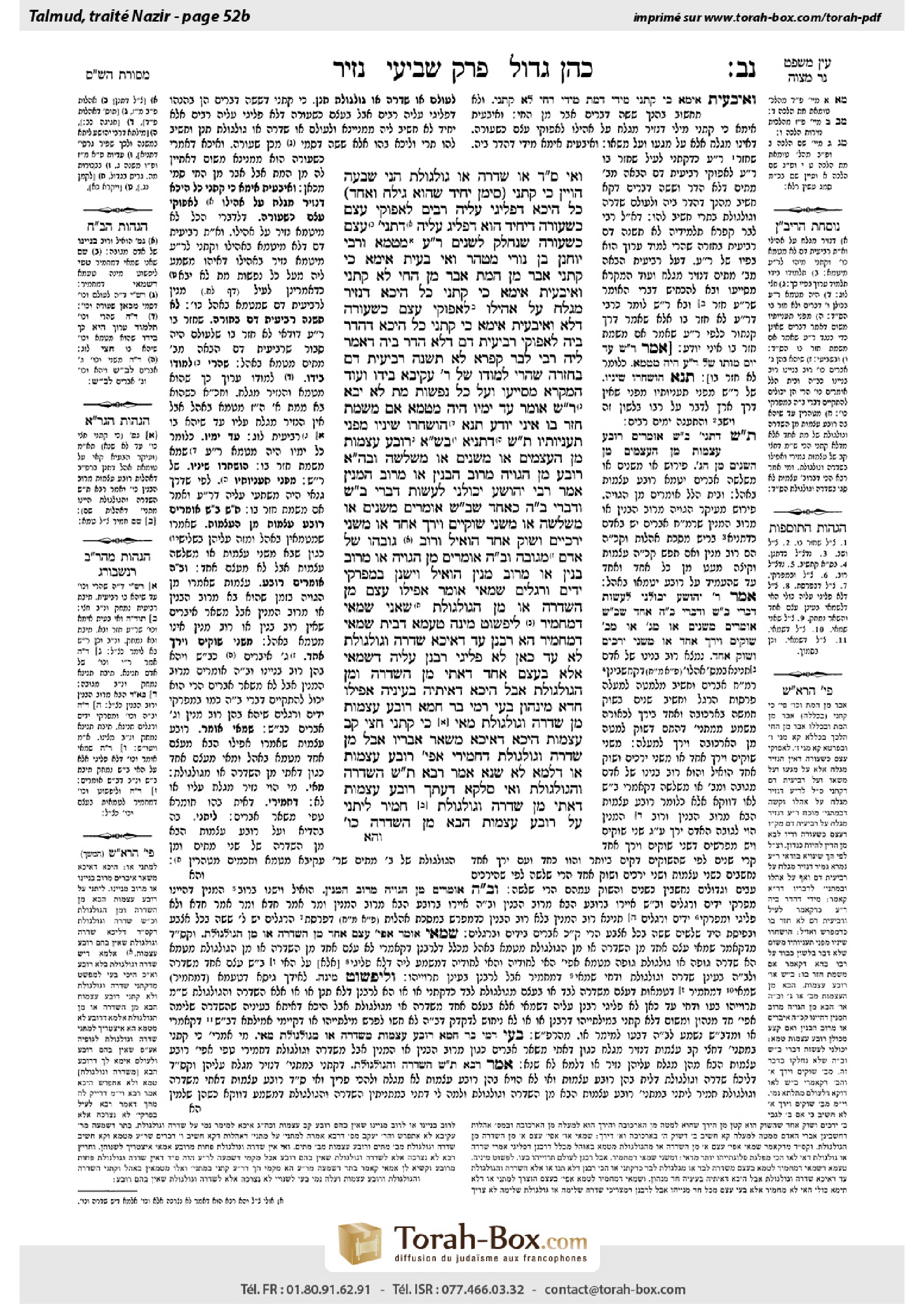
Nazir 52b: Talmud study for Daf Yomi
Daf Yomi is the daily study of one Talmud folio. Explore 37 tractates with scans, Hebrew text, Sefaria English and AI-generated French translations where annotated.
Passage selection and English or AI-generated French translation are available where the scan has annotations. Daf Study is independent of Torah-Box and Sefaria.
Browse Nazir · נזיר · All tractatesNazir 52b text and translations
This page of Nazir includes the Aramaic text, an English translation and an AI-generated French translation, alongside the scan above.
נזיר נ״ב ב · Aramaic and Hebrew text
וְאִי סָלְקָא דַּעְתָּךְ אוֹ שִׁדְרָה אוֹ גוּלְגּוֹלֶת, הָנֵי שִׁבְעָה הָוְיָין! כִּי קָתָנֵי (סִימָן: יָחִיד, שֶׁהוּא, גִּילַּח, וְאֶחָד) —
כׇּל הֵיכָא דִּפְלִיגִי עֲלֵיהּ רַבִּים. לְאַפּוֹקֵי עֶצֶם כִּשְׂעוֹרָה, דְּיָחִיד הוּא דִּפְלִיג עֲלֵיהּ. דְּתַנְיָא: עֶצֶם כִּשְׂעוֹרָה שֶׁנֶּחְלַק לִשְׁנַיִם, רַבִּי עֲקִיבָא מְטַמֵּא וְרַבִּי יוֹחָנָן בֶּן נוּרִי מְטַהֵר.
וְאִי בָּעֵית אֵימָא: כִּי קָתָנֵי, אֵבֶר מִן הַמֵּת, אֵבֶר מִן הַחַי לָא קָתָנֵי.
וְאִיבָּעֵית אֵימָא: כִּי קָתָנֵי, כׇּל הֵיכָא דְּנָזִיר מְגַלֵּחַ עַל אֲהִילוֹ, לְאַפּוֹקֵי עֶצֶם כִּשְׂעוֹרָה דְּלָא.
וְאִיבָּעֵית אֵימָא: כִּי קָתָנֵי, כׇּל הֵיכָא דַּהֲדַר בֵּיהּ, לְאַפּוֹקֵי רְבִיעִית דָּם דְּלָא הֲדַר בֵּיהּ. דַּאֲמַר לֵיהּ רַבִּי לְבַר קַפָּרָא: לֹא תִּשְׁנֶה רְבִיעִית דָּם בַּחֲזָרָה, שֶׁהֲרֵי לִמּוּדוֹ שֶׁל רַבִּי עֲקִיבָא בְּיָדוֹ.
וְעוֹד, הַמִּקְרָא מְסַיְּיעוֹ: ״וְעַל כׇּל נַפְשׁוֹת מֵת לֹא יָבֹא״. רַבִּי שִׁמְעוֹן אוֹמֵר: עַד יָמָיו הָיָה מְטַמֵּא, אִם מִשֶּׁמֵּת חָזַר בּוֹ — אֵינִי יוֹדֵעַ. תָּנָא: הוּשְׁחֲרוּ שִׁינָּיו מִפְּנֵי תַּעֲנִיּוֹתָיו.
תָּא שְׁמַע דְּתַנְיָא, בֵּית שַׁמַּאי אוֹמְרִים: רוֹבַע עֲצָמוֹת — מִן הָעֲצָמִים אוֹ מִשְּׁנַיִם אוֹ מִשְּׁלֹשָׁה. וּבֵית הִלֵּל אוֹמְרִים: רוֹבַע מִן הַגְּוִיָּה, מֵרוֹב הַבִּנְיָן אוֹ מֵרוֹב הַמִּנְיָן. אָמַר רַבִּי יְהוֹשֻׁעַ: יָכוֹלְנִי לַעֲשׂוֹת דִּבְרֵי בֵּית שַׁמַּאי וְדִבְרֵי בֵּית הִלֵּל כְּאֶחָד.
שֶׁבֵּית שַׁמַּאי אוֹמְרִים: מִשְּׁנַיִם אוֹ מִשְּׁלֹשָׁה — אוֹ מִשְּׁנֵי שׁוֹקַיִים וְיָרֵךְ אֶחָד, אוֹ מִשְּׁנֵי יְרֵכַיִים וְשׁוֹק אֶחָד, הוֹאִיל וְרוֹב גּוֹבְהוֹ שֶׁל אָדָם מִגּוֹבַהּ. וּבֵית הִלֵּל אוֹמְרִים: מִן הַגְּוִיָּה אוֹ מֵרוֹב בִּנְיָן, אוֹ מֵרוֹב מִנְיָן — הוֹאִיל וְיֶשְׁנָן בְּמִפְרְקֵי יָדַיִם וְרַגְלַיִם. שַׁמַּאי אוֹמֵר: אֲפִילּוּ עֶצֶם מִן הַשִּׁדְרָה אוֹ מִן הַגּוּלְגּוֹלֶת.
שָׁאנֵי שַׁמַּאי דְּמַחְמִיר. לִיפְשׁוֹט מִינַּהּ: טַעְמָא דְּבֵית שַׁמַּאי דְּמַחְמִיר, הָא רַבָּנַן עַד דְּאִיכָּא שִׁדְרָה וְגוּלְגּוֹלֶת! לָא, עַד כָּאן לָא פְּלִיגִי רַבָּנַן עֲלֵיהּ דְּשַׁמַּאי אֶלָּא בְּעֶצֶם אֶחָד דְּאָתֵי מִן הַשִּׁדְרָה וּמִן הַגּוּלְגּוֹלֶת, אֲבָל הֵיכָא דְּאִיתֵיהּ בְּעֵינֵיהּ, אֲפִילּוּ חֲדָא מִינְּהוֹן.
בְּעַי רָמֵי בַּר חָמָא: רוֹבַע עֲצָמוֹת מִן שִׁדְרָה וְגוּלְגּוֹלֶת, מַאי? כִּי קָתָנֵי חֲצִי קַב עֲצָמוֹת — הֵיכָא דְּאִיכָּא מִשְּׁאָר אֵבָרָיו, אֲבָל מִן שִׁדְרָה וְגוּלְגּוֹלֶת דַּחֲמִירִי — אֲפִילּוּ רוֹבַע עֲצָמוֹת. אוֹ דִלְמָא לָא שְׁנָא?
אָמַר רָבָא, תָּא שְׁמַע: הַשִּׁדְרָה וְהַגּוּלְגּוֹלֶת. וְאִי סָלְקָא דַעְתָּךְ רוֹבַע עֲצָמוֹת דְּאָתֵי מִן שִׁדְרָה וְגוּלְגּוֹלֶת חֲמִיר — לִיתְנֵי: עַל רוֹבַע עֲצָמוֹת הַבָּא מִן הַשִּׁדְרָה כּוּ׳!
Nazir 52b · English translation
And if it enters your mind that the halakha applies to either a spine or a skull and they are two separate halakhot, these are seven cases, rather than six. The Gemara rejects this claim: No proof can be brought from here, as when the tanna teaches this tally he lists seven items. However, only six are fully relevant here, and therefore he said they were six. The Gemara inserts a mnemonic device for the ensuing suggestions as to which item in the list is not necessary in this context: An individual disagrees with him; that he; a nazirite shaves for it; and one quarter-log.
The first explanation is: Rabbi Akiva listed the spine and skull as separate items, but the six include anywhere that many Sages disagree with him, to the exclusion of the case of a bone that is a barley-grain-bulk, as here it is an individual who disagrees with Rabbi Akiva, as it is taught in a mishna (Oholot 2:7): If a bone that is a barley-grain-bulk was divided into two, Rabbi Akiva deems it impure and Rabbi Yoḥanan ben Nuri deems it pure. In this case, only one Sage disagrees with Rabbi Akiva.
And if you wish, say a different item on the list that is omitted from the tally: When he teaches six, he includes a limb severed from a corpse, but he does not teach a limb severed from a living person, and that was the case that was not listed.
And if you wish, say a different item on the list that is omitted from the tally: When he teaches six, he mentions anywhere that a nazirite shaves for his overlaying, i.e., he formed a tent over the remains of a corpse, to the exclusion of the case of a bone that is a barley-grain-bulk, as it does not impart ritual impurity in a tent. As stated in the mishna, this bone imparts impurity only through contact and carrying.
And if you wish, say a different item on the list that is omitted from the tally: When he teaches six, he lists anywhere that Rabbi Akiva retracted his opinion, to the exclusion of a quarter-log of blood, as he did not retract his opinion in that case, as Rabbi Yehuda HaNasi said to bar Kappara: Do not teach a quarter-log of blood in the list of Rabbi Akiva’s retractions, as Rabbi Akiva held onto his opinion in this regard.
And furthermore, the verse supports his opinion, as it states: “Neither shall he go in to any dead bodies” (Leviticus 21:11). The plural form “bodies” indicates that two corpses can join together, as stated by Rabbi Akiva. Similarly, Rabbi Shimon says: All his days, Rabbi Akiva would deem a quarter-log of blood from two corpses ritually impure. Whether he retracted his opinion after he died, this I do not know. A Sage taught: Rabbi Shimon’s teeth blackened due to his fasts, which he undertook for uttering this irreverent comment about Rabbi Akiva.
§ The Gemara returns to the earlier discussion. Come and hear an answer to the question of whether a spine and skull must be together to impart ritual impurity, as it is taught in a mishna (Eduyyot 1:7) that Beit Shammai say: The quarter-kav of bones, which imparts impurity in a tent, can be from several bones [ha’atzamim] or from two or from three bones, but they cannot be from one bone. And Beit Hillel say: The quarter-kav of bones must come from the same body, either from the majority of the structure of the skeleton or from the majority of the number of 248 bones in the body. Rabbi Yehoshua said: I can establish the statement of Beit Shammai and the statement of Beit Hillel as one. In other words, I can explain their opinions so that there is no dispute between them.
How so? As when Beit Shammai say: From two or three bones, they mean either from two shins and one thigh, or from two thighs and one shin. Since the majority of a person’s height is contained in the height of these limbs, they are considered the majority of the structure of the body. And Beit Hillel say: Parts from the body, or from the majority of the structure, or from the majority of the number of bones, since they include the joints of the hands and feet, which comprise many small bones, impart impurity. Shammai says: Even a bone from the spine or from the skull imparts impurity. In this source, Shammai explicitly refers to a spine or a skull.
The Gemara rejects this proof: One cannot establish a general halakha from this source, for Shammai is different, as he is invariably stringent, whereas the Rabbis might disagree. The Gemara inquires: If so, let us resolve the opposite from this baraita: The reason that Shammai spoke of a spine or a skull is that Beit Shammai are stringent, from which it may be inferred that according to the Rabbis a spine and skull are not ritually impure unless both a spine and skull are present. The Gemara rejects this proof too: No, the Rabbis disagree with Shammai only with regard to one bone that comes from the spine or from the skull, but when it is intact, even if the bone is from one of them, either the spine or the skull, they possibly agree that it imparts impurity.
§ Rami bar Ḥama raised a dilemma: With regard to a quarter-kav of bones from a spine and a skull, what is the halakha? Does a nazirite shave for them? The Gemara explains the two sides of the dilemma: When the mishna teaches that one shaves for a half-kav of bones, does this apply only when they are from his other limbs, but in the case of bones from the spine and skull, which are stringent, as they impart ritual impurity on their own, even a quarter-kav of bones imparts impurity? Or perhaps it is no different.
Rava said: Come and hear a resolution from the mishna, which teaches: The spine and the skull. And if it enters your mind that a quarter-kav of bones that come from a spine and skull is more stringent than other limbs and imparts ritual impurity, let the tanna teach this halakha in a manner that presents a greater novelty, by stating: For a quarter-kav of bones that come from the spine and the skull.
Nazir 52b · Traduction française (IA)
Et si tu penses que la halakha s’applique soit à la colonne vertébrale, soit au crâne, et qu’il s’agit de deux halakhot distinctes, cela ferait sept cas et non six. La Guemara rejette cette affirmation : on ne peut en tirer aucune preuve, car, lorsqu’il énonce ce décompte, le tanna énumère sept éléments. Toutefois, seuls six sont pleinement pertinents ici, et c’est pourquoi il a dit qu’ils étaient six. La Guemara introduit un moyen mnémotechnique pour les hypothèses qui suivent concernant l’élément de la liste qui n’est pas nécessaire dans ce contexte : un individu est en désaccord avec lui ; celui-ci ; un nazir se rase pour ce cas ; et un quart de log.
La première explication est la suivante : Rabbi Akiva a compté la colonne vertébrale et le crâne comme deux éléments distincts, mais le décompte des six comprend les cas où plusieurs Sages sont en désaccord avec lui, à l’exception du cas d’un os de la taille d’un grain d’orge, car ici, c’est un seul Sage qui est en désaccord avec Rabbi Akiva. En effet, il est enseigné dans une Michna (Oholot 2:7) : « Si un os de la taille d’un grain d’orge est divisé en deux, Rabbi Akiva le déclare impur, tandis que Rabbi Yoḥanan ben Nuri le déclare pur. » Dans ce cas, un seul Sage est en désaccord avec Rabbi Akiva.
Et si tu le souhaites, on peut proposer un autre élément de la liste qui n’est pas compris dans le décompte : lorsqu’il énumère six cas, il inclut un membre détaché d’un cadavre, mais ne mentionne pas un membre détaché d’une personne vivante ; c’est ce cas qui n’a pas été énuméré.
Et si tu le souhaites, on peut proposer un autre élément de la liste qui n’est pas compris dans le décompte : lorsqu’il énumère six cas, il mentionne tous les cas où un nazir se rase parce qu’il a formé une tente au-dessus des restes d’un cadavre, à l’exception du cas d’un os de la taille d’un grain d’orge, car celui-ci ne transmet pas l’impureté rituelle sous une tente. Comme l’enseigne la Michna, cet os ne transmet l’impureté que par contact et par portage.
Et si tu le souhaites, on peut proposer un autre élément de la liste qui n’est pas compris dans le décompte : lorsqu’il énumère six cas, il mentionne tous les cas où Rabbi Akiva a rétracté son opinion ; le quart de log de sang est exclu, car Rabbi Akiva n’a pas rétracté son opinion dans ce cas. En effet, Rabbi Yehuda HaNasi a dit à bar Kappara : « N’enseigne pas le quart de log de sang dans la liste des rétractations de Rabbi Akiva, car Rabbi Akiva a maintenu son opinion à ce sujet. »
De plus, le verset vient à l’appui de son opinion, puisqu’il est écrit : « Il ne s’approchera d’aucun corps mort » (Lévitique 21:11). La forme plurielle « corps morts » indique que deux cadavres peuvent s’associer, comme l’a affirmé Rabbi Akiva. De même, Rabbi Shimon dit : « Toute sa vie, Rabbi Akiva a considéré comme rituellement impur un quart de log de sang provenant de deux cadavres. Quant à savoir s’il a rétracté son opinion avant sa mort, je l’ignore. » Un Sage enseigna : les dents de Rabbi Shimon noircirent à cause des jeûnes qu’il entreprit pour avoir tenu cette remarque irrévérencieuse au sujet de Rabbi Akiva.
§ La Guemara revient à la discussion précédente. Viens et entends une réponse à la question de savoir si une colonne vertébrale et un crâne doivent être réunis pour transmettre l’impureté rituelle. En effet, il est enseigné dans une Michna (Eduyyot 1:7) que Beit Shammaï disent : « Le quart de kav d’ossements, qui transmet l’impureté sous une tente, peut provenir de plusieurs os [ha’atzamim], de deux ou de trois os, mais pas d’un seul os. » Et Beit Hillel disent : « Le quart de kav d’ossements doit provenir d’un même corps, soit de la majorité de la structure du squelette, soit de la majorité des 248 os du corps. » Rabbi Yehoshua dit : « Je peux concilier la déclaration de Beit Shammaï et celle de Beit Hillel. » Autrement dit, je peux expliquer leurs opinions de manière à montrer qu’il n’y a pas de désaccord entre eux.
Comment cela ? Lorsque Beit Shammaï disent : « De deux ou trois os », ils veulent dire : soit de deux tibias et d’un fémur, soit de deux fémurs et d’un tibia. Puisque ces membres représentent la majorité de la taille d’une personne, ils constituent la majorité de la structure du corps. Et Beit Hillel disent que des parties du corps, ou la majorité de sa structure, ou la majorité du nombre de ses os transmettent l’impureté, puisque les articulations des mains et des pieds comprennent de nombreux petits os. Shammaï dit : « Même un os de la colonne vertébrale ou du crâne transmet l’impureté. » Dans cette source, Shammaï mentionne explicitement une colonne vertébrale ou un crâne.
La Guemara rejette cette preuve : on ne peut pas établir une halakha générale à partir de cette source, car le cas de Shammaï est différent : il se montre toujours plus strict, tandis que les Rabbins pourraient être en désaccord avec lui. La Guemara demande : si tel est le cas, déduisons l’inverse de cette baraïta : si Shammaï a parlé d’une colonne vertébrale ou d’un crâne, c’est parce que Beit Shammaï se montrent stricts ; on peut en déduire que, selon les Rabbins, une colonne vertébrale et un crâne ne transmettent l’impureté rituelle que si les deux sont présents. La Guemara rejette également cette preuve : non, les Rabbins ne sont en désaccord avec Shammaï qu’au sujet d’un os provenant de la colonne vertébrale ou du crâne ; mais lorsque l’os est intact, même s’il provient de l’un des deux, soit de la colonne vertébrale, soit du crâne, ils sont peut-être d’accord qu’il transmet l’impureté.
§ Rami bar Ḥama souleva une question : quelle est la halakha concernant un quart de kav d’ossements provenant d’une colonne vertébrale et d’un crâne ? Un nazir doit-il se raser à cause d’eux ? La Guemara expose les deux possibilités : lorsque la Michna enseigne qu’un nazir se rase pour un demi-kav d’ossements, cela ne s’applique-t-il que lorsque les os proviennent d’autres parties du corps, tandis que, dans le cas d’ossements provenant de la colonne vertébrale et du crâne, qui sont plus sévères puisqu’ils transmettent à eux seuls l’impureté rituelle, même un quart de kav d’ossements transmettrait l’impureté ? Ou bien n’y a-t-il pas de différence ?
Rava dit : « Viens et entends la réponse tirée de la Michna, qui enseigne : “La colonne vertébrale et le crâne.” » Et si tu penses qu’un quart de kav d’ossements provenant d’une colonne vertébrale et d’un crâne est plus sévère que des os provenant d’autres parties du corps et transmet l’impureté rituelle, que le tanna enseigne cette halakha sous une forme plus novatrice, en disant : « Pour un quart de kav d’ossements provenant de la colonne vertébrale et du crâne. »
Traduction française générée par IA à partir de l’édition anglaise de Sefaria. Vérifie toujours un passage avec le texte source.
Text from Sefaria: William Davidson Edition - Vocalized Aramaic (CC BY NC); William Davidson Edition - English (CC BY NC).