Nedarim 91b: Talmud study for Daf Yomi
Daf Yomi is the daily study of one Talmud folio. Explore 37 tractates with scans, Hebrew text, Sefaria English and AI-generated French translations where annotated.
Passage selection and English or AI-generated French translation are available where the scan has annotations. Daf Study is independent of Torah-Box and Sefaria.
Browse Nedarim · נדרים · All tractatesNedarim 91b text and translations
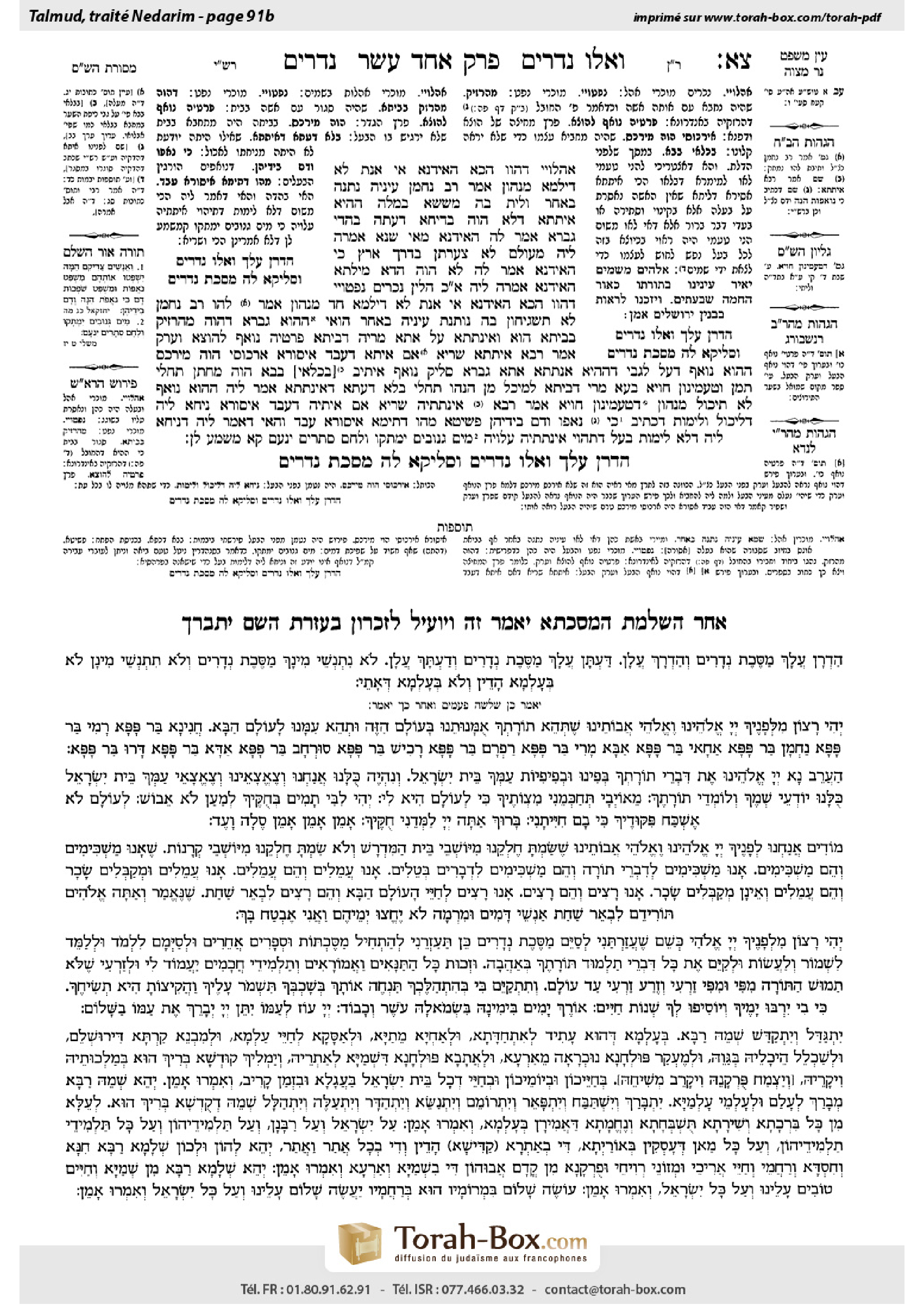
This page of Nedarim includes the Aramaic text, an English translation and an AI-generated French translation, alongside the scan above.
נדרים צ״א ב · Aramaic and Hebrew text
אַהֲלוֹיֵי דַּהֲווֹ הָכָא הָאִידָּנָא, אִי אַנְתְּ לָא — דִּלְמָא מִנְּהוֹן. אָמַר רַב נַחְמָן: עֵינֶיהָ נָתְנָה בְּאַחֵר, וְלֵית בַּהּ מְשָׁשָׁא בְּמִלַּהּ.
הָהִיא אִיתְּתָא דְּלָא הֲוָה בְּדִיחָא דַּעְתַּהּ בַּהֲדֵי גַּבְרָא. אֲמַר לַהּ: הָאִידָּנָא מַאי שְׁנָא? אֲמַרָה לֵיהּ: מֵעוֹלָם לָא צַעַרְתַּן בְּדֶרֶךְ אֶרֶץ כִּי הָאִידָּנָא. אֲמַר לַהּ: לָא הֲוָה הָדָא מִילְּתָא הָאִידָּנָא. אֲמַרָה לֵיהּ: אִם כֵּן הָלֵין נׇכְרִים נַפְטוֹיֵי דַּהֲווֹ הָכָא הָאִידָּנָא, אִי אַנְתְּ לָא — דִּלְמָא חַד מִנְּהוֹן. אֲמַר לְהוּ רַב נַחְמָן: לָא תַּשְׁגִּיחוּן בַּהּ, נוֹתֶנֶת עֵינֶיהָ בְּאַחֵר הֲוַאי.
הָהוּא גַּבְרָא דַּהֲוָה מִהַרְזִיק בְּבֵיתָא הוּא וְאִינְתְּתָא. עָל אֲתָא מָרֵיהּ דְּבֵיתָא, פַּרְטֵיהּ נוֹאֵף לְהוּצָא וַעֲרַק. אָמַר רָבָא: אִיתְּתָא שַׁרְיָא. אִם אִיתָא דַּעֲבַד אִיסּוּרָא — אִרְכוֹסֵי הֲוָה מִירְכַס.
הָהוּא נוֹאֵף דְּעָל לְגַבֵּי דְּהָהִיא אִנְתְּתָא, אֲתָא גַּבְרָא, סְלֵיק נוֹאֵף אִיתִּיב [בִּכְלָאֵי] בָּבָא. הֲוָה מַחֲתָן תַּחְלֵי תַּמָּן וְטַעְמִינּוּן חִוְיָא. בְּעָא מָרֵי דְבֵיתָא לְמֵיכַל מִן הָנְהוּ תַּחְלֵי בְּלָא דַּעְתָּא דְּאִינְתְּתָא, אֲמַר לֵיהּ הָהוּא נוֹאֵף: לָא תֵּיכוּל מִנְּהוֹן דְּטַעְמִינּוּן חִוְיָא.
אָמַר רָבָא: אִינְתְּתֵיהּ שַׁרְיָא, אִם אִיתֵיהּ דַּעֲבַד אִיסּוּרָא, נִיחָא לֵיהּ דְּלֵיכוֹל וְלֵימוּת, דִּכְתִיב: ״כִּי נִאֵפוּ וְדָם בִּידֵיהֶן״.
פְּשִׁיטָא! מַהוּ דְּתֵימָא: אִיסּוּרָא עֲבַד, וְהַאי דַּאֲמַר לֵיהּ דְּנִיחָא לֵיהּ דְּלָא לֵימוּת בַּעַל, דְּתֶהְוֵי אִינְתְּתֵיהּ עִלָּוֵיהּ ״מַיִם גְּנוּבִים יִמְתָּקוּ וְלֶחֶם סְתָרִים יִנְעָם״, קָא מַשְׁמַע לַן.
הַדְרָן עֲלָךְ וְאֵלּוּ נְדָרִים וּסְלִיקָא לַהּ מַסֶּכֶת נְדָרִים
Nedarim 91b · English translation
aloe merchants [ahaloyei] who were here just now should be blamed; if it was not you, perhaps it was one of them. The case came before Rav Naḥman, who said: There is reason to suspect that she might have cast her eyes upon another man, and therefore there is no substance to her words. She lacks credibility and her statement is unreliable, and so she remains permitted to her husband.
It is further related that there was a certain woman who was displeased with her man. He said to her: What is different now? What have I done to make you angry? She said to him: I am upset because you never hurt me while we were engaged in proper relations as you did just now. He said to her: This matter did not occur now. She said to him: If so, it may be that one of the gentile oil merchants [naftoyei] who were here just now should be blamed; if it was not you, perhaps it was one of them. Rav Naḥman said to them: Take no notice of her; she has cast her eyes upon another man, and her words are therefore unreliable.
The Gemara relates another incident about a certain man who was secluding himself [meharzeik] in a house, he and a certain married woman. When the owner of the house entered, the adulterer burst through the wall of palm branches and fled. Rava said: The woman is permitted to her husband. The assumption is that she did not sin, for if it is so that the man had committed a transgression, he would have hidden himself in the house instead of revealing his identity by escaping in the open.
The Gemara concludes with one final incident about a certain adulterer who entered the house of a certain married woman. When the man, i.e., her husband, came home, the adulterer went and sat himself behind the door, so that the husband would not know that he was there. There was some cress [taḥlei] lying there in the house, and the adulterer, but not the husband, saw that a snake had come and tasted of it, perhaps thereby contaminating it with its venom. The master of the house wanted to eat from that cress, without the woman’s knowledge. The adulterer said to him: Do not eat from the cress, as a snake has tasted of it.
The case was brought before Rava, who said: His wife is permitted to him, for were it so that the adulterer had committed a transgression, it would have been preferable for him that the husband should eat the cress and die. This is because one who commits adultery is also suspected of bloodshed, as it is written: “For they have committed adultery and blood is on their hands” (Ezekiel 23:37), indicating that adultery leads to murder.
The Gemara comments: It is obvious that this is the case. What then does Rava come to teach us? The Gemara answers: Rava’s ruling is necessary, lest you say that the man did in fact commit a transgression with the other man’s wife, and the reason that he said to the husband that he should not eat and saved his life is because it is preferable for him that the husband should not die. This is in order that his wife should be to him as it says in the verse: “Stolen waters are sweet, and bread eaten in secret is pleasant” (Proverbs 9:17). That is to say, a person derives greater pleasure from forbidden fruit. Rava therefore teaches us that this is not a concern. Rather, the assumption is that he had not yet actually sinned and therefore acted in the proper manner.
Nedarim 91b · Traduction française (IA)
Il faut accuser les marchands d’aloès [ahaloyei] qui étaient ici il y a un instant ; si ce n’était pas toi, c’était peut-être l’un d’eux. L’affaire fut portée devant Rav Naḥman, qui dit : Il y a lieu de soupçonner qu’elle a peut-être jeté son dévolu sur un autre homme ; ses paroles sont donc sans fondement. Elle n’est pas crédible et sa déclaration n’est pas fiable ; elle reste donc autorisée à son mari.
On rapporte également qu’une certaine femme était mécontente de son mari. Il lui dit : Qu’est-ce qui est différent maintenant ? Qu’ai-je fait pour te mettre en colère ? Elle lui répondit : Je suis contrariée parce que, lorsque nous avions des rapports convenables, tu ne m’as jamais fait mal comme tu viens de le faire. Il lui dit : Cela ne s’est pas produit maintenant. Elle lui répondit : Dans ce cas, il faut peut-être accuser l’un des marchands d’huile non juifs [naftoyei] qui étaient ici il y a un instant ; si ce n’était pas toi, c’était peut-être l’un d’eux. Rav Naḥman leur dit : Ne prêtez pas attention à elle ; elle a jeté son dévolu sur un autre homme, et ses paroles ne sont donc pas fiables.
La Guemara rapporte un autre incident concernant un homme qui se trouvait seul [meharzeik] dans une maison avec une femme mariée. Lorsque le propriétaire de la maison entra, l’amant traversa le mur de branches de palmier et s’enfuit. Rava dit : La femme est autorisée à son mari. On présume qu’elle n’a pas péché, car si l’homme avait commis une transgression, il se serait caché dans la maison au lieu de révéler son identité en s’enfuyant au grand jour.
La Guemara conclut par un dernier incident, au sujet d’un certain amant qui entra dans la maison d’une femme mariée. Lorsque l’homme, c’est-à-dire son mari, rentra chez lui, l’amant alla s’asseoir derrière la porte afin que le mari ne sache pas qu’il était là. Il y avait du cresson [taḥlei] dans la maison ; l’amant, mais non le mari, vit qu’un serpent était venu y goûter, et l’avait peut-être ainsi contaminé avec son venin. Le maître de maison voulut manger de ce cresson à l’insu de sa femme. L’amant lui dit : Ne mange pas de ce cresson, car un serpent y a goûté.
L’affaire fut portée devant Rava, qui dit : Son épouse lui est autorisée, car si l’amant avait commis une transgression, il aurait préféré que le mari mange le cresson et meure. En effet, celui qui commet un adultère est également soupçonné de meurtre, comme il est écrit : « Car elles ont commis l’adultère et leurs mains sont couvertes de sang » (Ézéchiel 23:37), ce qui indique que l’adultère conduit au meurtre.
La Guemara fait remarquer : Cela va de soi. Qu’est-ce donc que Rava vient nous enseigner ? La Guemara répond : La décision de Rava est nécessaire, de peur que tu ne dises que l’homme avait effectivement commis une transgression avec la femme d’un autre, et que s’il a dit au mari de ne pas manger et lui a sauvé la vie, c’est parce qu’il préférait que le mari ne meure pas. Ainsi, il pourrait garder sa femme, conformément au verset : « Les eaux dérobées sont douces, et le pain mangé en secret est agréable » (Proverbes 9:17). Autrement dit, une personne tire davantage de plaisir du fruit défendu. Rava nous enseigne donc qu’il n’y a pas lieu de s’en inquiéter. On présume plutôt qu’il n’avait pas encore péché dans les faits et qu’il a donc agi comme il convenait.
Traduction française générée par IA à partir de l’édition anglaise de Sefaria. Vérifie toujours un passage avec le texte source.
Text from Sefaria: William Davidson Edition - Vocalized Aramaic (CC BY NC); William Davidson Edition - English (CC BY NC).