Shevuot 9a: Talmud study for Daf Yomi
Daf Yomi is the daily study of one Talmud folio. Explore 37 tractates with scans, Hebrew text, Sefaria English and AI-generated French translations where annotated.
Passage selection and English or AI-generated French translation are available where the scan has annotations. Daf Study is independent of Torah-Box and Sefaria.
Browse Shevuot · שבועות · All tractatesShevuot 9a text and translations
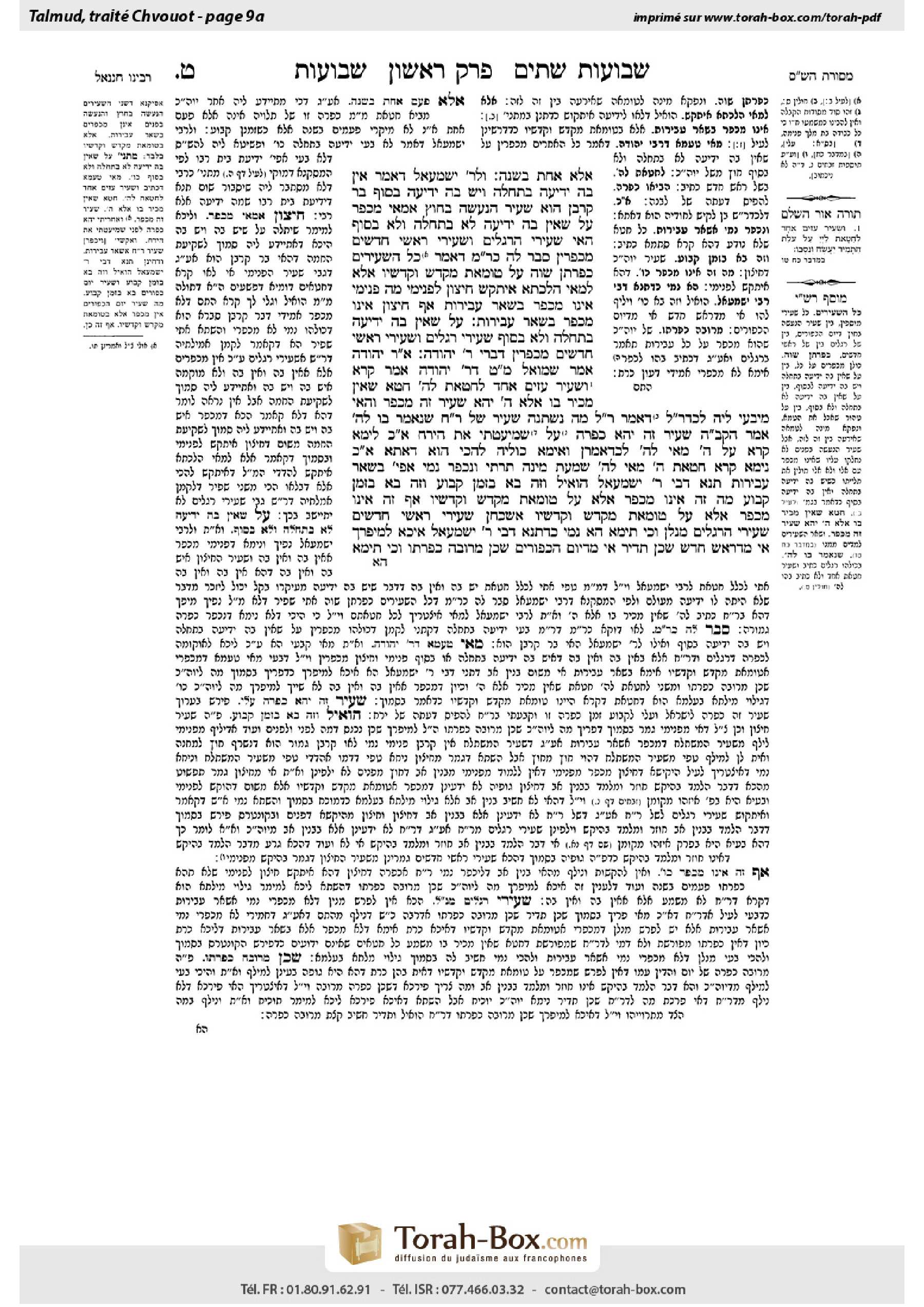
This page of Shevuot includes the Aramaic text, an English translation and an AI-generated French translation, alongside the scan above.
שבועות ט׳ א · Aramaic and Hebrew text
אֶלָּא אַחַת בַּשָּׁנָה.
וּלְרַבִּי יִשְׁמָעֵאל דְּאָמַר אֵין בָּהּ יְדִיעָה בַּתְּחִלָּה וְיֵשׁ בָּהּ יְדִיעָה בַּסּוֹף בַּר קׇרְבָּן הוּא, שָׂעִיר הַנַּעֲשֶׂה בַּחוּץ אַמַּאי מְכַפֵּר? עַל שֶׁאֵין בָּהּ יְדִיעָה לֹא בַּתְּחִלָּה וְלֹא בַּסּוֹף.
הַאי שְׂעִירֵי הָרְגָלִים וּשְׂעִירֵי רָאשֵׁי חֳדָשִׁים מְכַפְּרִין! סָבַר לַהּ כְּרַבִּי מֵאִיר, דְּאָמַר: כׇּל הַשְּׂעִירִים כַּפָּרָתָן שָׁוָה – עַל טוּמְאַת מִקְדָּשׁ וְקָדָשָׁיו.
אֶלָּא לְמַאי הִלְכְתָא אִיתַּקַּשׁ חִיצוֹן לִפְנִימִי? מָה פְּנִימִי אֵינוֹ מְכַפֵּר בִּשְׁאָר עֲבֵירוֹת, אַף חִיצוֹן אֵינוֹ מְכַפֵּר בִּשְׁאָר עֲבֵירוֹת.
עַל שֶׁאֵין בָּהּ יְדִיעָה בַּתְּחִלָּה וְלֹא בַּסּוֹף, שְׂעִירֵי רְגָלִים וּשְׂעִירֵי רָאשֵׁי חֳדָשִׁים מְכַפְּרִין. דִּבְרֵי רַבִּי יְהוּדָה.
אָמַר רַב יְהוּדָה אָמַר שְׁמוּאֵל: מַאי טַעְמָא דְּרַבִּי יְהוּדָה? אָמַר קְרָא: ״וּשְׂעִיר עִזִּים אֶחָד לְחַטָּאת לַה׳״ – חֵטְא שֶׁאֵין מַכִּיר בּוֹ אֶלָּא ה׳, יְהֵא שָׂעִיר זֶה מְכַפֵּר.
וְהַאי מִיבְּעֵי לֵיהּ לְכִדְרֵישׁ לָקִישׁ – דְּאָמַר רֵישׁ לָקִישׁ: מָה נִשְׁתַּנָּה שָׂעִיר שֶׁל רֹאשׁ חֹדֶשׁ שֶׁנֶּאֱמַר בּוֹ ״לַה׳״? אָמַר הַקָּדוֹשׁ בָּרוּךְ הוּא: שָׂעִיר זֶה יְהֵא כַּפָּרָה עַל שֶׁמִּיעַטְתִּי אֶת הַיָּרֵחַ.
אִם כֵּן, לֵימָא קְרָא ״עַל ה׳״; מַאי ״לַה׳״? לִכְדַאֲמַרַן.
וְאֵימָא כּוּלֵּיהּ לְהָכִי הוּא דַּאֲתָא! אִם כֵּן, נֵימָא קְרָא: ״חַטָּאת ה׳״; מַאי ״לַה׳״? שָׁמְעַתְּ מִינַּהּ תַּרְתֵּי.
וּנְכַפַּר נָמֵי אֲפִילּוּ בִּשְׁאָר עֲבֵירוֹת! תָּנָא דְּבֵי רַבִּי יִשְׁמָעֵאל: הוֹאִיל וְזֶה בָּא בִּזְמַן קָבוּעַ וְזֶה בָּא בִּזְמַן קָבוּעַ; מָה זֶה אֵינוֹ מְכַפֵּר אֶלָּא עַל טוּמְאַת מִקְדָּשׁ וְקָדָשָׁיו, אַף זֶה אֵינוֹ מְכַפֵּר אֶלָּא עַל טוּמְאַת מִקְדָּשׁ וְקָדָשָׁיו.
אַשְׁכְּחַן שְׂעִירֵי רָאשֵׁי חֳדָשִׁים, שְׂעִירֵי הָרְגָלִים מְנָלַן? וְכִי תֵּימָא הָא נָמֵי כִּדְתָנָא דְּבֵי רַבִּי יִשְׁמָעֵאל, אִיכָּא לְמִיפְרַךְ: אִי מִדְּרֹאשׁ חֹדֶשׁ – שֶׁכֵּן תָּדִיר, אִי מִדְּיוֹם הַכִּפּוּרִים – שֶׁכֵּן מְרוּבָּה כַּפָּרָתוֹ! וְכִי תֵּימָא
Shevuot 9a · English translation
only once a year.
According to the mishna, the external goat atones for a case in which there was no awareness at the beginning but there was awareness at the end. The Gemara asks: And according to Rabbi Yishmael, who says: For a case in which one did not have awareness at the beginning but did have awareness at the end, that person is liable to bring an offering, for what does the goat whose blood presentation is performed outside the Sanctuary atone? The Gemara answers: It atones for a case in which one did not have awareness, neither in the beginning, nor in the end.
The Gemara challenges this answer: But for that case, the goats of the Festivals and the goats of the New Moons atone. The Gemara explains: He holds in accordance with the opinion of Rabbi Meir, who says: The atonement effected by all the goats offered as part the additional offerings, i.e., those of the New Moons, the Festivals, and Yom Kippur, is the same: They all atone for various cases of the defiling of the Temple or its sacrificial foods.
The Gemara asks: But if Rabbi Yishmael holds that the internal goat atones for a situation in which there was no awareness at all, with regard to what halakha does the Torah juxtapose the internal goat with the external goat? The Gemara explains: The juxtaposition teaches that just as the internal goat does not atone for other transgressions, so too, the external goat does not atone for other transgressions. Rather, they both atone only for the defiling of the Temple or its sacrificial foods.
§ The mishna teaches: For the defiling of the Temple or its sacrificial foods in which one did not have awareness, neither at the beginning nor at the end, the goats brought as sin-offerings as part of the additional offerings of the Festivals and the goats brought as sin-offerings as part of the additional offerings of the New Moons atone. This is the statement of Rabbi Yehuda.
The Gemara elaborates: Rav Yehuda says that Shmuel says: What is the reasoning of Rabbi Yehuda? The verse states with regard to additional offerings of the New Moons: “And one goat for a sin-offering to the Lord” (Numbers 28:15). The final phrase, which literally means: A sin to the Lord, alludes to the fact that this goat atones for a sin of which only the Lord is aware, i.e., where there was no awareness either at the beginning or at the end.
The Gemara objects: But this phrase is necessary in order to expound it in accordance with the statement of Reish Lakish, as Reish Lakish says: What is different about the goat brought as a sin-offering of the New Moon that it is stated with regard to it: “To the Lord,” a term not written with regard to other sin-offerings? The Holy One, Blessed be He, says, as it were: This goat shall be an atonement for the fact that I diminished the size of the moon.
The Gemara resolves the problem: If so, i.e., if the phrase was needed only for that statement, let the verse state only: A sin-offering for the Lord. For what reason does it state: “To the Lord”? In order to expound it in accordance with that which we have said, that it atones only for a sin that the Lord alone is aware of.
The Gemara asks: But why not say that the whole of the phrase comes exclusively to teach this halakha, and not to expound it in accordance with Reish Lakish’s statement at all? The Gemara answers: If so, let the verse state: A sin-offering of the Lord. For what reason does it state: “To the Lord”? You can conclude two conclusions from it.
The Gemara asks: But let the goat atone even for other transgressions that a person never became aware of. Why does Rabbi Yehuda limit the scope of its atonement? The Sages of the school of Rabbi Yishmael taught: Since this goat of the New Moon is brought at a fixed time, and that goat of Yom Kippur is brought at a fixed time, they must atone for similar transgressions. Just as that goat of Yom Kippur atones only for the defiling of the Temple or its sacrificial foods, so too, this goat of the New Moon atones only for the defiling of the Temple or its sacrificial foods.
The Gemara says: We found a source teaching that the goats of the New Moons atone for the defiling of the Temple or its sacrificial foods. From where do we derive that the goats of the Festivals also atone for such cases? And if you would say that this can also be derived in accordance with that which the Sages of the school of Rabbi Yishmael taught, that suggestion can be refuted as follows: If you try to derive it through a comparison to the goats of the New Moon, the comparison is flawed, as those goats are more frequent than those of the Festivals. And if you try to derive it through a comparison to the goat of Yom Kippur, that comparison is also flawed, as that goat has a more extensive atonement, since it atones for all sins. And if you would say:
Shevuot 9a · Traduction française (IA)
une seule fois par an.
Selon la Michna, le bouc extérieur expie un cas où il n’y a pas eu de prise de conscience au début, mais où il y en a eu une à la fin. La Guemara demande : Et selon Rabbi Yishmaël, qui affirme que celui qui n’a pas eu conscience au début, mais en a eu à la fin, est tenu d’apporter un sacrifice, qu’expie le bouc dont le sang est aspergé à l’extérieur du Sanctuaire ? La Guemara répond : Il expie un cas où la personne n’a eu conscience ni au début ni à la fin.
La Guemara objecte : Mais les boucs des fêtes et ceux des nouvelles lunes expient ce cas. La Guemara explique : Il suit l’opinion de Rabbi Meïr, selon laquelle tous les boucs offerts dans le cadre des sacrifices supplémentaires — ceux des nouvelles lunes, des fêtes et de Yom Kippour — ont la même fonction expiatoire : ils expient tous différentes situations de souillure du Temple ou de ses offrandes sacrificielles.
La Guemara demande : Mais si Rabbi Yishmaël estime que le bouc intérieur expie une situation où il n’y a eu aucune prise de conscience, à quelle fin la Torah juxtapose-t-elle le bouc intérieur et le bouc extérieur ? La Guemara explique : Cette juxtaposition enseigne que, de même que le bouc intérieur n’expie pas d’autres transgressions, le bouc extérieur non plus n’en expie pas. Tous deux expient uniquement les cas de souillure du Temple ou de ses offrandes sacrificielles.
§ La Michna enseigne : Les boucs offerts comme sacrifices expiatoires dans le cadre des sacrifices supplémentaires des fêtes, ainsi que ceux offerts dans le cadre des sacrifices supplémentaires des nouvelles lunes, expient les cas de souillure du Temple ou de ses offrandes sacrificielles où la personne n’en a eu conscience ni au début ni à la fin. Telle est l’opinion de Rabbi Yehouda.
La Guemara développe : Rav Yehouda dit au nom de Shmuel : Quel est le raisonnement de Rabbi Yehouda ? À propos des sacrifices supplémentaires des nouvelles lunes, le verset dit : « Et un bouc comme sacrifice expiatoire pour le Seigneur » (Nombres 28:15). La formule finale, qui signifie littéralement « un péché pour le Seigneur », fait allusion au fait que ce bouc expie un péché dont le Seigneur seul a connaissance, c’est-à-dire un cas où il n’y a eu de prise de conscience ni au début ni à la fin.
La Guemara objecte : Mais cette formule est nécessaire pour l’interpréter conformément à l’enseignement de Reish Lakish. En effet, Reish Lakish dit : En quoi le bouc offert comme sacrifice expiatoire à la nouvelle lune se distingue-t-il pour que l’expression « pour le Seigneur », qui ne figure pas à propos des autres sacrifices expiatoires, soit employée à son sujet ? Le Saint, béni soit-Il, dit, pour ainsi dire : Ce bouc servira à expier le fait que J’ai diminué la taille de la lune.
La Guemara résout la difficulté : Si tel était le cas, c’est-à-dire si la formule n’était nécessaire que pour cet enseignement, que le verset dise simplement : « Un sacrifice expiatoire pour le Seigneur ». Pourquoi dit-il : « pour le Seigneur » ? Afin d’en tirer l’enseignement que nous avons énoncé : ce bouc expie uniquement un péché dont le Seigneur seul a connaissance.
La Guemara demande : Mais pourquoi ne pas dire que toute la formule vient uniquement enseigner cette halakha, sans qu’il soit nécessaire de l’interpréter conformément à l’enseignement de Reish Lakish ? La Guemara répond : Si tel était le cas, que le verset dise : « Un sacrifice expiatoire du Seigneur ». Pourquoi dit-il : « pour le Seigneur » ? On peut en tirer deux enseignements.
La Guemara demande : Mais que le bouc expie aussi d’autres transgressions dont la personne n’a jamais eu conscience. Pourquoi Rabbi Yehouda limite-t-il la portée de son expiation ? Les Sages de l’école de Rabbi Yishmaël enseignèrent : Puisque ce bouc de la nouvelle lune est offert à une date fixe, tout comme le bouc de Yom Kippour est offert à une date fixe, ils doivent expier des transgressions similaires. De même que le bouc de Yom Kippour expie uniquement les cas de souillure du Temple ou de ses offrandes sacrificielles, de même le bouc de la nouvelle lune expie uniquement ces cas.
La Guemara dit : Nous avons trouvé une source enseignant que les boucs des nouvelles lunes expient les cas de souillure du Temple ou de ses offrandes sacrificielles. D’où déduit-on que les boucs des fêtes expient eux aussi de tels cas ? Et si tu dis que cela peut également se déduire de l’enseignement des Sages de l’école de Rabbi Yishmaël, on peut réfuter cette proposition ainsi : si tu cherches à le déduire par comparaison avec les boucs de la nouvelle lune, la comparaison est inadéquate, car ces boucs sont plus fréquents que ceux des fêtes. Et si tu cherches à le déduire par comparaison avec le bouc de Yom Kippour, cette comparaison est également inadéquate, car son expiation a une portée plus large, puisqu’il expie tous les péchés. Et si tu dis :
Traduction française générée par IA à partir de l’édition anglaise de Sefaria. Vérifie toujours un passage avec le texte source.
Text from Sefaria: William Davidson Edition - Vocalized Aramaic (CC BY NC); William Davidson Edition - English (CC BY NC).