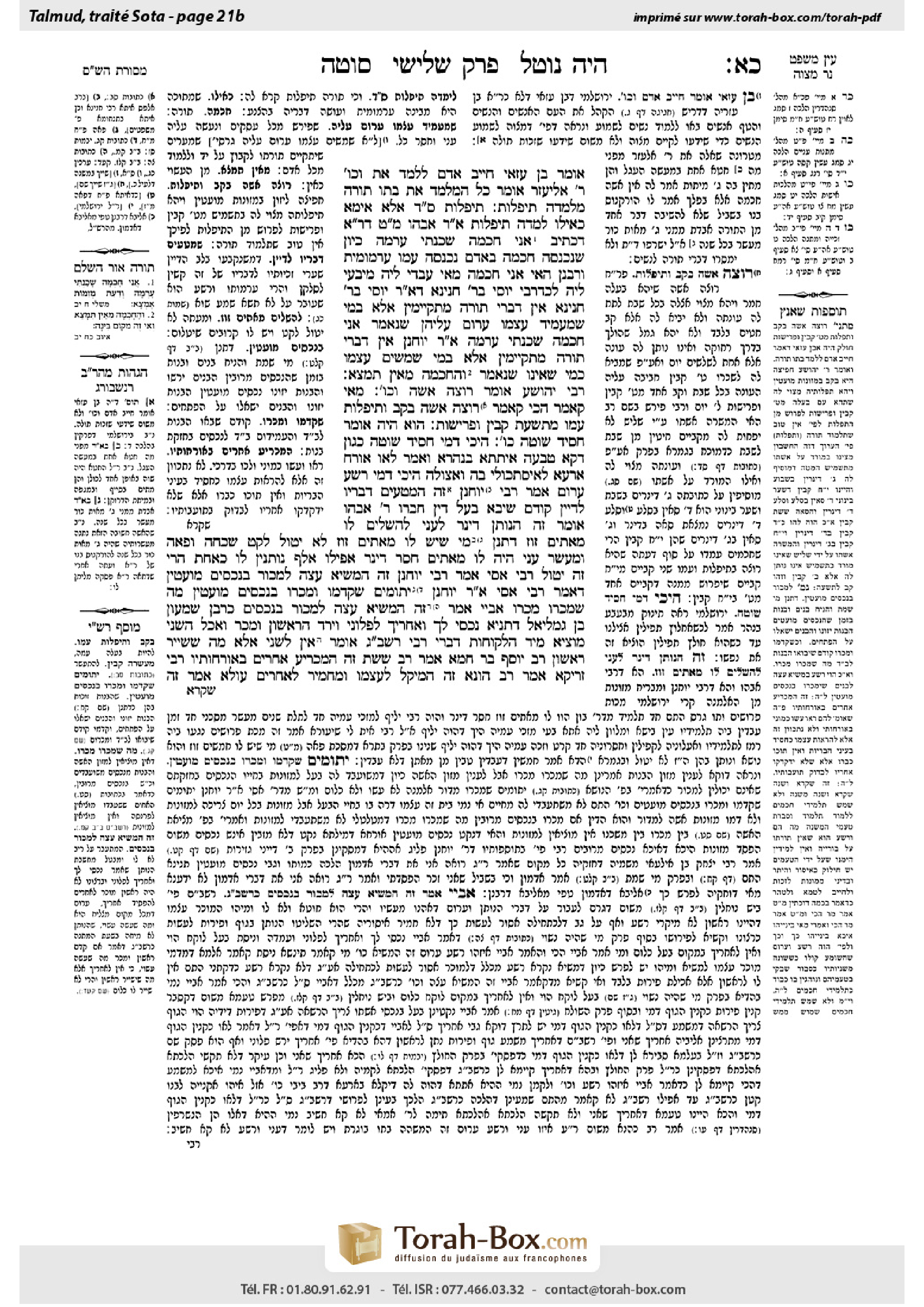
Sotah 21b: Talmud study for Daf Yomi
Daf Yomi is the daily study of one Talmud folio. Explore 37 tractates with scans, Hebrew text, Sefaria English and AI-generated French translations where annotated.
Passage selection and English or AI-generated French translation are available where the scan has annotations. Daf Study is independent of Torah-Box and Sefaria.
Browse Sotah · סוטה · All tractatesSotah 21b text and translations
This page of Sotah includes the Aramaic text, an English translation and an AI-generated French translation, alongside the scan above.
סוטה כ״א ב · Aramaic and Hebrew text
אוֹמֵר בֶּן עַזַּאי: חַיָּיב אָדָם לְלַמֵּד אֶת וְכוּ׳. רַבִּי אֱלִיעֶזֶר אוֹמֵר: כׇּל הַמְלַמֵּד אֶת בִּתּוֹ תּוֹרָה — מְלַמְּדָהּ תִּיפְלוּת. תִּיפְלוּת סָלְקָא דַּעְתָּךְ? אֶלָּא אֵימָא: כְּאִילּוּ לִמְּדָהּ תִּיפְלוּת.
אָמַר רַבִּי אֲבָהוּ: מַאי טַעְמָא דְּרַבִּי אֱלִיעֶזֶר, דִּכְתִיב: ״אֲנִי חׇכְמָה שָׁכַנְתִּי עׇרְמָה״, כֵּיוָן שֶׁנִּכְנְסָה חׇכְמָה בְּאָדָם — נִכְנְסָה עִמּוֹ עַרְמוּמִית.
וְרַבָּנַן, הַאי ״אֲנִי חׇכְמָה״ מַאי עָבְדִי לֵיהּ? מִיבְּעֵי לֵיהּ לְכִדְרַבִּי יוֹסֵי בְּרַבִּי חֲנִינָא. דְּאָמַר רַבִּי יוֹסֵי בְּרַבִּי חֲנִינָא: אֵין דִּבְרֵי תוֹרָה מִתְקַיְּימִין אֶלָּא בְּמִי שֶׁמַּעֲמִיד עַצְמוֹ עָרוֹם עֲלֵיהֶן, שֶׁנֶּאֱמַר: ״אֲנִי חׇכְמָה שָׁכַנְתִּי עׇרְמָה״. אָמַר רַבִּי יוֹחָנָן: אֵין דִּבְרֵי תוֹרָה מִתְקַיְּימִין אֶלָּא בְּמִי שֶׁמֵּשִׂים עַצְמוֹ כְּמִי שֶׁאֵינוֹ, שֶׁנֶּאֱמַר: ״וְהַחׇכְמָה מֵאַיִן תִּמָּצֵא״.
רַבִּי יְהוֹשֻׁעַ אוֹמֵר: רוֹצָה אִשָּׁה וְכוּ׳. מַאי קָאָמַר? הָכִי קָאָמַר: רוֹצָה אִשָּׁה בְּקַב וְתִיפְלוּת עִמּוֹ, מִתִּשְׁעַת קַבִּין וּפְרִישׁוּת.
הוּא הָיָה אוֹמֵר: חָסִיד שׁוֹטֶה כּוּ׳. הֵיכִי דָּמֵי חָסִיד שׁוֹטֶה? כְּגוֹן דְּקָא טָבְעָה אִיתְּתָא בְּנַהֲרָא, וְאָמַר: לָאו אוֹרַח אַרְעָא לְאִיסְתַּכּוֹלֵי בַּהּ וְאַצּוֹלַהּ.
הֵיכִי דָּמֵי רָשָׁע עָרוּם? אָמַר רַבִּי יוֹחָנָן: זֶה הַמַּטְעִים דְּבָרָיו לַדַּיָּין קוֹדֶם שֶׁיָּבֹא בַּעַל דִּין חֲבֵרוֹ. רַבִּי אֲבָהוּ אוֹמֵר: זֶה הַנּוֹתֵן דִּינָר לְעָנִי לְהַשְׁלִים לוֹ מָאתַיִם זוּז. דִּתְנַן: מִי שֶׁיֵּשׁ לוֹ מָאתַיִם זוּז — לֹא יִטּוֹל לֶקֶט שִׁכְחָה וּפֵאָה וּמַעְשַׂר עָנִי. הָיָה לוֹ מָאתַיִם חָסֵר דִּינָר, אֲפִילּוּ אֶלֶף נוֹתְנִין לוֹ כְּאַחַת — הֲרֵי זֶה יִטּוֹל.
רַבִּי אַסִּי אָמַר רַבִּי יוֹחָנָן: זֶה הַמַּשִּׂיא עֵצָה לִמְכּוֹר בִּנְכָסִים מוּעָטִין. דְּאָמַר רַבִּי אַסִּי אָמַר רַבִּי יוֹחָנָן: יְתוֹמִים שֶׁקָּדְמוּ וּמָכְרוּ בִּנְכָסִים מוּעָטִין — מַה שֶּׁמָּכְרוּ מָכְרוּ.
אַבָּיֵי אָמַר: זֶה הַמַּשִּׂיא עֵצָה לִמְכּוֹר בִּנְכָסִים כְּרַבָּן שִׁמְעוֹן בֶּן גַּמְלִיאֵל. דְּתַנְיָא: ״נְכָסַי לְךָ, וְאַחֲרֶיךָ לִפְלוֹנִי״, וְיָרַד הָרִאשׁוֹן וּמָכַר וְאָכַל — הַשֵּׁנִי מוֹצִיא מִיַּד הַלָּקוֹחוֹת, דִּבְרֵי רַבִּי. רַבָּן שִׁמְעוֹן בֶּן גַּמְלִיאֵל אוֹמֵר: אֵין לַשֵּׁנִי אֶלָּא מַה שֶּׁשִּׁיֵּיר רִאשׁוֹן.
רַב יוֹסֵף בַּר חָמָא אָמַר רַב שֵׁשֶׁת: זֶה הַמַּכְרִיעַ אֲחֵרִים בְּאוֹרְחוֹתָיו. רַבִּי זְרִיקָא אָמַר רַב הוּנָא: זֶה הַמֵּיקֵל לְעַצְמוֹ וּמַחְמִיר לַאֲחֵרִים. עוּלָּא אָמַר: זֶה
Sotah 21b · English translation
§ The mishna states: From here ben Azzai states: A person is obligated to teach his daughter Torah, so that if she drinks and does not die immediately, she will know that some merit of hers has delayed her punishment. Rabbi Eliezer says: Anyone who teaches his daughter Torah is teaching her promiscuity. The Gemara asks: Could it enter your mind to say that teaching one’s daughter Torah is actually teaching her promiscuity? Rather, say: It is considered as if he taught her promiscuity.
Rabbi Abbahu says: What is the reason for Rabbi Eliezer’s statement? It is as it is written: “I, wisdom, dwell with cunning” (Proverbs 8:12), which indicates that once wisdom enters into a person, cunning enters with it. Rabbi Eliezer fears that the woman will use the cunning she achieves by learning the wisdom of the Torah to engage in promiscuous behavior.
The Gemara asks: And the Rabbis who disagree with him, what do they do with this verse: “I, wisdom, dwell with cunning [orma]”; how do they interpret it? The Gemara responds: He requires that verse for that which Rabbi Yosei, son of Rabbi Ḥanina, states, interpreting the word “orma” as nakedness rather than cunningness, as Rabbi Yosei, son of Rabbi Ḥanina, says: The matters of Torah do not endure except in one who stands naked for them, as it is stated: “I, wisdom, dwell with nakedness [orma]” (Proverbs 8:12). This means that wisdom dwells only in one who is prepared to give away all of his possessions for the sake of Torah study. Rabbi Yoḥanan says: The matters of Torah do not endure except in one who considers himself as one who does not exist, as it is stated: “But wisdom, it can be found in nothingness” (Job 28:12).
§ The mishna states that Rabbi Yehoshua says: A woman desires to receive the amount of a kav of food and a sexual relationship rather than to receive nine kav of food and abstinence. The Gemara asks: What is he saying? This is what Rabbi Yehoshua is saying: A woman desires to receive the amount of a kav of food and with it a sexual relationship, i.e., her husband’s availability to fulfill her sexual desires, rather than nine kav of food and with it abstinence, and since her desires are of a sexual nature, it is undesirable for her to study Torah.
§ The mishna continues: He, Rabbi Yehoshua, would say: A foolish man of piety, and a conniving wicked person, and an abstinent woman, and those who injure themselves out of false abstinence; all these are people who erode the world. The Gemara asks: Who is considered a foolish man of piety? For example, it is one who sees that a woman is drowning in a river, and he says: It is not proper conduct to look at her while she is undressed and save her.
The Gemara asks: Who is considered a conniving wicked person? Rabbi Yoḥanan says: This is one who presents his statement to the judge before the other litigant comes and thereby prejudices the judge in his favor. Rabbi Abbahu says: This is referring to one who gives a dinar to a poor man in order to complete the sum of two hundred dinars for him, so that he will no longer be entitled to receive charity, as we learned in a mishna (Pe’a 8:8): One who has two hundred dinars may not collect gleanings, forgotten sheaves, pe’a, and the poor man’s tithe, since he is not defined as poor. However, if he has two hundred less one dinar, even if he is given one thousand dinars at once, he may collect.
Rabbi Asi says that Rabbi Yoḥanan says: A conniving wicked person is one who provides advice to male orphans to sell from the small quantity of property left to them by their father, before it is appropriated by the court for the purpose of providing for the daughters, who do not inherit property. This causes the daughters to lose their right to sustenance, because although it is improper to do so, the sale is valid, as Rabbi Asi says that Rabbi Yoḥanan says: With regard to male orphans who preemptively sold the property from a small estate, that which they sold, they sold, and the sons retain the money.
Abaye says: A conniving wicked person is one who provides advice to sell property in accordance with the ruling of Rabban Shimon ben Gamliel, as it is taught in a baraita: With regard to one who said: My property is given to you, and after you die, to so-and-so, and the first beneficiary entered the property and sold it and consumed the profits, the second beneficiary repossesses the property from the purchasers, as the property belongs to him after the death of the first beneficiary; this is the statement of Rabbi Yehuda HaNasi. Rabban Shimon ben Gamliel says: The second beneficiary receives only that which the first beneficiary left, since his sale is valid. However, it is not permitted to sell the property ab initio, since the giver intended for the second beneficiary to receive the property.
Rav Yosef bar Ḥama says that Rav Sheshet says: A conniving wicked person is one who persuades others with his ways, convincing others to mimic his seemingly righteous behavior, in order to hide his faults. Rabbi Zerika says that Rav Huna says: A conniving wicked person is one who is lenient in the halakha for himself and strict for others. Ulla says: This
Sotah 21b · Traduction française (IA)
§ La Michna énonce : De là, ben Azzai affirme qu’un homme est tenu d’enseigner la Torah à sa fille, afin que, si elle boit et ne meurt pas immédiatement, elle sache qu’un certain mérite a retardé son châtiment. Rabbi Eliezer dit : Quiconque enseigne la Torah à sa fille lui enseigne la débauche. La Guemara demande : Peut-on vraiment penser qu’enseigner la Torah à sa fille revient à lui enseigner la débauche ? Il faut plutôt dire : c’est comme s’il lui enseignait la débauche.
Rabbi Abbahou dit : Quelle est la raison de la déclaration de Rabbi Eliezer ? C’est ce qui est écrit : « Moi, la sagesse, je demeure avec la ruse » (Proverbes 8,12), ce qui indique que, dès que la sagesse entre chez une personne, la ruse entre avec elle. Rabbi Eliezer craint que la femme n’emploie la ruse qu’elle acquiert en apprenant la sagesse de la Torah pour se livrer à la débauche.
La Guemara demande : Et les Rabbins qui sont en désaccord avec lui, que font-ils de ce verset : « Moi, la sagesse, je demeure avec la ruse [orma] » ? Comment l’interprètent-ils ? La Guemara répond : Il a besoin de ce verset pour ce qu’enseigne Rabbi Yosei, fils de Rabbi Ḥanina, qui interprète le mot « orma » comme signifiant « nudité » plutôt que « ruse ». En effet, Rabbi Yosei, fils de Rabbi Ḥanina, dit : Les paroles de Torah ne se maintiennent que chez celui qui se tient nu pour elles, comme il est dit : « Moi, la sagesse, je demeure avec la nudité [orma] » (Proverbes 8,12). Cela signifie que la sagesse ne réside que chez celui qui est prêt à céder tous ses biens pour étudier la Torah. Rabbi Yoḥanan dit : Les paroles de Torah ne se maintiennent que chez celui qui se considère comme n’existant pas, comme il est dit : « Mais la sagesse, où peut-elle se trouver ? » (Job 28,12).
§ La Michna énonce que Rabbi Yehoshua dit : Une femme préfère recevoir la valeur d’un kav de nourriture et, avec cela, avoir des relations sexuelles — c’est-à-dire que son mari soit disponible pour satisfaire ses désirs sexuels — plutôt que de recevoir neuf kav de nourriture et de vivre dans l’abstinence ; et puisque ses désirs sont de nature sexuelle, il n’est pas souhaitable qu’elle étudie la Torah.
§ La Michna poursuit : Lui, Rabbi Yehoshua, disait : Un homme pieux insensé, un méchant rusé, une femme abstinente et ceux qui se font du mal par une abstinence illusoire : tous ces gens sont des fléaux pour le monde. La Guemara demande : Qui est considéré comme un homme pieux insensé ? Par exemple, celui qui voit une femme se noyer dans une rivière et dit : « Il n’est pas convenable de la regarder alors qu’elle est dévêtue et de la sauver. »
La Guemara demande : Qui est considéré comme un méchant rusé ? Rabbi Yoḥanan dit : C’est celui qui présente son argument au juge avant que l’autre partie ne comparaisse et prédispose ainsi le juge en sa faveur. Rabbi Abbahou dit : Il s’agit de celui qui donne un dinar à un pauvre afin de lui faire atteindre la somme de deux cents dinars, de sorte qu’il n’ait plus droit à l’aumône. En effet, nous avons appris dans une Michna (Pea 8,8) : Celui qui possède deux cents dinars ne peut pas recueillir les épis tombés, les gerbes oubliées, la pe’a ni la dîme des pauvres, puisqu’il n’est pas considéré comme pauvre. Toutefois, s’il possède deux cents dinars moins un dinar, même si on lui donne mille dinars d’un seul coup, il peut recueillir.
Rabbi Asi dit au nom de Rabbi Yoḥanan : Un méchant rusé, c’est celui qui conseille à des orphelins de vendre les quelques biens laissés par leur père, avant que le tribunal ne les affecte à l’entretien des filles, qui n’héritent pas des biens. Cela prive les filles de leur droit à l’entretien, car, même si cette conduite est inconvenante, la vente est valide. En effet, Rabbi Asi dit au nom de Rabbi Yoḥanan : En ce qui concerne des orphelins qui ont vendu par anticipation les biens d’une petite succession, ce qu’ils ont vendu est vendu, et les fils conservent l’argent.
Abaye dit : Un méchant rusé, c’est celui qui conseille de vendre des biens conformément à la décision de Rabban Shimon ben Gamliel, comme il est enseigné dans une baraïta : Dans le cas de celui qui a dit : « Mes biens te sont donnés, et après ta mort, à untel », si le premier bénéficiaire est entré en possession des biens, les a vendus et en a consommé les revenus, le second bénéficiaire reprend les biens aux acheteurs, car ceux-ci lui appartiennent après la mort du premier bénéficiaire ; telle est la déclaration de Rabbi Yehuda HaNasi. Rabban Shimon ben Gamliel dit : Le second bénéficiaire ne reçoit que ce que le premier a laissé, car la vente de celui-ci est valide. Toutefois, il n’est pas permis de vendre les biens a priori, puisque le donateur entendait que le second bénéficiaire les reçoive.
Rav Yosef bar Ḥama dit au nom de Rav Sheshet : Un méchant rusé, c’est celui qui persuade les autres par sa conduite et les convainc d’imiter son comportement apparemment vertueux afin de dissimuler ses défauts. Rabbi Zerika dit au nom de Rav Huna : Un méchant rusé, c’est celui qui se montre indulgent dans la halakha pour lui-même et strict envers les autres. Ulla dit : Cela
Traduction française générée par IA à partir de l’édition anglaise de Sefaria. Vérifie toujours un passage avec le texte source.
Text from Sefaria: William Davidson Edition - Vocalized Aramaic (CC BY NC); William Davidson Edition - English (CC BY NC).