Sukkah 49a: Talmud study for Daf Yomi
Daf Yomi is the daily study of one Talmud folio. Explore 37 tractates with scans, Hebrew text, Sefaria English and AI-generated French translations where annotated.
Passage selection and English or AI-generated French translation are available where the scan has annotations. Daf Study is independent of Torah-Box and Sefaria.
Browse Sukkah · סוכה · All tractatesSukkah 49a text and translations
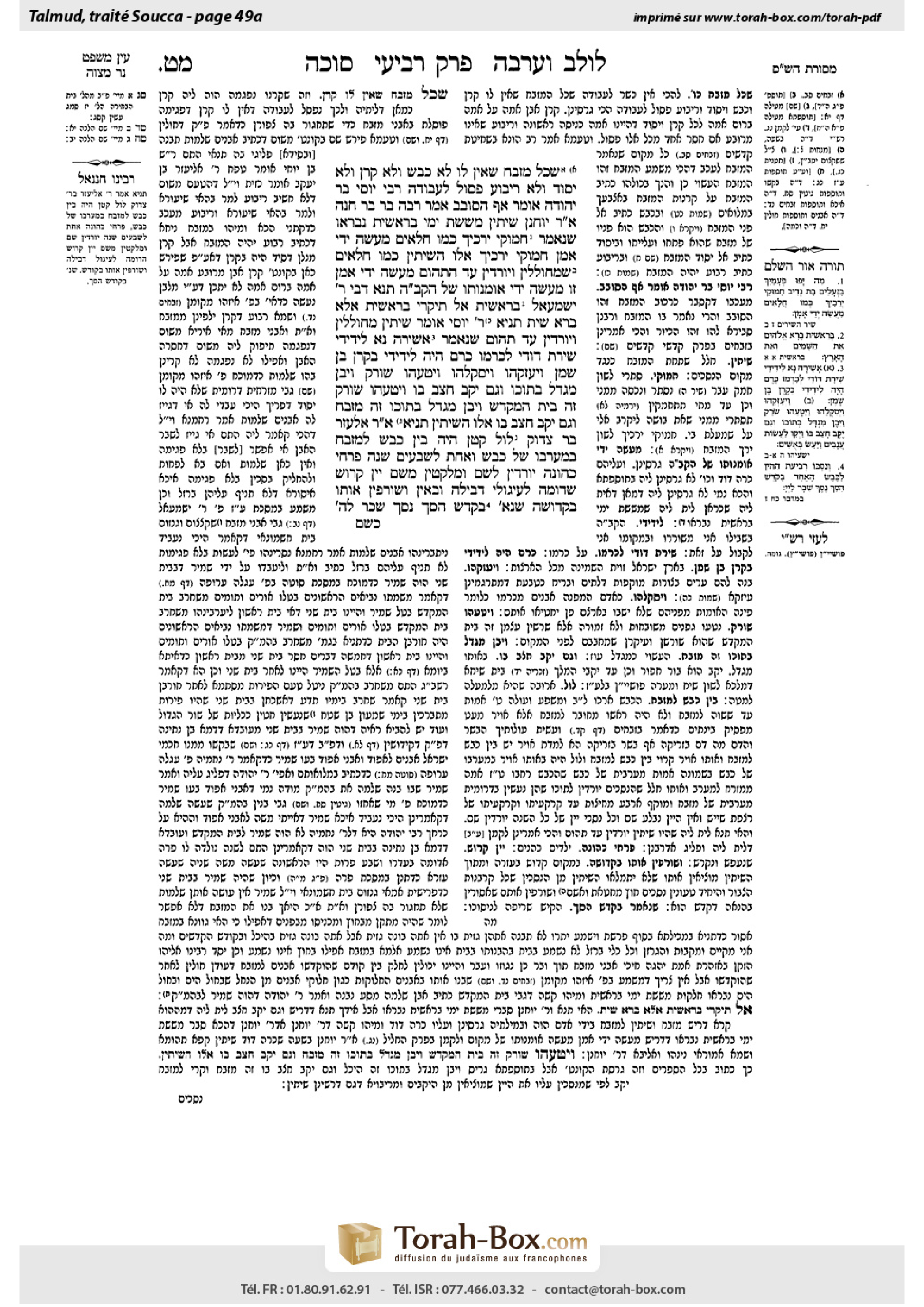
This page of Sukkah includes the Aramaic text, an English translation and an AI-generated French translation, alongside the scan above.
סוכה מ״ט א · Aramaic and Hebrew text
שֶׁכׇּל מִזְבֵּחַ שֶׁאֵין לוֹ לֹא כֶּבֶשׁ וְלֹא קֶרֶן וְלֹא יְסוֹד וְלֹא רִיבּוּעַ — פָּסוּל לַעֲבוֹדָה. רַבִּי יוֹסֵי בַּר יְהוּדָה אוֹמֵר: אַף הַסּוֹבֵב.
אָמַר רַבָּה בַּר בַּר חָנָה אָמַר רַבִּי יוֹחָנָן: שִׁיתִין, מִשֵּׁשֶׁת יְמֵי בְּרֵאשִׁית נִבְרְאוּ, שֶׁנֶּאֱמַר: ״חַמּוּקֵי יְרֵכַיִךְ כְּמוֹ חֲלָאִים מַעֲשֵׂה יְדֵי אׇמָּן״. ״חֲמוּקֵי יְרֵכַיִךְ״ — אֵלּוּ הַשִּׁיתִין. ״כְּמוֹ חֲלָאִים״ — שֶׁמְּחוֹלְלִין וְיוֹרְדִין עַד הַתְּהוֹם. ״מַעֲשֵׂה יְדֵי אׇמָּן״ — זוֹ מַעֲשֵׂה יְדֵי אוּמָּנוּתוֹ שֶׁל הַקָּדוֹשׁ בָּרוּךְ הוּא. תָּנָא דְּבֵי רַבִּי יִשְׁמָעֵאל: ״בְּרֵאשִׁית״, אַל תִּיקְרֵי ״בְּרֵאשִׁית״, אֶלָּא ״בָּרָא שִׁית״.
תַּנְיָא, רַבִּי יוֹסֵי אוֹמֵר: שִׁיתִּין מְחוֹלָלִין וְיוֹרְדִין עַד תְּהוֹם, שֶׁנֶּאֱמַר: ״אָשִׁירָה נָּא לִידִידִי שִׁירַת דּוֹדִי לְכַרְמוֹ כֶּרֶם הָיָה לִידִידִי בְּקֶרֶן בֶּן שָׁמֶן. וַיְעַזְּקֵהוּ וַיְסַקְּלֵהוּ וַיִּטָּעֵהוּ שׂוֹרֵק וַיִּבֶן מִגְדָּל בְּתוֹכוֹ וְגַם יֶקֶב חָצֵב בּוֹ״. ״וַיִּטָּעֵהוּ שׂוֹרֵק״ — זֶה בֵּית הַמִּקְדָּשׁ, ״וַיִּבֶן מִגְדָּל בְּתוֹכוֹ״ — זֶה מִזְבֵּחַ, ״וְגַם יֶקֶב חָצֵב בּוֹ״ — אֵלּוּ הַשִּׁיתִין.
תַּנְיָא, אָמַר רַבִּי אֶלְעָזָר בַּר צָדוֹק: לוּל קָטָן הָיָה בֵּין כֶּבֶשׁ לַמִּזְבֵּחַ בְּמַעֲרָבוֹ שֶׁל כֶּבֶשׁ, וְאַחַת לְשִׁבְעִים שָׁנָה פִּרְחֵי כְהוּנָּה יוֹרְדִין לְשָׁם, וּמְלַקְּטִין מִשָּׁם יַיִן קָרוּשׁ שֶׁדּוֹמֶה לְעִיגּוּלֵי דְבֵילָה, וּבָאִין וְשׂוֹרְפִין אוֹתוֹ בִּקְדוּשָּׁה, שֶׁנֶּאֱמַר: ״בַּקֹּדֶשׁ הַסֵּךְ נֶסֶךְ שֵׁכָר לַה׳״ —
Sukkah 49a · English translation
As any altar that lacks a ramp, or a horn, or a base, or the shape of a square, either because it was not erected as a square or due to damage, is disqualified for use in the Temple service. Rabbi Yosei bar Yehuda says: Even the surrounding ledge must be complete, and if it is lacking it disqualifies the altar.
§ Rabba bar bar Ḥana said that Rabbi Yoḥanan said: The drainpipes [shittin] built into the altar and extending beneath it were created from the six days of Creation, as it is stated: “The hidden of your thighs are like the links of a chain, the handiwork of a skilled workman” (Song of Songs 7:2). The Gemara interprets the verse homiletically: “The hidden of your thighs”; these are the drainpipes that are concealed within the altar; “are like the links of a chain [ḥala’im]”; they are hollow [meḥolalin] and descend to the depths; “the handiwork of a skilled workman”; this is the handiwork of the Holy One, Blessed be He. On a similar note, it was taught in the school of Rabbi Yishmael that it is written: “In the beginning [bereshit]” (Genesis 1:1); do not read it as: Bereshit, but rather as: Bara shit, meaning that God created the pipeline descending from the altar.
It was taught in a baraita that Rabbi Yosei says: These drainpipes are hollow and descend to the depths, as it is stated: “Let me sing of my well beloved, a song of my beloved touching his vineyard. My well beloved had a vineyard in a very fruitful hill, and he dug it, and cleared it of stones, and planted it with the choicest vine, and built a tower in the midst of it, and also hewed out a vat therein” (Isaiah 5:1–2). Rabbi Yosei interprets these verses homiletically as referring to the Temple. “He planted it with the choicest vine”; this is referring to the Temple; “he built a tower therein”; this is referring to the altar; “and hewed out a vat therein”; this is referring to the drainpipes. As the owner of the vineyard is a parable for God, this indicates that the drainpipes are a natural part of Creation.
It was taught in a baraita that Rabbi Elazar bar Tzadok said: There was a small gap between the ramp and the altar west of the ramp, and once in seventy years young priests would descend there and gather from there the congealed wine left over from the libations that set over time, which resembled round cakes of dried and pressed figs. They would then come and burn it in sanctity in the Temple courtyard, as it is stated: “In sanctity shall you pour a libation of strong drink unto the Lord” (Numbers 28:7);
Sukkah 49a · Traduction française (IA)
Car tout autel dépourvu de rampe, de corne, de base ou de forme carrée — soit parce qu’il n’a pas été construit de forme carrée, soit parce qu’il a été endommagé — est impropre au service du Temple. Rabbi Yosei bar Yehuda dit : même le rebord qui l’entoure doit être intact ; s’il en manque une partie, cela rend l’autel impropre.
§ Rabba bar bar Ḥana a dit que Rabbi Yoḥanan a dit : Les canalisations [shittin], aménagées dans l’autel et se prolongeant sous celui-ci, ont été créées au cours des six jours de la Création, comme il est dit : « Les courbes de tes cuisses sont comme des maillons, ouvrage d’un artisan habile » (Cantique des Cantiques 7:2). La Guemara interprète le verset de manière homilétique : « Les courbes de tes cuisses » : ce sont les canalisations dissimulées à l’intérieur de l’autel ; « sont comme des maillons [ḥala’im] » : elles sont creuses [meḥolalin] et descendent dans les profondeurs ; « ouvrage d’un artisan habile » : c’est l’œuvre du Saint, béni soit-Il. Dans le même ordre d’idées, il a été enseigné dans l’école de Rabbi Yishmael qu’il est écrit : « Au commencement [bereshit] » (Genèse 1:1) ; ne lis pas « Bereshit », mais plutôt « Bara shit », ce qui signifie que Dieu a créé la canalisation qui descend de l’autel.
Il a été enseigné dans une baraïta que Rabbi Yosei dit : Ces canalisations sont creuses et descendent dans les profondeurs, comme il est dit : « Je veux chanter pour mon bien-aimé, le chant de mon bien-aimé au sujet de sa vigne. Mon bien-aimé avait une vigne sur un coteau fertile ; il en retourna la terre, en ôta les pierres, y planta un cépage de choix, bâtit une tour au milieu et y creusa aussi une cuve » (Isaïe 5:1–2). Rabbi Yosei interprète ces versets de manière homilétique comme se rapportant au Temple. « Il y planta un cépage de choix » : cela désigne le Temple ; « il y bâtit une tour » : cela désigne l’autel ; « il y creusa une cuve » : cela désigne les canalisations. Puisque le propriétaire de la vigne représente Dieu dans cette parabole, cela indique que les canalisations font partie intégrante de la Création.
Il a été enseigné dans une baraïta que Rabbi Elazar bar Tzadok dit : Il y avait un petit espace entre la rampe et l’autel, à l’ouest de la rampe, et une fois tous les soixante-dix ans, de jeunes prêtres y descendaient pour recueillir le vin coagulé provenant des libations, qui s’était solidifié avec le temps et ressemblait à des galettes rondes de figues séchées et pressées. Ils venaient ensuite le brûler dans un lieu saint, dans la cour du Temple, comme il est dit : « Tu verseras une libation de boisson forte au Seigneur, dans un lieu saint » (Nombres 28:7) ;
Traduction française générée par IA à partir de l’édition anglaise de Sefaria. Vérifie toujours un passage avec le texte source.
Text from Sefaria: William Davidson Edition - Vocalized Aramaic (CC BY NC); William Davidson Edition - English (CC BY NC).