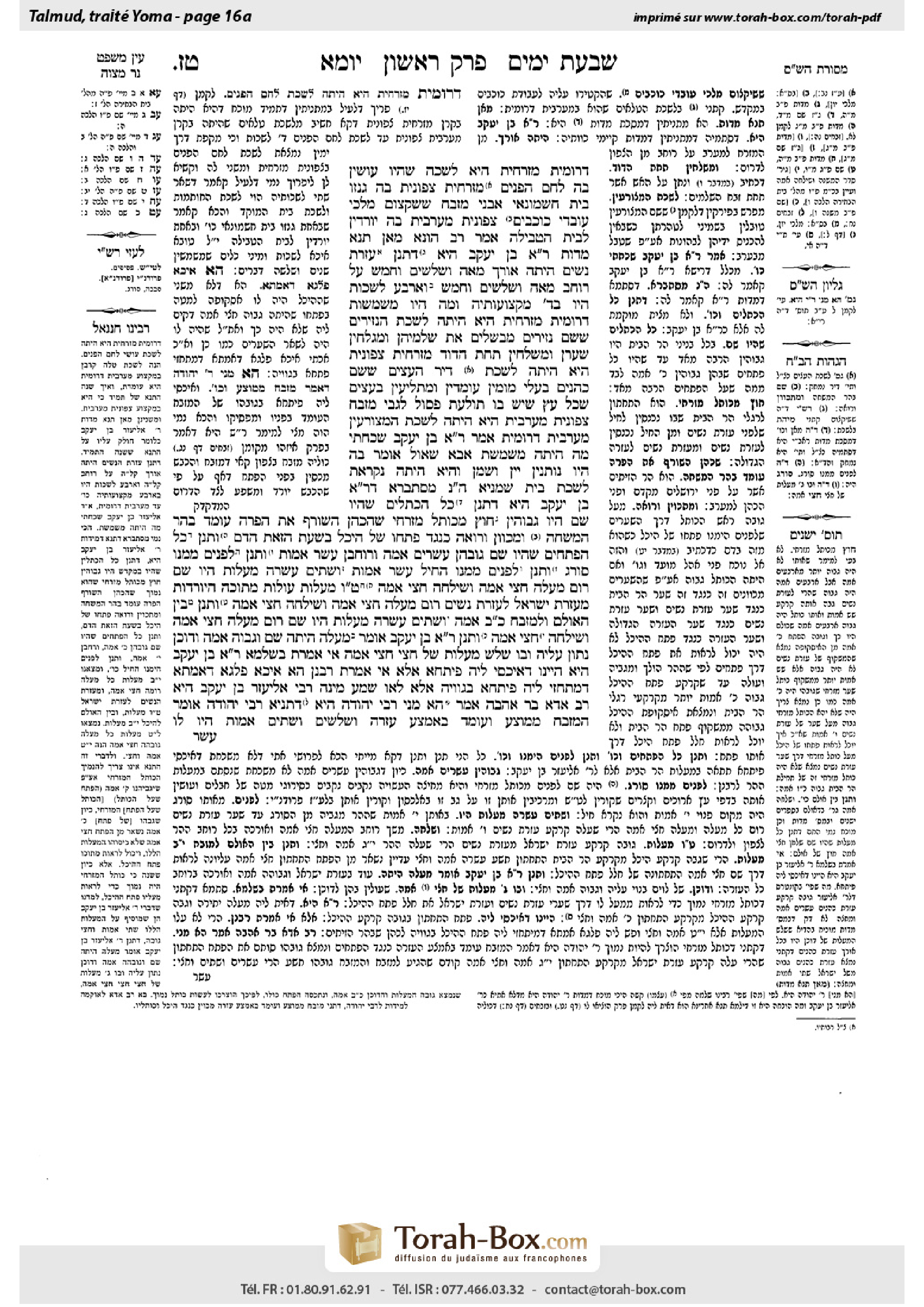
Yoma 16a: Talmud study for Daf Yomi
Daf Yomi is the daily study of one Talmud folio. Explore 37 tractates with scans, Hebrew text, Sefaria English and AI-generated French translations where annotated.
Passage selection and English or AI-generated French translation are available where the scan has annotations. Daf Study is independent of Torah-Box and Sefaria.
Browse Yoma · יומא · All tractatesYoma 16a text and translations
This page of Yoma includes the Aramaic text, an English translation and an AI-generated French translation, alongside the scan above.
יומא י״ו א · Aramaic and Hebrew text
דְּרוֹמִית מִזְרָחִית הִיא לִשְׁכָּה שֶׁהָיוּ עוֹשִׂין בָּהּ לֶחֶם הַפָּנִים. מִזְרָחִית צְפוֹנִית — בָּהּ גָּנְזוּ בֵּית חַשְׁמוֹנַאי אַבְנֵי מִזְבֵּחַ שֶׁשִּׁקְּצוּם מַלְכֵי גוֹיִם. צְפוֹנִית מַעֲרָבִית — בָּהּ יוֹרְדִין לְבֵית הַטְּבִילָה. אָמַר רַב הוּנָא: מַאן תָּנָא מִדּוֹת — רַבִּי אֱלִיעֶזֶר בֶּן יַעֲקֹב הִיא.
דִּתְנַן: עֶזְרַת נָשִׁים הָיְתָה אוֹרֶךְ מֵאָה וּשְׁלֹשִׁים וְחָמֵשׁ עַל רוֹחַב מֵאָה וּשְׁלֹשִׁים וְחָמֵשׁ, וְאַרְבַּע לְשָׁכוֹת הָיוּ בְּאַרְבַּע מִקְצוֹעוֹתֶיהָ, וּמֶה הָיוּ מְשַׁמְּשׁוֹת? דְּרוֹמִית מִזְרָחִית — הִיא הָיְתָה לִשְׁכַּת הַנְּזִירִים, שֶׁשָּׁם נְזִירִים מְבַשְּׁלִים אֶת שַׁלְמֵיהֶן וּמְגַלְּחִין שְׂעָרָן וּמְשַׁלְּחִין תַּחַת הַדּוּד. מִזְרָחִית צְפוֹנִית — הִיא הָיְתָה לִשְׁכַּת דִּיר הָעֵצִים, שֶׁשָּׁם כֹּהֲנִים בַּעֲלֵי מוּמִין עוֹמְדִין וּמַתְלִיעִין בְּעֵצִים, שֶׁכׇּל עֵץ שֶׁיֵּשׁ בּוֹ תּוֹלַעַת פָּסוּל לְגַבֵּי מִזְבֵּחַ.
צְפוֹנִית מַעֲרָבִית — הִיא הָיְתָה לִשְׁכַּת הַמְצוֹרָעִין. מַעֲרָבִית דְּרוֹמִית, אָמַר רַבִּי אֱלִיעֶזֶר בֶּן יַעֲקֹב: שָׁכַחְתִּי מֶה הָיְתָה מְשַׁמֶּשֶׁת. אַבָּא שָׁאוּל אוֹמֵר: בָּהּ הָיוּ נוֹתְנִין יַיִן וָשֶׁמֶן, וְהִיא הָיְתָה נִקְרֵאת ״לִשְׁכַּת בֵּית שְׁמָנַיָּא״.
הָכִי נָמֵי מִסְתַּבְּרָא דְּרַבִּי אֱלִיעֶזֶר בֶּן יַעֲקֹב הִיא, דִּתְנַן: כׇּל הַכְּתָלִים שֶׁהָיוּ שָׁם הָיוּ גְּבוֹהִין, חוּץ מִכּוֹתֶל מִזְרָחִי, שֶׁהַכֹּהֵן הַשּׂוֹרֵף אֶת הַפָּרָה עוֹמֵד בְּהַר הַמִּשְׁחָה וּמְכַוֵּון וְרוֹאֶה כְּנֶגֶד פִּתְחוֹ שֶׁל הֵיכָל בִּשְׁעַת הַזָּאַת הַדָּם.
וּתְנַן: כׇּל הַפְּתָחִים שֶׁהָיוּ שָׁם גּוֹבְהָן עֶשְׂרִים אַמָּה וְרוֹחְבָּן עֶשֶׂר אַמּוֹת. וּתְנַן: לִפְנִים מִמֶּנּוּ סוֹרֵג. וּתְנַן: לִפְנִים מִמֶּנּוּ הַחֵיל עֶשֶׂר אַמּוֹת, וּשְׁתֵּים עֶשְׂרֵה מַעֲלוֹת הָיוּ שָׁם, רוּם מַעֲלָה חֲצִי אַמָּה וְשִׁילְחָהּ חֲצִי אַמָּה.
חֲמֵשׁ עֶשְׂרֵה מַעֲלוֹת עוֹלוֹת מִתּוֹכָהּ, הַיּוֹרְדוֹת מֵעֶזְרַת יִשְׂרָאֵל לְעֶזְרַת נָשִׁים, רוּם מַעֲלָה חֲצִי אַמָּה וְשִׁילְחָהּ חֲצִי אַמָּה. וּתְנַן: בֵּין הָאוּלָם וְלַמִּזְבֵּחַ עֶשְׂרִים וּשְׁתַּיִם אַמָּה, וּשְׁתֵּים עֶשְׂרֵה מַעֲלוֹת הָיוּ שָׁם, רוּם מַעֲלָה חֲצִי אַמָּה וְשִׁילְחָהּ חֲצִי אַמָּה.
וּתְנַן, רַבִּי אֱלִיעֶזֶר בֶּן יַעֲקֹב אוֹמֵר: מַעֲלָה הָיְתָה שָׁם וּגְבוֹהָ אַמָּה, וְדוּכָן נָתוּן עָלֶיהָ, וּבוֹ שָׁלֹשׁ מַעֲלוֹת שֶׁל חֲצִי חֲצִי אַמָּה.
אִי אָמְרַתְּ בִּשְׁלָמָא רַבִּי אֱלִיעֶזֶר בֶּן יַעֲקֹב הִיא — הַיְינוּ דְּאִיכַּסִּי לֵיהּ פִּיתְחָא.
אֶלָּא אִי אָמְרַתְּ רַבָּנַן, הָא אִיכָּא פַּלְגָא דְאַמְּתָא דְּמִתְחֲזֵי לֵיהּ פִּיתְחָא בְּגַוֵּויהּ!
אֶלָּא לָאו שְׁמַע מִינַּהּ רַבִּי אֱלִיעֶזֶר בֶּן יַעֲקֹב הִיא. רַב אַדָּא בַּר אַהֲבָה אָמַר: הָא מַנִּי — רַבִּי יְהוּדָה הִיא. דְּתַנְיָא: רַבִּי יְהוּדָה אוֹמֵר: הַמִּזְבֵּחַ מְמוּצָּע וְעוֹמֵד בְּאֶמְצַע עֲזָרָה, וּשְׁלֹשִׁים וּשְׁתַּיִם אַמּוֹת הָיוּ לוֹ,
Yoma 16a · English translation
the southeast chamber in the Hall of the Hearth was the chamber in which the shewbread was prepared. The northeast chamber was the chamber in which the Hasmoneans sequestered the altar stones that were desecrated by the gentile kings when they sacrificed idolatrous offerings. The northwest chamber was the chamber in which the priests descended through tunnels to the Hall of Immersion. There is a contradiction between the sources with regard to the location of the Chamber of the Lambs. Rav Huna said: Who is the tanna who taught the mishnayot in tractate Middot? It is Rabbi Eliezer ben Ya’akov, who has a different opinion with regard to this matter.
As we learned in a mishna in tractate Middot: The dimensions of the women’s courtyard were a length of 135 cubits by a width of 135 cubits, and there were four chambers in its four corners. And what purpose did these chambers serve? The southeast chamber was the Chamber of the Nazirites, as there the nazirites cook their peace-offerings and shave their hair and cast it in the fire to burn beneath the pot in which the peace-offering was cooked, as the Torah instructs (see Numbers 6:18). The northeast chamber was the Chamber of the Woodshed, where blemished priests, who are disqualified for any other service, stand and examine the logs to determine if they were infested by worms, as any log in which there are worms is disqualified for use on the altar.
The northwest chamber was the Chamber of the Lepers, where lepers would immerse for purification. With regard to the southwest chamber, Rabbi Eliezer ben Ya’akov said: I forgot what purpose it would serve. Abba Shaul says: They would place wine and oil there for the meal-offerings and libations, and it was called the Chamber of the House of Oils. From this mishna it may be inferred that the tanna who taught the mishnayot in tractate Middot is Rabbi Eliezer ben Ya’akov, as that is why the mishna finds it necessary to mention that he forgot the purpose of one of the chambers.
So too, it is reasonable to conclude that the mishnayot in tractate Middot are in accordance with the opinion of Rabbi Eliezer ben Ya’akov, as we learned in a mishna there: All the walls that were there surrounding the Temple Mount were high except for the Eastern Wall, as the priest who burns the red heifer stands on the Mount of Olives, where the red heifer was slaughtered and burned, and directs his attention and looks toward the entrance of the Sanctuary when he sprinkles the blood.
The Gemara seeks the opinion according to which this would be feasible. And we learned in a mishna: All the entrances that were there in the Temple were twenty cubits high and ten cubits wide. And we learned in a different mishna describing the layout of the Temple: Inside the eastern wall of the Temple Mount was a latticed gate. And we learned in a different mishna: Inside the latticed gate was the rampart, which was an elevated area ten cubits wide. In that area there were twelve stairs; each stair was half a cubit high and half a cubit deep, for a total ascent of six cubits.
In addition, fifteen stairs ascend from within the women’s courtyard and descend from the Israelite courtyard to the women’s courtyard. Each stair was half a cubit high and half a cubit deep, for an additional ascent of seven and a half cubits. The total height of both staircases together was thirteen and a half cubits. And we learned in that mishna: The area between the Entrance Hall and the altar was twenty-two cubits wide, and there were twelve stairs in that area. Each stair was half a cubit high and half a cubit deep, for an additional ascent of six cubits and a total height of nineteen and a half cubits.
And we learned in that mishna that Rabbi Eliezer ben Ya’akov says: There was an additional stair there between the Israelite courtyard and the priests’ courtyard. That stair was one cubit high, and the platform on which the Levites stood was placed upon it and on it were three stairs, each with a height and depth of half a cubit, for a total of twenty-two cubits.
Granted, if you say that the mishnayot in tractate Middot are in accordance with the opinion of Rabbi Eliezer ben Ya’akov, that is how it can be understood that the entrance was concealed. The threshold of the entrance to the Sanctuary was more than twenty cubits higher than the threshold of the eastern gate of the Temple Mount. One looking through the Eastern Gate would be unable to see the entrance of the Sanctuary, because the gate was only twenty cubits high. In order to provide the priest performing the red heifer ritual on the Mount of Olives with a view of the entrance to the Sanctuary, the eastern wall had to be lowered.
However, if you say that the mishnayot in tractate Middot are in accordance with the opinion of the Rabbis, who do not add the two and a half cubits of the stair and the platform added by Rabbi Eliezer ben Ya’akov, isn’t there half a cubit through which the entrance can be seen? Since the threshold of the Sanctuary is only nineteen and a half cubits higher than the threshold of the gate, the priest on the Mount of Olives could look through the eastern gate of the Temple Mount and see the bottom of the Temple entrance. There would be no need to lower the eastern wall.
Rather, must one not conclude from it that that the mishnayot in tractate Middot are taught by Rabbi Eliezer ben Ya’akov? Rav Adda bar Ahava said: This is not a definitive proof, and it is still possible to interpret halakhot of this tractate in a different manner. Rather, whose is that opinion that the Eastern Wall was lowered? It is the opinion of Rabbi Yehuda, as it was taught in a baraita that Rabbi Yehuda says: The altar is centered and stands in the middle of the Temple courtyard, directly aligned with the entrances of the courtyards and the Sanctuary, and it was thirty-two cubits long and thirty-two cubits wide.
Yoma 16a · Traduction française (IA)
La chambre sud-est de la salle du Foyer était celle où l’on préparait les pains de proposition. La chambre nord-est était celle où les Hasmonéens avaient entreposé les pierres de l’autel, profanées par les rois gentils lorsqu’ils y avaient offert des sacrifices idolâtres. La chambre nord-ouest était celle par laquelle les prêtres descendaient par des tunnels jusqu’à la salle des Immersions. Les sources se contredisent quant à l’emplacement de la Chambre des Agneaux. Rav Houna dit : « Quel est le tanna qui a enseigné les Michnayot du traité Middot ? C’est Rabbi Eliezer ben Ya’akov, qui a une opinion différente sur cette question. »
Comme nous l’avons appris dans une Michna du traité Middot : le parvis des femmes mesurait 135 coudées de long sur 135 coudées de large, et quatre chambres se trouvaient à ses quatre angles. À quoi servaient-elles ? La chambre sud-est était la Chambre des Naziréens, où les naziréens cuisaient leurs sacrifices de paix, se rasaient les cheveux et les jetaient dans le feu afin qu’ils brûlent sous la marmite dans laquelle cuisait le sacrifice de paix, comme l’ordonne la Torah (voir Nombres 6,18). La chambre nord-est était la Chambre du Bois, où les prêtres atteints d’un défaut, inaptes à tout autre service, se tenaient pour examiner les bûches et vérifier si elles étaient infestées de vers, car toute bûche contenant des vers était impropre à être utilisée sur l’autel.
La chambre nord-ouest était la Chambre des Lépreux, où les lépreux s’immergeaient pour se purifier. Au sujet de la chambre sud-ouest, Rabbi Eliezer ben Ya’akov dit : « J’ai oublié à quoi elle servait. » Abba Shaoul dit : « On y entreposait le vin et l’huile destinés aux offrandes végétales et aux libations ; elle était appelée la Chambre de la Maison des Huiles. » On peut déduire de cette Michna que le tanna qui a enseigné les Michnayot du traité Middot est Rabbi Eliezer ben Ya’akov, puisque c’est pour cette raison que la Michna juge nécessaire de mentionner qu’il avait oublié l’usage de l’une des chambres.
De même, il est raisonnable de conclure que les Michnayot du traité Middot suivent l’opinion de Rabbi Eliezer ben Ya’akov, comme nous l’avons appris dans une Michna de ce traité : toutes les murailles qui entouraient le mont du Temple étaient hautes, à l’exception de la muraille orientale, car le prêtre qui brûle la vache rousse se tient sur le mont des Oliviers, où la vache rousse a été abattue et brûlée, et dirige son regard vers l’entrée du Sanctuaire lorsqu’il asperge le sang.
La Guemara cherche à déterminer selon quelle opinion cela serait possible. Nous avons appris dans une Michna : toutes les entrées du Temple avaient vingt coudées de haut et dix coudées de large. Nous avons également appris dans une autre Michna décrivant la disposition du Temple : à l’intérieur de la muraille orientale du mont du Temple se trouvait une porte à claire-voie. Et nous avons appris dans une autre Michna : à l’intérieur de la porte à claire-voie se trouvait le rempart, une zone surélevée de dix coudées de large. Cette zone comptait douze marches ; chacune avait une demi-coudée de haut et une demi-coudée de profondeur, soit une ascension totale de six coudées.
En outre, quinze marches montaient depuis le parvis des femmes et descendaient du parvis d’Israël vers le parvis des femmes. Chacune avait une demi-coudée de haut et une demi-coudée de profondeur, soit une ascension supplémentaire de sept coudées et demie. La hauteur totale des deux escaliers réunis était de treize coudées et demie. Nous avons également appris dans cette Michna : l’espace entre le vestibule et l’autel avait vingt-deux coudées de large, et il s’y trouvait douze marches. Chacune avait une demi-coudée de haut et une demi-coudée de profondeur, soit une ascension supplémentaire de six coudées et une hauteur totale de dix-neuf coudées et demie.
Nous avons également appris dans cette Michna que Rabbi Eliezer ben Ya’akov dit : « Il y avait là une marche supplémentaire entre le parvis d’Israël et le parvis des prêtres. Cette marche avait une coudée de haut ; la plateforme sur laquelle se tenaient les Lévites était posée dessus, et elle comportait trois marches, chacune d’une demi-coudée de haut et d’une demi-coudée de profondeur, pour atteindre une hauteur totale de vingt-deux coudées. »
Certes, si l’on dit que les Michnayot du traité Middot suivent l’opinion de Rabbi Eliezer ben Ya’akov, on peut comprendre ainsi comment l’entrée était cachée. Le seuil de l’entrée du Sanctuaire se trouvait à plus de vingt coudées au-dessus du seuil de la porte orientale du mont du Temple. Une personne regardant à travers la porte orientale ne pouvait pas voir l’entrée du Sanctuaire, car la porte ne faisait que vingt coudées de haut. Pour que le prêtre accomplissant le rite de la vache rousse sur le mont des Oliviers puisse voir l’entrée du Sanctuaire, il fallait abaisser la muraille orientale.
Cependant, si l’on dit que les Michnayot du traité Middot suivent l’opinion des Rabbins, qui ne comptent pas les deux coudées et demie ajoutées par la marche et la plateforme introduites par Rabbi Eliezer ben Ya’akov, n’y a-t-il pas une demi-coudée par laquelle on pourrait voir l’entrée ? Puisque le seuil du Sanctuaire ne se trouvait qu’à dix-neuf coudées et demie au-dessus du seuil de la porte, le prêtre sur le mont des Oliviers aurait pu regarder à travers la porte orientale du mont du Temple et voir le bas de l’entrée du Temple. Il n’aurait donc pas été nécessaire d’abaisser la muraille orientale.
Ne faut-il donc pas plutôt en conclure que les Michnayot du traité Middot ont été enseignées par Rabbi Eliezer ben Ya’akov ? Rav Adda bar Ahava dit : « Ce n’est pas une preuve concluante, et il est encore possible d’interpréter autrement les halakhot de ce traité. » Alors, à qui appartient l’opinion selon laquelle la muraille orientale a été abaissée ? C’est l’opinion de Rabbi Yehouda, comme cela a été enseigné dans une baraïta : Rabbi Yehouda dit que l’autel est centré et se dresse au milieu du parvis du Temple, directement aligné sur les entrées des parvis et du Sanctuaire, et qu’il mesurait trente-deux coudées de long sur trente-deux coudées de large.
Traduction française générée par IA à partir de l’édition anglaise de Sefaria. Vérifie toujours un passage avec le texte source.
Text from Sefaria: William Davidson Edition - Vocalized Aramaic (CC BY NC); William Davidson Edition - English (CC BY NC).