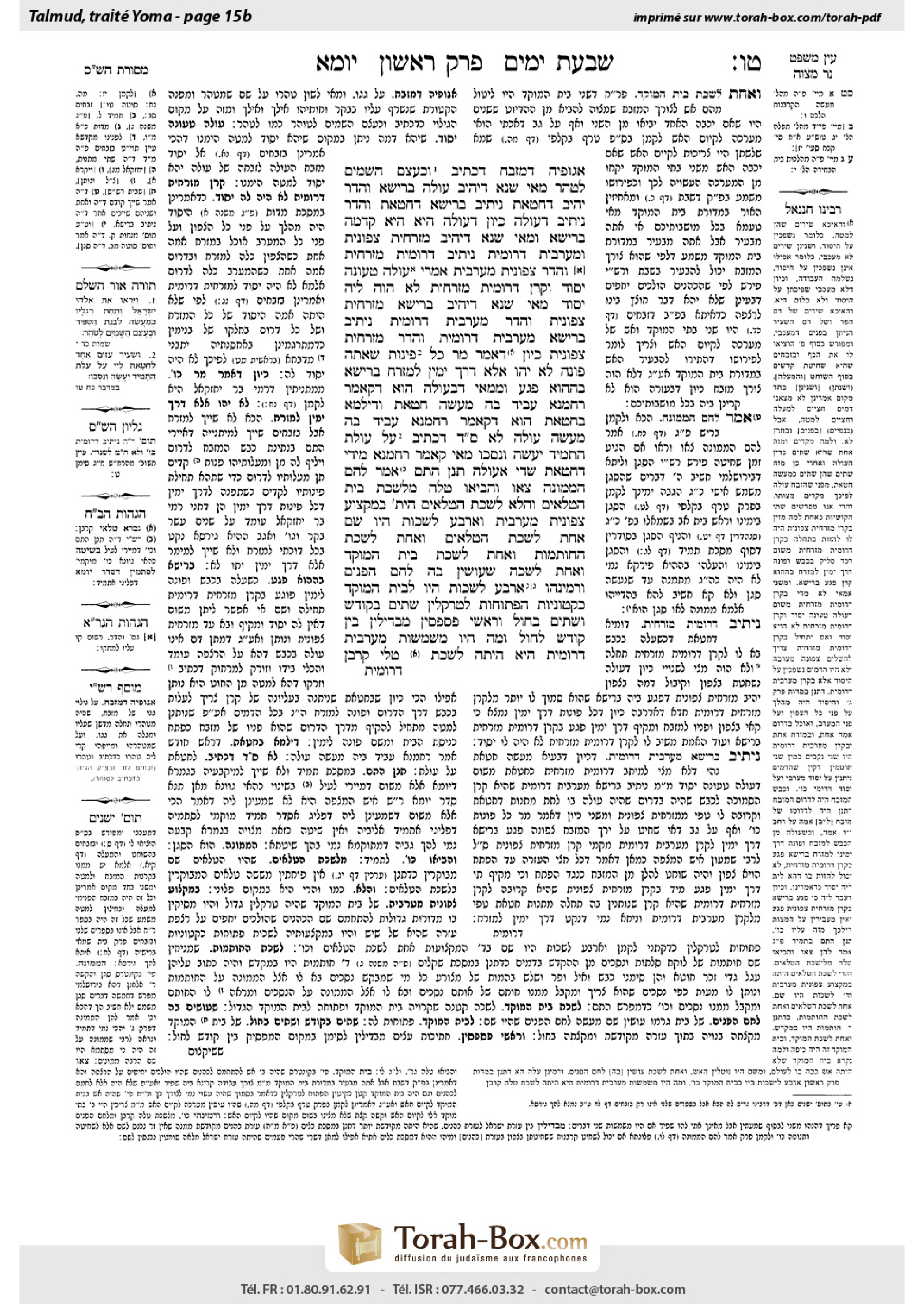
Yoma 15b: Talmud study for Daf Yomi
Daf Yomi is the daily study of one Talmud folio. Explore 37 tractates with scans, Hebrew text, Sefaria English and AI-generated French translations where annotated.
Passage selection and English or AI-generated French translation are available where the scan has annotations. Daf Study is independent of Torah-Box and Sefaria.
Browse Yoma · יומא · All tractatesYoma 15b text and translations
This page of Yoma includes the Aramaic text, an English translation and an AI-generated French translation, alongside the scan above.
יומא י״ה ב · Aramaic and Hebrew text
אַגּוּפֵיהּ דְּמִזְבֵּחַ, דִּכְתִיב: ״וּכְעֶצֶם הַשָּׁמַיִם לָטֹהַר״.
מַאי שְׁנָא דְּיָהֵיב עוֹלָה בְּרֵישָׁא וַהֲדַר יָהֵיב דְּחַטָּאת? נִיתֵּיב בְּרֵישָׁא דְּחַטָּאת, וַהֲדַר נִיתֵּיב דְּעוֹלָה! כֵּיוָן דְּעוֹלָה הִיא, הִיא קָדְמָה בְּרֵישָׁא.
וּמַאי שְׁנָא דְּיָהֵיב מִזְרָחִית צְפוֹנִית, וּמַעֲרָבִית דְּרוֹמִית, נִיתֵּיב דְּרוֹמִית מִזְרָחִית, וַהֲדַר צְפוֹנִית מַעֲרָבִית! אָמְרִי: עוֹלָה טְעוּנָה יְסוֹד, וְקֶרֶן דְּרוֹמִית מִזְרָחִית לָא הֲוָה לֵיהּ יְסוֹד.
מַאי שְׁנָא דְּיָהֵיב בְּרֵישָׁא מִזְרָחִית צְפוֹנִית וַהֲדַר מַעֲרָבִית דְּרוֹמִית? נִיתֵּיב בְּרֵישָׁא מַעֲרָבִית דְּרוֹמִית וַהֲדַר מִזְרָחִית צְפוֹנִית! כֵּיוָן דְּאָמַר מָר כׇּל פִּינּוֹת שֶׁאַתָּה פּוֹנֶה — לֹא יְהוּ אֶלָּא דֶּרֶךְ יָמִין לַמִּזְרָח, בְּרֵישָׁא בְּהָהוּא פָּגַע.
וּמִמַּאי דִּבְעוֹלָה הוּא דְּקָאָמַר רַחֲמָנָא עֲבֵיד בַּהּ מַעֲשֵׂה חַטָּאת, וְדִילְמָא: בְּחַטָּאת הוּא דְּקָאָמַר רַחֲמָנָא עֲבֵיד בַּהּ מַעֲשֵׂה עוֹלָה! לָא סָלְקָא דַּעְתָּךְ, דִּכְתִיב: ״עַל עוֹלַת הַתָּמִיד יֵעָשֶׂה וְנִסְכּוֹ״, מַאי קָאָמַר רַחֲמָנָא: מִידֵּי דְּחַטָּאת שְׁדִי אַעוֹלָה.
תְּנַן הָתָם: אָמַר לָהֶם הַמְמוּנֶּה צְאוּ וְהָבִיאוּ טָלֶה מִלִּשְׁכַּת בֵּית הַטְּלָאִים. וַהֲלֹא, לִשְׁכַּת הַטְּלָאִים הָיְתָה בְּמִקְצוֹעַ צְפוֹנִית מַעֲרָבִית. וְאַרְבַּע לְשָׁכוֹת הָיוּ שָׁם, אַחַת לִשְׁכַּת הַטְּלָאִים, וְאַחַת לִשְׁכַּת הַחוֹתָמוֹת, וְאַחַת לִשְׁכַּת בֵּית הַמּוֹקֵד, וְאַחַת לִשְׁכָּה שֶׁעוֹשִׂין בָּהּ לֶחֶם הַפָּנִים.
וּרְמִינְהוּ: אַרְבַּע לְשָׁכוֹת הָיוּ לְבֵית הַמּוֹקֵד, כְּקִטּוֹנִיּוֹת הַפְּתוּחוֹת לַטְּרַקְלִין, שְׁתַּיִם בַּקּוֹדֶשׁ, וּשְׁתַּיִם בַּחוֹל, וְרָאשֵׁי פְּסֵפָסִין מַבְדִּילִין בֵּין קוֹדֶשׁ לַחוֹל. וּמָה הָיוּ מְשַׁמְּשׁוֹת? מַעֲרָבִית דְּרוֹמִית — הִיא הָיְתָה לִשְׁכַּת טְלֵי קׇרְבָּן.
Yoma 15b · English translation
Rather, tohoro means on top of the altar itself, as it is written: “Like the very sky for purity [latohar]” (Exodus 24:10). Tohoro refers to the top of the altar after the ashes of the incense are cleared and the pure gold is visible.
The Gemara returns to the opinion of Rabbi Shimon IshHaMitzpa: What is different that he says to sprinkle in accordance with the procedure of the burnt-offering first and then sprinkle in accordance with the procedure that is used for the sin-offering? Let us first sprinkle in accordance with the procedure that is used for the sin-offering and then let us sprinkle in accordance with the procedure that is used for the burnt-offering. The Gemara answers: Since the daily offering is a burnt-offering, that procedure takes precedence, and it is followed by the sin-offering.
The Gemara asks: What is different that he says to sprinkle first on the northeast corner of the altar and then on the southwest corner? Let him sprinkle first on the southeast corner and then on the northwest corner. The Sages say: That is because the blood of the burnt-offering requires sprinkling on the side of the altar with a base, as it is stated: “On the base of the altar of burnt-offering” (Leviticus 4:18) and the southeast corner did not have a base. Therefore, the sprinkling was performed on the northeast corner, where part of the base of the altar was located.
The Gemara asks: What is different that he says to sprinkle first on the northeast corner of the altar and then on the southwest corner? Let him sprinkle first on the southwest corner and then on the northeast corner. The Gemara answers that it is since the Master said: All turns that you turn should be only to the right. With regard to certain offerings sacrificed when the priest is on the south side of the altar, he would turn to the east, which was to his right. Since the animal to be offered is slaughtered to the north of the altar, he first sprinkles blood at the corner that he encounters first.
And from where is the conclusion drawn that the Merciful One says with regard to a burnt-offering to perform it in accordance with the procedure of a sin-offering? Perhaps it is with regard to a sin-offering of the New Moon that the Merciful One says to perform it in accordance with the procedure of a burnt-offering. The Gemara responds: This can not enter your mind, as it is written: “It shall be offered aside from the daily burnt-offering and its libation” (Numbers 28:15). What is the Merciful One saying? Cast a matter of the sin-offering upon the burnt-offering, i.e., apply the procedure of the sin-offering to the sacrifice of the burnt-offering.
§ Just as the contradiction above was resolved by attributing different sources to different tanna’im, the Gemara cites an additional contradiction with a similar resolution. We learned in a mishna there: The appointee, the deputy High Priest, said to the other priests: Go out and bring a lamb from the Chamber of the Lambs, where lambs awaiting sacrifice were kept after they underwent inspection and were found to be without blemish. That mishna continues: The Chamber of the Lambs was located in the northwest corner of the Hall of the Hearth in the Temple courtyard. And there were four chambers there in that hall. One was the Chamber of the Lambs, and one was the Chamber of the Seals. In the Temple, seals were dispensed as receipts to individuals who paid for sacrificial animals. The person then showed the seal to a Temple official, who supplied him with an animal. And one was the Chamber of the Hall of the Hearth, and one was the chamber where the shewbread was prepared.
And the Gemara raises a contradiction from a mishna in tractate Middot: Four chambers were open into the Hall of the Hearth like small semi-open rooms [kitoniyyot] that open into a central hall [teraklin]. Two of these chambers were located in the sacred area, in the Temple courtyard, and two of the chambers were located in the non-sacred area of the Temple Mount. And the tops of wooden stakes [pispasin] in the Hall of the Hearth divided between the sacred area and the non-sacred area to apprise the people in both areas where they were located and what conduct is required. And what purpose did these chambers serve? The southwest chamber was the Chamber of the Sacrificial Lambs;
Yoma 15b · Traduction française (IA)
Il faut plutôt comprendre que tohoro désigne le dessus de l’autel lui-même, comme il est écrit : « Comme le ciel lui-même, d’une pureté [latohar] éclatante » (Exode 24:10). Tohoro désigne le dessus de l’autel après que les cendres de l’encens ont été retirées et que l’or pur est visible.
La Guemara revient à l’opinion de Rabbi Shimon Ish HaMitzpa : pourquoi dit-il qu’il faut asperger d’abord selon la procédure de l’holocauste, puis selon celle du sacrifice expiatoire ? Aspergeons d’abord selon la procédure du sacrifice expiatoire, puis selon celle de l’holocauste. La Guemara répond : puisque l’offrande quotidienne est un holocauste, sa procédure a priorité, puis vient celle du sacrifice expiatoire.
La Guemara demande : pourquoi dit-il qu’il faut asperger d’abord l’angle nord-est de l’autel, puis l’angle sud-ouest ? Qu’il asperge d’abord l’angle sud-est, puis l’angle nord-ouest. Les Sages répondent : c’est parce que le sang de l’holocauste doit être aspergé sur le côté de l’autel qui possède une base, comme il est dit : « Sur la base de l’autel de l’holocauste » (Lévitique 4:18), or l’angle sud-est n’avait pas de base. C’est pourquoi l’aspersion avait lieu sur l’angle nord-est, où se trouvait une partie de la base de l’autel.
La Guemara demande : pourquoi dit-il qu’il faut asperger d’abord l’angle nord-est de l’autel, puis l’angle sud-ouest ? Qu’il asperge d’abord l’angle sud-ouest, puis l’angle nord-est. La Guemara répond que c’est parce que le Maître a dit : « Tous les déplacements que tu effectues doivent se faire uniquement vers la droite. » Pour certains sacrifices offerts alors que le prêtre se trouve au sud de l’autel, il se tournait vers l’est, qui était à sa droite. Puisque l’animal destiné à être offert est égorgé au nord de l’autel, il asperge d’abord le sang à l’angle qu’il rencontre en premier.
Et d’où tire-t-on la conclusion que le Miséricordieux prescrit, à propos d’un holocauste, de procéder selon la procédure d’un sacrifice expiatoire ? Peut-être le Miséricordieux prescrit-il, à propos du sacrifice expiatoire de la nouvelle lune, de procéder selon la procédure d’un holocauste. La Guemara répond : cela ne peut te venir à l’esprit, car il est écrit : « Il sera offert en plus de l’holocauste quotidien et de sa libation » (Nombres 28:15). Que dit le Miséricordieux ? Fais porter une règle du sacrifice expiatoire sur l’holocauste, c’est-à-dire applique la procédure du sacrifice expiatoire au sacrifice de l’holocauste.
§ De même que la contradiction précédente a été résolue en attribuant des sources différentes à différents tannaïm, la Guemara rapporte une autre contradiction, qui reçoit une résolution similaire. Nous avons appris dans une Michna, là-bas : Le préposé, le grand prêtre adjoint, dit aux autres prêtres : « Allez chercher un agneau dans la Chambre des agneaux », où étaient conservés les agneaux destinés au sacrifice après avoir été examinés et déclarés sans défaut. Cette Michna poursuit : La Chambre des agneaux se trouvait dans l’angle nord-ouest de la Salle du Foyer, dans le parvis du Temple. Cette salle comportait quatre chambres. L’une était la Chambre des agneaux, une autre la Chambre des sceaux. Dans le Temple, des sceaux étaient remis comme reçus aux personnes qui payaient des animaux destinés aux sacrifices. La personne présentait ensuite le sceau à un fonctionnaire du Temple, qui lui fournissait un animal. Une autre était la Chambre de la Salle du Foyer, et la dernière, la chambre où l’on préparait le pain de proposition.
La Guemara soulève une contradiction à partir d’une Michna du traité Middot : Quatre chambres s’ouvraient sur la Salle du Foyer, comme de petites pièces semi-ouvertes [kitoniyyot] donnant sur une salle centrale [teraklin]. Deux de ces chambres se trouvaient dans l’espace sacré, dans le parvis du Temple, et deux autres dans l’espace profane du mont du Temple. Les extrémités de pieux de bois [pispasin] dans la Salle du Foyer marquaient la séparation entre l’espace sacré et l’espace profane, afin d’indiquer aux personnes présentes dans les deux espaces où elles se trouvaient et quelle conduite était requise. À quoi servaient ces chambres ? La chambre sud-ouest était la Chambre des agneaux destinés aux sacrifices ;
Traduction française générée par IA à partir de l’édition anglaise de Sefaria. Vérifie toujours un passage avec le texte source.
Text from Sefaria: William Davidson Edition - Vocalized Aramaic (CC BY NC); William Davidson Edition - English (CC BY NC).