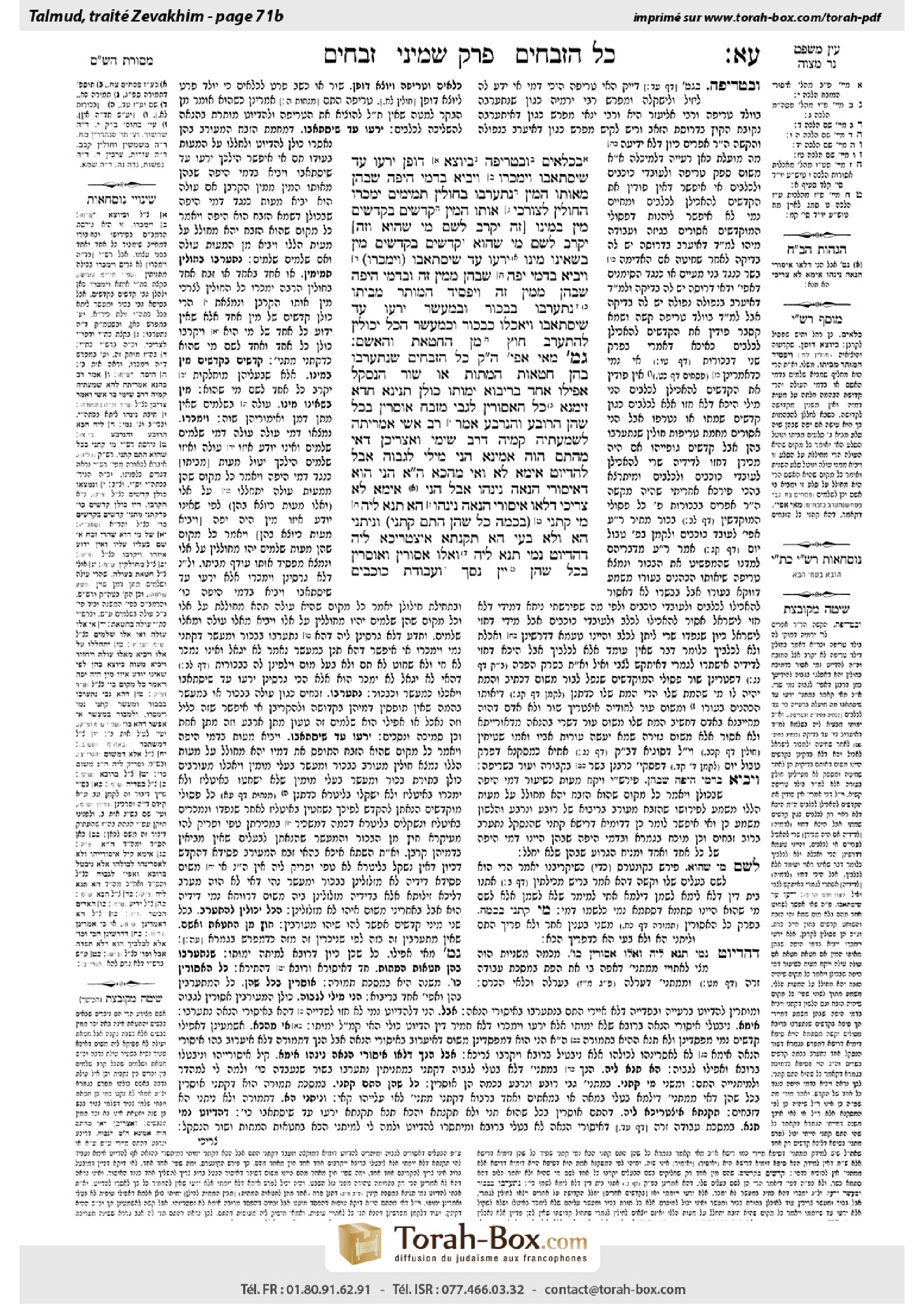
Zevachim 71b: Talmud study for Daf Yomi
Daf Yomi is the daily study of one Talmud folio. Explore 37 tractates with scans, Hebrew text, Sefaria English and AI-generated French translations where annotated.
Passage selection and English or AI-generated French translation are available where the scan has annotations. Daf Study is independent of Torah-Box and Sefaria.
Browse Zevachim · זבחים · All tractatesZevachim 71b text and translations
This page of Zevachim includes the Aramaic text, an English translation and an AI-generated French translation, alongside the scan above.
זבחים ע״א ב · Aramaic and Hebrew text
בְּכִלְאַיִם וּבִטְרֵיפָה, בְּיוֹצֵא דּוֹפֶן – יִרְעוּ עַד שֶׁיִּסְתָּאֲבוּ, וְיִמָּכְרוּ, וְיָבִיא בִּדְמֵי הַיָּפֶה שֶׁבָּהֶן מֵאוֹתוֹ הַמִּין.
נִתְעָרְבוּ בְּחוּלִּין תְּמִימִים – יִמָּכְרוּ הַחוּלִּין לְצוֹרְכֵי אוֹתוֹ הַמִּין.
קָדָשִׁים בְּקָדָשִׁים מִין בְּמִינוֹ – זֶה יִקְרַב לְשֵׁם מִי שֶׁהוּא, וְזֶה יִקְרַב לְשֵׁם מִי שֶׁהוּא.
קָדָשִׁים בְּקָדָשִׁים מִין בְּשֶׁאֵינוֹ מִינוֹ – יִרְעוּ עַד שֶׁיִּסְתָּאֲבוּ וְיִמָּכְרוּ, וְיָבִיא בִּדְמֵי יָפֶה שֶׁבָּהֶן מִמִּין זֶה, וּבִדְמֵי הַיָּפֶה שֶׁבָּהֶן מִמִּין זֶה, וְיַפְסִיד הַמּוֹתָר מִבֵּיתוֹ.
נִתְעָרְבוּ בִּבְכוֹר וּבְמַעֲשֵׂר – יִרְעוּ עַד שֶׁיִּסְתָּאֲבוּ, וְיֵאָכְלוּ כִּבְכוֹר וּכְמַעֲשֵׂר.
הַכֹּל יְכוֹלִין לְהִתְעָרֵב, חוּץ מִן הַחַטָּאת וְהָאָשָׁם.
גְּמָ׳ מַאי ״אֲפִילּוּ״?
הָכִי קָאָמַר: כׇּל הַזְּבָחִים שֶׁנִּתְעָרְבוּ בָּהֶן חַטָּאוֹת הַמֵּתוֹת אוֹ שׁוֹר הַנִּסְקָל, אֲפִילּוּ אֶחָד בְּרִיבּוֹא – יָמוּתוּ כּוּלָּן.
תְּנֵינָא חֲדָא זִימְנָא: כָּל הָאֲסוּרִין לְגַבֵּי מִזְבֵּחַ אוֹסְרִין בְּכׇל שֶׁהֵן, הָרוֹבֵעַ וְהַנִּרְבָּע!
אָמַר רַב אָשֵׁי: אַמְרִיתַהּ לִשְׁמַעְתֵּיהּ קַמֵּיהּ דְּרַב שִׁימִי, וְאַצְרִיכַן – דְּאִי מֵהָתָם, הֲוָה אָמֵינָא: הָנֵי מִילֵּי לְגָבוֹהַּ, אֲבָל לְהֶדְיוֹט אֵימָא לָא;
וְאִי מֵהָכָא, הֲוָה אָמֵינָא: הָנֵי הוּא אִיסּוּרֵי הֲנָאָה נִינְהוּ, אֲבָל הָנֵי אֵימָא לָא; צְרִיכִי.
דְּלָאו אִיסּוּרֵי הֲנָאָה נִינְהוּ – הָא תְּנָא לֵיהּ! מִי קָתָנֵי בְּכַמָּה?! ״כׇּל שֶׁהֵן״ – הָתָם קָתָנֵי.
וְנִיתְנֵי הָא, וְלָא בָּעֵי הָא! תַּקַּנְתָּא אִיצְטְרִיכָא לֵיהּ.
דְּהֶדְיוֹט נָמֵי תְּנָא לֵיהּ – וְאֵלּוּ אֲסוּרִין וְאוֹסְרִין בְּכׇל שֶׁהֵן: יֵין נֶסֶךְ וַעֲבוֹדָה זָרָה!
Zevachim 71b · English translation
Additional examples include an offering that was intermingled with an animal born of a mixture of diverse kinds, e.g., the offspring of a ram and a goat, or with an animal with a wound that will cause it to die within twelve months [tereifa], or with an animal born by caesarean section. In all these cases the animals that are intermingled shall graze until they become unfit for sacrifice and then they shall be sold. And from the money received in the sale, the owner shall bring another offering of the monetary value of the highest-quality animal among them, of the same type of offering that the intermingled offering was.
The mishna continues: If sacrificial animals were intermingled with unblemished, non-sacred animals, which, if consecrated, are fit for sacrifice, the non-sacred animals shall be sold for the purpose of purchasing offerings of the same type as the offering with which they were intermingled.
In a case where sacrificial animals were intermingled with other sacrificial animals, if it was an animal of one type of offering with animals of the same type of offering, one shall sacrifice this animal for the sake of whoever is its owner and one shall sacrifice that animal for the sake of whoever is its owner, and both fulfill their obligation.
In a case where sacrificial animals were intermingled with other sacrificial animals, where an animal of one type of offering was intermingled with animals not of the same type of offering, e.g., two rams, where one is designated as a burnt offering and one as a peace offering, they shall graze until they become unfit for sacrifice and then they shall be sold. And from the money received in the sale, the owner shall bring another offering of the monetary value of the highest-quality animal among them as this type of offering, and another offering of the monetary value of the highest-quality animal among them as that type of offering, and he will lose the additional expense of purchasing two highest-quality animals, when he had sold only one highest-quality animal, from his own assets.
In a case where sacrificial animals were intermingled with a firstborn offering or with an animal tithe offering, they shall graze until they become unfit for sacrifice and they shall both be eaten as a firstborn offering or as an animal tithe offering.
All offerings can become indistinguishably intermingled with each other, except for a sin offering and a guilt offering, as the Gemara will explain.
GEMARA: The mishna teaches the halakha of all the offerings that were intermingled with animals from which deriving benefit is forbidden. This indicates that one offering became intermingled with a majority of prohibited animals, as it is usual to describe the smaller unit as being intermingled with the larger unit. The Gemara asks: If so, what is the meaning of the term: Even, in the clause: Even if the ratio is one in ten thousand, deriving benefit from them all is prohibited and they all must die. If the permitted animal is rendered prohibited by a simple majority, of course it is prohibited if the ratio is one in ten thousand.
The Gemara explains: This is what the mishna is saying: All the offerings in which were intermingled sin offerings left to die, or in which an ox that was sentenced to be stoned was intermingled, even if the ratio is one forbidden animal intermingled with ten thousand offerings, they all must die.
The Gemara raises a difficulty: Why is this mishna necessary? We already learn this halakha on another occasion, in a mishna (Temura 28a): With regard to all animals whose sacrifice on the altar is prohibited, if they are intermingled with animals whose sacrifice is permitted they render the entire mixture prohibited in any amount, regardless of the ratio of permitted to prohibited animals. The mishna adds that these are the animals whose sacrifice is prohibited: An animal that actively copulated with a person, and an animal that was the object of bestiality. That mishna proceeds to add other categories of animals to this list, including ones mentioned in the mishna here. In any event, the basic halakha of the mishna is also taught in tractate Temura.
Rav Ashi says: I said this halakha in the presence of Rav Shimi, and he explained to me that both mishnayot are necessary, as each teaches a novelty not included in the other. Rav Ashi clarifies: As, if this halakha was learned only from there, the mishna in Temura, I would say that this statement, that prohibited animals render a mixture prohibited in any ratio, applies only to prohibiting the animals from being sacrificed to the Most High; but with regard to prohibiting the animals even to an ordinary person [hedyot], e.g., that if they became intermingled with an ox that is to be stoned they all must die without the possibility of redemption, one might say that they are not all rendered prohibited in benefit, as the prohibited animal is nullified in a majority. Therefore, the mishna here teaches that even with regard to deriving benefit, all the animals in the mixture are prohibited.
Rav Ashi continues: And if this halakha was learned only from here, I would say that it is only these categories that are mentioned in this mishna, i.e., sin offerings that were condemned to die or an ox that was sentenced to be stoned, that render a mixture prohibited in any ratio. The halakha is stringent with regard to them, as they are items from which deriving benefit is prohibited. But with regard to these categories mentioned in the mishna in Temura, e.g., an animal that copulated with a person, which are not items from which deriving benefit is prohibited, one might say that they are not disqualified from being sacrificed, and they are nullified in a majority. Therefore, both mishnayot are necessary.
The Gemara questions this explanation: This justifies the mishna here, but concerning the halakha stated in Temura, why did that mishna teach the halakha with regard to those animals that are not items from which deriving benefit is prohibited, such as an animal that copulated with a person; the tanna already taught this halakha in the mishna here. The Gemara answers: Does the mishna here teach by what ratio they render the mixture prohibited? The important measure: In any amount, is taught there, in Temura, not in the mishna here, and that is the novelty of the mishna in Temura.
The Gemara challenges: But if so, let the tanna teach that mishna in Temura, and then he would not require this mishna here. Why teach the second clause of the mishna here? The Gemara explains: It was necessary for the tanna to mention the remedy, i.e., that the animals that are intermingled shall graze until they become unfit for sacrifice and then they shall be sold; and from the money received in the sale, the owner shall bring another offering of the monetary value of the highest-quality animal among them as the same type of offering that the sacrificial animal was. This halakha is not stated in the mishna in Temura.
The Gemara raises another difficulty. The halakha of the mishna that items from which deriving benefit is prohibited render a mixture prohibited in any amount even to an ordinary person, as stated with regard to the sin offerings that were condemned to die and an ox that was sentenced to be stoned, is also taught in a mishna (Avoda Zara 74a): And these following items are themselves forbidden, and any amount of them renders other items with which they become mixed forbidden: Wine used for a libation that became mixed with kosher wine, and objects of idol worship that were intermingled with permitted items.
Zevachim 71b · Traduction française (IA)
Parmi les autres exemples, on trouve une offrande mêlée à un animal issu d’un croisement entre espèces différentes, par exemple le petit d’un bélier et d’une chèvre, ou à un animal atteint d’une lésion qui entraînera sa mort dans les douze mois [tereifa], ou encore à un animal né par césarienne. Dans tous ces cas, les animaux mêlés doivent paître jusqu’à ce qu’ils deviennent impropres au sacrifice, puis être vendus. Avec l’argent obtenu de la vente, le propriétaire apportera une autre offrande d’une valeur égale à celle de l’animal de la plus grande valeur parmi eux, du même type que l’offrande qui a été mêlée.
La Michna poursuit : si des animaux consacrés ont été mêlés à des animaux non consacrés et sans défaut, qui seraient aptes au sacrifice s’ils étaient consacrés, les animaux non consacrés seront vendus afin d’acheter des offrandes du même type que l’offrande à laquelle ils ont été mêlés.
Si des animaux consacrés ont été mêlés à d’autres animaux consacrés, et qu’un animal destiné à un type d’offrande ait été mêlé à des animaux destinés au même type d’offrande, on sacrifiera cet animal au nom de son propriétaire et cet autre animal au nom de son propriétaire, et tous deux s’acquitteront de leur obligation.
Si des animaux consacrés ont été mêlés à d’autres animaux consacrés, et qu’un animal destiné à un type d’offrande ait été mêlé à des animaux destinés à un autre type d’offrande, par exemple deux béliers, dont l’un est désigné comme holocauste et l’autre comme sacrifice de paix, ils paîtront jusqu’à ce qu’ils deviennent impropres au sacrifice, puis seront vendus. Avec l’argent obtenu de la vente, le propriétaire apportera une autre offrande de ce type, d’une valeur égale à celle de l’animal de la plus grande valeur parmi eux, ainsi qu’une autre offrande de l’autre type, d’une valeur égale à celle de l’animal de la plus grande valeur parmi eux. Il devra financer sur ses propres biens la dépense supplémentaire correspondant à l’achat de deux animaux de la plus grande valeur, alors qu’il n’a vendu qu’un seul animal de la plus grande valeur.
Si des animaux consacrés ont été mêlés à une offrande de premier-né ou à une offrande de dîme animale, ils paîtront jusqu’à ce qu’ils deviennent impropres au sacrifice, puis tous seront consommés comme offrande de premier-né ou comme offrande de dîme animale.
Toutes les offrandes peuvent être mêlées les unes aux autres au point qu’on ne puisse plus les distinguer, à l’exception du sacrifice expiatoire et du sacrifice de culpabilité, comme la Guemara l’expliquera.
GUEMARA : La Michna enseigne la halakha concernant toutes les offrandes mêlées à des animaux dont il est interdit de tirer profit. Cela indique qu’une offrande a été mêlée à une majorité d’animaux interdits, car on dit habituellement que l’élément minoritaire est mêlé à l’élément majoritaire. La Guemara demande : si tel est le cas, que signifie le terme « même » dans la clause : « Même si la proportion est d’un animal pour dix mille, il est interdit de tirer profit de tous et ils doivent tous mourir » ? Si l’animal permis devient interdit en présence d’une simple majorité d’animaux interdits, il est évidemment interdit lorsque la proportion est d’un pour dix mille.
La Guemara explique : voici ce que dit la Michna : toutes les offrandes auxquelles ont été mêlés des sacrifices expiatoires condamnés à mourir, ou auxquelles a été mêlé un bœuf condamné à être lapidé, doivent toutes mourir, même si un seul animal interdit a été mêlé à dix mille offrandes.
La Guemara soulève une difficulté : pourquoi cette Michna est-elle nécessaire ? Nous apprenons déjà cette halakha ailleurs, dans une Michna (Temoura 28a) : pour tous les animaux dont le sacrifice sur l’autel est interdit, s’ils sont mêlés à des animaux dont le sacrifice est permis, ils rendent tout le mélange interdit, quelle que soit la proportion d’animaux permis et interdits. La Michna ajoute que les animaux dont le sacrifice est interdit sont les suivants : un animal qui a eu des rapports avec une personne et un animal qui a été l’objet d’un acte de bestialité. Cette Michna ajoute ensuite d’autres catégories d’animaux à cette liste, notamment certaines de celles qui sont mentionnées dans la Michna ici. Quoi qu’il en soit, la halakha fondamentale de la Michna est également enseignée dans le traité Temoura.
Rav Ashi dit : j’ai énoncé cette halakha en présence de Rav Shimi, et il m’a expliqué que les deux Michnayot sont nécessaires, car chacune enseigne un élément nouveau absent de l’autre. Rav Ashi précise : si cette halakha n’était apprise que de là, de la Michna de Temoura, je dirais que l’énoncé selon lequel les animaux interdits rendent un mélange interdit quelle que soit la proportion ne s’applique qu’à l’interdiction de sacrifier ces animaux au Très-Haut. Mais quant à l’interdiction de les utiliser même pour une personne ordinaire [hedyot], par exemple s’ils étaient mêlés à un bœuf destiné à être lapidé et qu’ils doivent tous mourir sans possibilité de rachat, on pourrait dire qu’ils ne sont pas tous interdits à la jouissance, puisque l’animal interdit est annulé dans une majorité. La Michna ici enseigne donc que même la jouissance de tous les animaux du mélange est interdite.
Rav Ashi poursuit : si cette halakha n’était apprise que d’ici, je dirais que seules les catégories mentionnées dans cette Michna — les sacrifices expiatoires condamnés à mourir ou un bœuf condamné à être lapidé — rendent un mélange interdit quelle que soit la proportion. La halakha est stricte à leur égard, car il s’agit d’éléments dont il est interdit de tirer profit. Mais concernant les catégories mentionnées dans la Michna de Temoura, par exemple un animal qui a eu des rapports avec une personne, qui ne sont pas des éléments dont il est interdit de tirer profit, on pourrait dire que ces animaux ne sont pas disqualifiés pour le sacrifice et qu’ils sont annulés dans une majorité. Les deux Michnayot sont donc nécessaires.
La Guemara conteste cette explication : cela justifie la Michna ici, mais concernant la halakha énoncée dans Temoura, pourquoi cette Michna enseigne-t-elle la halakha au sujet de ces animaux dont il n’est pas interdit de tirer profit, comme un animal qui a eu des rapports avec une personne ? Le tanna a déjà enseigné cette halakha dans la Michna ici. La Guemara répond : la Michna ici enseigne-t-elle dans quelle proportion ces animaux rendent le mélange interdit ? La mesure importante — « quelle qu’en soit la quantité » — est enseignée là-bas, dans Temoura, et c’est là la nouveauté de la Michna de Temoura.
La Guemara objecte : dans ce cas, que le tanna enseigne cette Michna dans Temoura, et la Michna ici ne serait alors pas nécessaire. Pourquoi enseigner la seconde clause de la Michna ici ? La Guemara explique : le tanna devait mentionner le remède, c’est-à-dire que les animaux mêlés paissent jusqu’à ce qu’ils deviennent impropres au sacrifice, puis soient vendus ; avec l’argent obtenu de la vente, le propriétaire apportera une autre offrande d’une valeur égale à celle de l’animal de la plus grande valeur parmi eux, du même type que l’offrande de l’animal consacré. Cette halakha n’est pas énoncée dans la Michna de Temoura.
La Guemara soulève une autre difficulté. La halakha de la Michna, selon laquelle des éléments dont il est interdit de tirer profit rendent un mélange interdit quelle qu’en soit la quantité, même pour une personne ordinaire, comme dans le cas des sacrifices expiatoires condamnés à mourir et du bœuf condamné à être lapidé, est également enseignée dans une Michna (Avoda Zara 74a) : « Voici les éléments qui sont eux-mêmes interdits, et dont toute quantité rend interdits les autres éléments auxquels ils sont mêlés : le vin destiné à une libation qui a été mêlé à du vin autorisé, et les objets du culte idolâtre mêlés à des éléments permis. »
Traduction française générée par IA à partir de l’édition anglaise de Sefaria. Vérifie toujours un passage avec le texte source.
Text from Sefaria: William Davidson Edition - Vocalized Aramaic (CC BY NC); William Davidson Edition - English (CC BY NC).