Baba Batra 128a en français · בבא בתרא קכ״ח א
Traduction française du daf 128a du traité Baba Batra (Bava Batra 128a en anglais), avec le texte araméen, l’anglais de Sefaria et le scan de la page, pour étudier le Daf Yomi.
Ouvrir dans le lecteur interactifLire le daf du jour
Traduction française de Baba Batra 128a
Les traductions françaises de Daf Study sont générées par IA à partir de l’édition anglaise de Sefaria. Elles peuvent contenir des erreurs : vérifie toujours un passage avec le texte source.
Ou bien : « Tu me l’as donné en cadeau. » S’il ajoute alors : « Bien que je ne te doive rien, puisque l’esclave m’appartient, si tu le souhaites, jure qu’il est à toi et prends-le », et que le demandeur jure que l’esclave lui appartient, celui qui détient l’esclave ne peut pas revenir sur son offre, bien qu’il n’ait pas été tenu de la faire.
La Guemara demande : Que nous enseigne Rabbi Abba ? Nous avons déjà appris dans une Michna (Sanhédrin 24a) que si l’un des plaideurs dit à l’autre : « Mon père est digne de confiance pour trancher en ma faveur », ou : « Ton père est digne de confiance pour trancher en ma faveur », ou encore : « Ces trois bouviers, qui ne sont pas experts en halakha, sont dignes de confiance pour trancher en ma faveur », et que toutes les personnes mentionnées par ce plaideur sont juridiquement inaptes à exercer la fonction de juges, Rabbi Meïr dit que celui qui a fait cette déclaration peut revenir dessus, tandis que les Sages disent qu’il ne le peut pas et qu’il est tenu de les accepter comme juges si l’autre plaideur le souhaite. Puisque cette halakha est déjà énoncée dans la Michna, quelle halakha nouvelle Rabbi Abba a-t-il enseignée ?
La Guemara du traité Sanhédrin rapporte une controverse entre des amoraïm sur les circonstances du cas de cette Michna : selon l’un, la controverse concerne seulement le cas où celui qui accepte le juge inapte devra renoncer à une créance si le juge tranche en faveur de son adversaire ; selon l’autre, elle concerne même le cas où il devra payer l’autre plaideur si le juge tranche en faveur de son adversaire. En énonçant sa décision dans un cas où le plaideur devra remettre l’esclave à l’autre, Rabbi Abba nous enseigne ceci : la controverse entre Rabbi Meïr et les Sages porte même sur le cas où le plaideur a dit : « Je te donnerai ce que tu réclames si c’est la décision de ces juges », et les Sages estiment que s’il souhaite ensuite revenir sur sa proposition, il ne le peut pas. Rabbi Abba enseigne également que la halakha suit l’opinion des Sages.
§ Rabbi Abba a également envoyé à Rav Yosef bar Ḥama une décision selon laquelle les créanciers d’un défunt recouvrent leurs créances sur les esclaves cananéens que le défunt a laissés à ses héritiers, c’est-à-dire qu’ils prennent les esclaves, car ceux-ci ont, à cet égard, le même statut que les terres. Rav Naḥman dit qu’ils ne recouvrent pas la dette en prenant les esclaves.
§ Rabbi Abba a également envoyé à Rav Yosef bar Ḥama une décision concernant des personnes ayant un ancêtre commun : la halakha est que le témoignage de membres de la troisième génération concernant des membres de la deuxième génération, dont le lien familial le plus proche passe par cet ancêtre, est valable. Par exemple, on peut témoigner au sujet du fils de son cousin germain, sans être disqualifié en raison de cette parenté. Rava dit : le témoignage de membres de la troisième génération concernant des membres de la première génération est lui aussi valable ; par exemple, on peut témoigner au sujet de son grand-oncle.
Mar bar Rav Ashi a jugé valable le témoignage d’une personne au sujet du père de son père, considérant qu’il s’agissait du témoignage d’un membre de la troisième génération concernant un membre de la première génération, que Rava avait jugé valable. Toutefois, la halakha ne suit pas l’opinion de Mar bar Rav Ashi.
§ Rabbi Abba a également envoyé à Rav Yosef bar Ḥama une décision concernant le témoignage : si quelqu’un connaissait, avant de devenir aveugle, des éléments pouvant servir de témoignage au sujet des limites du terrain d’autrui, puis devenait aveugle, il est inapte à témoigner dans un litige portant sur les limites des propriétés de cette personne.
Et Shmuel a dit : il est apte à témoigner, car il peut déterminer les limites des champs malgré sa cécité. En revanche, il n’est pas apte à identifier un objet mobilier, par exemple un manteau, puisqu’il ne peut pas le voir. Rav Sheshet a dit : il peut même identifier un manteau, car il peut en déterminer la longueur et la largeur. En revanche, il n’est pas apte à identifier une pièce d’argent. Rav Pappa a dit : il peut même identifier une pièce d’argent, car il peut en déterminer le poids.
La Guemara soulève une objection à partir d’une baraïta (Tosefta, Sanhédrin 3:5) : si quelqu’un connaissait des éléments pouvant servir de témoignage au sujet d’une personne avant de devenir son gendre, puis devenait son gendre et donc un parent inapte à témoigner à son sujet ; ou s’il était capable d’entendre au moment où il a été témoin d’un événement, puis devenait sourd ; ou s’il était capable de voir au moment où il a été témoin d’un événement, puis devenait aveugle ; ou s’il était apte du point de vue de la halakha, puis devenait fou, dans tous ces cas, il est inapte à témoigner.
La baraïta poursuit : mais s’il connaissait des éléments pouvant servir de témoignage au sujet de cette personne avant de devenir son gendre, puis devenait son gendre, et que sa fille mourait ensuite, de sorte qu’ils ne sont plus parents ; ou s’il était capable d’entendre, puis devenait sourd et recouvrait ensuite l’ouïe ; ou s’il était capable de voir, puis devenait aveugle et recouvrait ensuite la vue ; ou s’il était apte du point de vue de la halakha, puis devenait fou et recouvrait ensuite ses facultés, dans tous ces cas, il est apte à témoigner.
La baraïta conclut : voici le principe : toute personne dont l’état initial ou l’état final, c’est-à-dire l’état au moment de l’événement ou au moment de son témoignage devant le tribunal, est un état d’inaptitude à témoigner, est disqualifiée pour témoigner. Mais toute personne dont l’état initial et l’état final sont des états d’aptitude à témoigner est apte à témoigner, même si elle a été disqualifiée entre-temps. Cette baraïta affirme clairement qu’une personne aveugle est inapte à témoigner.
Texte source et traduction anglaise
בבא בתרא קכ״ח א · texte araméen et hébreu
אַתָּה נְתַתּוֹ לִי בְּמַתָּנָה. רְצוֹנְךָ הִשָּׁבַע וְטוֹל?״ וְנִשְׁבַּע – אֵינוֹ יָכוֹל לַחְזוֹר בּוֹ.
מַאי קָא מַשְׁמַע לַן? תְּנֵינָא, אָמַר לוֹ: ״נֶאֱמָן עָלַי אַבָּא״; ״נֶאֱמָן עָלַי אָבִיךָ״; ״נֶאֱמָנִין עָלַי שְׁלֹשָׁה רוֹעֵי בָקָר״ – רַבִּי מֵאִיר אוֹמֵר: יָכוֹל לַחֲזוֹר בּוֹ, וַחֲכָמִים אוֹמְרִים: אֵינוֹ יָכוֹל לַחֲזוֹר בּוֹ!
הָא קָא מַשְׁמַע לַן – דִּבְ״אֶתֵּן לָךְ״ מַחְלוֹקֶת, וַהֲלָכָה כְּדִבְרֵי חֲכָמִים.
שְׁלַח לֵיהּ רַבִּי אַבָּא לְרַב יוֹסֵף בַּר חָמָא, הֲלָכָה: גּוֹבִין מִן הָעֲבָדִים. וְרַב נַחְמָן אָמַר: אֵין גּוֹבִין.
שְׁלַח לֵיהּ רַבִּי אַבָּא לְרַב יוֹסֵף בַּר חָמָא, הֲלָכָה: שְׁלִישִׁי בְּשֵׁנִי – כָּשֵׁר. רָבָא אָמַר: אַף בְּרִאשׁוֹן.
מָר בַּר רַב אָשֵׁי אַכְשַׁר בְּאַבָּא דְאַבָּא; וְלֵית הִלְכְתָא כְּמָר בַּר רַב אָשֵׁי.
שְׁלַח לֵיהּ רַבִּי אַבָּא לְרַב יוֹסֵף בַּר חָמָא: הָיָה יוֹדֵעַ לוֹ בְּעֵדוּת קַרְקַע עַד שֶׁלֹּא נִסְתַּמֵּא, וְנִסְתַּמֵּא – פָּסוּל.
וּשְׁמוּאֵל אָמַר: כָּשֵׁר, אֶפְשָׁר דִּמְכַוֵּין מִצְרָנַהָא. אֲבָל גְּלִימָא – לָא. וְרַב שֵׁשֶׁת אָמַר: אֲפִילּוּ גְּלִימָא, אֶפְשָׁר דִּמְכַוֵּין מִדַּת אׇרְכּוֹ וּמִדַּת רׇחְבּוֹ. אֲבָל נְסָכָא – לָא. וְרַב פָּפָּא אָמַר: אֲפִילּוּ נְסָכָא, אֶפְשָׁר דִּמְכַוֵּין מִדַּת מִשְׁקְלוֹתָיו.
מֵיתִיבִי: הָיָה יוֹדֵעַ לוֹ בְּעֵדוּת עַד שֶׁלֹּא נַעֲשָׂה חֲתָנוֹ, וְנַעֲשָׂה חֲתָנוֹ; פִּיקֵּחַ, וְנִתְחָרֵשׁ; פִּיתֵּחַ, וְנִסְתַּמֵּא; שָׁפוּי, וְנִשְׁתַּטָּה – פָּסוּל.
אֲבָל הָיָה יוֹדֵעַ לוֹ בְּעֵדוּת עַד שֶׁלֹּא נַעֲשָׂה חֲתָנוֹ, וְנַעֲשָׂה חֲתָנוֹ וּמֵתָה בִּתּוֹ; פִּיקֵּחַ וְנִתְחָרֵשׁ וְחָזַר וְנִתְפַּקֵּחַ; פִּיתֵּחַ וְנִסְתַּמֵּא וְחָזַר וְנִתְפַּתֵּחַ; שָׁפוּי וְנִשְׁתַּטָּה וְחָזַר וְנִשְׁתַּפָּה – כָּשֵׁר.
זֶה הַכְּלָל: כׇּל שֶׁתְּחִלָּתוֹ אוֹ סוֹפוֹ בְּפַסְלוּת – פָּסוּל, תְּחִלָּתוֹ וְסוֹפוֹ בְּכַשְׁרוּת – כָּשֵׁר.
Bava Batra 128a · traduction anglaise de Sefaria
or: You gave him to me as a gift, if he then adds: Although I owe you nothing, as the slave is mine, if it is your desire, take an oath that he is yours and take him; and the claimant takes an oath that the slave is his, the one in possession of the slave cannot retract his offer, although he was not obligated to make the offer.
The Gemara asks: What is Rabbi Abba teaching us? We already learned in a mishna (Sanhedrin 24a) that if one of the litigants said to the other: My father is trusted to adjudicate for me, or: Your father is trusted to adjudicate for me, or: These three cattle herders who are not experts in halakha are trusted to adjudicate for me, and all of the individuals this litigant mentioned are legally disqualified from serving as judges, Rabbi Meir says that the one who stated this can retract his statement, and the Rabbis say that he cannot retract it, and he is obligated to have them serve as judges if the other litigant so desires. Since this halakha is already stated in the mishna, what novel halakha did Rabbi Abba teach?
The Gemara in tractate Sanhedrin records a dispute between amora’im as to the circumstances of the case of that mishna, with one amora holding that the dispute pertains only to a case where the one accepting the disqualified judge will need to forgive a debt if the judge rules in accordance with his opponent, while another amora holds that the dispute pertains even to a case where he will need to pay the other litigant if the judge rules in accordance with his opponent. By stating his ruling in a case where the litigant will have to give the slave to the other, Rabbi Abba teaches us this, that the dispute between Rabbi Meir and the Rabbis is even in a case where the litigant said: I will give you what you claim if that is the ruling of these judges, and the Rabbis hold that if he subsequently wishes to retract his suggestion, he cannot do so. And Rabbi Abba also teaches that the halakha is in accordance with the statement of the Rabbis.
§ Rabbi Abba also sent a ruling to Rav Yosef bar Ḥama that the halakha is that the creditors of one who died collect the debts from the Canaanite slaves the deceased left his heirs, i.e., they take the slaves, as slaves have the same status as land in this regard. And Rav Naḥman says that they do not collect the debt by taking the slaves.
§ Rabbi Abba also sent a ruling to Rav Yosef bar Ḥama that with regard to people with a common ancestor, the halakha is that the testimony of members of the third generation with regard to members of the second generation whose closest familial connection is through that ancestor is valid. For example, one can testify about his first cousin once removed, and is not disqualified as a relative. Rava says: Even the testimony of members of the third generation with regard to members of the first generation is valid; e.g., one can testify about his great-uncle.
Mar bar Rav Ashi deemed one’s testimony with regard to his father’s father valid, as he considered it a case of testimony of a member of the third generation with regard to a member of the first generation, which Rava deemed valid. But the halakha is not in accordance with the opinion of Mar bar Rav Ashi.
§ Rabbi Abba also sent a ruling to Rav Yosef bar Ḥama concerning testimony: If one knew information that could serve as testimony about the boundary of another’s land before he became blind, and then he became blind, he is disqualified from bearing witness in a dispute as to the boundaries of that person’s properties.
And Shmuel said: He is fit to bear witness, as it is possible for him to determine the boundaries of the fields despite his blindness. But he is not fit to identify a movable item, e.g., a cloak, as he cannot see it. And Rav Sheshet said: He can identify even a cloak, as it is possible for him to determine its length and its width. But he is not fit to identify a piece of silver. And Rav Pappa said: He can identify even a piece of silver, as it is possible for him to determine its weight.
The Gemara raises an objection from a baraita (Tosefta, Sanhedrin 3:5): If one knew information that could serve as testimony about another before he became his son-in-law, and then he became his son-in-law, thereby becoming a relative who is disqualified from bearing witness concerning him; or if he was able to hear at the time he witnessed an incident and then he became deaf; or if he was able to see at the time he witnessed an incident and then became blind; or if he was halakhically competent and then became insane, in all these cases, he is disqualified from bearing witness.
The baraita continues: But if he knew information about him that could serve as testimony before he became his son-in-law, and then he became his son-in-law, and then his daughter died, so that they are no longer related; or if he was able to hear, and then became deaf, and then again became able to hear; or if he was able to see, and then became blind, and then again became able to see; or if he was halakhically competent, and then became insane, and then again became halakhically competent, in all these cases, he is fit to bear witness.
The baraita concludes: This is the principle: Anyone whose initial state or his ultimate state, i.e., his state at the time of the incident or at the time of his testimony in court, is one of disqualification for bearing witness is disqualified from bearing witness. But anyone whose initial state and his ultimate state is one of fitness to bear witness is fit to bear witness, even if he was disqualified in the interim. This baraita clearly states that one who is blind is disqualified from bearing witness.
Texte de Sefaria : William Davidson Edition - Vocalized Aramaic (CC BY NC) ; William Davidson Edition - English (CC BY NC).
Scan de Baba Batra 128a
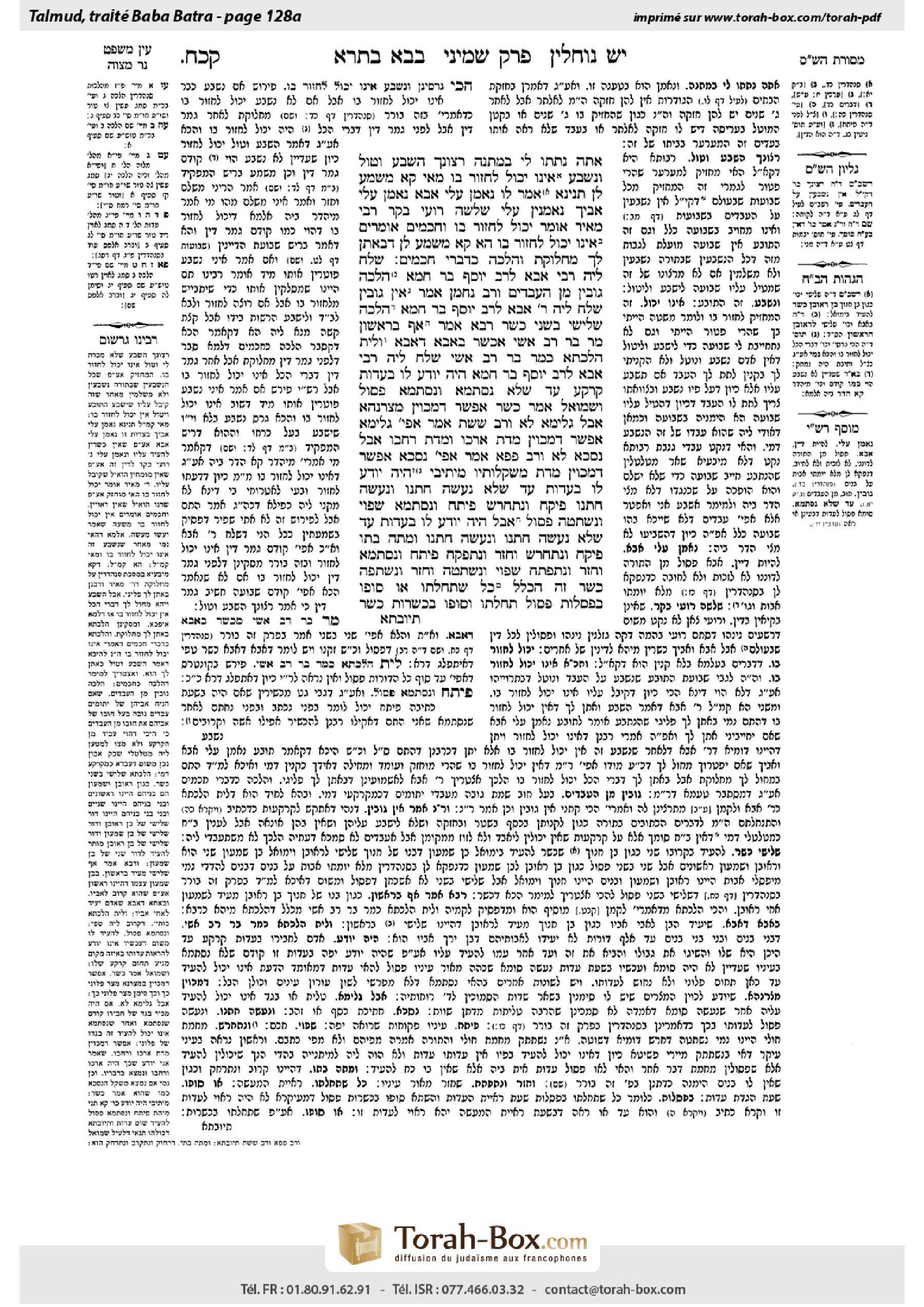
Scan : Torah-Box. Daf Study est un projet indépendant, sans affiliation ni approbation de Torah-Box ou de Sefaria.