Baba Batra 22a en français · בבא בתרא כ״ב א
Traduction française du daf 22a du traité Baba Batra (Bava Batra 22a en anglais), avec le texte araméen, l’anglais de Sefaria et le scan de la page, pour étudier le Daf Yomi.
Ouvrir dans le lecteur interactifLire le daf du jour
Traduction française de Baba Batra 22a
Les traductions françaises de Daf Study sont générées par IA à partir de l’édition anglaise de Sefaria. Elles peuvent contenir des erreurs : vérifie toujours un passage avec le texte source.
La jalousie entre les maîtres accroît la sagesse.
Rav Naḥman bar Yitzḥak dit : Rav Huna, fils de Rav Yehoshua, qui a affirmé que les habitants d’une ville peuvent empêcher des artisans venus d’autres villes de s’y installer, reconnaît que les vendeurs de parfums qui vont de ville en ville ne peuvent être empêchés par les habitants d’entrer dans leur ville. Car le Maître a dit : Ezra a institué une ordonnance pour le peuple juif, selon laquelle les vendeurs de parfums doivent aller de ville en ville afin que les femmes juives puissent se procurer des produits de beauté. Puisque cette ordonnance a été instituée en faveur des femmes juives, les Sages ont statué que ces colporteurs ne pouvaient être empêchés d’entrer dans une ville.
La Guemara poursuit : Cette règle ne s’applique qu’à celui qui veut aller de ville en ville pour vendre. Mais s’il veut ouvrir une boutique, cette règle ne s’applique pas, et les habitants de la ville peuvent l’en empêcher. S’il est un érudit en Torah, il peut même ouvrir une boutique de parfums. C’est ce qui s’est produit lorsque Rava a permis à Rabbi Yoshiya et à Rav Ovadya d’ouvrir une boutique, contrairement à la halakha. Pour quelle raison ? Parce qu’étant rabbins, ils risqueraient d’être distraits de leurs études s’ils devaient se déplacer d’un endroit à l’autre.
§ La Guemara rapporte : Des vendeurs de paniers apportèrent des paniers en Babylonie. Les habitants de la ville vinrent et les empêchèrent d’y vendre. Les deux parties se présentèrent devant Ravina pour obtenir une décision. Ravina leur dit : Ces vendeurs de paniers sont venus de l’extérieur de la ville et vendent à ceux qui viennent de l’extérieur de la ville, c’est-à-dire aux visiteurs qui n’y résident pas. La Guemara précise : Cette règle ne s’applique que les jours de marché, lorsque des habitants d’autres villes viennent faire leurs achats ; ils ne peuvent pas vendre leurs marchandises les jours où il n’y a pas de marché. Et même les jours de marché, cela ne vaut que pour la vente sur le marché ; cette halakha ne s’applique pas à ceux qui circulent dans la ville.
La Guemara rapporte encore : Des vendeurs de laine apportèrent de la laine dans la ville de Pum Nahara. Les habitants de la ville vinrent et les empêchèrent de la vendre. Les deux parties se présentèrent devant Rav Kahana pour obtenir une décision. Rav Kahana leur dit : La halakha est qu’ils peuvent vous empêcher de vendre vos marchandises. Les vendeurs de laine lui dirent : Nous avons des créances à recouvrer dans la ville et, en attendant d’être payés, nous devons vendre nos marchandises pour subvenir à nos besoins. Rav Kahana leur dit : Allez vendre ce dont vous avez besoin pour subvenir à vos besoins jusqu’à ce que vous ayez recouvré vos créances, puis partez.
§ La Guemara rapporte : Rav Dimi de Neharde’a transporta des figues sèches sur un bateau pour les vendre. L’Exilarque dit à Rava : Va voir ; s’il est un érudit en Torah, réserve-lui le marché, c’est-à-dire déclare qu’il a le droit exclusif d’y vendre des figues sèches. Rava dit à son élève Rav Adda bar Abba : Va sentir sa jarre, c’est-à-dire vérifie si Rav Dimi est un érudit en Torah.
Rav Adda bar Abba alla poser une question à Rav Dimi : Quel est le statut d’un panier en osier qu’un éléphant a avalé puis rejeté intact avec ses excréments ? Le récipient est-il encore susceptible d’impureté rituelle, ou est-il considéré comme digéré et donc non susceptible d’impureté ? Rav Dimi ne sut pas répondre. Rav Dimi dit à Rav Adda bar Abba : Le Maître serait-il Rava, pour me poser une question aussi difficile ? Rav Adda bar Abba le frappa sur sa chaussure, d’un geste méprisant, et lui dit : Il y a une grande différence entre moi et Rava ; mais je suis bel et bien ton maître, tandis que Rava est le maître de ton maître.
À la suite de cet échange, Rav Adda bar Abba conclut que Rav Dimi n’était pas un grand érudit en Torah ; il ne lui réserva donc pas le marché, et Rav Dimi perdit ses figues sèches, qui pourrirent. Rav Dimi se présenta devant Rav Yosef pour se plaindre et lui dit : Que le Maître voie ce qu’ils m’ont fait. Rav Yosef lui dit : Celui qui n’a pas tardé à punir l’humiliation du roi d’Édom ne devrait pas tarder à répondre à l’humiliation que tu as subie, mais devrait punir celui qui t’a causé du tort, comme il est écrit : « Ainsi parle le Seigneur : Pour trois transgressions de Moav, et pour quatre, je ne révoquerai pas mon décret, parce qu’il a brûlé les os du roi d’Édom pour en faire de la chaux » (Amos 2,1).
La Guemara rapporte que Rav Adda bar Abba mourut. Rav Yosef dit : C’est moi qui l’ai puni, c’est-à-dire que je suis responsable de sa mort, car je l’ai maudit. Rav Dimi de Neharde’a dit : C’est moi qui l’ai puni, car il m’a fait perdre mes figues sèches. Abaye dit : C’est moi qui l’ai puni, c’est-à-dire qu’il a été puni à cause de moi, parce qu’il ne m’a pas témoigné le respect qui convenait. En effet, Rav Adda bar Abba avait dit aux Sages : Au lieu de ronger des os dans l’école d’Abaye, vous feriez mieux de manger de la viande grasse dans l’école de Rava, c’est-à-dire qu’il vaut mieux étudier avec Rava qu’avec Abaye. Et Rava dit : C’est moi qui l’ai puni, car, lorsqu’il allait chez le boucher acheter un morceau de viande, il disait aux bouchers : Je prendrai de la viande avant le serviteur de Rava, car je suis plus important que lui.
Rav Naḥman bar Yitzḥak dit : C’est moi qui l’ai puni, c’est-à-dire qu’il a été puni à cause de moi, car Rav Naḥman bar Yitzḥak était le responsable des séances de kalla, les rassemblements d’étude de la Torah pendant les mois d’Eloul et d’Adar. Rav Naḥman bar Yitzḥak enseignait aux élèves juste après le cours donné par le chef de l’académie. Chaque jour, avant de se rendre à la séance de kalla, il révisait son cours avec Rav Adda bar Abba, puis entrait dans la salle d’étude pour la séance de kalla.
Ce jour-là, Rav Pappa et Rav Huna, fils de Rav Yehoshua, retinrent Rav Adda bar Abba, car ils n’avaient pas assisté à la fin du cours de Rava. Ils lui dirent : Dis-nous comment Rava a formulé ces halakhot concernant la première dîme des animaux. Rav Adda bar Abba leur répondit : Rava a dit ceci, et Rava a dit cela. Entre-temps, il se faisait tard pour Rav Naḥman bar Yitzḥak, et Rav Adda bar Abba n’était toujours pas arrivé.
Les Sages dirent à Rav Naḥman bar Yitzḥak : Lève-toi et enseigne-nous, car il se fait tard pour nous. Pourquoi le Maître reste-t-il assis à attendre ? Rav Naḥman bar Yitzḥak leur dit : Je suis assis et j’attends le cercueil de Rav Adda bar Abba, qui est sans doute mort. Entre-temps, la rumeur se répandit que Rav Adda bar Abba était effectivement mort. La Guemara fait remarquer qu’il est également raisonnable de conclure que Rav Naḥman bar Yitzḥak l’a puni, c’est-à-dire qu’il est mort à la suite des paroles de Rav Naḥman bar Yitzḥak, puisque le malheur survint au moment même où celui-ci annonçait que le cercueil de Rav Adda bar Abba était en route.
Michna : Celui dont le mur est proche du mur d’un autre ne peut construire un nouveau mur près du mur de son voisin, à moins de le tenir à quatre coudées du mur de celui-ci. Celui qui souhaite construire un mur en face des fenêtres de la maison de son voisin doit éloigner ce mur de quatre coudées des fenêtres, qu’il soit au-dessus, au-dessous ou en face d’elles.
Guemara : Avant d’aborder la construction du second mur, on pourrait demander : Et le premier, comment a-t-il pu placer son mur près de celui de son voisin dès le départ ? Rav Yehuda dit que voici ce que le tanna veut dire :
Texte source et traduction anglaise
בבא בתרא כ״ב א · texte araméen et hébreu
קִנְאַת סוֹפְרִים תַּרְבֶּה חָכְמָה.
אָמַר רַב נַחְמָן בַּר יִצְחָק: וּמוֹדֶה רַב הוּנָא בְּרֵיהּ דְּרַב יְהוֹשֻׁעַ בְּרוֹכְלִין הַמַּחֲזִירִין בָּעֲיָירוֹת, דְּלָא מָצֵי מְעַכֵּב; דְּאָמַר מָר: עֶזְרָא תִּקֵּן לָהֶן לְיִשְׂרָאֵל שֶׁיְּהוּ רוֹכְלִין מַחֲזִירִין בָּעֲיָירוֹת, כְּדֵי שֶׁיְּהוּ תַּכְשִׁיטִין מְצוּיִין לִבְנוֹת יִשְׂרָאֵל.
וְהָנֵי מִילֵּי לְאַהְדּוֹרֵי, אֲבָל לְאִקְּבוֹעֵי – לָא. וְאִי צוּרְבָּא מֵרַבָּנַן הוּא, אֲפִילּוּ לְאִקְּבוֹעֵי נָמֵי. כִּי הָא דְּרָבָא שְׁרָא לְהוּ לְרַבִּי יֹאשִׁיָּה וּלְרַב עוֹבַדְיָה לְאִקְּבוֹעֵי – דְּלָא כְּהִלְכְתָא. מַאי טַעְמָא? כֵּיוָן דְּרַבָּנַן נִינְהוּ, אָתוּ לִטַּרְדוּ מִגִּירְסַיְיהוּ.
הָנְהוּ דִּיקּוּלָאֵי דְּאַיְיתוֹ דִּיקְלָאֵי לְבָבֶל. אֲתוֹ בְּנֵי מָתָא קָא מְעַכְּבִי עִלָּוַיְהוּ. אֲתוֹ לְקַמֵּיהּ דְּרָבִינָא, אֲמַר לְהוּ: מֵעָלְמָא אָתוּ, וּלְעָלְמָא לִיזַבְּנוּ. וְהָנֵי מִילֵּי בְּיוֹמָא דְשׁוּקָא, אֲבָל בְּלָא יוֹמָא דְשׁוּקָא – לָא. וּבְיוֹמָא דְשׁוּקָא נָמֵי לָא אָמְרִינַן אֶלָּא לְזַבּוֹנֵי בְּשׁוּקָא, אֲבָל לְאַהְדּוֹרֵי – לָא.
הָנְהוּ עָמוֹרָאֵי דְּאַיְיתוֹ עַמְרָא לְפוּם נַהֲרָא. אֲתוֹ בְּנֵי מָתָא קָא מְעַכְּבִי עִלָּוַיְהוּ. אֲתוֹ לְקַמֵּיהּ דְּרַב כָּהֲנָא, אָמַר לְהוּ: דִּינָא הוּא דִּמְעַכְּבִי עֲלַיְיכוּ. אֲמַרוּ לֵיהּ: אִית לַן אַשְׁרַאי! אֲמַר לְהוּ: זִילוּ זַבְּנוּ שִׁיעוּר חַיּוּתַיְיכוּ עַד דְּעָקְרִיתוּ אַשְׁרַאי דִּידְכוּ, וְאָזְלִיתוּ.
רַב דִּימִי מִנְּהַרְדְּעָא אַיְיתִי גְּרוֹגְרוֹת בִּסְפִינָה. אֲמַר לֵיהּ רֵישׁ גָּלוּתָא לְרָבָא: פּוֹק חֲזִי, אִי צוּרְבָּא מֵרַבָּנַן הוּא – נַקֵּיט לֵיהּ שׁוּקָא. אֲמַר לֵיהּ רָבָא לְרַב אַדָּא בַּר אַבָּא: פּוֹק תְּהִי לֵיהּ בְּקַנְקַנֵּיהּ.
נְפַק [אֲזַל] בְּעָא מִינֵּיהּ: פִּיל שֶׁבְּלַע כְּפִיפָה מִצְרִית, וֶהֱקִיאָהּ דֶּרֶךְ בֵּית הָרְעִי, מַהוּ? לָא הֲוָה בִּידֵיהּ. אֲמַר לֵיהּ: מָר נִיהוּ רָבָא? טְפַח לֵיהּ בְּסַנְדָּלֵיהּ, אֲמַר לֵיהּ: בֵּין דִּידִי לְרָבָא אִיכָּא טוּבָא, מִיהוּ עַל כׇּרְחָךְ אֲנָא רַבָּךְ, וְרָבָא רַבָּה דְרַבָּךְ.
לָא נַקִּטוּ לֵיהּ שׁוּקָא, פְּסוּד גְּרוֹגְרוֹת דִּידֵיהּ. אֲתָא לְקַמֵּיהּ דְּרַב יוֹסֵף, אֲמַר לֵיהּ: חֲזִי מָר מַאי עֲבַדוּ לִי! אֲמַר לֵיהּ: מַאן דְּלָא שַׁהֲיַיהּ לְאוֹנִיתָא דְּמַלְכָּא דֶּאֱדוֹם, לָא נְשַׁהֲיַיהּ לְאוֹנִיתָיךְ. דִּכְתִיב: ״כֹּה אָמַר ה׳: עַל שְׁלֹשָׁה פִּשְׁעֵי מוֹאָב וְעַל אַרְבָּעָה לֹא אֲשִׁיבֶנּוּ, עַל שׇׂרְפוֹ עַצְמוֹת מֶלֶךְ אֱדוֹם לַסִּיד״.
נָח נַפְשֵׁיהּ דְּרַב אַדָּא בַּר אַבָּא. רַב יוֹסֵף אָמַר: אֲנָא עֲנֵישְׁתֵּיהּ – דַּאֲנָא לַטְיִיתֵיהּ. רַב דִּימִי מִנְּהַרְדְּעָא אָמַר: אֲנָא עֲנֵישְׁתֵּיהּ, דְּאַפְסֵיד גְּרוֹגְרוֹת דִּידִי. אַבָּיֵי אָמַר: אֲנָא עֲנֵישְׁתֵּיהּ, דַּאֲמַר לְהוּ לְרַבָּנַן: אַדִּמְגָרְמִיתוּ גַּרְמֵי בֵּי אַבָּיֵי, תּוּ אִכְלוּ בִּישְׂרָא [שַׁמִּינָא] בֵּי רָבָא. וְרָבָא אָמַר: אֲנָא עֲנֵישְׁתֵּיהּ, [דְּכִי הֲוָה אָזֵיל לְבֵי טַבָּחָא לְמִשְׁקַל אוּמְצָא,] אָמַר לְהוּ לְטַבָּחֵי: אֲנָא שָׁקֵילְנָא בִּישְׂרָא מִיקַּמֵּי שַׁמָּעֵיהּ דְּרָבָא, דַּאֲנָא עֲדִיפְנָא מִינֵּיהּ.
רַב נַחְמָן בַּר יִצְחָק אָמַר: אֲנָא עֲנֵישְׁתֵּיהּ – דְּרַב נַחְמָן בַּר יִצְחָק רֵישׁ כַּלָּה הֲוָה. כׇּל יוֹמָא מִיקַּמֵּי דְּנֵיעוּל לְכַלָּה, מַרְהֵיט בַּהֲדֵיהּ רַב אַדָּא בַּר אַבָּא לִשְׁמַעְתֵּיהּ, וַהֲדַר עָיֵיל לְכַלָּה.
הָהוּא יוֹמָא נַקְטוּהּ רַב פָּפָּא וְרַב הוּנָא בְּרֵיהּ דְּרַב יְהוֹשֻׁעַ לְרַב אַדָּא בַּר אַבָּא מִשּׁוּם דְּלָא הֲווֹ בְּסִיּוּמָא, אֲמַרוּ לֵיהּ: אֵימָא לַן הָנֵי שְׁמַעְתָּתָא דְּמַעְשַׂר בְּהֵמָה הֵיכִי אַמְרִינְהוּ רָבָא. אֲמַר לְהוּ: הָכִי אָמַר רָבָא, וְהָכִי אָמַר רָבָא. אַדְּהָכִי נְגַהּ לֵיהּ [לְרַב נַחְמָן בַּר יִצְחָק], וְלָא אָתֵי רַב אַדָּא בַּר אַבָּא;
אֲמַרוּ לֵיהּ רַבָּנַן לְרַב נַחְמָן בַּר יִצְחָק: קוּם, דִּנְגַהּ לַן, לְמָה יָתֵיב מָר? אֲמַר לְהוּ: יָתֵיבְנָא וְקָא מְנַטְּרָא לְעַרְסֵיהּ דְּרַב אַדָּא בַּר אַבָּא. אַדְּהָכִי נְפַק קָלָא דְּנָח נַפְשֵׁיהּ דְּרַב אַדָּא בַּר אַבָּא. וּמִסְתַּבְּרָא, דְּרַב נַחְמָן בַּר יִצְחָק עַנְשֵׁיהּ.
מַתְנִי׳ מִי שֶׁהָיָה כּוֹתְלוֹ סָמוּךְ לְכוֹתֶל חֲבֵירוֹ, לֹא יִסְמוֹךְ לוֹ כּוֹתֶל אַחֵר, אֶלָּא אִם כֵּן הִרְחִיק מִמֶּנּוּ אַרְבַּע אַמּוֹת. הַחַלּוֹנוֹת – בֵּין מִלְּמַעְלָן, בֵּין מִלְּמַטָּן, בֵּין כְּנֶגְדָּן – אַרְבַּע אַמּוֹת.
גְּמָ׳ וְקַמָּא הֵיכִי סָמֵיךְ? אָמַר רַב יְהוּדָה, הָכִי קָאָמַר:
Bava Batra 22a · traduction anglaise de Sefaria
Jealousy among teachers increases wisdom.
Rav Naḥman bar Yitzḥak said: And Rav Huna, son of Rav Yehoshua, who said that townspeople can bar craftsmen who come from other cities, concedes with regard to perfume salesmen who travel from one town to another that the townspeople cannot prevent them from entering their town. As the Master said: Ezra instituted an ordinance for the Jewish people that perfume salesmen shall travel from town to town so that cosmetics will be available to Jewish women. Since this ordinance was instituted on behalf of Jewish women, the Sages ruled that these peddlers could not be barred from entering a town.
The Gemara continues: And this matter applies only to one who seeks to travel from town to town as a salesman. But if he wants to establish a shop, this ruling was not stated, and the townspeople can prevent him from doing so. And if he is a Torah scholar he may even establish a shop as a perfume salesman. This is like that incident in which Rava permitted Rabbi Yoshiya and Rav Ovadya to establish a shop not in accordance with the halakha. What is the reason for this ruling? The reason is that since they are rabbis, they are likely to be distracted from their studies should they be required to travel from place to place.
§ The Gemara relates: There were these basket sellers who brought baskets to Babylonia. The townspeople came and prevented them from selling there. The two parties came before Ravina for a ruling. Ravina said to them: The basket sellers came from outside the town, and they sell to those from outside the town, i.e., to guests who are not residents of the town. The Gemara comments: And this statement applies only on a market day, when people from other towns come to shop, but they may not sell their wares on non-market days. And even with regard to market days, we say so only with regard to selling in the market, but this halakha does not apply to circulating around the town.
The Gemara further relates: There were these wool sellers who brought wool to the city of Pum Nahara. The townsfolk came and prevented them from selling it. The two parties came before Rav Kahana for a ruling. Rav Kahana said to them: The halakha is that they may prevent you from selling your wares. The wool sellers said to him: We have debts to collect in the city, and we must sell our wares in the meantime to sustain ourselves until we are paid. Rav Kahana said to them: Go and sell the amount needed to sustain yourselves until you have collected your debts, and then leave.
§ The Gemara relates: Rav Dimi of Neharde’a brought dried figs on a ship to sell them. The Exilarch said to Rava: Go and see; if he is a Torah scholar, reserve the market for him, i.e., declare that he has the exclusive right to sell dried figs. Rava said to his student Rav Adda bar Abba: Go and smell his jar, i.e., determine whether or not Rav Dimi is a Torah scholar.
Rav Adda bar Abba went and asked Rav Dimi a question: With regard to an elephant that swallowed a wicker basket and excreted it intact along with its waste, what is the halakha? Is the vessel still susceptible to ritual impurity or is it considered digested and not susceptible to impurity? An answer was not available to Rav Dimi. Rav Dimi said to Rav Adda bar Abba: Is the Master Rava, i.e., are you Rava, as you have asked me such a difficult question? Rav Adda bar Abba struck him on his shoe in a disparaging way and said to him: There is a great difference between me and Rava; but I am perforce your teacher, and Rava is your teacher’s teacher.
Based on this exchange, Rav Adda bar Abba decided that Rav Dimi was not a great Torah scholar, and therefore he did not reserve the market for him, and Rav Dimi lost his dried figs, as they rotted. Rav Dimi came before Rav Yosef to complain, and said to him: The Master should see what they did to me. Rav Yosef said to him: He Who did not delay retribution for the humiliation of the King of Edom should not delay His response to your humiliation, but should punish whoever distressed you, as it is written: “So says the Lord: For three transgressions of Moab, indeed for four I will not reverse for him, because he burned the bones of the King of Edom into lime” (Amos 2:1).
The Gemara reports that Rav Adda bar Abba died. Rav Yosef said: I punished him, i.e., I am to blame for his death, as I cursed him. Rav Dimi from Neharde’a said: I punished him, as he caused my loss of dried figs. Abaye said: I punished him, i.e., he was punished on my account because he did not exhibit the proper respect for me. As Rav Adda bar Abba said to the Sages: Instead of gnawing the bones in the school of Abaye, you would do better to eat fatty meat in the school of Rava, i.e., it is preferable to study with Rava than with Abaye. And Rava said: I punished him, as when he would go to the butcher to buy a piece of meat, he would say to the butchers: I will take meat before Rava’s servant, as I am greater than he is.
Rav Naḥman bar Yitzḥak said: I punished him, i.e., he was punished because of me, as Rav Naḥman bar Yitzḥak was the head of the kalla lectures, the gatherings for Torah study during Elul and Adar. Rav Naḥman bar Yitzḥak would teach the students immediately following the lesson taught by the head of the academy. Every day, before he went in for the kalla lecture, he reviewed his lecture with Rav Adda bar Abba, and then he would enter the study hall for the kalla lecture.
On that day Rav Pappa and Rav Huna, son of Rav Yehoshua, seized Rav Adda bar Abba, because they had not been present at the conclusion of Rava’s lecture. They said to him: Tell us how Rava stated these halakhot of animal tithe. Rav Adda bar Abba said to them: Rava said this and Rava said that. Meanwhile, it grew late for Rav Naḥman bar Yitzḥak, and Rav Adda bar Abba had not yet arrived.
The Sages said to Rav Naḥman bar Yitzḥak: Arise and teach us, as it is late for us. Why does the Master sit and wait? Rav Naḥman bar Yitzḥak said to them: I am sitting and waiting for the bier of Rav Adda bar Abba, who has presumably died. Meanwhile, a rumor emerged that Rav Adda bar Abba had indeed died. The Gemara comments: And so too, it is reasonable to conclude that Rav Naḥman bar Yitzḥak punished him, i.e., he died as a result of Rav Naḥman bar Yitzḥak’s statement, as the unfortunate event occurred just as he announced that Rav Adda bar Abba’s bier was on its way.
MISHNA: One whose wall was close to the wall of another may not build another wall close to the neighbor’s wall unless he distances it four cubits from the wall of the neighbor. And one who desires to build a wall opposite the windows of a neighbor’s house must distance the wall four cubits from the windows, whether above, below, or opposite.
GEMARA: The Gemara comments: Before addressing the construction of the second wall, one could ask: And with regard to the first man, how did he place his wall close to the neighbor’s wall in the first place? Rav Yehuda said that this is what the tanna is saying:
Texte de Sefaria : William Davidson Edition - Vocalized Aramaic (CC BY NC) ; William Davidson Edition - English (CC BY NC).
Scan de Baba Batra 22a
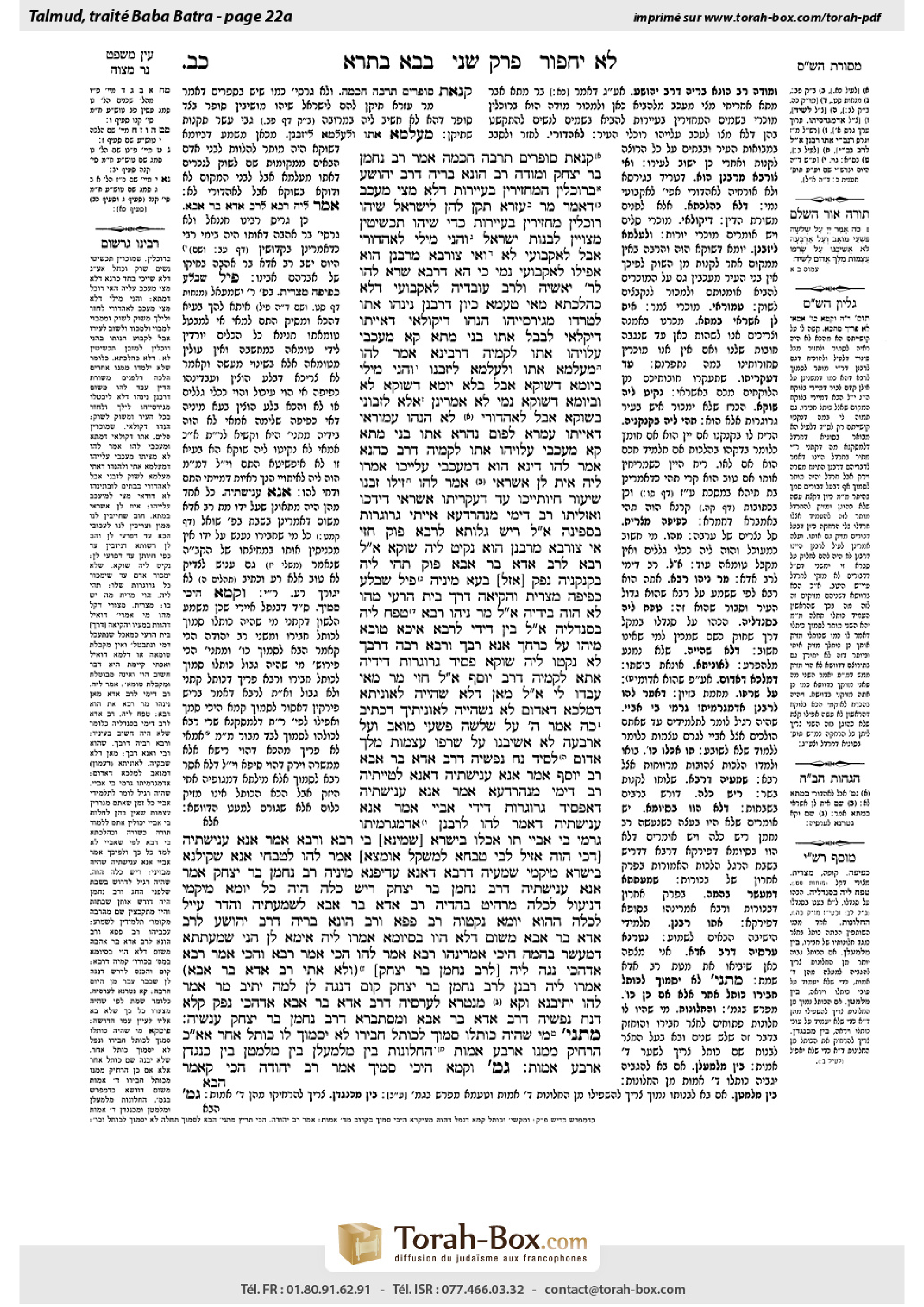
Scan : Torah-Box. Daf Study est un projet indépendant, sans affiliation ni approbation de Torah-Box ou de Sefaria.