Baba Batra 34b en français · בבא בתרא ל״ד ב
Traduction française du daf 34b du traité Baba Batra (Bava Batra 34b en anglais), avec le texte araméen, l’anglais de Sefaria et le scan de la page, pour étudier le Daf Yomi.
Ouvrir dans le lecteur interactifLire le daf du jour
Traduction française de Baba Batra 34b
Les traductions françaises de Daf Study sont générées par IA à partir de l’édition anglaise de Sefaria. Elles peuvent contenir des erreurs : vérifie toujours un passage avec le texte source.
§ La Guemara rapporte : deux personnes se disputaient la propriété d’un bateau. L’un disait : « Il est à moi », et l’autre disait également : « Il est à moi. » L’un d’eux se présenta au tribunal et dit : « Saisissez-le jusqu’à ce que je puisse apporter des témoins attestant qu’il m’appartient. » La Guemara demande : dans un tel cas, le saisit-on ou non ? Rav Houna dit : on le saisit. Rav Yehouda dit : on ne le saisit pas, car rien ne justifie l’intervention du tribunal.
Le tribunal saisit le bateau. Celui qui avait demandé au tribunal de le saisir partit à la recherche de témoins, mais n’en trouva pas. Il dit alors au tribunal : « Relâchez le bateau, et que le plus fort l’emporte », car telle est la décision lorsqu’aucun des plaideurs ne dispose ni d’une preuve ni d’une présomption de possession. La Guemara demande : dans un tel cas, le relâche-t-on ou non ? Rav Yehouda dit : on ne le relâche pas. Rav Pappa dit : on le relâche. La Guemara conclut : la halakha est que l’on ne saisit pas un bien lorsque sa propriété est incertaine et que, s’il a été saisi, on ne le relâche pas.
Un cas s’est présenté où deux personnes se disputaient la propriété d’un bien. L’un disait : « Il appartenait à mes ancêtres et j’en ai hérité », et l’autre disait : « Il appartenait à mes ancêtres et j’en ai hérité. » Aucun des plaideurs ne disposait ni d’une preuve ni d’une présomption de possession. Rav Naḥman dit : le plus fort l’emporte. La Guemara demande : en quoi ce cas diffère-t-il de celui où deux personnes produisent deux actes de vente ou de donation portant sur le même champ, établis le même jour,
Texte source et traduction anglaise
בבא בתרא ל״ד ב · texte araméen et hébreu
הָהוּא אַרְבָּא דַּהֲווֹ מִינְּצוּ עֲלַהּ בֵּי תְרֵי, הַאי אָמַר: ״דִּידִי הִיא״, וְהַאי אָמַר: ״דִּידִי הִיא״. אֲתָא חַד מִינַּיְיהוּ לְבֵי דִינָא, וְאָמַר: תִּיפְסוּהָ אַדְּמַיְיתֵינָא סָהֲדֵי דְּדִידִי הִיא. תָּפְסִינַן, אוֹ לָא תָּפְסִינַן? רַב הוּנָא אָמַר: תָּפְסִינַן. רַב יְהוּדָה אָמַר: לָא תָּפְסִינַן.
אֲזַל, וְלָא אַשְׁכַּח סָהֲדֵי. אֲמַר לְהוּ: אַפְּקוּהָ, וְכֹל דְּאַלִּים גָּבַר. מַפְּקִינַן, אוֹ לָא מַפְּקִינַן? רַב יְהוּדָה אָמַר: לָא מַפְּקִינַן. רַב פָּפָּא אָמַר: מַפְּקִינַן. וְהִלְכְתָא: לָא תָּפְסִינַן, וְהֵיכָא דִּתְפַס – לָא מַפְּקִינַן.
זֶה אוֹמֵר: ״שֶׁל אֲבוֹתַי״, וְזֶה אוֹמֵר: ״שֶׁל אֲבוֹתַי״ – אָמַר רַב נַחְמָן: כֹּל דְּאַלִּים גָּבַר. וּמַאי שְׁנָא מִשְּׁנֵי שְׁטָרוֹת הַיּוֹצְאִין בְּיוֹם אֶחָד –
Bava Batra 34b · traduction anglaise de Sefaria
§ The Gemara relates: There was a certain boat that two people were quarreling about with regard to its ownership. This one said: It is mine, and that one also said: It is mine. One of them came to court and said: Seize it until I am able to bring witnesses that it is mine. The Gemara asks: In such a case, do we seize it or do we not seize it? Rav Huna said: We seize it. Rav Yehuda said: We do not seize it, as there is no cause for the court to intervene.
The court seized the boat. The one who requested of the court to seize it went to seek witnesses, but did not find witnesses. He then said to the court: Release the boat, and whoever is stronger prevails, as this is the ruling in a case where there is neither evidence nor presumptive ownership for either litigant. The Gemara asks: In such a case, do we release it or do we not release it? Rav Yehuda said: We do not release it. Rav Pappa said: We release it. The Gemara concludes: And the halakha is that we do not seize property in a case where ownership is uncertain, and where it was seized, we do not release it.
There was an incident where two people dispute the ownership of property. This one says: It belonged to my ancestors and I inherited it from them, and that one says: It belonged to my ancestors and I inherited it from them. There was neither evidence nor presumptive ownership for either litigant. Rav Naḥman said: Whoever is stronger prevails. The Gemara asks: And in what way is this case different from the case where two people produce two deeds of sale or gift for the same field that are issued on one day,
Texte de Sefaria : William Davidson Edition - Vocalized Aramaic (CC BY NC) ; William Davidson Edition - English (CC BY NC).
Scan de Baba Batra 34b
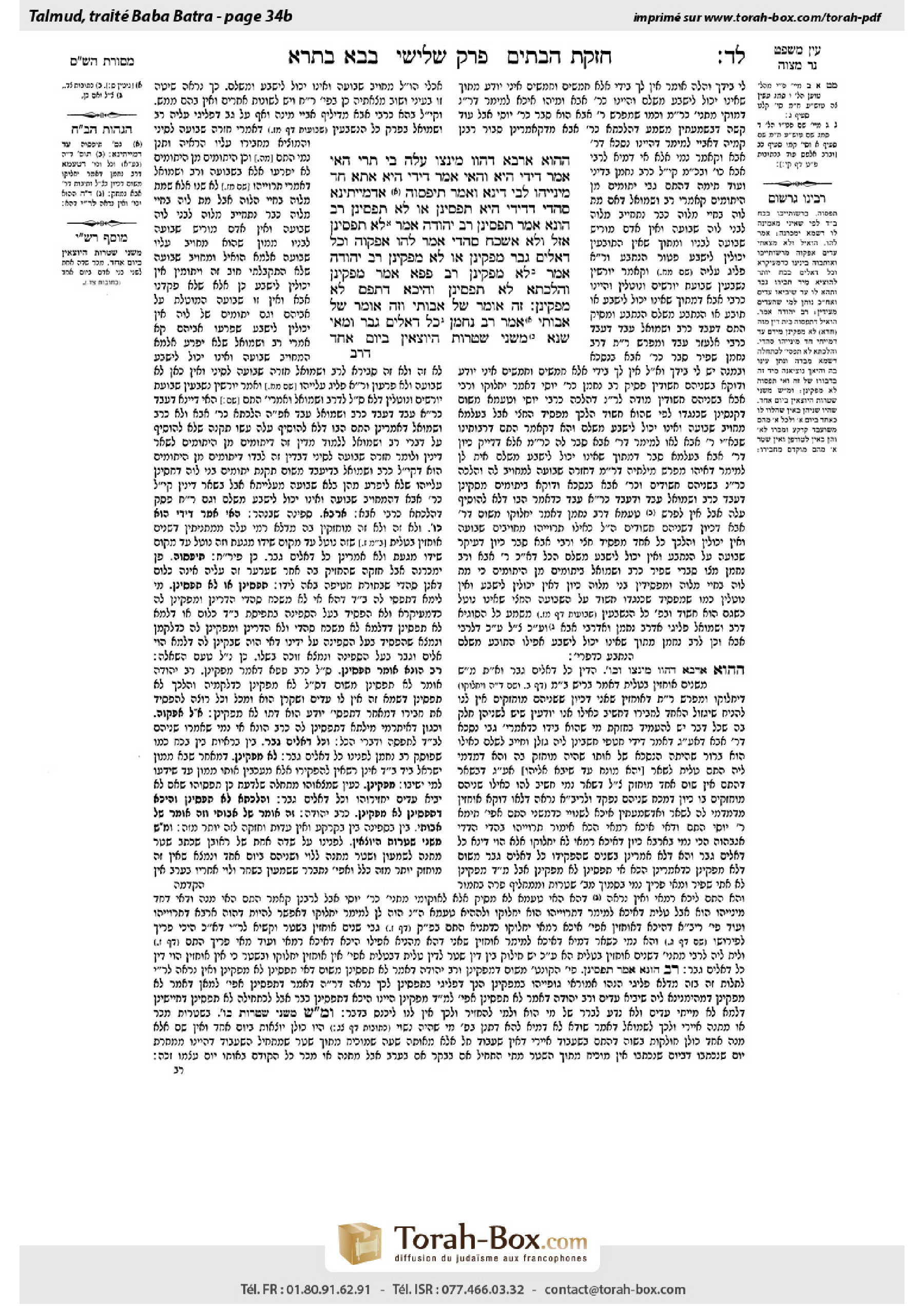
Scan : Torah-Box. Daf Study est un projet indépendant, sans affiliation ni approbation de Torah-Box ou de Sefaria.