Baba Metsia 21b en français · בבא מציעא כ״א ב
Traduction française du daf 21b du traité Baba Metsia (Bava Metzia 21b en anglais), avec le texte araméen, l’anglais de Sefaria et le scan de la page, pour étudier le Daf Yomi.
Ouvrir dans le lecteur interactifLire le daf du jour
Traduction française de Baba Metsia 21b
Les traductions françaises de Daf Study sont générées par IA à partir de l’édition anglaise de Sefaria. Elles peuvent contenir des erreurs : vérifie toujours un passage avec le texte source.
À propos du désespoir inconscient de retrouver un objet perdu, c’est-à-dire du cas où, s’il avait su qu’il avait perdu son bien, le propriétaire aurait désespéré de le retrouver, mais où il ignorait sa perte lorsque le trouveur a découvert l’objet, Abayé dit : Cela n’est pas considéré comme un désespoir ; le propriétaire reste propriétaire de l’objet et le trouveur ne peut pas le garder. Rava dit : Cela est considéré comme un désespoir, et le trouveur peut garder l’objet.
La Guemara délimite la portée de leur désaccord. Dans le cas d’un objet portant un signe distinctif, tous conviennent que le désespoir inconscient n’est pas considéré comme un désespoir. Même si l’on apprend qu’en fin de compte le propriétaire désespère de retrouver l’objet, cela n’est pas considéré comme un désespoir, car l’objet est entré en possession du trouveur de manière illicite. En effet, lorsque le propriétaire apprend que l’objet est tombé de ses mains, il ne désespère pas immédiatement de le retrouver. Au contraire, il se dit : « L’objet porte un signe distinctif ; je le communiquerai au trouveur et je le récupérerai. »
Quant à un objet emporté par la marée ou par la crue d’un fleuve, même s’il porte un signe distinctif, le Miséricordieux autorise le trouveur à le garder, comme nous le verrons plus loin dans la discussion.
Le désaccord porte sur un objet qui ne porte aucun signe distinctif. Abayé dit : Le désespoir inconscient n’est pas considéré comme un désespoir, puisque le propriétaire ignorait que l’objet était tombé de ses mains ; il ne peut donc pas désespérer de le retrouver. Rava dit : Le désespoir inconscient est considéré comme un désespoir, car, lorsqu’il découvre que l’objet est tombé de ses mains, il désespérera de le retrouver, en se disant : « L’objet ne porte aucun signe distinctif. » Par conséquent, on considère qu’il désespère dès le moment où l’objet est tombé.
La Guemara cite ensuite une série de preuves et d’objections concernant les opinions d’Abayé et de Rava, et donne un moyen mnémotechnique pour les retenir : Peh, mem, gimmel, shin ; mem, mem, kuf, gimmel, tet, yod ; kaf, kaf, samekh, ayin, zayin.
La Guemara propose : « Viens et entends » une preuve tirée de la Michna : celui qui trouve des produits éparpillés peut les garder. La Guemara demande : Pourquoi peut-il les garder ? Le propriétaire ignore pourtant qu’ils sont tombés de ses mains. Apparemment, le désespoir inconscient est considéré comme un désespoir. La Guemara rejette cette preuve : Rav Ukva bar Ḥama n’a-t-il pas dit que la Michna parle de grains de blé restés sur l’aire après le battage de la récolte ? Le propriétaire a sciemment laissé ces grains sur l’aire, car cela ne valait pas la peine de les ramasser. Il s’agit donc d’une perte délibérée, et le désespoir est par conséquent conscient. Cette clause de la Michna ne concerne donc pas le désaccord en question.
La Guemara propose : « Viens et entends » une preuve tirée de la Michna : celui qui trouve des pièces éparpillées peut les garder. La Guemara demande : Pourquoi le trouveur peut-il les garder ? Le propriétaire ignore pourtant qu’elles sont tombées de ses mains. Apparemment, le désespoir inconscient est considéré comme un désespoir. La Guemara rejette cette preuve : là aussi, il ne s’agit pas d’un désespoir inconscient, conformément à l’enseignement de Rabbi Yitzḥak, qui dit : « Une personne a tendance à tâter constamment sa bourse. » Ici aussi, une personne a tendance à tâter constamment sa bourse ; il est donc raisonnable de supposer que, peu après la chute des pièces, le propriétaire a pris conscience de sa perte.
La Guemara propose : « Viens et entends » une preuve tirée de la Michna : celui qui trouve des galettes rondes de figues pressées ou des pains de boulanger peut les garder. La Guemara demande : Pourquoi le trouveur peut-il les garder ? Le propriétaire ignore pourtant qu’elles sont tombées de ses mains. Apparemment, le désespoir inconscient est considéré comme un désespoir. La Guemara rejette cette preuve : là aussi, il ne s’agit pas d’un désespoir inconscient. Comme ces objets sont lourds, le propriétaire sait qu’ils sont tombés ; il est donc raisonnable de supposer que, peu après leur chute, il a pris conscience de sa perte.
La Guemara propose : « Viens et entends » une preuve tirée de la Michna : celui qui trouve des bandes de laine pourpre peut les garder. La Guemara demande : Pourquoi le trouveur peut-il les garder ? Le propriétaire ignore pourtant qu’elles sont tombées de ses mains. Apparemment, le désespoir inconscient est considéré comme un désespoir. La Guemara rejette cette preuve : là aussi, il ne s’agit pas d’un désespoir inconscient. Comme ces bandes sont précieuses et ont de la valeur, le propriétaire les palpe pour s’assurer qu’il ne les a pas perdues ; il est donc raisonnable de supposer que, peu après leur chute, il a pris conscience de sa perte. Ce raisonnement s’accorde avec l’enseignement de Rabbi Yitzḥak à propos des pièces.
La Guemara propose : « Viens et entends » une preuve tirée d’une baraïta : celui qui trouve des pièces dans des synagogues, des maisons d’étude ou tout autre lieu fréquenté par la foule peut les garder, car leurs propriétaires désespèrent de les retrouver. Pourquoi le trouveur peut-il les garder ? Le propriétaire ignore pourtant que les pièces sont tombées de ses mains. Rabbi Yitzḥak dit : « Une personne a tendance à tâter constamment sa bourse. » Il est donc raisonnable de supposer que, peu après la chute des pièces, le propriétaire a pris conscience de sa perte.
La Guemara propose : « Viens et entends » une preuve tirée d’une Michna (Pe’a 8:1) : à partir de quel moment chacun est-il autorisé à ramasser les glanures, que la Torah réserve exclusivement aux pauvres (voir Lévitique 19:9–10) ? À partir du moment où les nemushot ont parcouru le champ. La Michna est interprétée ainsi : que sont les nemushot ? Rabbi Yoḥanan dit : ce sont les personnes âgées qui marchent en s’appuyant sur une canne. Comme elles avancent lentement, elles voient les épis restés sur place et les ramassent. Reish Lakish dit : ce sont les glaneurs de la deuxième vague, qui traversent le champ après les premiers glaneurs et ramassent les épis restés sur place.
La Guemara demande : Pourquoi chacun est-il autorisé à prendre les épis ? Certes, les pauvres présents renoncent à leur propriété après avoir vu les nemushot parcourir le champ, mais il y a des pauvres ailleurs qui ignorent le passage des nemushot et ne renoncent pas à leur propriété. Apparemment, le désespoir inconscient est considéré comme un désespoir. Les Sages rejettent cette preuve en disant : puisque des pauvres sont présents ici, les pauvres qui se trouvent ailleurs désespèrent dès le départ de récupérer les glanures et se disent : « Les pauvres qui sont là-bas les ramasseront. »
La Guemara propose : « Viens et entends » une preuve tirée d’une Michna (Ma’asrot 3:4) : si l’on trouve des figues sèches sur le chemin, même au bord d’un champ où des figues sèchent, ou si les branches d’un figuier surplombent un chemin et que l’on trouve des figues en dessous, il est permis de prendre ces figues, sans enfreindre l’interdiction du vol. Comme elles sont sans propriétaire, celui qui les trouve est dispensé de l’obligation de prélever les dîmes. En revanche, il est interdit de prendre les olives ou les caroubes.
Certes, la première clause de la Michna ne pose pas de difficulté selon l’opinion d’Abayé, car il peut expliquer que le propriétaire désespère consciemment de retrouver les figues sèches. Comme elles sont précieuses et ont de la valeur, il les palpe pour s’assurer qu’il ne les a pas perdues. Il est raisonnable de supposer que, peu après leur chute, le propriétaire a pris conscience de sa perte et a désespéré de les retrouver. De même, dans le cas du figuier, on sait qu’il est courant que ses fruits tombent de l’arbre, et le propriétaire renonce à les récupérer dès le départ.
Mais la dernière clause de la Michna pose une difficulté selon l’opinion de Rava, car elle enseigne : « Dans le cas des olives ou des caroubes, il est interdit de prendre les fruits. » Apparemment, le désespoir inconscient n’est pas considéré comme un désespoir. Rabbi Abbahu dit : La halakha concernant l’olive est différente, car son apparence permet d’identifier son propriétaire : le fruit tombé de l’arbre ressemble à ceux qui y poussent encore. Ainsi, même si les olives tombent de l’arbre, celui qui les trouve sait que l’olivier situé sur un terrain appartenant à une personne donnée appartient à celle-ci, et que le propriétaire ne renoncera pas à la propriété de ses fruits.
La Guemara demande : Si tel est le cas, alors, dans la première clause également, il devrait être interdit de prendre les fruits tombés du figuier. Rav Pappa dit : Une figue devient répugnante lorsqu’elle tombe de l’arbre. Même si l’on peut attribuer le fruit à l’arbre dont il provient, le propriétaire n’en voudrait pas puisqu’il n’est plus propre à la consommation ; il renonce donc à sa propriété.
La Guemara propose : « Viens et entends » une preuve tirée d’une baraïta : un voleur qui prend un objet à une personne et le donne à une autre, et de même, un brigand qui prend un objet à une personne et le donne à une autre,
Texte source et traduction anglaise
בבא מציעא כ״א ב · texte araméen et hébreu
יֵאוּשׁ שֶׁלֹּא מִדַּעַת, אַבָּיֵי אָמַר: לָא הָוֵי יֵאוּשׁ. וְרָבָא אָמַר: הָוֵי יֵאוּשׁ.
בְּדָבָר שֶׁיֵּשׁ בּוֹ סִימָן – כּוּלֵּי עָלְמָא לָא פְּלִיגִי דְּלָא הָוֵי יֵאוּשׁ. וְאַף עַל גַּב דְּשַׁמְעִינֵיהּ דְּמִיָּאַשׁ לְסוֹף, לָא הָוֵי יֵאוּשׁ, דְּכִי אֲתָא לִידֵיהּ – בְּאִיסּוּרָא הוּא דַּאֲתָא לִידֵיהּ, דִּלְכִי יָדַע דִּנְפַל מִינֵּיהּ לָא מִיָּאַשׁ, מֵימָר אָמַר: סִימָנָא אִית לִי בְּגַוֵּיהּ, יָהֵבְנָא סִימָנָא וְשָׁקֵילְנָא לֵיהּ.
בְּזוּטוֹ שֶׁל יָם וּבִשְׁלוּלִיתוֹ שֶׁל נָהָר, אַף עַל גַּב דְּאִית בֵּיהּ סִימָן, רַחֲמָנָא שַׁרְיֵיהּ, כִּדְבָעֵינַן לְמֵימַר לְקַמַּן.
כִּי פְּלִיגִי בְּדָבָר שֶׁאֵין בּוֹ סִימָן. אַבָּיֵי אָמַר: לָא הָוֵי יֵאוּשׁ, דְּהָא לָא יָדַע דִּנְפַל מִינֵּיהּ. רָבָא אָמַר: הָוֵי יֵאוּשׁ, דִּלְכִי יָדַע דִּנְפַל מִינֵּיהּ – מִיָּאַשׁ. מֵימָר אָמַר: סִימָנָא לֵית לִי בְּגַוֵּיהּ, מֵהַשְׁתָּא הוּא דְּמִיָּאַשׁ.
(סִימַן פמג״ש ממקגט״י ככסע״ז)
תָּא שְׁמַע: פֵּירוֹת מְפוּזָּרִין, הָא לָא יָדַע דִּנְפַל מִינֵּיהּ! הָא אָמַר רַב עוּקְבָא בַּר חָמָא: הָכָא בְּמַכְנַשְׁתָּא (דְּבִיזְרֵי) [דְּבֵי דָרֵי] עָסְקִינַן, דַּאֲבֵידָה מִדַּעַת הִיא.
תָּא שְׁמַע: מָעוֹת מְפוּזָּרוֹת – הֲרֵי אֵלּוּ שֶׁלּוֹ, אַמַּאי? הָא לָא יָדַע דִּנְפַל מִינֵּיהּ! הָתָם נָמֵי כִּדְרַבִּי יִצְחָק דְּאָמַר: אָדָם עָשׂוּי לְמַשְׁמֵשׁ בְּכִיסוֹ בְּכׇל שָׁעָה וְשָׁעָה. הָכָא נָמֵי אָדָם עָשׂוּי לְמַשְׁמֵשׁ בְּכִיסוֹ בְּכׇל שָׁעָה וְשָׁעָה.
תָּא שְׁמַע: עִיגּוּלֵי דְבֵילָה וְכִכָּרוֹת שֶׁל נַחְתּוֹם – הֲרֵי אֵלּוּ שֶׁלּוֹ. אַמַּאי? וְהָא לָא יָדַע דִּנְפַל מִינֵּיהּ? הָתָם נָמֵי, אַגַּב דְּיַקִּירֵי מִידָּע יָדַע בְּהוּ.
תָּא שְׁמַע: וּלְשׁוֹנוֹת שֶׁל אַרְגָּמָן – הֲרֵי אֵלּוּ שֶׁלּוֹ. וְאַמַּאי? הָא לָא יָדַע דִּנְפַל מִינֵּיהּ! הָתָם נָמֵי, אַגַּב דַּחֲשִׁיבִי מַשְׁמוּשֵׁי מְמַשְׁמֵשׁ בְּהוּ, וְכִדְרַבִּי יִצְחָק.
תָּא שְׁמַע: הַמּוֹצֵא מָעוֹת בְּבָתֵּי כְנֵסִיּוֹת וּבְבָתֵּי מִדְרָשׁוֹת, וּבְכׇל מָקוֹם שֶׁהָרַבִּים מְצוּיִין שָׁם – הֲרֵי אֵלּוּ שֶׁלּוֹ, מִפְּנֵי שֶׁהַבְּעָלִים מִתְיָאֲשִׁין מֵהֶן. וְהָא לָא יָדַע דִּנְפַל מִינֵּיהּ? אָמַר רַבִּי יִצְחָק: אָדָם עָשׂוּי לְמַשְׁמֵשׁ בְּכִיסוֹ בְּכׇל שָׁעָה.
תָּא שְׁמַע: מֵאֵימָתַי כׇּל אָדָם מוּתָּרִים בַּלֶּקֶט? מִשֶּׁיֵּלְכוּ בָּהּ הַנָּמוֹשׁוֹת. וְאָמְרִינַן: מַאי נָמוֹשׁוֹת? וְאָמַר רַבִּי יוֹחָנָן: סָבֵי דְּאָזְלִי אַתִּיגְרָא. רֵישׁ לָקִישׁ אָמַר: לָקוֹטֵי בָּתַר לָקוֹטֵי.
וְאַמַּאי? נְהִי דַּעֲנִיִּים דְּהָכָא מִיָּאֲשִׁי – אִיכָּא עֲנִיִּים בְּדוּכְתָּא אַחְרִיתָא דְּלָא מִיָּאֲשִׁי! אָמְרִי: כֵּיוָן דְּאִיכָּא עֲנִיִּים הָכָא, הָנָךְ מֵעִיקָּרָא אִיָּאוֹשֵׁי מִיָּאַשׁ, וְאָמְרִי: עֲנִיִּים דְּהָתָם מְלַקְּטִי לֵיהּ.
תָּא שְׁמַע: קְצִיעוֹת בַּדֶּרֶךְ, וַאֲפִילּוּ בְּצַד שְׂדֵה קְצִיעוֹת, וְכֵן תְּאֵנָה הַנּוֹטָה לַדֶּרֶךְ, וּמָצָא תְּאֵנִים תַּחְתֶּיהָ – מוּתָּרוֹת מִשּׁוּם גָּזֵל, וּפְטוּרוֹת מִן הַמַּעֲשֵׂר. בְּזֵיתִים וּבְחָרוּבִים – אָסוּר.
בִּשְׁלָמָא רֵישָׁא לְאַבָּיֵי לָא קַשְׁיָא: אַגַּב דַּחֲשִׁיבִי – מְמַשְׁמֵשׁ בְּהוּ. תְּאֵנָה נָמֵי מִידָּע יְדִיעַ דְּנָתְרָא.
אֶלָּא סֵיפָא לְרָבָא קַשְׁיָא, דְּקָתָנֵי ״בְּזֵיתִים וּבְחָרוּבִים אָסוּר״, אָמַר רַבִּי אֲבָהוּ: שָׁאנֵי זַיִת, הוֹאִיל וְחָזוּתוֹ מוֹכִיחַ עָלָיו, וְאַף עַל גַּב דְּנָתְרִין זֵיתֵי מִידָּע יְדִיעַ, דּוּכְתָּא דְּאִינִישׁ אִינִישׁ הוּא.
אִי הָכִי, אֲפִילּוּ רֵישָׁא נָמֵי! אָמַר רַב פָּפָּא: תְּאֵנָה עִם נְפִילָתָהּ נִמְאֶסֶת.
תָּא שְׁמַע: הַגַּנָּב שֶׁנָּטַל מִזֶּה וְנָתַן לָזֶה, וְכֵן גַּזְלָן שֶׁנָּטַל מִזֶּה וְנָתַן לָזֶה,
Bava Metzia 21b · traduction anglaise de Sefaria
With regard to one’s despair of recovering his lost item that is not a conscious feeling, i.e., were he aware of the loss of his property, he would have despaired of its recovery, but he was unaware of his loss when the finder discovered the item, Abaye said: It is not considered despair; the owner maintains ownership of the item, and the finder may not keep it. And Rava said: It is considered despair and the finder may keep it.
The Gemara limits the scope of the dispute. In the case of an item on which there is a distinguishing mark, everyone agrees that despair that is not conscious is not considered despair. And even though we hear that he ultimately despairs of recovering the item, it is not considered despair, as when the item came into the possession of the finder, it was in a prohibited manner that it came into his possession. It is prohibited because when the owner learns that it fell from his possession, he does not despair of its recovery immediately. Instead, he says: I have a distinguishing mark on the item; I will provide the distinguishing mark to the finder, and I will take it.
With regard to an item swept away by the tide of the sea or by the flooding of a river, even though the item has a distinguishing mark, the Merciful One permits the finder to keep it as we seek to state below, later in the discussion.
When they disagree, it is with regard to an item in which there is no distinguishing mark. Abaye said: Despair that is not conscious is not considered despair, as he did not know that the item fell from him; therefore, he cannot despair of recovering it. Rava said: Despair that is not conscious is considered despair, as when he discovers that it fell from him, he will despair of its recovery; as he says upon this discovery: I have no distinguishing mark on the item. Therefore, it is considered from now, when the item fell, that he despairs.
The Gemara proceeds to cite a series of proofs for and against the opinions of Abaye and Rava and provides a mnemonic representing those proofs: Peh, mem, gimmel, shin; mem, mem, kuf, gimmel, tet, yod; kaf, kaf, samekh, ayin, zayin.
The Gemara suggests: Come and hear a proof from the mishna: If one found scattered produce, it belongs to him. The Gemara asks: Why does it belong to him; isn’t the owner unaware that they fell from him? Apparently, despair that is not conscious is considered despair. The Gemara rejects that proof: Didn’t Rav Ukva bar Ḥama say: We are dealing with kernels of wheat that remained during the gathering of grain on the threshing floor? The owner knowingly left the kernels on the threshing floor because it was not worth his while to gather them. That is a deliberate loss, and therefore the despair is conscious. Therefore, this clause in the mishna is not relevant to the dispute in question.
The Gemara suggests: Come and hear a proof from the mishna: If one found scattered coins, these belong to him. The Gemara asks: Why do they belong to the one who finds them; isn’t the owner unaware that they fell from him? Apparently, despair that is not conscious is considered despair. The Gemara rejects that proof: There too, it is not a case of unconscious despair, in accordance with the statement of Rabbi Yitzḥak, who says: A person is prone to feel his money pouch constantly. Here too, a person is prone to feel his money pouch constantly; therefore, it is reasonable to assume that shortly after the coins fell, the owner became aware of his loss.
The Gemara suggests: Come and hear a proof from the mishna: If one found round cakes of pressed figs or baker’s loaves, these belong to him. The Gemara asks: Why do they belong to the one who finds them; isn’t the owner unaware that they fell from him? Apparently, despair that is not conscious is considered despair. The Gemara rejects that proof: There too, it is not a case of unconscious despair. Since these items are heavy he knows that they fell, and it is reasonable to assume that shortly after they fell the owner became aware of his loss.
The Gemara suggests: Come and hear a proof from the mishna: If one found strips of purple wool, these belong to him. The Gemara asks: And why do they belong to the one who finds them; isn’t the owner unaware that they fell from him? Apparently, despair that is not conscious is considered despair. The Gemara rejects that proof: There too, it is not a case of unconscious despair. Since they are significant and valuable, the owner feels around for them to ensure that they are not lost, and therefore, it is reasonable to assume that shortly after the strips fell, the owner became aware of his loss. This reasoning is in accordance with the statement of Rabbi Yitzḥak with regard to coins.
The Gemara suggests: Come and hear a proof from a baraita: In the case of one who finds coins in synagogues, and in study halls, and in any place where the multitudes are found, these coins belong to him due to the fact that the owners despair of their recovery. Why do they belong to him; isn’t the owner unaware that the coins fell from him? Rabbi Yitzḥak says: A person is prone to feel his money pouch constantly; therefore, it is reasonable to assume that shortly after the coins fell, the owner became aware of his loss.
The Gemara suggests: Come and hear a proof from a mishna (Pe’a 8:1): From when is it permitted for any person to collect gleanings, which the Torah designates as exclusively for the poor (see Leviticus 19:9–10)? It is permitted once the nemushot have walked in the field. And we say in interpreting the mishna: What are nemushot? And Rabbi Yoḥanan said: They are the elderly people who walk leaning on a cane. Since they walk slowly, they will see any stalks that remain and take them. Reish Lakish said: They are the second wave of gleaners who pass through the field after the initial gleaners, collecting any stalks that remain.
The Gemara asks: And why is it permitted for any person to take the stalks, given that although the poor who are here renounce ownership of the stalks after seeing the nemushot pass through the field, there are poor people in another place who are unaware of the passing of the nemushot and do not renounce ownership? Apparently, despair that is not conscious is considered despair. The Sages say in rejecting that proof: Since there are poor people here, those poor people in the other places despair of the gleanings from the outset, and they say: The poor people who are there gather the gleanings.
The Gemara suggests: Come and hear a proof from a mishna (Ma’asrot 3:4): If dried figs are found on the path, and even if they were found at the side of a field where dried figs are spread to dry, and likewise, if there is a fig tree whose branches extend over a path and one found figs beneath it, those figs are permitted and taking them is not prohibited due to the prohibition of robbery. And as these are ownerless property, one who finds them is exempt from the obligation to separate tithes. In the case of olives or of carobs, it is prohibited to take the fruit.
Granted, the first clause of the mishna is not difficult according to the opinion of Abaye, as he can explain that one consciously despairs of recovering the dried figs. Since dried figs are significant and valuable, one feels around for them to ensure that they have not become lost. It is reasonable to assume that shortly after the fruits fell, the owner became aware of his loss and despaired of recovering them. In the case of the fig tree, too, one knows that it is a common occurrence for the fruit of the fig tree to fall from the tree and he renounces ownership from the outset.
But the latter clause of the mishna is difficult according to the opinion of Rava, as it teaches: In the case of olives or of carobs, it is prohibited to take the fruit. Apparently, despair that is not conscious is not considered despair. Rabbi Abbahu said: The halakha of an olive is different, since its appearance proves the identity of the owner, as the fruit fallen from the tree appears similar to the fruit on that tree, and even though the olives fall off the tree, the one who finds the olives knows that an olive tree that is located in a place that is owned by a specific person belongs to that person and the owner will not renounce ownership of his fruit.
The Gemara asks: If so, then even in the first clause as well, it should be prohibited to take the fruit that fell from the fig tree. Rav Pappa said: A fig becomes disgusting with its fall from the tree. Even if the fruit can be attributed to the tree of origin, since it is no longer fit for consumption, the owner would not want the fruit and consequently renounces his ownership of it.
The Gemara suggests: Come and hear a proof from a baraita: A thief who took an item from this person and gave it to that person, and likewise, a robber who took an item from this person and gave it to that person,
Texte de Sefaria : William Davidson Edition - Vocalized Aramaic (CC BY NC) ; William Davidson Edition - English (CC BY NC).
Scan de Baba Metsia 21b
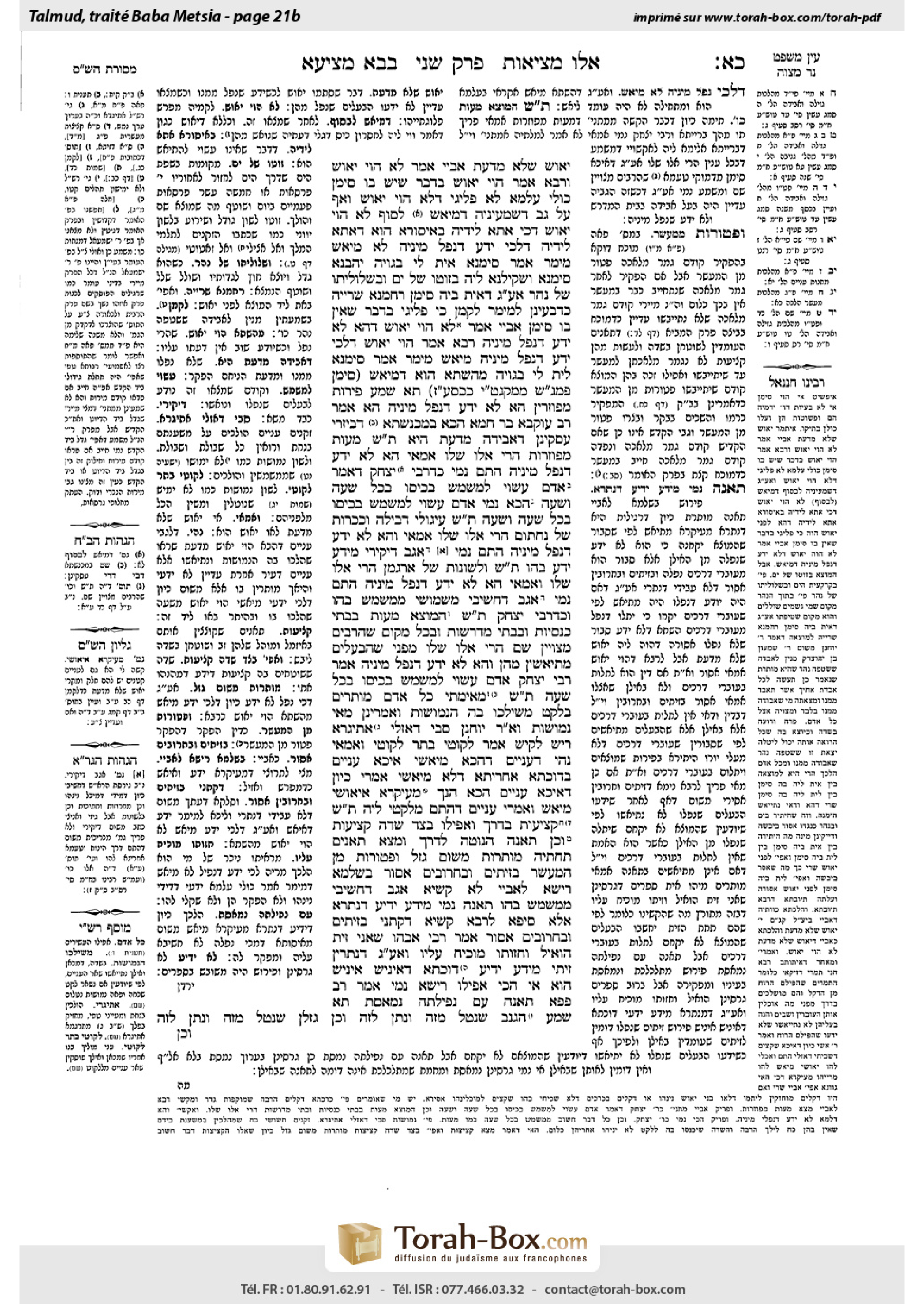
Scan : Torah-Box. Daf Study est un projet indépendant, sans affiliation ni approbation de Torah-Box ou de Sefaria.