Beitsa 19b en français · ביצה י״ט ב
Traduction française du daf 19b du traité Beitsa (Beitzah 19b en anglais), avec le texte araméen, l’anglais de Sefaria et le scan de la page, pour étudier le Daf Yomi.
Ouvrir dans le lecteur interactifLire le daf du jour
Traduction française de Beitsa 19b
Les traductions françaises de Daf Study sont générées par IA à partir de l’édition anglaise de Sefaria. Elles peuvent contenir des erreurs : vérifie toujours un passage avec le texte source.
Toutefois, concernant les offrandes votives et les offrandes volontaires, tous conviennent qu’elles ne peuvent pas être sacrifiées le jour même de la fête, comme l’ont dit Oulla et Rav Adda bar Ahava.
§ La Guemara fait remarquer qu’en cette matière, ces tannaïm sont comme ceux qui ont également divergé sur la même question, comme l’enseigne une baraïta : On ne peut pas apporter de sacrifice de reconnaissance pendant la fête des Matsot, en raison du pain levé qui l’accompagne. En effet, un sacrifice de reconnaissance doit être accompagné d’une offrande de quarante pains, dont dix sont levés et ne peuvent pas être consommés pendant Pessa’h. On ne peut pas non plus apporter ce sacrifice à Chavouot, car c’est une fête pendant laquelle on ne peut apporter aucune offrande qui ne fasse pas partie des obligations de la fête, même s’il s’agit d’une offrande dont on consomme la viande. Toutefois, une personne peut apporter son sacrifice de reconnaissance pendant la fête de Soukkot.
La baraïta poursuit : Rabbi Chimon dit : Mais il est écrit : « À la fête des Matsot, à la fête de Chavouot et à la fête de Soukkot » (Deutéronome 16:16), pour enseigner que tout sacrifice qui peut être apporté à la fête des Matsot peut l’être à la fête de Chavouot et à la fête de Soukkot, et que tout sacrifice qui ne peut pas être apporté à la fête des Matsot ne peut être apporté ni à la fête de Chavouot ni à la fête de Soukkot. Rabbi Elazar, fils de Rabbi Chimon, dit : Une personne peut apporter son sacrifice de reconnaissance pendant la fête de Soukkot et s’acquitter ainsi de son obligation d’apporter des sacrifices de paix de réjouissance. On accomplit la mitsva de se réjouir pendant une fête en consommant la viande des sacrifices, et l’on peut s’acquitter de cette obligation avec la viande d’un sacrifice de reconnaissance. Mais elle ne s’acquitte pas ainsi de l’obligation d’apporter un sacrifice de paix de la fête.
La Guemara examine la baraïta citée plus haut. Le Maître a dit dans la baraïta qu’on ne peut pas apporter de sacrifice de reconnaissance pendant la fête des Matsot, en raison du pain levé qui l’accompagne. La Guemara s’étonne : Il est évident qu’on ne peut pas apporter ce sacrifice pendant Pessa’h, puisqu’il contient du pain levé. Rav Adda, fils de Rav Yitzḥak, a dit — et certains disent que c’est Rav Shmuel bar Abba qui l’a dit : Ici, cette baraïta ne parle pas de Pessa’h même ; elle traite plutôt d’un sacrifice de reconnaissance offert le quatorze nissan, c’est-à-dire la veille de Pessa’h, et ce tanna estime qu’on ne doit pas apporter d’offrandes consacrées dans une situation où la période pendant laquelle elles peuvent être consommées est restreinte, ce qui accroît le risque qu’elles deviennent impropres. Bien qu’il soit permis de manger du pain levé jusqu’à la sixième heure du quatorze nissan, on ne peut pas apporter de sacrifice de reconnaissance la veille de Pessa’h. En effet, un sacrifice de reconnaissance peut normalement être consommé pendant une journée entière et la nuit qui suit ; s’il est apporté la veille de Pessa’h, le temps disponible avant qu’il ne devienne impropre est réduit.
La baraïta enseigne en outre : On ne peut pas non plus apporter de sacrifice de reconnaissance à Chavouot, car c’est une fête. La Guemara explique : Ce tanna estime que les offrandes votives et les offrandes volontaires ne peuvent pas être sacrifiées pendant une fête.
La baraïta poursuit : Toutefois, une personne peut apporter son sacrifice de reconnaissance pendant la fête de Soukkot. La Guemara demande : Quand ? Si l’on dit qu’elle peut l’apporter le jour même de la fête de Soukkot, cela pose une difficulté. N’as-tu pas dit : On ne peut pas non plus apporter de sacrifice de reconnaissance à Chavouot, car c’est une fête, ce qui indique qu’un sacrifice de reconnaissance ne peut pas être apporté le jour même d’une fête ? La même règle devrait s’appliquer à Soukkot. Il faut donc plutôt comprendre qu’elle peut l’apporter pendant les jours intermédiaires de la fête.
La baraïta enseignait également que Rabbi Chimon dit : Mais il est écrit : « À la fête des Matsot, à la fête de Chavouot et à la fête de Soukkot », pour enseigner que tout sacrifice qui peut être apporté à la fête des Matsot peut l’être à la fête de Chavouot et à la fête de Soukkot, et que tout sacrifice qui ne peut pas être apporté à la fête des Matsot ne peut être apporté ni à la fête de Chavouot ni à la fête de Soukkot. Cela semble indiquer que les sacrifices de reconnaissance ne peuvent être apportés pendant aucune fête. Rabbi Zeïra s’y oppose vivement : Si l’on peut couper du bois de chauffage pendant les jours intermédiaires de la fête pour les besoins de la fête, est-il nécessaire de préciser qu’il est permis de sacrifier des offrandes votives et volontaires pendant ces jours ? Comment peut-on suggérer que Rabbi Chimon interdit d’apporter des sacrifices de reconnaissance pendant les jours intermédiaires de la fête de Soukkot ?
Abayé dit : Pour ce qui est de sacrifier ces offrandes pendant les jours intermédiaires d’une fête, tous conviennent que c’est permis. Leur désaccord ne porte pas sur les halakhot d’une fête, mais sur le moment où l’on devient passible d’avoir enfreint l’interdiction de tarder : « Tu ne tarderas pas ». Si quelqu’un fait le vœu d’apporter un sacrifice sans s’acquitter de son engagement, combien de temps doit-il s’écouler avant qu’il ne transgresse l’interdiction : « Tu ne tarderas pas à t’en acquitter » (Deutéronome 23:22) ?
Le premier tanna estime que le Miséricordieux mentionne dans la Torah trois fêtes, même sans respecter leur ordre habituel, c’est-à-dire sans suivre le cycle annuel présenté dans la Torah : Pessa’h, Chavouot, Soukkot. Dès que trois fêtes se sont écoulées depuis le jour où une personne a fait son vœu, si elle n’a pas encore apporté son sacrifice, elle a transgressé l’interdiction de tarder. Le premier tanna conseille donc à celui qui a fait vœu d’apporter un sacrifice de reconnaissance de le faire à Soukkot, même si c’est la première fête qui suit son vœu et bien que ce ne soit pas la première fête mentionnée dans la Torah. S’il ne le fait pas, il devra entreprendre un voyage spécial à Jérusalem pour offrir le sacrifice, car il ne pourra pas le faire à Pessa’h, à cause du pain levé qu’il contient, ni à Chavouot, car cette fête ne comporte pas de jours intermédiaires.
Mais Rabbi Chimon estime que si trois fêtes se sont écoulées dans leur ordre habituel, alors il a transgressé l’interdiction de tarder ; mais si elles se sont écoulées dans un ordre différent, il ne l’a pas transgressée. Par exemple, si quelqu’un a fait vœu d’apporter un sacrifice entre Pessa’h et Chavouot, il peut en reporter l’apport jusqu’à Soukkot de l’année suivante ; il ne sera donc pas tenu d’effectuer un déplacement supplémentaire à Jérusalem dans ce but précis.
La baraïta enseignait également que Rabbi Elazar, fils de Rabbi Chimon, dit : Une personne peut apporter son sacrifice de reconnaissance pendant la fête de Soukkot. La Guemara demande : Quand ? Si l’on dit qu’il parle des jours intermédiaires de la fête, son avis est identique à celui du premier tanna de la baraïta. Il doit donc plutôt parler du jour même de la fête et estimer que les offrandes votives et les offrandes volontaires peuvent être sacrifiées pendant une fête.
La Guemara demande : Si c’est le cas, pourquoi a-t-il cité précisément la fête de Soukkot comme exemple de fête ? La Guemara répond : Rabbi Elazar, fils de Rabbi Chimon, reste fidèle à son raisonnement habituel, et cette décision aussi se rapporte à l’interdiction de tarder. En effet, une baraïta enseigne que Rabbi Chimon dit : Le verset n’avait pas besoin de mentionner « la fête de Soukkot », dont parlait le verset immédiatement précédent ; il suffisait d’ajouter les autres fêtes. Pourquoi donc mentionner « la fête de Soukkot » ? Pour indiquer que cette fête, c’est-à-dire Soukkot, doit être la dernière en ce qui concerne l’interdiction de tarder : on ne transgresse cette interdiction que si les trois fêtes se sont écoulées dans leur ordre habituel, Soukkot étant ainsi la dernière des trois.
Toutefois, Rabbi Elazar, fils de Rabbi Chimon, dit : Cela vient enseigner que c’est cette fête qui entraîne le retard dans l’accomplissement du vœu. Selon lui, l’interdiction de tarder ne dépend pas du nombre de fêtes. Cela signifie plutôt qu’à Soukkot, la dernière fête selon le cycle annuel présenté dans la Torah, on doit avoir apporté toutes ses offrandes votives de l’année. Même celui qui a fait vœu d’apporter un sacrifice juste avant Soukkot doit l’apporter avant la fin de la fête.
La baraïta enseigne : Une personne peut apporter son sacrifice de reconnaissance pendant la fête de Soukkot et s’acquitter ainsi de son obligation d’apporter des sacrifices de paix de réjouissance, mais elle ne s’acquitte pas ainsi de l’obligation d’apporter un sacrifice de paix de la fête. La Guemara s’étonne : Il est évident qu’on ne s’acquitte pas de l’obligation d’apporter un sacrifice de paix de la fête avec un sacrifice de reconnaissance. Le sacrifice de paix de la fête est obligatoire, car tous sont tenus de l’apporter ; or, le principe est que toute offrande obligatoire doit provenir de biens non consacrés, ce qui signifie qu’on ne peut pas apporter une offrande obligatoire avec un animal déjà consacré à un autre usage. Il s’ensuit qu’on ne peut pas s’acquitter de l’obligation d’apporter un sacrifice de paix de la fête avec un sacrifice de reconnaissance, puisque l’on est déjà tenu d’apporter ce dernier et que l’animal a été consacré à cette fin.
La Guemara répond : Non, il est nécessaire d’énoncer cette halakha pour enseigner que même si, au moment de son vœu, quelqu’un a précisé qu’il consacrait l’animal comme sacrifice de reconnaissance à condition qu’il puisse également servir de sacrifice de paix de la fête, il ne s’acquitte néanmoins pas de son obligation avec cet animal.
Cet enseignement est analogue à la question que Rabbi Chimon ben Lakich posa à Rabbi Yoḥanan : Au sujet de quelqu’un qui fait un vœu et dit : « Il m’incombe d’apporter un sacrifice de reconnaissance, et je m’acquitterai également avec lui de mon obligation d’apporter un sacrifice de paix de la fête » ; ou s’il dit : « Je suis nazir »,
Texte source et traduction anglaise
ביצה י״ט ב · texte araméen et hébreu
אֲבָל נְדָרִים וּנְדָבוֹת — דִּבְרֵי הַכֹּל אֵין קְרֵיבִין בְּיוֹם טוֹב.
וְהָנֵי תַּנָּאֵי כִּי הָנֵי תַּנָּאֵי, דְּתַנְיָא: אֵין מְבִיאִין תּוֹדָה בְּחַג הַמַּצּוֹת, מִפְּנֵי חָמֵץ שֶׁבָּהּ. וְלָא בָּעֲצֶרֶת — מִפְּנֵי שֶׁהוּא יוֹם טוֹב. אֲבָל מֵבִיא אָדָם תּוֹדָתוֹ בְּחַג הַסּוּכּוֹת.
רַבִּי שִׁמְעוֹן אוֹמֵר: הֲרֵי הוּא אוֹמֵר ״בְּחַג הַמַּצּוֹת וּבְחַג הַשָּׁבוּעוֹת וּבְחַג הַסֻּכּוֹת״, כֹּל שֶׁבָּא בְּחַג הַמַּצּוֹת — בָּא בְּחַג הַשָּׁבוּעוֹת וּבְחַג הַסּוּכּוֹת, וְכֹל שֶׁלֹּא בָּא בְּחַג הַמַּצּוֹת — אֵינוֹ בָּא בְּחַג הַשָּׁבוּעוֹת וּבְחַג הַסּוּכּוֹת. רַבִּי אֶלְעָזָר בְּרַבִּי שִׁמְעוֹן אוֹמֵר: מֵבִיא אָדָם תּוֹדָתוֹ בְּחַג הַסּוּכּוֹת, וְיוֹצֵא בָּהּ יְדֵי חוֹבָתוֹ מִשּׁוּם שִׂמְחָה, וְאֵין יוֹצֵא בָּהּ מִשּׁוּם חֲגִיגָה.
אָמַר מָר: אֵין מְבִיאִין תּוֹדָה בְּחַג הַמַּצּוֹת — מִפְּנֵי חָמֵץ שֶׁבָּהּ. פְּשִׁיטָא! אָמַר רַב אַדָּא בְּרֵיהּ דְּרַב יִצְחָק, וְאָמְרִי לַהּ רַב שְׁמוּאֵל בַּר אַבָּא: הָכָא בְּאַרְבָּעָה עָשָׂר עָסְקִינַן, וְקָסָבַר: אֵין מְבִיאִין קָדָשִׁים לְבֵית הַפְּסוּל.
וְלֹא בָּעֲצֶרֶת — מִפְּנֵי שֶׁהוּא יוֹם טוֹב. קָסָבַר: נְדָרִים וּנְדָבוֹת אֵין קְרֵיבִין בְּיוֹם טוֹב.
אֲבָל מֵבִיא אָדָם תּוֹדָתוֹ בְּחַג הַסּוּכּוֹת. אֵימַת? אִילֵּימָא בְּיוֹם טוֹב עַצְמוֹ — וְהָא אָמְרַתְּ: וְלֹא בָּעֲצֶרֶת מִפְּנֵי שֶׁהוּא יוֹם טוֹב! אֶלָּא בְּחוּלּוֹ שֶׁל מוֹעֵד.
רַבִּי שִׁמְעוֹן אוֹמֵר: הֲרֵי הוּא אוֹמֵר ״בְּחַג הַמַּצּוֹת וּבְחַג הַשָּׁבוּעוֹת וּבְחַג הַסּוּכּוֹת״, כׇּל שֶׁבָּא בְּחַג הַמַּצּוֹת — בָּא בְּחַג הַשָּׁבוּעוֹת וּבְחַג הַסּוּכּוֹת, וְכׇל שֶׁלֹּא בָּא בְּחַג הַמַּצּוֹת — אֵינוֹ בָּא בְּחַג הַשָּׁבוּעוֹת וּבְחַג הַסּוּכּוֹת. מַתְקֵיף לַהּ רַבִּי זֵירָא: הַשְׁתָּא סַלּוֹתֵי מְסַלְּתִינַן, נְדָרִים וּנְדָבוֹת מִבַּעְיָא?!
אָמַר אַבָּיֵי: בְּהַקְרָבָה כּוּלֵּי עָלְמָא לָא פְּלִיגִי דִּשְׁרֵי. כִּי פְּלִיגִי, לְמֵיקַם עֲלֵיהּ בְּ״בַל תְּאַחֵר״.
תַּנָּא קַמָּא סָבַר: שָׁלֹשׁ רְגָלִים אָמַר רַחֲמָנָא — אֲפִילּוּ שֶׁלֹּא כְּסִדְרָן.
וְרַבִּי שִׁמְעוֹן סָבַר: כְּסִדְרָן — אִין, שֶׁלֹּא כְּסִדְרָן — לָא.
רַבִּי אֶלְעָזָר בְּרַבִּי שִׁמְעוֹן אוֹמֵר: מֵבִיא אָדָם תּוֹדָתוֹ בְּחַג הַסּוּכּוֹת. אֵימַת? אִילֵּימָא בְּחוּלּוֹ שֶׁל מוֹעֵד — הַיְינוּ תַּנָּא קַמָּא. אֶלָּא בְּיוֹם טוֹב, וְקָסָבַר נְדָרִים וּנְדָבוֹת קְרֵיבִין בְּיוֹם טוֹב.
וּמַאי שְׁנָא חַג הַסּוּכּוֹת דְּנָקֵט? רַבִּי אֶלְעָזָר בְּרַבִּי שִׁמְעוֹן לְטַעְמֵיהּ, דְּתַנְיָא, רַבִּי שִׁמְעוֹן אוֹמֵר: לֹא יֵאָמֵר ״חַג הַסּוּכּוֹת״, שֶׁבּוֹ הַכָּתוּב מְדַבֵּר. לָמָּה נֶאֱמַר — לוֹמַר שֶׁזֶּה אַחֲרוֹן.
רַבִּי אֶלְעָזָר בְּרַבִּי שִׁמְעוֹן אוֹמֵר: לוֹמַר שֶׁזֶּה גּוֹרֵם.
וְיוֹצֵא בָּהּ מִשּׁוּם שִׂמְחָה, וְאֵינוֹ יוֹצֵא בָּהּ מִשּׁוּם חֲגִיגָה. פְּשִׁיטָא! דָּבָר שֶׁבְּחוֹבָה הִיא, וְכׇל דָּבָר שֶׁבְּחוֹבָה אֵינוֹ בָּא אֶלָּא מִן הַחוּלִּין!
לָא צְרִיכָא, דְּאַף עַל גַּב דְּפָרֵישׁ.
כְּדִבְעָא מִנֵּיהּ רַבִּי שִׁמְעוֹן בֶּן לָקִישׁ מֵרַבִּי יוֹחָנָן: הָאוֹמֵר הֲרֵי עָלַי תּוֹדָה וְאֵצֵא בָּהּ יְדֵי חֲגִיגָה, הֲרֵינִי נָזִיר
Beitzah 19b · traduction anglaise de Sefaria
However, with regard to vow-offerings and gift-offerings, all agree that they may not be sacrificed on the actual Festival day, as stated by Ulla and Rav Adda bar Ahava.
§ The Gemara comments that in this matter, these tanna’im are like those tanna’im, who also disagreed about the same issue, as it is taught in a baraita: One may not bring a thanks-offering on the festival of Matzot due to the leavened bread included with it, as a thanks-offering must be accompanied by a meal-offering of forty loaves, ten of which are leavened bread, which may not be eaten on Passover. Nor may one bring this offering on Shavuot because it is a Festival, on which one may not bring any offering, even one that is eaten, if it is not part of the Festival obligations. However, a person may bring his thanks-offering on the festival of Sukkot.
The baraita continues: Rabbi Shimon says: But it says: “On the festival of Matzot, on the festival of Shavuot, and on the festival of Sukkot” (Deuteronomy 16:16), to teach: Any offering that comes on the festival of Matzot may come on the festival of Shavuot and on the festival of Sukkot, and any offering that does not come on the festival of Matzot may not come on the festival of Shavuot or on the festival of Sukkot. Rabbi Elazar, son of Rabbi Shimon, says: A person may bring his thanks-offering on the festival of Sukkot and fulfill with it his obligation to bring peace-offerings of rejoicing. One fulfills the mitzva to rejoice on a Festival by eating the meat of offerings, and this obligation can be fulfilled with the meat of a thanks-offering. But he does not fulfill with it the obligation to bring a Festival peace-offering.
The Gemara analyzes the baraita cited above. The Master said in the baraita that one may not bring a thanks-offering on the festival of Matzot due to the leavened bread included with it. The Gemara expresses surprise: It is obvious that one may not bring this offering on Passover, as it contains leavened bread. Rav Adda, son of Rav Yitzḥak, said, and some say it was Rav Shmuel bar Abba who said: Here, this baraita is not discussing Passover itself; rather, we are dealing with a thanks-offering sacrificed on the fourteenth of Nisan, i.e., on Passover eve, and this tanna holds that one may not bring consecrated offerings to a situation where the time that they may be eaten is restricted, thereby increasing the likelihood of disqualification. Although it is permitted to eat leavened bread until the sixth hour of the fourteenth of Nisan, one may not bring a thanks-offering on Passover eve. The reason is that a thanks-offering may usually be eaten for one full day and the following night, and if it is brought on the eve of Passover, the time available before disqualification is reduced.
It was further taught in the baraita: Nor may one bring a thanks-offering on Shavuot because it is a Festival. The Gemara explains: This tanna holds that vow-offerings and gift-offerings may not be sacrificed on a Festival.
The baraita continues: However, a person may bring his thanks-offering on the festival of Sukkot. The Gemara asks: When? If we say he may bring it on the Festival day of Sukkot itself, this is difficult, as didn’t you say: Nor may one bring a thanks-offering on Shavuot because it is a Festival, indicating that a thanks-offering may not be brought on an actual Festival day? The same should apply to Sukkot. Rather, it means that one may bring it on the intermediate days of the Festival.
The baraita further taught that Rabbi Shimon says: But it says: “On the festival of Matzot, on the festival of Shavuot, and on the festival of Sukkot,” to teach: Any offering that comes on the festival of Matzot may come on the festival of Shavuot and on the festival of Sukkot, and any offering that does not come on the festival of Matzot may not come on the festival of Shavuot or on the festival of Sukkot. This seems to indicate that thanks-offerings may not be brought on any Festival. Rabbi Zeira strongly objects to this: Now, if we may chop kindling wood on the intermediate days of the Festival for the sake of the Festival, is it necessary to state that it is permitted to sacrifice vow-offerings and gift-offerings on the intermediate Festival days? How can it be suggested that Rabbi Shimon prohibits bringing thanks-offerings on the intermediate days of the festival of Sukkot?
Abaye said: With regard to sacrificing these offerings on the intermediate days of a Festival, everyone agrees that it is permitted. When they disagree, it is not with regard to the halakhot of a Festival but with respect to determining when one is liable for violating the prohibition: You must not delay. If one vows to bring an offering but fails to fulfill his pledge, how much time must pass before he transgresses the prohibition: “You shall not delay to pay it” (Deuteronomy 23:22)?
The first tanna holds that the Merciful One states three Festivals in the Torah, even not in their proper order, meaning not in accordance with the yearly cycle found in the Torah: Passover, Shavuot, Sukkot. As soon as three Festivals have passed from the day a person took his vow, if he has yet to bring his offering, he has transgressed the prohibition against delaying. Therefore, the first tanna advises a person who vowed to bring a thanks-offering to do so on Sukkot, even if it is the first Festival after his vow, and even though it is not the first Festival listed by the Torah. If he fails to do so, he will have to make a special trip to Jerusalem in order to sacrifice the offering, as he will not be able to sacrifice it on Passover due to the leavened bread it contains, or on Shavuot because it does not have intermediate Festival days.
But Rabbi Shimon holds that if three Festivals have passed in their proper order, yes, he has violated the prohibition against delaying; but if they have passed not in their proper order, he has not violated the prohibition. If, for example, one vowed to bring an offering between Passover and Shavuot, he may put off bringing the offering until Sukkot of the following year, and therefore he would not be required to travel an extra time to Jerusalem specifically for this purpose.
The baraita further taught that Rabbi Elazar, son of Rabbi Shimon, says: A person may bring his thanks-offering on the festival of Sukkot. The Gemara asks: When? If we say that he means on the intermediate days of the Festival, this is identical to the opinion of the first tanna of the baraita. Rather, he must be referring to the Festival day itself, and he holds that vow-offerings and gift-offerings may be sacrificed on a Festival.
The Gemara asks: If so, what is different about the festival of Sukkot that he cited it specifically as an example of a Festival? The Gemara answers: Rabbi Elazar, son of Rabbi Shimon, conforms to his standard line of reasoning, and this ruling too is related to the prohibition against delaying. As it is taught in a baraita that Rabbi Shimon says: The verse did not have to say “the festival of Sukkot,” of which the immediately preceding verse was speaking; it was only necessary to add the other Festivals. Why, then, is “the festival of Sukkot” stated? It is to say that this Festival, i.e., Sukkot, must be the last one with regard to the prohibition against delaying; one transgresses the prohibition only if the three Festivals have passed in their proper order, so that Sukkot is the last of the three.
However, Rabbi Elazar, son of Rabbi Shimon, says: It comes to say that this Festival is what causes a person to be late in fulfilling his vow. In his view, the prohibition against delaying does not depend on the number of Festivals. Rather, it means that by the time of Sukkot, the last Festival according to the yearly cycle found in the Torah, one must have brought all of his vow-offerings of that year. Even one who vowed to bring an offering just before Sukkot must bring his offering before the Festival ends.
It is taught in the baraita: A person may bring his thanks-offering on the festival of Sukkot and fulfill with it his obligation to bring peace-offerings of rejoicing, but he does not fulfill with it the obligation to bring a Festival peace-offering. The Gemara expresses surprise: It is obvious that one does not fulfill his obligation to bring a Festival peace-offering with his thanks-offering. The Festival peace-offering is an obligatory matter, as everyone is obligated to bring this offering, and the principle is that anything that is an obligatory matter must come only from that which is non-sacred, meaning that one cannot bring an obligatory offering from an animal that has already been consecrated for another purpose. It follows that one cannot discharge his obligation to bring a Festival peace-offering with a thanks-offering, as he is already obligated to bring the latter and has consecrated the animal for this purpose.
The Gemara answers: No, it is necessary to state this halakha in order to teach that even if one specified at the time of his vow that he is consecrating the animal as a thanks-offering on condition that it may be used as a Festival peace-offering as well, he nevertheless does not fulfill his obligation with it.
This teaching is similar to the question that Rabbi Shimon ben Lakish asked of Rabbi Yoḥanan: With regard to one who vows and says: It is incumbent upon me to bring a thanks-offering, and I will also fulfill my obligation to bring a Festival peace-offering with it; or if he says: I am a nazirite,
Texte de Sefaria : William Davidson Edition - Vocalized Aramaic (CC BY NC) ; William Davidson Edition - English (CC BY NC).
Scan de Beitsa 19b
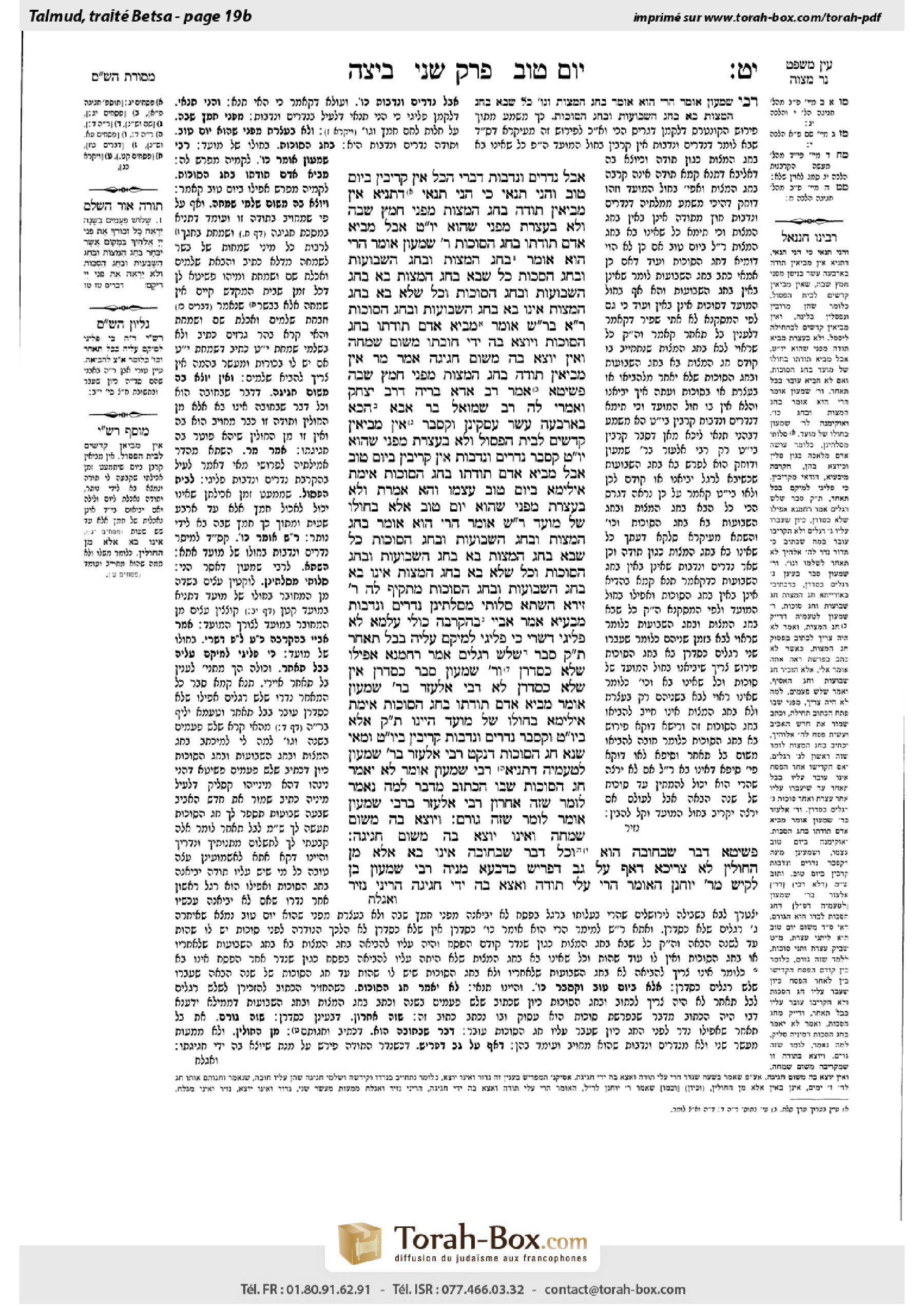
Scan : Torah-Box. Daf Study est un projet indépendant, sans affiliation ni approbation de Torah-Box ou de Sefaria.