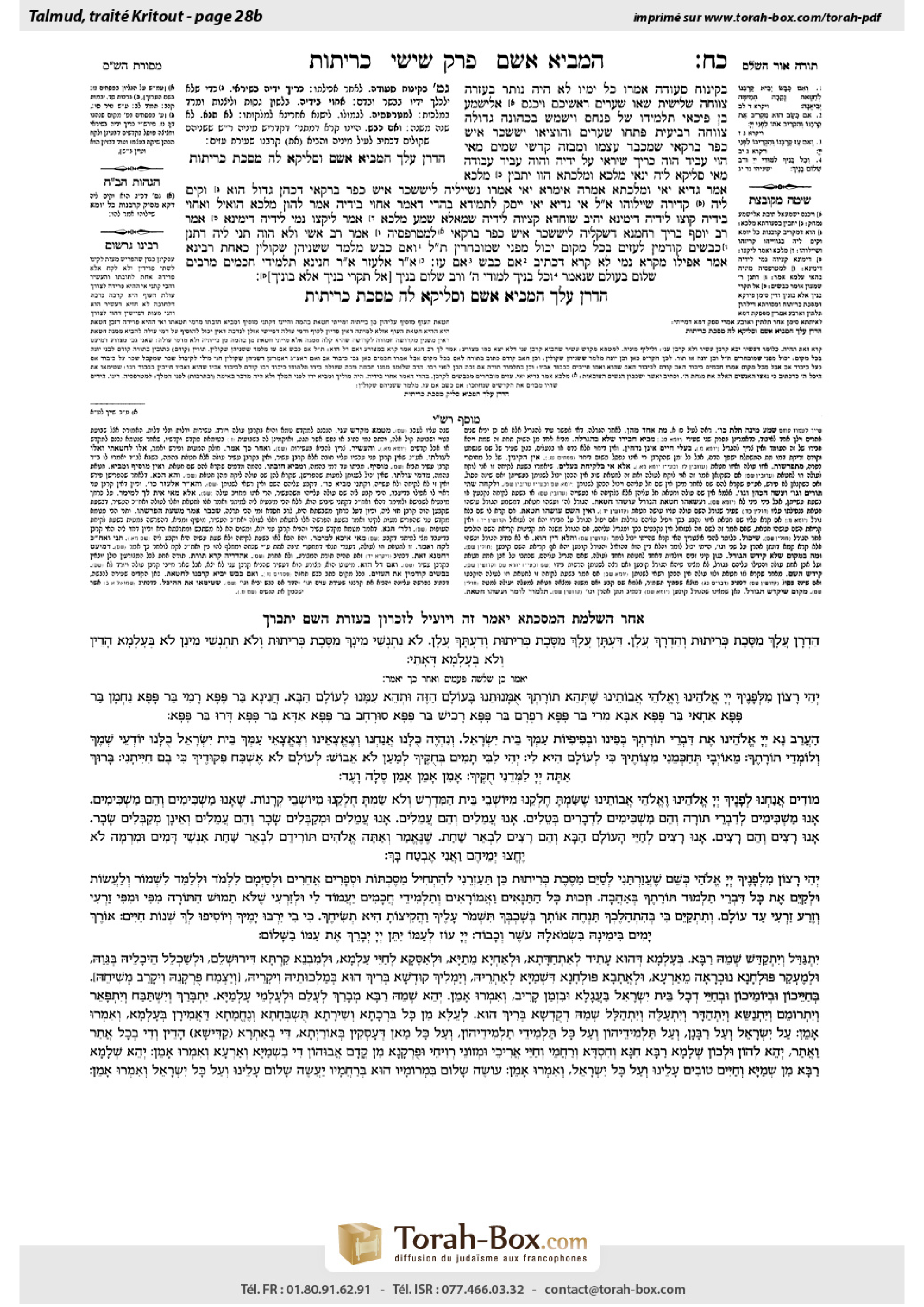
Keritot 28b: Talmud study for Daf Yomi
Daf Yomi is the daily study of one Talmud folio. Explore 37 tractates with scans, Hebrew text, Sefaria English and AI-generated French translations where annotated.
Passage selection and English or AI-generated French translation are available where the scan has annotations. Daf Study is independent of Torah-Box and Sefaria.
Browse Keritot · כריתות · All tractatesKeritot 28b text and translations
This page of Keritot includes the Aramaic text, an English translation and an AI-generated French translation, alongside the scan above.
כריתות כ״ח ב · Aramaic and Hebrew text
בְּקִינּוּחַ סְעוּדָה. אָמְרוּ, כׇּל יָמָיו לֹא הָיָה נוֹתָר בַּעֲזָרָה.
צְווֹחָה שְׁלִישִׁית: שְׂאוּ שְׁעָרִים רָאשֵׁיכֶם וְיִכָּנֵס אֱלִישָׁמָע בֶּן פִּיכַאי תַּלְמִידוֹ שֶׁל פִּנְחָס וִישַׁמֵּשׁ בִּכְהוּנָּה גְּדוֹלָה.
צְווֹחָה רְבִיעִית: פִּתְחוּ שְׁעָרִים וְהוֹצִיאוּ יִשָּׂשכָר אִישׁ כְּפַר בַּרְקַאי, שֶׁמְּכַבֵּד עַצְמוֹ וּמְבַזֶּה קׇדְשֵׁי שָׁמַיִם. מַאי הָוֵי עָבֵיד? הֲוָה כָּרֵיךְ שִׁירָאֵי עַל יְדֵיהּ וְהָוֵה עָבֵיד עֲבוֹדָה.
מַאי סְלִיקָא לֵיהּ? יַנַּאי מַלְכָּא וּמַלְכְּתָא הֲווֹ יָתְבִין. מַלְכָּא אָמַר: גַּדְיָא יָאֵי, וּמַלְכְּתָא אָמְרָה: אִימְּרָא יָאֵי, אֲמַרוּ: נְשַׁיְּילֵיהּ לְיִשָּׂשׂכָר אִישׁ כְּפַר בַּרְקַאי, דְּכֹהֵן גָּדוֹל הוּא וְקִים לֵיהּ קְדֵירָה.
שַׁיְילוּהוּ, אֲמַר לְהוּ: אִי גַּדְיָא יָאֵי יִיסַּק לִתְמִידָא. בַּהֲדֵי דְּאָמַר אַחְוִי בִּידֵיהּ, אֲמַר לְהוֹן מַלְכָּא: הוֹאִיל וְאַחְוִי בִּידֵיהּ, קוּצוּ לִידֵיהּ דְּיַמִּינָא. יְהֵיב שׁוּחְדָּא, קַצְיוּהּ לִידֵיהּ שְׂמָאלָא. שְׁמַע מַלְכָּא, אֲמַר: לִיקְצְ[יוּהּ] נָמֵי לִידֵיהּ דְּיַמִּינָא. אָמַר רַב יוֹסֵף: בְּרִיךְ רַחֲמָנָא דְּשַׁקְלֵיהּ (לְ)יִשָּׂשׂכָר אִישׁ כְּפַר בַּרְקַאי לְמַטְרַפְסֵיהּ.
אָמַר רַב אָשֵׁי וְלָא הֲוָה תְּנֵי לֵיהּ. דִּתְנַן: כְּבָשִׂים קוֹדְמִין לָעִזִּים בְּכׇל מָקוֹם. יָכוֹל מִפְּנֵי שֶׁמּוּבְחָרִין? תַּלְמוּד לוֹמַר: ״וְאִם כֶּבֶשׂ״, מְלַמֵּד שֶׁשְּׁנֵיהֶן שְׁקוּלִין כְּאַחַת.
רָבִינָא אָמַר: אֲפִילּוּ מִקְרָא נָמֵי לָא קְרָא, דִּכְתִיב: ״אִם כֶּבֶשׂ״, ״אִם עֵז״.
אָמַר רַבִּי אֶלְעָזָר אָמַר רַבִּי חֲנִינָא: תַּלְמִידֵי חֲכָמִים מַרְבִּים שָׁלוֹם בָּעוֹלָם, שֶׁנֶּאֱמַר: ״וְכׇל בָּנַיִךְ לִמּוּדֵי ה׳ וְרַב שְׁלוֹם בָּנָיִךְ״ [אַל תִּקְרֵי בָּנֶיךָ אֶלָּא בּוֹנָיִךְ].
הֲדַרַן עֲלָךְ הַמֵּבִיא אָשָׁם וּסְלִיקָא לָהּ מַסֶּכֶת כְּרִיתוּת
Keritot 28b · English translation
for dessert. They said: Throughout all the days of Yoḥanan ben Nedavai there was never sacrificial meat left over in the Temple courtyard, as he would ensure that it was eaten.
The third cry was: Lift your heads, O gates, and let Elishama ben Pikai, the student of Pineḥas, son of Elazar, son of Aaron the priest, enter and serve as High Priest, as he is worthy.
The fourth cry was: Open the gates and expel Yissakhar from the village of Barkai, as he honors himself and desecrates items consecrated to Heaven. What would he do to deserve such a reputation? He would wrap silk [shira’ei] over his hands and perform the Temple service, as he was unwilling to dirty his hands.
The Gemara asks: What ultimately happened to Yissakhar from the village of Barkai? Yannai the king, and the queen were sitting and discussing food. The king said that goat meat is better food than lamb meat, and the queen said lamb meat is the better food. They said: Let us ask Yissakhar from the village of Barkai, as he is the High Priest and is very familiar with various dishes.
They asked him, and he said to them: If goat meat were better, it would be sacrificed as the daily offering. The fact that the daily offering is lamb proves that its meat is preferable to that of goat. As he spoke, he signaled contemptuously with his hand. The king said to his attendants: Since he signaled contemptuously with his hand, sever his right hand. Yissakhar gave a bribe, and the official severed his left hand instead. The king heard that Yissakhar had deceived him, and said: Let the official sever his right hand as well. Rav Yosef said: Blessed is the Merciful One, who took retribution [lematrapsei] on Yissakhar of the village of Barkai. His punishment fit his crime; since he would not dirty his hands with sacrificial blood, both his hands were severed.
Rav Ashi said, with regard to this incident: Yissakhar of the village of Barkai did not study that which we learned in the mishna: Lambs precede goats almost everywhere in the Torah that they are both mentioned. One might have thought that it is due to the fact that sheep are more select than goats. Therefore, the verse states: “And he shall bring for his offering a goat” (Leviticus 4:28), after which it is written: “And if he bring a lamb as his offering for a sin offering” (Leviticus 4:32), which teaches that both of them are equal.
Ravina said: Yissakhar did not even read the Torah, as it is written with regard to the peace offering: “If he sacrifices a lamb” (Leviticus 3:7), and it further states: “If a goat is his offering” (Leviticus 3:12). These verses indicate that one is permitted to bring whichever animal he wishes, and there is no preference.
Rabbi Elazar says that Rabbi Ḥanina says: Torah scholars increase peace in the world, as it is stated: “And all your children [banayikh] shall be taught of the Lord, and great shall be the peace of your children [banayikh]” (Isaiah 54:13). The Sages interpreted this verse homiletically: Do not read: Your children [banayikh], but rather: Your builders [bonayikh], referring to the scholars who build the world through their Torah study and performance of mitzvot.
Keritot 28b · Traduction française (IA)
pour le dessert. Ils dirent : Pendant toute la vie de Yoḥanan ben Nedavai, il ne resta jamais de viande sacrificielle dans la cour du Temple, car il veillait à ce qu’elle soit consommée.
Le troisième cri fut : « Levez vos têtes, ô portes, et laissez entrer Elishama ben Pikai, le disciple de Pineḥas, fils d’Elazar, fils d’Aaron le prêtre, afin qu’il officie comme grand prêtre, car il en est digne. »
Le quatrième cri fut : « Ouvrez les portes et chassez Yissakhar du village de Barkai, car il se met en valeur et profane les choses consacrées au Ciel. » Que faisait-il pour mériter une telle réputation ? Il se couvrait les mains de soie [shira’ei] pour accomplir le service du Temple, car il ne voulait pas se salir les mains.
La Guemara demande : Qu’advint-il finalement de Yissakhar du village de Barkai ? Le roi Yannai et la reine étaient assis et discutaient de nourriture. Le roi dit que la viande de chèvre était meilleure que la viande d’agneau, tandis que la reine soutint que la viande d’agneau était meilleure. Ils dirent : « Demandons à Yissakhar du village de Barkai, puisqu’il est grand prêtre et connaît très bien les différents mets. »
Ils le consultèrent, et il leur répondit : « Si la viande de chèvre était meilleure, on l’offrirait comme sacrifice quotidien. Le fait que le sacrifice quotidien soit un agneau prouve que sa viande est préférable à celle de la chèvre. » Tout en parlant, il fit un geste méprisant de la main. Le roi dit à ses serviteurs : « Puisqu’il a fait un geste méprisant de la main, coupez-lui la main droite. » Yissakhar versa un pot-de-vin, et le fonctionnaire lui coupa la main gauche à la place. Le roi apprit que Yissakhar l’avait trompé et dit : « Que le fonctionnaire lui coupe aussi la main droite. » Rav Yosef dit : « Béni soit le Miséricordieux, qui a fait rendre des comptes [lematrapsei] à Yissakhar du village de Barkai. » Son châtiment correspondait à sa faute : puisqu’il ne voulait pas se salir les mains avec le sang sacrificiel, on lui coupa les deux mains.
Rav Ashi dit au sujet de cet épisode : Yissakhar du village de Barkai n’avait pas étudié ce que nous avons appris dans la Michna : presque partout dans la Torah où les agneaux et les chèvres sont mentionnés ensemble, les agneaux précèdent les chèvres. On aurait pu penser que cela tient au fait que les moutons sont plus estimés que les chèvres. C’est pourquoi le verset dit : « Et il apportera une chèvre pour son offrande » (Lévitique 4:28), puis il est écrit : « Et s’il apporte un agneau pour son offrande en sacrifice expiatoire » (Lévitique 4:32), ce qui enseigne que les deux sont égaux.
Ravina dit : Yissakhar n’avait même pas lu la Torah, car il est écrit au sujet du sacrifice de paix : « S’il offre un agneau » (Lévitique 3:7), et il est aussi écrit : « Si une chèvre constitue son offrande » (Lévitique 3:12). Ces versets indiquent qu’il est permis d’apporter l’un ou l’autre animal, sans préférence.
Rabbi Elazar dit au nom de Rabbi Ḥanina : Les sages de la Torah accroissent la paix dans le monde, comme il est dit : « Et tous tes enfants [banayikh] seront instruits par le Seigneur, et grande sera la paix de tes enfants [banayikh] » (Isaïe 54:13). Les Sages interprétèrent ce verset de manière homilétique : ne lis pas « tes enfants » [banayikh], mais plutôt « tes bâtisseurs » [bonayikh], en référence aux sages qui bâtissent le monde par l’étude de la Torah et l’accomplissement des mitsvot.
Traduction française générée par IA à partir de l’édition anglaise de Sefaria. Vérifie toujours un passage avec le texte source.
Text from Sefaria: William Davidson Edition - Vocalized Aramaic (CC BY NC); William Davidson Edition - English (CC BY NC).