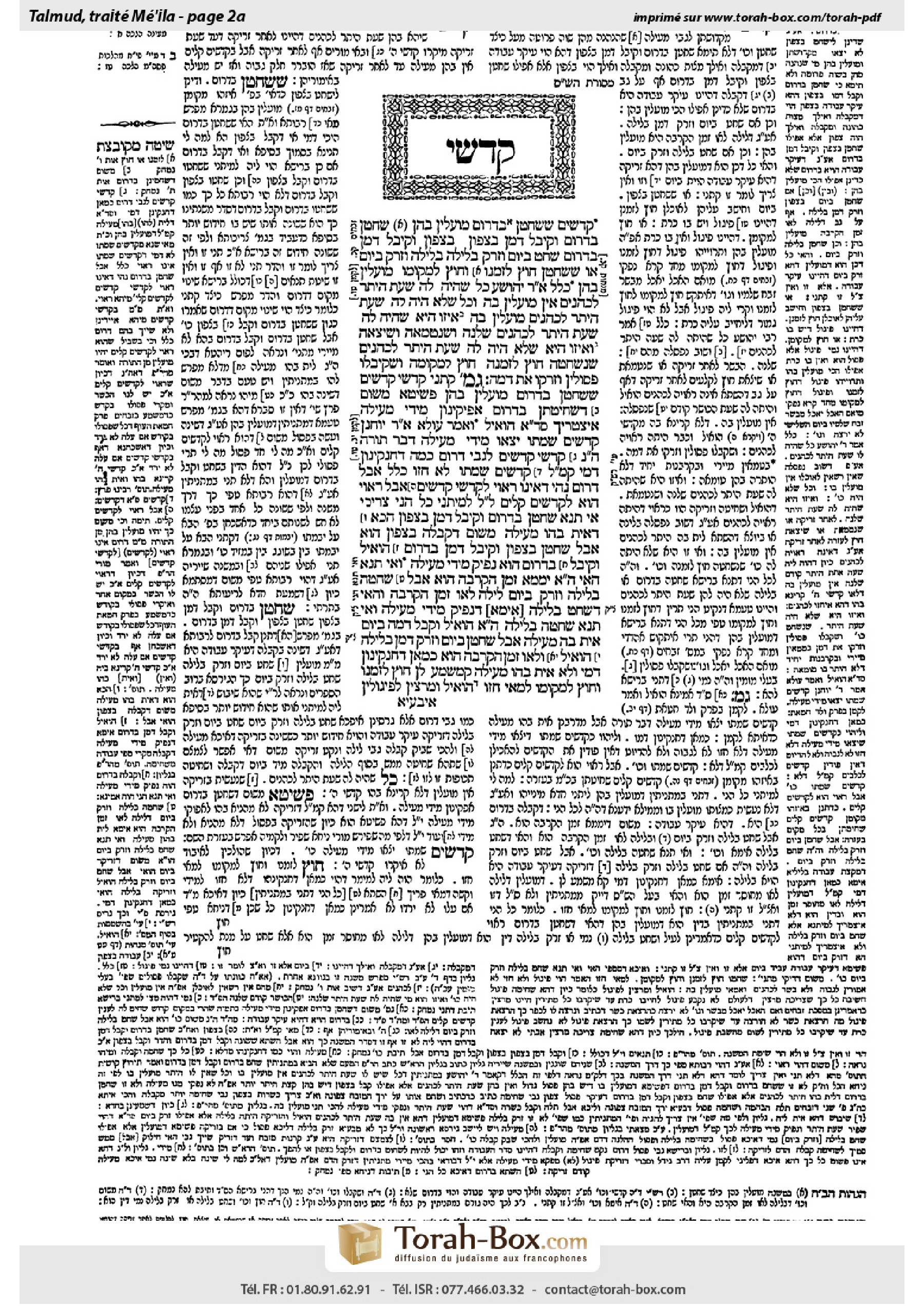
Meilah 2a: Talmud study for Daf Yomi
Daf Yomi is the daily study of one Talmud folio. Explore 37 tractates with scans, Hebrew text, Sefaria English and AI-generated French translations where annotated.
Passage selection and English or AI-generated French translation are available where the scan has annotations. Daf Study is independent of Torah-Box and Sefaria.
Browse Meilah · מעילה · All tractatesMeilah 2a text and translations
This page of Meilah includes the Aramaic text, an English translation and an AI-generated French translation, alongside the scan above.
מעילה ב׳ א · Aramaic and Hebrew text
קׇדְשֵׁי קָדָשִׁים שֶׁשְּׁחָטָן בַּדָּרוֹם – מוֹעֲלִין בָּהֶן. שְׁחָטָן בַּדָּרוֹם וְקִיבֵּל דָּמָן בַּצָּפוֹן, בַּצָּפוֹן וְקִיבֵּל דָּמָן בַּדָּרוֹם,
שָׁחַט בַּיּוֹם וְזָרַק בַּלַּיְלָה, בַּלַּיְלָה וְזָרַק בַּיּוֹם, אוֹ שֶׁשְּׁחָטָן חוּץ לִזְמַנּוֹ וְחוּץ לִמְקוֹמוֹ – מוֹעֲלִין בָּהֶן.
כְּלָל אָמַר רַבִּי יְהוֹשֻׁעַ: כׇּל שֶׁהָיָה לָהּ שְׁעַת הֶיתֵּר לַכֹּהֲנִים – אֵין מוֹעֲלִין בָּהּ, וְכׇל שֶׁלֹּא הָיָה לָהּ שְׁעַת הֶיתֵּר לַכֹּהֲנִים – מוֹעֲלִין בָּהּ.
אֵיזוֹ הִיא שֶׁהָיָה לָהּ שְׁעַת הֶיתֵּר לַכֹּהֲנִים? שֶׁלָּנָה, וְשֶׁנִּטְמְאָה, וְשֶׁיָּצְאָה.
וְאֵיזוֹ הִיא שֶׁלֹּא הָיָה לָהּ שְׁעַת הֶיתֵּר לַכֹּהֲנִים? שֶׁנִּשְׁחֲטָה חוּץ לִזְמַנָּהּ, חוּץ לִמְקוֹמָהּ, וְשֶׁקִּיבְּלוּ פְּסוּלִין וְזָרְקוּ אֶת דָּמָה.
גְּמָ׳ קָתָנֵי: קׇדְשֵׁי קָדָשִׁים שֶׁשְּׁחָטָן בַּדָּרוֹם – מוֹעֲלִין בָּהֶן. פְּשִׁיטָא, מִשּׁוּם דִּשְׁחִיטָתָן בַּדָּרוֹם אַפֵּיקִינּוּן מִידֵי מְעִילָה?
אִיצְטְרִיךְ, סָלְקָא דַּעְתָּךְ אָמֵינָא הוֹאִיל וְאָמַר עוּלָּא אָמַר רַבִּי יוֹחָנָן: קָדָשִׁים שֶׁמֵּתוּ – יָצְאוּ מִידֵּי מְעִילָה דְּבַר תּוֹרָה, הָכִי נָמֵי קׇדְשֵׁי קָדָשִׁים לְגַבֵּי דָרוֹם, כְּמָה דְּחַנְקִינּוּן דָּמֵי.
קָא מַשְׁמַע לַן: קָדָשִׁים שֶׁמֵּתוּ – לָא חֲזוּ כְּלָל. אֲבָל דָּרוֹם – נְהִי דְּאֵינוֹ רָאוּי לְקׇדְשֵׁי קָדָשִׁים, אֲבָל רָאוּי הוּא לְקָדָשִׁים קַלִּים.
לְמָה לִי לְמִיתְנֵי כׇּל הָנֵי?
צְרִיכִי: אִי תְּנָא שְׁחָטָן בַּדָּרוֹם וְקִיבֵּל דָּמָן בַּצָּפוֹן, הָכָא דְּאִית בְּהוּ מְעִילָה, מִשּׁוּם דְּקַבָּלָה בַּצָּפוֹן הוּא. אֲבָל שְׁחָטָן בַּצָּפוֹן וְקִיבֵּל דָּמָן בַּדָּרוֹם, הוֹאִיל וְקִיבֵּל בַּדָּרוֹם הוּא – נָפֵיק מִידֵי מְעִילָה.
וְאִי תְּנָא הַאי, הֲוָה אָמֵינָא: יְמָמָא זְמַן הַקְרָבָה הוּא, אֲבָל שְׁחָטָהּ בַּלַּיְלָה וְזָרַק בַּיּוֹם – לַיְלָה לָאו זְמַן הַקְרָבָה, וְהַאי דְּשָׁחֵט בַּלַּיְלָה – דְּנָפֵיק מִידֵי מְעִילָה!
וְאִי תְּנָא שְׁחָטָהּ בַּלַּיְלָה, הֲוָה אָמֵינָא: הוֹאִיל וְקִבֵּל דָּמָה בַּיּוֹם – אִית בַּהּ מְעִילָה, אֲבָל שְׁחָטָן בַּיּוֹם וְזָרַק דָּמָן בַּלַּיְלָה, הוֹאִיל וְלָאו זְמַן הַקְרָבָה הוּא – כְּמַאן דְּחַנְקִינּוּן דָּמֵי, וְלָא אִית בְּהוּ מְעִילָה, קָמַשְׁמַע לַן.
חוּץ לִזְמַנּוֹ וְחוּץ לִמְקוֹמוֹ. לְמַאי חֲזוּ?
הוֹאִיל וּמְרַצִּין לְפִיגּוּלִין.
Meilah 2a · English translation
MISHNA: Offerings of the most sacred order that were disqualified before their blood was sprinkled on the altar, e.g., if one slaughtered them in the south of the Temple courtyard, and not in the north as required, are subject to the following halakha: One is liable for misusing them, i.e., one who derives benefit from them must bring a guilt offering and pay the principal and an additional one-fifth of their value. If he improperly slaughtered them in the south of the courtyard and properly collected their blood in the north, or even if he properly slaughtered them in the north of the courtyard but improperly collected their blood in the south, although the more significant rite was performed improperly, one is liable for misuse if he derives benefit from the animals.
The same halakha that applies if the location of the sacrificial rites was altered likewise applies if the time of those rites was altered. Accordingly, if one properly slaughtered them during the day and improperly sprinkled their blood at night, or if he improperly slaughtered them at night and properly sprinkled their blood during the day, one is liable for misuse if he derives benefit from the animals. Or in a case where one slaughtered them with the intent to partake of their meat or sprinkle their blood beyond its designated time, rendering it piggul, or outside its designated area, disqualifying the offering, he is liable for misusing them if he derives benefit from the animals.
Rabbi Yehoshua stated a principle with regard to misuse of disqualified sacrificial animals: With regard to any sacrificial animal that had a period of fitness to the priests before it was disqualified, one is not liable for misusing it. Misuse applies specifically to items consecrated to God, which are not permitted for human consumption at all. Once the offering was permitted for consumption by the priests, it is no longer in that category. And with regard to any sacrificial animal that did not have a period of fitness for the priests before it was disqualified, one is liable for misusing it if he derives benefit from it, as it remained consecrated to God throughout.
Which is the sacrificial animal that had a period of fitness for the priests? This category includes a sacrificial animal whose meat remained overnight after its blood was presented on the altar and therefore came to have the status of notar and was therefore disqualified, and one that was disqualified when it became ritually impure, and one that left the Temple courtyard and was thereby disqualified. All of these disqualifications transpired after consumption of the sacrificial meat was permitted, and therefore one who derives benefit from these offerings is not liable for misuse.
And which is the sacrificial animal that did not have a period of fitness for the priests? It is a sacrificial animal that was slaughtered with the intent to partake of it or sprinkle its blood beyond its designated time, or outside its designated area, or one that those unfit for Temple service collected and sprinkled its blood. All of these disqualifications took effect before consumption of the sacrificial meat was permitted. The offerings therefore remain consecrated to God, and one is liable for misuse if he derives benefit from them.
GEMARA: The mishna teaches: With regard to offerings of the most sacred order that were disqualified before their blood was sprinkled on the altar, e.g., if one slaughtered them in the south of the Temple courtyard, one who derives benefit from them is liable for misusing them. The Gemara asks: Isn’t it obvious? Just because their slaughter was performed in the south, should we revoke their status as subject to the halakhot of misuse?
The Gemara answers: It was necessary for the mishna to mention the case of slaughtering them in the south, as it might enter your mind to say that since Ulla says that Rabbi Yoḥanan says: Sacrificial animals that died without being sacrificed are excluded from being subject to the halakhot of misuse by Torah law, so too, in the case of offerings of the most sacred order that were improperly slaughtered in the south, they are considered as though they were strangled to death, and therefore they are no longer subject to misuse.
Consequently, the mishna teaches us that although they were slaughtered improperly, they are not considered to have the status of sacrificial animals that died, as those are not fit at all. But with regard to slaughtering an animal in the south, although this is not fitting for offerings of the most sacred order, yet the act is still classified as slaughter of sacrificial animals, as slaughter in the south is fitting for offerings of lesser sanctity.
§ The Gemara asks: Why do I need the mishna to teach all of these different cases? It could have mentioned just one case, from which one would have derived the principle that even in a situation where the rite of the offering is not performed in the proper manner, the animal can still be subject to the halakhot of misuse.
The Gemara explains: All these cases are necessary. If the mishna had taught only the case of one who improperly slaughtered them in the south of the courtyard and properly collected their blood in the north, one might have thought that it is only here, in this case, that the animals are subject to the halakhot of misuse, as the collection of the blood was in the north. But if he slaughtered them in the north and collected their blood in the south, since the collection, which is a more fundamental rite than the slaughter, is in the south, one might think that they are removed from the status of being subject to the halakhot of misuse. Therefore, the mishna mentions that case as well.
And if the mishna had taught only these aforementioned cases, I would say that only in such situations is the offering subject to the halakhot of misuse, as they were at least sacrificed during the day, which is the appropriate time for sacrifice. But if one slaughtered an offering at night and sprinkled its blood during the day, it would not be subject to the halakhot of misuse, as night is not the appropriate time for sacrifice, and therefore in this case of one who slaughtered at night, the animal is removed from its status of being subject to the halakhot of misuse.
And if the mishna had taught only the case where he slaughtered it at night and collected the blood during the day, I would say: Since he collected the blood during the day, as required, the offering retains its status and is subject to the halakhot of misuse. But if he slaughtered animals during the day and sprinkled their blood, which is the main act of sacrifice, at night, since it is not a time fit for sacrifice, it is considered as though they were strangled, and they are not subject to the halakhot of misuse. Therefore, the mishna teaches us all of these cases.
§ The mishna teaches: If one slaughtered sacrificial animals with the intent to partake of their meat or sprinkle their blood beyond its designated time, rendering them piggul, or outside its designated area, disqualifying them, he is liable for misusing them if he derives benefit from them. The Gemara asks: For what are these sacrificial animals fit? Since they are unfit for both sacrifice and consumption by the priests, even in the case of offerings of lesser sanctity, why are they considered as consecrated items that are subject to misuse?
The Gemara answers: Since sprinkling their blood on the altar renders them accepted in that they receive their status of being subject to piggul, therefore they have still not entirely lost their sanctified status and are subject to misuse. In other words, an offering with regard to which there was an improper intention is rendered piggul only if all its permitting factors, one of which is sprinkling the blood, are performed properly (see Zevaḥim 28b). The fact that its permitting factors are important for the purpose of rendering it subject to piggul shows that the offering has not lost its consecrated status.
Meilah 2a · Traduction française (IA)
MICHNA : Les offrandes de sainteté suprême qui ont été invalidées avant que leur sang soit aspergé sur l’autel — par exemple, si on les a abattues au sud du parvis du Temple, au lieu du nord comme il est requis — sont soumises à la halakha suivante : celui qui en tire profit est passible d’un sacrifice de culpabilité et doit payer le principal, augmenté d’un cinquième de leur valeur, pour usage illicite. Si on les a abattues illicitement au sud du parvis et que leur sang a été recueilli conformément aux règles au nord, ou même si on les a abattues conformément aux règles au nord du parvis, mais que leur sang a été recueilli illicitement au sud, bien que le rite le plus important ait été accompli de manière incorrecte, celui qui tire profit des animaux est passible pour usage illicite.
La même halakha qui s’applique lorsque le lieu des rites sacrificiels a été modifié s’applique également lorsque leur moment a été modifié. Ainsi, si on les a abattues correctement pendant la journée et que leur sang a été aspergé incorrectement la nuit, ou si on les a abattues incorrectement la nuit et que leur sang a été aspergé correctement pendant la journée, celui qui tire profit des animaux est passible pour usage illicite. Il en va de même si on les a abattues avec l’intention de consommer leur viande ou d’asperger leur sang après le délai prévu, ce qui les rend piggoul, ou en dehors de l’aire prévue, ce qui invalide l’offrande : celui qui tire profit des animaux est passible pour usage illicite.
Rabbi Yehoshua a énoncé un principe concernant l’usage illicite d’animaux sacrificiels invalidés : pour tout animal sacrificiel qui a été apte à être consommé par les prêtres pendant une certaine période avant d’être invalidé, celui qui en tire profit n’est pas passible pour usage illicite. L’usage illicite concerne spécifiquement les biens consacrés à Dieu, qui ne sont pas du tout permis à la consommation humaine. Dès lors que l’offrande a été autorisée à la consommation des prêtres, elle n’appartient plus à cette catégorie. En revanche, pour tout animal sacrificiel qui n’a pas été apte à être consommé par les prêtres avant d’être invalidé, celui qui en tire profit est passible pour usage illicite, puisqu’il est demeuré consacré à Dieu en permanence.
Quel est l’animal sacrificiel qui a été apte à être consommé par les prêtres pendant une certaine période ? Cette catégorie comprend un animal sacrificiel dont la viande est restée toute la nuit après que son sang a été présenté sur l’autel et qui a donc acquis le statut de notar, ce qui l’a invalidé ; un animal qui a été invalidé lorsqu’il est devenu rituellement impur ; et un animal qui a quitté le parvis du Temple et a ainsi été invalidé. Toutes ces invalidations sont survenues après que la consommation de la viande sacrificielle a été autorisée ; par conséquent, celui qui tire profit de ces offrandes n’est pas passible pour usage illicite.
Et quel est l’animal sacrificiel qui n’a pas été apte à être consommé par les prêtres pendant une certaine période ? C’est un animal sacrificiel qui a été abattu avec l’intention de le consommer ou d’asperger son sang après le délai prévu, ou en dehors de l’aire prévue, ainsi qu’un animal dont le sang a été recueilli et aspergé par des personnes inaptes au service du Temple. Toutes ces invalidations ont pris effet avant que la consommation de la viande sacrificielle soit autorisée. Les offrandes demeurent donc consacrées à Dieu, et celui qui en tire profit est passible pour usage illicite.
GUEMARA : La Michna enseigne que, concernant les offrandes de sainteté suprême qui ont été invalidées avant que leur sang soit aspergé sur l’autel — par exemple, si on les a abattues au sud du parvis du Temple —, celui qui en tire profit est passible pour usage illicite. La Guemara demande : N’est-ce pas évident ? Le fait que leur abattage ait eu lieu au sud suffirait-il à leur faire perdre leur statut de biens soumis aux lois de l’usage illicite ?
La Guemara répond : Il était nécessaire que la Michna mentionne le cas où on les a abattues au sud, car on aurait pu penser que, puisque Oulla dit au nom de Rabbi Yoḥanan : « Les animaux sacrificiels qui sont morts sans avoir été offerts ne sont pas soumis, selon la Torah, aux lois de l’usage illicite », il en va de même pour les offrandes de sainteté suprême abattues illicitement au sud : elles sont considérées comme si elles avaient été étranglées et ne sont donc plus soumises aux lois de l’usage illicite.
Par conséquent, la Michna nous enseigne que, bien qu’ils aient été abattus de manière incorrecte, ils ne sont pas considérés comme des animaux sacrificiels qui sont morts, car ceux-ci ne sont absolument pas aptes. En revanche, lorsqu’un animal est abattu au sud, bien que cela ne convienne pas aux offrandes de sainteté suprême, l’acte reste classé comme un abattage sacrificiel, puisque l’abattage au sud convient aux offrandes de moindre sainteté.
§ La Guemara demande : Pourquoi la Michna doit-elle enseigner tous ces différents cas ? Elle aurait pu n’en mentionner qu’un seul, dont on aurait déduit le principe selon lequel, même lorsque le rite de l’offrande n’est pas accompli de la manière requise, l’animal peut tout de même être soumis aux lois de l’usage illicite.
La Guemara explique : Tous ces cas sont nécessaires. Si la Michna avait enseigné uniquement le cas où on les a abattues illicitement au sud du parvis et que leur sang a été recueilli correctement au nord, on aurait pu penser que les animaux ne sont soumis aux lois de l’usage illicite que dans ce cas précis, puisque le sang a été recueilli au nord. Mais si on les a abattues au nord et que leur sang a été recueilli au sud, puisque le recueil du sang, qui est un rite plus fondamental que l’abattage, a eu lieu au sud, on aurait pu penser qu’elles ne sont plus soumises aux lois de l’usage illicite. C’est pourquoi la Michna mentionne également ce cas.
Et si la Michna avait enseigné uniquement les cas mentionnés plus haut, j’aurais dit que l’offrande n’est soumise aux lois de l’usage illicite que dans de telles situations, puisqu’elle a au moins été offerte pendant la journée, qui est le moment approprié pour les sacrifices. Mais si on avait abattu une offrande la nuit et aspergé son sang pendant la journée, elle ne serait pas soumise aux lois de l’usage illicite, car la nuit n’est pas un moment approprié pour les sacrifices ; ainsi, dans ce cas où l’on a abattu l’animal la nuit, celui-ci perdrait son statut de bien soumis aux lois de l’usage illicite.
Et si la Michna avait enseigné uniquement le cas où on l’a abattue la nuit et où son sang a été recueilli pendant la journée, j’aurais dit : puisque le sang a été recueilli pendant la journée, comme il se doit, l’offrande conserve son statut et est soumise aux lois de l’usage illicite. Mais si on a abattu des animaux pendant la journée et que leur sang a été aspergé la nuit — alors que l’aspersion est l’acte sacrificiel principal —, comme ce n’est pas un moment approprié pour les sacrifices, ils sont considérés comme s’ils avaient été étranglés et ne sont pas soumis aux lois de l’usage illicite. La Michna nous enseigne donc tous ces cas.
§ La Michna enseigne que, si on a abattu des animaux sacrificiels avec l’intention de consommer leur viande ou d’asperger leur sang après le délai prévu, ce qui les rend piggoul, ou en dehors de l’aire prévue, ce qui les invalide, celui qui en tire profit est passible pour usage illicite. La Guemara demande : À quoi ces animaux sacrificiels sont-ils aptes ? Puisqu’ils ne conviennent ni au sacrifice ni à la consommation par les prêtres, même lorsqu’il s’agit d’offrandes de moindre sainteté, pourquoi sont-ils considérés comme des biens consacrés soumis aux lois de l’usage illicite ?
La Guemara répond : Puisque l’aspersion de leur sang sur l’autel les rend agréés en leur conférant le statut de piggoul, ils n’ont donc pas entièrement perdu leur statut de biens consacrés et restent soumis aux lois de l’usage illicite. Autrement dit, une offrande à l’égard de laquelle une intention incorrecte a été formulée ne devient piggoul que si tous les facteurs qui la rendent permise, dont l’aspersion du sang, sont accomplis correctement (voir Zevaḥim 28b). Le fait que ces facteurs soient importants pour lui conférer le statut de piggoul montre que l’offrande n’a pas perdu son statut de bien consacré.
Traduction française générée par IA à partir de l’édition anglaise de Sefaria. Vérifie toujours un passage avec le texte source.
Text from Sefaria: William Davidson Edition - Vocalized Aramaic (CC BY NC); William Davidson Edition - English (CC BY NC).