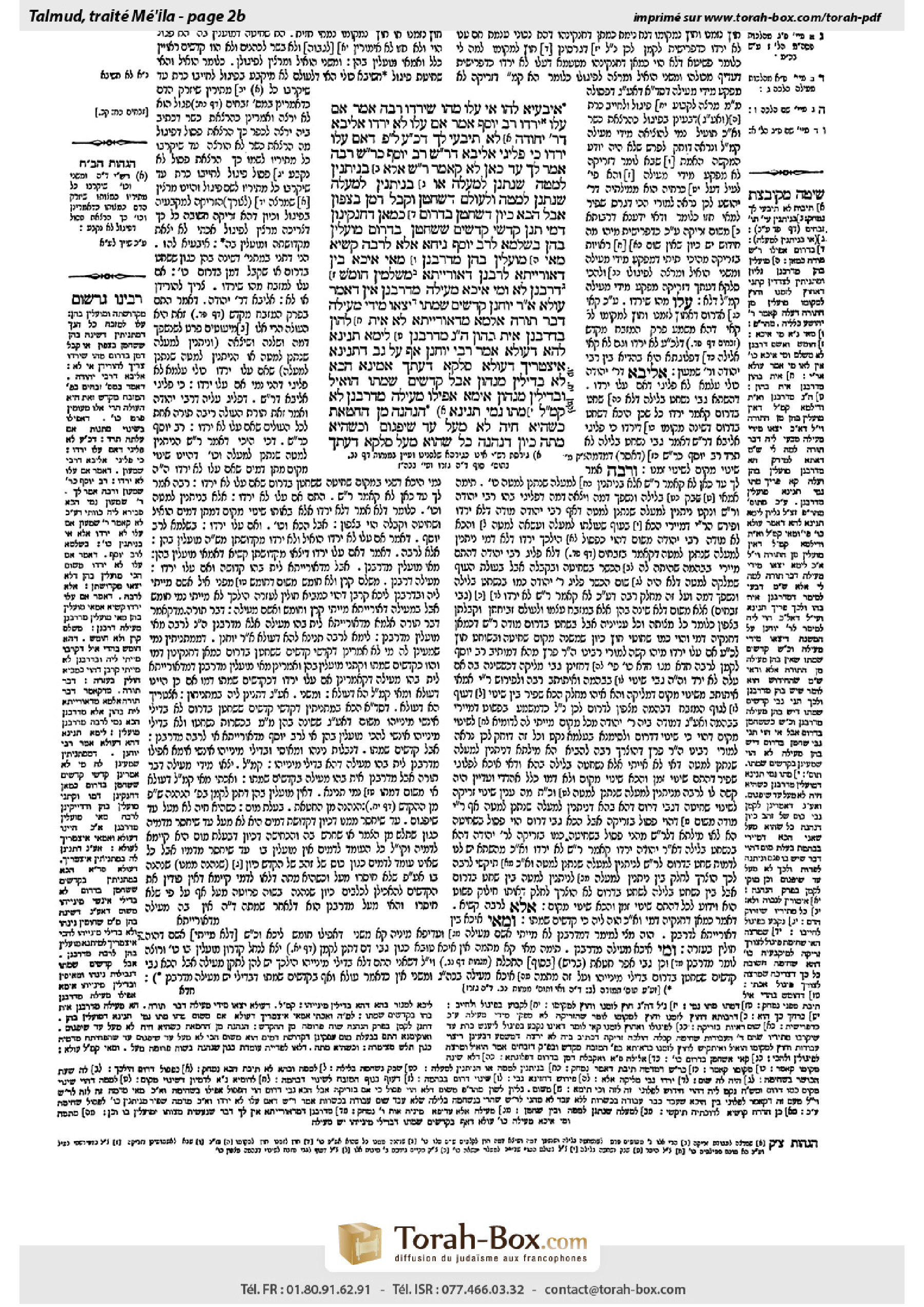
Meilah 2b: Talmud study for Daf Yomi
Daf Yomi is the daily study of one Talmud folio. Explore 37 tractates with scans, Hebrew text, Sefaria English and AI-generated French translations where annotated.
Passage selection and English or AI-generated French translation are available where the scan has annotations. Daf Study is independent of Torah-Box and Sefaria.
Browse Meilah · מעילה · All tractatesMeilah 2b text and translations
This page of Meilah includes the Aramaic text, an English translation and an AI-generated French translation, alongside the scan above.
מעילה ב׳ ב · Aramaic and Hebrew text
אִיבַּעְיָא לְהוּ: אִי עָלוּ, מַהוּ שֶׁיֵּרְדוּ? רַבָּה אָמַר: אִם עָלוּ – יֵרְדוּ, רַב יוֹסֵף אָמַר: אִם עָלוּ – לֹא יֵרְדוּ.
אַלִּיבָּא דְּרַבִּי יְהוּדָה לָא תִּיבְּעֵי לָךְ, דְּכוּלֵּי עָלְמָא לָא פְּלִיגִי דְּאִם עָלוּ – יֵרְדוּ. כִּי פְּלִיגִי אַלִּיבָּא דְּרַבִּי שִׁמְעוֹן.
רַב יוֹסֵף כְּרַבִּי שִׁמְעוֹן. רַבָּה אָמַר לָךְ: עַד כָּאן לָא קָאָמַר רַבִּי שִׁמְעוֹן אֶלָּא בַּנִּיתָּנִין לְמַטָּה שֶׁנְּתָנָן לְמַעְלָה אוֹ בַּנִּיתָּנִין לְמַעְלָה שֶׁנְּתָנָן לְמַטָּה,
וּלְעוֹלָם דִּשְׁחָטָן וְקִבֵּל דָּמָן בַּצָּפוֹן, אֲבָל הָכָא, כֵּיוָן דִּשְׁחָטָן בַּדָּרוֹם – כְּמַאן דְּחַנְקִינּוּן דָּמֵי.
תְּנַן: קׇדְשֵׁי קָדָשִׁים שֶׁשְּׁחָטָן בַּדָּרוֹם – מוֹעֲלִין בָּהֶן. בִּשְׁלָמָא לְרַב יוֹסֵף נִיחָא, אֶלָּא לְרַבָּה קַשְׁיָא! מַאי מוֹעֲלִין בָּהֶן – מִדְּרַבָּנַן.
מַאי אִיכָּא בֵּין דְּאוֹרָיְיתָא לְרַבָּנַן? דְּאוֹרָיְיתָא מְשַׁלְּמִין חוֹמֶשׁ, דְּרַבָּנַן – לָא.
וּמִי אִיכָּא מְעִילָה מִדְּרַבָּנַן? אִין, דְּאָמַר עוּלָּא אָמַר רַבִּי יוֹחָנָן: קָדָשִׁים שֶׁמֵּתוּ – יָצְאוּ מִידֵי מְעִילָה, דְּבַר תּוֹרָה. אַלְמָא מִדְּאוֹרָיְיתָא לָא אִית לְהוֹן, בִּדְרַבָּנַן אִית בְּהוֹן. הָכִי נָמֵי – מִדְּרַבָּנַן.
לֵימָא תְּנֵינָא לְהָא דְּעוּלָּא אָמַר רַבִּי יוֹחָנָן! אַף עַל גַּב דִּתְנֵינָא, אִיצְטְרִיךְ דְּעוּלָּא, סָלְקָא דַּעְתָּךְ אָמֵינָא, הָכָא לָא בְּדִילִין מִנְּהוֹן,
אֲבָל קָדָשִׁים שֶׁמֵּתוּ, הוֹאִיל וּבְדִילִין מִנְּהוֹן, אֵימָא: אֲפִילּוּ מְעִילָה מִדְּרַבָּנַן לָא, קָא מַשְׁמַע לַן.
מֵתוּ – נָמֵי תְּנֵינָא: הַנֶּהֱנֶה מִן הַחַטָּאת כְּשֶׁהִיא חַיָּה – לֹא מָעַל עַד שֶׁיִּפְגּוֹם. וּכְשֶׁהִיא מֵתָה, כֵּיוָן דְּנֶהֱנָה כׇּל שֶׁהוּא – מָעַל.
סָלְקָא דַּעְתָּךְ
Meilah 2b · English translation
§ A dilemma was raised before the Sages: In a case where a rite was performed in the wrong location, e.g., offerings of the most sacred order were slaughtered in the south rather than the north, if the offerings had already ascended the altar, what is the halakha as to whether they descend, i.e., are they removed from the altar or are they sacrificed? Rabba says: If they ascended the altar, they shall descend. Rav Yosef says: If they ascended the altar, they shall not descend.
With regard to this dilemma, the Gemara cites a relevant dispute between Rabbi Yehuda and Rabbi Shimon in a mishna (Zevaḥim 84a). Rabbi Yehuda maintains that in certain cases when an offering became disqualified in the sacred area, i.e., the Temple courtyard, it was removed from the altar. By contrast, Rabbi Shimon rules that any offering that became disqualified once it was already inside the Temple courtyard was not removed from the altar if it ascended there. The Gemara states: In accordance with the opinion of Rabbi Yehuda, you should not raise this dilemma, as everyone, i.e., both Rabba and Rav Yosef, agrees that in the cases of the mishna Rabbi Yehuda would rule that even if the disqualified offerings have ascended the altar, they must descend. They disagree when the dilemma is raised according to the opinion of Rabbi Shimon.
Rav Yosef holds in accordance with a straightforward interpretation of the opinion of Rabbi Shimon, that the offerings listed in the mishna do not descend from the altar, as they became disqualified inside the Temple courtyard. By contrast, Rabba could have said to you: Rabbi Shimon states that the offerings do not descend only with regard to cases such as the bird sin offering, whose blood should be placed below the red line on the altar, which one placed above the red line; or with regard to offerings such as the bird burnt offering, whose blood should be placed above the red line, which one placed below that line.
And therefore, Rabbi Shimon is actually dealing with cases where one slaughtered the offerings and collected their blood in the north, in accordance with the halakha. But here, in the cases of the mishna, since one slaughtered them in the south, it is considered as though they were strangled to death, and were not slaughtered at all. Consequently, Rabbi Shimon agrees that they should be removed from the altar.
We learned in the mishna: With regard to offerings of the most sacred order that were disqualified before their blood was sprinkled on the altar, if one slaughtered them in the south of the Temple courtyard, he is liable for misusing them if he derives benefit from them. Granted, according to the opinion of Rav Yosef, this halakha works out well. Since they remain consecrated and do not become permitted to the priests, they may remain on the altar. But according to the opinion of Rabba, it is difficult: If these offerings must be removed from the altar, why can one be liable for misusing them? The Gemara explains: What is the meaning of the clause: One is liable for misusing them? This means that one is liable for misusing them by rabbinic law, but they are not subject to the halakhot of misuse by Torah law.
The Gemara inquires: What practical difference is there between misuse by Torah law and misuse by rabbinic law? The Gemara explains that those who misuse by Torah law must pay an additional one-fifth to the Temple treasury, over and above the principal. By contrast, misuse by rabbinic law does not render one obligated to pay the additional one-fifth.
The Gemara asks: And is there a concept of misuse of consecrated property by rabbinic law? The Gemara answers: Yes there is, as Ulla said that Rabbi Yoḥanan says: Sacrificial animals that died have been removed from the halakhot of misuse by Torah law. Evidently, it is by Torah law that the halakhot of misuse do not apply to them, but by rabbinic law they do apply to them. So too in this case, where the animals are slaughtered in the south, they are subject to misuse by rabbinic law.
The Gemara raises a difficulty: If Rabba is correct that the mishna is referring to misuse by rabbinic law, let us say that we already learned in the mishna that which Ulla says that Rabbi Yoḥanan said. Why, then, was it necessary for Ulla to repeat this halakha? The Gemara explains: Even though we already learned it in the mishna, the statement of Ulla was necessary: It might enter your mind to say that here, with regard to offerings slaughtered in the south, people will not distance themselves from them, as they are no different in appearance from animals sacrificed properly, and therefore the Sages decreed that they are subject to misuse by rabbinic law.
But in the case of sacrificial animals that died, and were never slaughtered at all, since people distance themselves from them, one might say that they are not subject to misuse even by rabbinic law. There-fore, Ulla teaches us that they are nevertheless subject to misuse by rabbinic law.
The Gemara raises a further difficulty: Didn’t we also learn in a mishna that sacrificial animals that died are subject to the halakhot of misuse by rabbinic law? As the mishna (18a) teaches: One who derives benefit from a sin offering while it is alive is not liable for misuse until he causes it one peruta worth of damage. But if he derives benefit from it when it is dead, since it will not be redeemed it cannot be damaged. Therefore, once he derives one peruta worth of benefit from it, even without damaging it, he is liable for misuse. This misuse must apply by rabbinic law, as sacrificial animals that have died are not subject to the halakhot of misuse by Torah law. If so, the halakha that these animals are subject to misuse by rabbinic law is already stated in a mishna and therefore there is no reason for Ulla to repeat it.
The Gemara answers: It might enter your mind
Meilah 2b · Traduction française (IA)
§ Un dilemme fut soumis aux Sages : lorsqu’un rite a été accompli au mauvais endroit — par exemple, des offrandes de très haute sainteté ont été égorgées au sud plutôt qu’au nord — si elles sont déjà montées sur l’autel, quelle est la halakha : doivent-elles en descendre, c’est-à-dire être retirées de l’autel, ou y sont-elles sacrifiées ? Rabba dit : Si elles sont montées sur l’autel, elles doivent en descendre. Rav Yosef dit : Si elles sont montées sur l’autel, elles ne doivent pas en descendre.
À propos de ce dilemme, la Guemara cite une controverse entre Rabbi Yehouda et Rabbi Shimon dans une Michna (Zevaḥim 84a). Rabbi Yehouda soutient que, dans certains cas où une offrande est devenue impropre dans le domaine sacré, c’est-à-dire dans la cour du Temple, elle est retirée de l’autel. En revanche, Rabbi Shimon statue que toute offrande devenue impropre alors qu’elle se trouvait déjà dans la cour du Temple n’est pas retirée de l’autel si elle y est montée. La Guemara déclare : Selon l’opinion de Rabbi Yehouda, il ne faut pas soulever ce dilemme, car tous — c’est-à-dire Rabba et Rav Yosef — conviennent que, dans les cas de la Michna, Rabbi Yehouda statuerait que même si les offrandes devenues impropres sont montées sur l’autel, elles doivent en descendre. Leur désaccord porte sur le dilemme posé selon l’opinion de Rabbi Shimon.
Rav Yosef suit l’interprétation directe de l’opinion de Rabbi Shimon : les offrandes énumérées dans la Michna ne descendent pas de l’autel, puisqu’elles sont devenues impropres dans la cour du Temple. Rabba aurait toutefois pu te répondre : Rabbi Shimon affirme que les offrandes ne descendent pas de l’autel uniquement dans des cas tels que celui du sacrifice expiatoire d’oiseau, dont le sang doit être appliqué sous la ligne rouge de l’autel, mais qui a été appliqué au-dessus de cette ligne ; ou dans des cas tels que celui de l’holocauste d’oiseau, dont le sang doit être appliqué au-dessus de la ligne rouge, mais qui a été appliqué au-dessous.
Par conséquent, Rabbi Shimon traite en réalité de cas où l’on a égorgé les offrandes et recueilli leur sang au nord, conformément à la halakha. Mais ici, dans les cas de la Michna, puisqu’on les a égorgées au sud, c’est comme si elles avaient été étranglées et n’avaient pas été égorgées du tout. Rabbi Shimon convient donc qu’elles doivent être retirées de l’autel.
Nous avons appris dans la Michna : en ce qui concerne les offrandes de très haute sainteté devenues impropres avant que leur sang soit aspergé sur l’autel, si quelqu’un les égorge au sud de la cour du Temple, il est passible pour usage illicite s’il en tire profit. Selon l’opinion de Rav Yosef, cette halakha s’explique aisément. Puisqu’elles restent consacrées et ne deviennent pas permises aux prêtres, elles peuvent rester sur l’autel. Mais selon l’opinion de Rabba, c’est difficile : si ces offrandes doivent être retirées de l’autel, pourquoi peut-on être passible pour usage illicite ? La Guemara explique : Que signifie la clause « il est passible pour usage illicite » ? Cela signifie qu’il est passible selon le droit rabbinique, mais que les halakhot de l’usage illicite prévues par la Torah ne s’appliquent pas.
La Guemara demande : Quelle différence pratique y a-t-il entre l’usage illicite selon la Torah et l’usage illicite selon le droit rabbinique ? La Guemara explique que ceux qui commettent un usage illicite selon la Torah doivent verser au Trésor du Temple un cinquième supplémentaire, en sus du principal. En revanche, l’usage illicite selon le droit rabbinique n’oblige pas à verser ce cinquième supplémentaire.
La Guemara demande : Existe-t-il donc une notion d’usage illicite des biens consacrés selon le droit rabbinique ? La Guemara répond : Oui, car Oula a dit au nom de Rabbi Yoḥanan : Les animaux sacrificiels qui sont morts sont exclus des halakhot de l’usage illicite prévues par la Torah. Il ressort donc que ces halakhot ne s’appliquent pas à eux selon la Torah, mais qu’elles s’appliquent à eux selon le droit rabbinique. De même, dans ce cas, où les animaux sont égorgés au sud, l’usage illicite relève du droit rabbinique.
La Guemara soulève une difficulté : si Rabba a raison de dire que la Michna traite de l’usage illicite selon le droit rabbinique, disons que nous avons déjà appris dans la Michna ce qu’Oula rapporte au nom de Rabbi Yoḥanan. Pourquoi Oula a-t-il alors eu besoin de répéter cette halakha ? La Guemara explique : Bien que nous l’ayons déjà apprise dans la Michna, la déclaration d’Oula était nécessaire. On aurait pu penser que, dans le cas des offrandes égorgées au sud, les gens ne s’en détourneraient pas, car elles ont la même apparence que les animaux sacrifiés correctement ; les Sages ont donc décrété qu’elles étaient soumises aux règles de l’usage illicite selon le droit rabbinique.
Mais dans le cas des animaux sacrificiels qui sont morts sans jamais avoir été égorgés, puisque les gens s’en détournent, on aurait pu dire qu’ils ne sont soumis aux règles de l’usage illicite même pas selon le droit rabbinique. C’est pourquoi Oula nous enseigne qu’ils y sont néanmoins soumis selon le droit rabbinique.
La Guemara soulève une autre difficulté : n’avons-nous pas également appris dans une Michna que les animaux sacrificiels qui sont morts sont soumis aux halakhot de l’usage illicite selon le droit rabbinique ? Car la Michna (18a) enseigne : Celui qui tire profit d’un sacrifice expiatoire alors qu’il est vivant n’est passible pour usage illicite que s’il lui cause un dommage d’une valeur d’une perouta. Mais s’il en tire profit alors qu’il est mort, puisqu’il ne sera pas racheté, il ne peut pas être endommagé. Par conséquent, dès qu’il en tire un profit d’une valeur d’une perouta, même sans lui causer de dommage, il est passible pour usage illicite. Cet usage illicite doit relever du droit rabbinique, puisque les animaux sacrificiels qui sont morts ne sont pas soumis aux halakhot de l’usage illicite prévues par la Torah. Si tel est le cas, la halakha selon laquelle ces animaux sont soumis aux règles de l’usage illicite selon le droit rabbinique est déjà énoncée dans une Michna ; Oula n’avait donc aucune raison de la répéter.
La Guemara répond : On aurait pu penser
Traduction française générée par IA à partir de l’édition anglaise de Sefaria. Vérifie toujours un passage avec le texte source.
Text from Sefaria: William Davidson Edition - Vocalized Aramaic (CC BY NC); William Davidson Edition - English (CC BY NC).