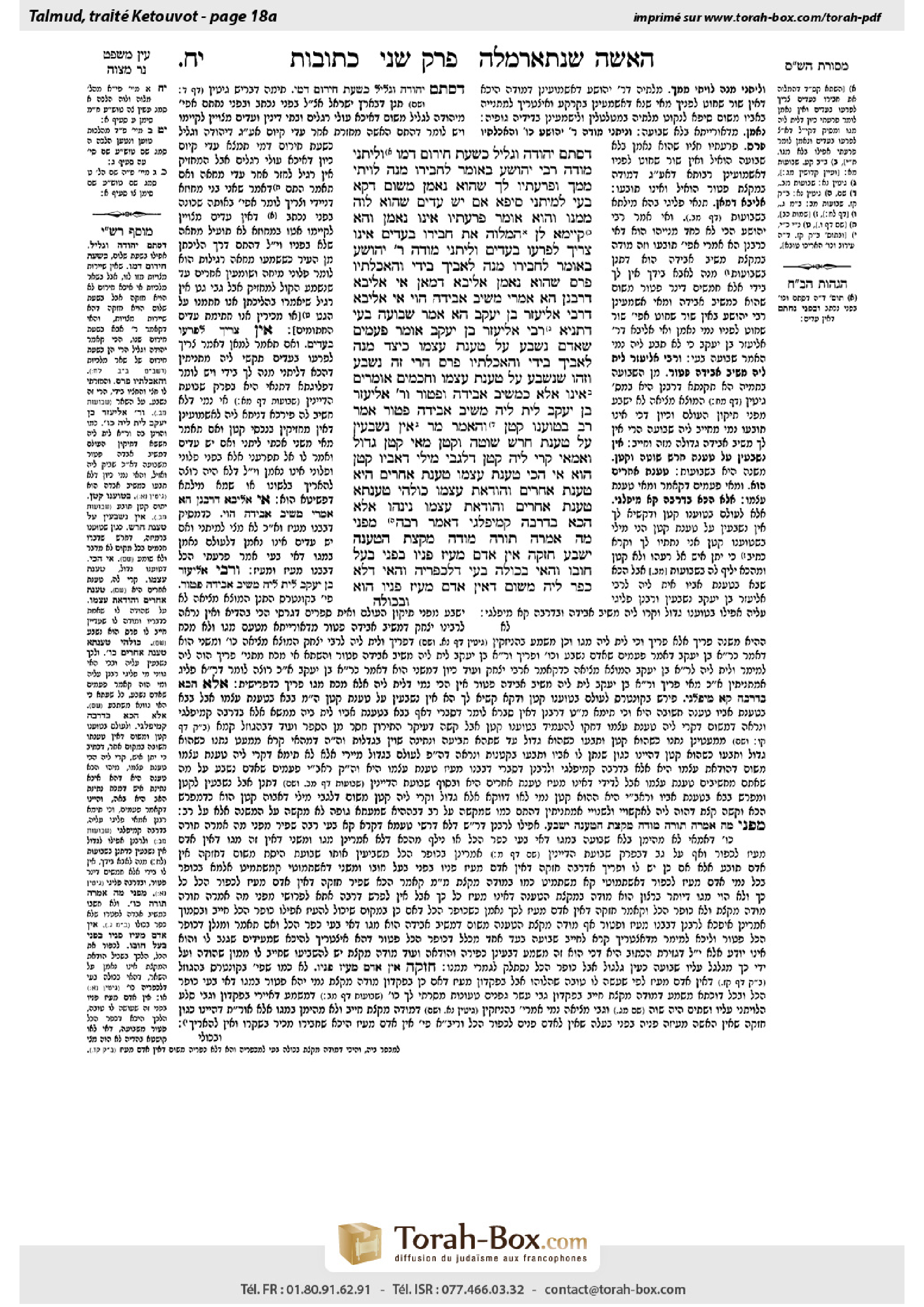
Ketubot 18a: Talmud study for Daf Yomi
Daf Yomi is the daily study of one Talmud folio. Explore 37 tractates with scans, Hebrew text, Sefaria English and AI-generated French translations where annotated.
Passage selection and English or AI-generated French translation are available where the scan has annotations. Daf Study is independent of Torah-Box and Sefaria.
Browse Ketubot · כתובות · All tractatesKetubot 18a text and translations
This page of Ketubot includes the Aramaic text, an English translation and an AI-generated French translation, alongside the scan above.
כתובות י״ח א · Aramaic and Hebrew text
דִּסְתַם יְהוּדָה וּגְלִיל כִּשְׁעַת חֵירוּם דָּמוּ.
וְלִיתְנֵי: מוֹדֶה רַבִּי יְהוֹשֻׁעַ בְּאוֹמֵר לַחֲבֵירוֹ ״מָנֶה לָוִיתִי מִמְּךָ וּפְרַעְתִּיו לָךְ״, שֶׁהוּא נֶאֱמָן! מִשּׁוּם דְּקָא בָּעֵי לְמִיתְנֵי סֵיפָא: אִם יֵשׁ עֵדִים שֶׁהוּא לָוָה מִמֶּנּוּ, וְהוּא אוֹמֵר: פְּרַעְתִּיו — אֵינוֹ נֶאֱמָן, וְהָא קַיְימָא לַן הַמַּלְוֶה אֶת חֲבֵירוֹ בְּעֵדִים — אֵינוֹ צָרִיךְ לְפׇרְעוֹ בְּעֵדִים.
וְלִיתְנֵי: מוֹדֶה רַבִּי יְהוֹשֻׁעַ בְּאוֹמֵר לַחֲבֵירוֹ: מָנֶה לְאָבִיךְ בְּיָדִי, וְהֶאֱכַלְתִּיו פְּרָס — שֶׁהוּא נֶאֱמָן!
אַלִּיבָּא דְמַאן? אִי אַלִּיבָּא דְרַבָּנַן — הָא אָמְרִי מֵשִׁיב אֲבֵידָה הָוֵי. אִי אַלִּיבָּא דְּרַבִּי אֱלִיעֶזֶר בֶּן יַעֲקֹב — הָא אָמַר שְׁבוּעָה בָּעֵי.
דְּתַנְיָא, רַבִּי אֱלִיעֶזֶר בֶּן יַעֲקֹב אוֹמֵר: פְּעָמִים שֶׁאָדָם נִשְׁבָּע עַל טַעֲנַת עַצְמוֹ. כֵּיצַד? ״מָנֶה לְאָבִיךְ בְּיָדִי וְהֶאֱכַלְתִּיו פְּרָס״ — הֲרֵי זֶה נִשְׁבָּע, וְזֶהוּ שֶׁנִּשְׁבָּע עַל טַעֲנַת עַצְמוֹ. וַחֲכָמִים אוֹמְרִים: אֵינוֹ אֶלָּא כְּמֵשִׁיב אֲבֵידָה, וּפָטוּר.
וְרַבִּי אֱלִיעֶזֶר בֶּן יַעֲקֹב לֵית לֵיהּ מֵשִׁיב אֲבֵידָה פָּטוּר? אָמַר רַב: בְּטוֹעֲנוֹ קָטָן. וְהָאָמַר מָר: אֵין נִשְׁבָּעִין עַל טַעֲנַת חֵרֵשׁ שׁוֹטֶה וְקָטָן!
מַאי קָטָן — גָּדוֹל. וְאַמַּאי קָרֵי לֵיהּ קָטָן — דִּלְגַבֵּי מִילֵּי דְאָבִיו, קָטָן הוּא. אִי הָכִי: טַעֲנַת עַצְמוֹ? טַעֲנַת אֲחֵרִים הִיא! טַעֲנַת אֲחֵרִים, וְהוֹדָאַת עַצְמוֹ.
כּוּלְּהִי טַעֲנָתָא, טַעֲנַת אֲחֵרִים וְהוֹדָאַת עַצְמוֹ נִינְהוּ!
אֶלָּא הָכָא בִּדְרַבָּה קָמִיפַּלְגִי. דְּאָמַר רַבָּה: מִפְּנֵי מָה אָמְרָה תּוֹרָה מוֹדֶה מִקְצָת הַטַּעֲנָה יִשָּׁבַע — חֲזָקָה אֵין אָדָם מֵעִיז פָּנָיו בִּפְנֵי בַּעַל חוֹבוֹ. וְהַאי בְּכוּלַּהּ בָּעֵי דְּלִכְפְּרֵיהּ, וְהַאי דְּלָא כְּפַר לֵיהּ — מִשּׁוּם דְּאֵין אָדָם מֵעִיז פָּנָיו הוּא.
Ketubot 18a · English translation
The Gemara answers: The reason that the tanna cited specifically a case where each is located in a different land is that the standard situation with regard to travel between Judea and the Galilee is tantamount to a crisis period, as war was commonplace, and there was a strip of Samaritan territory between Judea and the Galilee.
The Gemara asks: And let the tanna teach in the mishna: And Rabbi Yehoshua concedes in a case where one says to another: I borrowed one hundred dinars from you and repaid the loan to you, that he is deemed credible. The Gemara answers: The tanna chose not to teach that case of the mouth that prohibited is the mouth that permitted due to the fact that the tanna wanted to teach in the latter clause: If there are witnesses that he borrowed money from another, and he says: I repaid the loan, he is not deemed credible. However, the tanna would not be able to distinguish between a case where witnesses testify and a case where there are no witnesses, as don’t we hold that in the case of one who lends money to another in the presence of witnesses, the borrower need not repay the loan in the presence of witnesses? Therefore, even if witnesses testify that he took the loan, his claim that he repaid the loan is accepted.
The Gemara asks: And let the tanna teach in the mishna: And Rabbi Yehoshua concedes in a case where one says to another: Your father has one hundred dinars in my possession in the form of a loan, but I provided him with repayment of half that amount, that his claim is deemed credible.
The Gemara answers: There is a tannaitic dispute with regard to that case and the case that the Gemara suggested does not correspond to either opinion. In accordance with whose opinion would the mishna be taught? If it is in accordance with the opinion of the Rabbis, didn’t they say that in that case he is the equivalent of one returning a lost article? Since the son is unaware that the borrower owes his father money, and the borrower takes the initiative and admits that he owes part of the sum that he borrowed, it is as if he returned a lost article, and clearly his claim is accepted and no oath is required. And if it is in accordance with the opinion of Rabbi Eliezer ben Ya’akov, didn’t he say that in that case the borrower is required to take an oath, and only then is his claim accepted?
This dispute is as it is taught in a baraita that Rabbi Eliezer ben Ya’akov says: There are times when although no one claimed that another owes him money, a person takes an oath on the basis of his own claim. How so? If one says to another: Your father has one hundred dinars in my possession, but I provided him with repayment of half that amount, he is required to take an oath that he repaid half, and that is the case of one who takes an oath on the basis of his own claim. And the Rabbis say: In that case he is merely the equivalent of one returning a lost article, and is exempt from taking an oath.
The Gemara asks: And is Rabbi Eliezer ben Ya’akov not of the opinion that one who returns a lost article is exempt from taking an oath that he did not take part of the sum? He returns what he admitted taking without an oath. Rav says: The baraita is referring to a case where a minor makes a claim against him. The lender’s minor son claims that the borrower did not repay any part of the loan to his father. The borrower’s claim comes in response to that claim. Therefore, his admission is not at all comparable to returning a lost article. The Gemara asks: But didn’t the Master say: One does not take an oath on the basis of the claim of a deaf-mute, an imbecile, or a minor? Due to their lack of cognition, they are not deemed halakhically competent to require another to take an oath based on their claim.
The Gemara answers: In Rav’s statement, what is the meaning of minor? It means one who reached majority, and is therefore halakhically competent. And why does Rav call him a minor? It is due to the fact that with regard to his father’s matters, he is the equivalent of a minor, as he is uncertain about the particulars of his father’s dealings. If so, i.e., that the son making the claim has already reached majority, the language of the baraita is imprecise. Why does the tanna refer to this case as one taking an oath on the basis of his own claim? This is not his own claim; it is the claim of others. The Gemara answers: The baraita employed that language for the following reason: It is the claim of others, but he is taking an oath on the basis of his own partial admission.
The Gemara asks: All claims where an oath is required are cases of a claim of others and his own admission. However, in the baraita, Rabbi Eliezer ben Ya’akov introduces his opinion with the phrase: There are times, indicating that the case to which he is referring, that of one taking an oath on the basis of his own claim, is not the standard case of taking an oath.
Rather, the Gemara suggests an alternative explanation of the tannaitic dispute. Here, Rabbi Eliezer ben Ya’akov and the Rabbis disagree with regard to the statement of Rabba, as Rabba said: Why did the Torah say that one who makes a partial admission in response to the claim is required to take an oath? It is because there is a presumption that a person would not be so insolent in the presence of his creditor as to deny his debt. Presumably, this borrower who made a partial admission would have liked to deny the entire loan, and the fact that he did not deny the entire loan is due to the fact that a person would not be so insolent in the presence of his creditor.
Ketubot 18a · Traduction française (IA)
La Guemara répond : Si le tanna a cité précisément le cas où chacun se trouve dans un pays différent, c’est parce que, dans les circonstances habituelles, le voyage entre la Judée et la Galilée équivalait à une période de crise : la guerre y était fréquente et une bande de territoire samaritain séparait la Judée de la Galilée.
La Guemara demande : Que le tanna enseigne donc dans la Michna : « Rabbi Yehoshua concède le cas où quelqu’un dit à un autre : “Je t’ai emprunté cent dinars et je t’ai remboursé”, et où il est jugé crédible. » La Guemara répond : Le tanna a choisi de ne pas enseigner ce cas où la même bouche qui a interdit autorise, car il voulait enseigner, dans la dernière partie de la Michna : « S’il y a des témoins attestant qu’il a emprunté de l’argent à un autre, et qu’il dit : “J’ai remboursé”, il n’est pas jugé crédible. » Mais le tanna n’aurait pas pu distinguer entre un cas où des témoins attestent le prêt et un cas où il n’y a pas de témoins, car ne savons-nous pas que celui qui prête de l’argent à un autre en présence de témoins n’est pas tenu d’exiger que le remboursement ait lieu en présence de témoins ? Par conséquent, même si des témoins attestent qu’il a emprunté l’argent, sa déclaration selon laquelle il a remboursé est acceptée.
La Guemara demande : Que le tanna enseigne donc dans la Michna : « Rabbi Yehoshua concède le cas où quelqu’un dit à un autre : “Ton père détient cent dinars en ma possession sous forme de prêt, mais je lui ai remboursé la moitié de cette somme”, et où sa déclaration est jugée crédible. »
La Guemara répond : Il existe une controverse entre les tannaïm au sujet de ce cas, et celui que la Guemara a proposé ne correspond à l’avis d’aucun des deux. Selon quel avis enseignerait-on la Michna ? Si c’est selon l’avis des Sages, n’ont-ils pas dit que, dans ce cas, il est comme quelqu’un qui restitue un objet perdu ? Puisque le fils ignore que l’emprunteur doit de l’argent à son père et que l’emprunteur prend l’initiative de reconnaître devoir une partie de la somme empruntée, c’est comme s’il restituait un objet perdu ; sa déclaration est donc clairement acceptée et aucun serment n’est requis. Et si c’est selon l’avis de Rabbi Eliezer ben Ya’akov, n’a-t-il pas dit que, dans ce cas, l’emprunteur doit prêter serment et que sa déclaration n’est acceptée qu’ensuite ?
Cette controverse est celle qui est enseignée dans une baraïta : Rabbi Eliezer ben Ya’akov dit : « Il arrive qu’une personne prête serment sur la base de sa propre déclaration, bien que personne n’ait prétendu qu’elle lui devait de l’argent. Dans quel cas ? Si quelqu’un dit à un autre : “Ton père détient cent dinars en ma possession, mais je lui ai remboursé la moitié de cette somme”, il doit prêter serment qu’il a remboursé la moitié ; c’est là le cas de quelqu’un qui prête serment sur la base de sa propre déclaration. » Les Sages disent : « Dans ce cas, il est simplement comme quelqu’un qui restitue un objet perdu et est dispensé de prêter serment. »
La Guemara demande : Rabbi Eliezer ben Ya’akov ne pense-t-il pas que celui qui restitue un objet perdu est dispensé de prêter serment qu’il n’en a pas pris une partie ? Il restitue sans serment ce qu’il reconnaît avoir pris. Rav dit : La baraïta parle d’un cas où un mineur formule une réclamation contre lui. Le fils mineur du prêteur prétend que l’emprunteur n’a remboursé aucune partie du prêt à son père. La déclaration de l’emprunteur répond à cette réclamation. Son aveu n’est donc aucunement comparable à la restitution d’un objet perdu. La Guemara demande : Mais le Maître n’a-t-il pas dit : « On ne prête pas serment sur la base de la réclamation d’un sourd-muet, d’un déficient mental ou d’un mineur » ? En raison de leur manque de discernement, ils ne sont pas considérés comme juridiquement aptes à obliger une autre personne à prêter serment sur la base de leur réclamation.
La Guemara répond : Dans la déclaration de Rav, que signifie « mineur » ? Cela désigne quelqu’un qui a atteint la majorité et qui est donc juridiquement apte. Pourquoi Rav le qualifie-t-il alors de mineur ? Parce que, s’agissant des affaires de son père, il est comme un mineur, car il ne connaît pas avec certitude les détails des transactions de son père. Si tel est le cas, c’est-à-dire si le fils qui formule la réclamation a déjà atteint la majorité, la formulation de la baraïta est imprécise. Pourquoi le tanna présente-t-il ce cas comme celui de quelqu’un qui prête serment sur la base de sa propre déclaration ? Ce n’est pas sa propre réclamation, mais celle d’autrui. La Guemara répond : La baraïta emploie cette formulation pour la raison suivante : la réclamation est celle d’autrui, mais lui prête serment sur la base de son propre aveu partiel.
La Guemara demande : Tous les cas où un serment est requis sont des cas où il y a la réclamation d’autrui et son propre aveu. Pourtant, dans la baraïta, Rabbi Eliezer ben Ya’akov introduit son avis par les mots : « Il arrive », ce qui indique que le cas auquel il se réfère — celui de quelqu’un qui prête serment sur la base de sa propre réclamation — n’est pas le cas habituel où un serment est exigé.
La Guemara propose plutôt une autre explication de la controverse entre les tannaïm. Ici, Rabbi Eliezer ben Ya’akov et les Sages sont en désaccord au sujet de la déclaration de Rabba. En effet, Rabba a dit : « Pourquoi la Torah a-t-elle prescrit qu’une personne qui reconnaît partiellement la réclamation doit prêter serment ? Parce qu’il existe une présomption selon laquelle une personne n’oserait pas être aussi effrontée que de nier sa dette en présence de son créancier. » On peut supposer que cet emprunteur, qui a reconnu devoir une partie de la somme, aurait voulu nier l’intégralité du prêt ; s’il ne l’a pas fait, c’est parce qu’une personne n’oserait pas être aussi effrontée en présence de son créancier.
Traduction française générée par IA à partir de l’édition anglaise de Sefaria. Vérifie toujours un passage avec le texte source.
Text from Sefaria: William Davidson Edition - Vocalized Aramaic (CC BY NC); William Davidson Edition - English (CC BY NC).