Ketubot 20b: Talmud study for Daf Yomi
Daf Yomi is the daily study of one Talmud folio. Explore 37 tractates with scans, Hebrew text, Sefaria English and AI-generated French translations where annotated.
Passage selection and English or AI-generated French translation are available where the scan has annotations. Daf Study is independent of Torah-Box and Sefaria.
Browse Ketubot · כתובות · All tractatesKetubot 20b text and translations
This page of Ketubot includes the Aramaic text, an English translation and an AI-generated French translation, alongside the scan above.
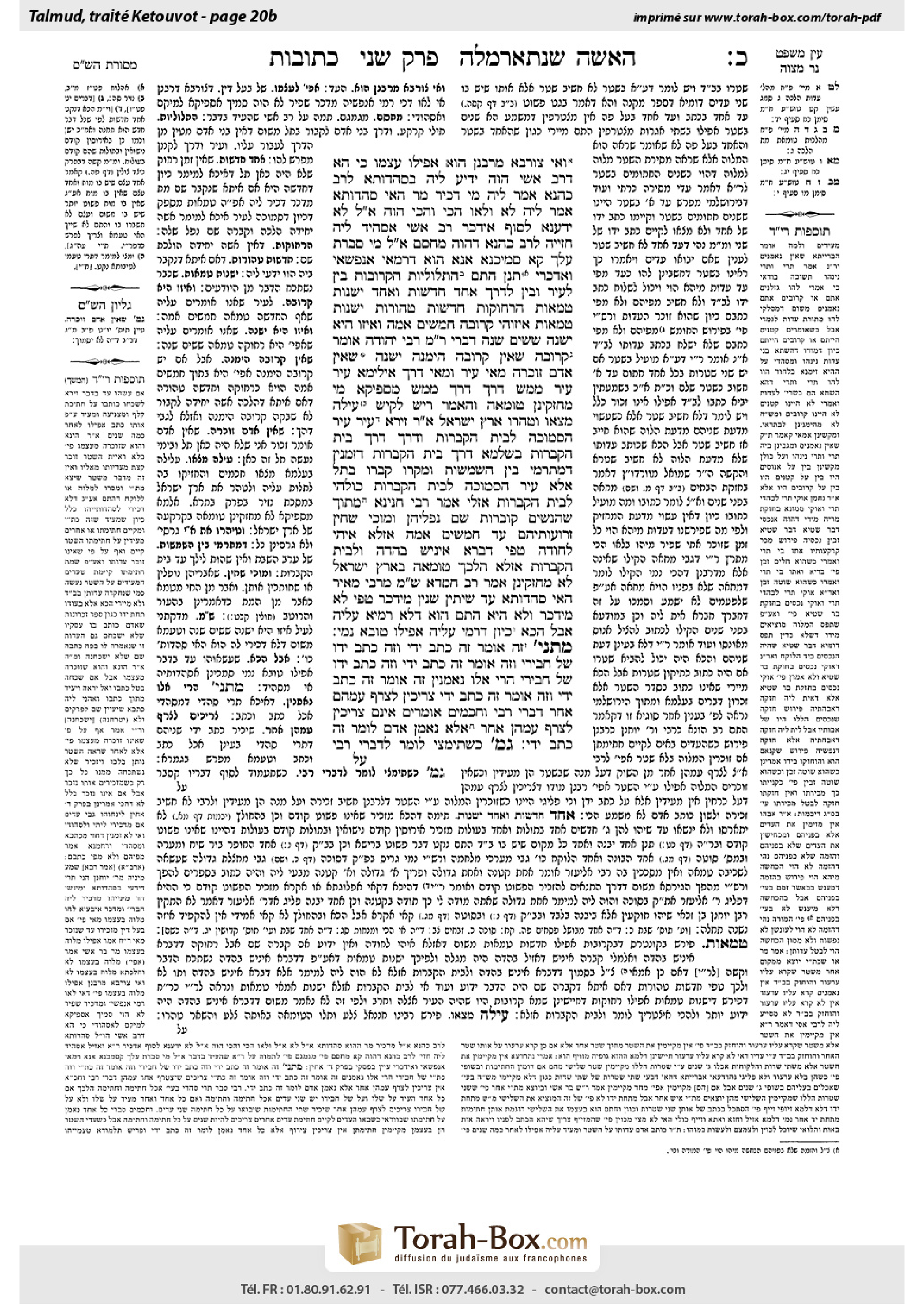
כתובות כ׳ ב · Aramaic and Hebrew text
וְאִי צוּרְבָּא מֵרַבָּנַן הוּא, אֲפִילּוּ עַצְמוֹ. כִּי הָא דְּרַב אָשֵׁי הֲוָה יְדִיעַ לֵיהּ בְּסָהֲדוּתָא לְרַב כָּהֲנָא. אֲמַר לֵיהּ: מִי דְּכִיר מָר הַאי סָהֲדוּתָא? אֲמַר לֵיהּ: לָא. וְלָאו הָכִי וְהָכִי הֲוָה? אֲמַר לֵיהּ: לָא יָדַעְנָא, לְסוֹף אִידְּכַר רַב אָשֵׁי, אַסְהֵיד לֵיהּ. חַזְיֵיהּ לְרַב כָּהֲנָא דַּהֲוָה מְחַסֵּם. אֲמַר לֵיהּ: מִי סָבְרַתְּ עֲלָךְ קָא סְמִיכְנָא? אֲנָא הוּא דִּרְמַאי אַנַּפְשַׁאי וְאִדַּכְרִי.
תְּנַן הָתָם: הַתְּלוּלִיּוֹת הַקְּרוֹבוֹת בֵּין לָעִיר וּבֵין לַדֶּרֶךְ, אֶחָד חֲדָשׁוֹת וְאֶחָד יְשָׁנוֹת — טְמֵאוֹת. הָרְחוֹקוֹת, חֲדָשׁוֹת — טְהוֹרוֹת, יְשָׁנוֹת — טְמֵאוֹת. אֵיזוֹהִי קְרוֹבָה — חֲמִשִּׁים אַמָּה, וְאֵיזוֹ הִיא יְשָׁנָה — שִׁשִּׁים שָׁנָה, דִּבְרֵי רַבִּי מֵאִיר. רַבִּי יְהוּדָה אוֹמֵר: קְרוֹבָה — שֶׁאֵין קְרוֹבָה הֵימֶנָּה, יְשָׁנָה — שֶׁאֵין אָדָם זוֹכְרָהּ.
מַאי ״עִיר״ וּמַאי ״דֶּרֶךְ״? אִילֵימָא ״עִיר״ — עִיר מַמָּשׁ, ״דֶּרֶךְ״ — דֶּרֶךְ מַמָּשׁ, מִסְּפֵיקָא מִי מַחְזְקִינַן טוּמְאָה? וְהָאָמַר רֵישׁ לָקִישׁ: עִילָּה מָצְאוּ וְטִהֲרוּ אֶרֶץ יִשְׂרָאֵל. אָמַר רַבִּי זֵירָא: ״עִיר״ — עִיר הַסְּמוּכָה לְבֵית הַקְּבָרוֹת, וְ״דֶרֶךְ״ — דֶּרֶךְ בֵּית הַקְּבָרוֹת.
בִּשְׁלָמָא דֶּרֶךְ בֵּית הַקְּבָרוֹת, דְּזִמְנִין דְּמִתְרְמֵי בֵּין הַשְּׁמָשׁוֹת וּמִקְּרוּ קָבְרוּ בְּתֵל. אֶלָּא עִיר הַסְּמוּכָה לְבֵית הַקְּבָרוֹת, כּוּלְּהִי לְבֵית הַקְּבָרוֹת אָזְלִי?
אָמַר רַבִּי חֲנִינָא: מִתּוֹךְ שֶׁהַנָּשִׁים קוֹבְרוֹת שָׁם נִפְלֵיהֶן, וּמוּכֵּי שְׁחִין זְרוֹעוֹתֵיהֶם — עַד חֲמִשִּׁים אַמָּה אָזְלָא אִיהִי לְחוּדַּהּ. טְפֵי — דָּבְרָא אִינִישׁ בַּהֲדַהּ, וּלְבֵית הַקְּבָרוֹת אָזְלָא. הִלְכָּךְ, טוּמְאָה בְּאֶרֶץ יִשְׂרָאֵל לָא מַחְזְקִינַן.
אָמַר רַב חִסְדָּא: שְׁמַע מִינַּהּ מֵרַבִּי מֵאִיר, הַאי סָהֲדוּתָא עַד שִׁיתִּין שְׁנִין — מִידְּכַר, טְפֵי — לָא מִידְּכַר. וְלָא הִיא, הָתָם הוּא דְּלָא רַמְיָא עֲלֵיהּ. אֲבָל הָכָא, כֵּיוָן דְּרָמֵי עֲלֵיהּ, אֲפִילּוּ טוּבָא נָמֵי.
מַתְנִי׳ זֶה אוֹמֵר: כְּתַב יָדִי, וְזֶה כְּתַב יָדוֹ שֶׁל חֲבֵירִי. וְזֶה אוֹמֵר: זֶה כְּתַב יָדִי, וְזֶה כְּתַב יָדוֹ שֶׁל חֲבֵירִי — הֲרֵי אֵלּוּ נֶאֱמָנִין. זֶה אוֹמֵר: זֶה כְּתַב יָדִי, וְזֶה אוֹמֵר: זֶה כְּתַב יָדִי — צְרִיכִין לְצָרֵף עִמָּהֶם אַחֵר, דִּבְרֵי רַבִּי. וַחֲכָמִים אוֹמְרִים: אֵינָם צְרִיכִין לְצָרֵף עִמָּהֶן אַחֵר, אֶלָּא נֶאֱמָן אָדָם לוֹמַר זֶה כְּתַב יָדִי.
גְּמָ׳ כְּשֶׁתִּימְצֵי לוֹמַר, לְדִבְרֵי רַבִּי
Ketubot 20b · English translation
And if the witness is a Torah scholar, then even if the litigant himself jogged the witness’s memory, the witness may testify. A Torah scholar would not testify if he did not actually remember the testimony himself, as in that case involving Rav Ashi, who knew testimony relating to Rav Kahana. Rav Kahana said to Rav Ashi: Does the Master remember this testimony? Rav Ashi said to him: No. Rav Kahana said to him: Didn’t the incident transpire in such and such a manner? Rav Ashi said to him: I don’t know. Ultimately, Rav Ashi remembered the testimony and testified for Rav Kahana. He saw that Rav Kahana was hesitant [meḥassem] with regard to accepting his testimony, concerned that he had influenced the content of Rav Ashi’s testimony. Rav Ashi said to him: Do you think that I am relying on you? I made an effort, and I remembered the incident.
§ Apropos recalling testimony, the Gemara adds that we learned there in a mishna (Oholot 16:2): Mounds of dirt that are near either to a city or a path, whether these mounds are new or whether they are old, are ritually impure due to the concern that a corpse is buried there. With regard to the mounds that are distant from the city: If they are new they are ritually pure, as, were there a corpse buried there, someone would remember, and if they are old they are impure. The mishna elaborates: What is a mound that is near? It is one at a distance of up to fifty cubits. And what is a mound that is old? It is one that was there for more than sixty years; this is the statement of Rabbi Meir. Rabbi Yehuda says: A mound that is near is one that there is no mound closer than it. Old is referring to a mound that no one remembers. According to Rabbi Yehuda, the parameters are not quantifiable.
The Gemara asks: What is a city and what is a path in this context? If you say city means an actual city and a path is an actual path and the mishna is referring to any city or path, the question arises: Do we presume the existence of ritual impurity in Eretz Yisrael? But didn’t Reish Lakish say in explaining how the Sages, based on meager proof, deemed an area in Eretz Yisrael ritually pure where uncertainty arose with regard to its purity: They found a pretext and deemed Eretz Yisrael ritually pure. Apparently, one does not presume ritual impurity in Eretz Yisrael. Why, then, does the mishna declare that every mound of dirt near a city or a path is impure? Rabbi Zeira said: The word city in the mishna is referring to a city adjacent to the cemetery, and the word path is referring to the path leading to the cemetery. Therefore, the concern that a corpse may be buried in the mound is a reasonable one.
The Gemara asks: Granted, with regard to a mound located adjacent to the path leading to the cemetery, there is concern that a corpse is buried in the mound, as sometimes one happens to go to bury the corpse on Shabbat eve at twilight, and to avoid desecrating Shabbat, it happened that they buried the corpse in a mound on the path. However, with regard to a city adjacent to the cemetery, everyone goes to the cemetery to bury their dead. Why would anyone bury a corpse in a mound adjacent to the city?
Rabbi Ḥanina said: The mounds could be impure, since women bury their stillborn babies adjacent to the city, as there is no funeral in that case, and because those afflicted with boils bury their arms that withered and fell from their bodies. Until a distance of fifty cubits from the city, the woman goes alone and buries the stillborn in a mound. More than that distance, she takes a person with her, as she fears going alone, and she goes to the cemetery. Therefore, we are not presuming the existence of ritual impurity in Eretz Yisrael. The case of the mounds is an exception, as there is basis for deeming them impure.
Rav Ḥisda said: Conclude from the statement of Rabbi Meir, who established a time limit beyond which a mound is considered an old mound, that with regard to testimony, until sixty years have passed, it is remembered, and if more than sixty years have passed, it is not remembered. And the Gemara rejects that conclusion: That is not so. There, with regard to the mounds, it is a case where responsibility to attest to the status of the mound was not imposed upon him, and the matter is forgotten after the passage of sixty years. However, here, with regard to testimony in general, since responsibility to testify was imposed upon him, he remembers the testimony even after a greater period of time than sixty years has passed.
MISHNA: If this witness whose name is signed on a document says: This is my handwriting and this is the handwriting of my fellow witness, and that witness says: This is my handwriting and that is the handwriting of my fellow witness, these witnesses are deemed credible and the document is ratified, as together they provide testimony authenticating both signatures. If this witness says: This is my handwriting, and that witness says: This is my handwriting, and neither testifies with regard to the signature of the other, they must add another witness with them who will authenticate the signatures of the two witnesses, as otherwise, each of the witnesses would be testifying with regard to half the sum in the document; this is the statement of Rabbi Yehuda HaNasi. And the Rabbis say: They need not add another witness with them. Rather, a person is deemed credible to say: This is my handwriting. The testimony of the two signatories about their own signatures is sufficient.
GEMARA: The Gemara says: When you analyze the reasoning for the opinions of the tanna’im, say that according to the statement of Rabbi Yehuda HaNasi,
Ketubot 20b · Traduction française (IA)
Et si le témoin est un érudit de la Torah, même si le plaideur lui-même lui a rafraîchi la mémoire, le témoin peut déposer. Un érudit de la Torah ne déposerait pas s’il ne se souvenait pas lui-même réellement du témoignage, comme dans cette affaire concernant Rav Ashi, qui connaissait un témoignage relatif à Rav Kahana. Rav Kahana demanda à Rav Ashi : « Le Maître se souvient-il de ce témoignage ? » Rav Ashi lui répondit : « Non. » Rav Kahana lui dit : « L’incident ne s’est-il pas déroulé de telle et telle manière ? » Rav Ashi lui répondit : « Je ne sais pas. » Finalement, Rav Ashi se souvint du témoignage et déposa en faveur de Rav Kahana. Il vit que Rav Kahana hésitait [meḥassem] à accepter son témoignage, craignant d’avoir influencé le contenu de la déposition de Rav Ashi. Rav Ashi lui dit : « Penses-tu que je m’en remets à toi ? J’ai fait un effort et je me suis souvenu de l’incident. »
§ À propos du souvenir d’un témoignage, la Guemara ajoute que nous avons appris là-bas dans une Michna (Oholot 16:2) : Les monticules de terre situés près d’une ville ou d’un chemin, qu’ils soient récents ou anciens, sont rituellement impurs, par crainte qu’un cadavre y soit enterré. Quant aux monticules éloignés de la ville, s’ils sont récents, ils sont rituellement purs, car si un cadavre y avait été enterré, quelqu’un s’en souviendrait ; s’ils sont anciens, ils sont impurs. La Michna précise : Qu’est-ce qu’un monticule proche ? C’est un monticule situé à une distance maximale de cinquante coudées. Et qu’est-ce qu’un monticule ancien ? C’est un monticule présent depuis plus de soixante ans ; telle est l’opinion de Rabbi Meïr. Rabbi Yehouda dit : Un monticule proche est un monticule dont aucun autre monticule n’est plus proche. « Ancien » désigne un monticule dont personne ne se souvient. Selon Rabbi Yehouda, ces paramètres ne sont pas quantifiables.
La Guemara demande : Que désignent ici une ville et un chemin ? Si l’on dit que « ville » désigne une véritable ville et que « chemin » désigne un véritable chemin, et que la Michna parle de n’importe quelle ville ou de n’importe quel chemin, une question se pose : présume-t-on l’existence d’une impureté rituelle en Eretz Israël ? Or Reish Lakish n’a-t-il pas dit, pour expliquer comment les Sages, en s’appuyant sur des preuves ténues, ont déclaré rituellement pure une zone d’Eretz Israël dont la pureté était incertaine : « Ils ont trouvé un prétexte et ont déclaré Eretz Israël rituellement pure » ? Il apparaît donc qu’on ne présume pas l’existence d’une impureté rituelle en Eretz Israël. Pourquoi, alors, la Michna déclare-t-elle impur tout monticule de terre situé près d’une ville ou d’un chemin ? Rabbi Zeïra dit : Dans la Michna, le mot « ville » désigne une ville adjacente au cimetière, et le mot « chemin » désigne le chemin qui mène au cimetière. La crainte qu’un cadavre soit enterré dans le monticule est donc fondée.
La Guemara demande : On comprend qu’on craigne qu’un cadavre soit enterré dans un monticule situé près du chemin menant au cimetière, car il arrive parfois qu’on aille enterrer un cadavre la veille de Chabbat, au crépuscule ; pour éviter de profaner Chabbat, il est arrivé qu’on enterre le cadavre dans un monticule situé le long du chemin. Cependant, s’agissant d’une ville adjacente au cimetière, tout le monde se rend au cimetière pour enterrer ses morts. Pourquoi quelqu’un enterrerait-il un cadavre dans un monticule situé près de la ville ?
Rabbi Ḥanina dit : Les monticules pourraient être impurs, car les femmes enterrent leurs enfants mort-nés près de la ville, puisqu’il n’y a pas de funérailles dans ce cas, et que les personnes atteintes de furoncles enterrent les bras qui se sont desséchés et sont tombés de leur corps. Jusqu’à une distance de cinquante coudées de la ville, la femme va seule et enterre l’enfant mort-né dans un monticule. Au-delà de cette distance, elle emmène quelqu’un avec elle, car elle craint d’y aller seule, et elle se rend au cimetière. Par conséquent, on ne présume pas l’existence d’une impureté rituelle en Eretz Israël. Le cas des monticules fait exception, puisqu’il existe un fondement permettant de les déclarer impurs.
Rav Ḥisda dit : Déduis de l’enseignement de Rabbi Meïr, qui a fixé une limite de temps au-delà de laquelle un monticule est considéré comme ancien, qu’en matière de témoignage, on s’en souvient tant que soixante ans ne se sont pas écoulés, et qu’on ne s’en souvient plus si plus de soixante ans se sont écoulés. La Guemara rejette cette déduction : Il n’en est pas ainsi. Là-bas, à propos des monticules, il s’agit d’un cas où l’on ne lui avait pas imposé la responsabilité d’attester le statut du monticule ; l’affaire est donc oubliée après soixante ans. Mais ici, en matière de témoignage en général, puisqu’on lui a imposé la responsabilité de témoigner, il se souvient du témoignage même après qu’une période supérieure à soixante ans s’est écoulée.
MICHNA : Si ce témoin dont le nom figure sur un document dit : « Ceci est mon écriture et ceci est l’écriture de mon collègue témoin », et que l’autre témoin dit : « Ceci est mon écriture et ceci est l’écriture de mon collègue témoin », ces témoins sont jugés crédibles et le document est authentifié, car, ensemble, ils fournissent un témoignage qui authentifie les deux signatures. Si ce témoin dit : « Ceci est mon écriture », et que l’autre témoin dit : « Ceci est mon écriture », sans que l’un ni l’autre témoigne au sujet de la signature de l’autre, ils doivent se faire assister d’un autre témoin qui authentifiera leurs deux signatures ; autrement, chacun d’eux témoignerait au sujet de la moitié de la somme inscrite dans le document. Telle est l’opinion de Rabbi Yehouda HaNassi. Les Sages disent : Ils n’ont pas besoin de se faire assister d’un autre témoin. Au contraire, une personne est jugée crédible lorsqu’elle dit : « Ceci est mon écriture. » Le témoignage des deux signataires au sujet de leurs propres signatures suffit.
GUEMARA : La Guemara dit : Lorsque tu analyses le raisonnement qui sous-tend les opinions des tanaïm, dis que, selon l’enseignement de Rabbi Yehouda HaNassi,
Traduction française générée par IA à partir de l’édition anglaise de Sefaria. Vérifie toujours un passage avec le texte source.
Text from Sefaria: William Davidson Edition - Vocalized Aramaic (CC BY NC); William Davidson Edition - English (CC BY NC).