Ketubot 21b: Talmud study for Daf Yomi
Daf Yomi is the daily study of one Talmud folio. Explore 37 tractates with scans, Hebrew text, Sefaria English and AI-generated French translations where annotated.
Passage selection and English or AI-generated French translation are available where the scan has annotations. Daf Study is independent of Torah-Box and Sefaria.
Browse Ketubot · כתובות · All tractatesKetubot 21b text and translations
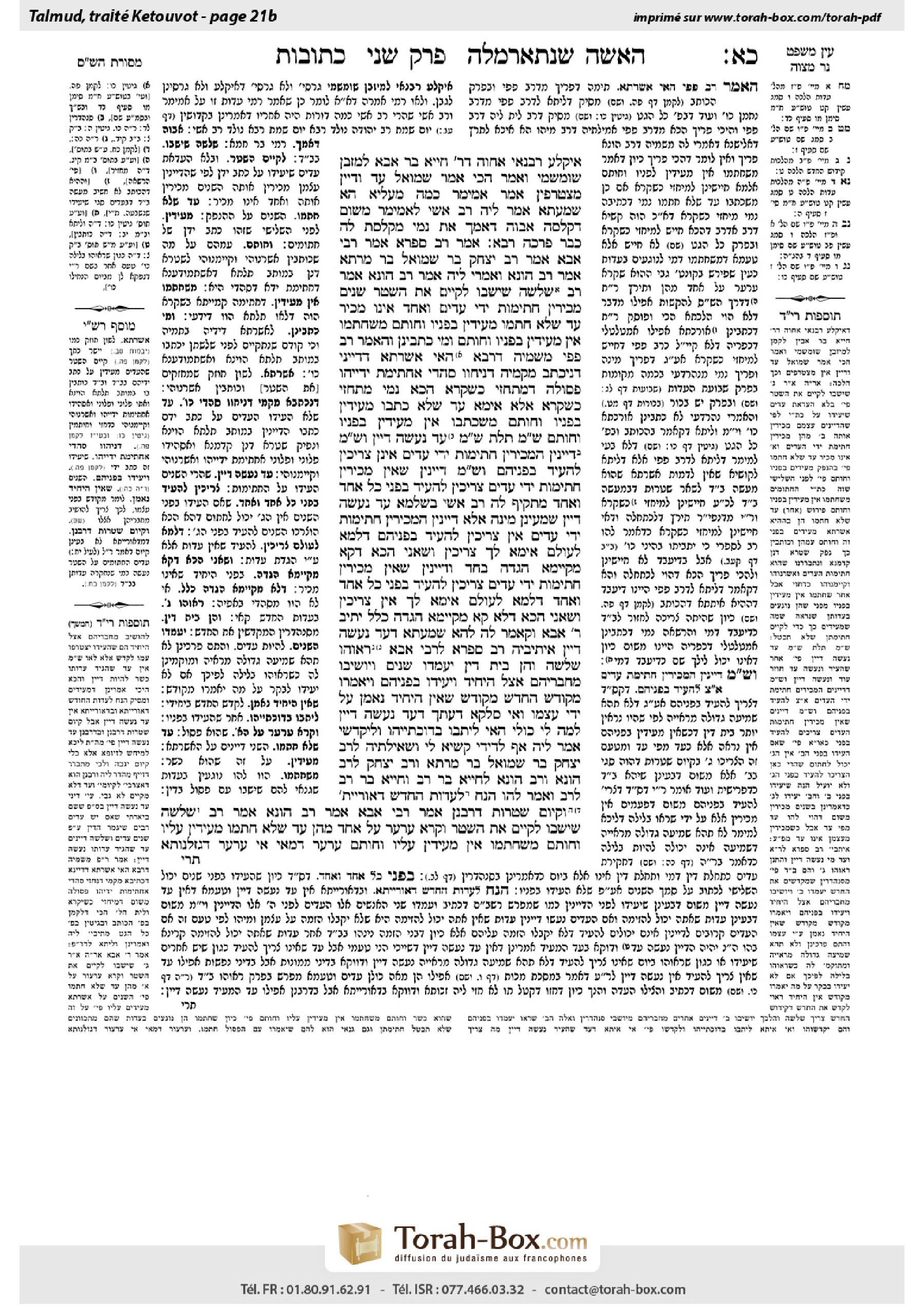
This page of Ketubot includes the Aramaic text, an English translation and an AI-generated French translation, alongside the scan above.
כתובות כ״א ב · Aramaic and Hebrew text
אִיקְּלַע רַבְנַאי אֲחוּהּ דְּרַבִּי חִיָּיא בַּר אַבָּא לְמִזְבַּן שׁוּמְשְׁמֵי וַאֲמַר: הָכִי אָמַר שְׁמוּאֵל: עֵד וְדַיָּין מִצְטָרְפִין. אֲמַר אַמֵּימָר: כַּמָּה מְעַלְּיָא הָא שְׁמַעְתָּא! אֲמַר לֵיהּ רַב אָשֵׁי לְאַמֵּימָר: מִשּׁוּם דְּקַלְּסַהּ אֲבוּהּ דְּאִמָּךְ, אַתְּ נָמֵי מְקַלְּסַתְּ לַהּ?! כְּבָר פַּרְכַהּ רָבָא.
אָמַר רַב סָפְרָא אָמַר רַבִּי אַבָּא אָמַר רַב יִצְחָק בַּר שְׁמוּאֵל בַּר מָרְתָא אָמַר רַב הוּנָא, וְאָמְרִי לֵיהּ אָמַר רַב הוּנָא אָמַר רַב: שְׁלֹשָׁה שֶׁיָּשְׁבוּ לְקַיֵּים אֶת הַשְּׁטָר, שְׁנַיִם מַכִּירִין חֲתִימוּת יְדֵי עֵדִים, וְאֶחָד אֵינוֹ מַכִּיר. עַד שֶׁלֹּא חָתְמוּ — מְעִידִין בְּפָנָיו וְחוֹתֵם. מִשֶּׁחָתְמוּ — אֵין מְעִידִין בְּפָנָיו וְחוֹתֵם.
וּמִי כָּתְבִינַן? וְהָאָמַר רַב פַּפִּי מִשְּׁמֵיהּ דְּרָבָא: הַאי אַשַּׁרְתָּא דְּדַיָּינֵי דְּנִיכְתַּב מִקַּמֵּיהּ דְּנַיחְווֹ סָהֲדִי אַחֲתִימַת יְדַיְיהוּ — פְּסוּלָה, דְּמִתְחֲזֵי כְּשִׁקְרָא, הָכָא נָמֵי מִתְחֲזֵי כְּשִׁקְרָא!
אֶלָּא אֵימָא: עַד שֶׁלֹּא כָּתְבוּ — מְעִידִין בְּפָנָיו וְחוֹתֵם, מִשֶּׁכָּתְבוּ — אֵין מְעִידִין בְּפָנָיו וְחוֹתֵם.
שְׁמַע מִינַּהּ תְּלָת. שְׁמַע מִינַּהּ: עֵד נַעֲשֶׂה דַּיָּין, וּשְׁמַע מִינַּהּ: דַּיָּינִין הַמַּכִּירִין חֲתִימוּת יְדֵי עֵדִים — אֵינָן צְרִיכִין לְהָעִיד בִּפְנֵיהֶם, וּשְׁמַע מִינַּהּ: דַּיָּינִין שֶׁאֵין מַכִּירִין חֲתִימוּת יְדֵי עֵדִים — צְרִיכִין לְהָעִיד בִּפְנֵי כׇּל אֶחָד וְאֶחָד.
מַתְקֵיף לַהּ רַב אָשֵׁי: בִּשְׁלָמָא עֵד נַעֲשֶׂה דַּיָּין, שָׁמְעִינַן מִינַּהּ, אֶלָּא דַּיָּינִין הַמַּכִּירִין חֲתִימוּת יְדֵי עֵדִים אֵין צְרִיכִין לְהָעִיד בִּפְנֵיהֶם — דִּלְמָא לְעוֹלָם אֵימָא לָךְ: צְרִיכִין, וְשָׁאנֵי הָכָא דְּקָא מִקַּיְימָא הַגָּדָה בְּחַד.
וְדַיָּינִין שֶׁאֵין מַכִּירִין חֲתִימוּת יְדֵי עֵדִים צְרִיכִין לְהָעִיד בִּפְנֵי כׇּל אֶחָד וְאֶחָד, דִּלְמָא לְעוֹלָם אֵימָא לָךְ: אֵין צְרִיכִין, וְשָׁאנֵי הָכָא דְּלָא קָא מִקַּיְימָא הַגָּדָה כְּלָל.
יְתֵיב רַבִּי אַבָּא וְקָאָמַר לַהּ לְהָא שְׁמַעְתָּא דְּעֵד נַעֲשֶׂה דַּיָּין, אֵיתִיבֵיהּ רַב סָפְרָא לְרַבִּי אַבָּא: רָאוּהוּ שְׁלֹשָׁה, וְהֵן בֵּית דִּין — יַעַמְדוּ שְׁנַיִם וְיוֹשִׁיבוּ מֵחַבְרֵיהֶם אֵצֶל הַיָּחִיד, וְיָעִידוּ בִּפְנֵיהֶם, וְיֹאמְרוּ: ״מְקוּדָּשׁ הַחֹדֶשׁ, מְקוּדָּשׁ״. שֶׁאֵין הַיָּחִיד נֶאֱמָן עַל יְדֵי עַצְמוֹ. וְאִי סָלְקָא דַעְתָּךְ דְּעֵד נַעֲשֶׂה דַּיָּין, לְמָה לִי כּוּלֵּי הַאי? לֵיתְבוּ בְּדוּכְתַּיְיהוּ וְלִיקַּדְּשׁוּ!
אֲמַר לֵיהּ: אַף לְדִידִי קַשְׁיָא לִי, וּשְׁאֵילְתֵּיהּ לְרַב יִצְחָק בַּר שְׁמוּאֵל בַּר מָרְתָא, וְרַב יִצְחָק לְרַב הוּנָא, וְרַב הוּנָא לְחִיָּיא בַּר רַב, וְחִיָּיא בַּר רַב לְרַב, וַאֲמַר לְהוּ: הַנַּח לְעֵדוּת הַחֹדֶשׁ דְּאוֹרָיְיתָא, וְקִיּוּם שְׁטָרוֹת דְּרַבָּנַן.
אָמַר רַבִּי אַבָּא אָמַר רַב הוּנָא אָמַר רַב: שְׁלֹשָׁה שֶׁיָּשְׁבוּ לְקַיֵּים אֶת הַשְּׁטָר, וְקָרָא עַרְעָר עַל אֶחָד מֵהֶן. עַד שֶׁלֹּא חָתְמוּ — מְעִידִין עָלָיו וְחוֹתֵם. מִשֶּׁחָתְמוּ — אֵין מְעִידִין עָלָיו וְחוֹתֵם.
עַרְעָר דְּמַאי? אִי עַרְעָר דְּגַזְלָנוּתָא —
Ketubot 21b · English translation
The Gemara relates: Ravnai, brother of Rabbi Ḥiyya bar Abba, happened to come and sell sesame, and he said that this is what Shmuel said: A witness and a judge join together to testify. Ameimar said: How excellent is this halakha. Rav Ashi said to Ameimar: Due to the fact that Rami bar Ḥama, father of your mother, praised it, you also praise [mekallesat] it? Rava already refuted that statement and proved it incorrect.
§ Rav Safra said that Rabbi Abba said that Rav Yitzhak bar Shmuel bar Marta said that Rav Huna said; and some say that Rav Huna said that Rav said: With regard to three judges who convened to ratify a document, and two of them recognize the signatures of the witnesses on the document, and one does not recognize them; as long as the two judges did not yet sign to ratify the document, they testify and authenticate the signatures before the third judge, and based on that testimony, the third judge signs the document of ratification together with the first two judges. However, once the two judges signed the ratification, they may not testify before him and have him sign the ratification. The formula of the ratification is: We verified and ratified this document in a forum of three. Since when the first two judges signed the ratification, they were not a forum of three, the ratification is invalid.
The Gemara asks: And do we write the ratification of a document before all of the judges verify the signatures of the witnesses? But didn’t Rav Pappi say in the name of Rava: This ratification of judges that was written before the witnesses related testimony about their signatures is invalid, even if the witnesses later authenticate their signatures, as it seems like a lie, since when they drafted the ratification they were not yet aware that they would be able to ratify the document? Here too, when the judges drafted the ratification before the third judge can verify the signatures, it seems like a lie.
The Gemara answers: Rather, emend the statement and say: As long as the two judges did not yet write the ratification of the document, they testify and authenticate the signatures before the third judge, and based on that testimony, the third judge signs the ratification together with the first two judges. However, once the two judges have written the ratification, they may not testify before him and have him sign the ratification.
The Gemara notes: Conclude from the statement of Rav Huna three halakhot: Conclude from it that a witness can become a judge, as the two judges who testified to authenticate the signatures signed the ratification as judges and were not disqualified due to a conflict of interest. And conclude from it that judges who recognize the signatures of the witnesses do not require other witnesses to testify before them. And conclude from it that in cases involving judges who do not recognize the signatures of the witnesses, witnesses are required to testify before each and every one of them, and no judge may issue a ruling based on testimony brought before the other judges.
Rav Ashi strongly objects to the conclusions drawn by the Gemara. Granted, the fact that a witness can become a judge we can conclude from the statement of Rav Huna. However, the fact that judges who recognize the signatures of witnesses do not require other witnesses to testify before them cannot be concluded from the statement of Rav Huna. Perhaps, I will say to you that actually judges require witnesses to testify before them; and here, in this case, it is different, as the requirement of the statement of testimony is fulfilled with the testimony of the two judges before the one judge who did not recognize the signatures. However, in a case where there is no statement of testimony at all, there could be no ratification of the document.
And furthermore, with regard to the conclusion that in cases of judges who do not recognize the signatures of the witnesses, witnesses are required to testify before each and every one of them, perhaps, I will say to you that actually, in general, witnesses are not required to testify before each and every judge; and here, in this case, it is different, as were it not for the testimony of the two judges before the third judge, the requirement of the statement of testimony would not be fulfilled at all. In a case where there is other testimony, perhaps one may rely on the knowledge of others in order to ratify the document.
The Gemara relates: Rabbi Abba sat and stated this halakha that a witness can become a judge. Rav Safra raised an objection to the opinion of Rabbi Abba from a mishna (Rosh HaShana 25b): If three people saw the new moon and they constitute a court, two of them should stand and seat two of their colleagues to sit near the remaining individual judge. And the two should testify before the three judges, and they should then recite the standard formula for sanctifying the month: Sanctified is the month, sanctified. Two others must join the original judge to form a tribunal of three judges, as an individual judge is not deemed credible to sanctify the month by himself. And if it enters your mind to say that a witness can become a judge, why do I need all this? Let the three judges remain seated in their place and sanctify the month, as they can be both witnesses and judges.
Rabbi Abba said to Rav Safra: That mishna was difficult for me to understand as well, and I asked Rav Yitzḥak bar Shmuel bar Marta about it, and Rav Yitzḥak asked Rav Huna, and Rav Huna asked Ḥiyya bar Rav, and Ḥiyya bar Rav asked Rav, and Rav said to them: Leave the case of testimony to sanctify the month, as it is mandated by Torah law, and the guidelines are more stringent, and the requirement of ratification of documents is mandated by rabbinic law, where the guidelines are more lenient. In that case a witness can become a judge.
§ Rabbi Abba said that Rav Huna said that Rav said: In the case of three judges who convened as a tribunal to ratify a document, and a person raised a challenge with regard to the fitness of one of them to serve as a judge, thereby preventing ratification of the document, as long as they did not yet sign the ratification, the other two judges may testify about the acceptability of the judge whose fitness was challenged, and he then signs the ratification. However, once they signed the ratification, they may no longer testify about his fitness and thereby enable him to sign the ratification. Once they sign, their testimony is no longer impartial because there is a conflict of interest as they seek to avoid being associated with a tribunal tainted by an unfit judge.
The Gemara elaborates: With regard to a challenge of what sort was this halakha stated? If it was a challenge based on an allegation of theft,
Ketubot 21b · Traduction française (IA)
La Guemara rapporte : Ravnai, le frère de Rabbi Ḥiyya bar Abba, vint par hasard vendre du sésame et dit que telle était la déclaration de Shmuel : un témoin et un juge peuvent s’associer pour témoigner. Ameimar dit : « Comme cette halakha est excellente ! » Rav Ashi dit à Ameimar : « Parce que Rami bar Ḥama, le père de ta mère, l’a louée, toi aussi tu la loues [mekallesat] ? » Rava a déjà réfuté cette affirmation et démontré qu’elle était incorrecte.
§ Rav Safra dit au nom de Rabbi Abba, qui le tenait de Rav Yitzhak bar Shmuel bar Marta, qui le tenait de Rav Huna ; certains disent que Rav Huna dit au nom de Rav : Lorsque trois juges se réunissent pour authentifier un acte, que deux d’entre eux reconnaissent les signatures des témoins sur l’acte, mais que le troisième ne les reconnaisse pas, tant que les deux juges n’ont pas encore signé l’authentification de l’acte, ils témoignent devant le troisième et authentifient les signatures ; sur la base de leur témoignage, le troisième juge signe l’acte d’authentification avec les deux premiers juges. En revanche, une fois que les deux juges ont signé l’authentification, ils ne peuvent plus témoigner devant lui pour qu’il signe l’authentification. La formule d’authentification est : « Nous avons vérifié et authentifié cet acte en présence d’un tribunal de trois juges. » Puisque les deux premiers juges ont signé l’authentification alors qu’ils ne formaient pas un tribunal de trois, l’authentification est invalide.
La Guemara demande : Écrit-on l’authentification d’un acte avant que tous les juges aient vérifié les signatures des témoins ? Rav Pappi n’a-t-il pas dit au nom de Rava : Cette authentification judiciaire rédigée avant que les témoins n’aient déposé au sujet de leurs signatures est invalide, même si les témoins authentifient ensuite leurs signatures, car elle semble mensongère : lorsqu’ils l’ont rédigée, ils ne savaient pas encore s’ils seraient en mesure d’authentifier l’acte. Ici aussi, lorsque les juges rédigent l’authentification avant que le troisième juge puisse vérifier les signatures, cela semble mensonger.
La Guemara répond : Il faut plutôt corriger l’énoncé et dire : Tant que les deux juges n’ont pas encore rédigé l’authentification de l’acte, ils témoignent devant le troisième et authentifient les signatures ; sur la base de leur témoignage, le troisième juge signe l’authentification avec les deux premiers juges. En revanche, une fois que les deux juges ont rédigé l’authentification, ils ne peuvent plus témoigner devant lui pour qu’il signe l’authentification.
La Guemara relève : On peut déduire de la déclaration de Rav Huna trois halakhot. On peut en déduire qu’un témoin peut devenir juge, puisque les deux juges qui ont témoigné pour authentifier les signatures ont signé l’authentification en tant que juges, sans être disqualifiés pour conflit d’intérêts. On peut aussi en déduire que les juges qui reconnaissent les signatures des témoins n’ont pas besoin que d’autres témoins déposent devant eux. Enfin, on peut en déduire que, dans les cas où les juges ne reconnaissent pas les signatures des témoins, des témoins doivent déposer devant chacun d’eux, et qu’aucun juge ne peut statuer sur la base d’un témoignage présenté devant les autres juges.
Rav Ashi s’oppose vivement aux déductions de la Guemara. Certes, nous pouvons déduire de la déclaration de Rav Huna qu’un témoin peut devenir juge. Cependant, nous ne pouvons pas en déduire que les juges qui reconnaissent les signatures des témoins n’ont pas besoin que d’autres témoins déposent devant eux. Peut-être diras-tu qu’en réalité, les juges ont besoin que des témoins déposent devant eux ; mais dans ce cas, il en va autrement, car l’exigence d’une déposition est satisfaite par le témoignage des deux juges devant le juge qui ne reconnaissait pas les signatures. Toutefois, dans un cas où il n’y a aucune déposition, l’acte ne peut pas être authentifié.
En outre, concernant la déduction selon laquelle, lorsque des juges ne reconnaissent pas les signatures des témoins, des témoins doivent déposer devant chacun d’eux, peut-être diras-tu qu’en règle générale, les témoins n’ont pas besoin de déposer devant chaque juge ; mais dans ce cas, il en va autrement, car, sans le témoignage des deux juges devant le troisième, l’exigence d’une déposition ne serait pas satisfaite du tout. Lorsqu’il existe un autre témoignage, peut-être peut-on se fier aux connaissances d’autrui pour authentifier l’acte.
La Guemara rapporte : Rabbi Abba était assis et enseignait cette halakha, selon laquelle un témoin peut devenir juge. Rav Safra objecta à l’opinion de Rabbi Abba en citant une Michna (Roch Hachana 25b) : Si trois personnes ont vu la nouvelle lune et qu’elles constituent un tribunal, deux d’entre elles doivent se lever et faire asseoir deux de leurs collègues auprès du juge qui reste. Les deux témoignent devant les trois juges, qui récitent alors la formule habituelle de sanctification du mois : « Le mois est sanctifié, le mois est sanctifié. » Deux autres personnes doivent se joindre au juge initial afin de former un tribunal de trois juges, car un juge isolé n’est pas considéré comme digne de foi pour sanctifier seul le mois. Or, si tu estimes qu’un témoin peut devenir juge, pourquoi tout cela est-il nécessaire ? Que les trois juges restent assis à leur place et sanctifient le mois, puisqu’ils peuvent être à la fois témoins et juges.
Rabbi Abba dit à Rav Safra : Cette Michna était également difficile à comprendre pour moi, et j’ai interrogé Rav Yitzḥak bar Shmuel bar Marta à son sujet. Rav Yitzḥak interrogea Rav Huna, Rav Huna interrogea Ḥiyya bar Rav, Ḥiyya bar Rav interrogea Rav, et Rav leur répondit : Laisse de côté le cas du témoignage destiné à sanctifier le mois, car il est régi par la Torah et ses règles sont plus strictes ; l’authentification des actes, elle, est régie par une ordonnance rabbinique, et ses règles sont plus souples. Dans ce cas, un témoin peut devenir juge.
§ Rabbi Abba dit au nom de Rav Huna, qui le tenait de Rav : Lorsque trois juges se réunissent en tribunal pour authentifier un acte et qu’une personne conteste l’aptitude de l’un d’eux à siéger comme juge, empêchant ainsi l’authentification de l’acte, tant qu’ils n’ont pas encore signé l’authentification, les deux autres juges peuvent témoigner que le juge dont l’aptitude est contestée est apte à siéger, après quoi celui-ci signe l’authentification. En revanche, une fois qu’ils ont signé l’authentification, ils ne peuvent plus témoigner de son aptitude pour lui permettre de signer l’authentification. Après avoir signé, leur témoignage n’est plus impartial, car ils sont en conflit d’intérêts : ils cherchent à éviter d’être associés à un tribunal entaché par la présence d’un juge inapte.
La Guemara précise : De quel type de contestation s’agit-il dans cette halakha ? S’il s’agit d’une contestation fondée sur une accusation de vol,
Traduction française générée par IA à partir de l’édition anglaise de Sefaria. Vérifie toujours un passage avec le texte source.
Text from Sefaria: William Davidson Edition - Vocalized Aramaic (CC BY NC); William Davidson Edition - English (CC BY NC).