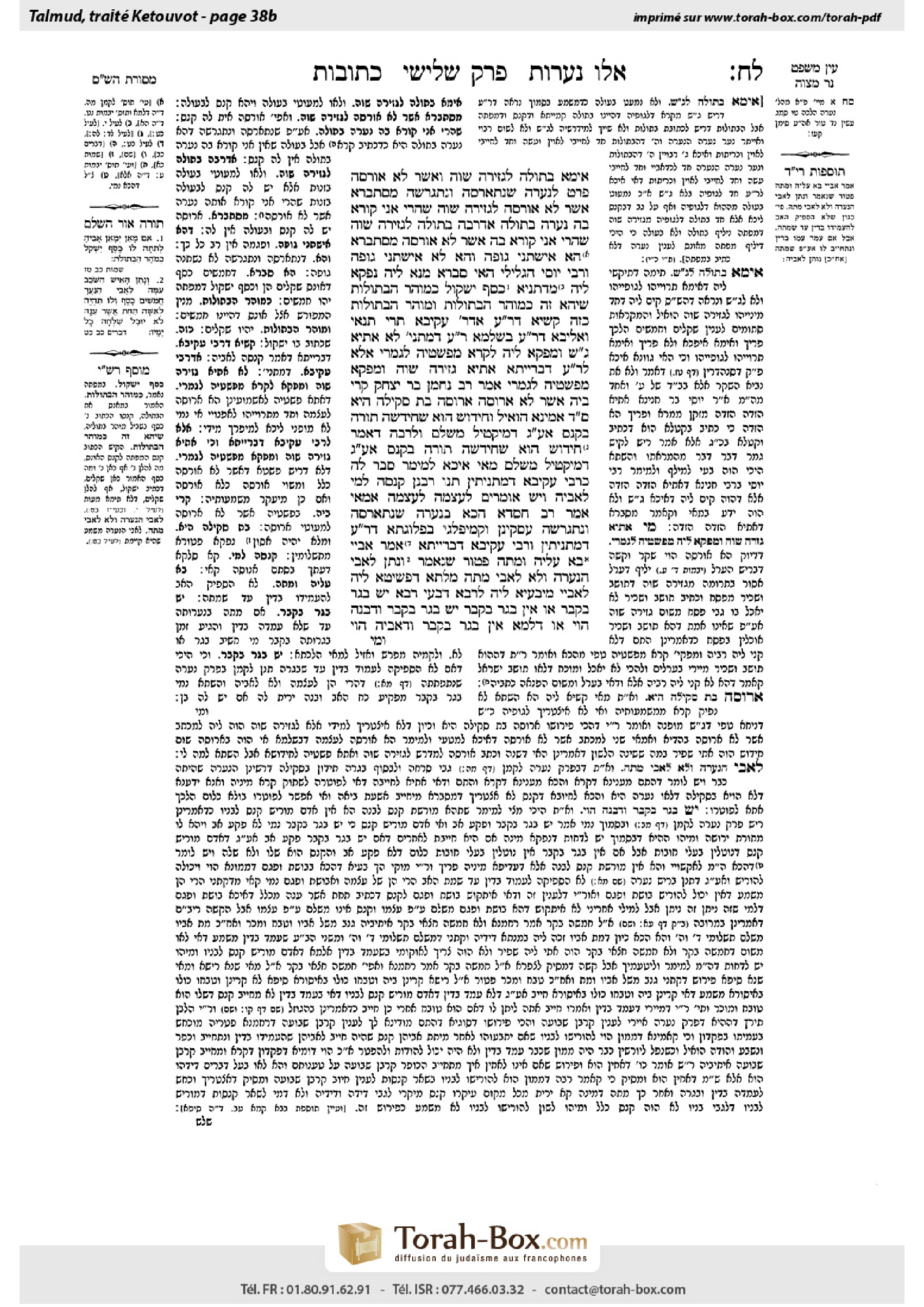
Ketubot 38b: Talmud study for Daf Yomi
Daf Yomi is the daily study of one Talmud folio. Explore 37 tractates with scans, Hebrew text, Sefaria English and AI-generated French translations where annotated.
Passage selection and English or AI-generated French translation are available where the scan has annotations. Daf Study is independent of Torah-Box and Sefaria.
Browse Ketubot · כתובות · All tractatesKetubot 38b text and translations
This page of Ketubot includes the Aramaic text, an English translation and an AI-generated French translation, alongside the scan above.
כתובות ל״ח ב · Aramaic and Hebrew text
אֵימָא: ״בְּתוּלָה״ — לִגְזֵירָה שָׁוָה, וַ״אֲשֶׁר לֹא אוֹרָסָה״ — פְּרָט לְנַעֲרָה שֶׁנִּתְאָרְסָה וְנִתְגָּרְשָׁה!
מִסְתַּבְּרָא ״אֲשֶׁר לֹא אוֹרָסָה״ לִגְזֵירָה שָׁוָה, שֶׁהֲרֵי אֲנִי קוֹרֵא בָּהּ ״נַעֲרָה בְּתוּלָה״. אַדְּרַבָּה: ״בְּתוּלָה״ לִגְזֵירָה שָׁוָה, שֶׁהֲרֵי אֲנִי קוֹרֵא בָּהּ ״אֲשֶׁר לֹא אוֹרָסָה״! מִסְתַּבְּרָא: הָא אִישְׁתַּנִּי גּוּפַהּ, וְהָא לָא אִישְׁתַּנִּי גּוּפַהּ.
וְרַבִּי יוֹסֵי הַגְּלִילִי הַאי סְבָרָא מְנָא לֵיהּ? נָפְקָא לֵיהּ מִדְּתַנְיָא: ״כֶּסֶף יִשְׁקוֹל כְּמוֹהַר הַבְּתוּלוֹת״, שֶׁיְּהֵא זֶה כְּמוֹהַר הַבְּתוּלוֹת, וּמוֹהַר הַבְּתוּלוֹת כָּזֶה.
קַשְׁיָא דְּרַבִּי עֲקִיבָא אַדְּרַבִּי עֲקִיבָא. תְּרֵי תַּנָּאֵי וְאַלִּיבָּא דְּרַבִּי עֲקִיבָא.
בִּשְׁלָמָא רַבִּי עֲקִיבָא דְּמַתְנִיתִין, לָא אָתְיָא גְּזֵירָה שָׁוָה וּמַפְּקָא לֵיהּ לִקְרָא מִפְּשָׁטֵיהּ לִגְמָרֵי. אֶלָּא לְרַבִּי עֲקִיבָא דְּבָרַיְיתָא, אָתְיָא גְּזֵירָה שָׁוָה וּמַפְּקָא מִפְּשָׁטֵיהּ לִגְמָרֵי.
אָמַר רַב נַחְמָן בַּר יִצְחָק: קְרִי בֵּיהּ ״אֲשֶׁר לֹא אֲרוּסָה״. אֲרוּסָה בַּת סְקִילָה הִיא! סָלְקָא דַּעְתָּךְ אָמֵינָא: הוֹאִיל וְחִידּוּשׁ הוּא שֶׁחִידְּשָׁה תּוֹרָה בִּקְנָס, אַף עַל גַּב דְּמִיקְּטִיל — מְשַׁלֵּם.
וּלְרַבָּה דְּאָמַר חִידּוּשׁ הוּא שֶׁחִידְּשָׁה תּוֹרָה בִּקְנָס, אַף עַל גַּב דְּמִיקְּטִיל מְשַׁלֵּם, מַאי אִיכָּא לְמֵימַר? סָבַר לַהּ כְּרַבִּי עֲקִיבָא דְּמַתְנִיתִין.
תָּנוּ רַבָּנַן: קְנָסָהּ לְמִי, לְאָבִיהָ. וְיֵשׁ אוֹמְרִים: לְעַצְמָהּ. לְעַצְמָהּ אַמַּאי! אָמַר רַב חִסְדָּא: הָכָא בְּנַעֲרָה שֶׁנִּתְאָרְסָה וְנִתְגָּרְשָׁה עָסְקִינַן, וְקָמִיפַּלְגִי בִּפְלוּגְתָּא דְּרַבִּי עֲקִיבָא דְּמַתְנִיתִין וְרַבִּי עֲקִיבָא דְּבָרַיְיתָא.
אָמַר אַבָּיֵי: בָּא עָלֶיהָ וּמֵתָה — פָּטוּר, שֶׁנֶּאֱמַר: ״וְנָתַן לַאֲבִי הַנַּעֲרָה״ — וְלֹא לַאֲבִי מֵתָה. מִלְּתָא דִּפְשִׁיטָא לֵיהּ לְאַבָּיֵי, מִיבַּעְיָא לֵיהּ לְרָבָא.
דְּבָעֵי רָבָא: יֵשׁ בֶּגֶר בַּקֶּבֶר, אוֹ אֵין בֶּגֶר בַּקֶּבֶר? יֵשׁ בֶּגֶר בַּקֶּבֶר — וְדִבְנָהּ הָוֵי, אוֹ דִלְמָא: אֵין בֶּגֶר בַּקֶּבֶר, וּדְאָבִיהָ הָוֵי.
Ketubot 38b · English translation
Say to the contrary; the term “virgin,” written with regard to both rape and seduction, is to derive a verbal analogy, and not to exclude a non-virgin, and the phrase “Who was not betrothed” will be interpreted as Rabbi Yosei HaGelili interpreted it, to exclude a young woman who was betrothed and divorced.
The Gemara answers: It stands to reason that the phrase “Who was not betrothed” is utilized to derive a verbal analogy, and not to exclude one who was betrothed and divorced, as even after the divorce I can still read the phrase “A young woman who is a virgin” as applying to her. The Gemara asks: On the contrary, utilize the term virgin to derive a verbal analogy, as even if she is not a virgin, I can still read the phrase “Who was not betrothed” as applying to her. The Gemara answers: It stands to reason that the term “virgin” excludes a non-virgin, and the phrase “Who was not betrothed” is utilized to derive a verbal analogy, as this woman who engaged in relations, her body changed, and that woman who was betrothed and divorced, her body did not change, and therefore her status with regard to the fine should similarly not change.
The Gemara asks: And from where does Rabbi Yosei HaGelili derive this conclusion with regard to the amount of the payment for seduction and the type of money used in the payment for rape? The Gemara responds: He derives it from that which was taught in a baraita that it is written with regard to seduction: “He shall weigh money like the dowry of the virgins” (Exodus 22:16), from which it is derived that this fine for seduction will be like the dowry paid to the virgins elsewhere for rape, fifty silver coins, and the dowry paid to the virgins for rape will be like this fine for seduction in shekels.
§ The Gemara comments: It is difficult as there is a contradiction between one statement of Rabbi Akiva and another statement of Rabbi Akiva. In the mishna he ruled that the fine for the rape of a young woman who was betrothed and divorced is paid to the woman, and in the baraita he ruled that it is paid to her father. The Gemara answers: These are conflicting traditions of two tanna’im in accordance with the opinion of Rabbi Akiva.
The Gemara observes: Granted, the statement of Rabbi Akiva of the mishna is reasonable, as a verbal analogy does not come and divert the verse from its plain meaning entirely. The plain meaning of the phrase: “Who was not betrothed” is that there is a difference between a young woman who was betrothed, who receives payment of the fine, and one who was not, whose father receives payment of the fine. However, according to Rabbi Akiva of the baraita, does a verbal analogy come and divert the verse from its plain meaning entirely, and teach that there is no difference at all between a young woman who was betrothed and one who was not?
Rav Naḥman bar Yitzḥak said: Interpret the verse as: Who is not betrothed. It does not mean that the young woman was not betrothed in the past, rather, that she is not currently betrothed. The Gemara asks: There is no need for a verse to derive that the rapist is exempt from paying a fine if the young woman is betrothed, as the rape of a betrothed young woman is punishable by stoning, and the rapist is certainly exempt from paying the fine. The Gemara answers: As it might enter your mind to say: Since it is a novel element that the Torah introduced with regard to the payment of a fine, even though he is killed he pays the fine. Therefore, the verse teaches us that one who is executed is exempt from payment of the fine.
The Gemara asks: And according to Rabba, who said that this is indeed the halakha: Since it is a novel element that the Torah introduced with regard to the payment of a fine, even though he is killed he pays the fine, what is there to say? What is derived from the verse that says that there is no fine if the young woman is betrothed? The Gemara answers: Rabba holds in accordance with the opinion of Rabbi Akiva of the mishna, who interpreted the verse as it is written, meaning that it is referring to one who was betrothed and divorced.
The Sages taught: With regard to a young woman who was raped, to whom is her fine paid? It is paid to her father; and some say: It is paid to her. The Gemara asks: To her? Why? The verse explicitly states that the fine is paid to her father. Rav Ḥisda said: Here we are dealing with a young woman who was betrothed and divorced, and these tanna’im in the baraita disagree in the dispute between Rabbi Akiva of the mishna and Rabbi Akiva of the baraita, with regard to whom the rapist pays the fine in that case.
§ Abaye said: If one had intercourse with a young woman, and she died before he was sentenced, he is exempt from paying the fine, as it is stated: “And the man who lay with her shall give to the father of the young woman” (Deuteronomy 22:29), from which it is inferred, and not to the father of a dead girl. The Gemara comments: This matter that was obvious to Abaye was raised as a dilemma to Rava.
As Rava raised a dilemma: Is there achievement of grown-woman status in the grave or is there not achievement of grown-woman status in the grave? The halakha is that if a young woman is raped and the rapist did not pay the fine until she became a grown woman, the rapist pays the fine to her and not to her father. Rava’s dilemma is in a case where a young woman dies and her rapist was convicted only after the time elapsed that were she alive she would have reached grown-woman status. Is there achievement of grown-woman status in the grave, and therefore she is entitled to the fine and it is the property of her son as his mother’s heir? Or perhaps there is no achievement of grown-woman status in the grave, and the fine is the property of her father, as she was a young woman when she died.
Ketubot 38b · Traduction française (IA)
Disons le contraire : le terme « vierge », employé à propos du viol comme de la séduction, sert à établir une analogie verbale et non à exclure une non-vierge. Quant à l’expression « qui n’a pas été fiancée », elle sera interprétée comme Rabbi Yosei HaGelili l’a interprétée : elle exclut une jeune fille qui a été fiancée puis divorcée.
La Guemara répond : Il est logique que l’expression « qui n’a pas été fiancée » serve à établir une analogie verbale et non à exclure celle qui a été fiancée puis divorcée, car même après son divorce, l’expression « une jeune fille vierge » peut encore s’appliquer à elle. La Guemara demande : Au contraire, que le terme « vierge » serve à établir une analogie verbale, car même si elle n’est pas vierge, l’expression « qui n’a pas été fiancée » peut encore s’appliquer à elle. La Guemara répond : Il est logique que le terme « vierge » exclue une non-vierge et que l’expression « qui n’a pas été fiancée » serve à établir une analogie verbale, car la femme qui a eu des relations a vu son corps changer, tandis que celle qui a été fiancée puis divorcée n’a pas vu son corps changer. Son statut concernant l’amende ne devrait donc pas non plus changer.
La Guemara demande : Et d’où Rabbi Yosei HaGelili déduit-il cette conclusion concernant le montant du paiement pour séduction et le type de monnaie utilisé pour le paiement du viol ? La Guemara répond : Il la déduit de ce qui a été enseigné dans une baraïta : il est écrit à propos de la séduction : « Il pèsera de l’argent selon le douaire des vierges » (Exode 22:16). On en déduit que l’amende pour séduction sera égale au douaire versé ailleurs aux vierges en cas de viol, soit cinquante pièces d’argent, et que le douaire versé aux vierges en cas de viol sera fixé en sicles, comme cette amende pour séduction.
§ La Guemara fait remarquer qu’il y a une difficulté : une déclaration de Rabbi Akiva contredit une autre déclaration de Rabbi Akiva. Dans la Michna, il a statué que l’amende pour le viol d’une jeune fille qui a été fiancée puis divorcée est versée à la jeune fille, tandis que, dans la baraïta, il a statué qu’elle est versée à son père. La Guemara répond : Ce sont des traditions divergentes de deux tannaïm, chacun suivant l’opinion de Rabbi Akiva.
La Guemara fait remarquer : Il est logique que la déclaration de Rabbi Akiva dans la Michna soit raisonnable, car une analogie verbale ne détourne pas entièrement le verset de son sens littéral. Le sens littéral de l’expression « qui n’a pas été fiancée » est qu’il existe une différence entre une jeune fille qui a été fiancée, à qui revient le paiement de l’amende, et une jeune fille qui ne l’a pas été, dont le père reçoit le paiement de l’amende. Mais, selon Rabbi Akiva dans la baraïta, une analogie verbale détournerait-elle entièrement le verset de son sens littéral et enseignerait-elle qu’il n’y a absolument aucune différence entre une jeune fille qui a été fiancée et une jeune fille qui ne l’a pas été ?
Rav Naḥman bar Yitzḥak dit : Interprétez le verset ainsi : « qui n’est pas fiancée ». Cela ne signifie pas que la jeune fille n’a pas été fiancée dans le passé, mais qu’elle n’est pas fiancée actuellement. La Guemara demande : Il n’est pas nécessaire de recourir à un verset pour déduire que le violeur est exempt de payer l’amende si la jeune fille est fiancée, puisque le viol d’une jeune fille fiancée est passible de lapidation et que le violeur est certainement exempt de payer l’amende. La Guemara répond : On pourrait penser que, puisqu’il s’agit d’une disposition novatrice introduite par la Torah concernant le paiement d’une amende, même s’il est mis à mort, il paie l’amende. Le verset vient donc nous enseigner que celui qui est exécuté est exempt du paiement de l’amende.
La Guemara demande : Et selon Rabba, qui a dit que telle est effectivement la halakha — puisqu’il s’agit d’une disposition novatrice introduite par la Torah concernant le paiement d’une amende, même s’il est mis à mort, il paie l’amende —, que faut-il répondre ? Que déduit-on du verset qui dit qu’il n’y a pas d’amende si la jeune fille est fiancée ? La Guemara répond : Rabba suit l’opinion de Rabbi Akiva dans la Michna, qui a interprété le verset selon son libellé, c’est-à-dire qu’il se rapporte à une jeune fille qui a été fiancée puis divorcée.
Les Sages ont enseigné : Lorsqu’une jeune fille a été violée, à qui son amende est-elle versée ? Elle est versée à son père. Certains disent : elle lui est versée à elle. La Guemara demande : À elle ? Pourquoi ? Le verset dit explicitement que l’amende est versée à son père. Rav Ḥisda dit : Nous parlons ici d’une jeune fille qui a été fiancée puis divorcée. Ces tannaïm de la baraïta divergent dans le cadre du désaccord entre Rabbi Akiva de la Michna et Rabbi Akiva de la baraïta quant à la personne à qui le violeur paie l’amende dans ce cas.
§ Abaye dit : Si un homme a eu des relations avec une jeune fille et qu’elle est morte avant qu’il soit condamné, il est exempt de payer l’amende, comme il est dit : « L’homme qui a couché avec elle donnera au père de la jeune fille » (Deutéronome 22:29). On en déduit que le paiement n’est pas versé au père d’une jeune fille morte. La Guemara fait remarquer que cette question, évidente pour Abaye, fut soulevée comme problème par Rava.
En effet, Rava souleva le problème suivant : Peut-on acquérir le statut de femme adulte dans la tombe, ou non ? Selon la halakha, si une jeune fille est violée et que le violeur ne paie pas l’amende avant qu’elle ne devienne une femme adulte, il lui paie l’amende à elle et non à son père. Le problème de Rava concerne le cas où une jeune fille meurt et où son violeur n’est condamné qu’après l’écoulement du temps au terme duquel, si elle avait été en vie, elle aurait atteint le statut de femme adulte. Peut-on acquérir ce statut dans la tombe, de sorte qu’elle ait droit à l’amende et que celle-ci appartienne à son fils, héritier de sa mère ? Ou bien ne peut-on pas acquérir ce statut dans la tombe, auquel cas l’amende appartient à son père, puisqu’elle était une jeune fille à sa mort ?
Traduction française générée par IA à partir de l’édition anglaise de Sefaria. Vérifie toujours un passage avec le texte source.
Text from Sefaria: William Davidson Edition - Vocalized Aramaic (CC BY NC); William Davidson Edition - English (CC BY NC).