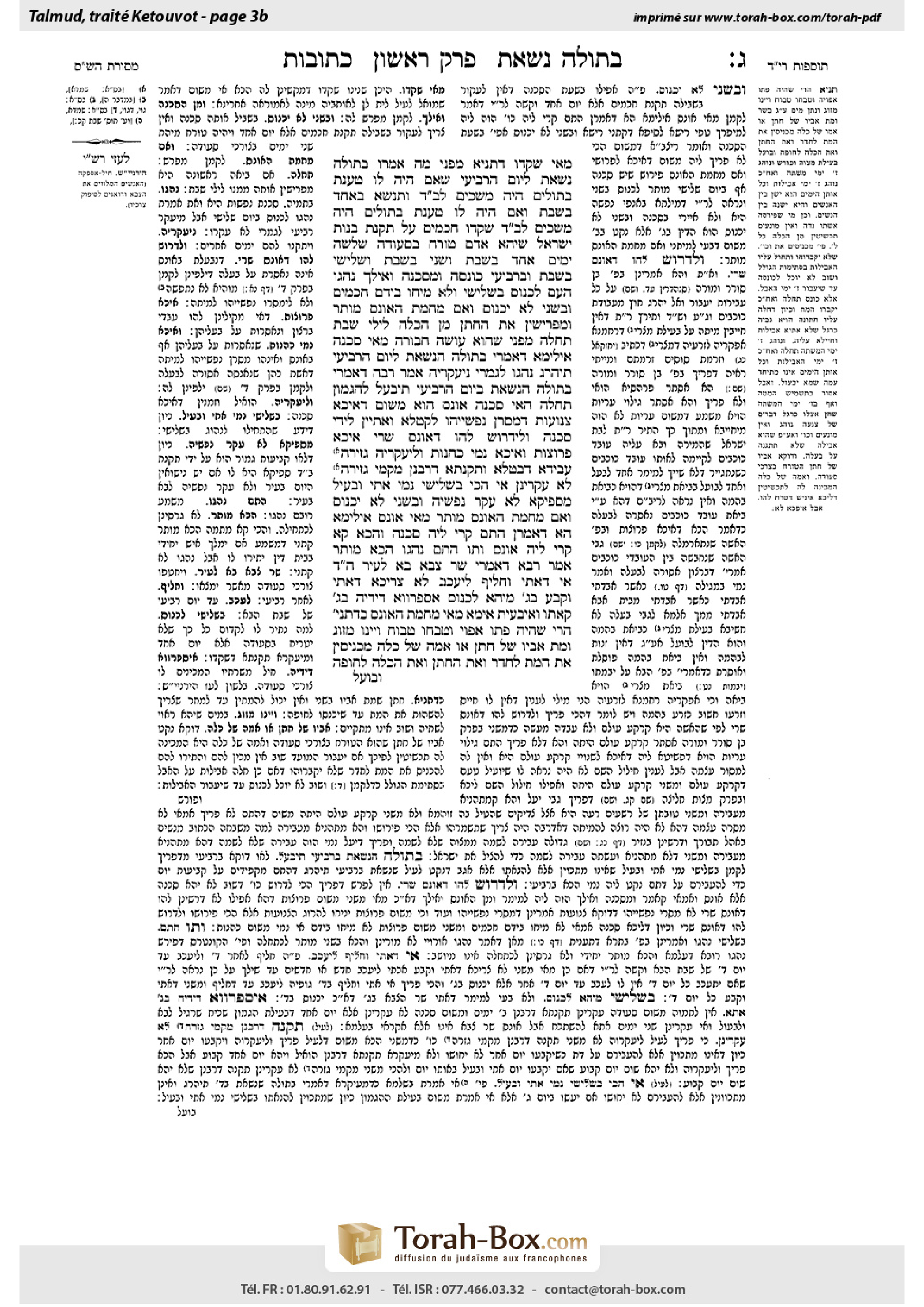
Ketubot 3b: Talmud study for Daf Yomi
Daf Yomi is the daily study of one Talmud folio. Explore 37 tractates with scans, Hebrew text, Sefaria English and AI-generated French translations where annotated.
Passage selection and English or AI-generated French translation are available where the scan has annotations. Daf Study is independent of Torah-Box and Sefaria.
Browse Ketubot · כתובות · All tractatesKetubot 3b text and translations
This page of Ketubot includes the Aramaic text, an English translation and an AI-generated French translation, alongside the scan above.
כתובות ג׳ ב · Aramaic and Hebrew text
מַאי ״שָׁקְדוּ״? דְּתַנְיָא: מִפְּנֵי מָה אָמְרוּ בְּתוּלָה נִשֵּׂאת לַיּוֹם הָרְבִיעִי? שֶׁאִם הָיָה לוֹ טַעֲנַת בְּתוּלִים, הָיָה מַשְׁכִּים לְבֵית דִּין. וְתִנָּשֵׂא בְּאֶחָד בְּשַׁבָּת, וְאִם הָיָה לוֹ טַעֲנַת בְּתוּלִים הָיָה מַשְׁכִּים לְבֵית דִּין! שָׁקְדוּ חֲכָמִים עַל תַּקָּנַת בְּנוֹת יִשְׂרָאֵל, שֶׁיְּהֵא אָדָם טוֹרֵחַ בַּסְּעוּדָה שְׁלֹשָׁה יָמִים: אֶחָד בַּשַּׁבָּת וְשֵׁנִי בְּשַׁבָּת וּשְׁלִישִׁי בַּשַּׁבָּת, וּבָרְבִיעִי כּוֹנְסָהּ.
וּמִסַּכָּנָה וְאֵילָךְ נָהֲגוּ הָעָם לִכְנוֹס בַּשְּׁלִישִׁי, וְלֹא מִיחוּ בְּיָדָם חֲכָמִים. וּבַשֵּׁנִי לֹא יִכְנוֹס. וְאִם מֵחֲמַת הָאוֹנֶס — מוּתָּר. וּמַפְרִישִׁין אֶת הֶחָתָן מִן הַכַּלָּה לֵילֵי שַׁבָּת תְּחִלָּה, מִפְּנֵי שֶׁהוּא עוֹשֶׂה חַבּוּרָה.
מַאי סַכָּנָה? אִילֵּימָא דְּאָמְרִי בְּתוּלָה הַנִּשֵּׂאת לַיּוֹם הָרְבִיעִי תֵּיהָרֵג — נָהֲגוּ?! לִגְמָרֵי נִיעְקְרֵיהּ!
אָמַר רַבָּה, דְּאָמְרִי: בְּתוּלָה הַנִּשֵּׂאת בְּיוֹם הָרְבִיעִי תִּיבָּעֵל לַהֶגְמוֹן תְּחִלָּה. הַאי סַכָּנָה? אוֹנֶס הוּא! מִשּׁוּם דְּאִיכָּא צְנוּעוֹת דְּמָסְרָן נַפְשַׁיְיהוּ לִקְטָלָא, וְאָתְיָין לִידֵי סַכָּנָה.
וְלִידְרוֹשׁ לְהוּ דְּאוֹנֶס שְׁרֵי? אִיכָּא פְּרוּצוֹת, וְאִיכָּא נָמֵי כֹּהֲנוֹת.
וְלִיעְקְרֵיהּ! שְׁמָדָא עֲבִידָא דְּבָטְלָא, וְתַקַּנְתָּא דְרַבָּנַן מִקַּמֵּי שְׁמָדָא לָא עָקְרִינַן. אִי הָכִי, בַּשְּׁלִישִׁי נָמֵי אָתֵי וּבָעֵיל! מִסְּפֵיקָא לָא עָקַר נַפְשֵׁיהּ.
וּבַשֵּׁנִי לֹא יִכְנוֹס, וְאִם מֵחֲמַת הָאוֹנֶס — מוּתָּר. מַאי אוֹנֶס? אִילֵּימָא הָא דַּאֲמַרַן, הָתָם קָרֵי לֵיהּ ״סַכָּנָה״, וְהָכָא קָא קָרֵי לֵיהּ ״אוֹנֶס״?! וְתוּ: הָתָם נָהֲגוּ, הָכָא מוּתָּר?
אָמַר רָבָא, דְּאָמְרִי: שַׂר צָבָא בָּא לָעִיר. הֵיכִי דָמֵי? אִי דְּאָתֵי וְחָלֵיף — לִיעַכַּב! לָא צְרִיכָא, דְּאָתֵי וְקָבַע. בַּשְּׁלִישִׁי מִיהָא לִכְנוֹס? אִסְפַּרְווֹא דִידֵיהּ בִּשְׁלִישִׁי קָאָתוּ.
וְאִיבָּעֵית אֵימָא: מַאי ״מֵחֲמַת הָאוֹנֶס״ — כִּדְתַנְיָא: הֲרֵי שֶׁהָיָה פִּתּוֹ אָפוּי, וְטִבְחוֹ טָבוּחַ, וְיֵינוֹ מָזוּג, וּמֵת אָבִיו שֶׁל חָתָן אוֹ אִמָּהּ שֶׁל כַּלָּה — מַכְנִיסִין אֶת הַמֵּת לַחֶדֶר, וְאֶת הֶחָתָן וְאֶת הַכַּלָּה לַחוּפָּה,
Ketubot 3b · English translation
The Gemara asks: What is the meaning of: The Sages were assiduous? It is as it is taught in a baraita: Due to what reason did the Sages in the mishna say that a virgin is married on Wednesday? It is so that if the husband had a claim concerning the bride’s virginity, he would go early the next day to court and make his claim. The baraita continues: But if that is the reason, let her marry on Sunday, as then too, if the husband had a claim concerning the bride’s virginity, he would go early the next day to court and make his claim. The Gemara answers: The Sages were assiduous in seeing to the well-being of Jewish women and preferred Wednesday, so that the husband would exert himself in arranging the wedding feast for three days, Sunday, Monday and Tuesday, and on Wednesday, he marries her.
The baraita continues: And from the time of danger and onward, the people adopted the custom to marry on Tuesday as well, and the Sages did not reprimand them. And on Monday one may not marry even in time of danger. However, if it is due to the coercion, it is permitted. The baraita concludes: One isolates the groom from the virgin bride, so that he will not engage in intercourse with her for the first time on Shabbat evening, because by rupturing the hymen he inflicts a wound, which is a labor prohibited on Shabbat.
The Gemara elaborates: What is the danger mentioned in the baraita? If we say it is referring to a situation where the government said that a virgin who is married on Wednesday will be executed, would the response be merely that they adopted the custom to marry on Tuesday? Let them totally abolish the ordinance to marry on Wednesday in the face of life-threatening danger.
Rabba said: The baraita is referring to a period where the government said that a virgin who is married on Wednesday will submit to intercourse with the prefect [hegmon] first. The Gemara questions the formulation of the baraita: Is that characterized as danger? It is coercion. The Gemara answers: There is also danger involved, as there are virtuous women who give their lives rather than allow themselves to be violated, and they will come to mortal danger.
The Gemara asks: And if so, let the Sages instruct these women that in cases of coercion it is permitted to submit to violation rather than sacrifice their lives, and they will not be forbidden to their husbands. The Gemara answers: The Sages cannot issue an instruction of that sort, because there are licentious women who would exploit the situation to engage in intercourse willingly, rendering them forbidden to their husbands. And furthermore, there are also women married to priests, who are rendered forbidden to their husbands even if they are raped.
The Gemara asks: And let the Sages completely abolish the ordinance to marry on Wednesday and establish marriage on a different day. The Gemara answers: A decree of religious persecution [shemada] is likely to be abrogated, and we do not abolish a rabbinic ordinance in the face of a decree of religious persecution. Rather, a lenient ruling is issued instructing them not to follow the ordinance, as long as the decree of persecution is in effect. The Gemara asks: If so, what is accomplished by moving the marriage to Tuesday? The prefect will come on Tuesday too, to violate them. The Gemara answers: The date of the marriage is not fixed, and for a situation of uncertainty the prefect will not uproot himself to violate the bride.
The baraita continues: And on Monday one may not marry even in time of danger. However, if it is due to the coercion, it is permitted. The Gemara asks: What is the coercion mentioned in the baraita? If we say it is referring to that which we mentioned with regard to the decree of prima nocta it is difficult, as there the tanna calls it danger, and here he calls it coercion. Furthermore, there it says that they adopted the custom to marry on Tuesday; here it states that it is permitted.
Rava said: Coercion refers to a case where they said: A general and his army are coming to the city on Wednesday, and the concern is that the troops will appropriate the supplies for the feast. What are the circumstances? If it is a situation where the general comes and passes through, let them postpone the wedding until the following week. Rather, it is necessary to teach the halakha with regard to the general only in a case where he comes and establishes himself there. The Gemara asks: In any case, let one marry on Tuesday. Why does the baraita permit marrying on Monday? The Gemara answers: It was necessary to move the wedding to Monday because his entourage [asperava] arrives on Tuesday.
And if you wish, say instead: What is the meaning of: Due to the coercion? It is as it is taught in a baraita: If one’s bread was baked, and his animal slaughtered, and his wine diluted, and all preparations for the wedding feast were complete, and the father of the groom or the mother of the bride died before the wedding, then before burying the deceased, which would trigger the onset of mourning, one moves the corpse into a room, and the bride and groom are ushered to the wedding canopy and they are married.
Ketubot 3b · Traduction française (IA)
La Guemara demande : Quelle est la signification de : Les Sages étaient assidus ? C'est comme il est enseigné dans une baraïta : Pour quelle raison les Sages de la Michna ont-ils dit qu'une vierge se marie le mercredi ? C'est afin que, si le mari avait un grief concernant la virginité de la mariée, il aille tôt le lendemain au tribunal et fasse valoir sa réclamation. La baraïta continue : Mais si c'est la raison, qu'elle se marie le dimanche, car alors aussi, si le mari avait un grief concernant la virginité de la mariée, il irait tôt le lendemain au tribunal et ferait valoir sa réclamation. La Guemara répond : Les Sages étaient assidus à veiller au bien-être des femmes juives et préféraient le mercredi, afin que le mari s'efforce à organiser le festin de mariage pendant trois jours, le dimanche, le lundi et le mardi, et que, le mercredi, il la marie.
La baraïta continue : Et à partir du temps de danger et au-delà, les gens ont adopté la coutume de se marier aussi le mardi, et les Sages ne les ont pas réprimandés. Et le lundi, on ne peut pas se marier même en temps de danger. Cependant, si c'est en raison de la contrainte, c'est permis. La baraïta conclut : On isole le marié de la mariée vierge, afin qu'il n'ait pas de rapports avec elle pour la première fois le soir du Chabbat, car en rompant l'hymen, il inflige une blessure, ce qui est un travail interdit le Chabbat.
La Guemara développe : Quel est le danger mentionné dans la baraïta ? Si nous disons qu'il fait référence à une situation où le gouvernement a dit qu'une vierge qui se marie le mercredi sera exécutée, la réponse serait-elle simplement qu'ils ont adopté la coutume de se marier le mardi ? Qu'ils abolissent totalement l'ordonnance de se marier le mercredi face à un danger de mort.
Rabba a dit : La baraïta fait référence à une période où le gouvernement a décrété qu'une vierge qui se marie un mercredi doit d'abord se soumettre à des rapports sexuels avec le préfet [hegmon]. La Guemara questionne la formulation de la baraïta : Est-ce que cela est caractérisé comme un danger ? C'est une contrainte. La Guemara répond : Il y a aussi un danger impliqué, car il y a des femmes vertueuses qui préfèrent donner leur vie plutôt que de se laisser violer, et elles s'exposent ainsi à un danger mortel.
La Guemara demande : Et si c'est le cas, que les Sages instruisent ces femmes que, dans les cas de contrainte, il est permis de se soumettre au viol plutôt que de sacrifier leur vie, et qu'elles ne seront pas interdites à leurs maris. La Guemara répond : Les Sages ne peuvent pas émettre une instruction de ce type, car il y a des femmes licencieuses qui exploiteraient la situation pour avoir des rapports volontaires, ce qui les rendrait interdites à leurs maris. De plus, il y a aussi des femmes mariées à des prêtres, qui sont rendues interdites à leurs maris même si elles sont violées.
La Guemara demande : Et que les Sages abolissent complètement l'ordonnance de se marier un mercredi et établissent le mariage un autre jour. La Guemara répond : Un décret de persécution religieuse [shemada] est susceptible d'être abrogé, et nous n'abolissons pas une ordonnance rabbinique face à un décret de persécution religieuse. Plutôt, une décision tolérante est émise leur enjoignant de ne pas suivre l'ordonnance, tant que le décret de persécution est en vigueur. La Guemara demande : Si c'est le cas, qu'est-ce qui est accompli en déplaçant le mariage au mardi ? Le préfet viendra aussi le mardi, pour les violer. La Guemara répond : La date du mariage n'est pas fixe, et pour une situation d'incertitude, le préfet ne se déplacera pas pour violer la mariée.
La baraïta continue : Et le lundi, on ne peut pas se marier, même en temps de danger. Cependant, si c'est en raison de la contrainte, c'est permis. La Guemara demande : Quelle est la contrainte mentionnée dans la baraïta ? Si nous disons qu'elle fait référence à ce que nous avons mentionné concernant le décret de la prima nocta, c'est difficile, car là le tanna l'appelle danger, et ici il l'appelle contrainte. De plus, là il est dit qu'ils ont adopté la coutume de se marier le mardi ; ici il est dit que c'est permis.
Rava a dit : La contrainte fait référence à un cas où l'on a dit : Un général et son armée arrivent dans la ville le mercredi, et la crainte est que les troupes s'approprient les provisions pour le festin. Quelles sont les circonstances ? S'il s'agit d'une situation où le général vient et passe, qu'ils reportent le mariage à la semaine suivante. Plutôt, il est nécessaire d'enseigner la halakha concernant le général uniquement dans un cas où il vient et s'y installe. La Guemara demande : Dans tous les cas, qu'on se marie le mardi. Pourquoi la baraïta permet-elle de se marier le lundi ? La Guemara répond : Il était nécessaire de déplacer le mariage au lundi parce que son entourage [asperava] arrive le mardi.
Et si vous le souhaitez, dites plutôt : Quelle est la signification de : En raison de la contrainte ? C'est comme il est enseigné dans une baraïta : Si le pain d'un homme a été cuit, et son animal abattu, et son vin dilué, et toutes les préparations pour le festin de mariage étaient complètes, et le père du marié ou la mère de la mariée est mort avant le mariage, alors avant d'enterrer le défunt, ce qui déclencherait le début du deuil, on déplace le corps dans une pièce, et la mariée et le marié sont conduits sous la tente de mariage et ils se marient.
Traduction française générée par IA à partir de l’édition anglaise de Sefaria. Vérifie toujours un passage avec le texte source.
Text from Sefaria: William Davidson Edition - Vocalized Aramaic (CC BY NC); William Davidson Edition - English (CC BY NC).