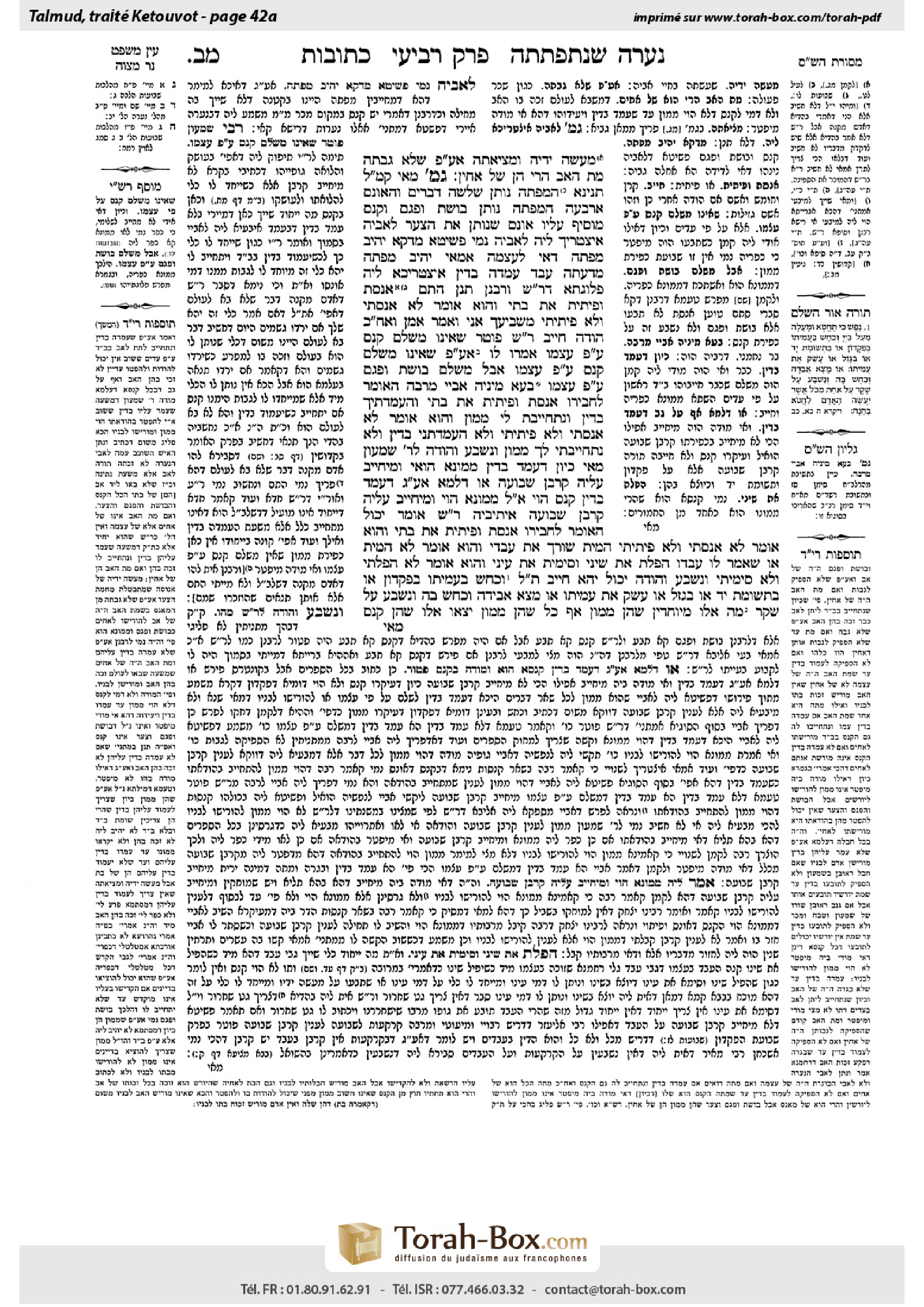
Ketubot 42a: Talmud study for Daf Yomi
Daf Yomi is the daily study of one Talmud folio. Explore 37 tractates with scans, Hebrew text, Sefaria English and AI-generated French translations where annotated.
Passage selection and English or AI-generated French translation are available where the scan has annotations. Daf Study is independent of Torah-Box and Sefaria.
Browse Ketubot · כתובות · All tractatesKetubot 42a text and translations
This page of Ketubot includes the Aramaic text, an English translation and an AI-generated French translation, alongside the scan above.
כתובות מ״ב א · Aramaic and Hebrew text
מַעֲשֵׂה יָדֶיהָ וּמְצִיאָתָהּ, אַף עַל פִּי שֶׁלֹּא גָּבְתָה, מֵת הָאָב — הֲרֵי הֵן שֶׁל אַחִין.
גְּמָ׳ מַאי קָא מַשְׁמַע לַן? תְּנֵינָא: הַמְפַתֶּה נוֹתֵן שְׁלֹשָׁה דְּבָרִים, וְהָאוֹנֵס אַרְבָּעָה. הַמְפַתֶּה נוֹתֵן בּוֹשֶׁת וּפְגָם וּקְנָס, מוֹסִיף עָלָיו אוֹנֵס שֶׁנּוֹתֵן אֶת הַצַּעַר! לְאָבִיהָ אִיצְטְרִיךְ לֵיהּ. לְאָבִיהָ נָמֵי פְּשִׁיטָא, מִדְּקָא יָהֵיב מְפַתֶּה, דְּאִי לְעַצְמָהּ — אַמַּאי יָהֵיב מְפַתֶּה? מִדַּעְתָּהּ עֲבַד!
עָמְדָה בַּדִּין אִיצְטְרִיכָא לֵיהּ, פְּלוּגְתָּא דְּרַבִּי שִׁמְעוֹן וְרַבָּנַן.
תְּנַן הָתָם: ״אָנַסְתָּ וּפִיתִּיתָ אֶת בִּתִּי״, וְהוּא אוֹמֵר: ״לֹא אָנַסְתִּי וְלֹא פִּיתִּיתִי״. ״מַשְׁבִּיעֲךָ אֲנִי״, וְאָמַר: ״אָמֵן״, וְאַחַר כָּךְ הוֹדָה — חַיָּיב.
רַבִּי שִׁמְעוֹן פּוֹטֵר, שֶׁאֵינוֹ מְשַׁלֵּם קְנָס עַל פִּי עַצְמוֹ. אָמְרוּ לוֹ: אַף עַל פִּי שֶׁאֵינוֹ מְשַׁלֵּם קְנָס עַל פִּי עַצְמוֹ, אֲבָל מְשַׁלֵּם בּוֹשֶׁת וּפְגָם עַל פִּי עַצְמוֹ.
בְּעָא מִינֵּיהּ אַבָּיֵי מֵרַבָּה, הָאוֹמֵר לַחֲבֵירוֹ: ״אָנַסְתָּ וּפִיתִּיתָ אֶת בִּתִּי, וְהֶעֱמַדְתִּיךָ בַּדִּין, וְנִתְחַיַּיבְתָּ לִי מָמוֹן״, וְהוּא אוֹמֵר: ״לֹא אָנַסְתִּי וְלֹא פִּיתִּיתִי, וְלֹא הֶעֱמַדְתַּנִי בַּדִּין, וְלֹא נִתְחַיַּיבְתִּי לְךָ מָמוֹן״, וְנִשְׁבַּע וְהוֹדָה, לְרַבִּי שִׁמְעוֹן מַאי?
כֵּיוָן דְּעָמַד בַּדִּין — מָמוֹנָא הָוֵאי, וּמִיחַיַּיב עֲלֵיהּ קׇרְבַּן שְׁבוּעָה. אוֹ דִלְמָא, אַף עַל גַּב דְּעָמַד בַּדִּין, קְנָס הָוֵי? אֲמַר לֵיהּ: מָמוֹנָא הָוֵי, וּמִיחַיַּיב עֲלֵיהּ קׇרְבַּן שְׁבוּעָה.
אֵיתִיבֵיהּ, רַבִּי שִׁמְעוֹן אוֹמֵר: יָכוֹל הָאוֹמֵר לַחֲבֵירוֹ ״אָנַסְתָּ וּפִיתִּיתָ אֶת בִּתִּי״, וְהוּא אוֹמֵר: ״לֹא אָנַסְתִּי וְלֹא פִּיתִּיתִי״; ״הֵמִית שׁוֹרְךָ אֶת עַבְדִּי״, וְהוּא אוֹמֵר: ״לֹא הֵמִית״; אוֹ שֶׁאָמַר לוֹ עַבְדּוֹ ״הִפַּלְתָּ אֶת שִׁינִּי וְסִימִיתָ אֶת עֵינִי״, וְהוּא אוֹמֵר: ״לֹא הִפַּלְתִּי וְלֹא סִימִיתִי״, וְנִשְׁבַּע וְהוֹדָה, יָכוֹל יְהֵא חַיָּיב —
תַּלְמוּד לוֹמַר: ״וְכִחֵשׁ בַּעֲמִיתוֹ בְּפִקָּדוֹן אוֹ בִתְשׂוּמֶת יָד אוֹ בְגָזֵל אוֹ עָשַׁק אֶת עֲמִיתוֹ. אוֹ מָצָא אֲבֵידָה וְכִחֶשׁ בָּהּ וְנִשְׁבַּע עַל שָׁקֶר״, מָה אֵלּוּ מְיוּחָדִין שֶׁהֵן מָמוֹן, אַף כֹּל שֶׁהֵן מָמוֹן. יָצְאוּ אֵלּוּ, שֶׁהֵן קְנָס.
Ketubot 42a · English translation
By contrast, with regard to her earnings and the lost items that she has found, although she has not collected them, e.g., she had yet to receive her wages, if the father died they belong to her brothers. These payments are considered the property of their father, as he was entitled to them before he passed away.
GEMARA: The Gemara asks: What is the mishna teaching us? We already learned this in a mishna (Ketubot 39a): The seducer pays three types of indemnity and the rapist pays four. The seducer pays compensation for his victim’s humiliation and degradation and for the fine the Torah imposes on a seducer. A rapist adds an additional payment, as he pays compensation for the pain she suffered. The Gemara answers: It is necessary for the mishna to teach that the money is given to her father. The Gemara asks: It is also obvious that the money goes to her father, from the fact that a seducer pays these types of indemnity, as, if one claims that the money goes to her, why does a seducer pay her at all? After all, he acted with her consent; how can she then claim compensation?
The Gemara answers: It was necessary for the mishna to mention these cases in order to address the case where she stood for judgment before her father died, and then he died before collecting payment. In this case, there is a dispute between Rabbi Shimon and the Rabbis as to whether the sons inherit these payments from the father or whether the money belongs to the young woman.
§ We learned in a mishna there (Shevuot 36b) that if someone said to another: You raped my daughter, or: You seduced my daughter, and the other says: I did not rape and I did not seduce, to which the father replied: I administer an oath to you, and the defendant said: Amen, and afterward he admitted that he had raped or seduced the man’s daughter, he is obligated both in the payments of a rapist or a seducer as well as an additional one-fifth, and he must bring an offering for swearing falsely that he did not owe the money.
Rabbi Shimon exempts him, as he does not pay the fine on his own admission. The accused individual is not considered to have taken a false oath in denial of a monetary charge because he would not have been obligated to pay the fine on the basis of his own admission of guilt. The Rabbis said to him: Although he does not pay the fine on his own admission, indeed he does pay compensation for the humiliation and degradation on his own admission. Consequently, he has denied a monetary claim, and therefore his false oath obligates him to add one-fifth and to bring an offering. This concludes the mishna.
In light of this mishna, Abaye raised a dilemma before Rabba: With regard to one who says to another: You raped my daughter, or: You seduced my daughter, and I made you stand in judgment for your actions, and you were found obligated to pay me money but you did not do so, and the defendant says: I did not rape, or: I did not seduce, and you did not make me stand in judgment, and I was not found obligated to pay you money, and the defendant took an oath that he was telling the truth and subsequently admitted his guilt, according to the opinion of Rabbi Shimon, what is the halakha?
Abaye explains the two sides of the dilemma: Since he stood trial and was found liable, is this considered a regular monetary obligation, and therefore he is liable to bring the offering for taking a false oath to deny a monetary claim? Or perhaps one can argue that although he stood trial and the court ordered him to pay, the payment is in essence a fine. Rabba said to him: Since he has already stood trial, it is considered a regular monetary payment, and he is liable to bring the offering of an oath.
Abaye raised an objection to Rabba from the following baraita. Rabbi Shimon says: One might have thought that in the case of one who says to another: You raped my daughter, or: You seduced my daughter, and he says: I did not rape her, or: I did not seduce her, or if he claimed: Your ox killed my slave, and he says: It did not kill him, or if his slave said to him: You knocked out my tooth, or: You blinded my eye and you are therefore obligated to emancipate me, and he says: I did not knock it out, or: I did not blind your eye, and he takes an oath but later admitted to the truth of the accusation, one might have thought that he should be liable to bring an offering for a false oath denying a monetary claim.
Therefore, with regard to the offering for a false oath in denial of a monetary claim, the verse states: “If anyone sin, and commit a trespass against the Lord and deal falsely with his neighbor in a matter of a deposit or of a pledge or of a robbery or have oppressed his neighbor, or have found that which was lost and deal falsely with it, and swear to a lie” (Leviticus 5:21–22). Just as all these matters listed in the verse are unique in that they are monetary obligations equal in value to the loss one has caused another individual, so too, this halakha applies to all obligations that are monetary claims, which excludes these payments of a rapist, a seducer, and the like, as they are fines.
Ketubot 42a · Traduction française (IA)
En revanche, s'agissant de ses gains et des objets perdus qu'elle a trouvés, bien qu'elle ne les ait pas encore encaissés, par exemple si elle n'avait pas encore reçu son salaire, si le père décède, ils appartiennent à ses frères. Ces sommes sont considérées comme la propriété de leur père, car il y avait droit avant son décès.
GUEMARA : La Guemara demande : Qu'est-ce que la Michna nous enseigne ? Nous avons déjà appris cela dans une Michna (Ketubot 39a) : Le séducteur paie trois types d'indemnisation et le violeur en paie quatre. Le séducteur paie la compensation pour l'humiliation et la dégradation de sa victime, ainsi que l'amende que la Torah impose au séducteur. Le violeur ajoute un paiement supplémentaire, car il paie la compensation pour la douleur qu'elle a subie. La Guemara répond : Il est nécessaire que la Michna enseigne que l'argent est versé à son père. La Guemara demande : Il est également évident que l'argent revient à son père, à partir du fait qu'un séducteur paie ces types d'indemnisation, car, si l'on prétend que l'argent revient à la jeune femme, pourquoi un séducteur lui paierait-il quoi que ce soit ? Après tout, il a agi avec son consentement ; comment pourrait-elle alors réclamer une compensation ?
La Guemara répond : Il était nécessaire que la Michna mentionne ces cas afin d'aborder la situation où elle s'est présentée au tribunal avant le décès de son père, puis où celui-ci est décédé avant d'avoir encaissé le paiement. Dans ce cas, il existe un désaccord entre Rabbi Chimon et les Sages quant à savoir si les fils héritent de ces paiements de leur père ou si l'argent appartient à la jeune femme.
§ Nous avons appris dans une Michna (Shevuot 36b) que si quelqu'un dit à un autre : Tu as violé ma fille, ou : Tu as séduit ma fille, et l'autre répond : Je n'ai pas violé et je n'ai pas séduit, et que le père réplique : Je te fais prêter serment, et que le défendeur réponde : Amen, puis qu'il avoue ensuite avoir violé ou séduit la fille de l'homme, il est tenu de payer les indemnités dues par un violeur ou un séducteur, ainsi qu'un cinquième supplémentaire, et il doit apporter un sacrifice pour avoir prêté serment à tort en niant devoir l'argent.
Rabbi Chimon l'exonère, car il ne paie pas l'amende sur la base de sa propre aveu. L'accusé n'est pas considéré comme ayant prêté serment à tort en niant une créance monétaire, car il n'aurait pas été tenu de payer l'amende sur la base de sa propre admission de culpabilité. Les Sages lui ont dit : Bien qu'il ne paie pas l'amende sur la base de sa propre aveu, il paie effectivement la compensation pour l'humiliation et la dégradation sur la base de sa propre aveu. Par conséquent, il a nié une créance monétaire, et son serment à tort l'oblige donc à ajouter un cinquième et à apporter un sacrifice. C'est la fin de la Michna.
À la lumière de cette Michna, Abaye a posé un dilemme à Rabba : S'agissant de celui qui dit à un autre : Tu as violé ma fille, ou : Tu as séduit ma fille, et je t'ai fait comparaître en justice pour tes actes, et tu as été déclaré tenu de me payer de l'argent mais tu ne l'as pas fait, et que le défendeur dise : Je n'ai pas violé, ou : Je n'ai pas séduit, et tu ne m'as pas fait comparaître en justice, et je n'ai pas été déclaré tenu de te payer de l'argent, et que le défendeur ait prêté serment qu'il disait la vérité puis ait admis sa culpabilité, selon l'opinion de Rabbi Chimon, quelle est la halakha ?
Abaye explique les deux aspects du dilemme : Puisqu'il a comparu devant le tribunal et a été déclaré responsable, cela est-il considéré comme une obligation monétaire ordinaire, et par conséquent, est-il tenu d'apporter l'offrande pour avoir prêté serment à tort en niant une créance monétaire ? Ou peut-être peut-on soutenir que, bien qu'il ait comparu devant le tribunal et que celui-ci l'ait condamné à payer, le paiement est en substance une amende. Rabba lui a dit : Puisqu'il a déjà comparu devant le tribunal, cela est considéré comme un paiement monétaire ordinaire, et il est tenu d'apporter l'offrande du serment.
Abaye a soulevé une objection à Rabba à partir de la baraïta suivante. Rabbi Chimon dit : On aurait pu penser que, dans le cas de celui qui dit à un autre : Tu as violé ma fille, ou : Tu as séduit ma fille, et que celui-ci répond : Je ne l'ai pas violée, ou : Je ne l'ai pas séduite ; ou si celui-là affirme : Ton bœuf a tué mon esclave, et que celui-ci répond : Il ne l'a pas tué ; ou si son esclave lui dit : Tu m'as arraché une dent, ou : Tu m'as aveuglé d'un œil, et tu es donc tenu de m'affranchir, et que celui-ci répond : Je ne l'ai pas arrachée, ou : Je n'ai pas aveuglé ton œil ; et qu'il prête serment, mais avoue ensuite la vérité de l'accusation, on aurait pu penser qu'il devrait être tenu d'apporter une offrande pour un serment à tort niant une créance monétaire.
Par conséquent, s'agissant de l'offrande pour un serment à tort niant une créance monétaire, le verset énonce : « Si un homme pèche et commet une faute contre l'Éternel, et agit avec fausseté envers son prochain en matière de dépôt, ou de gage, ou de vol, ou s'il a opprimé son prochain, ou s'il a trouvé ce qui était perdu et a agi avec fausseté à son égard, et a prêté serment à tort » (Lévitique 5:21–22). Tout comme toutes ces affaires énumérées dans le verset sont uniques en ce qu'elles sont des obligations monétaires égales en valeur à la perte causée à un autre individu, de même, cette halakha s'applique à toutes les obligations qui sont des créances monétaires, ce qui exclut les paiements dus par un violeur, un séducteur, et de même, car ce sont des amendes.
Traduction française générée par IA à partir de l’édition anglaise de Sefaria. Vérifie toujours un passage avec le texte source.
Text from Sefaria: William Davidson Edition - Vocalized Aramaic (CC BY NC); William Davidson Edition - English (CC BY NC).