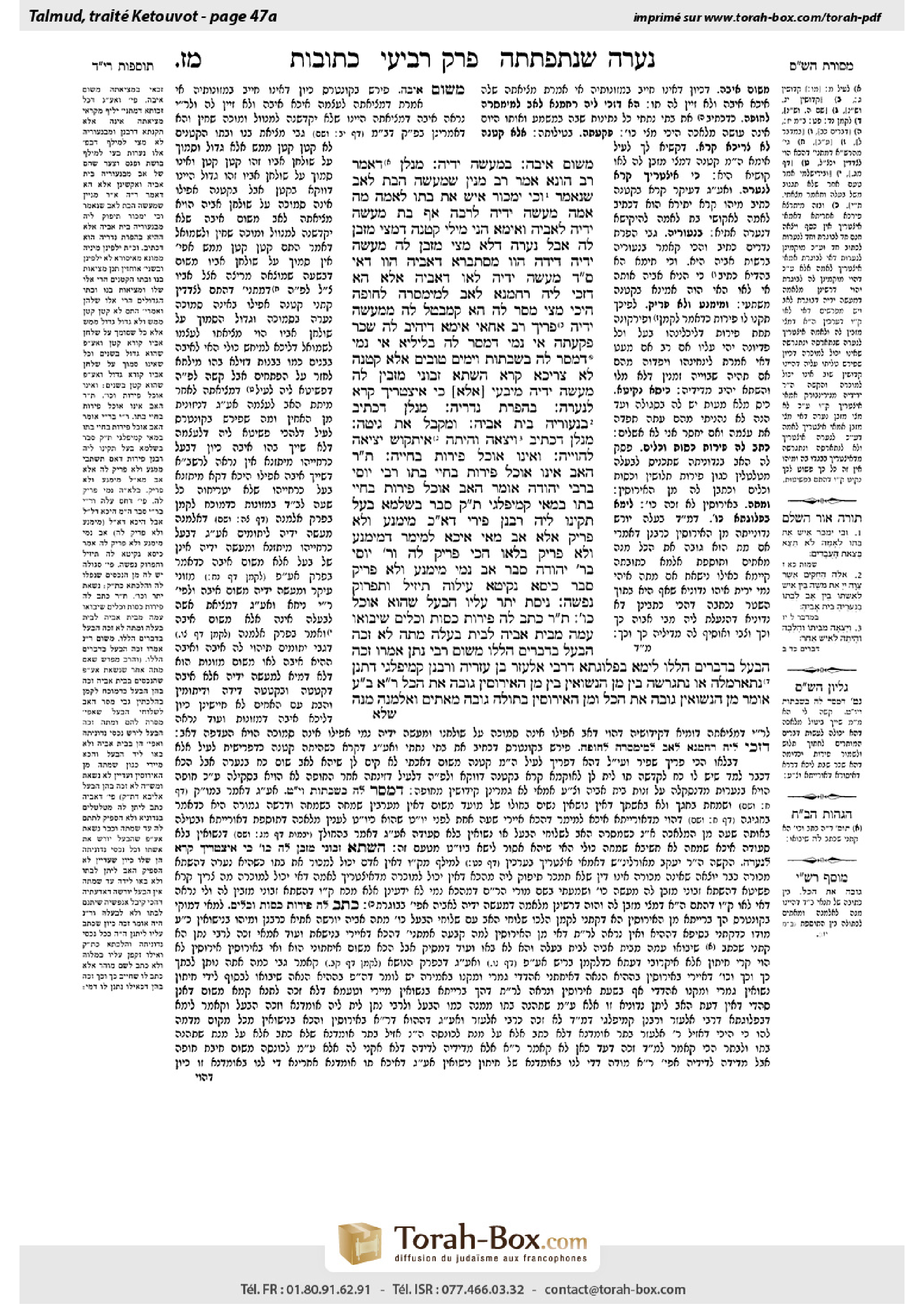
Ketubot 47a: Talmud study for Daf Yomi
Daf Yomi is the daily study of one Talmud folio. Explore 37 tractates with scans, Hebrew text, Sefaria English and AI-generated French translations where annotated.
Passage selection and English or AI-generated French translation are available where the scan has annotations. Daf Study is independent of Torah-Box and Sefaria.
Browse Ketubot · כתובות · All tractatesKetubot 47a text and translations
This page of Ketubot includes the Aramaic text, an English translation and an AI-generated French translation, alongside the scan above.
כתובות מ״ז א · Aramaic and Hebrew text
מִשּׁוּם אֵיבָה.
בְּמַעֲשֵׂה יָדֶיהָ. מְנָלַן? דְּאָמַר רַב הוּנָא אָמַר רַב: מִנַּיִן שֶׁמַּעֲשֵׂה הַבַּת לָאָב, שֶׁנֶּאֱמַר: ״וְכִי יִמְכּוֹר אִישׁ אֶת בִּתּוֹ לְאָמָה״, מָה אָמָה מַעֲשֵׂה יָדֶיהָ לְרַבָּהּ — אַף בַּת מַעֲשֵׂה יָדֶיהָ לְאָבִיהָ. וְאֵימָא הָנֵי מִילֵּי קְטַנָּה, דְּמָצֵי מְזַבֵּן לַהּ, אֲבָל נַעֲרָה, דְּלָא מָצֵי מְזַבֵּן לַהּ — מַעֲשֵׂה יָדֶיהָ דִּידַהּ הָווּ!
מִסְתַּבְּרָא דְּאָבִיהָ הָווּ, דְּאִי סָלְקָא דַעְתָּךְ מַעֲשֵׂה יָדֶיהָ לָאו דְּאָבִיהָ, אֶלָּא הָא דְּזַכִּי לֵיהּ רַחֲמָנָא לְאָב לְמִימְסְרַהּ לְחוּפָּה, הֵיכִי מָצֵי מָסַר לַהּ? הָא קָמְבַטֵּל לַהּ מִמַּעֲשֵׂה יָדֶיהָ.
פָּרֵיךְ רַב אַחַאי: אֵימָא דְּיָהֵיב לַהּ שְׂכַר פְּקַעְתַּהּ. אִי נָמֵי דִּמְסַר לָהּ בְּלֵילְיָא. אִי נָמֵי דִּמְסַר לַהּ בְּשַׁבָּתוֹת וְיָמִים טוֹבִים.
אֶלָּא: קְטַנָּה לָא צְרִיכָא קְרָא — הַשְׁתָּא זַבּוֹנֵי מְזַבֵּין לַהּ, מַעֲשֵׂה יָדֶיהָ מִיבְּעֵי?! [אֶלָּא] כִּי אִיצְטְרִיךְ קְרָא, לְנַעֲרָה.
בַּהֲפָרַת נְדָרֶיהָ. מְנָלַן? דִּכְתִיב: ״בִּנְעוּרֶיהָ בֵּית אָבִיהָ״.
וּמְקַבֵּל אֶת גִּיטָּהּ. מְנָלַן? דִּכְתִיב: ״וְיָצְאָה ... וְהָיְתָה״, אִיתַּקּוּשׁ יְצִיאָה לַהֲוָיָיהּ.
וְאֵינוֹ אוֹכֵל פֵּירוֹת בְּחַיֶּיהָ. תָּנוּ רַבָּנַן: הָאָב אֵינוֹ אוֹכֵל פֵּירוֹת בְּחַיֵּי בִתּוֹ. רַבִּי יוֹסֵי בְּרַבִּי יְהוּדָה אוֹמֵר: הָאָב אוֹכֵל פֵּירוֹת בְּחַיֵּי בִתּוֹ. בְּמַאי קָמִיפַּלְגִי? תַּנָּא קַמָּא סָבַר: בִּשְׁלָמָא בַּעַל, תַּקִּינוּ לֵיה רַבָּנַן פֵּירֵי, דְּאִם כֵּן מִימְּנַע וְלָא פָּרֵיק,
אֶלָּא אָב, מַאי אִיכָּא לְמֵימַר — דְּמִימְּנַע וְלָא פָּרֵיק? בְּלָאו הָכִי פָּרֵיק לַהּ! וְרַבִּי יוֹסֵי בְּרַבִּי יְהוּדָה סָבַר: אָב נָמֵי מִימְּנַע וְלָא פָּרֵיק. סָבַר: כִּיסָא נְקִיטָא עִילָּוַהּ, תֵּיזִיל וְתִפְרוֹק נַפְשַׁהּ.
נִיסֵּת, יָתֵר עָלָיו הַבַּעַל שֶׁהוּא אוֹכֵל כּוּ׳. תָּנוּ רַבָּנַן: כָּתַב לָהּ פֵּירוֹת, כְּסוּת וְכֵלִים שֶׁיָּבוֹאוּ עִמָּהּ מִבֵּית אָבִיהָ לְבֵית בַּעְלָהּ — מֵתָה, לֹא זָכָה הַבַּעַל בִּדְבָרִים הַלָּלוּ. מִשּׁוּם רַבִּי נָתָן אָמְרוּ: זָכָה הַבַּעַל בִּדְבָרִים הַלָּלוּ.
לֵימָא בִּפְלוּגְתָּא דְּרַבִּי אֶלְעָזָר בֶּן עֲזַרְיָה וְרַבָּנַן קָמִיפַּלְגִי, דִּתְנַן: נִתְאַרְמְלָה אוֹ נִתְגָּרְשָׁה, בֵּין מִן הַנִּשּׂוּאִין בֵּין מִן הָאֵירוּסִין — גּוֹבָה אֶת הַכֹּל. רַבִּי אֶלְעָזָר בֶּן עֲזַרְיָה אוֹמֵר: מִן הַנִּשּׂוּאִין — גּוֹבָה אֶת הַכֹּל, וּמִן הָאֵירוּסִין — בְּתוּלָה גּוֹבָה מָאתַיִם, וְאַלְמָנָה מָנֶה,
Ketubot 47a · English translation
The Gemara explains: The reason is due to enmity, so that he should not bear a grudge against her for finding articles and withholding them from him, which might lead him to become reluctant to provide her with sustenance.
§ The mishna further taught that a father is entitled to his daughter’s earnings. The Gemara asks: From where do we derive this? The Gemara answers: As Rav Huna said that Rav said: From where is it derived that the earnings of a daughter belong to her father? As it is stated: “And if a man sell his daughter to be a maidservant” (Exodus 21:7), which indicates that just as with regard to a maidservant, her earnings belong to her master, as she was sold for this purpose, so too with regard to a daughter, her earnings go to her father. The Gemara asks: But one can say that this applies only to a minor, as a father can sell her as a maidservant. However, with regard to a young woman, whom he cannot sell, perhaps her earnings should belong to her.
The Gemara responds: It is reasonable that her earnings should go to her father, as, if it should enter your mind to say that her earnings do not belong to her father, what about the fact that the Merciful One entitles a father to bring his daughter, when she is a young woman, to the wedding canopy? How can he bring her to the wedding canopy? Doesn’t he thereby cause her to neglect her earnings at that time, as she cannot work while getting married? If she has the rights to her own earnings, she can object on these grounds.
Rav Aḥai refutes this claim: Say that when he brings her to the wedding canopy, he gives her the wages she neglects by taking a break from her work, and therefore the above objection does not apply. Alternatively, it is referring to a case where he brought her to the wedding canopy at night, when she does not work. Alternatively, it means that he brought her to the wedding canopy on Shabbatot or Festivals, when it is prohibited to work.
Rather, the Gemara reverts to the original exposition based upon the case of a Hebrew maidservant, and argues that with regard to a minor, it is not necessary to derive from a verse that her father is entitled to her earnings, for the following reason: Now, if her father has the right to sell her as a maidservant, is it necessary to state that her earnings belong to him? Rather, when the verse was necessary, it was to teach that the earnings of a young woman also belong to her father.
§ The mishna taught that a father is entitled to effect the nullification of his daughter’s vows. The Gemara asks: From where do we derive this? The Gemara answers that it is written: “Being in her youth, in her father’s house” (Numbers 30:17), and the Torah proceeds to explain that during this period a father can nullify his daughter’s vows.
The mishna further taught: And he accepts her bill of divorce on her behalf. The Gemara asks: From where do we derive this? The Gemara answers that it is written: “And she departs out of his house and goes and becomes another man’s wife” (Deuteronomy 24:2). This verse juxtaposes departing a marriage and becoming a wife, which teaches that the halakhot of betrothal apply to her departing her husband’s home via a bill of divorce. Consequently, just as a father has the right to accept betrothal on his daughter’s behalf, he can also receive a bill of divorce on her behalf.
§ The mishna taught that a father may not consume the produce of his daughter’s property during her lifetime. The Sages taught in a baraita: A father may not consume the produce of his daughter’s property during his daughter’s lifetime. Rabbi Yosei, son of Rabbi Yehuda, says: A father may consume this produce during his daughter’s lifetime. The Gemara asks: With regard to what principle do they disagree? The Gemara explains that the first tanna holds: Granted, in the case of a husband, the Sages decreed for him that he should consume her produce, as if this were not so, he would refrain from redeeming her if she were captured. The right of a husband to consume the produce of his wife’s property was instituted in order to correspond to his obligation to redeem his wife from captivity.
However, in the case of a father, what is there to say? That he will refrain from redeeming her? Even without this right to the produce of her property he will redeem her, as she is his daughter and he will certainly not turn a blind eye to his own flesh and blood. And Rabbi Yosei, son of Rabbi Yehuda, holds: If he is deprived of the right to the produce of his daughter’s property, a father will also refrain from redeeming her, as he will reason: A pouch of money is held in her hand for a time of need, so let her go and redeem herself.
§ The mishna further taught that if the daughter married, the husband has more rights than her father, as he consumes the produce of her property. The Sages taught in a baraita: If the father wrote for her in her marriage contract that he was providing produce, clothing, and vessels that would come with her as a dowry from her father’s house to her husband’s house, and she died during the betrothal period, the husband does not have the right to these objects. They said in the name of Rabbi Natan: The husband does have the right to these objects.
The Gemara suggests: Let us say that the dispute of these tanna’im is parallel to the dispute between Rabbi Elazar ben Azarya and the Rabbis. As we learned in a mishna (54b): If a woman was widowed or divorced, whether from marriage or from betrothal, she collects the entire sum specified in her marriage contract, including any extra amount her husband added to the standard sum required by the Sages. Rabbi Elazar ben Azarya says: If she was widowed or divorced from marriage, she collects the entire amount. But if she was widowed or divorced from betrothal, she is entitled to collect only the standard minimum sum required by the Sages: If she was betrothed as a virgin she collects two hundred dinars, and if she was a widow she is entitled to one hundred dinars.
Ketubot 47a · Traduction française (IA)
La Guemara explique : la raison en est d’éviter l’animosité, afin qu’il ne lui garde pas rancune parce qu’elle aurait trouvé des objets et les lui aurait cachés, ce qui pourrait le rendre réticent à subvenir à ses besoins.
§ La Michna enseigne également qu’un père a droit aux gains de sa fille. La Guemara demande : d’où le déduisons-nous ? Elle répond, comme Rav Houna l’a dit au nom de Rav : d’où apprend-on que les gains d’une fille reviennent à son père ? De ce qui est écrit : « Si un homme vend sa fille comme servante » (Exode 21:7). Cela indique que, de même que les gains d’une servante reviennent à son maître, puisqu’elle a été vendue à cette fin, les gains d’une fille reviennent à son père. La Guemara demande : mais on peut dire que cela ne s’applique qu’à une mineure, car son père peut la vendre comme servante. En revanche, pour une jeune fille qu’il ne peut pas vendre, peut-être ses gains devraient-ils lui revenir.
La Guemara répond : il est raisonnable que ses gains reviennent à son père, car, si l’on devait penser qu’ils ne lui reviennent pas, que dire du fait que le Miséricordieux confère à un père le droit de conduire sa fille, lorsqu’elle est une jeune fille, sous le dais nuptial ? Comment peut-il la conduire sous le dais nuptial ? Ne la fait-il pas ainsi renoncer à ses gains à ce moment-là, puisqu’elle ne peut pas travailler pendant la célébration du mariage ? Si elle avait droit à ses propres gains, elle pourrait s’y opposer pour ce motif.
Rav Aḥai réfute cet argument : disons que, lorsqu’il la conduit sous le dais nuptial, il lui verse le salaire qu’elle perd en interrompant son travail ; l’objection précédente ne s’applique donc pas. Autre possibilité : il s’agit d’un cas où il l’a conduite sous le dais nuptial la nuit, alors qu’elle ne travaille pas. Ou bien il l’a conduite sous le dais nuptial pendant les Chabbatot ou les fêtes, où il est interdit de travailler.
La Guemara revient plutôt à la déduction initiale fondée sur le cas d’une servante hébreue et soutient que, pour une mineure, il n’est pas nécessaire de déduire d’un verset que son père a droit à ses gains, pour la raison suivante : si son père a le droit de la vendre comme servante, est-il nécessaire de préciser que ses gains lui reviennent ? Le verset était plutôt nécessaire pour enseigner que les gains d’une jeune fille reviennent également à son père.
§ La Michna enseigne qu’un père a le droit d’annuler les vœux de sa fille. La Guemara demande : d’où le déduisons-nous ? Elle répond que l’Écriture dit : « Tant qu’elle est jeune, dans la maison de son père » (Nombres 30:17), puis la Torah explique que, durant cette période, un père peut annuler les vœux de sa fille.
La Michna enseigne également : et il reçoit son acte de divorce pour elle. La Guemara demande : d’où le déduisons-nous ? Elle répond que l’Écriture dit : « Elle sortira de sa maison, s’en ira et deviendra la femme d’un autre homme » (Deutéronome 24:2). Ce verset rapproche le fait de quitter un mariage de celui de devenir épouse, ce qui enseigne que les halakhot des fiançailles s’appliquent également lorsqu’elle quitte le domicile de son mari au moyen d’un acte de divorce. Par conséquent, de même qu’un père a le droit d’accepter les fiançailles de sa fille, il peut également recevoir un acte de divorce pour elle.
§ La Michna enseigne qu’un père ne peut pas percevoir les fruits des biens de sa fille du vivant de celle-ci. Les Sages ont enseigné dans une baraïta : un père ne peut pas percevoir les fruits des biens de sa fille du vivant de celle-ci. Rabbi Yossei, fils de Rabbi Yehouda, dit : un père peut percevoir ces fruits du vivant de sa fille. La Guemara demande : sur quel principe sont-ils en désaccord ? Elle explique que le premier tanna tient le raisonnement suivant : il est compréhensible que les Sages aient décrété, dans le cas d’un mari, qu’il perçoive les fruits des biens de son épouse, car, sans cela, il s’abstiendrait de la racheter si elle était captive. Le droit du mari de percevoir les fruits des biens de son épouse a été institué en contrepartie de son obligation de la racheter de captivité.
Mais dans le cas d’un père, que peut-on dire ? Qu’il s’abstiendra de la racheter ? Même sans ce droit aux fruits des biens de sa fille, il la rachètera, puisqu’elle est sa fille et qu’il ne fermera certainement pas les yeux sur sa propre chair et son propre sang. Rabbi Yossei, fils de Rabbi Yehouda, estime quant à lui que si un père est privé du droit aux fruits des biens de sa fille, il s’abstiendra lui aussi de la racheter, car il raisonnera ainsi : elle a une bourse d’argent à sa disposition pour les moments difficiles ; qu’elle aille donc se racheter elle-même.
§ La Michna enseigne également que, si la fille s’est mariée, le mari a davantage de droits que son père, puisqu’il perçoit les fruits de ses biens. Les Sages ont enseigné dans une baraïta : si le père a inscrit dans son contrat de mariage qu’il lui fournissait des fruits, des vêtements et des objets qui l’accompagneraient en dot de la maison de son père à celle de son mari, et qu’elle est morte pendant la période des fiançailles, le mari n’a pas droit à ces objets. On a enseigné au nom de Rabbi Natan : le mari a droit à ces objets.
La Guemara propose : disons que le désaccord entre ces tannaim correspond à celui qui oppose Rabbi Elazar ben Azarya aux Sages. En effet, nous avons appris dans une Michna (54b) : si une femme est devenue veuve ou a été divorcée, que ce soit après le mariage ou après les fiançailles, elle perçoit le montant intégral indiqué dans son contrat de mariage, y compris toute somme supplémentaire que son mari a ajoutée au montant standard fixé par les Sages. Rabbi Elazar ben Azarya dit : si elle est devenue veuve ou a été divorcée après le mariage, elle perçoit le montant intégral. Mais si elle est devenue veuve ou a été divorcée après les fiançailles, elle n’a droit qu’au montant minimal standard fixé par les Sages : si elle était fiancée en tant que vierge, elle perçoit deux cents dinars, et si elle était veuve, elle a droit à cent dinars.
Traduction française générée par IA à partir de l’édition anglaise de Sefaria. Vérifie toujours un passage avec le texte source.
Text from Sefaria: William Davidson Edition - Vocalized Aramaic (CC BY NC); William Davidson Edition - English (CC BY NC).