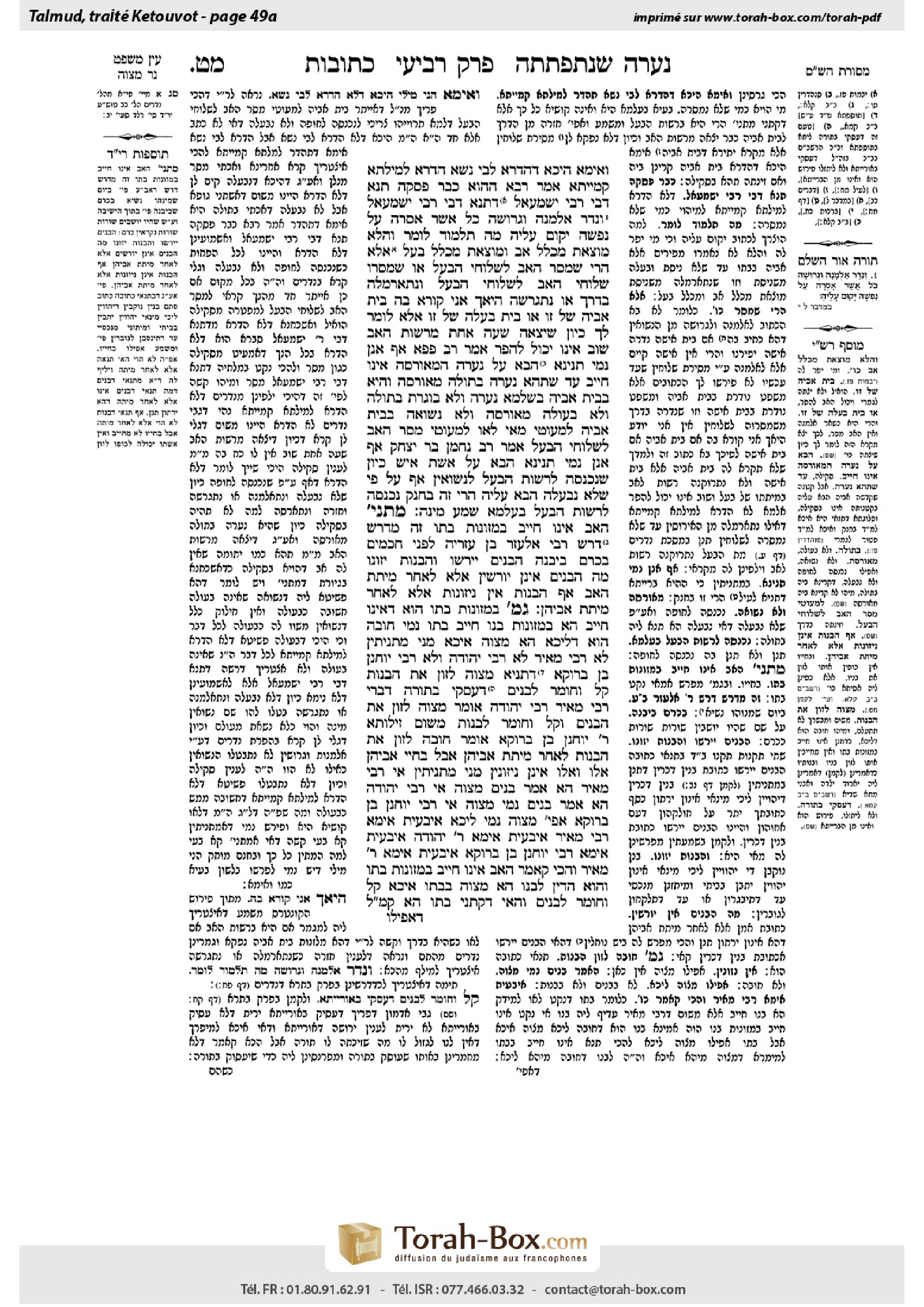
Ketubot 49a: Talmud study for Daf Yomi
Daf Yomi is the daily study of one Talmud folio. Explore 37 tractates with scans, Hebrew text, Sefaria English and AI-generated French translations where annotated.
Passage selection and English or AI-generated French translation are available where the scan has annotations. Daf Study is independent of Torah-Box and Sefaria.
Browse Ketubot · כתובות · All tractatesKetubot 49a text and translations
This page of Ketubot includes the Aramaic text, an English translation and an AI-generated French translation, alongside the scan above.
כתובות מ״ט א · Aramaic and Hebrew text
וְאֵימָא: הֵיכָא דְּהָדְרָא לְבֵי נָשָׁא — הָדְרָא לְמִילְּתָא קַמַּיְיתָא? אָמַר רָבָא: הָהוּא כְּבָר פַּסְקַהּ תַּנָּא דְּבֵי רַבִּי יִשְׁמָעֵאל,
דְּתָנָא דְּבֵי רַבִּי יִשְׁמָעֵאל: ״וְנֵדֶר אַלְמָנָה וּגְרוּשָׁה כֹּל אֲשֶׁר אָסְרָה עַל נַפְשָׁהּ יָקוּם עָלֶיהָ״, מָה תַּלְמוּד לוֹמַר? וַהֲלֹא מוּצֵאת מִכְּלַל אָב וּמוּצֵאת מִכְּלַל בַּעַל!
אֶלָּא, הֲרֵי שֶׁמָּסַר הָאָב לִשְׁלוּחֵי הַבַּעַל, אוֹ שֶׁמָּסְרוּ שְׁלוּחֵי הָאָב לִשְׁלוּחֵי הַבַּעַל, וְנִתְאַרְמְלָה בַּדֶּרֶךְ אוֹ נִתְגָּרְשָׁה, הֵיאַךְ אֲנִי קוֹרֵא בָּהּ: בֵּית אָבִיהָ שֶׁל זוֹ, אוֹ בֵּית בַּעְלָהּ שֶׁל זוֹ? אֶלָּא לוֹמַר לְךָ: כֵּיוָן שֶׁיָּצְאָה שָׁעָה אַחַת מֵרְשׁוּת הָאָב — שׁוּב אֵינוֹ יָכוֹל לְהָפֵר.
אָמַר רַב פָּפָּא אַף אֲנַן נָמֵי תְּנֵינָא: הַבָּא עַל נַעֲרָה הַמְאוֹרָסָה — אֵינוֹ חַיָּיב עַד שֶׁתְּהֵא נַעֲרָה בְּתוּלָה מְאוֹרָסָה, וְהִיא בְּבֵית אָבִיהָ. בִּשְׁלָמָא ״נַעֲרָה״ — וְלֹא בּוֹגֶרֶת, ״בְּתוּלָה״ — וְלֹא בְּעוּלָה, ״מְאוֹרָסָה״ — וְלֹא נְשׂוּאָה. ״בְּבֵית אָבִיהָ״ לְמַעוֹטֵי מַאי? לָאו לְמַעוֹטֵי מָסַר הָאָב לִשְׁלוּחֵי הַבַּעַל?!
אָמַר רַב נַחְמָן בַּר יִצְחָק, אַף אֲנַן נָמֵי תְּנֵינָא: הַבָּא עַל אֵשֶׁת אִישׁ, כֵּיוָן שֶׁנִּכְנְסָה לִרְשׁוּת הַבַּעַל לְנִשּׂוּאִין, אַף עַל פִּי שֶׁלֹּא נִבְעֲלָה — הַבָּא עָלֶיהָ הֲרֵי זֶה בְּחֶנֶק. נִכְנְסָה לִרְשׁוּת הַבַּעַל בְּעָלְמָא שְׁמַע מִינַּהּ.
מַתְנִי׳ הָאָב אֵינוֹ חַיָּיב בִּמְזוֹנוֹת בִּתּוֹ. זֶה מִדְרָשׁ דָּרַשׁ רַבִּי אֶלְעָזָר בֶּן עֲזַרְיָה לִפְנֵי חֲכָמִים בַּכֶּרֶם בְּיַבְנֶה: הַבָּנִים יִירְשׁוּ וְהַבָּנוֹת יִזּוֹנוּ. מָה הַבָּנִים אֵינָן יוֹרְשִׁין אֶלָּא לְאַחַר מִיתַת הָאָב — אַף הַבָּנוֹת אֵין נִיזּוֹנוֹת אֶלָּא לְאַחַר מִיתַת אֲבִיהֶן.
גְּמָ׳ בִּמְזוֹנוֹת בִּתּוֹ הוּא דְּאֵינוֹ חַיָּיב, הָא בִּמְזוֹנוֹת בְּנוֹ — חַיָּיב. בִּתּוֹ נָמֵי: חוֹבָה הוּא דְּלֵיכָּא, הָא מִצְוָה אִיכָּא. מַנִּי מַתְנִיתִין? לָא רַבִּי מֵאִיר, לָא רַבִּי יְהוּדָה, וְלָא רַבִּי יוֹחָנָן בֶּן בְּרוֹקָא.
דְּתַנְיָא: מִצְוָה לָזוּן אֶת הַבָּנוֹת, קַל וְחוֹמֶר לַבָּנִים — דְּעָסְקִי בַּתּוֹרָה, דִּבְרֵי רַבִּי מֵאִיר. רַבִּי יְהוּדָה אוֹמֵר: מִצְוָה לָזוּן אֶת הַבָּנִים, וְקַל וָחוֹמֶר לַבָּנוֹת — מִשּׁוּם זִילוּתָא. רַבִּי יוֹחָנָן בֶּן בְּרוֹקָא אוֹמֵר: חוֹבָה לָזוּן אֶת הַבָּנוֹת לְאַחַר מִיתַת אֲבִיהֶן, אֲבָל בְּחַיֵּי אֲבִיהֶן — אֵלּוּ וָאֵלּוּ אֵינָן נִיזּוֹנִין.
מַנִּי מַתְנִיתִין? אִי רַבִּי מֵאִיר הָא אָמַר בָּנִים מִצְוָה?! אִי רַבִּי יְהוּדָה, הָא אָמַר בָּנִים נָמֵי מִצְוָה! אִי רַבִּי יוֹחָנָן בֶּן בְּרוֹקָא, אֲפִילּוּ מִצְוָה נָמֵי לֵיכָּא!
אִיבָּעֵית אֵימָא רַבִּי מֵאִיר, אִיבָּעֵית אֵימָא רַבִּי יְהוּדָה, אִיבָּעֵית אֵימָא רַבִּי יוֹחָנָן בֶּן בְּרוֹקָא.
אִיבָּעֵית אֵימָא רַבִּי מֵאִיר וְהָכִי קָאָמַר: הָאָב אֵינוֹ חַיָּיב בִּמְזוֹנוֹת בִּתּוֹ, וְהוּא הַדִּין לִבְנוֹ. הָא מִצְוָה בְּבִתּוֹ אִיכָּא, קַל וָחוֹמֶר לַבָּנִים. וְהַאי דְּקָתָנֵי בִּתּוֹ — הָא קָא מַשְׁמַע לַן:
Ketubot 49a · English translation
The Gemara asks another question: But say that in a case where she returns to her father’s house, she returns to the previous matter, i.e., her former status, as though she had never left her father’s authority. Rava said: That question has already been resolved by the tanna of the school of Rabbi Yishmael.
This is as the tanna of the school of Rabbi Yishmael taught: “But the vow of a widow or of a divorcée, everything with which she has bound her soul shall stand against her” (Numbers 30:10). What is the meaning when the verse states this? Is it not already known that if she is widowed or divorced she has already been removed from the category of one under the authority of her father and she has likewise been removed from the category of one under the authority of her husband? Who, then, could possibly nullify her vows?
Rather, this is referring to a case where the father delivered his daughter to the husband’s messengers or where the father’s messengers delivered her to the husband’s messengers, and she was widowed or divorced on her way to the wedding canopy. How do I consider her? Is she a member of her father’s house, or a member of her husband’s house? Her status is entirely unclear. Rather, this verse comes to tell you: Since she has left her father’s domain for a short time her father is no longer able to nullify her vows, as she is considered a widow or a divorcée in all regards. The same applies to the issue at hand: She retains the status of a married woman even if she returns to her father’s house.
Rav Pappa said: We, too, learn this principle in a mishna (Sanhedrin 66b): One who has intercourse with a young woman betrothed to another is liable to stoning only if she is a virgin, a young woman, betrothed, and she is in her father’s house. The Gemara analyzes this mishna: Granted, the term young woman indicates that this punishment does not apply if she is a grown woman; similarly, this punishment applies only if she is a virgin, but not if she is a non-virgin, and only if she is betrothed, but not if she is a married woman. However, when the mishna states that she is in her father’s house, what does that phrase come to exclude? Does it not serve to exclude a case when the father delivered her to the husband’s messengers, indicating that in such a case the punishment of stoning no longer applies?
Rav Naḥman bar Yitzḥak said: We, too, learn this principle in another mishna (Sanhedrin 89a): With regard to one who has intercourse with a married woman, once she has entered her husband’s authority for marriage, even though she has not had intercourse with him, one who has intercourse with her is punished by strangulation, which is the punishment for adultery with a married woman. It is clear that this halakha applies if she merely entered the husband’s authority for the purpose of marriage, even if they have not yet entered the wedding canopy. The Gemara concludes: Indeed, learn from here that this is so.
MISHNA: A father is not obligated to provide his daughter’s sustenance. This exposition was expounded by Rabbi Elazar ben Azarya before the Sages in the vineyard of Yavne: Since the Sages instituted that after the father’s death, the sons inherit the sum of money specified in their mother’s marriage contract, and the daughters are sustained from their father’s estate, these the two halakhot are equated: Just as the sons inherit only after the father’s death, not during his lifetime, so too, the daughters are sustained from his property only after their father’s death.
GEMARA: With regard to the mishna’s statement that a father is not obligated to provide his daughter’s sustenance, the Gemara infers: It is with regard to providing his daughter’s sustenance that he is not obligated, but with regard to providing his son’s sustenance, he is obligated. Furthermore, with regard to his daughter, too, there is no obligation, and therefore the court cannot compel him to provide sustenance for his daughter, but there is a mitzva, i.e., it is proper, for him to do so. With this interpretation in mind, whose opinion is expressed in the mishna? It is not Rabbi Meir, nor Rabbi Yehuda, nor Rabbi Yoḥanan ben Beroka.
As it is taught in a baraita, it is a mitzva to sustain daughters, and the same applies by an a fortiori inference to sons, who are engaged in the study of Torah. This is the statement of Rabbi Meir. Rabbi Yehuda says: It is a mitzva to sustain sons, and the same applies by an a fortiori inference with regard to daughters, due to the dishonor they will suffer if they are forced to go around begging. Rabbi Yoḥanan ben Beroka says: It is an obligation to sustain the daughters after their father’s death; however, during their father’s lifetime both these and those, sons and daughters alike, are not sustained.
The Gemara restates its question: Whose opinion is expressed in the mishna? If you say it is Rabbi Meir, didn’t he say that providing sustenance even to one’s sons is merely a mitzva, not an obligation? If the mishna expresses the opinion of Rabbi Yehuda, didn’t he say that providing sustenance to one’s sons is also a mitzva, not an obligation? If it is Rabbi Yoḥanan ben Beroka, according to his opinion there is not even a mitzva to provide sustenance for one’s daughters. Consequently, none of opinions of the tanna’im of the baraita fits the ruling of the mishna.
The Gemara answers that the mishna can be explained in several different ways. If you wish, say that the mishna is in accordance with the opinion of Rabbi Meir; if you wish, say that it follows the opinion of Rabbi Yehuda; and if you wish, say it is the opinion of Rabbi Yoḥanan ben Beroka.
The Gemara explains in detail: If you wish, say it is Rabbi Meir, and this is what he said in the mishna: A father is not obligated to provide his daughter’s sustenance, and the same is true with regard to providing sustenance for his son. This indicates that there is a mitzva, though not an obligation, to provide for his daughter, and by an a fortiori inference it is a mitzva with regard to the sons. And the reason that the mishna teaches only the case of his daughter, and omitted any mention of sons, is not because a father is obligated to feed his sons. Instead, it teaches us this:
Ketubot 49a · Traduction française (IA)
La Guemara pose une autre question : Mais ne devrait-on pas dire que, si elle retourne dans la maison de son père, elle retrouve son statut antérieur, comme si elle n’avait jamais quitté l’autorité de son père ? Rava dit : Cette question a déjà été résolue par le tanna de l’école de Rabbi Yishmaël.
C’est ce qu’enseigne le tanna de l’école de Rabbi Yishmaël : « Mais le vœu d’une veuve ou d’une divorcée, tout ce par quoi elle a lié son âme demeurera contre elle » (Nombres 30, 10). Que vient préciser le verset ? Ne sait-on pas déjà que, si elle est veuve ou divorcée, elle a été retirée de la catégorie de celles qui sont sous l’autorité de leur père et également de celle de celles qui sont sous l’autorité de leur mari ? Qui pourrait donc bien annuler ses vœux ?
Il s’agit plutôt du cas où le père a confié sa fille aux émissaires du mari, ou de celui où les émissaires du père l’ont confiée aux émissaires du mari, et où elle est devenue veuve ou a été répudiée en chemin vers la houppa. Comment faut-il la considérer ? Fait-elle partie de la maison de son père ou de celle de son mari ? Son statut est tout à fait incertain. Le verset vient donc nous enseigner que, puisqu’elle a quitté, même pour peu de temps, le domaine de son père, celui-ci ne peut plus annuler ses vœux : elle est considérée à tous égards comme une veuve ou une divorcée. Il en va de même pour la question qui nous occupe : elle conserve le statut d’une femme mariée même si elle retourne dans la maison de son père.
Rav Pappa dit : Nous apprenons nous aussi ce principe d’une Michna (Sanhédrin 66b) : Celui qui a des relations avec une jeune fille fiancée à un autre n’est passible de lapidation que si elle est vierge, jeune fille, fiancée et qu’elle se trouve dans la maison de son père. La Guemara analyse cette Michna : Il est clair que le terme « jeune fille » indique que cette peine ne s’applique pas si elle est adulte ; de même, cette peine s’applique uniquement si elle est vierge, et non si elle ne l’est pas, et uniquement si elle est fiancée, et non si elle est mariée. Cependant, lorsque la Michna précise qu’elle se trouve dans la maison de son père, qu’est-ce que cette expression vient exclure ? N’est-ce pas le cas où le père l’a confiée aux émissaires du mari, ce qui indique que, dans ce cas, la peine de lapidation ne s’applique plus ?
Rav Naḥman bar Yitzḥak dit : Nous apprenons nous aussi ce principe d’une autre Michna (Sanhédrin 89a) : En ce qui concerne celui qui a des relations avec une femme mariée, dès qu’elle est entrée sous l’autorité de son mari en vue du mariage, même si elle n’a pas eu de relations avec lui, celui qui a des relations avec elle est puni par strangulation, peine appliquée à l’adultère avec une femme mariée. Il est clair que cette halakha s’applique dès lors qu’elle est simplement entrée sous l’autorité du mari en vue du mariage, même s’ils ne sont pas encore entrés sous la houppa. La Guemara conclut : En effet, apprends-en que c’est bien le cas.
MICHNA : Un père n’est pas tenu de subvenir aux besoins de sa fille. Cette interprétation fut exposée par Rabbi Elazar ben Azarya devant les Sages, dans le vignoble de Yavné : puisque les Sages ont institué qu’après la mort du père, les fils héritent de la somme indiquée dans le contrat de mariage de leur mère et que les filles sont entretenues sur la succession de leur père, ces deux halakhot sont mises en parallèle : de même que les fils n’héritent qu’après la mort de leur père, et non de son vivant, de même, les filles ne sont entretenues sur ses biens qu’après sa mort.
GUEMARA : À propos de l’énoncé de la Michna selon lequel un père n’est pas tenu de subvenir aux besoins de sa fille, la Guemara en déduit qu’il n’est pas tenu de subvenir aux besoins de sa fille, mais qu’il est tenu de subvenir à ceux de son fils. En outre, même à l’égard de sa fille, il n’y a pas d’obligation ; le tribunal ne peut donc pas le contraindre à subvenir à ses besoins. Toutefois, il y a une mitsva, c’est-à-dire qu’il convient qu’il le fasse. Selon cette interprétation, de qui la Michna exprime-t-elle l’opinion ? Ce n’est ni celle de Rabbi Meïr, ni celle de Rabbi Yehouda, ni celle de Rabbi Yoḥanan ben Beroka.
Car il est enseigné dans une baraïta qu’il y a une mitsva d’entretenir les filles, et l’on en déduit a fortiori qu’il en va de même pour les fils, qui s’adonnent à l’étude de la Torah. Telle est l’opinion de Rabbi Meïr. Rabbi Yehouda dit : Il y a une mitsva d’entretenir les fils, et l’on en déduit a fortiori qu’il en va de même pour les filles, en raison du déshonneur qu’elles subiraient si elles étaient contraintes d’aller mendier. Rabbi Yoḥanan ben Beroka dit : Il y a une obligation d’entretenir les filles après la mort de leur père ; toutefois, du vivant de leur père, ni les unes ni les autres, filles comme fils, ne sont entretenus.
La Guemara reformule sa question : de qui la Michna exprime-t-elle l’opinion ? Si tu dis qu’il s’agit de Rabbi Meïr, n’a-t-il pas dit que subvenir aux besoins même de ses fils n’est qu’une mitsva, et non une obligation ? Si la Michna exprime l’opinion de Rabbi Yehouda, n’a-t-il pas dit que subvenir aux besoins de ses fils est également une mitsva, et non une obligation ? Si c’est Rabbi Yoḥanan ben Beroka, selon son opinion, il n’y a même pas de mitsva de subvenir aux besoins de ses filles. Par conséquent, aucun des tannaïm de la baraïta ne correspond à la décision de la Michna.
La Guemara répond que la Michna peut s’expliquer de plusieurs façons. Si tu veux, dis que la Michna est conforme à l’opinion de Rabbi Meïr ; si tu veux, dis qu’elle suit l’opinion de Rabbi Yehouda ; et si tu veux, dis qu’elle exprime l’opinion de Rabbi Yoḥanan ben Beroka.
La Guemara explique en détail : Si tu veux, dis qu’il s’agit de Rabbi Meïr, et voici ce qu’il dit dans la Michna : Un père n’est pas tenu de subvenir aux besoins de sa fille, et il en va de même pour ceux de son fils. Cela indique qu’il y a une mitsva, mais pas une obligation, de pourvoir aux besoins de sa fille, et, a fortiori, qu’il y a une mitsva à l’égard de ses fils. Si la Michna ne traite que du cas de sa fille et omet toute mention des fils, ce n’est pas parce qu’un père est tenu de nourrir ses fils. Elle vient plutôt nous enseigner ceci :
Traduction française générée par IA à partir de l’édition anglaise de Sefaria. Vérifie toujours un passage avec le texte source.
Text from Sefaria: William Davidson Edition - Vocalized Aramaic (CC BY NC); William Davidson Edition - English (CC BY NC).