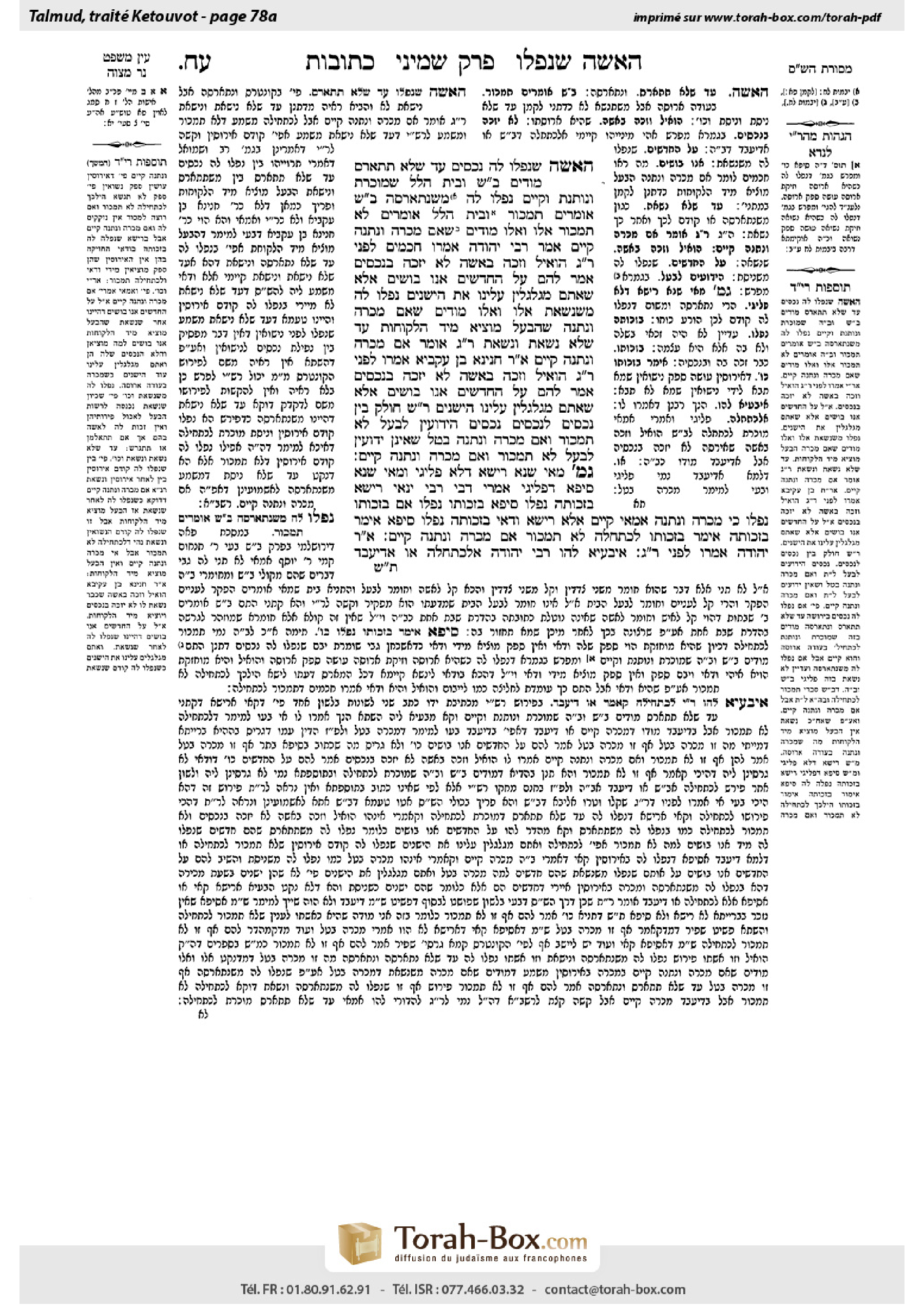
Ketubot 78a: Talmud study for Daf Yomi
Daf Yomi is the daily study of one Talmud folio. Explore 37 tractates with scans, Hebrew text, Sefaria English and AI-generated French translations where annotated.
Passage selection and English or AI-generated French translation are available where the scan has annotations. Daf Study is independent of Torah-Box and Sefaria.
Browse Ketubot · כתובות · All tractatesKetubot 78a text and translations
This page of Ketubot includes the Aramaic text, an English translation and an AI-generated French translation, alongside the scan above.
כתובות ע״ח א · Aramaic and Hebrew text
הָאִשָּׁה שֶׁנָּפְלוּ לָהּ נְכָסִים עַד שֶׁלֹּא תִּתְאָרֵס — מוֹדִים בֵּית שַׁמַּאי וּבֵית הִלֵּל שֶׁמּוֹכֶרֶת וְנוֹתֶנֶת וְקַיָּים. נָפְלוּ לָהּ מִשֶּׁנִּתְאָרְסָה — בֵּית שַׁמַּאי אוֹמְרִים: תִּמְכּוֹר, וּבֵית הִלֵּל אוֹמְרִים: לֹא תִּמְכּוֹר. אֵלּוּ וָאֵלּוּ מוֹדִים שֶׁאִם מָכְרָה וְנָתְנָה קַיָּים.
אָמַר רַבִּי יְהוּדָה: אָמְרוּ חֲכָמִים לִפְנֵי רַבָּן גַּמְלִיאֵל: הוֹאִיל וְזָכָה בָּאִשָּׁה, לֹא יִזְכֶּה בַּנְּכָסִים? אָמַר לָהֶם: עַל הַחֲדָשִׁים אָנוּ בּוֹשִׁים, אֶלָּא שֶׁאַתֶּם מְגַלְגְּלִין עָלֵינוּ אֶת הַיְּשָׁנִים?!
נָפְלוּ לָהּ מִשֶּׁנִּשֵּׂאת, אֵלּוּ וְאֵלּוּ מוֹדִים שֶׁאִם מָכְרָה וְנָתְנָה, שֶׁהַבַּעַל מוֹצִיא מִיַּד הַלָּקוֹחוֹת. עַד שֶׁלֹּא נִשֵּׂאת וְנִשֵּׂאת, רַבָּן גַּמְלִיאֵל אוֹמֵר: אִם מָכְרָה וְנָתְנָה — קַיָּים. אָמַר רַבִּי חֲנִינָא בֶּן עֲקַבְיָא, אָמְרוּ לִפְנֵי רַבָּן גַּמְלִיאֵל: הוֹאִיל וְזָכָה בָּאִשָּׁה, לֹא יִזְכֶּה בַּנְּכָסִים? אָמַר לָהֶם: עַל הַחֲדָשִׁים אָנוּ בּוֹשִׁים, אֶלָּא שֶׁאַתֶּם מְגַלְגְּלִין עָלֵינוּ הַיְּשָׁנִים?!
רַבִּי שִׁמְעוֹן חוֹלֵק בֵּין נְכָסִים לִנְכָסִים, נְכָסִים הַיְּדוּעִין לַבַּעַל — לֹא תִּמְכּוֹר, וְאִם מָכְרָה וְנָתְנָה — בָּטֵל. שֶׁאֵינָן יְדוּעִין לַבַּעַל — לֹא תִּמְכּוֹר, וְאִם מָכְרָה וְנָתְנָה — קַיָּים.
גְּמָ׳ מַאי שְׁנָא רֵישָׁא דְּלָא פְּלִיגִי, וּמַאי שְׁנָא סֵיפָא דִּפְלִיגִי?
אָמְרִי דְּבֵי רַבִּי יַנַּאי: רֵישָׁא — בִּזְכוּתָהּ נָפְלוּ. סֵיפָא — בִּזְכוּתוֹ נָפְלוּ.
אִם בִּזְכוּתוֹ נָפְלוּ, כִּי מָכְרָה וְנָתְנָה אַמַּאי קַיָּים? אֶלָּא: רֵישָׁא — וַדַּאי בִּזְכוּתָהּ נָפְלוּ. סֵיפָא — אֵימַר בִּזְכוּתָהּ, אֵימַר בִּזְכוּתוֹ. לְכַתְּחִלָּה לֹא תִּמְכּוֹר, אִם מָכְרָה וְנָתְנָה — קַיָּים.
אָמַר רַבִּי יְהוּדָה, אָמְרוּ לִפְנֵי רַבָּן גַּמְלִיאֵל. אִיבַּעְיָא לְהוּ, רַבִּי יְהוּדָה אַלְּכַתְּחִלָּה, אוֹ אַדִּיעֲבַד?
Ketubot 78a · English translation
MISHNA: With regard to a woman to whom property was bequeathed before she was betrothed, and she was then betrothed, Beit Shammai and Beit Hillel agree that she may sell or give the property as a gift, and the transaction is valid. However, if the property was bequeathed to her after she was betrothed, Beit Shammai say: She may sell it as long as she is betrothed, and Beit Hillel say: She may not sell it. Both these, Beit Shammai, and those, Beit Hillel, agree that if she sold it or gave it away as a gift, the transaction is valid.
Rabbi Yehuda said that the Sages said before Rabban Gamliel: Since he acquired the woman herself through betrothal, will he not acquire the property from the moment of their betrothal? Why, then, is her transaction valid? Rabban Gamliel said to them: With regard to the new property that she inherited after marriage, we are ashamed, because it is unclear why she cannot sell it, as it is hers; and you also seek to impose upon us a prohibition with regard to the old property that she owned beforehand?
If the property was bequeathed to her after she was married, both these, Beit Shammai, and those, Beit Hillel, agree that if she sold the property or gave it away, the husband may repossess it from the purchasers. If she inherited the property before she was married and then was married, Rabban Gamliel says: If she sold or gave the property away, the transaction is valid. Rabbi Ḥanina ben Akavya said that the Sages said before Rabban Gamliel: Since he acquired the woman through marriage, will he not acquire the property? Rabban Gamliel said to them: With regard to the new property we are ashamed, and you also seek to impose upon us a prohibition with regard to the old property?
Rabbi Shimon distinguishes between one type of property and another type of property: Property that is known to the husband she may not sell once she is married, and if she sold it or gave it away, the transaction is void. Property that is unknown to the husband she may not sell, but if she sold it or gave it away, the transaction is valid.
GEMARA: The Gemara asks: What is different in the first clause of the mishna, when she inherited property before she was betrothed, such that Beit Shammai and Beit Hillel do not disagree, and what is different in the latter clause, when she inherited property after betrothal, such that they disagree? If the dispute concerns the right to her property after she is betrothed, what difference does it make whether her ownership began before or after the betrothal?
The Gemara answers that the Sages of the school of Rabbi Yannai say: In the first clause, where she inherited the property before her betrothal, the inheritance was bequeathed to her during a period when she had rights to her property, whereas in the latter clause, the inheritance was bequeathed to her during a period when he had rights to her property.
The Gemara raises a difficulty: If, in the latter clause the property was bequeathed to her when he had rights to it, why is the transaction valid when she sold it or gave it away? Rather, in the first clause, where she inherited the property before her betrothal, it certainly was bequeathed to her when she had rights to it and it therefore fully belongs to her. However, in the latter clause, where she inherited it after her betrothal, one can say that perhaps during this time she has rights to it, or say that perhaps during this time he has rights to it. Since the ownership of the property is a matter of uncertainty, Beit Hillel rule that she may not sell ab initio, but if she sold it or gave it away, the transaction is valid.
§ The mishna states that Rabbi Yehuda said that the Sages said before Rabban Gamliel: Since he acquired the woman herself through betrothal, will he not acquire the property from the moment of their betrothal? A dilemma was raised before the Sages: When Rabbi Yehuda cited this question of the Sages, was he referring to her selling the property ab initio, which is permitted only according to Beit Shammai, or was he referring to the sale after the fact, which is valid even according to Beit Hillel?
Ketubot 78a · Traduction française (IA)
MICHNA : À propos d’une femme à qui un bien a été légué avant ses fiançailles, puis qui s’est fiancée, Beit Shammaï et Beit Hillel conviennent qu’elle peut vendre le bien ou le donner, et que la transaction est valide. En revanche, si le bien lui a été légué après ses fiançailles, Beit Shammaï disent : « Elle peut le vendre tant qu’elle est fiancée », et Beit Hillel disent : « Elle ne peut pas le vendre. » Les uns comme les autres, Beit Shammaï et Beit Hillel, conviennent que si elle l’a vendu ou donné, la transaction est valide.
Rabbi Yehouda rapporte que les Sages dirent devant Rabban Gamliel : « Puisqu’il a acquis la femme elle-même par les fiançailles, n’acquiert-il pas aussi le bien dès le moment de leurs fiançailles ? Pourquoi, dès lors, la transaction qu’elle a conclue est-elle valide ? » Rabban Gamliel leur répondit : « Pour le bien nouveau qu’elle a hérité après son mariage, nous sommes déjà embarrassés, car on ne comprend pas pourquoi elle ne peut pas le vendre, puisqu’il lui appartient ; et vous cherchez en plus à nous imposer une interdiction concernant le bien ancien qu’elle possédait auparavant ? »
Si le bien lui a été légué après son mariage, Beit Shammaï et Beit Hillel conviennent que, si elle l’a vendu ou donné, le mari peut le reprendre aux acquéreurs. Si elle a hérité du bien avant son mariage, puis s’est mariée, Rabban Gamliel dit : « Si elle l’a vendu ou donné, la transaction est valide. » Rabbi Ḥanina ben Akavya rapporte que les Sages dirent devant Rabban Gamliel : « Puisqu’il a acquis la femme par le mariage, n’acquiert-il pas aussi le bien ? » Rabban Gamliel leur répondit : « Pour le bien nouveau, nous sommes déjà embarrassés, et vous cherchez en plus à nous imposer une interdiction concernant le bien ancien ? »
Rabbi Shimon distingue deux types de biens. Elle ne peut pas vendre, une fois mariée, un bien dont son mari a connaissance ; si elle l’a vendu ou donné, la transaction est nulle. Quant au bien dont son mari n’a pas connaissance, elle ne peut pas le vendre, mais si elle l’a vendu ou donné, la transaction est valide.
GUEMARA : La Guemara demande : « En quoi la première partie de la Michna diffère-t-elle, lorsque la femme a hérité d’un bien avant ses fiançailles, pour que Beit Shammaï et Beit Hillel ne soient pas en désaccord, et en quoi la dernière partie diffère-t-elle, lorsqu’elle a hérité d’un bien après ses fiançailles, pour qu’ils soient en désaccord ? Si le désaccord porte sur les droits relatifs à ses biens après ses fiançailles, quelle différence cela fait-il que son droit de propriété ait commencé avant ou après les fiançailles ? »
La Guemara répond que les Sages de l’école de Rabbi Yannai disent : « Dans la première partie, où elle a hérité du bien avant ses fiançailles, l’héritage lui a été transmis à une période où elle avait des droits sur ses biens ; dans la dernière partie, l’héritage lui a été transmis à une période où lui avait des droits sur ses biens. »
La Guemara soulève une difficulté : « Si, dans la dernière partie, le bien lui a été légué à un moment où il avait des droits sur celui-ci, pourquoi la transaction est-elle valide si elle l’a vendu ou donné ? » Il faut plutôt dire que, dans la première partie, où elle a hérité du bien avant ses fiançailles, celui-ci lui a certainement été légué à un moment où elle avait des droits sur lui ; il lui appartient donc pleinement. En revanche, dans la dernière partie, où elle en a hérité après ses fiançailles, on peut dire que, pendant cette période, elle avait peut-être des droits sur lui, ou bien que lui en avait peut-être. Puisque la propriété du bien est incertaine, Beit Hillel statue qu’elle ne peut pas le vendre a priori, mais que, si elle l’a vendu ou donné, la transaction est valide.
§ La Michna rapporte que Rabbi Yehouda dit que les Sages dirent devant Rabban Gamliel : « Puisqu’il a acquis la femme elle-même par les fiançailles, n’acquiert-il pas aussi le bien dès le moment de leurs fiançailles ? » Les Sages soulevèrent une question : lorsque Rabbi Yehouda rapporte cette question des Sages, fait-il référence à la vente du bien a priori, qui n’est permise que selon Beit Shammaï, ou à la vente après coup, qui est valide même selon Beit Hillel ?
Traduction française générée par IA à partir de l’édition anglaise de Sefaria. Vérifie toujours un passage avec le texte source.
Text from Sefaria: William Davidson Edition - Vocalized Aramaic (CC BY NC); William Davidson Edition - English (CC BY NC).