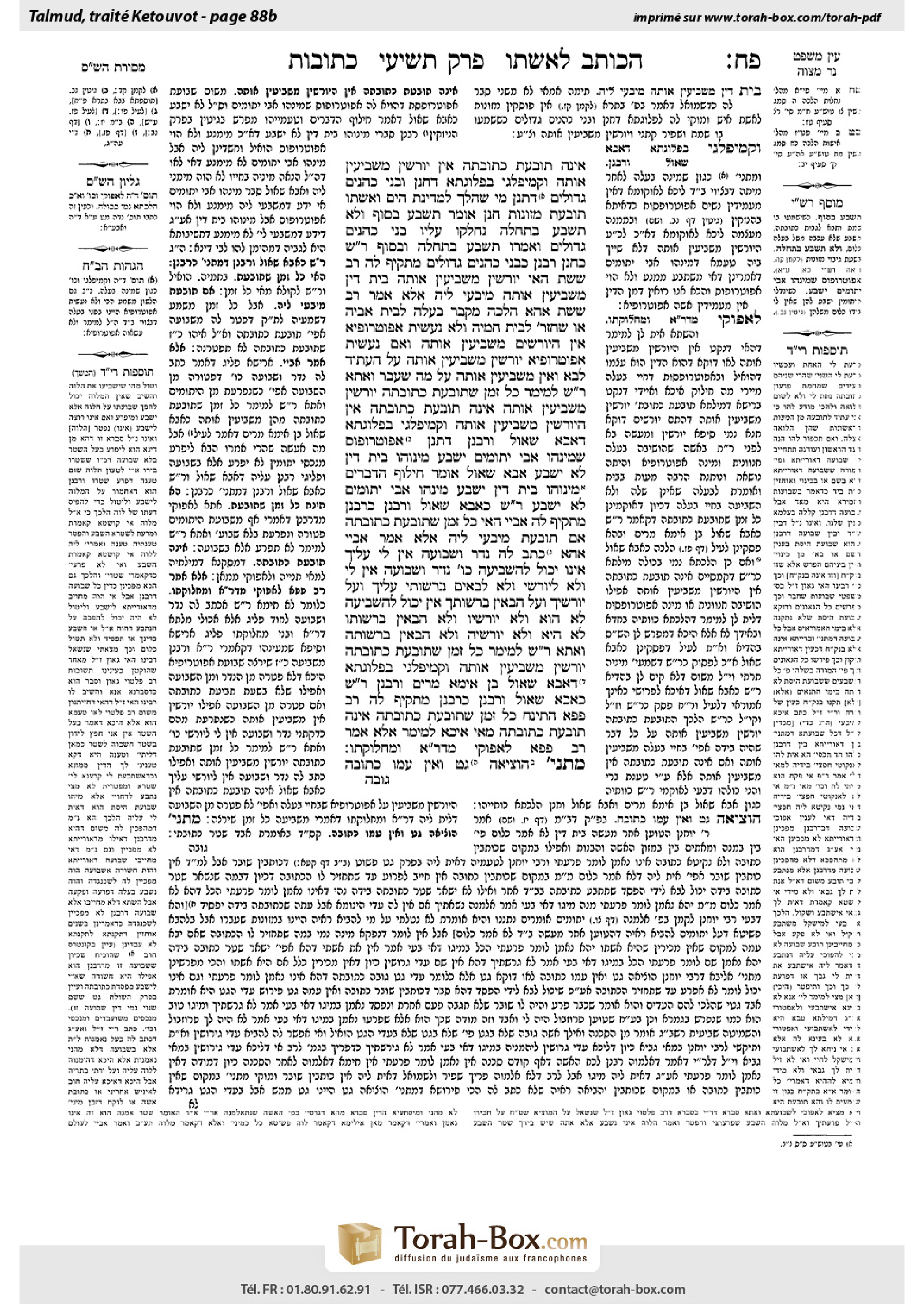
Ketubot 88b: Talmud study for Daf Yomi
Daf Yomi is the daily study of one Talmud folio. Explore 37 tractates with scans, Hebrew text, Sefaria English and AI-generated French translations where annotated.
Passage selection and English or AI-generated French translation are available where the scan has annotations. Daf Study is independent of Torah-Box and Sefaria.
Browse Ketubot · כתובות · All tractatesKetubot 88b text and translations
This page of Ketubot includes the Aramaic text, an English translation and an AI-generated French translation, alongside the scan above.
כתובות פ״ח ב · Aramaic and Hebrew text
אֵינָהּ תּוֹבַעַת כְּתוּבָּתָהּ — אֵין יוֹרְשִׁין מַשְׁבִּיעִין אוֹתָהּ. וְקָמִיפַּלְגִי בִּפְלוּגְתָּא דְּחָנָן וּבְנֵי כֹּהֲנִים גְּדוֹלִים. דִּתְנַן: מִי שֶׁהָלַךְ לִמְדִינַת הַיָּם וְאִשְׁתּוֹ תּוֹבַעַת מְזוֹנוֹת, חָנָן אוֹמֵר: תִּשָּׁבַע בַּסּוֹף, וְלֹא תִּשָּׁבַע בַּתְּחִלָּה.
נֶחְלְקוּ עָלָיו בְּנֵי כֹּהֲנִים גְּדוֹלִים וְאָמְרוּ: תִּשָּׁבַע בַּתְּחִלָּה וּבַסּוֹף. רַבִּי שִׁמְעוֹן כְּחָנָן, רַבָּנַן כִּבְנֵי כֹּהֲנִים גְּדוֹלִים.
מַתְקֵיף לַהּ רַב שֵׁשֶׁת: הַאי יוֹרְשִׁין מַשְׁבִּיעִין אוֹתָהּ? בֵּית דִּין מַשְׁבִּיעִין אוֹתָהּ מִיבְּעֵי לֵיהּ!
אֶלָּא אָמַר רַב שֵׁשֶׁת, אַהָא: הָלְכָה מִקֶּבֶר בַּעְלָהּ לְבֵית אָבִיהָ, אוֹ שֶׁחָזְרָה לְבֵית חָמִיהָ וְלֹא נַעֲשֵׂית אַפּוֹטְרוֹפְּיָא — אֵין הַיּוֹרְשִׁים מַשְׁבִּיעִין אוֹתָהּ. וְאִם נַעֲשֵׂית אַפּוֹטְרוֹפְּיָא — יוֹרְשִׁין מַשְׁבִּיעִין אוֹתָהּ עַל הֶעָתִיד לָבֹא, וְאֵין מַשְׁבִּיעִין אוֹתָהּ עַל מַה שֶּׁעָבַר. וַאֲתָא רַבִּי שִׁמְעוֹן לְמֵימַר: כׇּל זְמַן שֶׁתּוֹבַעַת כְּתוּבָּתָהּ — יוֹרְשִׁין מַשְׁבִּיעִין אוֹתָהּ, אֵינָהּ תּוֹבַעַת כְּתוּבָּתָהּ — אֵין הַיּוֹרְשִׁין מַשְׁבִּיעִין אוֹתָהּ.
וְקָמִיפַּלְגִי בִּפְלוּגְתָּא דְּאַבָּא שָׁאוּל וְרַבָּנַן. דִּתְנַן: אַפּוֹטְרוֹפּוֹס שֶׁמִּינָּהוּ אֲבִי יְתוֹמִים — יִשָּׁבַע. מִינּוּהוּ בֵּית דִּין — לֹא יִשָּׁבַע. אַבָּא שָׁאוּל אוֹמֵר, חִילּוּף הַדְּבָרִים: מִינּוּהוּ בֵּית דִּין — יִשָּׁבַע, מִינָּהוּ אֲבִי יְתוֹמִים — לֹא יִשָּׁבַע.
רַבִּי שִׁמְעוֹן כְּאַבָּא שָׁאוּל, וְרַבָּנַן כְּרַבָּנַן.
מַתְקֵיף לַהּ אַבָּיֵי: הַאי ״כׇּל זְמַן שֶׁתּוֹבַעַת כְּתוּבָּתָהּ״ — אִם תּוֹבַעַת מִיבְּעֵי לֵיהּ!
אֶלָּא אָמַר אַבָּיֵי, אַהָא: כָּתַב לָהּ ״נֶדֶר וּשְׁבוּעָה אֵין לִי עָלַיִךְ״ — אֵינוֹ יָכוֹל לְהַשְׁבִּיעָהּ כּוּ׳. ״נֶדֶר וּשְׁבוּעָה אֵין לִי, וְלֹא לְיוֹרְשַׁי, וְלֹא לַבָּאִים בִּרְשׁוּתִי, עָלַיִךְ, וְעַל יוֹרְשַׁיִךְ, וְעַל הַבָּאִין בִּרְשׁוּתִךְ״ — אֵין יָכוֹל לְהַשְׁבִּיעָהּ לֹא הוּא, וְלֹא יוֹרְשָׁיו, וְלֹא הַבָּאִין בִּרְשׁוּתוֹ. לֹא הִיא, וְלֹא יוֹרְשֶׁיהָ, וְלֹא הַבָּאִין בִּרְשׁוּתָהּ. וַאֲתָא רַבִּי שִׁמְעוֹן לְמֵימַר: כׇּל זְמַן שֶׁתּוֹבַעַת כְּתוּבָּתָהּ — יוֹרְשִׁין מַשְׁבִּיעִין אוֹתָהּ.
וְקָמִיפַּלְגִי בִּפְלוּגְתָּא דְּאַבָּא שָׁאוּל בֶּן אִימָּא מִרְיָם וְרַבָּנַן. רַבִּי שִׁמְעוֹן כְּאַבָּא שָׁאוּל, וְרַבָּנַן כְּרַבָּנַן.
מַתְקֵיף לַהּ רַב פָּפָּא: הָתִינַח כׇּל זְמַן שֶׁתּוֹבַעַת כְּתוּבָּתָהּ. אֵינָהּ תּוֹבַעַת כְּתוּבָּתָהּ, מַאי אִיכָּא לְמֵימַר?
אֶלָּא אָמַר רַב פָּפָּא: לְאַפּוֹקֵי מִדְּרַבִּי אֱלִיעֶזֶר וּמַחְלוּקְתּוֹ.
מַתְנִי׳ הוֹצִיאָה גֵּט וְאֵין עִמּוֹ כְּתוּבָּה —
Ketubot 88b · English translation
If she does not claim her marriage contract, the heirs do not administer an oath to her. And they disagree with regard to the issue that is the subject of the dispute of Ḥanan and the sons of the High Priests, as we learned in a mishna (104b): With regard to one who went to a country overseas and his wife claims money for sustenance, Ḥanan says: She takes an oath at the conclusion, when she comes to claim her marriage contract, that her husband did not leave her with any money and that she took from his estate only what she needed for her sustenance. And she does not take an oath at the beginning, when she takes the allowance for her sustenance from his estate.
The mishna continues: The sons of the High Priests disagreed with him, and said: She takes an oath that her husband did not leave her any money at the beginning, when she comes to take money for sustenance, and at the conclusion, when she comes to claim her marriage contract. Rabbi Yirmeya suggests: Rabbi Shimon holds like Ḥanan, that she takes an oath only when she comes to collect her marriage contract. And the Rabbis, who disagree, hold like the sons of the High Priests, that she must also take an oath when she collects money for her sustenance.
Rav Sheshet objects to Rabbi Yirmeya’s statement: If the dispute is with regard to a woman who comes to collect money for her sustenance while her husband is away, why would the mishna employ this phrase: The heirs administer an oath to her? It should have said that the court administers an oath to her, as this oath would be administered by the court.
Rather, Rav Sheshet said that Rabbi Shimon’s statement is referring to this earlier mishna (86b): If a woman who was exempted from an oath by her husband went from her husband’s grave, immediately after her husband’s death, to her father’s house, without handling her late husband’s property, or in a case where she returned to her father-in-law’s house and did not become a steward, then the heirs cannot administer an oath to her with regard to her actions in their father’s lifetime. And if she became a steward, the heirs may administer an oath to her about the future, i.e., anything she did with the property after the death of her husband, but they cannot administer an oath to her with regard to what took place in the past, during her husband’s lifetime. And Rabbi Shimon came to say that whenever she claims her marriage contract the heirs can administer an oath to her, but if she does not claim her marriage contract, the heirs do not administer an oath to her.
Rav Sheshet explains: And they disagree with regard to the issue that is the subject of the dispute of Abba Shaul and the Rabbis, as we learned in a mishna (Gittin 52a): A steward who was appointed by the father of orphans to take care of their property must take an oath when the orphans come of age and he returns their property. He takes an oath that he did not appropriate anything for himself. If the court appointed him steward, he need not take an oath. The Sages exempted him from an oath so that people would not refrain from serving as stewards. Abba Shaul says: The matters are reversed. If the court appointed him, he must take an oath; if the father of orphans appointed him, he need not take an oath. It is an honor to be appointed steward by the court, and to receive this honor he would not mind being obligated to take an oath. If he was appointed by the father, it is clear that the father trusted him and relied on him.
Rav Sheshet completes his explanation: Rabbi Shimon holds in accordance with the opinion of Abba Shaul, as the woman is comparable to a steward appointed by the father of the orphans. Therefore, she cannot be compelled to take an oath about the future, unless she comes to claim her marriage contract. And the Rabbis here hold in accordance with the opinion of the Rabbis there, that a steward appointed by the father is obligated to take an oath.
Abaye objects to Rav Sheshet’s statement: This phrase, that the heirs can administer an oath to her whenever she claims her marriage contract, is appropriate only if Rabbi Shimon is more stringent than the Rabbis, who exempt her from an oath in all cases. However, since according to Rav Sheshet his opinion is the more lenient one, he should have said: If she claims, meaning that she is required to take an oath only when she claims her marriage contract.
Rather, Abaye said that Rabbi Shimon’s statement is referring to this clause of the mishna (86b): If the husband wrote for her: I do not have the right to administer a vow or an oath upon you, he cannot administer an oath to her. If he wrote: Neither I, nor my heirs, nor those who come on my authority have the right to administer a vow or an oath upon you, or upon your heirs, or upon those who come on your authority, he cannot administer an oath to her or them; not he, nor his heirs, nor those who come on his authority may administer an oath, not to her, nor her heirs, nor those who come on her authority. And Rabbi Shimon came to say that whenever she claims her marriage contract the heirs can administer an oath to her.
Abaye explains: And they disagree with regard to the issue that is the subject of the dispute of Abba Shaul ben Imma Miriam and the Rabbis. Rabbi Shimon holds in accordance with the opinion of Abba Shaul, that even if the husband exempted her from an oath she must still take an oath before she can collect from the property of orphans. And the Rabbis here hold in accordance with the opinion of the Rabbis there, that if he exempted her from all oaths she can collect payment without an oath.
Rav Pappa objects to this: This works out well in explaining Rabbi Shimon’s disagreement with the Rabbis, where he said that she must take an oath whenever she demands payment for her marriage contract. However, what can be said about the second part of Rabbi Shimon’s statement, where he speaks of one who does not demand payment for her marriage contract? According to Abaye’s explanation, that clause does not add or teach anything.
Rather, Rav Pappa said that Rabbi Shimon is not referring to that mishna. His opinion is to the exclusion of Rabbi Eliezer and those who dispute him (86b), all of whom agree that the woman can be compelled to take an oath that she did not appropriate anything from her husband’s property. The Rabbis hold that she can be compelled to take an oath only if she was appointed steward, whereas Rabbi Eliezer holds that she can always be compelled to take an oath. Rabbi Shimon, who disagrees with both opinions, contends that the heirs can administer an oath to her only when she comes to collect her marriage contract, at which point they can administer an oath about other matters, including the work done with her spindle. However, if she does not claim her marriage contract, they cannot administer an oath to her even with regard to her work as steward or storekeeper.
MISHNA: In a case where a woman produced a bill of divorce and it was unaccompanied by a marriage contract, and she demands that her husband pay her marriage contract,
Ketubot 88b · Traduction française (IA)
Si elle ne réclame pas sa ketouba, les héritiers ne lui font pas prêter serment. Ils sont en désaccord sur la question qui fait l’objet de la controverse entre Ḥanan et les fils des grands prêtres, comme nous l’avons appris dans une Michna (104b) : au sujet d’une femme dont le mari est parti outre-mer et qui réclame de l’argent pour sa subsistance, Ḥanan dit : elle prête serment à la fin, lorsqu’elle vient réclamer sa ketouba, en attestant que son mari ne lui a laissé aucun argent et qu’elle n’a pris dans ses biens que ce dont elle avait besoin pour sa subsistance. Elle ne prête pas serment au début, lorsqu’elle prélève dans ses biens l’allocation destinée à sa subsistance.
La Michna poursuit : les fils des grands prêtres s’opposèrent à lui et dirent : elle prête serment que son mari ne lui a laissé aucun argent au début, lorsqu’elle vient prendre de l’argent pour sa subsistance, et à la fin, lorsqu’elle vient réclamer sa ketouba. Rabbi Yirmeya suggère : Rabbi Shimon suit l’avis de Ḥanan, selon lequel elle ne prête serment que lorsqu’elle vient réclamer sa ketouba. Quant aux Rabbins, qui sont en désaccord, ils suivent l’avis des fils des grands prêtres, selon lequel elle doit aussi prêter serment lorsqu’elle perçoit de l’argent pour sa subsistance.
Rav Sheshet objecte à l’explication de Rabbi Yirmeya : si le désaccord concerne une femme qui vient réclamer de l’argent pour sa subsistance pendant l’absence de son mari, pourquoi la Michna emploierait-elle cette formule : « Les héritiers lui font prêter serment » ? Elle aurait dû dire que le tribunal lui fait prêter serment, puisque c’est le tribunal qui lui ferait prêter ce serment.
Rav Sheshet dit plutôt que la déclaration de Rabbi Shimon se rapporte à cette Michna précédente (86b) : si une femme que son mari avait dispensée de prêter serment se rend, immédiatement après la mort de son mari, de la tombe de celui-ci chez son père, sans avoir géré les biens de son défunt mari, ou si elle retourne chez son beau-père sans être devenue intendante, les héritiers ne peuvent pas lui faire prêter serment au sujet de ses actes du vivant de leur père. Si elle est devenue intendante, les héritiers peuvent lui faire prêter serment au sujet de l’avenir, c’est-à-dire de tout ce qu’elle a fait des biens après la mort de son mari, mais ils ne peuvent pas lui faire prêter serment au sujet du passé, de ce qui s’est produit du vivant de son mari. Rabbi Shimon vient enseigner que chaque fois qu’elle réclame sa ketouba, les héritiers peuvent lui faire prêter serment, mais que si elle ne réclame pas sa ketouba, ils ne lui font pas prêter serment.
Rav Sheshet explique : ils sont en désaccord sur la question qui fait l’objet de la controverse entre Abba Shaul et les Rabbins, comme nous l’avons appris dans une Michna (Gittin 52a) : un intendant nommé par le père d’orphelins pour s’occuper de leurs biens doit prêter serment lorsque les orphelins atteignent la majorité et qu’il leur restitue leurs biens. Il jure qu’il ne s’est rien approprié. S’il a été nommé intendant par le tribunal, il n’a pas besoin de prêter serment. Les Sages l’ont dispensé de serment afin que les gens ne renoncent pas à exercer la fonction d’intendant. Abba Shaul dit : c’est l’inverse. S’il a été nommé par le tribunal, il doit prêter serment ; s’il a été nommé par le père des orphelins, il n’a pas besoin de prêter serment. Être nommé intendant par le tribunal est un honneur ; pour recevoir cet honneur, il ne verrait pas d’inconvénient à être tenu de prêter serment. S’il a été nommé par le père, cela montre que celui-ci lui faisait confiance et s’en remettait à lui.
Rav Sheshet achève son explication : Rabbi Shimon suit l’avis d’Abba Shaul, car la femme est comparable à un intendant nommé par le père des orphelins. Par conséquent, on ne peut pas la contraindre à prêter serment au sujet de l’avenir, à moins qu’elle ne vienne réclamer sa ketouba. Ici, les Rabbins suivent l’avis des Rabbins de cette autre Michna : un intendant nommé par le père est tenu de prêter serment.
Abaye objecte à l’explication de Rav Sheshet : cette formule, selon laquelle les héritiers peuvent lui faire prêter serment chaque fois qu’elle réclame sa ketouba, ne convient que si Rabbi Shimon est plus strict que les Rabbins, qui la dispensent de serment dans tous les cas. Cependant, puisque, selon Rav Sheshet, son avis est plus indulgent, il aurait dû dire : « Si elle réclame », c’est-à-dire qu’elle n’est tenue de prêter serment que lorsqu’elle réclame sa ketouba.
Abaye dit plutôt que la déclaration de Rabbi Shimon se rapporte à cette clause de la Michna (86b) : si le mari a écrit pour elle : « Je n’ai pas le droit de t’imposer un vœu ni un serment », il ne peut pas lui faire prêter serment. S’il a écrit : « Ni moi, ni mes héritiers, ni ceux qui viennent après moi n’avons le droit de t’imposer, à toi, à tes héritiers ou à ceux qui viennent après toi, un vœu ni un serment », il ne peut faire prêter serment ni à elle ni à eux ; ni lui, ni ses héritiers, ni ceux qui viennent après lui ne peuvent faire prêter serment ni à elle, ni à ses héritiers, ni à ceux qui viennent après elle. Rabbi Shimon vient enseigner que chaque fois qu’elle réclame sa ketouba, les héritiers peuvent lui faire prêter serment.
Abaye explique : ils sont en désaccord sur la question qui fait l’objet de la controverse entre Abba Shaul ben Imma Miriam et les Rabbins. Rabbi Shimon suit l’avis d’Abba Shaul : même si le mari l’a dispensée de prêter serment, elle doit tout de même prêter serment avant de pouvoir percevoir les biens des orphelins. Ici, les Rabbins suivent l’avis des Rabbins de cette autre Michna : s’il l’a dispensée de tous les serments, elle peut percevoir son dû sans prêter serment.
Rav Pappa objecte : cela explique bien le désaccord de Rabbi Shimon avec les Rabbins lorsqu’il dit qu’elle doit prêter serment chaque fois qu’elle réclame le paiement de sa ketouba. Mais que peut-on dire de la seconde partie de la déclaration de Rabbi Shimon, où il parle de celle qui ne réclame pas le paiement de sa ketouba ? Selon l’explication d’Abaye, cette clause n’ajoute ni n’enseigne rien.
Rav Pappa dit plutôt que Rabbi Shimon ne se rapporte pas à cette Michna. Son avis exclut celui de Rabbi Eliezer et de ceux qui s’opposent à lui (86b), qui conviennent tous que la femme peut être contrainte de prêter serment qu’elle ne s’est rien approprié des biens de son mari. Les Rabbins estiment qu’elle ne peut être contrainte à prêter serment que si elle a été nommée intendante, tandis que Rabbi Eliezer estime qu’elle peut toujours être contrainte à prêter serment. Rabbi Shimon, qui s’oppose aux deux avis, soutient que les héritiers ne peuvent lui faire prêter serment que lorsqu’elle vient réclamer sa ketouba ; ils peuvent alors lui faire prêter serment au sujet d’autres questions, notamment de ce qu’elle a fait avec son fuseau. Mais si elle ne réclame pas sa ketouba, ils ne peuvent pas lui faire prêter serment, même au sujet de son activité d’intendante ou de gardienne de magasin.
MICHNA : Si une femme présente un acte de divorce sans ketouba et réclame à son mari le paiement de sa ketouba,
Traduction française générée par IA à partir de l’édition anglaise de Sefaria. Vérifie toujours un passage avec le texte source.
Text from Sefaria: William Davidson Edition - Vocalized Aramaic (CC BY NC); William Davidson Edition - English (CC BY NC).