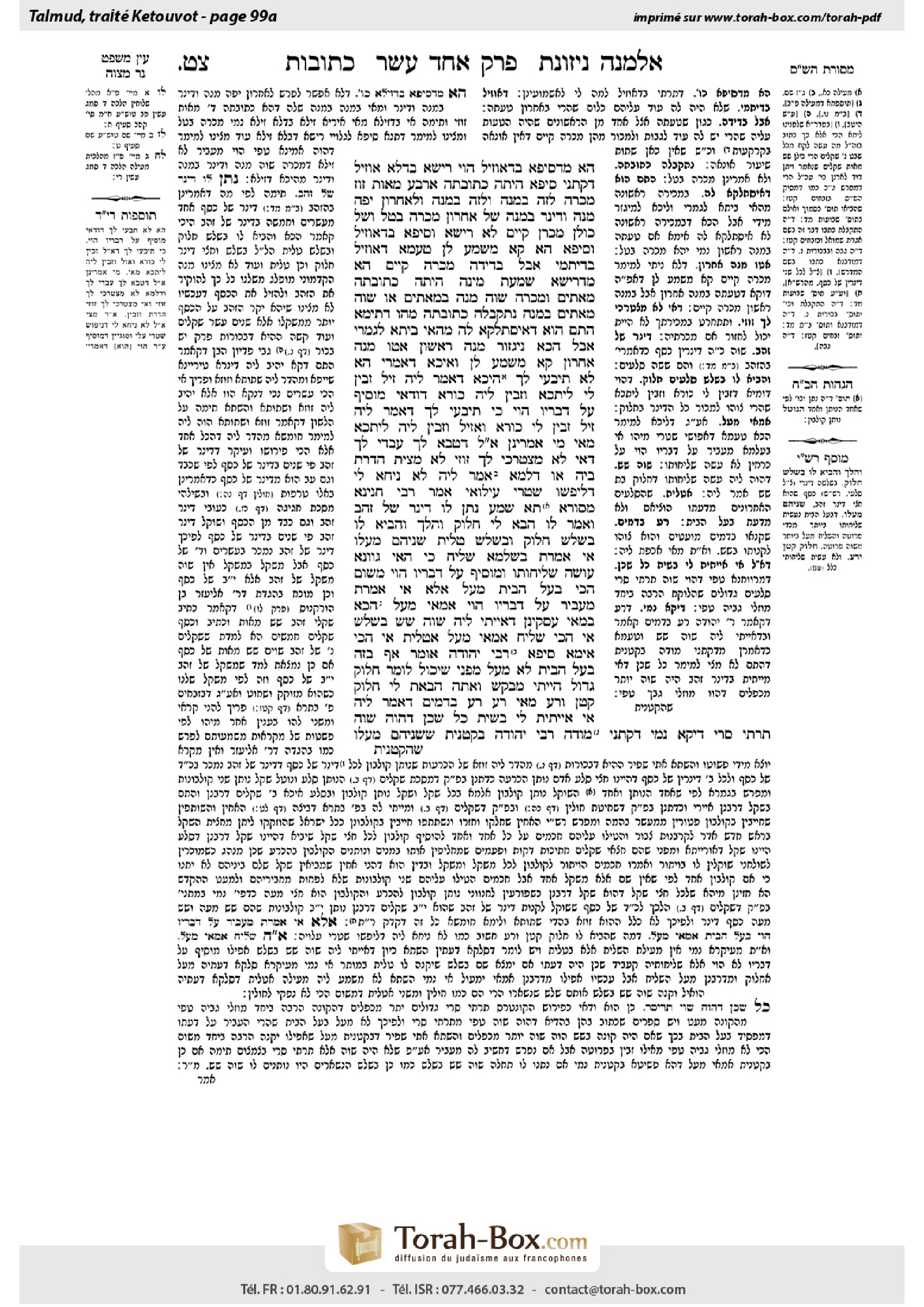
Ketubot 99a: Talmud study for Daf Yomi
Daf Yomi is the daily study of one Talmud folio. Explore 37 tractates with scans, Hebrew text, Sefaria English and AI-generated French translations where annotated.
Passage selection and English or AI-generated French translation are available where the scan has annotations. Daf Study is independent of Torah-Box and Sefaria.
Browse Ketubot · כתובות · All tractatesKetubot 99a text and translations
This page of Ketubot includes the Aramaic text, an English translation and an AI-generated French translation, alongside the scan above.
כתובות צ״ט א · Aramaic and Hebrew text
הָא מִדְּסֵיפָא בִּדְאוֹזֵיל הָוֵי, רֵישָׁא בִּדְלָא אוֹזֵיל, דְּקָתָנֵי סֵיפָא: הָיְתָה כְּתוּבָּתָהּ אַרְבַּע מֵאוֹת זוּז, מָכְרָה לָזֶה בְּמָנֶה וְלָזֶה בְּמָנֶה, וְלָאַחֲרוֹן יָפֶה מָנֶה וְדִינָר בְּמָנֶה — שֶׁל אַחֲרוֹן מִכְרָהּ בָּטֵל, וְשֶׁל כּוּלָּן מִכְרָן קַיָּים!
לָא, רֵישָׁא וְסֵיפָא בִּדְאוֹזֵיל, וְסֵיפָא הָא קָא מַשְׁמַע לַן: טַעְמָא דְּאוֹזֵיל בִּדְיַתְמֵי, אֲבָל בְּדִידַהּ — מִכְרָהּ קַיָּים.
הָא מִדְּרֵישָׁא שָׁמְעַתְּ מִינַּהּ: הָיְתָה כְּתוּבָּתָהּ מָאתַיִם, וּמָכְרָה שָׁוֶה מָנֶה בְּמָאתַיִם, אוֹ שָׁוֶה מָאתַיִם בְּמָנֶה — נִתְקַבְּלָה כְּתוּבָּתָהּ.
מַהוּ דְּתֵימָא: הָתָם הוּא דְּאִיסְתַּלַּקָא לַהּ מֵהַאי בֵּיתָא לִגְמָרֵי, אֲבָל הָכָא נִיגְזוֹר מָנֶה רִאשׁוֹן אַטּוּ מָנֶה אַחֲרוֹן — קָא מַשְׁמַע לַן.
וְאִיכָּא דְּאָמְרִי: הָא לָא תִּיבְּעֵי לָךְ הֵיכָא דַּאֲמַר לֵיהּ ״זִיל זַבֵּין לִי לִיתְכָּא״ וְזַבֵּין לֵיהּ כּוֹרָא, דְּוַדַּאי מוֹסִיף עַל דְּבָרָיו הָוֵי.
כִּי תִּיבְּעֵי לָךְ דַּאֲמַר לֵיהּ: ״זִיל זַבֵּין לִי כּוֹרָא״ וַאֲזַל וְזַבֵּין לֵיהּ לִיתְכָּא, מַאי? מִי אָמְרִינַן אֲמַר לֵיהּ: דְּטָבָא לָךְ עֲבַדִי לָךְ, דְּאִי לָא מִצְטָרְכִי לָךְ זוּזֵי, לָא מָצֵית הָדְרַתְּ בֵּיהּ.
אוֹ דִלְמָא אֲמַר לֵיהּ: לָא נִיחָא לִי דְּלִיפֻּשׁוּ שְׁטָרֵי עִילָּוַאי.
אָמַר רַבִּי חֲנִינָא מִסּוּרָא, תָּא שְׁמַע: נָתַן לוֹ דִּינָר שֶׁל זָהָב וְאָמַר לוֹ: ״הָבֵא לִי חָלוּק״, וְהָלַךְ וְהֵבִיא לוֹ בְּשָׁלֹשׁ חָלוּק וּבְשָׁלֹשׁ טַלִּית — שְׁנֵיהֶם מָעֲלוּ.
אִי אָמְרַתְּ בִּשְׁלָמָא: שְׁלִיחַ כִּי הַאי גַוְונָא עוֹשֶׂה שְׁלִיחוּתוֹ, וּמוֹסִיף עַל דְּבָרָיו הָוֵי — מִשּׁוּם הָכִי בַּעַל הַבַּיִת מָעַל, אֶלָּא אִי אָמְרַתְּ: מַעֲבִיר עַל דְּבָרָיו הָוֵי — אַמַּאי מָעַל?
הָכָא בְּמַאי עָסְקִינַן — דְּאַיְיתִי לֵיהּ שָׁוֶה שֵׁשׁ בְּשָׁלֹשׁ.
אִי הָכִי, שָׁלִיחַ אַמַּאי מָעַל? אַטַּלִּית.
אִי הָכִי אֵימָא סֵיפָא, רַבִּי יְהוּדָה אוֹמֵר: אַף בָּזֶה בַּעַל הַבַּיִת לֹא מָעַל, מִפְּנֵי שֶׁיָּכוֹל לוֹמַר: חָלוּק גָּדוֹל הָיִיתִי מְבַקֵּשׁ, וְאַתָּה הֵבֵאתָ לִי חָלוּק קָטָן וָרַע.
מַאי ״רַע״? רַע בְּדָמִים, דְּאָמַר לֵיהּ: אִי אַיְיתֵית לִי בְּשֵׁית, כׇּל שֶׁכֵּן דַּהֲוָה שָׁוֵה תַּרְתֵּי סְרֵי.
דַּיְקָא נָמֵי, דְּקָתָנֵי: מוֹדֶה רַבִּי יְהוּדָה בְּקִטְנִית שֶׁשְּׁנֵיהֶם מָעֲלוּ,
Ketubot 99a · English translation
The Gemara asks: Since the last clause of the mishna deals with a case where she reduced the price, it stands to reason that the first clause of the mishna is a case where she did not reduce the price. Why would the mishna repeat itself for no reason? As it teaches in the last clause of the mishna: If her marriage contract was worth four hundred dinars and she sold property to this one for one hundred dinars, and she sold property to that one for one hundred dinars, and again to a third one, and she sold property to the last one worth one hundred dinars and a dinar for only one hundred dinars, the sale of the last property is void. And as for all of the others, their sale is valid because they were sold for the correct price.
The Gemara rejects this: No, both the first and the last clauses discuss cases where she reduced the price of the land and sold it for less than its worth. And the last clause teaches us this: The reason that the sale is void is that in that case, since she had already received full payment of her marriage contract, she reduced the price in a sale that she made with property of the orphans and at their expense. However, when she reduced the price of the land in the sale of her own property, as in the earlier clauses of the mishna, her sale is valid.
The Gemara asks: How can it be that this is what the last clause of the mishna is teaching? It can already be concluded from the first clause of the mishna, which states: In the case of a widow whose marriage contract was worth two hundred dinars and she sold property that was worth one hundred dinars for two hundred dinars, or if she sold property worth two hundred dinars for one hundred dinars, she has received payment of her marriage contract and can demand nothing more. This teaches that although she reduced the price of her own property by half, the sale is valid.
The Gemara answers: Lest you say: There, in the first clause of the mishna, the sale is valid because through the sale she has left this house entirely, i.e., she no longer has anything to do with her husband’s estate, as her entire claim has been paid off; however, here, in the latter clause, decree that the first sale for one hundred dinars will be void due to the last one hundred dinars. If the first sale is allowed to take effect, this may lead to the error of the last sale taking effect as well. Therefore, the first sale should be void if she reduces the price. Lest you make this argument, the mishna teaches us that this is not the case.
The Gemara returns to the question asked earlier (98b): And there are those who say: Don’t raise this dilemma in a case where the employer said to his agent: Go and sell on my behalf a half-kor, and the agent sold for him a kor, as he was certainly adding to the employer’s words, and the sale of the first half-kor is valid.
Where you should raise the dilemma is a case in which the employer said to his agent: Go sell on my behalf a kor, and he went and sold for him a half-kor. What is the halakha in that case? Do we say that the agent can say to the employer: I did what is good for you by not selling everything, because you now have the opportunity to determine if you are truly in need of more money. If you decide that you do not need the money then you will not have to sell more property, because if you will realize that you do not need the money after the sale has been completed, you will not be able to reverse the sale. I therefore did you a favor by selling as little as I could.
Or perhaps the employer can say to the agent: I do not agree to this. I am not amenable to the fact that this will increase the number of bills of sale that I have because I will have to write a separate promissory note for each sale, and if I will have to go to court then I may earn a reputation as someone who has many mortgages.
Rabbi Ḥanina of Sura said: Come and hear a proof from the mishna for that which we learned about the halakhot of misusing consecrated property (Me’ila 21a): If one gave his agent a gold dinar, which is equal in value to twenty-five dinars or six sela, and said to him: Get me a robe. And he went and brought him a robe that cost three sela, and a cloak that also cost three sela, after which it was discovered that the original dinar was consecrated property, the halakha is that both are guilty of misusing consecrated property.
Granted, if you say that the agent in a case like this is considered to be performing his assigned agency, and he was merely adding to the words of the employer, it is due to that reason that the homeowner is guilty of misusing consecrated property. However, if you say that the agent is disregarding the words of the employer, as the employer intended for him to buy a robe with all six sela, why is the employer guilty of misusing consecrated property? In this instance, the agent did not fulfill his assignment.
The Gemara answers: Here we are dealing with a case where he brought him a robe worth six sela that he had succeeded in buying for only three sela, so that the employer received exactly what he wanted. And the agent did not deviate from his intentions, he merely added to them because he also bought him a cloak.
The Gemara asks: If that is so, if the employee did exactly what the employer had asked him to do, then why is the agent guilty of misusing consecrated property? The Gemara answers: He is guilty of misusing consecrated property because he spent three sela of consecrated property to buy the cloak, which the employer never requested from him.
The Gemara asks: If that is so, then say the last clause of the mishna quoted by Rabbi Ḥanina of Sura (Me’ila 21b): Rabbi Yehuda says: Even in this case the homeowner is not guilty of misusing consecrated property because he is able to say: I would have requested a large robe and you brought me a robe that is small and bad. If the agent had brought him a robe worth six sela as requested, then this should not be a bad robe.
The Gemara answers: What is meant by bad? It is bad in its monetary value because the agent spent on the robe less than what the employer instructed him. That is why the agent is considered to have violated the wishes of his employer, as the employer can say to him: Since you chanced upon a merchant who reduced his prices to such a degree, if you had brought me a robe for six sela as I asked you, it would all the more so have been worth twelve sela, and it would have been a much finer robe.
The Gemara notes: The language of the mishna is also precise when understood in this way, as it teaches: Rabbi Yehuda concedes that both are guilty of misusing consecrated property in the following case: The agent purchased only part of what the employer requested in the case of legumes, which are sold for a set price under all circumstances,
Ketubot 99a · Traduction française (IA)
La Guemara demande : Puisque la dernière clause de la Michna traite d’un cas où elle a réduit le prix, on peut en déduire que la première clause de la Michna concerne un cas où elle n’a pas réduit le prix. Pourquoi la Michna se répéterait-elle sans raison ? En effet, la dernière clause de la Michna enseigne : Si sa ketouba valait quatre cents dinars et qu’elle a vendu des biens à celui-ci pour cent dinars, puis à celui-là pour cent dinars, puis encore à un troisième, et qu’elle a vendu au dernier un bien valant cent dinars et un dinar pour seulement cent dinars, la vente du dernier bien est annulée. Quant à toutes les autres ventes, elles sont valides, car elles ont été conclues au juste prix.
La Guemara rejette cette hypothèse : Non, la première comme la dernière clause traitent de cas où elle a réduit le prix du terrain et l’a vendu au-dessous de sa valeur. Et la dernière clause nous apprend ceci : la vente est annulée parce qu’en l’occurrence, ayant déjà reçu le paiement intégral de sa ketouba, elle a réduit le prix lors d’une vente portant sur les biens des orphelins et faite à leurs dépens. En revanche, lorsqu’elle a réduit le prix du terrain en vendant ses propres biens, comme dans les clauses précédentes de la Michna, sa vente est valide.
La Guemara demande : Comment la dernière clause de la Michna pourrait-elle enseigner cela ? On peut déjà le déduire de la première clause de la Michna, qui énonce : Dans le cas d’une veuve dont la ketouba valait deux cents dinars, si elle a vendu un bien valant cent dinars pour deux cents dinars, ou si elle a vendu un bien valant deux cents dinars pour cent dinars, elle a reçu le paiement de sa ketouba et ne peut rien réclamer de plus. Cela enseigne que, bien qu’elle ait réduit de moitié le prix de son propre bien, la vente est valide.
La Guemara répond : De peur que tu dises : Là, dans la première clause de la Michna, la vente est valide parce que, grâce à cette vente, elle quitte entièrement cette maison, c’est-à-dire qu’elle n’a plus rien à voir avec la succession de son mari, puisque sa créance a été intégralement payée ; mais ici, dans la dernière clause, décrète que la première vente, pour cent dinars, sera annulée à cause de la dernière vente, pour cent dinars. Si l’on laisse la première vente prendre effet, cela risque d’amener à considérer également la dernière vente comme valide. Par conséquent, si elle réduit le prix, la première vente devrait être annulée. De peur que tu avances cet argument, la Michna nous enseigne qu’il n’en est rien.
La Guemara revient à la question posée précédemment (98b) : Et certains disent : Ne pose pas ce dilemme dans le cas où l’employeur a dit à son mandataire : « Va vendre pour moi un demi-kor », et où le mandataire en a vendu un kor pour lui, car il a certainement ajouté aux instructions de l’employeur, et la vente du premier demi-kor est valide.
C’est dans le cas où l’employeur a dit à son mandataire : « Va vendre pour moi un kor », et où celui-ci en a vendu un demi-kor pour lui, qu’il faut poser le dilemme. Quelle est la halakha dans ce cas ? Dit-on que le mandataire peut répondre à l’employeur : « J’ai agi dans ton intérêt en ne vendant pas tout, car tu as maintenant la possibilité de déterminer si tu as vraiment besoin de davantage d’argent. Si tu décides que tu n’en as pas besoin, tu n’auras pas à vendre d’autres biens ; car si tu te rends compte, une fois la vente conclue, que tu n’as pas besoin de cet argent, tu ne pourras plus l’annuler. Je t’ai donc rendu service en vendant le moins possible. »
Ou peut-être l’employeur peut-il répondre au mandataire : « Je ne suis pas d’accord. Je n’accepte pas que cela augmente le nombre d’actes de vente que je possède, car je devrai établir un billet à ordre distinct pour chaque vente ; et si je dois comparaître devant un tribunal, je risque d’avoir la réputation d’un homme qui a de nombreuses hypothèques. »
Rabbi Ḥanina de Sura dit : Viens entendre une preuve tirée de la Michna concernant ce que nous avons appris sur les lois du détournement de biens consacrés (Meïla 21a) : Si quelqu’un a remis à son mandataire un dinar d’or, qui vaut vingt-cinq dinars ou six séla, et lui a dit : « Achète-moi une robe », et que celui-ci est allé lui rapporter une robe qui avait coûté trois séla, ainsi qu’un manteau qui avait également coûté trois séla, puis qu’on a découvert que le dinar initial était consacré, la halakha est qu’ils sont tous deux coupables de détournement de biens consacrés.
Il est vrai que, si tu dis que, dans un tel cas, le mandataire est considéré comme ayant exécuté le mandat qui lui a été confié et qu’il s’est simplement contenté d’ajouter aux instructions de l’employeur, c’est pour cette raison que le propriétaire est coupable de détournement de biens consacrés. Cependant, si tu dis que le mandataire a contrevenu aux instructions de l’employeur, puisque celui-ci voulait qu’il achète une robe pour la totalité des six séla, pourquoi l’employeur est-il coupable de détournement de biens consacrés ? En l’occurrence, le mandataire n’a pas exécuté son mandat.
La Guemara répond : Il s’agit ici d’un cas où il lui a rapporté une robe valant six séla, qu’il avait réussi à acheter pour seulement trois séla ; l’employeur a donc reçu exactement ce qu’il voulait. Le mandataire ne s’est pas écarté de ses intentions : il s’est simplement contenté d’y ajouter quelque chose, puisqu’il lui a également acheté un manteau.
La Guemara demande : Si tel est le cas, si le mandataire a fait exactement ce que l’employeur lui avait demandé, pourquoi est-il coupable de détournement de biens consacrés ? La Guemara répond : Il est coupable de détournement de biens consacrés parce qu’il a dépensé trois séla de biens consacrés pour acheter le manteau, que l’employeur ne lui avait jamais demandé.
La Guemara demande : Si tel est le cas, citons la dernière clause de la Michna rapportée par Rabbi Ḥanina de Sura (Meïla 21b) : Rabbi Yehouda dit : Même dans ce cas, le propriétaire n’est pas coupable de détournement de biens consacrés, car il peut dire : « J’aurais demandé une grande robe, et tu m’as rapporté une robe petite et de mauvaise qualité. » Si le mandataire lui avait rapporté une robe valant six séla, comme demandé, elle n’aurait donc pas été de mauvaise qualité.
La Guemara répond : Que signifie « mauvaise » ? Elle est mauvaise par sa valeur monétaire, car le mandataire a dépensé pour la robe moins que ce que l’employeur lui avait ordonné. C’est pourquoi le mandataire est considéré comme ayant contrevenu à la volonté de son employeur, puisque celui-ci peut lui dire : « Puisque tu es tombé sur un marchand qui avait considérablement baissé ses prix, si tu m’avais rapporté une robe pour six séla, comme je te l’avais demandé, elle aurait valu à plus forte raison douze séla et aurait été bien plus belle. »
La Guemara note : La formulation de la Michna est également précise si on la comprend ainsi, car elle enseigne : Rabbi Yehouda reconnaît que tous deux sont coupables de détournement de biens consacrés dans le cas suivant : le mandataire n’a acheté qu’une partie de ce que l’employeur lui avait demandé dans le cas des légumineuses, qui sont vendues à prix fixe en toutes circonstances,
Traduction française générée par IA à partir de l’édition anglaise de Sefaria. Vérifie toujours un passage avec le texte source.
Text from Sefaria: William Davidson Edition - Vocalized Aramaic (CC BY NC); William Davidson Edition - English (CC BY NC).