Kiddushin 54a: Talmud study for Daf Yomi
Daf Yomi is the daily study of one Talmud folio. Explore 37 tractates with scans, Hebrew text, Sefaria English and AI-generated French translations where annotated.
Passage selection and English or AI-generated French translation are available where the scan has annotations. Daf Study is independent of Torah-Box and Sefaria.
Browse Kiddushin · קידושין · All tractatesKiddushin 54a text and translations
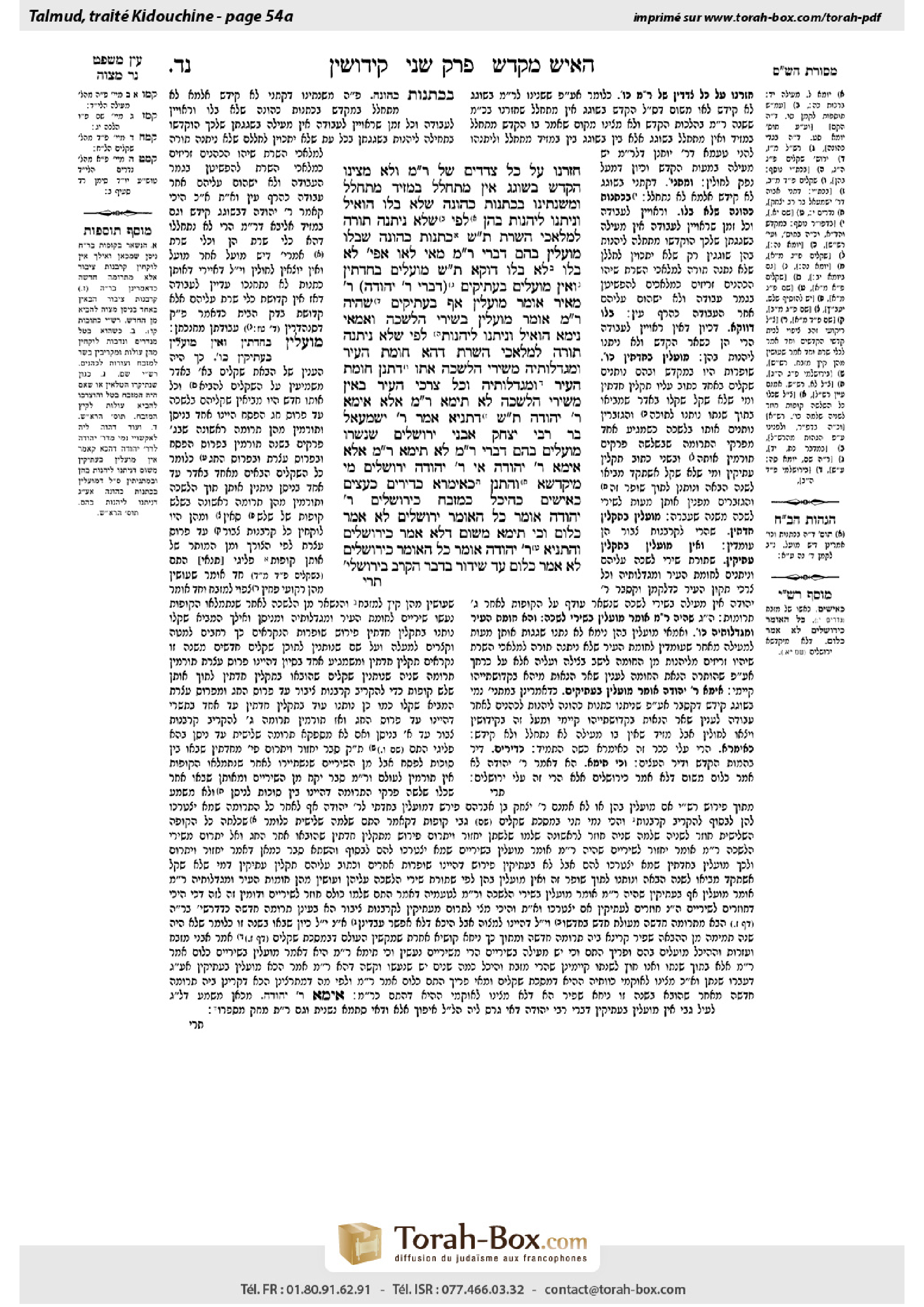
This page of Kiddushin includes the Aramaic text, an English translation and an AI-generated French translation, alongside the scan above.
קידושין נ״ד א · Aramaic and Hebrew text
חָזַרְנוּ עַל כׇּל צְדָדִים שֶׁל רַבִּי מֵאִיר, וְלֹא מָצִינוּ הֶקְדֵּשׁ בְּשׁוֹגֵג אֵין מִתְחַלֵּל, בְּמֵזִיד מִתְחַלֵּל.
וּמִשְׁנָתֵינוּ בְּכׇתְנוֹת כְּהוּנָּה שֶׁלֹּא בָּלוּ, הוֹאִיל וְנִיתְּנוּ לֵיהָנוֹת בָּהֶן, לְפִי שֶׁלֹּא נִיתְּנָה תּוֹרָה לְמַלְאֲכֵי הַשָּׁרֵת.
תָּא שְׁמַע: כׇּתְנוֹת כְּהוּנָּה שֶׁבָּלוּ מוֹעֲלִין בָּהֶם, דִּבְרֵי רַבִּי מֵאִיר. מַאי לָאו אֲפִילּוּ לֹא בָּלוּ? לָא, בָּלוּ דַּוְקָא.
תָּא שְׁמַע: מוֹעֲלִים בְּחַדְתִין וְאֵין מוֹעֲלִים בְּעַתִּיקִים. דִּבְרֵי רַבִּי יְהוּדָה. רַבִּי מֵאִיר אוֹמֵר: מוֹעֲלִין אַף בְּעַתִּיקִים, שֶׁהָיָה רַבִּי מֵאִיר אוֹמֵר: מוֹעֲלִין בִּשְׁיָרֵי הַלִּשְׁכָּה.
וְאַמַּאי? נֵימָא: הוֹאִיל וְנִיתְּנוּ לֵיהָנוֹת, לְפִי שֶׁלֹּא נִיתְּנָה תּוֹרָה לְמַלְאֲכֵי הַשָּׁרֵת, דְּהָא חוֹמַת הָעִיר וּמִגְדְּלוֹתֶיהָ מִשְּׁיָרֵי הַלִּשְׁכָּה אָתוּ, דִּתְנַן: חוֹמַת הָעִיר וּמִגְדְּלוֹתֶיהָ, וְכׇל צׇרְכֵי הָעִיר בָּאִין מִשְּׁיָרֵי הַלִּשְׁכָּה. לָא תֵּימָא רַבִּי מֵאִיר, אֶלָּא אֵימָא רַבִּי יְהוּדָה.
תָּא שְׁמַע: דְּתַנְיָא, אָמַר רַבִּי יִשְׁמָעֵאל בַּר רַבִּי יִצְחָק: אַבְנֵי יְרוּשָׁלַיִם שֶׁנָּשְׁרוּ מוֹעֲלִים בָּהֶם, דִּבְרֵי רַבִּי מֵאִיר. לָא תֵּימָא רַבִּי מֵאִיר, אֶלָּא אֵימָא רַבִּי יְהוּדָה.
אִי רַבִּי יְהוּדָה, יְרוּשָׁלַיִם מִי מִיקַּדְּשָׁא? וְהָתְנַן: כְּאִימְּרָא, כַּדִּירִים, כָּעֵצִים, כָּאִישִּׁים, כַּהֵיכָל, כַּמִּזְבֵּחַ, כִּירוּשָׁלַיִם. רַבִּי יְהוּדָה אוֹמֵר: כׇּל הָאוֹמֵר: ״יְרוּשָׁלַיִם״ לֹא אָמַר כְּלוּם.
וְכִי תֵּימָא, מִשּׁוּם דְּלֹא אָמַר: ״כִּירוּשָׁלַיִם״, וְהָתַנְיָא, רַבִּי יְהוּדָה אוֹמֵר: כׇּל הָאוֹמֵר ״כִּירוּשָׁלַיִם״ – לֹא אָמַר כְּלוּם, עַד שֶׁיִּדּוֹר בְּדָבָר הַקָּרֵב בִּירוּשָׁלַיִם!
Kiddushin 54a · English translation
We reviewed all angles of the opinion of Rabbi Meir, i.e., we have examined all of Rabbi Meir’s statements with regard to consecrated property, and we did not find that he holds that consecrated property is not desacralized if it is misused unwittingly but it is desacralized if misused intentionally.
And as for our mishna, which indicates that this is Rabbi Meir’s opinion, it should not be understood as Rabbi Meir’s opinion with regard to consecrated property in general, but with regard to a case where a priest betrothed a woman using priestly tunics that have not worn out and that can still be worn during the Temple service. If a priest betrothed a woman with such garments, Rabbi Meir holds that if he did so unwittingly she is not betrothed, since clothes of this kind are not desacralized, and do not become hers. This is because they were initially given on the condition that the priests may benefit from them even when not performing the Temple service, since the Torah was not given to the ministering angels. It is impossible for a priest to wear the garments only at the moment he is performing the service and at no other time. Therefore, these garments are desacralized only if he intended to desacralize them.
The Gemara raises a difficulty with Rav’s statement. Come and hear: With regard to priestly tunics that have worn out, one misuses property consecrated to the Temple by using them; this is the statement of Rabbi Meir. What, is it not so that this halakha would apply even if they had not worn out, and the tanna wanted to teach the additional halakha that it is still a transgression even after they are no longer fit for use? The Gemara rejects this: No, this halakha applies specifically to garments that have worn out. Since these cannot be used by priests, the permission to use them for non-sacred purposes lapses, and they are like other consecrated property that is subject to the halakhot of misuse.
The Gemara raises a difficulty with the explanation of Rabbi Meir’s statement. Come and hear: One is liable for misuse of property consecrated to the Temple by using new shekels, i.e., those given this year, which are used to purchase animals for this year’s offerings, but one is not liable for misuse of property consecrated to the Temple by using old shekels, given by those who failed to give the previous year’s half-shekel, since these old shekels are used not to purchase offerings but for Temple maintenance; this is the statement of Rabbi Yehuda. Rabbi Meir says: One is liable for misuse of property consecrated to the Temple even by using old shekels, as Rabbi Meir would say: One is liable for misuse of property consecrated to the Temple not only by using money designated to purchase offerings, but even with the remainder of the chamber, i.e., the money that remained in the chamber after money was taken to purchase the animals used in communal offerings.
The Gemara continues the question: But why should one be liable for using the old shekels? Let us say the same logic: One is not liable, because they were initially given on the condition that people may benefit from them, since the Torah was not given to the ministering angels and people could not help but benefit from them. This is as the money to repair the wall of the city and its towers comes from the remainder of the chamber, as we learned in a mishna (Shekalim 4:2): The wall of the city, its towers, and all of the requirements of the city of Jerusalem come from the remainder of the chamber. It is not possible for passersby to avoid benefiting from the shade provided by the walls of the city. The Gemara answers: Do not say that the opinion that one is liable for misuse of property consecrated to the Temple by using money from the remainder of the chamber is that of Rabbi Meir. Rather, emend the mishna and say that it is the opinion of Rabbi Yehuda.
Come and hear another proof: As it is taught in a baraita: Rabbi Yishmael bar Rabbi Yitzḥak said: With regard to stones of the walls and towers of Jerusalem that fell, one is liable for misuse of property consecrated to the Temple by using them; this is the statement of Rabbi Meir. This indicates that according to Rabbi Meir, the use of even such stones renders one liable, despite the fact that it is not possible for people to avoid benefiting from them. The Gemara again answers: Do not say that this baraita is recording the statement of Rabbi Meir. Rather, emend the baraita and say that it is in accordance with the opinion of Rabbi Yehuda.
The Gemara challenges this explanation: If it is in accordance with the opinion of Rabbi Yehuda, is Jerusalem consecrated at all? But didn’t we learn in a mishna (Nedarim 10b): If one says that an item shall be considered like the lamb of the daily offering, like the animals designated as offerings and kept in special enclosures, like the wood of the altar, like the fires on the altar, like the Sanctuary, like the altar, or like Jerusalem, it is a vow and he is prohibited to derive benefit from the item, as he has compared it to something consecrated. The essence of a vow creating a prohibition is the statement that a certain item shall be like a consecrated item. Rabbi Yehuda says: Anyone who says that an item shall be considered Jerusalem has not said anything, indicating that Rabbi Yehuda holds that Jerusalem is not consecrated.
And if you would say that Rabbi Yehuda’s reason is not that he holds that Jerusalem is not consecrated, but because the one stating the vow did not say: Like Jerusalem, but stated only that the item shall be considered Jerusalem, which is not a clear expression of a vow, but isn’t it taught in a baraita (Tosefta, Nedarim 1:6) that Rabbi Yehuda says: Anyone who says that an item shall be considered like Jerusalem has not said anything, until he vows by comparing the item to an item that is sacrificed in Jerusalem. This indicates that he holds that Jerusalem itself is not consecrated.
Kiddushin 54a · Traduction française (IA)
Nous avons examiné tous les aspects de l’opinion de Rabbi Meïr, c’est-à-dire que nous avons passé en revue toutes ses déclarations concernant les biens consacrés, et nous n’avons trouvé aucune déclaration selon laquelle les biens consacrés ne sont pas désacralisés lorsqu’ils sont utilisés à mauvais escient par inadvertance, mais le sont lorsqu’ils sont utilisés à mauvais escient intentionnellement.
Quant à notre Michna, qui laisse entendre qu’il s’agit de l’opinion de Rabbi Meïr, il ne faut pas la comprendre comme exprimant son opinion au sujet des biens consacrés en général, mais comme portant sur le cas où un prêtre a fiancé une femme au moyen de tuniques sacerdotales qui ne sont pas usées et peuvent encore être portées pendant le service au Temple. Si un prêtre a fiancé une femme avec de tels vêtements, Rabbi Meïr considère que, s’il l’a fait par inadvertance, elle n’est pas fiancée, car ces vêtements ne sont pas désacralisés et ne deviennent donc pas sa propriété. En effet, ils ont été donnés à l’origine à la condition que les prêtres puissent en tirer profit même lorsqu’ils n’accomplissent pas le service au Temple, car la Torah n’a pas été donnée aux anges du service. Il est impossible qu’un prêtre ne porte ces vêtements qu’au moment où il accomplit le service, et à aucun autre moment. Ces vêtements ne sont donc désacralisés que s’il a eu l’intention de les désacraliser.
La Guemara soulève une difficulté à l’encontre de la déclaration de Rav. Écoute : s’agissant des tuniques sacerdotales usées, celui qui les utilise commet un détournement de biens consacrés au Temple ; telle est la déclaration de Rabbi Meïr. Cela signifie-t-il que cette halakha s’appliquerait également si elles n’étaient pas usées, et que le tanna voulait enseigner cette halakha supplémentaire, à savoir que leur utilisation reste une transgression même lorsqu’elles ne sont plus utilisables ? La Guemara rejette cette interprétation : non, cette halakha concerne précisément les vêtements usés. Puisque les prêtres ne peuvent plus les utiliser, l’autorisation de s’en servir à des fins profanes cesse, et ils sont comme les autres biens consacrés soumis aux lois du détournement.
La Guemara soulève une difficulté à l’encontre de l’explication de la déclaration de Rabbi Meïr. Écoute : on est passible pour détournement de biens consacrés au Temple lorsqu’on utilise de nouveaux sicles, c’est-à-dire ceux qui ont été donnés cette année et qui servent à acheter les animaux destinés aux sacrifices de cette année, mais on n’est pas passible pour détournement de biens consacrés au Temple lorsqu’on utilise d’anciens sicles, donnés par ceux qui n’avaient pas versé le demi-sicle l’année précédente, car ces anciens sicles servent non pas à acheter des sacrifices, mais à l’entretien du Temple ; telle est la déclaration de Rabbi Yehouda. Rabbi Meïr dit : on est passible pour détournement de biens consacrés au Temple même lorsqu’on utilise d’anciens sicles, car Rabbi Meïr disait qu’on est passible pour détournement de biens consacrés au Temple non seulement lorsqu’on utilise de l’argent destiné à l’achat de sacrifices, mais aussi lorsqu’on utilise le reliquat de la chambre, c’est-à-dire l’argent qui y restait après qu’on en avait prélevé pour acheter les animaux destinés aux sacrifices communautaires.
La Guemara poursuit la question : mais pourquoi serait-on passible pour l’utilisation des anciens sicles ? Ne peut-on pas raisonner de la même façon : on n’est pas passible, car ils ont été donnés à l’origine à la condition que les gens puissent en tirer profit, puisque la Torah n’a pas été donnée aux anges du service et que les gens ne pouvaient faire autrement que d’en tirer profit ? En effet, l’argent destiné à réparer les murailles et les tours de la ville provient du reliquat de la chambre, comme nous l’avons appris dans une Michna (Chekalim 4:2) : les murailles de la ville, ses tours et tous les besoins de la ville de Jérusalem sont financés par le reliquat de la chambre. Les passants ne peuvent éviter de profiter de l’ombre que procurent les murailles de la ville. La Guemara répond : ne dis pas que l’opinion selon laquelle on est passible pour détournement de biens consacrés au Temple lorsqu’on utilise l’argent provenant du reliquat de la chambre est celle de Rabbi Meïr. Il faut plutôt corriger la Michna et dire qu’il s’agit de l’opinion de Rabbi Yehouda.
Écoute une autre preuve : il est enseigné dans une baraïta que Rabbi Yishmaël bar Rabbi Yitzḥak a dit : s’agissant des pierres des murailles et des tours de Jérusalem qui se sont effondrées, celui qui les utilise est passible pour détournement de biens consacrés au Temple ; telle est la déclaration de Rabbi Meïr. Cela indique que, selon Rabbi Meïr, l’utilisation de telles pierres rend également passible, bien qu’il soit impossible aux gens d’éviter d’en tirer profit. La Guemara répond de nouveau : ne dis pas que cette baraïta rapporte la déclaration de Rabbi Meïr. Il faut plutôt corriger la baraïta et dire qu’elle est conforme à l’opinion de Rabbi Yehouda.
La Guemara conteste cette explication : si elle est conforme à l’opinion de Rabbi Yehouda, Jérusalem est-elle donc consacrée ? N’avons-nous pas appris dans une Michna (Nedarim 10b) que si quelqu’un dit d’un objet qu’il doit être comme l’agneau du sacrifice quotidien, comme les animaux désignés pour les sacrifices et gardés dans des enclos réservés, comme le bois de l’autel, comme les feux de l’autel, comme le Sanctuaire, comme l’autel ou comme Jérusalem, il s’agit d’un vœu et il lui est interdit de tirer profit de l’objet, puisqu’il l’a comparé à une chose consacrée ? L’essence d’un vœu qui crée une interdiction est la déclaration qu’un objet donné sera comme un objet consacré. Rabbi Yehouda dit : quiconque dit qu’un objet sera considéré comme Jérusalem n’a rien dit. Cela indique que Rabbi Yehouda considère que Jérusalem n’est pas consacrée.
Et si tu dis que la raison de Rabbi Yehouda n’est pas qu’il considère Jérusalem comme non consacrée, mais que celui qui a formulé le vœu n’a pas dit : « Comme Jérusalem », et a seulement dit que l’objet serait considéré comme Jérusalem, ce qui n’est pas une formulation claire d’un vœu, n’est-il pas enseigné dans une baraïta (Tosefta, Nedarim 1:6) que Rabbi Yehouda dit : quiconque dit qu’un objet sera considéré comme Jérusalem n’a rien dit, tant qu’il ne formule pas un vœu en comparant l’objet à une chose qui est offerte en sacrifice à Jérusalem ? Cela indique qu’il considère que Jérusalem elle-même n’est pas consacrée.
Traduction française générée par IA à partir de l’édition anglaise de Sefaria. Vérifie toujours un passage avec le texte source.
Text from Sefaria: William Davidson Edition - Vocalized Aramaic (CC BY NC); William Davidson Edition - English (CC BY NC).