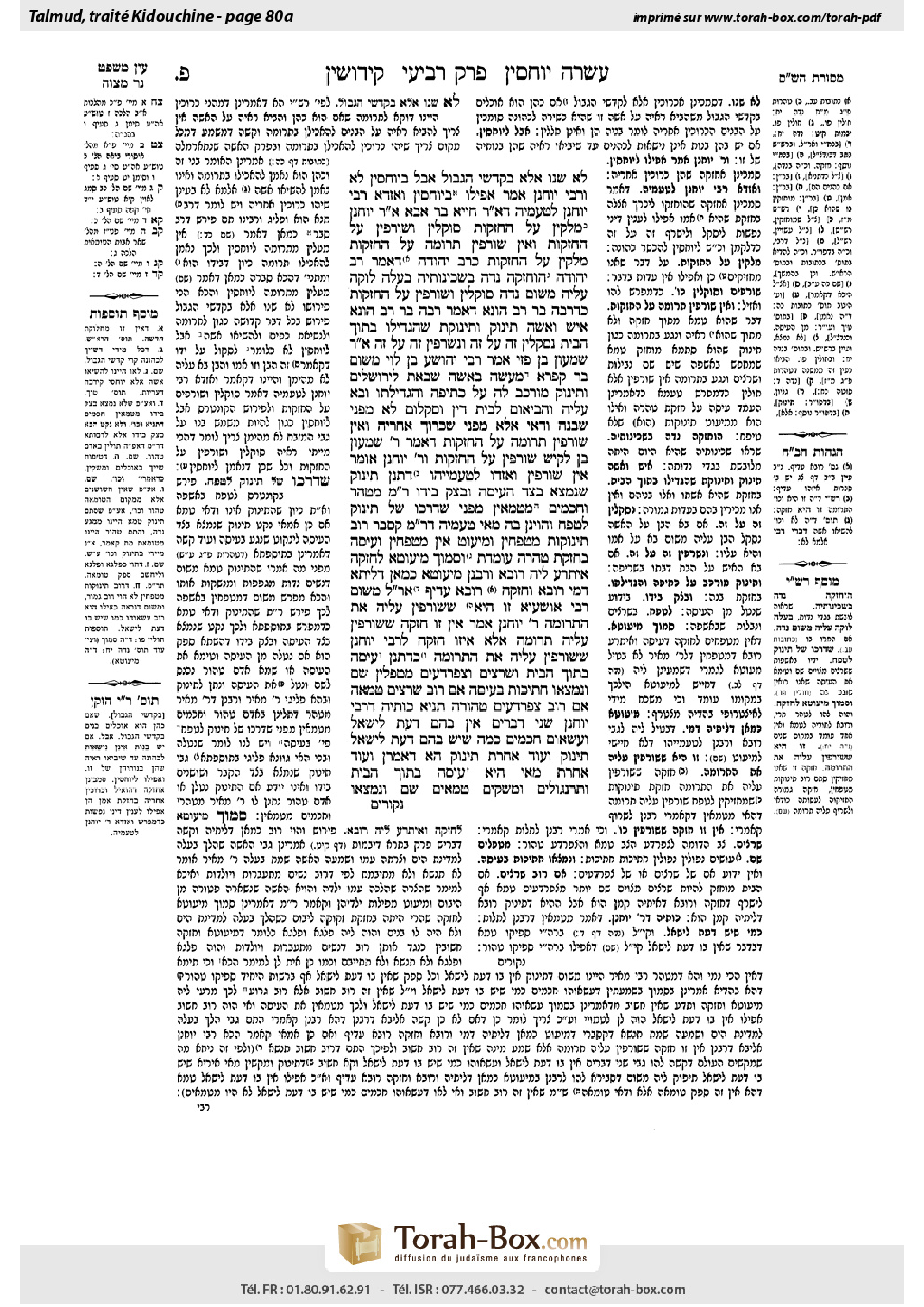
Kiddushin 80a: Talmud study for Daf Yomi
Daf Yomi is the daily study of one Talmud folio. Explore 37 tractates with scans, Hebrew text, Sefaria English and AI-generated French translations where annotated.
Passage selection and English or AI-generated French translation are available where the scan has annotations. Daf Study is independent of Torah-Box and Sefaria.
Browse Kiddushin · קידושין · All tractatesKiddushin 80a text and translations
This page of Kiddushin includes the Aramaic text, an English translation and an AI-generated French translation, alongside the scan above.
קידושין פ׳ א · Aramaic and Hebrew text
לֹא שָׁנוּ אֶלָּא בְּקׇדְשֵׁי הַגְּבוּל, אֲבָל בְּיוּחֲסִין – לֹא. וְרַבִּי יוֹחָנָן אָמַר: אֲפִילּוּ בְּיוּחֲסִין.
וְאַזְדָּא רַבִּי יוֹחָנָן לְטַעְמֵיהּ, דְּאָמַר רַבִּי חִיָּיא בַּר אַבָּא אָמַר רַבִּי יוֹחָנָן: מַלְקִין עַל הַחֲזָקוֹת, סוֹקְלִין וְשׂוֹרְפִין עַל הַחֲזָקוֹת, וְאֵין שׂוֹרְפִין תְּרוּמָה עַל הַחֲזָקוֹת.
מַלְקִין עַל הַחֲזָקוֹת – כְּרַב יְהוּדָה. דְּאָמַר רַב יְהוּדָה: הוּחְזְקָה נִדָּה בִּשְׁכֵינוֹתֶיהָ, בַּעְלָהּ – לוֹקֶה עָלֶיהָ מִשּׁוּם נִדָּה.
סוֹקְלִין וְשׂוֹרְפִין עַל הַחֲזָקוֹת – כִּדְרַבָּה בַּר רַב הוּנָא. דְּאָמַר רַבָּה בַּר רַב הוּנָא: אִישׁ וְאִשָּׁה תִּינוֹק וְתִינוֹקֶת שֶׁהִגְדִּילוּ בְּתוֹךְ הַבַּיִת – נִסְקָלִין זֶה עַל זֶה, וְנִשְׂרָפִין זֶה עַל זֶה.
אָמַר רַבִּי שִׁמְעוֹן בֶּן פַּזִּי, אָמַר רַבִּי יְהוֹשֻׁעַ בֶּן לֵוִי מִשּׁוּם בַּר קַפָּרָא: מַעֲשֶׂה בְּאִשָּׁה שֶׁבָּאת לִירוּשָׁלַיִם וְתִינוֹק מוּרְכָּב לָהּ עַל כְּתֵיפָהּ, וְהִגְדִּילַתּוּ, וּבָא עָלֶיהָ, וֶהֱבִיאוּם לְבֵית דִּין וּסְקָלוּם. לֹא מִפְּנֵי שֶׁבְּנָהּ וַדַּאי, אֶלָּא מִפְּנֵי שֶׁכָּרוּךְ אַחֲרֶיהָ.
וְאֵין שׂוֹרְפִין תְּרוּמָה עַל הַחֲזָקוֹת – דְּאָמַר רַבִּי שִׁמְעוֹן בֶּן לָקִישׁ: שׂוֹרְפִין עַל הַחֲזָקוֹת, וְרַבִּי יוֹחָנָן אוֹמֵר: אֵין שׂוֹרְפִין. וְאָזְדוּ לְטַעְמַיְיהוּ, דִּתְנַן: תִּינוֹק שֶׁנִּמְצָא בְּצַד הָעִיסָּה וּבָצֵק בְּיָדוֹ – רַבִּי מֵאִיר מְטַהֵר, וַחֲכָמִים מְטַמְּאִין, מִפְּנֵי שֶׁדַּרְכּוֹ שֶׁל תִּינוֹק לְטַפֵּחַ.
וְהָוֵינַן בַּהּ: מַאי טַעְמֵיהּ דְּרַבִּי מֵאִיר? קָסָבַר: רוֹב תִּינוֹקוֹת מְטַפְּחִין, וּמִיעוּט אֵין מְטַפְּחִין, וְעִיסָּה בְּחֶזְקַת טׇהֳרָה עוֹמֶדֶת, וּסְמוֹךְ מִיעוּטָא לַחֲזָקָה אִיתְּרַע לֵיהּ רוּבָּא. וְרַבָּנַן: מִיעוּטָא כְּמַאן דְּלֵיתֵיהּ דָּמֵי, רוּבָּא וַחֲזָקָה – רוּבָּא עֲדִיף.
אָמַר רֵישׁ לָקִישׁ מִשּׁוּם רַבִּי אוֹשַׁעְיָא: זוֹ הִיא שֶׁשּׂוֹרְפִין עָלֶיהָ אֶת הַתְּרוּמָה. רַבִּי יוֹחָנָן אָמַר: אֵין זוֹ חֲזָקָה שֶׁשּׂוֹרְפִין עָלֶיהָ תְּרוּמָה.
אֶלָּא אֵיזוֹ חֲזָקָה לְרַבִּי יוֹחָנָן שֶׁשּׂוֹרְפִין עָלֶיהָ אֶת הַתְּרוּמָה? כְּדִתְנַן: עִיסָּה בְּתוֹךְ הַבַּיִת, וּשְׁרָצִים וּצְפַרְדְּעִים מִטַּפְּלִין שָׁם, וְנִמְצְאוּ חֲתִיכוֹת בָּעִיסָּה. אִם רוֹב שְׁרָצִים – טְמֵאָה. אִם רוֹב צְפַרְדְּעִים – טְהוֹרָה.
תַּנְיָא כְּוָתֵיהּ דְּרַבִּי יוֹחָנָן: שְׁנֵי דְּבָרִים אֵין בָּהֶם דַּעַת לִישָּׁאֵל, וַעֲשָׂאוּם חֲכָמִים כְּמָה שֶׁיֵּשׁ בָּהֶם דַּעַת לִישָּׁאֵל: תִּינוֹק, וְעוֹד אַחֶרֶת.
תִּינוֹק – הָא דַּאֲמַרַן. וְעוֹד אַחֶרֶת מַאי הִיא? עִיסָּה בְּתוֹךְ הַבַּיִת, וְתַרְנְגוֹלִים וּמַשְׁקִים טְמֵאִים שָׁם, וְנִמְצְאוּ
Kiddushin 80a · English translation
The Sages taught that the children’s attachment to her proves that she is their mother only with regard to the consecrated items of the border, i.e., teruma, meaning that if she is the wife of a priest, her children may partake of teruma. But with regard to lineage, this proof is not relied upon, and her daughters may not marry priests. And Rabbi Yoḥanan says: If the children cling to her they are considered hers in all regards, even with regard to lineage.
The Gemara comments: And Rabbi Yoḥanan follows his standard line of reasoning, as Rabbi Ḥiyya bar Abba says that Rabbi Yoḥanan says: The court flogs one about whom witnesses testify that he violated a prohibition on the basis of presumptive status, even if there is no testimony to definitively establish that the person violated a prohibition, as will be explained. Similarly, the court stones or burns one about whom witnesses testify that he violated a prohibition resulting in court-imposed capital punishment on the basis of presumptive status. But one does not burn teruma on the basis of presumptive status unless there is testimony that it became ritually impure.
How so? The court flogs one about whom witnesses testify that he violated a prohibition on the basis of presumptive status, in accordance with the opinion of Rav Yehuda. As Rav Yehuda says: If a woman had among her neighbors the presumptive status of a menstruating woman, and witnesses testified that her husband engaged in sexual intercourse with her, he is flogged due to her status as a menstruating woman, and there is no need for testimony that she was a menstruating woman.
The court stones or burns one about whom witnesses testify that he violated a prohibition resulting in court-imposed capital punishment on the basis of presumptive status, in accordance with the opinion of Rabba bar Rav Huna. As Rabba bar Rav Huna says: With regard to a man and a woman and a boy and a girl who grew up together in one home as a single family, the presumption is that they are related, even absent witness testimony to that effect. Therefore, they are stoned due to engaging in intercourse with each other if the male child, now an adult, engages in intercourse with the woman, as it is considered incestuous sexual intercourse. And they are burned due to engaging in intercourse with each other if the man engages in intercourse with the female child, now an adult, since she is considered his wife’s daughter.
The Gemara cites a related incident: Rabbi Shimon ben Pazi says that Rabbi Yehoshua ben Levi says in the name of bar Kappara: An incident occurred involving a woman who came to Jerusalem with a child riding on her shoulders, in the manner of a mother and a son, and she raised him, and he eventually engaged in intercourse with her. And they brought them to court and stoned them for violating the prohibition against a mother and son engaging in intercourse. This was not because he was definitely her son, as they had no testimony to that effect, but because he clung to her, and he therefore had the presumptive status of being her son.
Rabbi Yoḥanan stated: But one does not burn teruma on the basis of presumptive status. As Rabbi Shimon ben Lakish says: One burns teruma on the basis of presumptive status, and Rabbi Yoḥanan says: One does not burn teruma in this case. The Gemara comments: And they follow their standard lines of reasoning in this matter, as we learned in a mishna (Teharot 3:8): If a ritually impure child is found alongside ritually pure started dough, and he has risen dough in his hand that may have been removed from the larger portion of started dough, Rabbi Meir deems the started dough pure, since there is no proof the child touched it, as he might have been given the piece by someone else. And the Rabbis deem it impure, as they assume that he touched the started dough. The child is presumed to be impure because it is the manner of a child to handle [letappe’aḥ] items.
And we discussed that case: What is the reasoning of Rabbi Meir? He holds that a majority of children handle items, in this case the dough, that are within reach, and a minority do not handle items within reach, and the dough itself retains a presumptive status of purity, since its impurity has not been definitively determined. And if one appends the minority of children who do not handle items within reach to the presumptive status of purity of the dough, the force of the majority of children who handle items within reach is weakened. Therefore, the dough is considered pure. And the Rabbis contend that in a case where the majority is followed, the minority is considered like it does not exist. Consequently, there is a conflict between the determining factors of the majority of impure children who handle items within reach and the presumptive status of purity of the dough. In that case, the majority takes precedence.
Reish Lakish says in the name of Rabbi Oshaya: This halakha of a child is an example of a presumption, i.e., that children handle items within reach, that one burns teruma based on it, since the Rabbis hold that it is sufficiently established that the dough has become impure to allow it to be burned. Rabbi Yoḥanan says: This is not the presumption that one burns teruma based on it. Rather, the dough is set aside and may be neither eaten nor burned.
The Gemara asks: But if so, according to Rabbi Yoḥanan, what is the presumption that one burns teruma based on it? The Gemara answers: As we learned in a baraita: In a case where started dough is in the house, and creeping animals, which impart impurity when dead, and frogs, which do not impart impurity, are also present there, and pieces of an unidentified creature were found in the started dough, if the majority of creatures in the house are creeping animals, the dough is impure, since the presumption is that the pieces are from a creeping animal. If the majority are frogs, it is pure.
The Gemara comments: It is taught in a baraita in accordance with the opinion of Rabbi Yoḥanan: There is a principle that when a possible case of impurity cannot be verified, even if it occurred in a private domain, where generally cases of uncertain impurity are deemed impure, it is deemed pure. Two things do not have the capacity to be questioned, i.e., one cannot verify what happened through investigation. Yet in these two cases, the Sages deemed them as things that have the capacity to be questioned and rendered them impure in cases of uncertainty in a private domain. The two cases are that of a child and an additional halakha.
The case of a child is that which we said concerning a child holding some dough discovered alongside a larger piece of dough. All of the dough is deemed impure, since the child cannot be asked whether or not he rendered the dough impure. And what is the additional one? If pure, started dough was located inside the house, and chickens and impure liquids were present there, and there were found to be
Kiddushin 80a · Traduction française (IA)
Les Sages ont enseigné que l'attachement des enfants à elle prouve qu'elle est leur mère uniquement en ce qui concerne les objets sacrés de la frontière, c'est-à-dire la terouma, ce qui signifie que si elle est l'épouse d'un Cohen, ses enfants peuvent consommer de la terouma. Mais en ce qui concerne la filiation, cette preuve n'est pas retenue, et ses filles ne peuvent pas épouser des Cohanim. Et Rabbi Yoḥanan dit : Si les enfants se rattachent à elle, ils sont considérés comme les siens à tous égards, y compris en ce qui concerne la filiation.
La Guemara commente : Et Rabbi Yoḥanan suit sa ligne de raisonnement habituelle, car Rabbi Ḥiyya bar Abba dit que Rabbi Yoḥanan dit : Le tribunal inflige le fouet à celui à propos duquel des témoins attestent qu'il a violé une interdiction sur la base d'un statut présumé, même s'il n'y a pas de témoignage établissant définitivement que la personne a violé une interdiction, comme cela sera expliqué. De même, le tribunal lapide ou brûle celui à propos duquel des témoins attestent qu'il a violé une interdiction entraînant la peine capitale imposée par le tribunal sur la base d'un statut présumé. Mais on ne brûle pas de la terouma sur la base d'un statut présumé à moins qu'il n'y ait un témoignage attestant qu'elle est devenue rituellement impure.
Comment cela se présente-t-il ? Le tribunal inflige le fouet à celui à propos duquel des témoins attestent qu'il a violé une interdiction sur la base d'un statut présumé, conformément à l'opinion de Rav Yehuda. Car Rav Yehuda dit : Si une femme avait parmi ses voisins le statut présumé d'une femme en période menstruelle, et que des témoins ont attesté que son mari a eu des rapports sexuels avec elle, il est fouetté en raison de son statut de femme en période menstruelle, et il n'est pas nécessaire d'avoir un témoignage attestant qu'elle était en période menstruelle.
Le tribunal lapide ou brûle celui à propos duquel des témoins attestent qu'il a violé une interdiction entraînant la peine capitale imposée par le tribunal sur la base d'un statut présumé, conformément à l'opinion de Rabba bar Rav Huna. Car Rabba bar Rav Huna dit : En ce qui concerne un homme et une femme, et un garçon et une fille qui ont grandi ensemble dans une même maison en tant que famille unique, la présomption est qu'ils sont apparentés, même en l'absence de témoignage de témoins à cet effet. Par conséquent, ils sont lapidés en raison de leurs rapports sexuels mutuels si le garçon, devenu adulte, a des rapports sexuels avec la femme, car cela est considéré comme un rapport sexuel incestueux. Et ils sont brûlés en raison de leurs rapports sexuels mutuels si l'homme a des rapports sexuels avec la fille, devenue adulte, car elle est considérée comme la fille de son épouse.
La Guemara cite un incident connexe : Rabbi Shimon ben Pazi dit que Rabbi Yehoshua ben Levi dit au nom de bar Kappara : Un incident s'est produit impliquant une femme qui est venue à Jérusalem avec un enfant sur les épaules, de la manière d'une mère et d'un fils, et elle l'a élevé, et il a finalement eu des rapports sexuels avec elle. Et on les a amenés devant le tribunal et on les a lapidés pour avoir violé l'interdiction pour une mère et un fils d'avoir des rapports sexuels. Ce n'était pas parce qu'il était définitivement son fils, car ils n'avaient pas de témoignage à cet effet, mais parce qu'il se rattachait à elle, et il avait donc le statut présumé d'être son fils.
Rabbi Yoḥanan a déclaré : Mais on ne brûle pas de la terouma sur la base d'un statut présumé. Comme le dit Rabbi Shimon ben Lakish : On brûle de la terouma sur la base d'un statut présumé, tandis que Rabbi Yoḥanan dit : On ne brûle pas de la terouma dans ce cas. La Guemara commente : Et ils suivent leurs lignes de raisonnement habituelles en cette matière, car nous avons appris dans une Michna (Teharot 3:8) : Si un enfant rituellement impur est trouvé à côté de pâte levée rituellement pure, et qu'il a de la pâte levée dans la main qui a peut-être été détachée de la plus grande partie de la pâte levée, Rabbi Meir déclare la pâte levée pure, car il n'y a pas de preuve que l'enfant l'ait touchée, car quelqu'un d'autre lui a peut-être donné ce morceau. Et les Rabbins la déclarent impure, car ils supposent qu'il a touché la pâte levée. L'enfant est présumé impure car c'est la manière d'un enfant de manipuler [letappe'aḥ] les objets.
Et nous avons discuté de ce cas : Quel est le raisonnement de Rabbi Meir ? Il soutient qu'une majorité d'enfants manipulent les objets qui sont à leur portée, dans ce cas la pâte, et qu'une minorité ne manipule pas les objets à leur portée, et que la pâte elle-même conserve un statut présumé de pureté, car son impureté n'a pas été définitivement déterminée. Et si l'on ajoute la minorité d'enfants qui ne manipulent pas les objets à leur portée au statut présumé de pureté de la pâte, la force de la majorité d'enfants qui manipulent les objets à leur portée est affaiblie. Par conséquent, la pâte est considérée comme pure. Et les Rabbins soutiennent que dans un cas où la majorité est suivie, la minorité est considérée comme n'existant pas. En conséquence, il y a un conflit entre les facteurs déterminants de la majorité d'enfants impurs qui manipulent les objets à leur portée et le statut présumé de pureté de la pâte. Dans ce cas, la majorité prévaut.
Reish Lakish dit au nom de Rabbi Oshaya : Cette halakha concernant un enfant est un exemple de présomption, à savoir que les enfants manipulent les objets à leur portée, présomption sur laquelle on brûle de la terouma, car les Rabbins estiment qu'il est suffisamment établi que la pâte est devenue impure pour autoriser sa combustion. Rabbi Yoḥanan dit : Ce n'est pas la présomption sur laquelle on brûle de la terouma. Plutôt, la pâte est mise de côté et ne peut être ni mangée ni brûlée.
La Guemara demande : Mais si c'est le cas, selon Rabbi Yoḥanan, quelle est la présomption sur laquelle on brûle de la terouma ? La Guemara répond : Comme nous l'avons appris dans une baraïta : Dans un cas où de la pâte levée se trouve dans la maison, et où des animaux rampants, qui transmettent l'impureté lorsqu'ils sont morts, et des grenouilles, qui ne transmettent pas l'impureté, sont également présents, et où des morceaux d'une créature non identifiée ont été trouvés dans la pâte levée, si la majorité des créatures dans la maison sont des animaux rampants, la pâte est impure, car la présomption est que les morceaux proviennent d'un animal rampant. Si la majorité sont des grenouilles, elle est pure.
La Guemara commente : Il est enseigné dans une baraïta, conformément à l'opinion de Rabbi Yoḥanan : Il existe un principe selon lequel, lorsqu'un cas possible d'impureté ne peut être vérifié, même s'il s'est produit dans un domaine privé, où les cas d'impureté incertaine sont généralement considérés comme impurs, il est considéré comme pur. Deux choses n'ont pas la capacité d'être interrogées, c'est-à-dire qu'on ne peut pas vérifier ce qui s'est passé par enquête. Pourtant, dans ces deux cas, les Sages les ont considérées comme des choses ayant la capacité d'être interrogées et les ont déclarées impures en cas d'incertitude dans un domaine privé. Ces deux cas sont celui d'un enfant et une halakha supplémentaire.
Le cas de l'enfant est celui dont nous avons parlé concernant un enfant tenant une pâte découverte à côté d'une plus grande pièce de pâte. Toute la pâte est considérée comme impure, car on ne peut pas demander à l'enfant s'il a rendu la pâte impure ou non. Et quelle est la halakha supplémentaire ? Si une pâte pure et pétrie était située à l'intérieur de la maison, et que des poules et des liquides impurs y étaient présents, et qu'il a été constaté que
Traduction française générée par IA à partir de l’édition anglaise de Sefaria. Vérifie toujours un passage avec le texte source.
Text from Sefaria: William Davidson Edition - Vocalized Aramaic (CC BY NC); William Davidson Edition - English (CC BY NC).