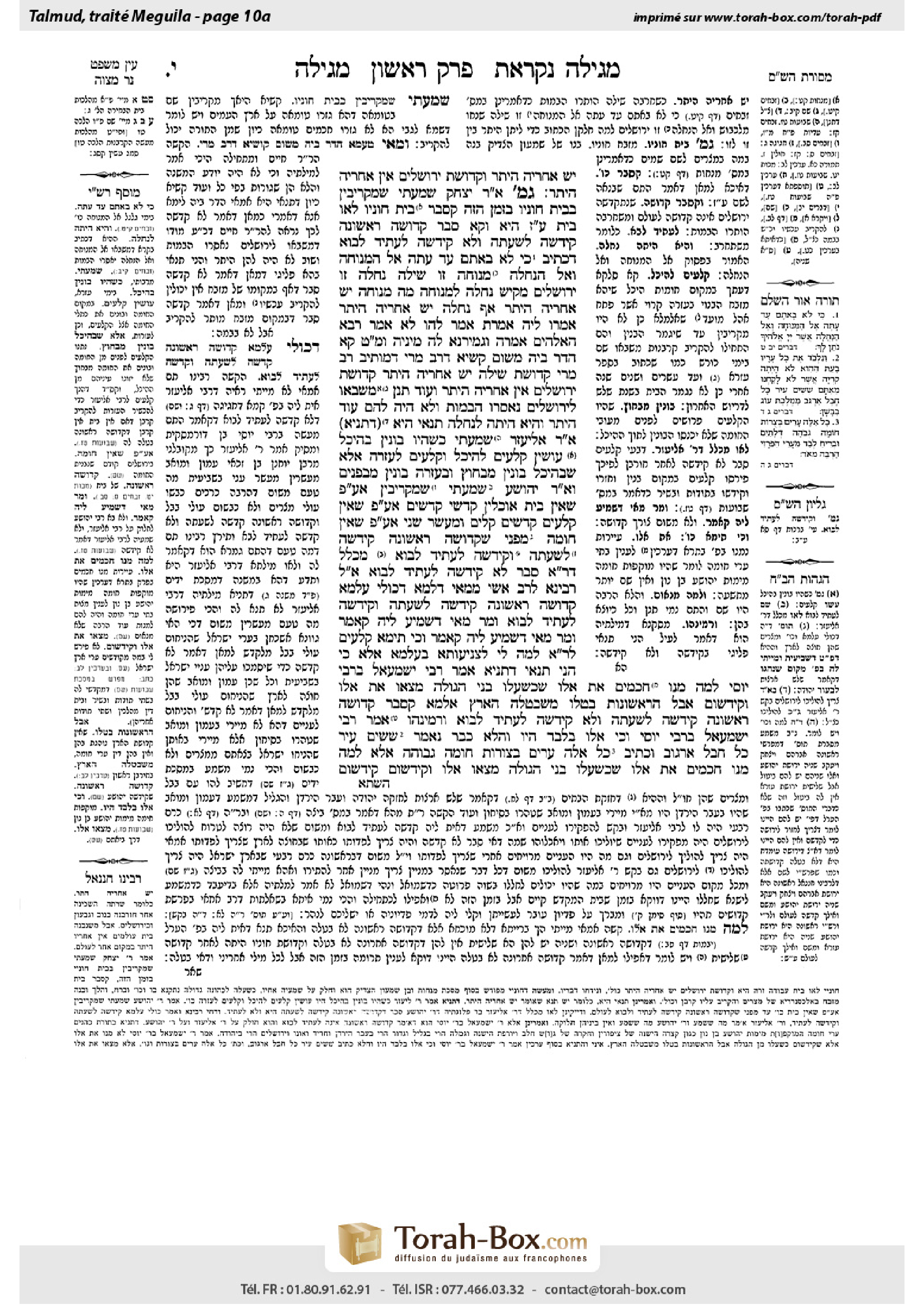
Megillah 10a: Talmud study for Daf Yomi
Daf Yomi is the daily study of one Talmud folio. Explore 37 tractates with scans, Hebrew text, Sefaria English and AI-generated French translations where annotated.
Passage selection and English or AI-generated French translation are available where the scan has annotations. Daf Study is independent of Torah-Box and Sefaria.
Browse Megillah · מגילה · All tractatesMegillah 10a text and translations
This page of Megillah includes the Aramaic text, an English translation and an AI-generated French translation, alongside the scan above.
מגילה י׳ א · Aramaic and Hebrew text
יֵשׁ אַחֲרֶיהָ הֶיתֵּר, וּקְדוּשַּׁת יְרוּשָׁלַיִם — אֵין אַחֲרֶיהָ הֶיתֵּר.
גְּמָ׳ אָמַר רַבִּי יִצְחָק: שָׁמַעְתִּי שֶׁמַּקְרִיבִין בְּבֵית חוֹנְיוֹ בִּזְמַן הַזֶּה. קָסָבַר: בֵּית חוֹנְיוֹ לָאו בֵּית עֲבוֹדָה זָרָה הִיא, וְקָא סָבַר: קְדוּשָּׁה רִאשׁוֹנָה — קִידְּשָׁה לִשְׁעָתָהּ וְלֹא קִידְּשָׁה לְעָתִיד לָבוֹא.
דִּכְתִיב: ״כִּי לֹא בָּאתֶם עַד עָתָּה אֶל הַמְּנוּחָה וְאֶל הַנַּחֲלָה״. ״מְנוּחָה״ — זוֹ שִׁילֹה, ״נַחֲלָה״ — זוֹ יְרוּשָׁלַיִם, מַקִּישׁ נַחֲלָה לִמְנוּחָה: מָה ״מְנוּחָה״ יֵשׁ אַחֲרֶיהָ הֶיתֵּר, אַף ״נַחֲלָה״ יֵשׁ אַחֲרֶיהָ הֶיתֵּר.
אֲמַרוּ לֵיהּ: אָמַרְתָּ? אֲמַר לְהוּ: לָא. אֲמַר רָבָא: הָאֱלֹהִים! אַמְרַהּ, וּגְמִירְנָא לַהּ מִינֵּיהּ.
וּמַאי טַעְמָא קָא הָדַר בֵּיהּ? מִשּׁוּם קֻשְׁיָא דְּרַב מָרִי. דְּמוֹתֵיב רַב מָרִי: קְדוּשַּׁת שִׁילֹה — יֵשׁ אַחֲרֶיהָ הֶיתֵּר. קְדוּשַּׁת יְרוּשָׁלַיִם — אֵין אַחֲרֶיהָ הֶיתֵּר. וְעוֹד תְּנַן: מִשֶּׁבָּאוּ לִירוּשָׁלַיִם נֶאֶסְרוּ הַבָּמוֹת, וְלֹא הָיָה לָהֶם עוֹד הֶיתֵּר, וְהִיא הָיְתָה נַחֲלָה.
תַּנָּאֵי הִיא. (דְּתַנְיָא) אָמַר רַבִּי אֱלִיעֶזֶר: שָׁמַעְתִּי כְּשֶׁהָיוּ בּוֹנִין בַּהֵיכָל, עוֹשִׂין קְלָעִים לַהֵיכָל וּקְלָעִים לָעֲזָרָה. אֶלָּא שֶׁבַּהֵיכָל בּוֹנִין מִבַּחוּץ, וּבָעֲזָרָה בּוֹנִין מִבִּפְנִים.
וְאָמַר רַבִּי יְהוֹשֻׁעַ: שָׁמַעְתִּי שֶׁמַּקְרִיבִין אַף עַל פִּי שֶׁאֵין בַּיִת, אוֹכְלִין קׇדְשֵׁי קָדָשִׁים אַף עַל פִּי שֶׁאֵין קְלָעִים, קָדָשִׁים קַלִּים וּמַעֲשֵׂר שֵׁנִי אַף עַל פִּי שֶׁאֵין חוֹמָה, מִפְּנֵי שֶׁקְּדוּשָּׁה רִאשׁוֹנָה קִידְּשָׁה לִשְׁעָתָהּ וְקִידְּשָׁה לֶעָתִיד לָבוֹא. מִכְּלָל דְּרַבִּי אֱלִיעֶזֶר סָבַר לֹא קִידְּשָׁה לֶעָתִיד לָבוֹא.
אֲמַר לֵיהּ רָבִינָא לְרַב אָשֵׁי: מִמַּאי? דִּלְמָא דְּכוּלֵּי עָלְמָא קְדוּשָּׁה רִאשׁוֹנָה קִידְּשָׁה לִשְׁעָתָהּ וְקִידְּשָׁה לֶעָתִיד לָבוֹא, וּמָר — מַאי דִּשְׁמִיעַ לֵיהּ קָאָמַר, וּמָר — מַאי דִּשְׁמִיעַ לֵיהּ קָאָמַר. וְכִי תֵּימָא: קְלָעִים לְרַבִּי אֱלִיעֶזֶר לְמָה לִי? לִצְנִיעוּתָא בְּעָלְמָא.
אֶלָּא כִּי הָנֵי תַּנָּאֵי, דְּתַנְיָא: אָמַר רַבִּי יִשְׁמָעֵאל בְּרַבִּי יוֹסֵי: לָמָּה מָנוּ חֲכָמִים אֶת אֵלּוּ? שֶׁכְּשֶׁעָלוּ בְּנֵי הַגּוֹלָה מָצְאוּ אֶת אֵלּוּ וְקִידְּשׁוּם, אֲבָל הָרִאשׁוֹנוֹת בָּטְלוּ מִשֶּׁבָּטְלָה הָאָרֶץ. אַלְמָא קָסָבַר: קְדוּשָּׁה רִאשׁוֹנָה קִידְּשָׁה לִשְׁעָתָהּ וְלֹא קִידְּשָׁה לֶעָתִיד לָבוֹא.
וּרְמִינְהוּ, אָמַר רַבִּי יִשְׁמָעֵאל בְּרַבִּי יוֹסֵי: וְכִי אֵלּוּ בִּלְבַד הָיוּ? וַהֲלֹא כְּבָר נֶאֱמַר: ״שִׁשִּׁים עִיר כׇּל חֶבֶל אַרְגּוֹב״, וּכְתִיב: ״כָּל אֵלֶּה עָרִים בְּצוּרוֹת חוֹמָה גְבוֹהָה״. אֶלָּא לָמָּה מָנוּ חֲכָמִים אֶת אֵלּוּ? שֶׁכְּשֶׁעָלוּ בְּנֵי הַגּוֹלָה מָצְאוּ אֵלּוּ וְקִידְּשׁוּם.
קִידְּשׁוּם?!
Megillah 10a · English translation
after the Tabernacle was destroyed, there is permission to sacrifice offerings on improvised altars. But with regard to the sanctity of Jerusalem, after the Temple was destroyed, there is no permission to sacrifice offerings on improvised altars, as the prohibition remains intact.
GEMARA: Rabbi Yitzḥak said: I heard that one sacrifices offerings in the temple of Onias in Egypt at the present time. The Gemara cites the basis for the statement of Rabbi Yitzḥak. He maintains that the temple of Onias is not a house of idol worship but rather a temple devoted to the service of God, and he maintains that the initial consecration sanctified Jerusalem for its time and did not sanctify Jerusalem forever. Therefore, after the destruction of the Temple, the sanctity of Jerusalem lapsed and the sacrifice of offerings elsewhere was no longer prohibited. For these reasons it was permitted to sacrifice offerings in the temple of Onias after the Temple was destroyed.
The Gemara cites the source of this halakha. It is as it is written: “For you are not as yet come to the rest and to the inheritance” (Deuteronomy 12:9), which is interpreted: “Rest,” this is Shiloh; “inheritance,” this is Jerusalem. The verse juxtaposes and likens inheritance to rest: Just as in the place of rest, Shiloh, after its destruction there is permission to sacrifice offerings on improvised altars, so too in the place of inheritance, Jerusalem, after its destruction there is permission to sacrifice offerings on improvised altars.
The Gemara reports that the other Sages said to Rabbi Yitzḥak: Did you say this halakha with regard to the temple of Onias? He said to them: No, I did not say that. Rava said, reinforcing his assertion with an oath: By God! Rabbi Yitzḥak did in fact say this, and I myself learned it from him, but he later retracted this ruling.
The Gemara asks: And what is the reason he retracted his ruling? The Gemara explains: It is due to the difficulty raised by Rav Mari, as Rav Mari raised an objection from the mishna: With regard to the sanctity of Shiloh, after the Tabernacle was destroyed there is permission to sacrifice offerings on improvised altars. But with regard to the sanctity of Jerusalem, after the Temple was destroyed there is no permission to sacrifice offerings on improvised altars. And furthermore, we learned in a mishna (Zevaḥim 112b): Once they came to Jerusalem, improvised altars were prohibited, and they did not again have permission to do so, and Jerusalem became the everlasting inheritance.
The Gemara comments: This matter is subject to a dispute between tanna’im, as it is taught in a mishna (Eduyyot 8:6): Rabbi Eliezer said: I heard that when they were building the Sanctuary in the Second Temple, they fashioned temporary hangings for the Sanctuary and temporary hangings for the courtyard to serve as partitions until construction of the stone walls was completed. The difference was only that in building the Sanctuary, the workers built the walls outside the hangings, without entering, and in the courtyard, the workers built the walls inside the hangings.
And Rabbi Yehoshua said: I heard that one sacrifices offerings on the altar even though there is no Temple, one eats offerings of the most sacred order in the Temple courtyard even if there are no hangings, and one eats offerings of lesser sanctity and second tithe produce in Jerusalem even if there is no wall surrounding the city, due to the fact that the initial consecration sanctified Jerusalem for its time and also sanctified Jerusalem forever. Even if the walls do not exist, the sanctity remains intact. The Gemara concludes: From the fact that Rabbi Yehoshua based his opinion on the principle that the initial sanctification sanctified Jerusalem forever, by inference one can conclude that Rabbi Eliezer holds: It did not sanctify Jerusalem forever. Apparently, this issue is subject to a dispute between tanna’im.
Ravina said to Rav Ashi: From where do you draw this inference? Perhaps everyone maintains that the initial consecration sanctified Jerusalem for its time and also sanctified Jerusalem forever. And one Sage, Rabbi Eliezer, stated that tradition, which he heard from his teachers, and one Sage, Rabbi Yehoshua, stated that tradition, which he heard from his teachers, and there is no dispute between them. And if you would say: Why then do I need hangings at all according to Rabbi Eliezer? The original sanctity remained when Jerusalem was not surrounded by walls, and the presence or absence of hangings is irrelevant as well. The Gemara answers: The hangings were established merely for seclusion, as it would have been unbecoming for the activity in this most sacred venue to be visible to all.
Rather, this matter is subject to the dispute between these tanna’im, as it is taught in a baraita that Rabbi Yishmael, son of Rabbi Yosei, said: Why did the Sages enumerate these nine cities in tractate Arakhin as cities walled since the days of Joshua, son of Nun? Weren’t there many more? As, when the exiles ascended to Eretz Yisrael from Babylonia, they discovered these cities and consecrated them as walled cities; but the sanctity of the first walled cities enumerated in the book of Joshua was negated when settlement in the land was negated and the Jewish people were exiled. Apparently, Rabbi Yishmael, son of Rabbi Yosei, maintains: The initial consecration sanctified Jerusalem for its time only and did not sanctify Jerusalem forever.
The Gemara raises a contradiction from a different baraita. Rabbi Yishmael, son of Rabbi Yosei, said: Were these cities that were enumerated in tractate Arakhin the only walled cities? Wasn’t it already stated: “Sixty cities, all the region of Argov” (Deuteronomy 3:4), and concerning these cities it is written: “All these cities were fortified with high walls, gates and bars” (Deuteronomy 3:5), indicating that there were a great number of walled cities? Rather, why then did the Sages enumerate these specific cities? It is due to the fact that when the exiles ascended from Babylonia they discovered these and consecrated them as walled cities.
The Gemara asks: Consecrated them? If their sanctity remained, why was it necessary to consecrate them?
Megillah 10a · Traduction française (IA)
Après la destruction du Tabernacle, il est permis de sacrifier des offrandes sur des autels improvisés. Mais en ce qui concerne la sainteté de Jérusalem, après la destruction du Temple, il n’est pas permis de sacrifier des offrandes sur des autels improvisés, car l’interdiction reste en vigueur.
GUEMARA : Rabbi Yitzḥak a dit : « J’ai entendu qu’à l’époque actuelle, on sacrifie des offrandes dans le temple d’Onias, en Égypte. » La Guemara expose le fondement de la déclaration de Rabbi Yitzḥak. Selon lui, le temple d’Onias n’est pas un lieu de culte idolâtre, mais un temple consacré au service de Dieu ; de plus, la consécration initiale a sanctifié Jérusalem pour son époque, mais pas pour toujours. Par conséquent, après la destruction du Temple, la sainteté de Jérusalem a pris fin et il n’était plus interdit de sacrifier des offrandes ailleurs. Pour ces raisons, il était permis de sacrifier des offrandes dans le temple d’Onias après la destruction du Temple.
La Guemara cite la source de cette halakha. En effet, il est écrit : « Car vous n’êtes pas encore arrivés au repos et à l’héritage » (Deutéronome 12:9), ce qui s’interprète ainsi : « Repos », c’est Shilo ; « héritage », c’est Jérusalem. Le verset juxtapose l’héritage et le repos et les assimile : de même qu’à Shilo, le lieu du repos, après sa destruction, il est permis de sacrifier des offrandes sur des autels improvisés, de même à Jérusalem, le lieu de l’héritage, après sa destruction, il est permis de sacrifier des offrandes sur des autels improvisés.
La Guemara rapporte que les autres Sages demandèrent à Rabbi Yitzḥak : « As-tu énoncé cette halakha au sujet du temple d’Onias ? » Il leur répondit : « Non, je n’ai pas dit cela. » Rava affirma, en renforçant ses propos par un serment : « Par Dieu ! Rabbi Yitzḥak a bel et bien dit cela, et je l’ai moi-même appris de lui, mais il est ensuite revenu sur cette décision. »
La Guemara demande : Pour quelle raison est-il revenu sur sa décision ? Elle explique : en raison de la difficulté soulevée par Rav Mari, qui objecta en citant la Michna : En ce qui concerne la sainteté de Shilo, après la destruction du Tabernacle, il est permis de sacrifier des offrandes sur des autels improvisés. Mais en ce qui concerne la sainteté de Jérusalem, après la destruction du Temple, il n’est pas permis de sacrifier des offrandes sur des autels improvisés. De plus, nous avons appris dans une Michna (Zevaḥim 112b) : « Dès qu’ils arrivèrent à Jérusalem, les autels improvisés furent interdits et ils ne furent plus jamais autorisés à y recourir ; Jérusalem devint l’héritage éternel. »
La Guemara fait remarquer que ce sujet fait l’objet d’une controverse entre tannaïm, comme il est enseigné dans une Michna (Eduyyot 8:6) : Rabbi Eliezer a dit : « J’ai entendu que, lorsqu’ils construisaient le Sanctuaire à l’époque du Second Temple, ils dressèrent des tentures provisoires pour le Sanctuaire et pour le parvis, afin de servir de cloisons jusqu’à l’achèvement des murs de pierre. La seule différence était que, pour la construction du Sanctuaire, les ouvriers bâtissaient les murs à l’extérieur des tentures, sans y entrer, tandis que, dans le parvis, les ouvriers bâtissaient les murs à l’intérieur des tentures. »
Et Rabbi Yehoshua a dit : « J’ai entendu que l’on sacrifie des offrandes sur l’autel même en l’absence de Temple, que l’on mange des offrandes de très haute sainteté dans le parvis du Temple même en l’absence de tentures, et que l’on mange des offrandes de moindre sainteté et des produits de la seconde dîme à Jérusalem même en l’absence d’un mur entourant la ville, car la consécration initiale a sanctifié Jérusalem pour son époque et aussi pour toujours. » Même si les murs n’existent plus, la sainteté demeure. La Guemara conclut : puisque Rabbi Yehoshua fonde son opinion sur le principe selon lequel la consécration initiale a sanctifié Jérusalem pour toujours, on peut en déduire que Rabbi Eliezer soutient qu’elle ne l’a pas sanctifiée pour toujours. Apparemment, cette question fait l’objet d’une controverse entre tannaïm.
Ravina dit à Rav Ashi : « D’où tires-tu cette déduction ? Peut-être tous admettent-ils que la consécration initiale a sanctifié Jérusalem pour son époque et aussi pour toujours. Un Sage, Rabbi Eliezer, a rapporté la tradition qu’il avait entendue de ses maîtres, et un autre Sage, Rabbi Yehoshua, a rapporté la tradition qu’il avait entendue de ses maîtres ; il n’y a donc pas de controverse entre eux. Et si tu dis : pourquoi, selon Rabbi Eliezer, fallait-il alors des tentures ? La sainteté originelle s’est maintenue même lorsque Jérusalem n’était pas entourée de murailles ; la présence ou l’absence de tentures est également sans importance. » La Guemara répond : « Les tentures furent installées uniquement pour préserver l’intimité, car il aurait été inconvenant que les activités de ce lieu très saint soient visibles de tous. »
En réalité, ce sujet fait l’objet d’une controverse entre ces tannaïm, comme il est enseigné dans une baraïta : Rabbi Yishmael, fils de Rabbi Yosei, a dit : « Pourquoi les Sages ont-ils recensé ces neuf villes, dans le traité Arakhin, comme des villes fortifiées depuis l’époque de Josué, fils de Noun ? N’y en avait-il pas beaucoup d’autres ? En effet, lorsque les exilés remontèrent de Babylone en Eretz Israël, ils découvrirent ces villes et les consacrèrent comme villes fortifiées ; mais la sainteté des premières villes fortifiées recensées dans le livre de Josué fut annulée lorsque l’occupation du pays prit fin et que le peuple juif fut exilé. » Apparemment, Rabbi Yishmael, fils de Rabbi Yosei, soutient que la consécration initiale a sanctifié Jérusalem uniquement pour son époque et ne l’a pas sanctifiée pour toujours.
La Guemara soulève une contradiction à partir d’une autre baraïta. Rabbi Yishmael, fils de Rabbi Yosei, a dit : « Ces villes recensées dans le traité Arakhin étaient-elles les seules villes fortifiées ? N’est-il pas déjà dit : “Soixante villes, toute la région d’Argov” (Deutéronome 3:4), et, au sujet de ces villes, écrit : “Toutes ces villes étaient fortifiées de hautes murailles, avec des portes et des barres” (Deutéronome 3:5), ce qui indique qu’il y avait un grand nombre de villes fortifiées ? Pourquoi, alors, les Sages ont-ils recensé ces villes en particulier ? C’est parce que, lorsque les exilés remontèrent de Babylone, ils les découvrirent et les consacrèrent comme villes fortifiées. »
La Guemara demande : « Les consacrèrent ? Si leur sainteté s’était maintenue, pourquoi était-il nécessaire de les consacrer ? »
Traduction française générée par IA à partir de l’édition anglaise de Sefaria. Vérifie toujours un passage avec le texte source.
Text from Sefaria: William Davidson Edition - Vocalized Aramaic (CC BY NC); William Davidson Edition - English (CC BY NC).