Meilah 9b: Talmud study for Daf Yomi
Daf Yomi is the daily study of one Talmud folio. Explore 37 tractates with scans, Hebrew text, Sefaria English and AI-generated French translations where annotated.
Passage selection and English or AI-generated French translation are available where the scan has annotations. Daf Study is independent of Torah-Box and Sefaria.
Browse Meilah · מעילה · All tractatesMeilah 9b text and translations
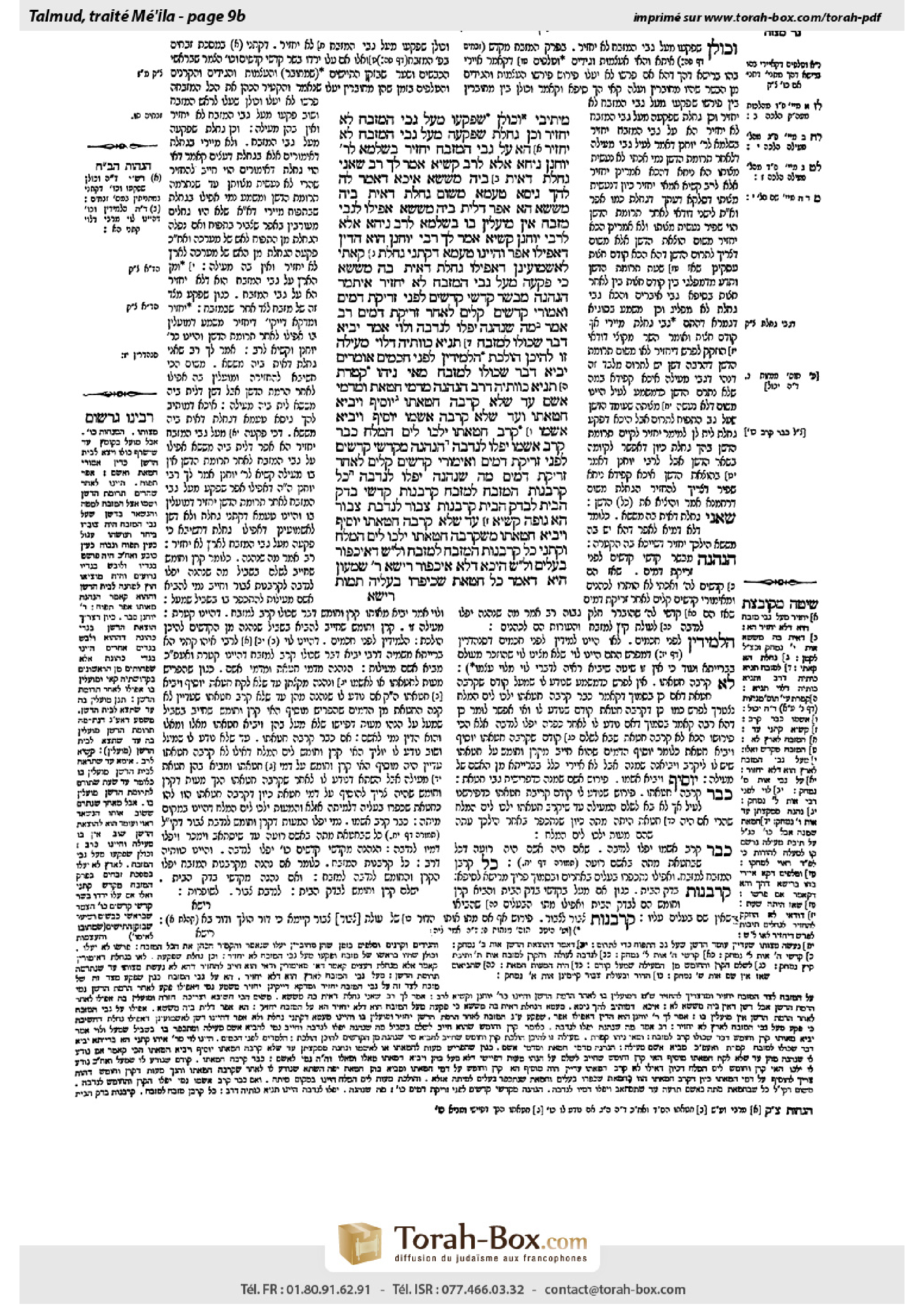
This page of Meilah includes the Aramaic text, an English translation and an AI-generated French translation, alongside the scan above.
מעילה ט׳ ב · Aramaic and Hebrew text
מֵיתִיבִי: וְכוּלָּן, שֶׁפָּקְעוּ מֵעַל גַּבֵּי הַמִּזְבֵּחַ – לֹא יַחֲזִיר, וְכֵן גַּחֶלֶת שֶׁפָּקְעָה מֵעַל גַּבֵּי הַמִּזְבֵּחַ – לֹא יַחֲזִיר. הָא עַל גַּבֵּי הַמִּזְבֵּחַ – יַחֲזִיר.
בִּשְׁלָמָא לְרַבִּי יוֹחָנָן, נִיחָא, אֶלָּא לְרַב, קַשְׁיָא! אָמַר לְךָ רַב: שָׁאנֵי גַּחֶלֶת, דְּאִית בַּיהּ מְשָׁשָׁא.
אִיכָּא דְּאָמַר לַהּ לְהָךְ גִּיסָא: טַעְמָא מִשּׁוּם גַּחֶלֶת, דְּאִית בַּיהּ מְשָׁשָׁא, הָא אֵפֶר דְּלֵית בֵּיהּ מְשָׁשָׁא, אֲפִילּוּ לְגַבֵּי מִזְבֵּחַ – אֵין מוֹעֲלִין בּוֹ. בִּשְׁלָמָא לְרַב, נִיחָא, אֶלָּא לְרַבִּי יוֹחָנָן, קַשְׁיָא!
אָמַר לָךְ רַבִּי יוֹחָנָן: הוּא הַדִּין דַּאֲפִילּוּ אֵפֶר, וְהַיְינוּ טַעְמָא דְּקָתָנֵי גַּחֶלֶת – קָאָתֵי לְאַשְׁמוֹעִינַן דַּאֲפִילּוּ גַּחֶלֶת, דְּאִית בַּהּ מְשָׁשָׁא, כִּי פָּקְעָה מֵעַל גַּבֵּי הַמִּזְבֵּחַ – לֹא יַחֲזִיר.
אִיתְּמַר: הַנֶּהֱנֶה מִבְּשַׂר קׇדְשֵׁי קָדָשִׁים לִפְנֵי זְרִיקַת דָּמִים, וְאֵמוּרֵי קָדָשִׁים קַלִּים לְאַחַר זְרִיקַת דָּמִים, רַב אָמַר: מַה שֶׁנֶּהֱנָה – יִפְּלוּ לִנְדָבָה. וְלֵוִי אָמַר: יָבִיא דָּבָר שֶׁכּוּלּוֹ לַמִּזְבֵּחַ.
תַּנְיָא כְּווֹתֵיהּ דְּלֵוִי: מְעִילָה זוֹ לְהֵיכָן הוֹלֶכֶת? הַלְּמֵידִין לִפְנֵי חֲכָמִים אוֹמְרִים: יָבִיא דָּבָר שֶׁכּוּלּוֹ לַמִּזְבֵּחַ. מַאי נִיהוּ? קְטֹרֶת.
תַּנְיָא כְּווֹתֵיהּ דְּרַב: הַנֶּהֱנֶה מִדְּמֵי חַטָּאת וּמִדְּמֵי אָשָׁם, עַד שֶׁלֹּא קָרְבָה חַטָּאתוֹ – יוֹסִיף וְיָבִיא חַטָּאתוֹ. וְעַד שֶׁלֹּא קָרְבָה אֲשָׁמוֹ – יוֹסִיף וְיָבִיא אֲשָׁמוֹ. קָרַב חַטָּאתוֹ – יֵלְכוּ לְיָם הַמֶּלַח. כְּבָר קָרַב אֲשָׁמוֹ – יִפְּלוּ לִנְדָבָה.
הַנֶּהֱנֶה מִקׇּדְשֵׁי קָדָשִׁים לִפְנֵי זְרִיקַת דָּמִים, וְאֵימוּרֵי קָדָשִׁים קַלִּים לְאַחַר זְרִיקַת דָּמִים – מַה שֶּׁנֶּהֱנָה יִפְּלוּ לִנְדָבָה. כׇּל קׇרְבְּנוֹת הַמִּזְבֵּחַ – לַמִּזְבֵּחַ. קׇרְבְּנוֹת קׇדְשֵׁי בֶּדֶק הַבַּיִת – לְבֶדֶק הַבַּיִת. קׇרְבְּנוֹת צִבּוּר – לְנִדְבַת צִבּוּר.
הָא גּוּפַהּ קַשְׁיָא, עַד שֶׁלֹּא קָרְבָה חַטָּאתוֹ – יוֹסִיף וְיָבִיא חַטָּאתוֹ, מִשֶּׁקָּרְבָה חַטָּאתוֹ – יֵלְכוּ לְיָם הַמֶּלַח. וְקָתָנֵי כׇּל קׇרְבְּנוֹת הַמִּזְבֵּחַ – לַמִּזְבֵּחַ, וְלָא שְׁנָא דְּאִיכַּפּוּר בְּעָלִים, וְלָא שְׁנָא הֵיכָא דְּלָא אִיכַּפּוּר!
רֵישָׁא רַבִּי שִׁמְעוֹן הִיא, דְּאָמַר: כׇּל חַטָּאת שֶׁכִּיפְּרוּ בְּעָלֶיהָ – תָּמוּת.
Meilah 9b · English translation
The Gemara raises an objection to Rav’s explanation from a mishna (Zevaḥim 86a): And all of those unfit offerings, with regard to which it was taught that if they ascended to the altar they do not descend, in a case where they were dislodged from upon the altar, the priest does not restore them to the altar. And likewise, with regard to an ember that was dislodged from upon the altar, the priest does not restore it to the altar. It can be inferred from the mishna that if the ember was still on the altar, then the priest must restore it.
The Gemara explains the objection: Granted, according to Rabbi Yoḥanan this works out well, as he maintains that even after the shovelful of ashes has been removed, an ember on the pile of ashes still retains its sanctity. But according to Rav this is difficult. The Gemara answers that Rav could have said to you: An ember is different, as it has substance [meshasha] and is therefore still fit to be burned on the altar.
There is a Sage who stated this objection in the opposite manner: The mishna indicates that the reason that the priest must return it to the altar is because it is an ember, and that it has substance. It can be inferred from this that one who derives benefit from ash, which does not have substance, is not liable for misuse of consecrated property even when it is on the top of the altar. Granted, according to Rav this works out well, but according to Rabbi Yoḥanan it is difficult.
The Gemara answers that Rabbi Yoḥanan could have said to you: The same is true that even ash that was dislodged must be returned. And this is the reason that the mishna teaches an ember, and not ash: It is coming to teach us that even in the case of an ember, which has substance, if it is dislodged from upon the altar the priest does not return it.
§ One of the halakhot of misuse is that the violator must pay the value of the benefit he derived and add an extra one-fifth. It was stated that there is a dispute between amora’im with regard to this money: In the case of one who derives benefit from meat of an offering of the most sacred order before the sprinkling of the blood on the altar, or who derives benefit from sacrificial portions, such as the fats of offerings of lesser sanctity, after the sprinkling of the blood, Rav says: The value of that benefit which he derived is allocated for communal gift offerings, and Levi says: One must bring an item that is entirely consumed on the altar, e.g., incense. One does not bring a burnt offering with this money, as the hide of a burnt offering belongs to the priests.
It is taught in a baraita in accordance with the opinion of Levi: This money paid for misuse of consecrated items, to where does it go? The Rabbis who are called: Those who learn before the Sages, say: One must bring an item that is entirely consumed on the altar, and what is that? Incense, which is burned on the altar in its entirety.
It is taught in another baraita in accordance with the opinion of Rav: In the case of one who derives benefit from money set aside for the purchase of a sin offering or set aside as money set aside for the purchase of a guilt offering, if he pays before his sin offering is sacrificed he must add the amount of the benefit he derived and an additional fifth and bring with that money a more expensive animal as his sin offering. And likewise, if he pays before his guilt offering is sacrificed, he must add the amount of the benefit he derived and an additional fifth and bring with that money a more expensive animal as his guilt offering. If his sin offering has already been sacrificed, the money is cast into the Dead Sea. If his guilt offering has already been sacrificed, the money is allocated for communal gift offerings.
The baraita continues: One who derives benefit from meat of an offering of the most sacred order before the sprinkling of the blood on the altar, or if he derives benefit from sacrificial portions, such as the fats of offerings of lesser sanctity, after the sprinkling of the blood, the value of that benefit which he derived is allocated for communal gift offerings. The baraita summarizes: The reimbursement for misuse of all offerings which are sacrificed on the altar is used to purchase items for the altar, whereas the reimbursement for misuse of all offerings which are consecrated for Temple maintenance is donated to Temple maintenance. And the reimbursement for misuse of all communal offerings is allocated for communal gift offerings.
The Gemara notes that this baraita itself is difficult, i.e., it is apparently self-contradictory. In the first clause it teaches that if he pays before his sin offering is sacrificed he must add the amount of the benefit he derived and an additional fifth and bring a more expensive animal as his sin offering, and if his sin offering has already been sacrificed the money is cast into the Dead Sea. But it is taught in the latter clause of the baraita: The reimbursement for misuse of all offerings that are sacrificed on the altar must be used to purchase items for the altar. The Gemara further explains the contradiction: And it can be inferred from this last statement that there is no difference if the owner has already achieved atonement through his sin offering and there is no difference if the owner has not yet achieved atonement through his sin offering.
The Gemara answers that the first clause is in accordance with the opinion of Rabbi Shimon, who says: Any sin offering whose owners achieved atonement by means of another animal must be left to die. Therefore, if the owner has achieved atonement, the money for misuse must be cast into the Dead Sea.
Meilah 9b · Traduction française (IA)
La Guemara soulève une objection à l’explication de Rav à partir d’une Michna (Zévaḥim 86a) : « Quant à toutes ces offrandes impropres, dont il a été enseigné que, si elles sont montées sur l’autel, elles n’en descendent pas, si elles en sont tombées, le prêtre ne les remet pas sur l’autel. De même, si une braise est tombée de l’autel, le prêtre ne la remet pas sur l’autel. » On peut déduire de la Michna que, si la braise se trouve encore sur l’autel, le prêtre doit l’y remettre.
La Guemara explique l’objection : cela s’accorde bien avec l’opinion de Rabbi Yoḥanan, qui estime que même après le retrait de la pelle de cendres, une braise située sur le tas de cendres conserve sa sainteté. Mais, selon Rav, cela pose difficulté. La Guemara répond que Rav aurait pu te dire : une braise est différente, car elle a une consistance [meshasha] et peut donc encore être brûlée sur l’autel.
Un Sage a formulé cette objection en sens inverse : la Michna indique que le prêtre doit la remettre sur l’autel parce qu’il s’agit d’une braise, qui a une consistance. On peut en déduire que celui qui tire profit de cendres, qui n’ont pas de consistance, n’est pas passible pour usage profane d’un bien consacré, même lorsqu’elles se trouvent sur le dessus de l’autel. Cela s’accorde bien avec l’opinion de Rav, mais pose difficulté selon Rabbi Yoḥanan.
La Guemara répond que Rabbi Yoḥanan aurait pu te dire : il en va de même pour des cendres tombées, qu’il faut remettre sur l’autel. Si la Michna enseigne le cas d’une braise et non celui de cendres, c’est pour nous apprendre que même une braise, qui a une consistance, n’est pas remise sur l’autel par le prêtre si elle en est tombée.
§ L’une des halakhot relatives à l’usage profane d’un bien consacré veut que le contrevenant paie la valeur du profit qu’il en a tiré, augmentée d’un cinquième. Un différend entre amoraïm a été rapporté au sujet de cette somme : dans le cas de celui qui tire profit de la viande d’une offrande de sainteté éminente avant l’aspersion du sang sur l’autel, ou de parties sacrificielles, comme les graisses d’offrandes de sainteté moindre, après l’aspersion du sang, Rav dit que la valeur du profit tiré est affectée à des offrandes volontaires communautaires, tandis que Levi dit qu’il faut apporter un élément entièrement consumé sur l’autel, par exemple de l’encens. On n’apporte pas d’holocauste avec cet argent, car la peau d’un holocauste revient aux prêtres.
Une baraïta est enseignée conformément à l’opinion de Levi : où va l’argent versé pour l’usage profane d’objets consacrés ? Les Sages appelés « ceux qui étudient devant les Sages » disent : il faut apporter un élément entièrement consumé sur l’autel. Et quel est cet élément ? L’encens, qui est entièrement brûlé sur l’autel.
Une autre baraïta est enseignée conformément à l’opinion de Rav : si quelqu’un tire profit d’argent mis de côté pour acheter un sacrifice expiatoire ou d’argent mis de côté pour acheter un sacrifice de culpabilité, et qu’il paie avant que son sacrifice expiatoire soit offert, il doit ajouter à la somme la valeur du profit qu’il a tiré ainsi qu’un cinquième supplémentaire, puis acheter avec cet argent un animal plus coûteux pour son sacrifice expiatoire. De même, s’il paie avant que son sacrifice de culpabilité soit offert, il doit ajouter à la somme la valeur du profit qu’il a tiré ainsi qu’un cinquième supplémentaire, puis acheter avec cet argent un animal plus coûteux pour son sacrifice de culpabilité. Si son sacrifice expiatoire a déjà été offert, l’argent est jeté dans la mer Morte. Si son sacrifice de culpabilité a déjà été offert, l’argent est affecté à des offrandes volontaires communautaires.
La baraïta poursuit : celui qui tire profit de la viande d’une offrande de sainteté éminente avant l’aspersion du sang sur l’autel, ou de parties sacrificielles, comme les graisses d’offrandes de sainteté moindre, après l’aspersion du sang, affecte la valeur du profit tiré à des offrandes volontaires communautaires. La baraïta résume : le remboursement pour l’usage profane de toutes les offrandes sacrifiées sur l’autel sert à acheter des éléments destinés à l’autel, tandis que le remboursement pour l’usage profane de toutes les offrandes consacrées à l’entretien du Temple est versé à cet entretien. Quant au remboursement pour l’usage profane de toutes les offrandes communautaires, il est affecté à des offrandes volontaires communautaires.
La Guemara relève que cette baraïta elle-même pose difficulté, c’est-à-dire qu’elle semble se contredire. Dans la première partie, elle enseigne que, s’il paie avant que son sacrifice expiatoire soit offert, il doit ajouter à la somme la valeur du profit qu’il a tiré ainsi qu’un cinquième supplémentaire, puis acheter un animal plus coûteux pour son sacrifice expiatoire ; et que, si son sacrifice expiatoire a déjà été offert, l’argent est jeté dans la mer Morte. Or, dans la dernière partie de la baraïta, il est enseigné que le remboursement pour l’usage profane de toutes les offrandes sacrifiées sur l’autel doit servir à acheter des éléments destinés à l’autel. La Guemara précise encore la contradiction : on peut déduire de cette dernière déclaration qu’il n’y a pas de différence entre le cas où le propriétaire a déjà obtenu l’expiation grâce à son sacrifice expiatoire et celui où il ne l’a pas encore obtenue.
La Guemara répond que la première partie est conforme à l’opinion de Rabbi Shimon, qui dit : tout sacrifice expiatoire dont le propriétaire a obtenu l’expiation au moyen d’un autre animal doit être laissé mourir. Par conséquent, si le propriétaire a obtenu l’expiation, l’argent dû au titre de l’usage profane doit être jeté dans la mer Morte.
Traduction française générée par IA à partir de l’édition anglaise de Sefaria. Vérifie toujours un passage avec le texte source.
Text from Sefaria: William Davidson Edition - Vocalized Aramaic (CC BY NC); William Davidson Edition - English (CC BY NC).