Menachot 100b: Talmud study for Daf Yomi
Daf Yomi is the daily study of one Talmud folio. Explore 37 tractates with scans, Hebrew text, Sefaria English and AI-generated French translations where annotated.
Passage selection and English or AI-generated French translation are available where the scan has annotations. Daf Study is independent of Torah-Box and Sefaria.
Browse Menachot · מנחות · All tractatesMenachot 100b text and translations
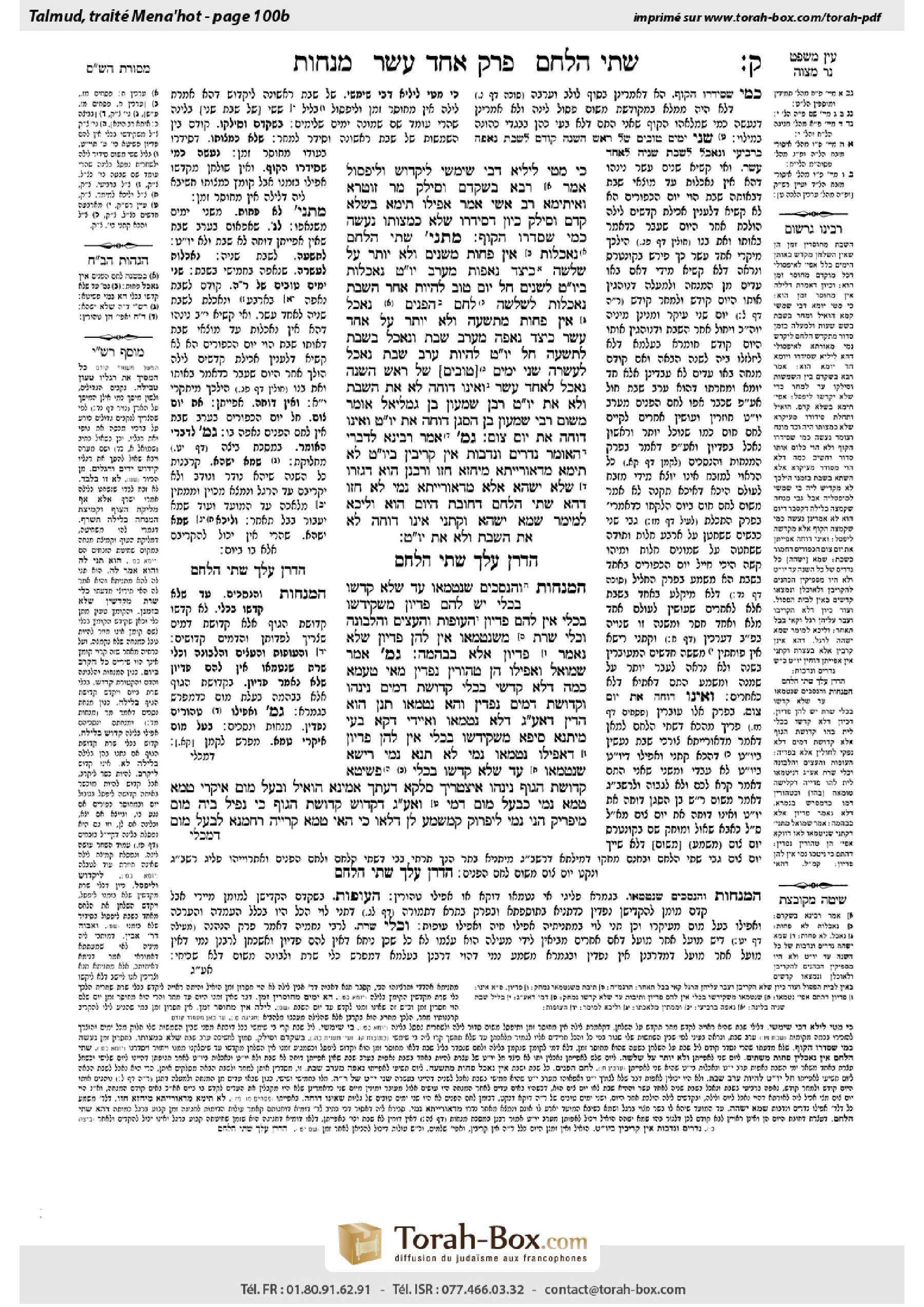
This page of Menachot includes the Aramaic text, an English translation and an AI-generated French translation, alongside the scan above.
מנחות ק׳ ב · Aramaic and Hebrew text
כִּי מָטֵי לֵילְיָא דְּבֵי שִׁימְשֵׁי לִיקְדּוֹשׁ וְלִיפְּסוֹל? אָמַר רָבָא: בְּשֶׁקָּדַם וְסִילֵּק.
מָר זוּטְרָא, וְאִיתֵּימָא רַב אָשֵׁי, אָמַר: אֲפִילּוּ תֵּימָא בְּשֶׁלֹּא קָדַם וְסִילֵּק, כֵּיוָן דְּסִידְּרוֹ שֶׁלֹּא כְּמִצְוָתוֹ – נַעֲשָׂה כְּמִי שֶׁסִּדְּרוֹ הַקּוֹף.
מַתְנִי׳ שְׁתֵּי הַלֶּחֶם נֶאֱכָלוֹת אֵין פָּחוֹת מִשְּׁנַיִם, וְלֹא יוֹתֵר עַל שְׁלֹשָׁה. כֵּיצַד? נֶאֱפוֹת מֵעֶרֶב יוֹם טוֹב – נֶאֱכָלוֹת בְּיוֹם טוֹב לִשְׁנַיִם. חָל יוֹם טוֹב לִהְיוֹת אַחַר הַשַּׁבָּת – נֶאֱכָלוֹת לִשְׁלֹשָׁה.
לֶחֶם הַפָּנִים נֶאֱכָל אֵין פָּחוֹת מִתִּשְׁעָה, וְלֹא יוֹתֵר עַל אַחַד עָשָׂר. כֵּיצַד? נֶאֱפֶה מֵעֶרֶב שַׁבָּת – וְנֶאֱכָל בְּשַׁבָּת לְתִשְׁעָה. חָל יוֹם טוֹב לִהְיוֹת עֶרֶב שַׁבָּת – נֶאֱכָל לַעֲשָׂרָה.
שְׁנֵי יָמִים [טוֹבִים] שֶׁל רֹאשׁ הַשָּׁנָה – נֶאֱכָל לְאַחַד עָשָׂר. וְאֵינוֹ דּוֹחֶה לֹא אֶת הַשַּׁבָּת וְלֹא אֶת יוֹם טוֹב. רַבָּן שִׁמְעוֹן בֶּן גַּמְלִיאֵל אוֹמֵר מִשּׁוּם רַבִּי שִׁמְעוֹן בֶּן הַסְּגָן: דּוֹחֶה אֶת יוֹם טוֹב, וְאֵינוֹ דּוֹחֶה אֶת יוֹם צוֹם.
גְּמָ׳ אָמַר רָבִינָא: לְדִבְרֵי הָאוֹמֵר נְדָרִים וּנְדָבוֹת אֵין קְרֵיבִין בְּיוֹם טוֹב, לָא תֵּימָא מִדְּאוֹרָיְיתָא מִיחְזָא חֲזוּ, וְרַבָּנַן הוּא דִּגְזַרוּ שֶׁלֹּא יְשַׁהֶא, אֶלָּא מִדְּאוֹרָיְיתָא נָמֵי לָא חֲזוּ.
דְּהָא שְׁתֵּי הַלֶּחֶם דְּחוֹבַת הַיּוֹם הוּא, וְלֵיכָּא לְמֵימַר שֶׁמָּא יְשַׁהֶא, וְקָתָנֵי אֵינוֹ דּוֹחֶה לֹא אֶת הַשַּׁבָּת וְלֹא אֶת יוֹם טוֹב.
הֲדַרַן עֲלָךְ שְׁתֵּי הַלֶּחֶם.
מַתְנִי׳ הַמְּנָחוֹת וְהַנְּסָכִים שֶׁנִּטְמְאוּ, עַד שֶׁלֹּא קָדְשׁוּ בִּכְלִי – יֵשׁ לָהֶם פִּדְיוֹן; מִשֶּׁקָּדְשׁוּ בִּכְלִי – אֵין לָהֶם פִּדְיוֹן.
הָעוֹפוֹת וְהָעֵצִים וְהַלְּבוֹנָה וּכְלֵי שָׁרֵת, מִשֶּׁנִּטְמְאוּ – אֵין לָהֶן פִּדְיוֹן, שֶׁלֹּא נֶאֱמַר פִּדְיוֹן אֶלָּא בִּבְהֵמָה.
גְּמָ׳ אָמַר שְׁמוּאֵל: וַאֲפִילּוּ הֵן טְהוֹרִין נִפְדִּין. מַאי טַעְמָא? כַּמָּה דְּלָא קָדְשִׁי בִּכְלִי – קְדוּשַּׁת דָּמִים נִינְהוּ, וּקְדוּשַּׁת דָּמִים נִפְדִּין.
וְהָא נִטְמְאוּ תְּנַן? הוּא הַדִּין דְּאַף עַל גַּב דְּלֹא נִטְמְאוּ, וְאַיְּידֵי דְּקָא בָּעֵי מִיתְנֵא סֵיפָא מִשֶּׁקָּדְשׁוּ בִּכְלִי אֵין לָהֶן פִּדְיוֹן, דַּאֲפִילּוּ נִטְמְאוּ נָמֵי לָא, תְּנָא נָמֵי רֵישָׁא שֶׁנִּטְמְאוּ עַד שֶׁלֹּא קָדְשׁוּ בִּכְלִי.
פְּשִׁיטָא, קְדוּשַּׁת הַגּוּף נִינְהוּ!
אִיצְטְרִיךְ, סָלְקָא דַּעְתָּךְ אָמֵינָא: הוֹאִיל וּבַעַל מוּם אִיקְּרִי ״טָמֵא״, טָמֵא נָמֵי כְּבַעַל מוּם דָּמֵי, וְאַף עַל גַּב דְּקָדוֹשׁ קְדוּשַּׁת הַגּוּף, כִּי נָפֵיל בֵּיהּ מוּם – מִיפְּרִיק, הָנֵי נָמֵי לִיפְּרוּק. קָמַשְׁמַע לַן, דְּלָאו כִּי הַאי ״טָמֵא״ קַרְיֵיהּ רַחֲמָנָא לְבַעַל מוּם,
Menachot 100b · English translation
if a rite performed during the night preceding its appointed time is not considered a rite whose time has not yet arrived, then when the night arrives, i.e., the twilight of Shabbat eve, the arrangement of loaves remaining on the Table should be consecrated and subsequently disqualified by being left overnight. Rava says: The mishna is referring to a case where the priest removed the shewbread from the Table before nightfall on Shabbat eve in order to prevent its consecration, and arranged it again the following day.
Mar Zutra, and some say Rav Ashi, said: Even if you say the mishna is referring to a case where one did not remove the shewbread before nightfall, the loaves are not consecrated by the Table. Since the priest arranged the shewbread at a time that was not in accordance with the procedure dictated by its mitzva, it is considered as though a monkey had arranged the shewbread, and it is not consecrated by the Table.
MISHNA: The two loaves that are brought on Shavuot are eaten by the priests no less than two days and no more than three days after they were baked. How so? They are generally baked on the eve of the festival of Shavuot and they are eaten on the day of the Festival, which is on the second day. If the Festival occurs after Shabbat, on Sunday, the loaves are baked on Friday, in which case they are eaten on the third day.
The shewbread is eaten no less than nine days and no more than eleven days after it is baked. How so? It is generally baked on Shabbat eve and eaten on the following Shabbat, which is on the ninth day. If a Festival occurs on Shabbat eve the shewbread is baked on the eve of the Festival, on Thursday, in which case it is eaten on the tenth day.
If the two festival days of Rosh HaShana occur on Thursday and Friday, the shewbread is baked on Wednesday, in which case it is eaten on the eleventh day. And this is because the preparation of the two loaves and the shewbread overrides neither Shabbat nor a Festival. Rabban Shimon ben Gamliel says in the name of Rabbi Shimon, son of the deputy High Priest: Their preparation overrides a Festival but does not override the fast day of Yom Kippur.
GEMARA: Ravina said: According to the statement of the one who says vow offerings and voluntary offerings may not be sacrificed on a Festival, do not say they are fit to be sacrificed on a Festival by Torah law and it is the Sages who decreed they may not be sacrificed. The Sages might have issued such a decree so that one would not delay sacrificing his offerings until he ascends to Jerusalem for the Festival. Rather, vow offerings and voluntary offerings are unfit to be sacrificed on a Festival also by Torah law.
Ravina explains this may be inferred from the mishna, as the offering of the two loaves is an obligation of the day of Shavuot. It is therefore not possible to say that the Sages decreed they may not be prepared on the Festival lest one delay bringing them. And yet the mishna teaches that baking and preparing the two loaves overrides neither Shabbat nor a Festival. All the more so that vow offerings and voluntary offerings, which do not need to be sacrificed specifically on a Festival, may not be sacrificed on a Festival by Torah law.
MISHNA: With regard to the fine flour for meal offerings or the wine for libations that became ritually impure, as long as they have not yet been consecrated in a service vessel and assumed inherent sanctity, their redemption is possible. If they are redeemed, their sanctity will be transferred to the redemption money. Once they have been consecrated in a service vessel and have assumed inherent sanctity, their redemption is no longer possible, and they are burned like any other offerings that became ritually impure.
With regard to consecrated birds, wood for the altar, frankincense, and service vessels, once they became ritually impure they have no possibility of redemption, as redemption of items consecrated for the altar was stated only with regard to a consecrated animal that developed a blemish, not with regard to other consecrated items.
GEMARA: According to the mishna, impure meal offerings and libations may be redeemed as long as they have not yet been placed in a service vessel. Shmuel says: Even if they are ritually pure, they also may be redeemed. What is the reason for this? As long as they have not been consecrated in a service vessel, they possess sanctity that inheres only in their value, and items whose sanctity inheres only in their value may be redeemed.
The Gemara asks: But didn’t we learn in the mishna: The meal offerings and libations that became ritually impure are redeemed? The Gemara answers: The same is true even if they had not become ritually impure. And the tanna mentions a case where they became ritually impure since he wants to teach the latter clause, which states: Once they were consecrated in a service vessel and have assumed inherent sanctity, they have no possibility of redemption, meaning that even when they became ritually impure and are disqualified from use as an offering, they still have no possibility of redemption. Therefore, the tanna also taught the first clause: That became ritually impure before they were consecrated in a service vessel.
With regard to flour or oil that has been consecrated in a service vessel, the Gemara asks: Isn’t it obvious that they are not redeemed, as they are consecrated with inherent sanctity?
The Gemara answers: It was necessary to state that items consecrated in a service vessel cannot be redeemed, as it may enter your mind to say: Since a blemished animal is called impure, as the Gemara will explain shortly, this analogy could be reversed and an impure animal could also have a status similar to that of a blemished animal. And just as in the case of a blemished animal, even though it is consecrated with inherent sanctity, when it develops a blemish it is redeemed, so too these impure items discussed in the mishna may also be redeemed despite their possessing inherent sanctity. Therefore, the tanna teaches us that it is not in this context that the Merciful One called a blemished animal “impure.”
Menachot 100b · Traduction française (IA)
Si un rite accompli pendant la nuit précédant le moment qui lui est fixé n’est pas considéré comme un rite accompli avant que son moment soit arrivé, alors, à la tombée de la nuit, c’est-à-dire au crépuscule de la veille de Chabbat, la disposition des pains restés sur la Table devrait être consacrée, puis invalidée parce qu’elle a passé la nuit. Rava dit : la Michna parle d’un cas où le prêtre a retiré les pains de proposition de la Table avant la tombée de la nuit, la veille de Chabbat, afin d’empêcher leur consécration, puis les a disposés de nouveau le lendemain.
Mar Zutra — et certains disent Rav Ashi — dit : même si l’on considère que la Michna parle d’un cas où l’on n’a pas retiré les pains de proposition avant la tombée de la nuit, les pains ne sont pas consacrés par la Table. Puisque le prêtre les a disposés à un moment qui ne respectait pas la procédure prescrite par leur mitsva, c’est comme si un singe les avait disposés ; ils ne sont donc pas consacrés par la Table.
MICHNA : Les deux pains apportés à Chavouot sont consommés par les prêtres au plus tôt deux jours et au plus tard trois jours après leur cuisson. Comment cela ? En règle générale, ils sont cuits la veille de la fête de Chavouot et consommés le jour de la fête, soit le deuxième jour. Si la fête tombe après Chabbat, un dimanche, les pains sont cuits le vendredi ; ils sont alors consommés le troisième jour.
Les pains de proposition sont consommés au plus tôt neuf jours et au plus tard onze jours après leur cuisson. Comment cela ? En règle générale, ils sont cuits la veille de Chabbat et consommés le Chabbat suivant, soit le neuvième jour. Si une fête tombe la veille de Chabbat, les pains de proposition sont cuits la veille de la fête, le jeudi ; ils sont alors consommés le dixième jour.
Si les deux jours de fête de Roch Hachana tombent un jeudi et un vendredi, les pains de proposition sont cuits le mercredi ; ils sont alors consommés le onzième jour. En effet, la préparation des deux pains et des pains de proposition ne repousse ni Chabbat ni une fête. Rabban Chimon ben Gamliel dit au nom de Rabbi Chimon, fils du grand prêtre adjoint : leur préparation repousse une fête, mais ne repousse pas le jour de jeûne de Yom Kippour.
GUEMARA : Ravina dit : selon celui qui affirme que les offrandes votives et volontaires ne peuvent pas être sacrifiées pendant une fête, ne dis pas qu’elles peuvent l’être selon la Torah, mais que les Sages l’ont interdit par décret. Les Sages auraient pu prendre un tel décret afin que l’on ne retarde pas le sacrifice de ses offrandes jusqu’à ce que l’on monte à Jérusalem pour la fête. Au contraire, selon la Torah également, les offrandes votives et volontaires ne peuvent pas être sacrifiées pendant une fête.
Ravina explique que l’on peut déduire cela de la Michna, car l’offrande des deux pains est une obligation du jour de Chavouot. On ne peut donc pas dire que les Sages aient décrété qu’ils ne pouvaient pas être préparés pendant la fête, de crainte que l’on retarde leur apport. Pourtant, la Michna enseigne que la cuisson et la préparation des deux pains ne repoussent ni Chabbat ni une fête. À plus forte raison, les offrandes votives et volontaires, qu’il n’est pas nécessaire de sacrifier précisément pendant une fête, ne peuvent pas être sacrifiées pendant une fête selon la Torah.
MICHNA : La fleur de farine destinée aux offrandes de farine ou le vin destiné aux libations qui sont devenus rituellement impurs peuvent être rachetés tant qu’ils n’ont pas encore été consacrés dans un ustensile de service et acquis une sainteté intrinsèque. Lorsqu’ils sont rachetés, leur sainteté est transférée à l’argent du rachat. Une fois consacrés dans un ustensile de service et dotés d’une sainteté intrinsèque, ils ne peuvent plus être rachetés ; ils sont alors brûlés comme toute autre offrande devenue rituellement impure.
Quant aux oiseaux consacrés, au bois destiné à l’autel, à l’encens et aux ustensiles de service, une fois devenus rituellement impurs, ils ne peuvent pas être rachetés. En effet, le rachat d’éléments consacrés à l’autel n’a été prévu qu’au sujet d’un animal consacré qui a développé un défaut, et non au sujet d’autres éléments consacrés.
GUEMARA : Selon la Michna, les offrandes de farine et les libations impures peuvent être rachetées tant qu’elles n’ont pas encore été placées dans un ustensile de service. Chmouel dit : même si elles sont rituellement pures, elles peuvent également être rachetées. Pour quelle raison ? Tant qu’elles n’ont pas été consacrées dans un ustensile de service, leur sainteté porte uniquement sur leur valeur ; or les éléments dont la sainteté porte uniquement sur la valeur peuvent être rachetés.
La Guemara demande : Mais n’avons-nous pas appris dans la Michna que les offrandes de farine et les libations devenues rituellement impures sont rachetées ? La Guemara répond : il en va de même même si elles ne sont pas devenues rituellement impures. Le tanna mentionne le cas où elles sont devenues rituellement impures parce qu’il veut enseigner la clause suivante, qui dit qu’une fois consacrées dans un ustensile de service et dotées d’une sainteté intrinsèque, elles ne peuvent plus être rachetées. Cela signifie que même lorsqu’elles sont devenues rituellement impures et sont disqualifiées comme offrandes, elles ne peuvent toujours pas être rachetées. C’est pourquoi le tanna a également enseigné la première clause, concernant celles qui sont devenues rituellement impures avant d’être consacrées dans un ustensile de service.
À propos de la farine ou de l’huile consacrée dans un ustensile de service, la Guemara demande : n’est-il pas évident qu’elles ne peuvent pas être rachetées, puisqu’elles sont dotées d’une sainteté intrinsèque ?
La Guemara répond : il était nécessaire d’enseigner que les éléments consacrés dans un ustensile de service ne peuvent pas être rachetés, car on aurait pu penser ceci : puisqu’un animal atteint d’un défaut est qualifié d’impur, comme la Guemara l’expliquera bientôt, on pourrait inverser cette analogie et considérer qu’un animal impur a lui aussi le statut d’un animal atteint d’un défaut. Or, de même qu’un animal atteint d’un défaut est racheté lorsqu’il développe un défaut, bien qu’il soit doté d’une sainteté intrinsèque, de même ces éléments impurs dont parle la Michna pourraient eux aussi être rachetés malgré leur sainteté intrinsèque. Le tanna nous enseigne donc que ce n’est pas dans ce contexte que le Miséricordieux a qualifié d’« impur » un animal atteint d’un défaut.
Traduction française générée par IA à partir de l’édition anglaise de Sefaria. Vérifie toujours un passage avec le texte source.
Text from Sefaria: William Davidson Edition - Vocalized Aramaic (unknown); William Davidson Edition - English (CC BY NC).