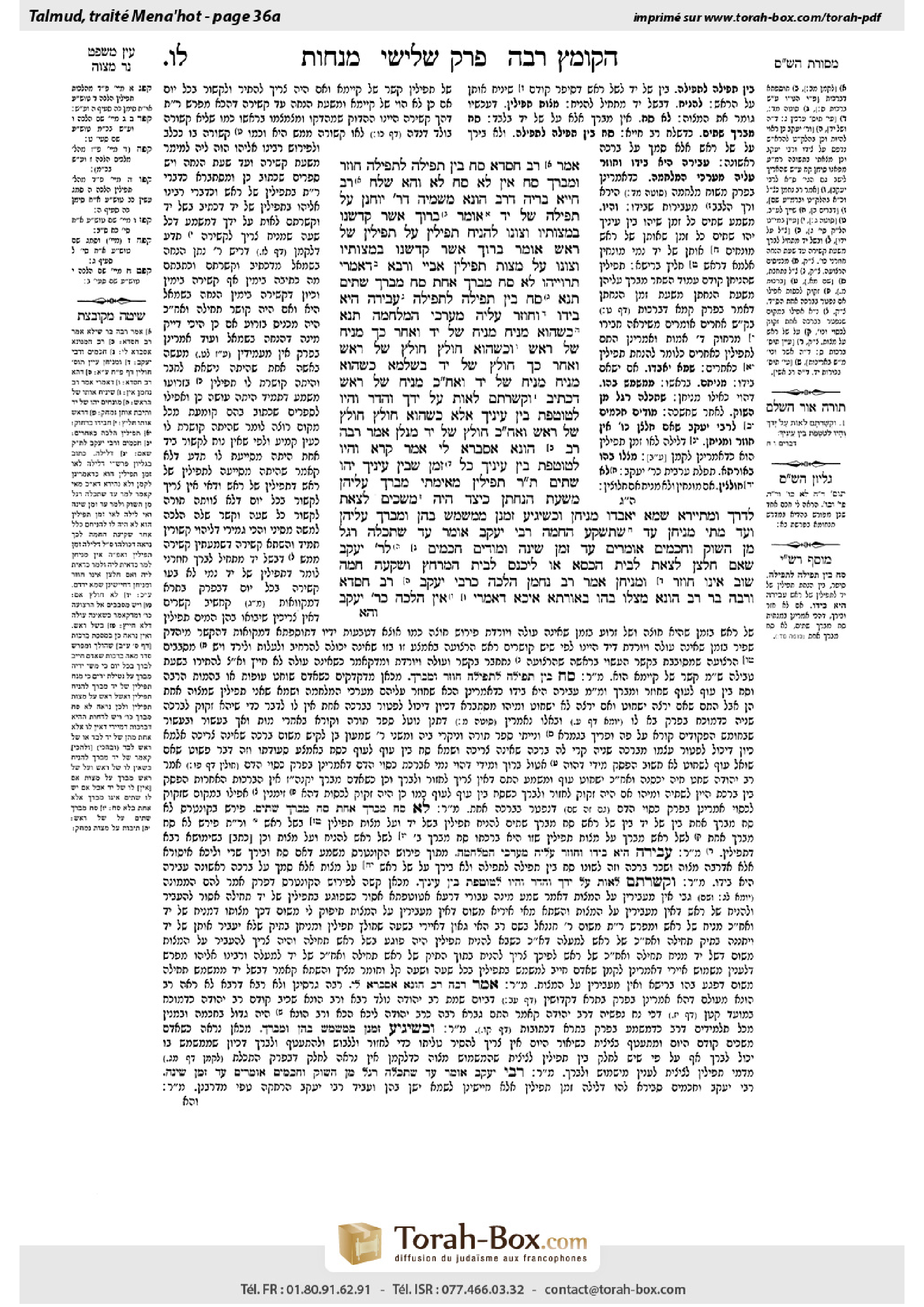
Menachot 36a: Talmud study for Daf Yomi
Daf Yomi is the daily study of one Talmud folio. Explore 37 tractates with scans, Hebrew text, Sefaria English and AI-generated French translations where annotated.
Passage selection and English or AI-generated French translation are available where the scan has annotations. Daf Study is independent of Torah-Box and Sefaria.
Browse Menachot · מנחות · All tractatesMenachot 36a text and translations
This page of Menachot includes the Aramaic text, an English translation and an AI-generated French translation, alongside the scan above.
מנחות ל״ו א · Aramaic and Hebrew text
אָמַר רַב חִסְדָּא: סָח בֵּין תְּפִילָּה לִתְפִילָּה חוֹזֵר וּמְבָרֵךְ.
סָח – אִין, לֹא סָח – לָא? וְהָא שְׁלַח רַב חִיָּיא בְּרֵיהּ דְּרַב הוּנָא מִשְּׁמֵיהּ דְּרַבִּי יוֹחָנָן: עַל תְּפִילָּה שֶׁל יָד אוֹמֵר ״בָּרוּךְ אֲשֶׁר קִדְּשָׁנוּ בְּמִצְוֹתָיו וְצִוָּנוּ לְהַנִּיחַ תְּפִילִּין״, עַל תְּפִילִּין שֶׁל רֹאשׁ אוֹמֵר ״בָּרוּךְ אֲשֶׁר קִדְּשָׁנוּ בְּמִצְוֹתָיו וְצִוָּנוּ עַל מִצְוַת תְּפִילִּין״.
אַבָּיֵי וְרָבָא דְּאָמְרִי תַּרְוַיְיהוּ: לֹא סָח – מְבָרֵךְ אַחַת, סָח – מְבָרֵךְ שְׁתַּיִם.
תָּנָא: סָח בֵּין תְּפִילָּה לִתְפִילָּה – עֲבֵירָה הִיא בְּיָדוֹ, וְחוֹזֵר עָלֶיהָ מֵעֶרְכֵי הַמִּלְחָמָה.
תָּנָא: כְּשֶׁהוּא מַנִּיחַ – מַנִּיחַ שֶׁל יָד, וְאַחַר כָּךְ מַנִּיחַ שֶׁל רֹאשׁ, וּכְשֶׁהוּא חוֹלֵץ – חוֹלֵץ שֶׁל רֹאשׁ, וְאַחַר כָּךְ חוֹלֵץ שֶׁל יָד. בִּשְׁלָמָא כְּשֶׁהוּא מַנִּיחַ – מַנִּיחַ שֶׁל יָד וְאַחַר כָּךְ מַנִּיחַ שֶׁל רֹאשׁ, דִּכְתִיב: ״וּקְשַׁרְתָּם לְאוֹת עַל יָדֶךָ״, וַהֲדַר ״וְהָיוּ לְטוֹטָפֹת בֵּין עֵינֶיךָ״.
אֶלָּא כְּשֶׁהוּא חוֹלֵץ, חוֹלֵץ שֶׁל רֹאשׁ וְאַחַר כָּךְ חוֹלֵץ שֶׁל יָד, מְנָלַן? אָמַר רַבָּה: רַב הוּנָא אַסְבְּרַאּ לִי, אָמַר קְרָא: ״וְהָיוּ לְטוֹטָפֹת בֵּין עֵינֶיךָ״, כׇּל זְמַן שֶׁבֵּין עֵינֶיךָ יְהוּ שְׁתַּיִם.
תָּנוּ רַבָּנַן: תְּפִילִּין מֵאֵימָתַי מְבָרֵךְ עֲלֵיהֶן? מִשְּׁעַת הַנָּחָתָן. כֵּיצַד? הָיָה מַשְׁכִּים לָצֵאת לַדֶּרֶךְ וּמִתְיָירֵא שֶׁמָּא יֹאבֵדוּ – מַנִּיחָן, וּכְשֶׁיַּגִּיעַ זְמַנָּן מְמַשְׁמֵשׁ בָּהֶן וּמְבָרֵךְ עֲלֵיהֶן.
וְעַד מָתַי מַנִּיחָן? עַד שֶׁתִּשְׁקַע הַחַמָּה. רַבִּי יַעֲקֹב אוֹמֵר: עַד שֶׁתִּכְלֶה רֶגֶל מִן הַשּׁוּק, וַחֲכָמִים אוֹמְרִים: עַד זְמַן שֵׁינָה. וּמוֹדִים חֲכָמִים לְרַבִּי יַעֲקֹב שֶׁאִם חֲלָצָן לָצֵאת לְבֵית הַכִּסֵּא אוֹ לִיכָּנֵס לְבֵית הַמֶּרְחָץ וְשָׁקְעָה חַמָּה – שׁוּב אֵינוֹ חוֹזֵר וּמַנִּיחָן.
אָמַר רַב נַחְמָן: הֲלָכָה כְּרַבִּי יַעֲקֹב. רַב חִסְדָּא וְרַבָּה בַּר רַב הוּנָא מְצַלּוּ בְּהוּ בְּאוּרְתָּא. אִיכָּא דְּאָמְרִי: אֵין הֲלָכָה כְּרַבִּי יַעֲקֹב.
Menachot 36a · English translation
§ Rav Ḥisda says: If one spoke between donning the phylacteries of the arm and the phylacteries of the head, he must recite the blessing again when donning the phylacteries of the head.
The Gemara notes: One can infer that if he spoke, yes, he must recite a blessing when donning the phylacteries of the head, but if he did not speak, he does not recite a blessing. The Gemara challenges this: But Rav Ḥiyya, son of Rav Huna, sent a ruling in the name of Rabbi Yoḥanan: On the phylacteries of the arm one says the blessing: Blessed are You, Lord our God, King of the Universe, Who has sanctified us through His mitzvot and commanded us to don phylacteries. On the phylacteries of the head one says the blessing: Blessed are You, Lord our God, King of the Universe, Who has sanctified us through His mitzvot and commanded us concerning the mitzva of phylacteries. This indicates that one always recites a blessing when donning the phylacteries of the head.
Abaye and Rava both say, to resolve this apparent contradiction: Rabbi Yoḥanan meant that if one did not speak, he recites one blessing; if he spoke, he recites two blessings, when donning the phylacteries of the head as well as when donning the phylacteries of the arm.
Concerning this, it is taught in a baraita: If one spoke between donning the phylacteries of the arm and the phylacteries of the head, he has a sin, and due to that sin he returns from the ranks of soldiers waging war. This is referring to the preparation for war, when the officers announce: “What man is there who is fearful and fainthearted? Let him go and return to his house” (Deuteronomy 20:8). The Sages explained that this is referring to one who is fearful due to his transgressions.
It is further taught in a baraita: When one dons phylacteries, he first dons the phylacteries of the arm and afterward dons the phylacteries of the head. And when he removes his phylacteries, he first removes the phylacteries of the head and afterward removes the phylacteries of the arm. The Gemara asks: Granted, the ruling that when one dons phylacteries he first dons the phylacteries of the arm and afterward dons the phylacteries of the head is understood, as it is first written: “And you shall bind them for a sign upon your arm,” and then it is written: “And they shall be for frontlets between your eyes” (Deuteronomy 6:8).
But from where do we derive the halakha that when he removes his phylacteries, he first removes the phylacteries of the head and afterward he removes the phylacteries of the arm? Rabba said in explanation: Rav Huna explained to me the source of this halakha. The verse states: “And you shall bind them for a sign upon your arm and they shall be for frontlets between your eyes,” and it is derived from here: As long as the phylacteries of the head are between your eyes, the number of phylacteries you are wearing shall be two.
The Sages taught in a baraita: With regard to phylacteries, from when does one recite a blessing over them? From when the time arrives to don them. How so? If one is rising early to leave his home to travel on the road and is afraid lest his phylacteries become lost during the journey, he dons them even at night, despite the fact that this is not the proper time for the mitzva of phylacteries. And when the time for their mitzva arrives, in the morning, he touches them and recites a blessing over them.
And until when does one wear them? Until the sun sets. Rabbi Ya’akov says: Until traffic in the marketplace ceases. And the Rabbis say: Until the time of sleep. And the Rabbis concede to Rabbi Ya’akov that if one removed them to go out to the bathroom or to enter the bathhouse and the sun set, one does not don them again.
Rav Naḥman says: The halakha is in accordance with the opinion of Rabbi Ya’akov. The Gemara likewise relates that Rav Ḥisda and Rabba bar Rav Huna would pray in the evening, i.e., the evening service, with phylacteries. Some say that Rav Naḥman ruled that the halakha is not in accordance with the opinion of Rabbi Ya’akov but in accordance with the opinion of the first tanna that the mitzva of phylacteries ends at sunset.
Menachot 36a · Traduction française (IA)
§ Rav Ḥisda dit : Si quelqu’un a parlé entre la pose des téfilines du bras et celle des téfilines de la tête, il doit réciter de nouveau la bénédiction lorsqu’il pose les téfilines de la tête.
La Guemara fait remarquer qu’on peut en déduire que s’il a parlé, il doit réciter une bénédiction lorsqu’il pose les téfilines de la tête, mais que s’il n’a pas parlé, il n’en récite pas. La Guemara objecte : Pourtant, Rav Ḥiyya, fils de Rav Huna, a transmis une décision au nom de Rabbi Yoḥanan : Pour les téfilines du bras, on récite la bénédiction suivante : « Béni sois-Tu, Seigneur notre Dieu, Roi de l’Univers, qui nous as sanctifiés par Tes mitsvot et nous as ordonné de mettre les téfilines. » Pour les téfilines de la tête, on récite la bénédiction suivante : « Béni sois-Tu, Seigneur notre Dieu, Roi de l’Univers, qui nous as sanctifiés par Tes mitsvot et nous as ordonné au sujet de la mitsva des téfilines. » Cela indique qu’on récite toujours une bénédiction lorsqu’on pose les téfilines de la tête.
Abayé et Rava disent tous deux, afin de résoudre cette contradiction apparente, que Rabbi Yoḥanan voulait dire que si l’on n’a pas parlé, on récite une seule bénédiction ; si l’on a parlé, on en récite deux, aussi bien lorsqu’on pose les téfilines de la tête que lorsqu’on pose celles du bras.
À ce sujet, il est enseigné dans une baraïta : Si quelqu’un a parlé entre la pose des téfilines du bras et celle des téfilines de la tête, il a commis une faute et, à cause de celle-ci, il rejoint les rangs des soldats qui retournent chez eux avant la guerre. Cela se rapporte aux préparatifs de la guerre, lorsque les officiers proclament : « Quel est l’homme qui a peur et le cœur lâche ? Qu’il s’en aille et retourne dans sa maison » (Deutéronome 20,8). Les Sages ont expliqué que cela désigne celui qui a peur à cause de ses transgressions.
Il est également enseigné dans une baraïta : Lorsqu’on met les téfilines, on met d’abord celles du bras, puis celles de la tête. Lorsqu’on les retire, on retire d’abord celles de la tête, puis celles du bras. La Guemara demande : Il est compréhensible que, lorsqu’on met les téfilines, on mette d’abord celles du bras, puis celles de la tête, car il est écrit d’abord : « Tu les attacheras comme un signe sur ton bras », puis : « Elles seront des fronteaux entre tes yeux » (Deutéronome 6,8).
Mais d’où déduit-on la halakha selon laquelle, lorsqu’on retire ses téfilines, on retire d’abord celles de la tête, puis celles du bras ? Rabba l’expliqua ainsi : Rav Huna m’a expliqué la source de cette halakha. Le verset dit : « Tu les attacheras comme un signe sur ton bras et elles seront des fronteaux entre tes yeux », et l’on en déduit ceci : Tant que les téfilines de la tête sont entre tes yeux, tu dois porter deux téfilines.
Les Sages ont enseigné dans une baraïta : À partir de quand récite-t-on une bénédiction sur les téfilines ? À partir du moment où arrive l’heure de les mettre. Comment cela ? Si quelqu’un se lève tôt pour quitter sa maison et prendre la route, et qu’il craint de perdre ses téfilines pendant le voyage, il les met même la nuit, bien que ce ne soit pas le moment approprié pour la mitsva des téfilines. Lorsque arrive l’heure de la mitsva, le matin, il les touche et récite une bénédiction sur elles.
Jusqu’à quand les porte-t-on ? Jusqu’au coucher du soleil. Rabbi Ya’akov dit : Jusqu’à ce que les allées et venues cessent sur le marché. Les Sages disent : Jusqu’à l’heure du sommeil. Les Sages reconnaissent à Rabbi Ya’akov que si quelqu’un les a retirées pour aller aux toilettes ou entrer aux bains, et que le soleil s’est couché entre-temps, il ne les remet pas.
Rav Naḥman dit : La halakha est conforme à l’opinion de Rabbi Ya’akov. La Guemara rapporte également que Rav Ḥisda et Rabba bar Rav Huna priaient le soir, c’est-à-dire qu’ils récitaient l’office du soir, avec les téfilines. Selon certains, Rav Naḥman a statué que la halakha n’est pas conforme à l’opinion de Rabbi Ya’akov, mais à celle du premier tanna, selon laquelle la mitsva des téfilines prend fin au coucher du soleil.
Traduction française générée par IA à partir de l’édition anglaise de Sefaria. Vérifie toujours un passage avec le texte source.
Text from Sefaria: William Davidson Edition - Vocalized Aramaic (unknown); William Davidson Edition - English (CC BY NC).