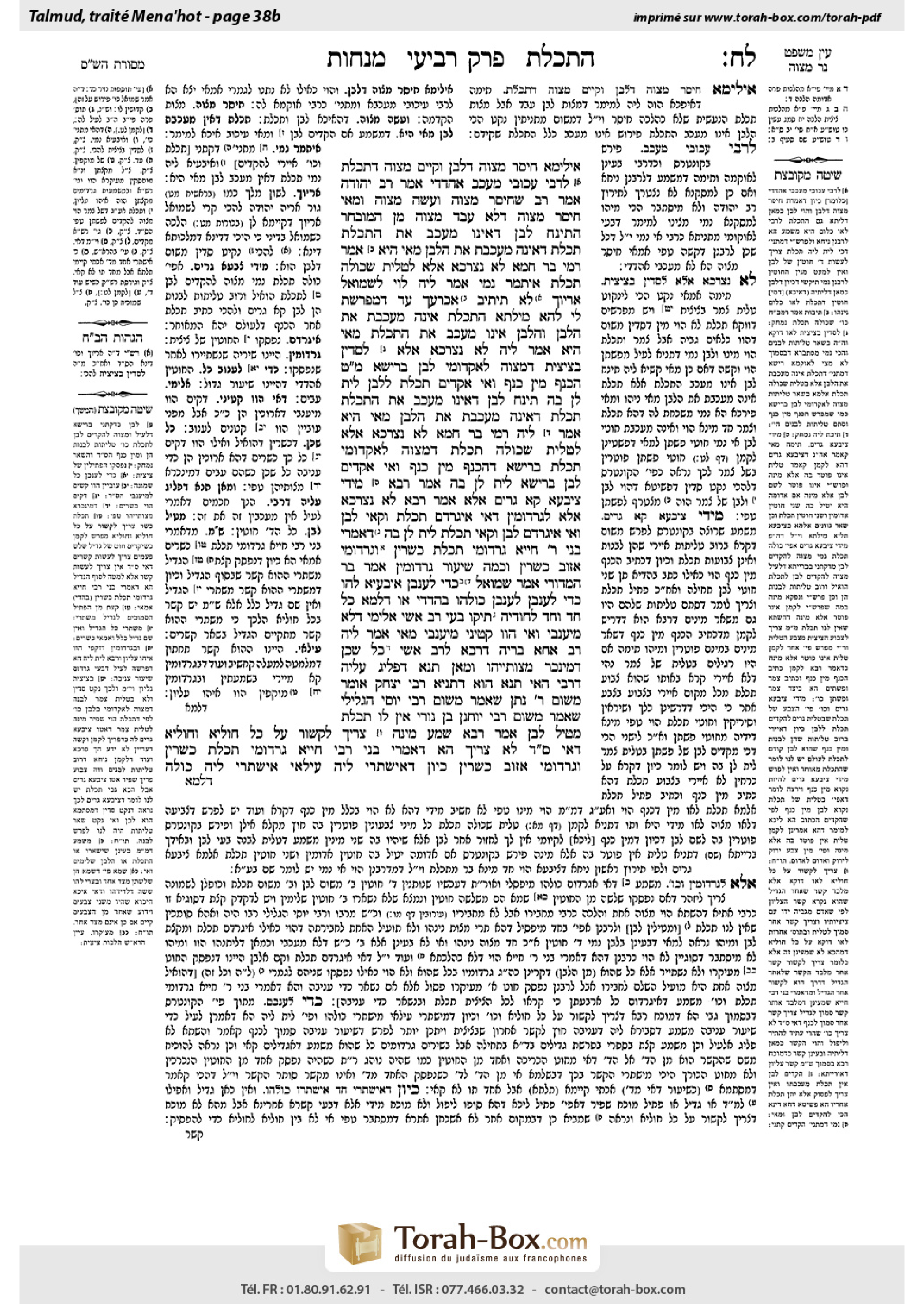
Menachot 38b: Talmud study for Daf Yomi
Daf Yomi is the daily study of one Talmud folio. Explore 37 tractates with scans, Hebrew text, Sefaria English and AI-generated French translations where annotated.
Passage selection and English or AI-generated French translation are available where the scan has annotations. Daf Study is independent of Torah-Box and Sefaria.
Browse Menachot · מנחות · All tractatesMenachot 38b text and translations
This page of Menachot includes the Aramaic text, an English translation and an AI-generated French translation, alongside the scan above.
מנחות ל״ח ב · Aramaic and Hebrew text
אִילֵּימָא חִיסֵּר מִצְוָה דְּלָבָן וְקִיֵּים מִצְוָה דִּתְכֵלֶת – לְרַבִּי עַכּוֹבֵי מְעַכֵּב אַהֲדָדֵי.
אָמַר רַב יְהוּדָה אָמַר רַב: שֶׁחִיסֵּר מִצְוָה וְעָשָׂה מִצְוָה, וּמַאי חִיסֵּר מִצְוָה? דְּלָא עֲבַד מִצְוָה מִן הַמּוּבְחָר.
הָתִינַח לָבָן דְּאֵינוֹ מְעַכֵּב אֶת הַתְּכֵלֶת, תְּכֵלֶת דְּאֵינָהּ מְעַכֶּבֶת אֶת הַלָּבָן – מַאי הִיא?
אָמַר רָמֵי בַּר חָמָא: לֹא נִצְרְכָא אֶלָּא לְטַלִּית שֶׁכּוּלָּהּ תְּכֵלֶת.
אִיתְּמַר נָמֵי: אֲמַר לֵיהּ לֵוִי לִשְׁמוּאֵל: אַרְיוֹךְ, לָא תִּיתֵּיב אַכַּרְעָךְ עַד דִּמְפָרְשַׁתְּ לִי לְהָא מִילְּתָא: הַתְּכֵלֶת אֵינָהּ מְעַכֶּבֶת אֶת הַלָּבָן, וְהַלָּבָן אֵינוֹ מְעַכֵּב אֶת הַתְּכֵלֶת – מַאי הִיא? אֲמַר לֵיהּ: לֹא נִצְרְכָא אֶלָּא לְסָדִין בְּצִיצִית, דְּמִצְוָה לְאַקְדּוֹמֵי לָבָן בְּרֵישָׁא.
מַאי טַעְמָא? ״הַכָּנָף״ – מִין כָּנָף, וְאִי אַקְדֵּים תְּכֵלֶת לְלָבָן – לֵית לַן בַּהּ.
תִּינַח לָבָן דְּאֵינוֹ מְעַכֵּב אֶת הַתְּכֵלֶת, תְּכֵלֶת דְּאֵינָהּ מְעַכֶּבֶת אֶת הַלָּבָן מַאי הִיא?
אֲמַר לֵיהּ רָמֵי בַּר חָמָא: לֹא נִצְרְכָא אֶלָּא לְטַלִּית שֶׁכּוּלָּהּ תְּכֵלֶת, דְּמִצְוָה לְאַקְדּוֹמֵי תְּכֵלֶת בְּרֵישָׁא, דְּ״הַכָּנָף״ – מִין כָּנָף, וְאִי אַקְדֵּים לָבָן בְּרֵישָׁא לֵית לַן בַּהּ.
אָמַר רָבָא: מִידֵּי צִיבְעָא קָא גָרֵים? אֶלָּא אָמַר רָבָא: לֹא נִצְרְכָא אֶלָּא לְגַרְדּוּמִּין, דְּאִי אִיגַּרְדַּם תְּכֵלֶת וְקָאֵי לָבָן, וְאִי אִיגַּרְדַּם לָבָן וְקָאֵי תְּכֵלֶת – לֵית לַן בַּהּ.
דְּאָמְרִי בְּנֵי רַבִּי חִיָּיא: גַּרְדּוּמֵּי תְּכֵלֶת כְּשֵׁרִין, וְגַרְדּוּמֵּי אֵזוֹב כְּשֵׁרִין. וְכַמָּה שִׁיעוּר גַּרְדּוּמִּין? אָמַר בַּר הַמְדּוּרֵי אָמַר שְׁמוּאֵל: כְּדֵי לְעׇנְבָן.
אִיבַּעְיָא לְהוּ: כְּדֵי לְעׇנְבָן – לְעׇנְבָן כּוּלְּהוּ בַּהֲדָדֵי, אוֹ דִלְמָא כֹּל חַד וְחַד לְחוֹדֵיהּ? תֵּיקוּ.
בָּעֵי רַב אָשֵׁי: אַלִּימֵי דְּלָא מִיעַנְבִי, וְאִי הֲווֹ קַטִּינֵי מִיעַנְבִי, מַאי? אֲמַר לֵיהּ רַב אַחָא בְּרֵיהּ דְּרָבָא לְרַב אָשֵׁי: כׇּל שֶׁכֵּן דְּמִינְּכַר מִצְוָתַיְיהוּ.
וּמַאן תַּנָּא דִּפְלִיג עֲלֵיהּ דְּרַבִּי? הַאי תַּנָּא הוּא, דְּתַנְיָא: רַבִּי יִצְחָק אוֹמֵר מִשּׁוּם רַבִּי נָתָן, שֶׁאָמַר מִשּׁוּם רַבִּי יוֹסֵי הַגְּלִילִי, שֶׁאָמַר מִשּׁוּם רַבִּי יוֹחָנָן בֶּן נוּרִי: אֵין לוֹ תְּכֵלֶת – מֵטִיל לָבָן.
אָמַר רָבָא: שְׁמַע מִינַּהּ, צָרִיךְ לִקְשׁוֹר עַל כׇּל חוּלְיָא וְחוּלְיָא, דְּאִי סָלְקָא דַעְתָּךְ לֹא צָרִיךְ – הָא דְּאָמְרִי בְּנֵי רַבִּי חִיָּיא: גַּרְדּוּמֵּי תְכֵלֶת כְּשֵׁרִין וְגַרְדּוּמֵּי אֵזוֹב כְּשֵׁרִין, כֵּיוָן דְּאִישְׁתְּרִי לֵיהּ עִילַּאי אִישְׁתְּרִי לֵיהּ כּוּלֵּהּ.
Menachot 38b · English translation
If we say that the individual omitted the mitzva of white strings and fulfilled only the mitzva of sky-blue strings, how is this possible? According to the opinion of Rabbi Yehuda HaNasi, the absence of either one prevents fulfillment of the mitzva with the other, and therefore in this case one would not fulfill any mitzva at all.
The Gemara answers that Rav Yehuda said that Rav said: It means that he omitted a mitzva but nevertheless performed a mitzva. And what does it mean that he omitted a mitzva? It means that he did not perform the mitzva in the optimal manner because he did not insert the white strings first, but he did fulfill the mitzva of ritual fringes.
The Gemara asks: This works out well with regard to the mishna’s statement that absence of the white strings does not prevent fulfillment of the mitzva with the sky-blue strings, which has been interpreted to mean that failing to insert the white strings before the sky-blue strings does not invalidate the ritual fringes. But what is the meaning of the mishna’s statement that the absence of sky-blue strings does not prevent fulfillment of the mitzva with the white strings?
Rami bar Ḥama said: That statement of the mishna is necessary only in the case of a garment that consists entirely of sky-blue wool. In such a case, one is supposed to insert the sky-blue strings before the white strings.
The Gemara notes that this was also stated by amora’im: Levi said to Shmuel: Aryokh, do not sit on your feet until you explain to me this matter: When the mishna states that the absence of the sky-blue strings does not prevent fulfillment of the mitzva of ritual fringes with the white strings, and the absence of white strings does not prevent fulfillment of the mitzva with the sky-blue strings, what does it mean? Shmuel said to Levi: That statement is necessary only in the case of a linen cloak on which one places ritual fringes, where there is a mitzva to insert the white strings first.
What is the reason for this? The verse states: “And they shall put on the fringe of the corner a sky-blue thread” (Numbers 15:38). “The fringe of the corner” is a reference to the string that is the same type as the corner of the garment. In the case of a linen cloak, which is generally white, this is a reference to the white strings, and since the verse mentions “the fringe of the corner” before the sky-blue thread, the white strings must be inserted before the sky-blue strings. The mishna therefore teaches that if one inserted the sky-blue strings before the white strings, we have no problem with it after the fact, and the ritual fringes are valid.
The Gemara asks: This works out well with regard to the mishna’s statement that absence of the white strings does not prevent fulfillment of the mitzva with the sky-blue strings. But what is the meaning of the mishna’s statement that the absence of sky-blue strings does not prevent fulfillment of the mitzva with the white strings?
Rami bar Ḥama said to him: That statement of the mishna is necessary only in the case of a garment that consists entirely of sky-blue wool, where it is a mitzva to insert the sky-blue strings first, as the phrase: “The fringe of the corner” indicates that the first strings one inserts into the garment are those that are the same type as the corner of the garment. The mishna therefore teaches that if one inserted the white strings first, we have no problem with it after the fact, and the ritual fringes are fit.
Rava said: Is it actually the color of the garment that determines the proper order in which one should insert the strings? Rather, Rava said: The ruling of the mishna is necessary only for a case of severed strings. The mishna teaches that if the sky-blue strings were severed and the white ones remain, or if the white strings were severed and the sky-blue strings remain, we have no problem with it, and the ritual fringes are fit.
As the sons of Rabbi Ḥiyya say: Severed white or sky-blue strings are fit, and similarly, severed hyssop branches are fit for sprinkling the water of purification mixed with the ashes of a red heifer. The Gemara asks: What measure do severed strings need to be in order to remain fit? Bar Hamduri says that Shmuel says: The strings must remain long enough to tie them in a slipknot.
A dilemma was raised before the Sages: When Shmuel says that severed strings must still be long enough to tie them in a slipknot, does that mean to tie all of the strings together in a slipknot? Or perhaps the strings may be even shorter, provided that they are long enough to tie each one individually. The Gemara concludes: The dilemma shall stand unresolved.
Rav Ashi asks: If the strings are thick and cannot be tied in a slipknot, but if they were the same length but thin they could be tied in a slipknot, what is their status? Rav Aḥa, son of Rava, said to Rav Ashi: If the strings are long enough to be fit if they are thin, all the more so they are fit if they are thick, as the mitzva one fulfills with them is more recognizable with thicker strings.
The Gemara cited the opinion of Rabbi Yehuda HaNasi, who holds that one cannot fulfill the mitzva of ritual fringes without both white and sky-blue strings, and the Gemara explained that the mishna can be interpreted in accordance with his opinion. The Gemara now asks: Who is the tanna who disagrees with Rabbi Yehuda HaNasi and holds that the sky-blue strings and the white strings are not interdependent? The Gemara answers: It is this following tanna, as it is taught in a baraita: Rabbi Yitzḥak says in the name of Rabbi Natan, who said in the name of Rabbi Yosei HaGelili, who said in the name of Rabbi Yoḥanan ben Nuri: If one does not have sky-blue strings, he nevertheless affixes white strings.
Rava said: Learn from the sons of Rabbi Ḥiyya that one is required to tie a knot after each and every set of windings, and one cannot suffice with only one knot at the end of all the windings. As, if it enters your mind to say that one is not required to tie a knot after each set of windings, then that which the sons of Rabbi Ḥiyya say: Severed white or sky-blue strings are fit, and similarly, severed hyssop branches are fit, is difficult: Once the uppermost knot is undone, all of the windings on the entire corner will come undone, as there are no other knots holding the windings in place, and in that case the garment will not have valid ritual fringes.
Menachot 38b · Traduction française (IA)
Si l’on dit que l’homme a omis la mitsva des fils blancs et n’a accompli que celle des fils bleu ciel, comment cela est-il possible ? Selon l’opinion de Rabbi Yehuda HaNasi, l’absence de l’un empêche d’accomplir la mitsva avec l’autre ; dans ce cas, il n’aurait donc accompli aucune mitsva.
La Guemara répond que Rav Yehuda a dit au nom de Rav : cela signifie qu’il a omis une mitsva, mais qu’il en a néanmoins accompli une. Que signifie le fait qu’il ait omis une mitsva ? Cela signifie qu’il n’a pas accompli la mitsva de la manière optimale, car il n’a pas inséré les fils blancs en premier, mais il a bien accompli la mitsva des franges rituelles.
La Guemara demande : cela s’accorde bien avec l’énoncé de la Michna selon lequel l’absence des fils blancs n’empêche pas d’accomplir la mitsva avec les fils bleu ciel, interprété comme signifiant que ne pas insérer les fils blancs avant les fils bleu ciel n’invalide pas les franges rituelles. Mais que signifie l’énoncé de la Michna selon lequel l’absence des fils bleu ciel n’empêche pas d’accomplir la mitsva avec les fils blancs ?
Rami bar Ḥama a dit : cet énoncé de la Michna n’est nécessaire que dans le cas d’un vêtement entièrement en laine bleu ciel. Dans ce cas, il convient d’insérer les fils bleu ciel avant les fils blancs.
La Guemara relève que cette explication a également été énoncée par des amoraïm : Levi dit à Shmuel : « Aryokh, ne t’assieds pas avant de m’avoir expliqué cette question : lorsque la Michna dit que l’absence des fils bleu ciel n’empêche pas d’accomplir la mitsva des franges rituelles avec les fils blancs, et que l’absence des fils blancs n’empêche pas d’accomplir la mitsva avec les fils bleu ciel, qu’est-ce que cela signifie ? » Shmuel dit à Levi : « Cet énoncé n’est nécessaire que dans le cas d’un manteau de lin auquel on attache des franges rituelles, car il y a une mitsva d’insérer les fils blancs en premier. »
Quelle en est la raison ? Le verset dit : « Ils mettront sur la frange du coin un fil bleu ciel » (Nombres 15:38). « La frange du coin » désigne le fil du même type que le coin du vêtement. Dans le cas d’un manteau de lin, généralement blanc, cela désigne les fils blancs ; et puisque le verset mentionne « la frange du coin » avant le fil bleu ciel, les fils blancs doivent être insérés avant les fils bleu ciel. La Michna enseigne donc que si l’on a inséré les fils bleu ciel avant les fils blancs, cela ne pose pas de problème a posteriori et les franges rituelles sont valides.
La Guemara demande : cela s’accorde bien avec l’énoncé de la Michna selon lequel l’absence des fils blancs n’empêche pas d’accomplir la mitsva avec les fils bleu ciel. Mais que signifie l’énoncé de la Michna selon lequel l’absence des fils bleu ciel n’empêche pas d’accomplir la mitsva avec les fils blancs ?
Rami bar Ḥama lui dit : cet énoncé de la Michna n’est nécessaire que dans le cas d’un vêtement entièrement en laine bleu ciel, où il convient d’insérer les fils bleu ciel en premier, car l’expression « la frange du coin » indique que les premiers fils que l’on insère dans le vêtement sont ceux du même type que le coin du vêtement. La Michna enseigne donc que si l’on a inséré les fils blancs en premier, cela ne pose pas de problème a posteriori et les franges rituelles sont valides.
Rava dit : est-ce réellement la couleur du vêtement qui détermine l’ordre dans lequel il convient d’insérer les fils ? Rava dit plutôt : la décision de la Michna n’est nécessaire que dans le cas de fils sectionnés. La Michna enseigne que si les fils bleu ciel ont été sectionnés et que les fils blancs restent, ou si les fils blancs ont été sectionnés et que les fils bleu ciel restent, cela ne pose pas de problème et les franges rituelles sont valides.
Car les fils de Rabbi Ḥiyya disent : des fils blancs ou bleu ciel sectionnés sont valides ; de même, des branches d’hysope sectionnées sont valides pour l’aspersion de l’eau de purification mélangée aux cendres d’une vache rousse. La Guemara demande : quelle longueur les fils sectionnés doivent-ils conserver pour rester valides ? Bar Ḥamduri dit au nom de Shmuel : les fils doivent rester assez longs pour qu’on puisse les nouer en nœud coulant.
Une question fut soumise aux Sages : lorsque Shmuel dit que les fils sectionnés doivent rester assez longs pour qu’on puisse les nouer en nœud coulant, veut-il dire qu’il faut réunir tous les fils dans un seul nœud coulant ? Ou peut-être les fils peuvent-ils être encore plus courts, à condition que chacun puisse être noué individuellement ? La Guemara conclut : la question reste sans réponse.
Rav Ashi demande : quel est le statut de fils épais qu’on ne peut pas nouer en nœud coulant, alors que des fils fins de même longueur pourraient l’être ? Rav Aḥa, fils de Rava, dit à Rav Ashi : si les fils sont assez longs pour être valides lorsqu’ils sont fins, à plus forte raison sont-ils valides lorsqu’ils sont épais, car la mitsva que l’on accomplit avec eux est plus reconnaissable grâce à leur épaisseur.
La Guemara a cité l’opinion de Rabbi Yehuda HaNasi, selon laquelle on ne peut pas accomplir la mitsva des franges rituelles sans les fils blancs et les fils bleu ciel, et elle a expliqué que la Michna peut être interprétée conformément à son opinion. La Guemara demande à présent : quel est le tanna qui est en désaccord avec Rabbi Yehuda HaNasi et considère que les fils bleu ciel et les fils blancs ne sont pas interdépendants ? La Guemara répond : c’est le tanna suivant, comme il est enseigné dans une baraïta : Rabbi Yitzḥak dit au nom de Rabbi Natan, qui a dit au nom de Rabbi Yosei HaGelili, qui a dit au nom de Rabbi Yoḥanan ben Nuri : si quelqu’un n’a pas de fils bleu ciel, il attache néanmoins des fils blancs.
Rava dit : apprends des fils de Rabbi Ḥiyya qu’il faut faire un nœud après chaque série d’enroulements et qu’on ne peut pas se contenter d’un seul nœud à la fin de tous les enroulements. En effet, si l’on envisageait qu’il n’est pas nécessaire de faire un nœud après chaque série d’enroulements, l’affirmation des fils de Rabbi Ḥiyya — selon laquelle des fils blancs ou bleu ciel sectionnés sont valides, et que des branches d’hysope sectionnées le sont également — serait difficile à comprendre : une fois le nœud supérieur défait, tous les enroulements du coin se déferaient, puisqu’aucun autre nœud ne les maintiendrait en place ; dans ce cas, le vêtement n’aurait pas de franges rituelles valides.
Traduction française générée par IA à partir de l’édition anglaise de Sefaria. Vérifie toujours un passage avec le texte source.
Text from Sefaria: William Davidson Edition - Vocalized Aramaic (unknown); William Davidson Edition - English (CC BY NC).