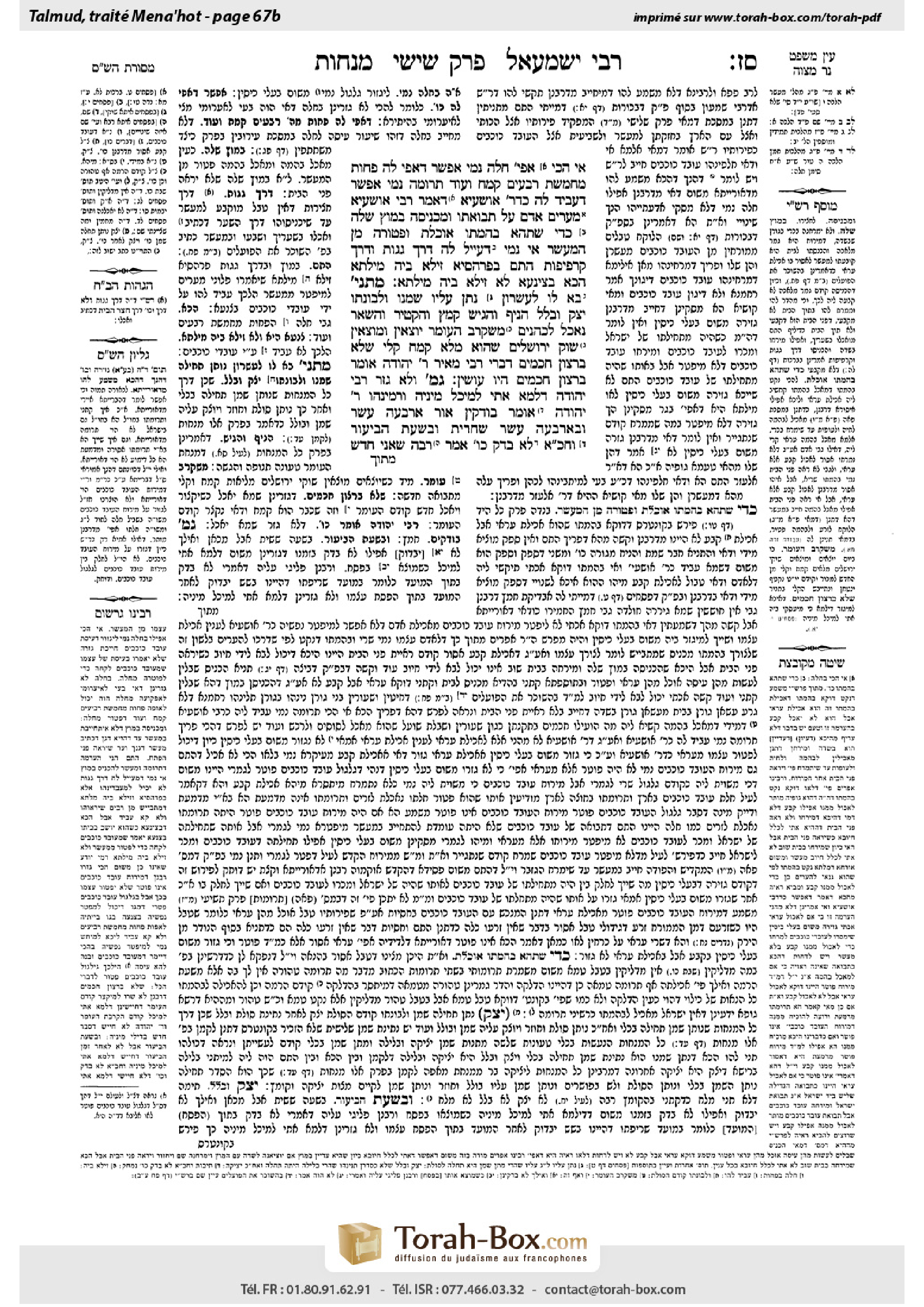
Menachot 67b: Talmud study for Daf Yomi
Daf Yomi is the daily study of one Talmud folio. Explore 37 tractates with scans, Hebrew text, Sefaria English and AI-generated French translations where annotated.
Passage selection and English or AI-generated French translation are available where the scan has annotations. Daf Study is independent of Torah-Box and Sefaria.
Browse Menachot · מנחות · All tractatesMenachot 67b text and translations
This page of Menachot includes the Aramaic text, an English translation and an AI-generated French translation, alongside the scan above.
מנחות ס״ז ב · Aramaic and Hebrew text
אִי הָכִי, אֲפִילּוּ חָלָה נָמֵי? אֶפְשָׁר דְּאָפֵי לָהּ פָּחוֹת מֵחֲמֵשֶׁת רְבָעִים קֶמַח, וְעוֹד.
תְּרוּמָה נָמֵי, אֶפְשָׁר דְּעָבֵיד לַהּ כִּדְרַבִּי אוֹשַׁעְיָא? דְּאָמַר רַבִּי אוֹשַׁעְיָא: מַעֲרִים אָדָם עַל תְּבוּאָתוֹ וּמַכְנִיסָהּ בַּמּוֹץ שֶׁלָּהּ, כְּדֵי שֶׁתְּהֵא בְּהֶמְתּוֹ אוֹכֶלֶת וּפְטוּרָה מִן הַמַּעֲשֵׂר. אִי נָמֵי, דְּעַיֵּיל לַהּ דֶּרֶךְ גַּגּוֹת וְדֶרֶךְ קַרְפֵּיפוֹת?
הָתָם בְּפַרְהֶסְיָא, זִילָא בֵּיהּ מִילְּתָא; הָכָא בְּצִינְעָא, לָא זִילָא בֵּיהּ מִילְּתָא.
מַתְנִי׳ בָּא לוֹ לָעִשָּׂרוֹן, נָתַן עָלָיו שַׁמְנוֹ וּלְבוֹנָתוֹ, יָצַק וּבָלַל, הֵנִיף וְהִגִּישׁ, קָמַץ וְהִקְטִיר, וְהַשְּׁאָר נֶאֱכָל לַכֹּהֲנִים.
מִשֶּׁקָּרַב הָעוֹמֶר, יוֹצְאִין וּמוֹצְאִין שׁוּק יְרוּשָׁלַיִם שֶׁהוּא מָלֵא קֶמַח קָלִי, שֶׁלֹּא בִּרְצוֹן חֲכָמִים – דִּבְרֵי רַבִּי מֵאִיר. רַבִּי יְהוּדָה אוֹמֵר: בִּרְצוֹן חֲכָמִים הָיוּ עוֹשִׂין.
גְּמָ׳ וְלָא גָּזַר רַבִּי יְהוּדָה דִּלְמָא אָתֵי לְמֵיכַל מִינֵּיהּ?
וּרְמִינְהוּ: רַבִּי יְהוּדָה אוֹמֵר, בּוֹדְקִין אוֹר אַרְבָּעָה עָשָׂר, וּבְאַרְבָּעָה עָשָׂר שַׁחֲרִית, וּבִשְׁעַת הַבִּיעוּר, וַחֲכָמִים אוֹמְרִים: לֹא בָּדַק כּוּ׳.
אָמַר רַבָּה: שָׁאנֵי חָדָשׁ,
Menachot 67b · English translation
The Gemara asks: If so, then ḥalla should be subject to the same rabbinic decree as well, to prevent someone from circumventing their obligation to separate ḥalla by temporarily selling their dough to a gentile who will knead it and return it to them. Why then does the baraita teach that dough kneaded by a gentile owner is exempt? The Gemara answers: There is no need for a decree in this case, since if one wanted to circumvent his obligation to separate ḥalla from his dough, an easier method is available: It is possible for him to bake using less than five-fourths of a kav of flour and a bit more, the minimum amount necessitating the separation of ḥalla.
The Gemara asks: If so, why is there a need for a rabbinic decree with regard to teruma and tithes? The obligation to separate teruma and tithes can also be easily circumvented by acting in accordance with that which Rabbi Oshaya suggested, as Rabbi Oshaya says: A person can employ artifice to circumvent obligations incumbent upon him in dealing with his grain, and exempt himself by bringing it into his courtyard in its chaff so that his animal may eat from it. And this grain is exempt from teruma and tithes. Although the obligation to separate teruma from and to tithe produce that has been fully processed applies even to animal fodder, it is permitted to feed one’s animal untithed produce that has not been fully processed. Alternatively, another option of avoiding the obligation of teruma and tithes is to bring in the produce to his house by way of roofs or by way of enclosures [karpeifot]. The obligation of teruma and tithes applies only to produce that passes through the entrance of the house.
The Gemara answers: There, in the case of teruma and tithes, the two options of bringing in the grain in its chaff or by way of roofs are performed in public [befarhesya], and it is degrading for one to be seen circumventing his obligation. Consequently, one who wishes to avoid the obligation would prefer the option of transferring ownership to a gentile, which the Sages prevent with their decree. Here, in the case of ḥalla, the option of baking with less than the minimum quantity of flour to avoid being obligated to separate ḥalla from the dough is performed in private, and it is not degrading for him, and he would sooner take advantage of that option than go through the process of transferring the dough to a gentile. Therefore, the Sages did not apply their decree in this case.
MISHNA: After daybreak, the priest sacrificing the omer came to the sifted tenth of an ephah, placed in the vessel in his hand some of its log of oil, and placed its frankincense on the side of the vessel. He then poured some more oil from the log onto the high-quality flour and mixed them together, waved and brought the meal offering to the corner of the altar, and removed the handful and burned it on the altar. And the rest of the meal offering is eaten by the priests.
Once the omer was sacrificed people would emerge and find the marketplace of Jerusalem full of the flour from the parched grain of the new crop that was permitted by the waving and the sacrifice of the omer offering. That filling of the marketplace with the new crop was performed not with the approval of the Sages; this is the statement of Rabbi Meir. Rabbi Yehuda says: They would do so with the approval of the Sages.
GEMARA: The mishna teaches that the marketplaces of Jerusalem would be filled with flour of parched grain even before the sacrificing of the omer offering, and Rabbi Yehuda holds that the Sages approved of this practice. The Gemara asks: And doesn’t Rabbi Yehuda agree that the Sages issued a decree against filling of the marketplaces with grain that is prohibited in consumption at the time? Wasn’t he concerned that perhaps someone might come to eat from it?
And the Gemara raises a contradiction from a mishna (Pesaḥim 10b): Rabbi Yehuda says that one searches for leaven on the evening of the fourteenth of Nisan, and on the fourteenth in the morning, and at the time of the eradication of leaven. And the Rabbis say: That is not the halakha; rather, if one did not search on the evening of the fourteenth he should search on the fourteenth during the day, and if he did not search on the fourteenth, he should search during the festival of Passover. Since Rabbi Yehuda does not allow a search on Passover itself, he is evidently concerned that one who finds prohibited food might come to eat it. The same reasoning should apply in the case of the new crop.
Rabba says that the prohibition of new grain is different, for the following reason:
Menachot 67b · Traduction française (IA)
La Guemara demande : Si tel est le cas, la ḥalla devrait elle aussi être soumise à la même ordonnance rabbinique, afin d’empêcher quelqu’un de se soustraire à son obligation de prélever la ḥalla en vendant temporairement sa pâte à un non-Juif, qui la pétrirait puis la lui rendrait. Pourquoi la baraïta enseigne-t-elle alors que la pâte pétrie par un propriétaire non juif est exemptée ? La Guemara répond : Dans ce cas, il n’est pas nécessaire d’édicter une ordonnance, car si quelqu’un voulait se soustraire à son obligation de prélever la ḥalla sur sa pâte, une méthode plus simple s’offrirait à lui : il lui suffirait de faire cuire une pâte préparée avec un peu moins de cinq quarts de kav de farine, quantité juste inférieure au minimum imposant le prélèvement de la ḥalla.
La Guemara demande : Si tel est le cas, pourquoi faut-il une ordonnance rabbinique concernant la terouma et les dîmes ? On peut tout aussi facilement se soustraire à l’obligation de prélever la terouma et les dîmes en agissant conformément à la suggestion de Rabbi Oshaya. Car Rabbi Oshaya dit : Une personne peut user d’un stratagème pour se soustraire aux obligations qui lui incombent à l’égard de ses céréales et s’en exempter en les faisant entrer dans sa cour encore enveloppées de leur balle, afin que son animal puisse en manger. Ces céréales sont exemptées de la terouma et des dîmes. Bien que l’obligation de prélever la terouma et les dîmes sur les produits entièrement transformés s’applique aussi au fourrage pour animaux, il est permis de donner à son animal des produits non titrés qui n’ont pas été entièrement transformés. Une autre possibilité pour éviter l’obligation de prélever la terouma et les dîmes consiste à faire entrer les produits dans sa maison par les toits ou par des enclos [karpeifot]. L’obligation de prélever la terouma et les dîmes ne s’applique qu’aux produits qui passent par l’entrée de la maison.
La Guemara répond : Là, dans le cas de la terouma et des dîmes, les deux possibilités — faire entrer les céréales encore enveloppées de leur balle ou les faire entrer par les toits — sont mises en œuvre publiquement [befarhesya], et il est dégradant d’être vu en train de se soustraire à son obligation. Par conséquent, celui qui souhaite éviter cette obligation préférerait transférer la propriété à un non-Juif, ce que les Sages empêchent par leur ordonnance. Ici, dans le cas de la ḥalla, la possibilité de faire cuire une quantité de farine inférieure au minimum requis afin d’éviter l’obligation de prélever la ḥalla sur la pâte peut être mise en œuvre en privé, et cela ne le déshonore pas ; il préférera recourir à cette possibilité plutôt que de transférer la pâte à un non-Juif. C’est pourquoi les Sages n’ont pas appliqué leur ordonnance dans ce cas.
MICHNA : Après le lever du jour, le prêtre chargé d’offrir l’omer prenait le dixième d’épha tamisé, versait dans le récipient qu’il tenait une partie du log d’huile et déposait l’encens sur le côté du récipient. Il versait ensuite un peu plus d’huile du log sur la farine de qualité et les mélangeait, balançait l’offrande de céréales et l’apportait à l’angle de l’autel, puis en retirait une poignée et la brûlait sur l’autel. Le reste de l’offrande de céréales est mangé par les prêtres.
Une fois l’omer offert, les gens sortaient et trouvaient le marché de Jérusalem rempli de farine de céréales grillées de la nouvelle récolte, que le balancement et le sacrifice de l’omer avaient rendue permise à la consommation. Cette pratique consistant à remplir le marché de produits de la nouvelle récolte n’avait pas l’approbation des Sages ; telle est la position de Rabbi Meïr. Rabbi Yehouda dit : Ils agissaient avec l’approbation des Sages.
GUEMARA : La Michna enseigne qu’après l’offrande de l’omer, les marchés de Jérusalem étaient remplis de farine de céréales grillées, et Rabbi Yehouda estime que les Sages approuvaient cette pratique. La Guemara demande : Rabbi Yehouda ne reconnaît-il pas que les Sages ont décrété qu’on ne devait pas remplir les marchés de céréales dont la consommation est alors interdite ? Ne craignait-il pas que quelqu’un en vienne à en manger ?
Et la Guemara soulève une contradiction à partir d’une Michna (Pessa’him 10b) : Rabbi Yehouda dit qu’on recherche le ḥamets le soir du quatorze Nissan, le quatorze au matin et au moment de l’élimination du ḥamets. Les Sages disent : Telle n’est pas la halakha ; au contraire, si quelqu’un n’a pas effectué la recherche le soir du quatorze, il doit la faire le quatorze pendant la journée, et s’il ne l’a pas faite le quatorze, il doit la faire pendant la fête de Pessa’h. Puisque Rabbi Yehouda ne permet pas d’effectuer la recherche pendant Pessa’h même, il est évident qu’il craint que celui qui trouve un aliment interdit ne vienne à le manger. Le même raisonnement devrait s’appliquer aux produits de la nouvelle récolte.
Rabba dit que l’interdiction des céréales nouvelles est différente, pour la raison suivante :
Traduction française générée par IA à partir de l’édition anglaise de Sefaria. Vérifie toujours un passage avec le texte source.
Text from Sefaria: William Davidson Edition - Vocalized Aramaic (unknown); William Davidson Edition - English (CC BY NC).