Menachot 86b: Talmud study for Daf Yomi
Daf Yomi is the daily study of one Talmud folio. Explore 37 tractates with scans, Hebrew text, Sefaria English and AI-generated French translations where annotated.
Passage selection and English or AI-generated French translation are available where the scan has annotations. Daf Study is independent of Torah-Box and Sefaria.
Browse Menachot · מנחות · All tractatesMenachot 86b text and translations
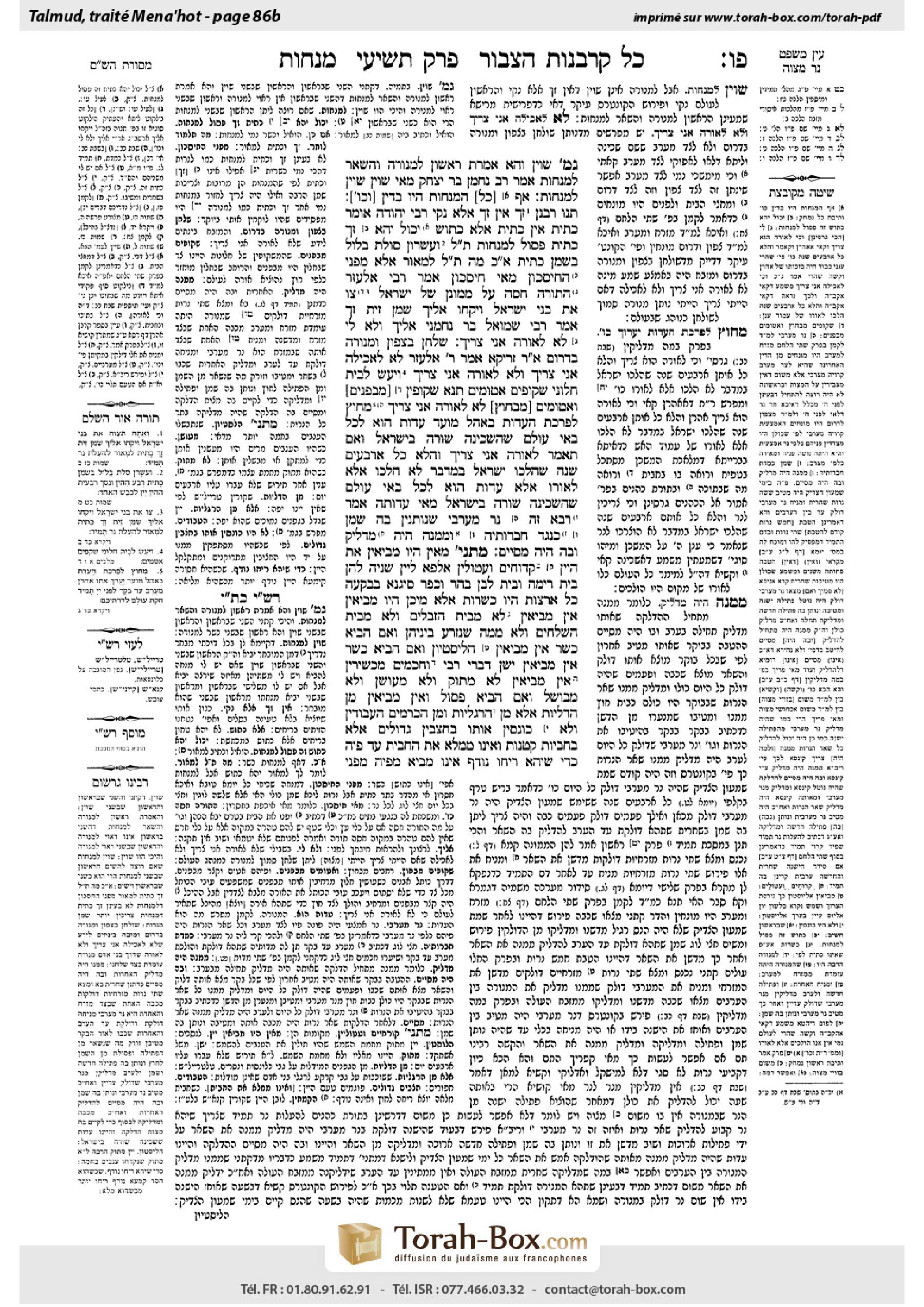
This page of Menachot includes the Aramaic text, an English translation and an AI-generated French translation, alongside the scan above.
מנחות פ״ו ב · Aramaic and Hebrew text
גְּמָ׳ שָׁוִין? וְהָא אָמְרַתְּ רִאשׁוֹן לַמְּנוֹרָה וְהַשְּׁאָר לִמְנָחוֹת! אָמַר רַב נַחְמָן בַּר יִצְחָק: מַאי שָׁוִין – שָׁוִין לִמְנָחוֹת.
אַף [כׇּל] הַמְּנָחוֹת הָיוּ בַּדִּין [וְכוּ׳]. תָּנוּ רַבָּנַן: ״זָךְ״ – אֵין ״זָךְ״ אֶלָּא נָקִי, רַבִּי יְהוּדָה אוֹמֵר: ״כָּתִית״ – אֵין ״כָּתִית״ אֶלָּא כָּתוּשׁ.
יָכוֹל יְהֵא זָךְ כָּתִית פָּסוּל לִמְנָחוֹת? תַּלְמוּד לוֹמַר ״וְעִשָּׂרוֹן סֹלֶת בָּלוּל בְּשֶׁמֶן כָּתִית״, אִם כֵּן מָה תַּלְמוּד לוֹמַר ״לַמָּאוֹר״? אֶלָּא מִפְּנֵי הַחִיסָּכוֹן.
מַאי ״חִיסָּכוֹן״? אָמַר רַבִּי אֶלְעָזָר: הַתּוֹרָה חָסָה עַל מָמוֹנָן שֶׁל יִשְׂרָאֵל.
״צַו אֶת בְּנֵי יִשְׂרָאֵל וְיִקְחוּ אֵלֶיךָ שֶׁמֶן זַיִת זָךְ״, אָמַר רַבִּי שְׁמוּאֵל בַּר נַחְמָנִי: ״אֵלֶיךָ״ – וְלֹא לִי, לֹא לְאוֹרָה אֲנִי צָרִיךְ.
שֻׁלְחָן בַּצָּפוֹן, וּמְנוֹרָה בַּדָּרוֹם – אָמַר רַבִּי זְרִיקָא, אָמַר רַבִּי אֶלְעָזָר: לֹא לַאֲכִילָה אֲנִי צָרִיךְ, וְלֹא לְאוֹרָה אֲנִי צָרִיךְ.
וַיַּעַשׂ לַבָּיִת חַלּוֹנֵי שְׁקֻפִים אֲטֻמִים״ – תָּנָא: שְׁקוּפִין מִבִּפְנִים, וַאֲטוּמִים מִבַּחוּץ, לֹא לְאוֹרָה אֲנִי צָרִיךְ.
״מִחוּץ לְפָרֹכֶת הָעֵדוּת בְּאֹהֶל מוֹעֵד״ – עֵדוּת הוּא לְכׇל בָּאֵי עוֹלָם שֶׁהַשְּׁכִינָה שׁוֹרָה בְּיִשְׂרָאֵל.
וְאִם תֹּאמַר: לְאוֹרָה אֲנִי צָרִיךְ? וַהֲלֹא כׇּל אַרְבָּעִים שָׁנָה שֶׁהָלְכוּ יִשְׂרָאֵל בְּמִדְבָּר לֹא הָלְכוּ אֶלָּא לְאוֹרוֹ! אֶלָּא עֵדוּת הוּא לְכׇל בָּאֵי עוֹלָם שֶׁהַשְּׁכִינָה שׁוֹרָה בְּיִשְׂרָאֵל.
מַאי עֵדוּתָהּ? אָמַר רָבָא: זֶה נֵר מַעֲרָבִי, שֶׁנּוֹתְנִין בָּהּ שֶׁמֶן כְּנֶגֶד חַבְרוֹתֶיהָ, וּמִמֶּנָּה הָיָה מַדְלִיק, וּבָהּ הָיָה מְסַיֵּים.
מַתְנִי׳ מֵאַיִן הָיוּ מְבִיאִין אֶת הַיַּיִן? קְדוֹחַיִם וַעֲטוּלַיִן – אַלְפָּא לַיַּיִן, שְׁנִיָּה לָהֶן – בֵּית רִימָּה וּבֵית לָבָן בָּהָר, וּכְפַר סִיגְנָא בַּבִּקְעָה. כׇּל אֲרָצוֹת הָיוּ כְּשֵׁרוֹת, אֶלָּא מִיכָּן הָיוּ מְבִיאִין.
אֵין מְבִיאִין לֹא מִבֵּית הַזְּבָלִים, וְלֹא מִבֵּית הַשְּׁלָחִים, וְלֹא מִמַּה שֶּׁנִּזְרַע בֵּינֵיהֶן, וְאִם הֵבִיא – כָּשֵׁר. אֵין מְבִיאִין הַלִּיסְטְיוֹן, וְאִם הֵבִיא – כָּשֵׁר. אֵין מְבִיאִין יָשָׁן – דִּבְרֵי רַבִּי, וַחֲכָמִים מַכְשִׁירִין. אֵין מְבִיאִין לֹא מָתוֹק, וְלֹא מְעוּשָּׁן, וְלֹא מְבוּשָּׁל, וְאִם הֵבִיא – פָּסוּל. וְאֵין מְבִיאִין מִן הַדָּלִיּוֹת, אֶלָּא מִן הָרַגְלִיּוֹת, וּמִן הַכְּרָמִים הָעֲבוּדִין.
וְלֹא כּוֹנְסִין אוֹתוֹ בַּחֲצָבִין גְּדוֹלִים, אֶלָּא בְּחָבִיּוֹת קְטַנּוֹת, וְאֵינוֹ מְמַלֵּא אֶת הֶחָבִית עַד פִּיהָ, כְּדֵי שֶׁיְּהֵא רֵיחוֹ נוֹדֵף.
אֵינוֹ מֵבִיא מִפִּיהָ – מִפְּנֵי
Menachot 86b · English translation
GEMARA: The Gemara asks: How can the mishna state that the second grade of the first harvest and the first grade of the second harvest are of equal quality? But didn’t you say that the first grade of each harvest is fit for kindling the Candelabrum and the rest are fit only for use in meal offerings? It would appear then that the first grade in any harvest is actually superior to the second grade of other harvests. To resolve this, Rav Naḥman bar Yitzḥak said: What does the mishna mean when it states that they are of equal quality? It means that they are equal with regard to meal offerings, and there is no reason to choose one over the other.
§ The mishna teaches: Also with regard to all the meal offerings, it was logical that they should require refined olive oil. To dispel this notion, the verse states: “Refined pounded olive oil for illumination” (Leviticus 24:2). The Sages taught in a baraita with regard to the verse cited in the mishna: The word “refined” means nothing other than clean oil, which flows by itself from the olives without applying any pressure. Rabbi Yehuda says that the word “pounded” means nothing other than olives crushed with a mortar, but not with a millstone.
One might have thought that refined, pounded oil is unfit for meal offerings, since the verse specifies that this oil is to be used for illumination. To dispel this notion, the verse states with regard to the meal offering brought with the daily offering: “And a tenth of fine flour, thoroughly mixed with a quarter of a hin of pounded oil” (Exodus 29:40). This indicates that pounded oil is fit to be used in meal offerings. If so, what is the meaning when the verse states that the refined pounded oil is “for illumination”? Rather, the Torah requires the use of refined pounded oil only for the Candelabrum, due to the sparing [haḥisakhon] of money, as the highest-quality oil is very expensive.
The Gemara asks: What is the reason for being sparing? Rabbi Elazar says: The intention is that the Torah spared the money of the Jewish people and did not require that the highest-quality oil be used for the meal offerings.
§ The Gemara discusses the Candelabrum and other aspects of the Temple. The verse states: “Command the children of Israel, and they shall take for yourself refined pounded olive oil for illumination, to kindle the lamps continually” (Leviticus 24:2). Rabbi Shmuel bar Naḥmani says: God tells the Jewish people that the oil should be taken “for yourself,” to indicate that it is for their benefit and not for My benefit, as I do not need its light.
Similarly, with regard to the Table of the shewbread, located in the north of the Sanctuary, and the Candelabrum, located in the south of the Sanctuary, Rabbi Zerika says that Rabbi Elazar says: God said to the Jewish people: I do not require the Table for eating, nor do I require the Candelabrum for its illumination. In evidence of this, the Candelabrum was not positioned close to the Table, as is done by one who sets a table with food in order to eat there.
With regard to the Temple built by King Solomon, the verse states: “And he made for the House, windows narrow and broad” (I Kings 6:4). The Sages taught in a baraita: Typically, windows are constructed to widen toward the inside in order that the light from the outside would be dispersed throughout the room. For the Temple, God said: Make the windows narrow within and broad without, as I do not require its illumination. On the contrary, the light of the Temple is to be radiated outward.
God instructed Aaron to kindle the Candelabrum: “Outside the Curtain of the testimony in the Tent of Meeting” (Leviticus 24:3). The dividing curtain is referred to here as: The Curtain of the testimony, to indicate that the illumination of the Candelabrum is testimony to all of humanity that the Divine Presence rests among the Jewish people.
And if you question this and say: How is this testimony; perhaps the Candelabrum is lit for illumination? To this God would respond: Do I need its light? But isn’t it so that for all forty years that the Jewish people walked in the wilderness of Sinai until they entered Eretz Yisrael, they walked exclusively by His light, i.e., from the pillar of fire that guided them at night. If God provides light for others, he certainly does not need it Himself. Rather, evidently, the illumination of the Candelabrum is testimony to all of humanity that the Divine Presence rests among the Jewish people.
What provides its testimony? Rava says: The testimony is provided by the westernmost lamp of the Candelabrum, in which they place a quantity of oil equivalent to that placed in the other lamps, and nevertheless it continues to burn longer than any of the other lamps. It burns so long that every evening, from it the priest would kindle the Candelabrum, i.e., he lit that westernmost lamp first, and the following morning, with it he would conclude the preparation of the lamps for the following evening’s lighting, because it remained alight longer than any of the other lamps. This perpetual miracle was testimony to God’s continuous presence among His people.
MISHNA: From where would they bring the wine for libations? Keduḥim and Attulin are the primary sources for wine. Secondary to them is Beit Rima and Beit Lavan, located in the mountain, and the village of Signa, located in the valley. All the regions were valid sources for wine; but it was from here, i.e., the aforementioned locations, that they would bring the wine.
One may not bring libations of wine that come from a fertilized vineyard, or from an irrigated vineyard, or from a vineyard in which grain was sown between the vines. But if one did bring a libation from such wine, it is valid. One may not bring libations from sweet wine made from sun-dried grapes [hilyasteyon], but if one did bring a libation from such wine, it is valid. One may not bring wine aged for one year; this is the statement of Rabbi Yehuda HaNasi, but the Rabbis deem it valid. One may not bring libations from sweet wine, nor from wine produced from smoked grapes, nor libations from boiled wine, and if one did bring a libation from such wine, it is not valid. And one may not bring wine produced from grapes suspended on stakes or trees; rather, one brings it from grapes at foot height, i.e., that rest on the ground, which are superior-quality grapes, and from vineyards that are cultivated, i.e., where one hoes beneath the vines twice a year.
And when producing wine for libations, one should not collect the wine into large barrels, as it causes the wine to spoil; rather, it should be placed in small casks. And one does not fill up the cask until its mouth; rather, one leaves some empty space so that its fragrance will collect there and diffuse when the lid is opened.
One should not bring libations from wine that rests at the mouth of the cask due to
Menachot 86b · Traduction française (IA)
GUEMARA : La Guemara demande : Comment la Michna peut-elle affirmer que la deuxième qualité de la première récolte et la première qualité de la deuxième récolte sont de qualité égale ? N’a-t-on pas dit que la première qualité de chaque récolte convient à l’allumage de la Ménora, tandis que les autres ne conviennent qu’aux offrandes de farine ? Il semblerait donc que la première qualité d’une récolte soit en réalité supérieure à la deuxième qualité d’une autre récolte. Pour résoudre cette difficulté, Rav Naḥman bar Yitzḥak dit : Que signifie l’affirmation de la Michna selon laquelle elles sont de qualité égale ? Cela signifie qu’elles sont égales pour les offrandes de farine et qu’il n’y a aucune raison de préférer l’une à l’autre.
§ La Michna enseigne : De même, pour toutes les offrandes de farine, il aurait été logique d’exiger une huile d’olive raffinée. Pour écarter cette idée, le verset dit : « De l’huile d’olive pure, pilée, pour l’éclairage » (Lévitique 24:2). Les Sages enseignèrent dans une baraïta au sujet du verset cité dans la Michna : Le mot « pure » ne désigne rien d’autre qu’une huile propre, qui s’écoule des olives d’elle-même, sans qu’on exerce de pression. Rabbi Yehouda dit que le mot « pilée » désigne uniquement des olives écrasées dans un mortier, et non au moyen d’une meule.
On aurait pu penser que l’huile pure et pilée ne convient pas aux offrandes de farine, puisque le verset précise que cette huile doit servir à l’éclairage. Pour écarter cette idée, le verset dit au sujet de l’offrande de farine apportée avec l’offrande quotidienne : « Et un dixième de farine fine, bien mélangée avec un quart de hin d’huile pilée » (Exode 29:40). Cela indique que l’huile pilée convient aux offrandes de farine. Si tel est le cas, que signifie l’expression du verset selon laquelle l’huile pure et pilée est « pour l’éclairage » ? La Torah exige plutôt l’emploi d’huile pure et pilée uniquement pour la Ménora, par souci d’économie [haḥisakhon], car l’huile de la meilleure qualité est très coûteuse.
La Guemara demande : Pourquoi faut-il économiser ? Rabbi Elazar dit : Cela signifie que la Torah a épargné l’argent du peuple juif et n’a pas exigé que l’huile de la meilleure qualité soit utilisée pour les offrandes de farine.
§ La Guemara traite de la Ménora et d’autres aspects du Temple. Le verset dit : « Ordonne aux enfants d’Israël qu’ils te prennent de l’huile d’olive pure, pilée, pour l’éclairage, afin d’allumer les lampes continuellement » (Lévitique 24:2). Rabbi Shmuel bar Naḥmani dit : Dieu indique au peuple juif que l’huile doit être prise « pour toi », afin de signifier que c’est pour leur bénéfice, et non pour le Mien, car Je n’ai pas besoin de sa lumière.
De même, au sujet de la Table des pains de proposition, située au nord du Sanctuaire, et de la Ménora, située au sud du Sanctuaire, Rabbi Zerika rapporte au nom de Rabbi Elazar : Dieu dit au peuple juif : Je n’ai pas besoin de la Table pour manger, ni de la Ménora pour son éclairage. La preuve en est que la Ménora n’était pas placée près de la Table, comme le ferait quelqu’un qui dresse une table avec de la nourriture pour y manger.
Au sujet du Temple construit par le roi Salomon, le verset dit : « Il fit pour la Maison des fenêtres étroites à l’intérieur et larges à l’extérieur » (I Rois 6:4). Les Sages enseignèrent dans une baraïta : En général, les fenêtres sont construites de manière à s’élargir vers l’intérieur afin que la lumière venant de l’extérieur se diffuse dans toute la pièce. Pour le Temple, Dieu dit : Faites les fenêtres étroites à l’intérieur et larges à l’extérieur, car Je n’ai pas besoin de son éclairage. Au contraire, la lumière du Temple doit rayonner vers l’extérieur.
Dieu ordonna à Aaron d’allumer la Ménora : « À l’extérieur du voile du témoignage, dans la Tente de la Rencontre » (Lévitique 24:3). Le voile de séparation est ici appelé « le voile du témoignage », afin d’indiquer que l’éclairage de la Ménora témoigne devant toute l’humanité que la Présence divine réside parmi le peuple juif.
Et si l’on conteste cela en disant : En quoi est-ce un témoignage ? Peut-être la Ménora est-elle allumée pour éclairer ? Dieu répondrait : Ai-Je besoin de sa lumière ? N’est-il pas vrai que, pendant les quarante années où le peuple juif a marché dans le désert du Sinaï avant d’entrer en Eretz Yisrael, il a cheminé exclusivement grâce à Sa lumière, c’est-à-dire grâce à la colonne de feu qui le guidait la nuit ? Si Dieu fournit de la lumière aux autres, Il n’en a certainement pas besoin Lui-même. Il est donc évident que l’éclairage de la Ménora témoigne devant toute l’humanité que la Présence divine réside parmi le peuple juif.
Qu’est-ce qui constitue ce témoignage ? Rava dit : Le témoignage est fourni par la lampe la plus occidentale de la Ménora : on y versait une quantité d’huile équivalente à celle des autres lampes et, néanmoins, elle continuait à brûler plus longtemps que toutes les autres. Elle brûlait si longtemps que, chaque soir, le prêtre allumait la Ménora à partir d’elle, c’est-à-dire qu’il allumait d’abord cette lampe la plus occidentale, et que le lendemain matin, il achevait grâce à elle la préparation des lampes pour l’allumage du soir suivant, car elle était restée allumée plus longtemps que toutes les autres. Ce miracle perpétuel témoignait de la présence continue de Dieu parmi Son peuple.
MICHNA : D’où apportait-on le vin des libations ? Keduḥim et Attulin en étaient les principales sources. Venait ensuite Beit Rima et Beit Lavan, situés dans la montagne, ainsi que le village de Signa, situé dans la vallée. Toutes les régions pouvaient fournir du vin ; mais c’est de ces endroits, c’est-à-dire ceux qui viennent d’être mentionnés, qu’on apportait le vin.
On ne peut pas apporter de libations de vin provenant d’une vigne fertilisée, d’une vigne irriguée ou d’une vigne où l’on a semé des céréales entre les ceps. Toutefois, si l’on a apporté une libation avec un tel vin, elle est valide. On ne peut pas apporter de libations avec du vin doux fait de raisins séchés au soleil [hilyasteyon], mais si l’on en a apporté, la libation est valide. On ne peut pas apporter de vin ayant vieilli un an ; telle est la déclaration de Rabbi Yehouda HaNassi, mais les Rabbins le déclarent valide. On ne peut pas apporter de libations avec du vin doux, ni avec du vin produit à partir de raisins fumés, ni avec du vin cuit ; si l’on a apporté une libation avec un tel vin, elle n’est pas valide. On ne peut pas non plus apporter du vin produit à partir de raisins suspendus à des échalas ou à des arbres ; on l’apporte plutôt à partir de raisins à hauteur du pied, c’est-à-dire qui reposent sur le sol, car ce sont des raisins de meilleure qualité, et de vignes cultivées, c’est-à-dire dont on bêche le sol sous les ceps deux fois par an.
Lorsqu’on prépare le vin des libations, on ne doit pas le recueillir dans de grands tonneaux, car cela le fait se gâter ; on le place plutôt dans de petits fûts. On ne remplit pas le fût jusqu’à son ouverture ; on laisse au contraire un peu d’espace vide, afin que son parfum s’y accumule et se diffuse lorsqu’on ouvre le couvercle.
On ne doit pas apporter de libations avec le vin qui repose à l’ouverture du fût en raison de
Traduction française générée par IA à partir de l’édition anglaise de Sefaria. Vérifie toujours un passage avec le texte source.
Text from Sefaria: William Davidson Edition - Vocalized Aramaic (unknown); William Davidson Edition - English (CC BY NC).