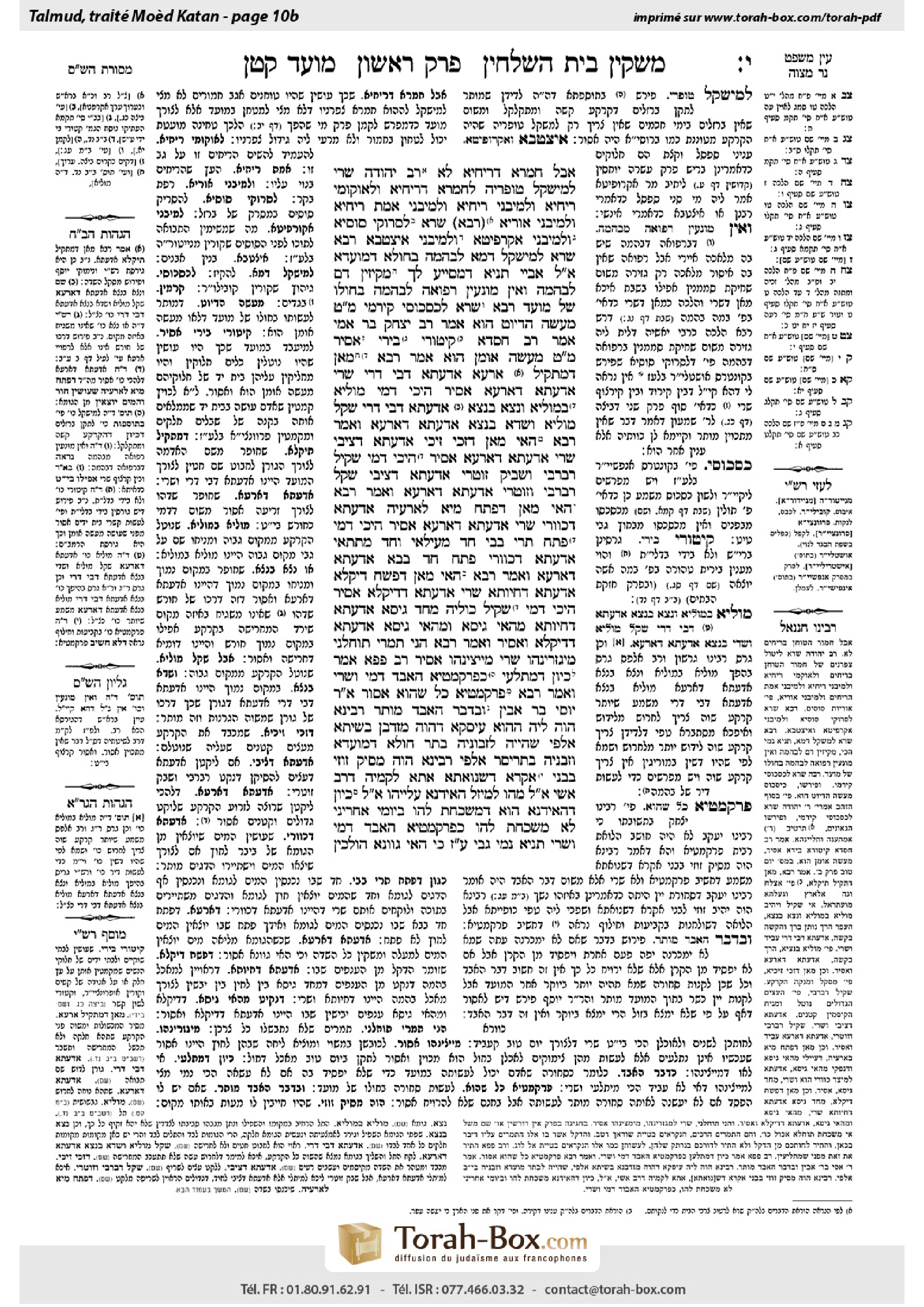
Moed Katan 10b: Talmud study for Daf Yomi
Daf Yomi is the daily study of one Talmud folio. Explore 37 tractates with scans, Hebrew text, Sefaria English and AI-generated French translations where annotated.
Passage selection and English or AI-generated French translation are available where the scan has annotations. Daf Study is independent of Torah-Box and Sefaria.
Browse Moed Katan · מועד קטן · All tractatesMoed Katan 10b text and translations
This page of Moed Katan includes the Aramaic text, an English translation and an AI-generated French translation, alongside the scan above.
מועד קטן י׳ ב · Aramaic and Hebrew text
אֲבָל חֲמָרָא דְרִיחְיָא — לָא.
רַב יְהוּדָה שְׁרֵי לְמִישְׁקַל טוּפְרֵיהּ לַחֲמָרָא דְרִיחְיָא, וּלְאוֹקוֹמֵי רִיחְיָא, וּלְמִיבְנֵי רִיחְיָא, וּלְמִיבְנֵי אַמַּת רִיחְיָא, וּלְמִיבְנֵי אוּרְיָא. רָבָא שְׁרָא לְסָרוֹקֵי סוּסְיָא, וּלְמִיבְנֵי אַקְרָפִיטָא, וּלְמִיבְנֵי אִיצְטְבָא.
רָבָא שְׁרָא לְמִישְׁקַל דְּמָא לִבְהֵמָה בְּחוּלָּא דְּמוֹעֲדָא. אֲמַר לֵיהּ אַבָּיֵי, תַּנְיָא דִּמְסַיַּיע לָךְ: מַקִּיזִין דָּם לַבְּהֵמָה, וְאֵין מוֹנְעִין רְפוּאָה לַבְּהֵמָה בְּחוּלּוֹ שֶׁל מוֹעֵד.
רָבָא שְׁרָא לְכַסְכּוֹסֵי קִירְמֵי. מַאי טַעְמָא — מַעֲשֵׂה הֶדְיוֹט הוּא. אָמַר רַב יִצְחָק בַּר אַמֵּי אֲמַר רַב חִסְדָּא: קִיטּוּרֵי בֵירֵי — אֲסִיר. מַאי טַעְמָא — מַעֲשֵׂה אוּמָּן הוּא.
אָמַר רָבָא: מַאן דִּמְתַקֵּיל אַרְעָא אַדַּעְתָּא דְּבֵי דָרֵי — שְׁרֵי, אַדַּעְתָּא דְאַרְעָא — אֲסִיר.
הֵיכִי דָּמֵי? — מוּלְיָא בְּמוּלְיָא וְנַצָּא בְּנַצָּא — אַדַּעְתָּא דְבֵי דָרֵי, שְׁקַל מוּלְיָא וּשְׁדָא בְּנַצָּא — אַדַּעְתָּא דְאַרְעָא.
וְאָמַר רָבָא: הַאי מַאן דְּזָכֵי זִיכֵי, אַדַּעְתָּא דְצִיבֵי — שְׁרֵי, אַדַּעְתָּא דְאַרְעָא — אֲסִיר. הֵיכִי דָּמֵי? שָׁקֵיל רַבְרְבֵי וְשָׁבֵיק זוּטְרֵי — אַדַּעְתָּא דְצִיבֵי, שְׁקַל רַבְרְבֵי וְזוּטְרֵי — אַדַּעְתָּא דְאַרְעָא.
וְאָמַר רָבָא: הַאי מַאן דְּפָתַח מַיָּא לְאַרְעֵיהּ, אַדַּעְתָּא דִכְווֹרֵי — שְׁרֵי, אַדַּעְתָּא דְאַרְעָא — אֲסִיר.
הֵיכִי דָּמֵי? פָּתַח תְּרֵי בָבֵי, חַד מֵעִילַּאי וְחַד מִתַּתַּאי — אַדַּעְתָּא דִכְווֹרֵי, פְּתַח חַד בָּבָא — אַדַּעְתָּא דְאַרְעָא.
וְאָמַר רָבָא: הַאי מַאן דְּפָשַׁח דִּיקְלָא, אַדַּעְתָּא דְחֵיוָתָא — שְׁרֵי, אַדַּעְתָּא דְּדִיקְלָא — אֲסִיר. הֵיכִי דָּמֵי? שָׁקֵיל כּוּלֵּיהּ מֵחַד גִּיסָא — אַדַּעְתָּא דְחֵיוָתָא, מֵהַאי גִּיסָא וּמֵהַאי גִּיסָא — אַדַּעְתָּא דְּדִיקְלָא וַאֲסִיר.
וְאָמַר רָבָא: הָנֵי תַּמְרֵי תוּחְלָנִי, מִיגְזְרִינְהוּ — שְׁרֵי, מַיְיצִינְהוּ — אֲסִיר. רַב פָּפָּא אָמַר: כֵּיוָן דְּמַתְלְעִי — כִּפְרַקְמַטְיָא הָאָבֵד דָּמֵי, וְשָׁרֵי.
וְאָמַר רָבָא: פְּרַקְמַטְיָא כָּל שֶׁהוּא, אָסוּר. אָמַר רַבִּי יוֹסֵי בַּר אָבִין: וּבַדָּבָר הָאָבֵד — מוּתָּר. רָבִינָא הֲוָה לֵיהּ הָהוּא עִיסְקָא דַּהֲוָה מִזְדַּבַּן בְּשִׁיתָּא אַלְפֵי, שַׁהֲיֵיהּ לְזַבּוֹנֵיהּ בָּתַר חוּלָּא דְמוֹעֲדָא וְזַבְּנֵיהּ בִּתְרֵיסַר אַלְפֵי.
רָבִינָא הֲוָה מַסֵּיק זוּזֵי בִּבְנֵי אַקְרָא דְשַׁנְוָאתָא, אֲתָא לְקַמֵּיהּ דְּרַב אָשֵׁי, אֲמַר לֵיהּ: מַהוּ לְמֵיזַל הָאִידָּנָא עֲלַיְיהוּ? אֲמַר לֵיהּ: כֵּיוָן דְּהָאִידָּנָא הוּא דְּמַשְׁכַּחַתְּ לְהוּ, בְּיוֹמֵי אַחֲרִינֵי לָא מַשְׁכַּחַתְּ לְהוּ — כִּפְרַקְמַטְיָא הָאָבֵד דָּמֵי, וְשָׁרֵי.
תַּנְיָא נָמֵי גַּבֵּי עֲבוֹדָה זָרָה כִּי הַאי גַוְונָא: הוֹלְכִין
Moed Katan 10b · English translation
However, with regard to the hooves of a donkey that turns the millstones, no, they may not be trimmed. This is unnecessary on the intermediate days of a Festival, as one may only grind grain that one needs to use on the Festival itself, and the donkey can perform this task even if its hooves are not trimmed.
Rav Yehuda permits one to trim the hooves of the donkey that turns a mill, to set the stones of a mill in their place, to build the base of a mill, to construct a water channel to carry water that drives a mill, and to build a stable for horses on the intermediate days of a Festival. Rava permitted one to groom a horse, to build a trough, and to build a bench on the intermediate days of a Festival.
Rava also permitted one to let the blood of an animal for medical purposes on the intermediate days of a Festival. Abaye said to him: A baraita is taught that supports you: One may let blood from an animal, and one does not withhold any medical treatment from an animal on the intermediate days of a Festival.
Rava further permitted one to scrub garments as part of the laundry process. What is the reason? It is the work of a layman and not the work of a craftsman, which is prohibited on the intermediate days of a Festival. Rav Yitzḥak bar Ami said that Rav Ḥisda said: Tying sleeves to create pleats is prohibited. What is the reason? It is the work of a craftsman and is consequently prohibited on the intermediate days of a Festival.
§ Rava said: With regard to one who clears the ground on the intermediate days of a Festival, the following distinction applies: If his intention is to prepare a threshing floor, it is permitted, but if his intention is to prepare the ground for planting, it is prohibited.
The Gemara asks: What are the circumstances of each case? The Gemara explains: If he casts earth from one mound [mulya] onto another mound, or from one furrow into another furrow [natza], it is clear that he is doing this with the intention of preparing a threshing floor, as his sole interest is the level area in the middle and not the ground that surrounds it. However, if he takes earth from a mound and casts it into a furrow, he is presumably doing this with the intention of preparing the ground for planting, which is prohibited on the intermediate days of a Festival due to its similarity to the prohibited labor of plowing.
And Rava said: With regard to one who clears his field from twigs on the intermediate days of a Festival, the following distinction applies: If his intention is to use the twigs it is permitted, but if his intention is to prepare the ground for planting, it is prohibited. The Gemara asks: What are the circumstances of each case? The Gemara explains: If he takes the large twigs and leaves the small ones, it is clear that he is doing this with the intention of using the twigs. But if he takes both the large twigs and the small ones, it appears as though that he is doing so with the intention of preparing the ground, and it is prohibited.
And Rava further said: With regard to one who opens the gates of a water channel running through his land on the intermediate days of a Festival, the following distinction applies: If his intention is to catch the fish that come along with the water, it is permitted, but if his intention is to water the ground, it is prohibited.
The Gemara asks: What are the circumstances of each case? The Gemara explains: If he opens two gates in the water channel, one above his field and one below, so the water that flows in also flows out, it is clear that he is doing this with the intention of catching fish, as the water will flow out and only the fish will remain in the indentations in his field. But if he opens only one gate, he is presumably doing this with the intention of watering the ground, as it is evident that he wants the channel to fill and the water to overflow into the field.
And Rava also said: With regard to one who cuts the branches of his date palm on the intermediate days of a Festival, the following distinction applies: If he does this with the intention of feeding his animals, it is permitted, but if he does it with the intention of enhancing the growth of his date palm, it is prohibited. The Gemara asks: What are the circumstances of each case? The Gemara explains: If he takes all of the branches from one side of the tree, he is doing this with the intention of feeding the branches to his animals, as it is evident that he is not concerned with the damage to the date palm. However, if he takes the branches from this side of the tree and also from the other side, it appears as though he is doing so with the intention of enhancing the growth of the date palm, and it is prohibited.
And Rava further said: With regard to these unripe dates, cutting them into pieces in order to render them fit for eating is permitted on the intermediate days of a Festival, but preserving them is prohibited, as they will not be ready for use until after the Festival. Rav Pappa said: Since they are likely to become infested with worms if they are not properly attended to, they are treated like merchandise that will be lost, and it is permitted to preserve them on the intermediate days of a Festival.
§ And Rava also said: Any commerce is prohibited on the intermediate days of a Festival. Rabbi Yosei bar Avin said: But with regard to a matter that, if left unattended, will result in significant loss, it is permitted. The Gemara relates that Ravina once had a joint business venture that could have been sold for six thousand dinars, but he delayed selling it until after the intermediate days of a Festival, and he sold it then for twelve thousand dinars.
It is further related that Ravina had lent money to the residents of the fortress of Shanvata. He came before Rav Ashi and said to him: What is the halakha with regard to going to them now, on the intermediate days of the Festival, to collect my debt? Rav Ashi said to him: Since it is now that you will find them, whereas on other days you will not find them, as during the year these people would travel from place to place to earn their livelihood, this is treated like merchandise that will be lost, and it is therefore permitted.
The Gemara adds: So too, it is taught in a baraita with regard to idol worship like this case: One may go
Moed Katan 10b · Traduction française (IA)
Toutefois, en ce qui concerne les sabots de l’âne qui fait tourner les meules, il est interdit de les parer. Cela n’est pas nécessaire pendant les jours intermédiaires de la fête, car on ne peut moudre que le grain dont on a besoin pour la fête elle-même, et l’âne peut effectuer cette tâche même si ses sabots ne sont pas parés.
Rav Yehouda permet, pendant les jours intermédiaires de la fête, de parer les sabots de l’âne qui fait tourner un moulin, de remettre les meules en place, de construire le socle d’un moulin, d’aménager un canal pour acheminer l’eau qui fait tourner un moulin et de construire une écurie pour les chevaux. Rava permet de panser un cheval, de construire une auge et de fabriquer un banc pendant les jours intermédiaires de la fête.
Rava permet également de saigner un animal à des fins médicales pendant les jours intermédiaires de la fête. Abayé lui dit : « Une baraïta enseignée vient à l’appui de ta position : On peut saigner un animal, et on ne prive un animal d’aucun traitement médical pendant les jours intermédiaires de la fête. »
Rava permet en outre de frotter les vêtements dans le cadre de la lessive. Pour quelle raison ? C’est un travail de profane, et non un travail d’artisan, lequel est interdit pendant les jours intermédiaires de la fête. Rav Yitsḥak bar Ami dit au nom de Rav Ḥisda : Il est interdit d’attacher les manches pour former des plis. Pour quelle raison ? C’est un travail d’artisan et, par conséquent, il est interdit pendant les jours intermédiaires de la fête.
§ Rava dit : Pour celui qui dégage le terrain pendant les jours intermédiaires de la fête, la distinction suivante s’applique : s’il a l’intention d’aménager une aire de battage, cela est permis ; mais s’il a l’intention de préparer le terrain pour y planter, cela est interdit.
La Guemara demande : Dans quelles circonstances chacun de ces cas se présente-t-il ? La Guemara explique : s’il jette de la terre d’un monticule [mulya] sur un autre monticule, ou d’un sillon dans un autre sillon [natza], il est clair qu’il le fait dans l’intention d’aménager une aire de battage, car seul l’intéresse l’espace plat au milieu, et non le terrain qui l’entoure. En revanche, s’il prend de la terre d’un monticule et la jette dans un sillon, il le fait vraisemblablement dans l’intention de préparer le terrain pour y planter, ce qui est interdit pendant les jours intermédiaires de la fête en raison de sa ressemblance avec le labour, travail interdit.
Et Rava dit : Pour celui qui débarrasse son champ des brindilles pendant les jours intermédiaires de la fête, la distinction suivante s’applique : s’il a l’intention d’utiliser les brindilles, cela est permis ; mais s’il a l’intention de préparer le terrain pour y planter, cela est interdit. La Guemara demande : Dans quelles circonstances chacun de ces cas se présente-t-il ? La Guemara explique : s’il prend les grosses brindilles et laisse les petites, il est clair qu’il le fait dans l’intention d’utiliser les brindilles. Mais s’il prend à la fois les grosses et les petites brindilles, il semble qu’il le fasse dans l’intention de préparer le terrain, ce qui est interdit.
Et Rava dit encore : Pour celui qui ouvre les vannes d’un canal d’irrigation traversant son terrain pendant les jours intermédiaires de la fête, la distinction suivante s’applique : s’il a l’intention de capturer les poissons qui arrivent avec l’eau, cela est permis ; mais s’il a l’intention d’arroser le terrain, cela est interdit.
La Guemara demande : Dans quelles circonstances chacun de ces cas se présente-t-il ? La Guemara explique : s’il ouvre deux vannes du canal, l’une en amont de son champ et l’autre en aval, de sorte que l’eau qui entre s’écoule également vers l’extérieur, il est clair qu’il le fait dans l’intention de capturer des poissons, car l’eau s’écoulera et seuls les poissons resteront dans les creux de son champ. Mais s’il n’ouvre qu’une seule vanne, il le fait vraisemblablement dans l’intention d’arroser le terrain, puisqu’il est évident qu’il veut que le canal se remplisse et que l’eau déborde dans le champ.
Et Rava dit également : Pour celui qui coupe les branches de son palmier-dattier pendant les jours intermédiaires de la fête, la distinction suivante s’applique : s’il le fait dans l’intention de nourrir ses animaux, cela est permis ; mais s’il le fait dans l’intention de favoriser la croissance de son palmier-dattier, cela est interdit. La Guemara demande : Dans quelles circonstances chacun de ces cas se présente-t-il ? La Guemara explique : s’il coupe toutes les branches d’un seul côté de l’arbre, il le fait dans l’intention de les donner à manger à ses animaux, car il est évident qu’il ne se soucie pas des dommages causés au palmier-dattier. En revanche, s’il coupe des branches de ce côté de l’arbre et également de l’autre côté, il semble qu’il le fasse dans l’intention de favoriser la croissance du palmier-dattier, ce qui est interdit.
Et Rava dit encore : Pour ces dattes non mûres, les couper en morceaux afin de les rendre propres à la consommation est permis pendant les jours intermédiaires de la fête, mais les conserver est interdit, car elles ne seront prêtes à être utilisées qu’après la fête. Rav Pappa dit : Comme elles risquent d’être infestées de vers si l’on ne s’en occupe pas comme il convient, elles sont considérées comme une marchandise qui risque d’être perdue, et il est donc permis de les conserver pendant les jours intermédiaires de la fête.
§ Et Rava dit également : Tout commerce est interdit pendant les jours intermédiaires de la fête. Rabbi Yosse bar Avin dit : Toutefois, lorsqu’une chose laissée sans surveillance risque d’entraîner une perte importante, cela est permis. La Guemara rapporte que Ravina avait un jour une affaire commerciale en association qui aurait pu être vendue pour six mille dinars, mais qu’il retarda la vente jusqu’après les jours intermédiaires de la fête ; il la vendit alors pour douze mille dinars.
On rapporte en outre que Ravina avait prêté de l’argent aux habitants de la forteresse de Shanvata. Il se présenta devant Rav Ashi et lui dit : « Quelle est la halakha concernant le fait d’aller les voir maintenant, pendant les jours intermédiaires de la fête, pour recouvrer ma créance ? » Rav Ashi lui dit : « C’est maintenant que tu les trouveras, tandis que les autres jours, tu ne les trouveras pas, car, au cours de l’année, ces gens se déplacent d’un endroit à l’autre pour gagner leur vie. Cette créance est donc considérée comme une marchandise qui risque d’être perdue, et il est par conséquent permis d’aller la recouvrer. »
La Guemara ajoute : De même, une baraïta enseigne quelque chose de semblable au sujet de l’idolâtrie : On peut aller
Traduction française générée par IA à partir de l’édition anglaise de Sefaria. Vérifie toujours un passage avec le texte source.
Text from Sefaria: William Davidson Edition - Vocalized Aramaic (CC BY NC); William Davidson Edition - English (CC BY NC).