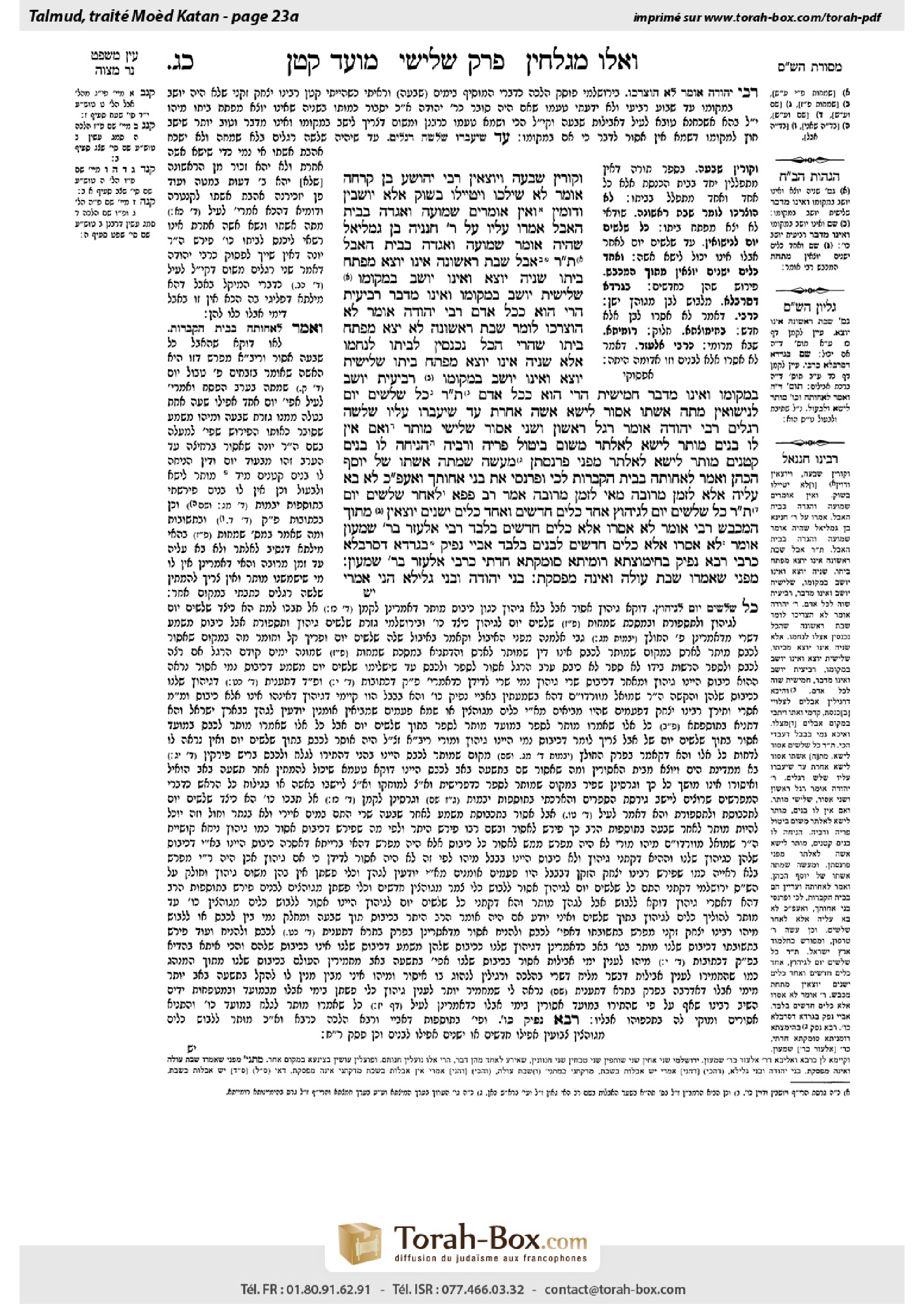
Moed Katan 23a: Talmud study for Daf Yomi
Daf Yomi is the daily study of one Talmud folio. Explore 37 tractates with scans, Hebrew text, Sefaria English and AI-generated French translations where annotated.
Passage selection and English or AI-generated French translation are available where the scan has annotations. Daf Study is independent of Torah-Box and Sefaria.
Browse Moed Katan · מועד קטן · All tractatesMoed Katan 23a text and translations
This page of Moed Katan includes the Aramaic text, an English translation and an AI-generated French translation, alongside the scan above.
מועד קטן כ״ג א · Aramaic and Hebrew text
וְקוֹרִין שִׁבְעָה, וְיוֹצְאִין. רַבִּי יְהוֹשֻׁעַ בֶּן קׇרְחָה אוֹמֵר: לֹא שֶׁיֵּלְכוּ וִיטַיְּילוּ בַּשּׁוּק, אֶלָּא יוֹשְׁבִין וְדָוִוין.
וְאֵין אוֹמְרִים שְׁמוּעָה וְאַגָּדָה בְּבֵית הָאֵבֶל. אָמְרוּ עָלָיו עַל רַבִּי חֲנַנְיָה בֶּן גַּמְלִיאֵל שֶׁהָיָה אוֹמֵר שְׁמוּעָה וְאַגָּדָה בְּבֵית הָאֵבֶל.
תָּנוּ רַבָּנַן: אָבֵל, שַׁבָּת רִאשׁוֹנָה — אֵינוֹ יוֹצֵא מִפֶּתַח בֵּיתוֹ, שְׁנִיָּה — יוֹצֵא וְאֵינוֹ יוֹשֵׁב בִּמְקוֹמוֹ, שְׁלִישִׁית — יוֹשֵׁב בִּמְקוֹמוֹ וְאֵינוֹ מְדַבֵּר, רְבִיעִית — הֲרֵי הוּא כְּכׇל אָדָם.
רַבִּי יְהוּדָה אוֹמֵר: לֹא הוּצְרְכוּ לוֹמַר שַׁבָּת רִאשׁוֹנָה לֹא יֵצֵא מִפֶּתַח בֵּיתוֹ, שֶׁהֲרֵי הַכֹּל נִכְנָסִין לְבֵיתוֹ לְנַחֲמוֹ. אֶלָּא: שְׁנִיָּה — אֵינוֹ יוֹצֵא מִפֶּתַח בֵּיתוֹ, שְׁלִישִׁית — יוֹצֵא וְאֵינוֹ יוֹשֵׁב בִּמְקוֹמוֹ, רְבִיעִית — יוֹשֵׁב בִּמְקוֹמוֹ וְאֵינוֹ מְדַבֵּר, חֲמִישִׁית — הֲרֵי הוּא כְּכׇל אָדָם.
תָּנוּ רַבָּנַן: כׇּל שְׁלֹשִׁים יוֹם לַנִּישּׂוּאִין. מֵתָה אִשְׁתּוֹ — אָסוּר לִישָּׂא אִשָּׁה אַחֶרֶת עַד שֶׁיַּעַבְרוּ עָלָיו שְׁלֹשָׁה רְגָלִים. רַבִּי יְהוּדָה אוֹמֵר: רֶגֶל רִאשׁוֹן וְשֵׁנִי — אָסוּר, שְׁלִישִׁי — מוּתָּר.
וְאִם אֵין לוֹ בָּנִים — מוּתָּר לִישָּׂא לְאַלְתַּר מִשּׁוּם בִּיטּוּל פְּרִיָּה וּרְבִיָּה. הִנִּיחָה לוֹ בָּנִים קְטַנִּים — מוּתָּר לִישָּׂא לְאַלְתַּר מִפְּנֵי פַרְנָסָתָן.
מַעֲשֶׂה שֶׁמֵּתָה אִשְׁתּוֹ שֶׁל יוֹסֵף הַכֹּהֵן, וְאָמַר לַאֲחוֹתָהּ בְּבֵית הַקְּבָרוֹת: לְכִי וּפַרְנְסִי אֶת בְּנֵי אֲחוֹתֵךְ, וְאַף עַל פִּי כֵן לֹא בָּא עָלֶיהָ אֶלָּא לִזְמַן מְרוּבֶּה. מַאי לִזְמַן מְרוּבֶּה? אָמַר רַב פָּפָּא: לְאַחַר שְׁלֹשִׁים יוֹם.
תָּנוּ רַבָּנַן: כׇּל שְׁלֹשִׁים יוֹם לְגִיהוּץ, אֶחָד כֵּלִים חֲדָשִׁים וְאֶחָד כֵּלִים יְשָׁנִים יוֹצְאִין מִתּוֹךְ הַמַּכְבֵּשׁ. רַבִּי אוֹמֵר: לֹא אָסְרוּ אֶלָּא כֵּלִים חֲדָשִׁים בִּלְבָד. רַבִּי אֶלְעָזָר בְּרַבִּי שִׁמְעוֹן אוֹמֵר: לֹא אָסְרוּ אֶלָּא כֵּלִים חֲדָשִׁים לְבָנִים בִּלְבָד.
אַבָּיֵי נָפֵיק בִּגְרָדָא דְסַרְבָּלָא כְּרַבִּי. רָבָא נָפֵיק בְּחִימּוּצְתָּא רוֹמִיתָא סוּמַּקְתָּא חַדְתִּי כְּרַבִּי אֶלְעָזָר בְּרַבִּי שִׁמְעוֹן.
מִפְּנֵי שֶׁאָמְרוּ: שַׁבָּת עוֹלָה וְאֵינָהּ מַפְסֶקֶת. בְּנֵי יְהוּדָה וּבְנֵי גָלִילָא. הָנֵי אָמְרִי:
Moed Katan 23a · English translation
and seven people read from the Torah. And then they leave and pray on their own. Rabbi Yehoshua ben Korḥa says: It is not that they stroll afterward in the marketplace, but rather they sit at home in silent mourning.
And furthermore, one may not speak about halakha or aggada in a house of mourning, as this is an activity that brings people joy. It was said of Rabbi Ḥananya ben Gamliel that he would speak about halakha and aggada in a house of mourning.
§ The Sages taught the following baraita: During the first week after his bereavement, the mourner may not go out of the opening of his house. During the second week, he may go out, but he may not sit in his usual place in the synagogue. During the third week, he may sit in his usual place but he may not speak. During the fourth week, he is like any other person.
Rabbi Yehuda says: They did not need to say that during the first week the mourner may not go out of the opening of his house. This teaches us nothing new, as at that time everyone goes into his house to console him. Rather, during the second week, he may not go out of the opening of his house. During the third week, he may go out, but he may not sit in his usual place in the synagogue. During the fourth week, he may sit in his usual place, but he may not speak. During the fifth week, he is like any other person.
§ The Sages taught another baraita: During the entire thirty-day period of mourning, it is prohibited to marry. If one’s wife died, it is prohibited to marry another wife until three Festivals pass since her death. Rabbi Yehuda says: Until the first and second Festivals have passed, he is prohibited from marrying; before the third Festival, however, he is permitted to do so.
And if he does not have children, he is permitted to marry another wife immediately due to the need to not neglect the mitzva to be fruitful and multiply. Since he has not yet fulfilled the mitzva of procreation, he is still required to marry a wife. Any delay might result in a lost opportunity for marriage. Similarly, if his wife died and left him young children, he is permitted to marry another wife immediately, so that she might take care of them.
There was an incident when the wife of Yosef the Priest died, and he said to her sister at the cemetery immediately after the funeral: Go and care for your sister’s children. In other words, he alluded that he wished to marry her immediately. But even though he married her immediately, he did not engage in sexual relations with her for a long time afterward. The Gemara asks: What is the meaning of the term: A long time? Rav Pappa said: After thirty days.
§ The Sages taught yet another baraita: During the entire thirty-day period of mourning, it is prohibited to wear ironed garments, whether they are new garments or old garments taken out of the press, as ironed garments appear to be new. Rabbi Yehuda HaNasi disagrees and says: The Sages prohibited wearing only new garments. Rabbi Elazar, son of Rabbi Shimon, says: They prohibited wearing only new white garments.
The Gemara relates that Abaye went out while he was in mourning in an old white garment, in accordance with the opinion of Rabbi Yehuda HaNasi. Rava, on the other hand, went out in a new, red Roman cloak, as he acted in accordance with the opinion of Rabbi Elazar, son of Rabbi Shimon.
It was taught in the mishna: This is because the Sages said that Shabbat counts as one of the days of mourning, but it does not interrupt the mourning period, which continues after Shabbat. It is stated that with regard to mourning on Shabbat, there is a difference in practice between the residents of Judea and the residents of the Galilee. These say:
Moed Katan 23a · Traduction française (IA)
et sept personnes lisent dans la Torah. Puis ils sortent et prient chacun de leur côté. Rabbi Yehoshua ben Korḥa dit : Cela ne signifie pas qu’ils se promènent ensuite sur la place du marché, mais qu’ils restent assis chez eux dans le silence du deuil.
En outre, il est interdit de parler de halakha ou d’aggada dans une maison de deuil, car cette activité réjouit les gens. On raconte que Rabbi Ḥananya ben Gamliel parlait de halakha et d’aggada dans une maison de deuil.
§ Les Sages ont enseigné la baraïta suivante : durant la première semaine après son deuil, l’endeuillé ne peut pas sortir de sa maison. Durant la deuxième semaine, il peut sortir, mais il ne peut pas s’asseoir à sa place habituelle à la synagogue. Durant la troisième semaine, il peut s’asseoir à sa place habituelle, mais il ne peut pas parler. Durant la quatrième semaine, il est comme toute autre personne.
Rabbi Yehuda dit : Il n’était pas nécessaire de préciser que, durant la première semaine, l’endeuillé ne peut pas sortir de sa maison. Cela ne nous apprend rien de nouveau, car, à ce moment-là, tout le monde entre chez lui pour le consoler. En revanche, durant la deuxième semaine, il ne peut pas sortir de sa maison. Durant la troisième semaine, il peut sortir, mais il ne peut pas s’asseoir à sa place habituelle à la synagogue. Durant la quatrième semaine, il peut s’asseoir à sa place habituelle, mais il ne peut pas parler. Durant la cinquième semaine, il est comme toute autre personne.
§ Les Sages ont enseigné une autre baraïta : durant toute la période de deuil de trente jours, il est interdit de se marier. Si son épouse est morte, il lui est interdit d’épouser une autre femme avant que trois fêtes de pèlerinage se soient écoulées depuis sa mort. Rabbi Yehuda dit : Il lui est interdit de se marier avant que les première et deuxième fêtes soient passées ; en revanche, il lui est permis de le faire avant la troisième fête.
Et s’il n’a pas d’enfants, il lui est permis d’épouser immédiatement une autre femme, afin de ne pas négliger la mitsva de procréer et de se multiplier. Puisqu’il n’a pas encore accompli la mitsva de procréation, il reste tenu de se marier. Tout retard pourrait lui faire perdre une occasion de se marier. De même, si son épouse est morte en lui laissant de jeunes enfants, il lui est permis d’épouser immédiatement une autre femme, afin qu’elle puisse s’occuper d’eux.
Un jour, l’épouse de Yossef le Prêtre mourut ; immédiatement après les funérailles, au cimetière, il dit à la sœur de celle-ci : « Va t’occuper des enfants de ta sœur. » Autrement dit, il lui faisait comprendre qu’il souhaitait l’épouser immédiatement. Mais, bien qu’il l’ait épousée aussitôt, il n’eut pas de relations sexuelles avec elle pendant longtemps. La Guemara demande : Que signifie l’expression « pendant longtemps » ? Rav Pappa dit : après trente jours.
§ Les Sages ont enseigné une autre baraïta : pendant toute la période de deuil de trente jours, il est interdit de porter des vêtements repassés, qu’il s’agisse de vêtements neufs ou de vieux vêtements sortis de la presse, car les vêtements repassés ont l’apparence de vêtements neufs. Rabbi Yehuda HaNasi n’est pas d’accord et dit : Les Sages ont interdit de porter uniquement des vêtements neufs. Rabbi Elazar, fils de Rabbi Shimon, dit : Ils ont interdit de porter uniquement des vêtements blancs neufs.
La Guemara rapporte qu’Abaye sortit alors qu’il était en deuil, vêtu d’un vieux vêtement blanc, conformément à l’opinion de Rabbi Yehuda HaNasi. Rava, quant à lui, sortit vêtu d’un manteau romain rouge neuf, conformément à l’opinion de Rabbi Elazar, fils de Rabbi Shimon.
Il a été enseigné dans la Michna : les Sages ont dit que le Chabbat compte comme l’un des jours de deuil, mais qu’il n’interrompt pas la période de deuil, qui se poursuit après le Chabbat. Il est indiqué qu’en ce qui concerne le deuil pendant le Chabbat, les habitants de Judée et ceux de Galilée ont des pratiques différentes. Ceux-ci disent :
Traduction française générée par IA à partir de l’édition anglaise de Sefaria. Vérifie toujours un passage avec le texte source.
Text from Sefaria: William Davidson Edition - Vocalized Aramaic (CC BY NC); William Davidson Edition - English (CC BY NC).