Nazir 10b: Talmud study for Daf Yomi
Daf Yomi is the daily study of one Talmud folio. Explore 37 tractates with scans, Hebrew text, Sefaria English and AI-generated French translations where annotated.
Passage selection and English or AI-generated French translation are available where the scan has annotations. Daf Study is independent of Torah-Box and Sefaria.
Browse Nazir · נזיר · All tractatesNazir 10b text and translations
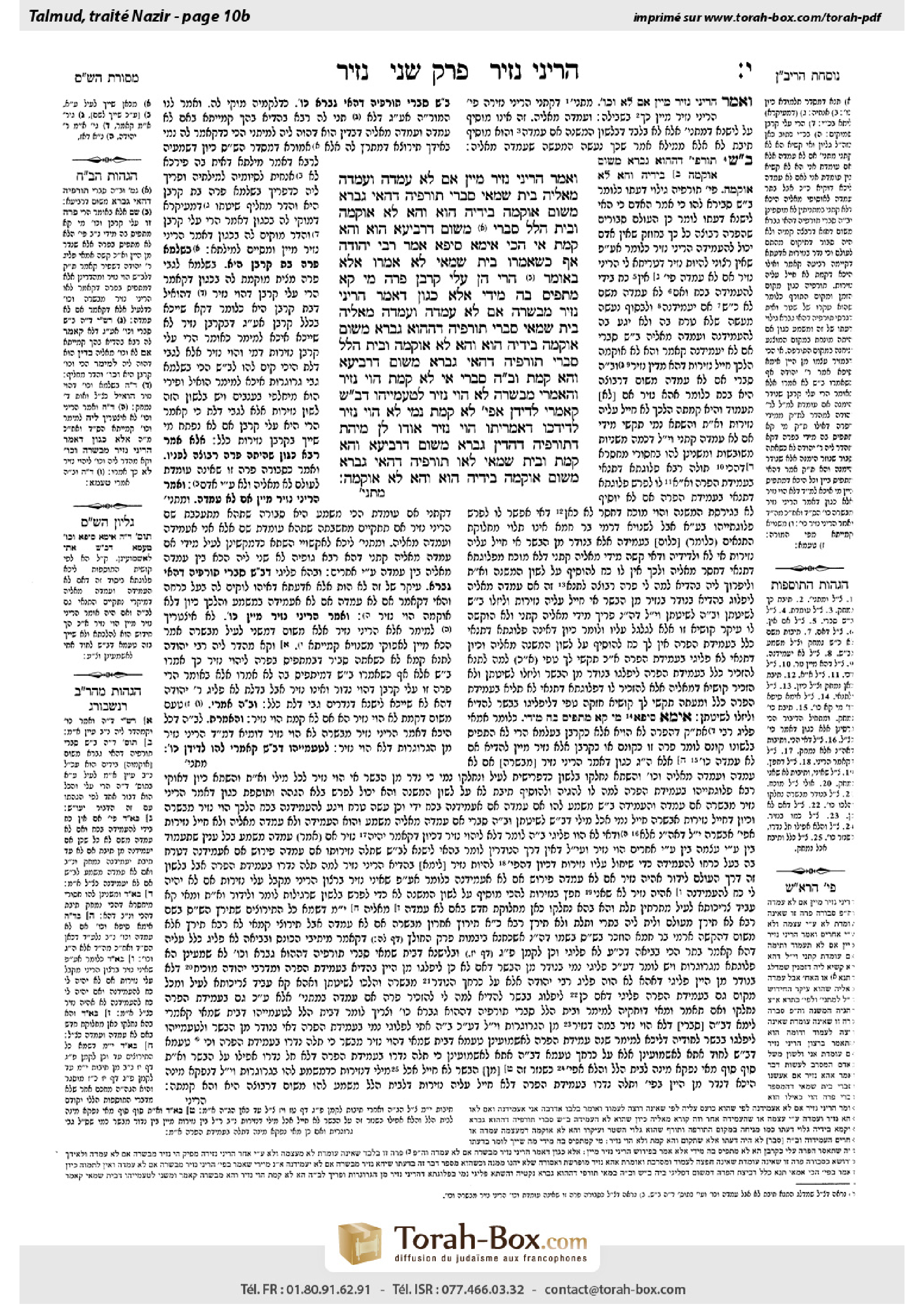
This page of Nazir includes the Aramaic text, an English translation and an AI-generated French translation, alongside the scan above.
נזיר י׳ ב · Aramaic and Hebrew text
וְאָמַר: ״הֲרֵינִי נָזִיר מִיַּיִן אִם לֹא עָמְדָה״, וְעָמְדָה מֵאֵלֶיהָ. בֵּית שַׁמַּאי סָבְרִי: תּוּרְפֵּיהּ דְּהַאי גַּבְרָא מִשּׁוּם אוֹקֹמַהּ בִּידֵיהּ הוּא, וְהָא לָא אוֹקְמַהּ. וּבֵית הִלֵּל סָבְרִי: מִשּׁוּם דִּרְבִיעָא הוּא, וְהָא קָמַת.
אִי הָכִי, אֵימָא סֵיפָא, אָמַר רַבִּי יְהוּדָה: אַף כְּשֶׁאָמְרוּ בֵּית שַׁמַּאי, לֹא אָמְרוּ אֶלָּא בְּאוֹמֵר ״הֲרֵי הֵן עָלַי קׇרְבָּן״. פָּרָה מִי קָא מַתְפֵּיס בָּהּ מִידֵּי?
אֶלָּא כְּגוֹן דְּאָמַר ״הֲרֵינִי נָזִיר מִבְּשָׂרָהּ אִם לֹא עָמְדָה״, וְעָמְדָה מֵאֵלֶיהָ. בֵּית שַׁמַּאי סָבְרִי: תּוּרְפֵּיהּ דְּהָהוּא גַּבְרָא מִשּׁוּם אוֹקֹמַהּ בִּידֵיהּ הוּא, וְהָא לָא אוֹקְמַהּ. וּבֵית הִלֵּל סָבְרִי: תּוּרְפֵּיהּ דְּהַאי גַּבְרָא מִשּׁוּם דִּרְבִיעָא, וְהָא קָמַת.
וּבֵית הִלֵּל סָבְרִי אִי לָא קָמַת הָוֵי נָזִיר? וְהָאָמְרִי ״מִבְּשָׂרָהּ״ — לָא הָוֵי נָזִיר!
לְטַעְמַיְיהוּ דְּבֵית שַׁמַּאי קָאָמְרִי: לְדִידַן אֲפִילּוּ לָא קָמַת, נָמֵי לָא הָוֵי נָזִיר. לְדִידְכוּ דְּאָמְרִיתוּ הָוֵי נָזִיר, אוֹדוֹ לַן מִיהַת דְּתוּרְפֵּיהּ דְּהָדֵין גַּבְרָא מִשּׁוּם דִּרְבִיעָא, וְהָא קָמַת. וּבֵית שַׁמַּאי: לָאו תּוּרְפֵּיהּ דְּהַאי גַּבְרָא מִשּׁוּם אוֹקֹמַהּ בִּידֵיהּ הוּא, וְהָא לָא אוֹקְמַהּ.
Nazir 10b · English translation
and he said: I am hereby a nazirite and therefore will refrain from wine if it does not stand, since I will force it to do so, and it stood of its own accord, without him causing it to stand. Beit Shammai hold: This man’s intention [turpeih] is based upon him having it stand by his own hand, and he did not have it stand. Since he did not cause it to stand, his vow of naziriteship takes effect. And Beit Hillel hold: His intention is based upon the fact that it was prone, and now it has stood. Since the cow stood up it does not matter what caused it to stand, and his vow of naziriteship does not take effect.
The Gemara asks: If so, say the latter clause of the mishna as follows: Rabbi Yehuda said: Even when Beit Shammai said the vow is effective they said so only with regard to one who said: They are hereby forbidden to me as an offering. But does he take a vow and extend any prohibition to the cow? Since according to this approach, he explicitly mentions naziriteship, the cow is not rendered forbidden but is merely the subject of a condition of the vow, so why does Rabbi Yehuda speak of a prohibition on the cow?
The Gemara offers another explanation: Rather, the mishna is referring to a case where he said: I am hereby a nazirite and therefore will refrain from its flesh if it does not stand, and it stood of its own accord. Beit Shammai hold: That man’s intention is based upon him having it stand by his own hand, and he did not have it stand. Since he did not cause it to stand, his vow of prohibition takes effect. And Beit Hillel hold: This man’s intention is based upon the fact that it was prone, and now it has stood, so his vow does not take effect.
The Gemara asks: And do Beit Hillel hold that if the cow does not stand he will be a nazirite? But didn’t they say that if one states: I am hereby a nazirite and therefore will refrain from the cow’s flesh, he is not a nazirite, just as they ruled in a case where one states that he is a nazirite from dried figs?
The Gemara answers: They stated their opinion in accordance with the reasoning of Beit Shammai: According to our opinion, even if the cow does not stand he is also not a nazirite, since naziriteship takes effect only if he vowed that products of the vine are forbidden to him. However, according to your reasoning that you say he is a nazirite, in any event concede to us that this man’s intention is based upon the fact that the cow was prone, and it has stood, so the naziriteship should not take effect. And Beit Shammai hold: Isn’t this man’s intention based upon him having it stand by his own hand, and he did not have it stand? Since his condition was not fulfilled, the naziriteship does not take effect.
Nazir 10b · Traduction française (IA)
Et il dit : « Je suis dès à présent nazir et m’abstiendrai donc de vin si elle ne se relève pas, puisque je la ferai se relever. » Or, elle se releva d’elle-même, sans qu’il la fasse se relever. Beit Chammaï estiment que l’intention de cet homme [turpeih] était qu’elle se relève de sa propre main, mais il ne l’a pas fait. Puisqu’il ne l’a pas fait se relever, son vœu de naziréat prend effet. Beit Hillel, eux, estiment que son intention était fondée sur le fait qu’elle était couchée et que, maintenant, elle s’est relevée. Puisque la vache s’est relevée, peu importe ce qui l’a fait se relever : son vœu de naziréat ne prend pas effet.
La Guemara demande : Si tel est le cas, comment faut-il comprendre la dernière clause de la Michna ? Rabbi Yehouda a dit : « Même lorsque Beit Chammaï ont déclaré que le vœu prend effet, ils ne l’ont dit qu’à propos de celui qui a dit : “Qu’elles me soient dès à présent interdites comme une offrande.” » Mais prend-il un vœu et étend-il une interdiction à la vache ? Selon cette approche, puisqu’il mentionne explicitement le naziréat, la vache n’est pas rendue interdite ; elle est seulement l’objet d’une condition du vœu. Pourquoi Rabbi Yehouda parle-t-il donc d’une interdiction visant la vache ?
La Guemara propose une autre explication : En réalité, la Michna traite du cas où il a dit : « Je suis dès à présent nazir et m’abstiendrai donc de sa chair si elle ne se relève pas », et où elle s’est relevée d’elle-même. Beit Chammaï estiment que l’intention de cet homme était qu’elle se relève de sa propre main, mais il ne l’a pas fait. Puisqu’il ne l’a pas fait se relever, son vœu d’interdiction prend effet. Beit Hillel, eux, estiment que l’intention de cet homme était fondée sur le fait qu’elle était couchée et que, maintenant, elle s’est relevée ; son vœu ne prend donc pas effet.
La Guemara demande : Beit Hillel estiment-ils donc que si la vache ne se relève pas, il sera nazir ? N’ont-ils pas dit que si quelqu’un déclare : « Je suis dès à présent nazir et m’abstiendrai donc de la chair de cette vache », il n’est pas nazir, comme ils l’ont statué dans le cas où quelqu’un déclare être nazir en ce qui concerne les figues sèches ?
La Guemara répond : Ils ont exposé leur opinion en suivant le raisonnement de Beit Chammaï. Selon notre opinion, même si la vache ne se relève pas, il n’est pas non plus nazir, puisque le naziréat ne prend effet que s’il a fait vœu que les produits de la vigne lui soient interdits. Toutefois, selon votre raisonnement, puisque vous dites qu’il est nazir, reconnaissez au moins que l’intention de cet homme était fondée sur le fait que la vache était couchée et qu’elle s’est relevée : le naziréat ne devrait donc pas prendre effet. Beit Chammaï, eux, estiment : l’intention de cet homme n’est-elle pas qu’elle se relève de sa propre main, alors qu’il ne l’a pas fait ? Puisque sa condition n’a pas été remplie, le naziréat ne prend pas effet.
Traduction française générée par IA à partir de l’édition anglaise de Sefaria. Vérifie toujours un passage avec le texte source.
Text from Sefaria: William Davidson Edition - Vocalized Aramaic (CC BY NC); William Davidson Edition - English (CC BY NC).