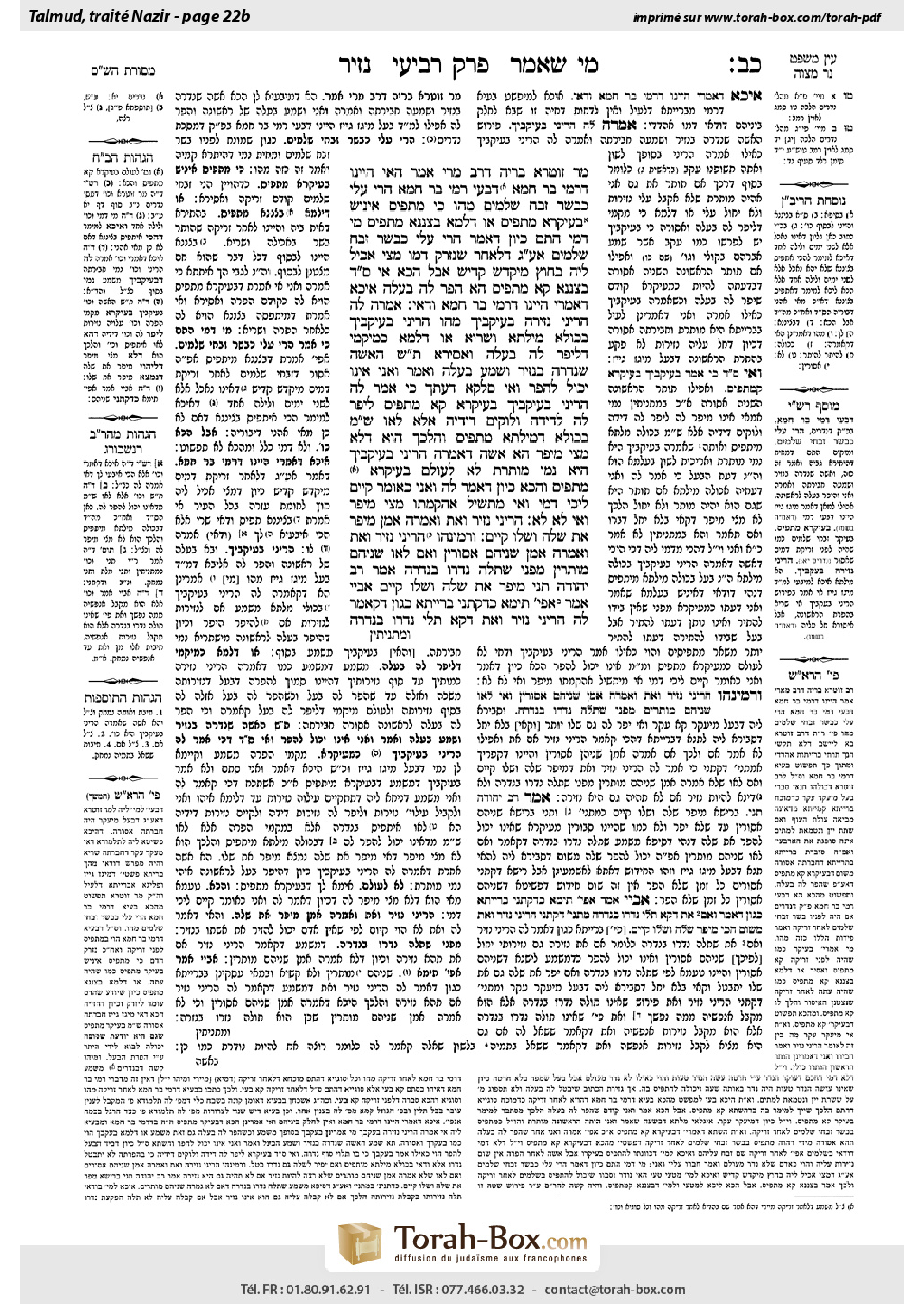
Nazir 22b: Talmud study for Daf Yomi
Daf Yomi is the daily study of one Talmud folio. Explore 37 tractates with scans, Hebrew text, Sefaria English and AI-generated French translations where annotated.
Passage selection and English or AI-generated French translation are available where the scan has annotations. Daf Study is independent of Torah-Box and Sefaria.
Browse Nazir · נזיר · All tractatesNazir 22b text and translations
This page of Nazir includes the Aramaic text, an English translation and an AI-generated French translation, alongside the scan above.
נזיר כ״ב ב · Aramaic and Hebrew text
מָר זוּטְרָא בְּרֵיהּ דְּרַב מָרִי אָמַר: הַאי, הַיְינוּ דְּרָמִי בַּר חָמָא. דְּבָעֵי רָמֵי בַּר חָמָא: ״הֲרֵי עָלַי כִּבְשַׂר זֶבַח שְׁלָמִים״, מַהוּ?
כִּי מַתְפֵּיס אִינִישׁ, בְּעִיקָּרָא מַתְפֵּיס, אוֹ דִּלְמָא בִּצְנָנָא מַתְפֵּיס?
מִי דָּמֵי? הָתָם כֵּיוָן דְּאָמַר ״הֲרֵי עָלַי כִּבְשַׂר זֶבַח שְׁלָמִים״, אַף עַל גַּב דִּלְאַחַר שֶׁנִּזְרַק דָּמוֹ מָצֵי אָכֵיל לֵיהּ בַּחוּץ, מִיקְדָּשׁ קָדֵישׁ. אֲבָל הָכָא, אִי סָלְקָא דַעְתָּךְ בִּצְנָנָא קָא מַתְפֵּיס — הָא הֵפֵר לָהּ בַּעְלָהּ! אִיכָּא דְּאָמְרִי, הַיְינוּ דְּרָמֵי בַּר חָמָא וַדַּאי.
אָמְרָה לָהּ, ״הֲרֵינִי נְזִירָה בְּעִיקְבֵיךְ״, מַהוּ? ״הֲרֵינִי בְּעִיקְבֵיךְ״ — בְּכוֹלָּא מִילְּתָא, וְשַׁרְיָא. אוֹ דִלְמָא כְּמִיקַּמֵּי דְּלֵיפַר לַהּ בַּעְלַהּ, וַאֲסִירָא?
תָּא שְׁמַע: הָאִשָּׁה שֶׁנָּדְרָה בְּנָזִיר, וְשָׁמַע בַּעְלָהּ וְאָמַר ״וַאֲנִי״ — אֵינוֹ יָכוֹל לְהָפֵר. וְאִי סָלְקָא דַּעְתָּךְ כִּי אֲמַר לַהּ ״הֲרֵינִי בְּעִיקְבֵיךְ״ — בְּעִיקָּרָא קָא מַתְפֵּיס, לֵיפַר לַהּ לְדִידַהּ וְלוֹקֵים דִּידֵיהּ.
אֶלָּא לָאו, שְׁמַע מִינַּהּ בְּכוֹלָּא דְּמִילְּתָא מַתְפֵּיס, וְהִלְכָּךְ הוּא דְּלָא מָצֵי מֵיפַר. הָא אִשָּׁה דְּאָמְרָה ״הֲרֵינִי בְּעִיקְבֵיךְ״, הִיא נָמֵי מוּתֶּרֶת!
לָא, לְעוֹלָם בְּעִיקָּרָא מַתְפֵּיס, וְהָכָא כֵּיוָן דְּאָמַר לַהּ ״וַאֲנִי״ — כְּאוֹמֵר ״קַיָּים לִיכִי״ דָּמֵי. וְאִי מִתְּשִׁיל אַהֲקָמָתוֹ — מָצֵי מֵיפַר, וְאִי לָא — לָא.
״הֲרֵינִי נָזִיר וְאַתְּ״, וְאָמְרָה ״אָמֵן״ — מֵיפֵר אֶת שֶׁלָּהּ, וְשֶׁלּוֹ קַיָּים. וּרְמִינְהוּ: ״הֲרֵינִי נָזִיר וְאַתְּ״, וְאָמְרָה ״אָמֵן״ — שְׁנֵיהֶם אֲסוּרִין, וְאִם לָאו — שְׁנֵיהֶם מוּתָּרִין, מִפְּנֵי שֶׁתָּלָה נִדְרוֹ בְּנִדְרָהּ.
אָמַר רַב יְהוּדָה, תְּנִי: ״מֵיפֵר אֶת שֶׁלָּהּ וְשֶׁלּוֹ קַיָּים״. אַבָּיֵי אָמַר: אֲפִילּוּ תֵּימָא כִּדְקָתָנֵי, בָּרַיְיתָא כְּגוֹן דְּקָאָמַר לַהּ: ״הֲרֵינִי נָזִיר וְאַתְּ״, דְּקָא תָּלֵי נִדְרוֹ בְּנִדְרָהּ.
Nazir 22b · English translation
Mar Zutra, son of Rav Mari, said: This problem, with regard to one who associated himself with the vow of a woman whose naziriteship was later nullified, is in essence the same as the dilemma of Rami bar Ḥama concerning a different issue. As Rami bar Ḥama raises a dilemma: If someone said about a certain object: This is forbidden to me like the flesh of a peace-offering, what is the halakha? Is this a vow or not?
The Gemara explains the two sides of the dilemma: When a person associates himself with a prohibition by means of another object, does he associate himself with it by its fundamental state? In this case, this would mean that he has associated himself with an article from which it is prohibited to benefit, as the flesh of a peace-offering is forbidden before its blood is sprinkled. Consequently, the vow would take effect. Or perhaps one associates himself with the item by its eventual permitted state [bitzenana], and as the flesh of a peace-offering may be eaten after the sprinkling of its blood, the vow is ineffective. This question is apparently analogous to the issue of the second woman’s vow: Is she referring to the fundamental, initial state of the first vow, before its nullification, or to its later, permitted state, after it has been dissolved?
The Gemara refutes this argument: Are the two cases comparable? There, since he said: It is forbidden to me like the flesh of a peace-offering, even though after its blood has been sprinkled it can be eaten outside the courtyard, nevertheless it is sacred to a certain extent, which means that his vow is referring to a forbidden object. However, here, if it should enter your mind that the second woman associates herself with the object’s permitted state, her husband has nullified her vow, and therefore there is no vow at all, which renders the statement of the second woman meaningless. Some say that this last refutation is not accepted. In their opinion, the dilemma concerning two women who vowed is certainly similar to that of Rami bar Ḥama.
The Gemara asks: If the second woman said to the first who vowed naziriteship: I am hereby a nazirite in your footsteps, and the husband of the first woman subsequently nullified her vow, what is the halakha of the second woman? Again the Gemara clarifies the two sides of the question: Does the statement: I am hereby a nazirite in your footsteps, mean in all matters, and therefore her vow is dissolved, as the vow of the first woman was ultimately nullified; or perhaps this statement is referring to her status before her husband nullified her vow, and therefore the second woman is bound by her vow?
The Gemara suggests: Come and hear an answer to this question from the mishna: With regard to a woman who vowed to be a nazirite and her husband heard and said: And I, he cannot nullify her vow with which he associated himself, as he would thereby be canceling his own vow. And if it should enter your mind that when he says to her: I am hereby a nazirite in your footsteps, he associates himself with the fundamental state of the vow, and it does not mean that they should be linked throughout, in that case let him nullify her vow and uphold his. In this manner the husband remains bound by his own vow while nullifying his wife’s vow.
Rather, must one not conclude from it that he associates himself with all matters of the vow, and therefore in his case he cannot nullify her vow, as he would thereby be nullifying his own, but with regard to a woman who said: I am hereby a nazirite in your footsteps, she is also permitted by the nullification of the first vow?
The Gemara rejects this argument: No; actually, it is possible that one associates himself with the fundamental state of the vow, and here, in the case of a husband, there is a different reason that he cannot nullify the vow. Since he says to her: And I, he is considered to have said: It is upheld for you, as his own vow indicates his acceptance of hers. And therefore, if he requests from a halakhic authority the dissolution of his upholding of her vow, he can nullify her vow, and if he does not submit this request he cannot nullify his wife’s vow.
§ The mishna teaches that if a husband said: I am hereby a nazirite and you, and his wife said: Amen, he can nullify her vow and his remains intact. And the Gemara raises a contradiction to this from a baraita (Tosefta 3:5): With regard to one who said to his wife: I am hereby a nazirite and you, and she said: Amen, they are both bound by their vows; and if she did not answer: Amen, they are both permitted, because he made his vow dependent on her vow. In other words, he meant that he would be a nazirite on the condition that she too accept naziriteship upon herself. This baraita teaches that if she says: Amen, he cannot nullify her vow, which apparently contradicts the ruling of the mishna.
Rav Yehuda said: Teach the baraita by emending it so that it reads: He can nullify hers and his remains intact, like the mishna, rather than: They are both bound by their vows. Abaye said: You can even say that the baraita should be read as it teaches, without emending it, as there is a difference between the two cases. The baraita is referring to a case where he said to her in a single clause: I am hereby a nazirite and you, as he makes his vow dependent on her vow. Consequently, if she is not a nazirite, his vow is also canceled.
Nazir 22b · Traduction française (IA)
Mar Zutra, fils de Rav Mari, dit : Ce problème, concernant celui qui s’est associé au vœu d’une femme dont le vœu de naziréat a ensuite été annulé, est au fond identique au dilemme que Rami bar Ḥama soulève à propos d’une autre question. Rami bar Ḥama demande en effet : si quelqu’un dit au sujet d’un objet donné : « Cet objet m’est interdit comme la chair d’un sacrifice de paix », quelle est la halakha ? Est-ce un vœu ou non ?
La Guemara expose les deux aspects du dilemme : lorsqu’une personne s’associe à une interdiction au moyen d’un autre objet, s’y associe-t-elle en fonction de son état fondamental ? Dans ce cas, cela signifierait qu’elle s’est associée à un objet dont il est interdit de tirer profit, puisque la chair d’un sacrifice de paix est interdite avant l’aspersion de son sang. Le vœu prendrait donc effet. Ou bien s’y associe-t-elle en fonction de son état ultérieur, lorsqu’il est permis [bitzenana] ? Comme la chair d’un sacrifice de paix peut être consommée après l’aspersion de son sang, le vœu serait alors sans effet. Cette question semble analogue à celle du vœu de la seconde femme : fait-elle référence à l’état fondamental du premier vœu, avant son annulation, ou à son état ultérieur, devenu permis après sa dissolution ?
La Guemara réfute cet argument : les deux cas sont-ils comparables ? Dans le premier cas, puisqu’il a dit : « Cet objet m’est interdit comme la chair d’un sacrifice de paix », même si cette chair peut être consommée hors de la cour après l’aspersion de son sang, elle demeure néanmoins sacrée dans une certaine mesure ; son vœu porte donc sur un objet interdit. Mais ici, si l’on devait penser que la seconde femme s’associe à l’état permis de l’objet, son mari a annulé son vœu et il n’y a donc plus aucun vœu : la déclaration de la seconde femme serait alors dépourvue de sens. Certains disent que cette dernière réfutation n’est pas retenue. Selon eux, le dilemme concernant deux femmes qui ont fait un vœu est bien analogue à celui de Rami bar Ḥama.
La Guemara demande : si la seconde femme a dit à la première, qui a fait vœu de naziréat : « Je deviens naziréenne à ta suite », puis que le mari de la première femme a annulé son vœu, quelle est la halakha pour la seconde femme ? Là encore, la Guemara précise les deux aspects de la question : la formule « Je deviens naziréenne à ta suite » signifie-t-elle qu’elle la suit en tout point, de sorte que son vœu est dissous puisque celui de la première femme a finalement été annulé ? Ou bien cette formule renvoie-t-elle au statut de la première femme avant que son mari n’annule son vœu, auquel cas la seconde femme reste liée par son propre vœu ?
La Guemara propose : « Viens et écoute » une réponse à cette question tirée de la Michna : si une femme a fait vœu de naziréat, que son mari l’a appris et a dit : « Et moi aussi », il ne peut pas annuler le vœu auquel il s’est associé, car il annulerait ainsi son propre vœu. Or, s’il devait te venir à l’esprit que, lorsqu’il lui dit : « Je deviens naziréen à ta suite », il s’associe à l’état fondamental du vœu et que cela ne signifie pas que leurs vœux restent liés en tout point, alors qu’il annule son vœu à elle et maintienne le sien ! Ainsi, le mari resterait lié par son propre vœu tout en annulant celui de sa femme.
Ne faut-il pas plutôt en conclure qu’il s’associe à tous les aspects du vœu ? Il ne peut donc pas annuler le vœu de sa femme, puisqu’il annulerait ainsi le sien. Mais, dans le cas d’une femme qui a dit : « Je deviens naziréenne à ta suite », ne faut-il pas en conclure que la seconde femme est, elle aussi, libérée par l’annulation du premier vœu ?
La Guemara rejette cet argument : non, il est en réalité possible qu’une personne s’associe à l’état fondamental du vœu. Ici, dans le cas du mari, il existe une autre raison pour laquelle il ne peut pas annuler le vœu. Puisqu’il lui dit : « Et moi aussi », on considère qu’il lui a dit : « Ton vœu est maintenu », car son propre vœu indique qu’il accepte le sien. Par conséquent, s’il demande à une autorité halakhique de dissoudre le maintien du vœu de sa femme, il peut ensuite annuler ce vœu ; s’il ne présente pas cette demande, il ne peut pas annuler le vœu de sa femme.
§ La Michna enseigne que si un mari a dit : « Je deviens naziréen, et toi aussi », et que sa femme a répondu : « Amen », il peut annuler le vœu de sa femme, tandis que le sien reste en vigueur. La Guemara soulève une contradiction à partir d’une baraïta (Tosefta 3:5) : si un homme a dit à sa femme : « Je deviens naziréen, et toi aussi », et qu’elle a répondu : « Amen », tous deux restent liés par leurs vœux ; si elle n’a pas répondu : « Amen », tous deux en sont libérés, car il a subordonné son vœu au sien. Autrement dit, il voulait dire qu’il serait naziréen à condition qu’elle accepte elle aussi le naziréat. Cette baraïta enseigne que, si elle répond : « Amen », il ne peut pas annuler son vœu, ce qui semble contredire la décision de la Michna.
Rav Yehuda dit : corrige la baraïta pour qu’elle se lise ainsi : « Il peut annuler le vœu de sa femme, tandis que le sien reste en vigueur », comme dans la Michna, au lieu de : « Tous deux restent liés par leurs vœux. » Abaye dit : on peut même dire que la baraïta doit être lue telle qu’elle est enseignée, sans correction, car les deux cas diffèrent. La baraïta parle d’un cas où il lui a dit en une seule proposition : « Je deviens naziréen, et toi aussi », subordonnant ainsi son vœu au sien. Par conséquent, si elle n’est pas naziréenne, son vœu à lui est également annulé.
Traduction française générée par IA à partir de l’édition anglaise de Sefaria. Vérifie toujours un passage avec le texte source.
Text from Sefaria: William Davidson Edition - Vocalized Aramaic (CC BY NC); William Davidson Edition - English (CC BY NC).