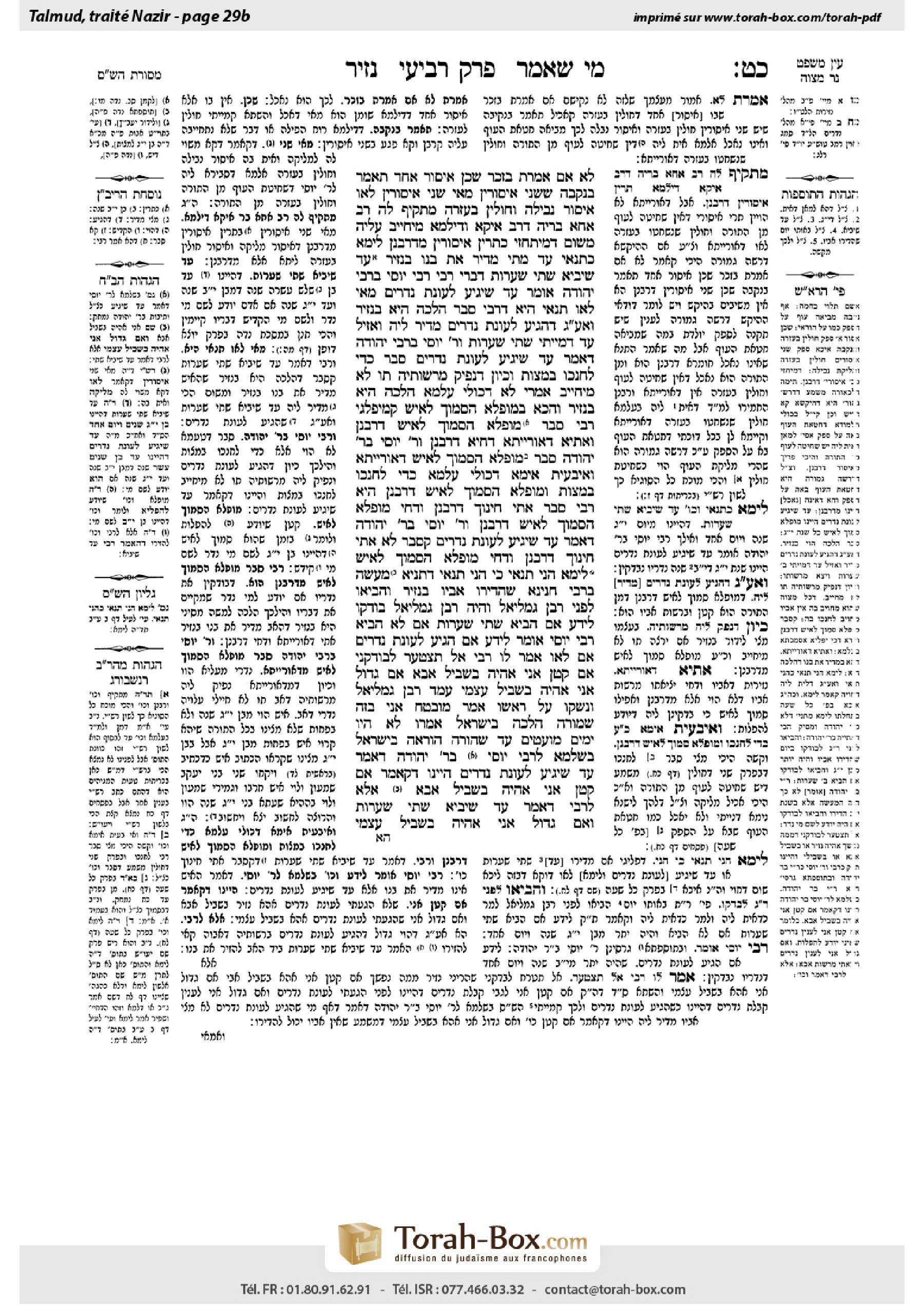
Nazir 29b: Talmud study for Daf Yomi
Daf Yomi is the daily study of one Talmud folio. Explore 37 tractates with scans, Hebrew text, Sefaria English and AI-generated French translations where annotated.
Passage selection and English or AI-generated French translation are available where the scan has annotations. Daf Study is independent of Torah-Box and Sefaria.
Browse Nazir · נזיר · All tractatesNazir 29b text and translations
This page of Nazir includes the Aramaic text, an English translation and an AI-generated French translation, alongside the scan above.
נזיר כ״ט ב · Aramaic and Hebrew text
לֹא, אִם אָמַרְתָּ בְּזָכָר — שֶׁכֵּן אִיסּוּר אֶחָד, תֹּאמַר בִּנְקֵבָה — שֶׁשְּׁנֵי אִיסּוּרִין.
מַאי שְׁנֵי אִיסּוּרִין? לָאו אִיסּוּר נְבֵילָה וְחוּלִּין בַּעֲזָרָה? מַתְקֵיף לַהּ רַב אַחָא בְּרֵיהּ דְּרַב אִיקָא: וְדִילְמָא מִיחַיַּיב עֲלֵיהּ, מִשּׁוּם דְּמִיתְחֲזֵי כִּתְרֵין אִיסּוּרִין מִדְּרַבָּנַן!
לֵימָא כְּתַנָּאֵי: עַד מָתַי מַדִּיר אֶת בְּנוֹ בְּנָזִיר — עַד שֶׁיָּבִיא שְׁתֵּי שְׂעָרוֹת, דִּבְרֵי רַבִּי. רַבִּי יוֹסֵי בְּרַבִּי יְהוּדָה אוֹמֵר: עַד שֶׁיַּגִּיעַ לְעוֹנַת נְדָרִים.
מַאי לָאו תַּנָּאֵי הִיא? דְּרַבִּי סָבַר הֲלָכָה הִיא בְּנָזִיר, וְאַף עַל גַּב דְּהִגִּיעַ לְעוֹנַת נְדָרִים, מַדִּיר לֵיהּ וְאָזֵיל עַד דְּמַיְיתֵי שְׁתֵּי שְׂעָרוֹת. וְרַבִּי יוֹסֵי בְּרַבִּי יְהוּדָה, דְּאָמַר: עַד שֶׁיַּגִּיעַ לְעוֹנַת נְדָרִים, סָבַר כְּדֵי לְחַנְּכוֹ בְּמִצְוֹת, וְכֵיוָן דְּנָפֵיק מֵרְשׁוּתֵיהּ — תּוּ לָא מִיחַיַּיב?
אָמְרִי: לָא. דְּכוּלֵּי עָלְמָא הֲלָכָה הִיא בְּנָזִיר, וְהָכָא בְּ״מוּפְלָא הַסָּמוּךְ לְאִישׁ״ קָמִיפַּלְגִי.
רַבִּי סָבַר: מוּפְלָא הַסָּמוּךְ לְאִישׁ — דְּרַבָּנַן, וְאָתְיָא דְּאוֹרָיְיתָא דָּחֲיָא דְּרַבָּנַן. וְרַבִּי יוֹסֵי בְּרַבִּי יְהוּדָה סָבַר: מוּפְלָא הַסָּמוּךְ לְאִישׁ — דְּאוֹרָיְיתָא.
וְאִיבָּעֵית אֵימָא: דְּכוּלֵּי עָלְמָא כְּדֵי לְחַנְּכוֹ בְּמִצְוֹת, וּמוּפְלָא הַסָּמוּךְ לְאִישׁ — דְּרַבָּנַן הִיא. רַבִּי סָבַר: אָתֵי חִינּוּךְ דְּרַבָּנַן וְדָחֵי מוּפְלָא הַסָּמוּךְ לְאִישׁ דְּרַבָּנַן.
וְרַבִּי יוֹסֵי בְּרַבִּי יְהוּדָה דְּאָמַר עַד שֶׁיַּגִּיעַ לְעוֹנַת נְדָרִים, קָסָבַר: לָא אָתֵי חִינּוּךְ דְּרַבָּנַן וְדָחֵי מוּפְלָא הַסָּמוּךְ לְאִישׁ.
לֵימָא הָנֵי תַּנָּאֵי כִּי הָנֵי תַּנָּאֵי, דְּתַנְיָא: מַעֲשֶׂה בְּרַבִּי חֲנִינָא שֶׁהִדִּירוֹ אָבִיו בְּנָזִיר, וֶהֱבִיאוֹ לִפְנֵי רַבָּן גַּמְלִיאֵל. וְהָיָה רַבָּן גַּמְלִיאֵל בּוֹדְקוֹ לֵידַע אִם הֵבִיא שְׁתֵּי שְׂעָרוֹת, אִם לֹא הֵבִיא.
רַבִּי יוֹסֵי אוֹמֵר: לֵידַע אִם הִגִּיעַ לְעוֹנַת נְדָרִים, אִם לָאו. אָמַר לוֹ: רַבִּי, אַל תִּצְטַעֵר לְבוֹדְקֵנִי, אִם קָטָן אֲנִי — אֶהְיֶה בִּשְׁבִיל אַבָּא, אִם גָּדוֹל אֲנִי — אֶהְיֶה בִּשְׁבִיל עַצְמִי. עָמַד רַבָּן גַּמְלִיאֵל וּנְשָׁקוֹ עַל רֹאשׁוֹ, אָמַר: מוּבְטָח אֲנִי בָּזֶה שֶׁמּוֹרֶה הֲלָכָה בְּיִשְׂרָאֵל. אָמְרוּ: לֹא הָיוּ יָמִים מוּעָטִים עַד שֶׁהוֹרָה הוֹרָאָה בְּיִשְׂרָאֵל.
בִּשְׁלָמָא לְרַבִּי יוֹסֵי בְּרַבִּי יְהוּדָה, דְּאָמַר: עַד שֶׁיַּגִּיעַ לְעוֹנַת נְדָרִים, הַיְינוּ דְּקָאָמַר ״אִם קָטָן אֲנִי אֶהְיֶה בִּשְׁבִיל אַבָּא״. אֶלָּא לְרַבִּי, דְּאָמַר: עַד שֶׁיָּבִיא שְׁתֵּי שְׂעָרוֹת — ״וְאִם גָּדוֹל אֲנִי אֶהְיֶה בִּשְׁבִיל עַצְמִי״,
Nazir 29b · English translation
No, you cannot make this claim, because if you say that this is true with regard to a male, when bringing his offering involves only one uncertain prohibition, i.e., that he might be bringing non-sacred animals into the Temple courtyard, shall you also say that this is the case with regard to a female, whose case includes two prohibitions? This concludes the baraita.
The Gemara asks: What are these two prohibitions? Are they not the prohibition against consuming an unslaughtered animal carcass by eating a bird killed by pinching, and the prohibition against bringing non-sacred animals into the Temple courtyard? This shows that the prohibition against bringing non-sacred animals into the Temple courtyard applies by Torah law according to the opinion of Rabbi Yosei, son of Rabbi Yehuda. Rav Aḥa, son of Rav Ika, objects to this: And perhaps one is not liable for these prohibitions by Torah law, rather, the baraita means that one is liable for this because it appears like two Torah prohibitions, although they actually apply only by rabbinic law.
§ The Gemara returns to the question of whether the ruling that a man can impose naziriteship on his son is a halakha transmitted to Moses from Sinai or whether it is part of the boy’s education. Let us say that this is parallel to a dispute between tanna’im. As it is taught: Until when can a father vow that his son should be a nazirite? It is until the son develops two pubic hairs; this is the statement of Rabbi Yehuda HaNasi. Rabbi Yosei, son of Rabbi Yehuda, says: It is until he reaches the age of vows, usually approximately a year earlier, when he demonstrates an understanding of the nature of vows. If he vows at that age and comprehends the significance of his utterance, his vow is valid.
What, is it not the case that this is a dispute between tanna’im: As Rabbi Yehuda HaNasi holds that it is a halakha transmitted to Moses from Sinai with regard to a nazirite, and therefore even though the son has already reached the age of vows and is capable of making his own decision with regard to the vow, this halakha states that the father continues to vow for him until he develops two pubic hairs, the sign of maturity. And Rabbi Yosei, son of Rabbi Yehuda, who says that the father can vow for the son only until he reaches the age of vows, holds that he imposes a vow on his son in order to educate him in mitzvot, and since the son has left the father’s supervision to the degree that he can utter his own vows, the father is no longer obligated to educate him in this area of halakha.
The Gemara rejects this argument. The Sages say in response: No; this is not the correct explanation of that dispute, as one can say that everyone, both Rabbi Yehuda HaNasi and Rabbi Yosei, son of Rabbi Yehuda, agrees with Rabbi Yoḥanan that it is a halakha with regard to a nazirite, and here they disagree with regard to the issue of a minor one year before he or she reaches majority. In other words, they dispute the case of a child who utters a vow when he is almost mature, on the verge of puberty. It is an accepted halakha that the vow of this child is valid if he understands its meaning. The dispute concerns the source of this halakha.
Rabbi Yehuda HaNasi holds that the status of a minor one year before he or she reaches majority applies by rabbinic law, and therefore the halakha by Torah law that a father can vow on behalf of his son comes and overrides the decree that one who is near the age of maturity is considered an independent adult with regard to vows, which is by rabbinic law. And Rabbi Yosei, son of Rabbi Yehuda, holds that the status of a minor one year before he or she reaches majority applies by Torah law. Consequently, the halakha that a father can vow on behalf of his son does not apply to this case.
And if you wish, say instead that everyone agrees that a father vows for his son in order to educate him in mitzvot, which means it is by rabbinic law, and likewise the status of a minor one year before he or she reaches majority is also by rabbinic law. In that case, the tanna’im dispute the following: Rabbi Yehuda HaNasi holds that the mitzva of education, which applies by rabbinic law, comes and overrides the status of a minor one year before he or she reaches majority, which is also by rabbinic law.
And Rabbi Yosei, son of Rabbi Yehuda, who said that a father can vow for his son only until he reaches the age of vows, holds that the mitzva of education by rabbinic law does not come and override the status of a minor one year before he or she reaches majority. Consequently, there is no necessary connection between this dispute of tanna’im and the argument between Rabbi Yoḥanan and Reish Lakish as to whether the ruling that a father can impose naziriteship on his son is a halakha transmitted to Moses from Sinai or an educational tool.
With regard to the dispute concerning the time period for a father’s vow on behalf of his son, the Gemara suggests: Shall we say that the dispute between these tanna’im is like the dispute between those other tanna’im, as it is taught in a baraita (Tosefta, Nidda 5:9): An incident occurred involving Rabbi Ḥanina in which his father vowed that he should be a nazirite when he was a minor, and they brought him before Rabban Gamliel, and Rabban Gamliel examined him to discern if he had already developed two pubic hairs, in which case the vow would not take effect, or if he had not developed them, which would mean that the vow was valid.
Rabbi Yosei says that Rabban Gamliel examined him to discern whether he had reached the age of vows or not, which he maintains is the decisive factor. The child said to Rabban Gamliel: My teacher, do not go to the trouble of examining me, since if I am a minor I shall be a nazirite due to my father’s vow, and if I am an adult, I shall be a nazirite due to my own vow. Rabban Gamliel arose and kissed the child on his head. He said: I am certain of this child that he will eventually become an authority of halakha for the Jewish people. They said: In fact, it was only a few years later that the child issued rulings for the Jewish people.
The Gemara explains its suggestion: Granted, according to the opinion of Rabbi Yosei, son of Rabbi Yehuda, who said that a father can vow on behalf of his son only until he reaches the age of vows, this is why the child said: If I am a minor I shall be a nazirite due to my father, as he means: If I have not yet reached the age of vows. However, according to the opinion of Rabbi Yehuda HaNasi, who said that a father can vow naziriteship for his son until he develops two pubic hairs, despite the fact that he is already mature with regard to vows, what is the meaning of: And if I am an adult, I shall be a nazirite due to my own vow?
Nazir 29b · Traduction française (IA)
Non, on ne peut pas soutenir cela, car si l’on dit que c’est vrai pour un garçon, puisque présenter son offrande n’implique qu’une seule interdiction incertaine, à savoir qu’il pourrait faire entrer des animaux non consacrés dans le parvis du Temple, peut-on également le dire d’une fille, dont le cas comporte deux interdictions ? Cela conclut la baraïta.
La Guemara demande : Quelles sont ces deux interdictions ? Ne s’agit-il pas de l’interdiction de consommer la carcasse d’un animal non abattu rituellement en mangeant un oiseau tué par meliqa, et de l’interdiction de faire entrer des animaux non consacrés dans le parvis du Temple ? Cela montre que, selon l’opinion de Rabbi Yosei, fils de Rabbi Yehuda, l’interdiction de faire entrer des animaux non consacrés dans le parvis du Temple s’applique selon la Torah écrite. Rav Aḥa, fils de Rav Ika, objecte : Peut-être n’est-on pas passible de ces interdictions selon la Torah ; la baraïta veut plutôt dire qu’on en est passible parce que cela ressemble à deux interdictions de la Torah, alors qu’en réalité elles ne s’appliquent que selon la loi rabbinique.
§ La Guemara revient à la question de savoir si la règle selon laquelle un homme peut imposer le naziréat à son fils est une halakha transmise à Moïse au Sinaï ou si elle relève de l’éducation du garçon. Peut-on dire que cela correspond à une controverse entre tannaïm ? En effet, il est enseigné : Jusqu’à quand un père peut-il faire le vœu que son fils soit nazir ? Jusqu’à ce que son fils ait deux poils pubiens ; telle est la déclaration de Rabbi Yehuda HaNasi. Rabbi Yosei, fils de Rabbi Yehuda, dit : Jusqu’à ce qu’il atteigne l’âge des vœux, généralement environ un an plus tôt, lorsqu’il manifeste qu’il comprend la nature des vœux. S’il fait un vœu à cet âge et en comprend la portée, son vœu est valide.
N’est-ce pas une controverse entre tannaïm ? Rabbi Yehuda HaNasi considère qu’il s’agit d’une halakha transmise à Moïse au Sinaï concernant le nazir ; par conséquent, même si le fils a déjà atteint l’âge des vœux et est capable de prendre lui-même une décision à ce sujet, cette halakha enseigne que son père continue à faire un vœu pour lui jusqu’à ce qu’il ait deux poils pubiens, signe de maturité. Rabbi Yosei, fils de Rabbi Yehuda, qui dit que le père ne peut faire un vœu pour son fils que jusqu’à ce que celui-ci atteigne l’âge des vœux, considère que le père lui impose un vœu afin de l’éduquer aux mitsvot ; puisque le fils est sorti de la tutelle de son père au point de pouvoir prononcer lui-même ses vœux, le père n’est plus tenu de l’éduquer dans ce domaine de la halakha.
La Guemara rejette cet argument. Les Sages répondent : Non, ce n’est pas la bonne explication de cette controverse, car on peut dire que tous, Rabbi Yehuda HaNasi comme Rabbi Yosei, fils de Rabbi Yehuda, sont d’accord avec Rabbi Yoḥanan pour dire qu’il s’agit d’une halakha concernant le nazir ; ici, ils sont en désaccord au sujet du mineur qui se trouve à un an de la majorité. Autrement dit, ils discutent du cas d’un enfant qui prononce un vœu alors qu’il est presque mûr, au seuil de la puberté. Il est admis que le vœu de cet enfant est valide s’il en comprend le sens. La controverse porte sur la source de cette halakha.
Rabbi Yehuda HaNasi considère que le statut du mineur qui se trouve à un an de la majorité relève de la loi rabbinique. Par conséquent, la halakha selon la Torah écrite, selon laquelle un père peut faire un vœu au nom de son fils, prévaut sur le décret rabbinique selon lequel celui qui approche de l’âge de la maturité est considéré comme un adulte autonome en matière de vœux. Rabbi Yosei, fils de Rabbi Yehuda, considère que le statut du mineur qui se trouve à un an de la majorité relève de la Torah écrite. Par conséquent, la halakha selon laquelle un père peut faire un vœu au nom de son fils ne s’applique pas à ce cas.
Et si tu veux, dis plutôt que tous conviennent qu’un père fait un vœu pour son fils afin de l’éduquer aux mitsvot, ce qui relève de la loi rabbinique ; de même, le statut du mineur qui se trouve à un an de la majorité relève également de la loi rabbinique. Dans ce cas, les tannaïm sont en désaccord sur le point suivant : Rabbi Yehuda HaNasi considère que la mitsva d’éducation, qui relève de la loi rabbinique, prévaut sur le statut du mineur qui se trouve à un an de la majorité, lequel relève lui aussi de la loi rabbinique.
Rabbi Yosei, fils de Rabbi Yehuda, qui dit qu’un père ne peut faire un vœu pour son fils que jusqu’à ce que celui-ci atteigne l’âge des vœux, considère que la mitsva d’éducation relevant de la loi rabbinique ne prévaut pas sur le statut du mineur qui se trouve à un an de la majorité. Par conséquent, il n’existe aucun lien nécessaire entre cette controverse de tannaïm et le débat entre Rabbi Yoḥanan et Reish Lakish sur la question de savoir si la règle selon laquelle un père peut imposer le naziréat à son fils est une halakha transmise à Moïse au Sinaï ou un moyen de l’éduquer.
Au sujet de la période pendant laquelle un père peut faire un vœu au nom de son fils, la Guemara suggère : Peut-on dire que la controverse entre ces tannaïm est semblable à celle entre ces autres tannaïm ? En effet, il est enseigné dans une baraïta (Tosefta, Nidda 5:9) : Un événement eut lieu au sujet de Rabbi Ḥanina : alors qu’il était mineur, son père fit le vœu qu’il soit nazir, et on le conduisit devant Rabban Gamliel. Rabban Gamliel l’examina pour déterminer s’il avait déjà deux poils pubiens, auquel cas le vœu ne prendrait pas effet, ou s’il ne les avait pas encore, ce qui signifierait que le vœu était valide.
Rabbi Yosei dit que Rabban Gamliel l’examina pour déterminer s’il avait atteint ou non l’âge des vœux, qu’il considère comme le critère décisif. L’enfant dit à Rabban Gamliel : « Mon maître, ne te donne pas la peine de m’examiner, car si je suis mineur, je serai nazir en vertu du vœu de mon père, et si je suis adulte, je serai nazir en vertu de mon propre vœu. » Rabban Gamliel se leva et embrassa l’enfant sur la tête. Il dit : « Je suis certain que cet enfant deviendra un jour une autorité en matière de halakha pour le peuple juif. » On dit qu’en fait, quelques années seulement s’écoulèrent avant que l’enfant ne rende des décisions pour le peuple juif.
La Guemara explique sa suggestion : Il est compréhensible que, selon l’opinion de Rabbi Yosei, fils de Rabbi Yehuda, qui dit qu’un père ne peut faire un vœu au nom de son fils que jusqu’à ce que celui-ci atteigne l’âge des vœux, l’enfant ait dit : « Si je suis mineur, je serai nazir en vertu du vœu de mon père », car il veut dire : si je n’ai pas encore atteint l’âge des vœux. Cependant, selon l’opinion de Rabbi Yehuda HaNasi, qui dit qu’un père peut imposer le naziréat à son fils jusqu’à ce qu’il ait deux poils pubiens, même s’il est déjà considéré comme mûr en matière de vœux, que signifie : « Et si je suis adulte, je serai nazir en vertu de mon propre vœu » ?
Traduction française générée par IA à partir de l’édition anglaise de Sefaria. Vérifie toujours un passage avec le texte source.
Text from Sefaria: William Davidson Edition - Vocalized Aramaic (CC BY NC); William Davidson Edition - English (CC BY NC).