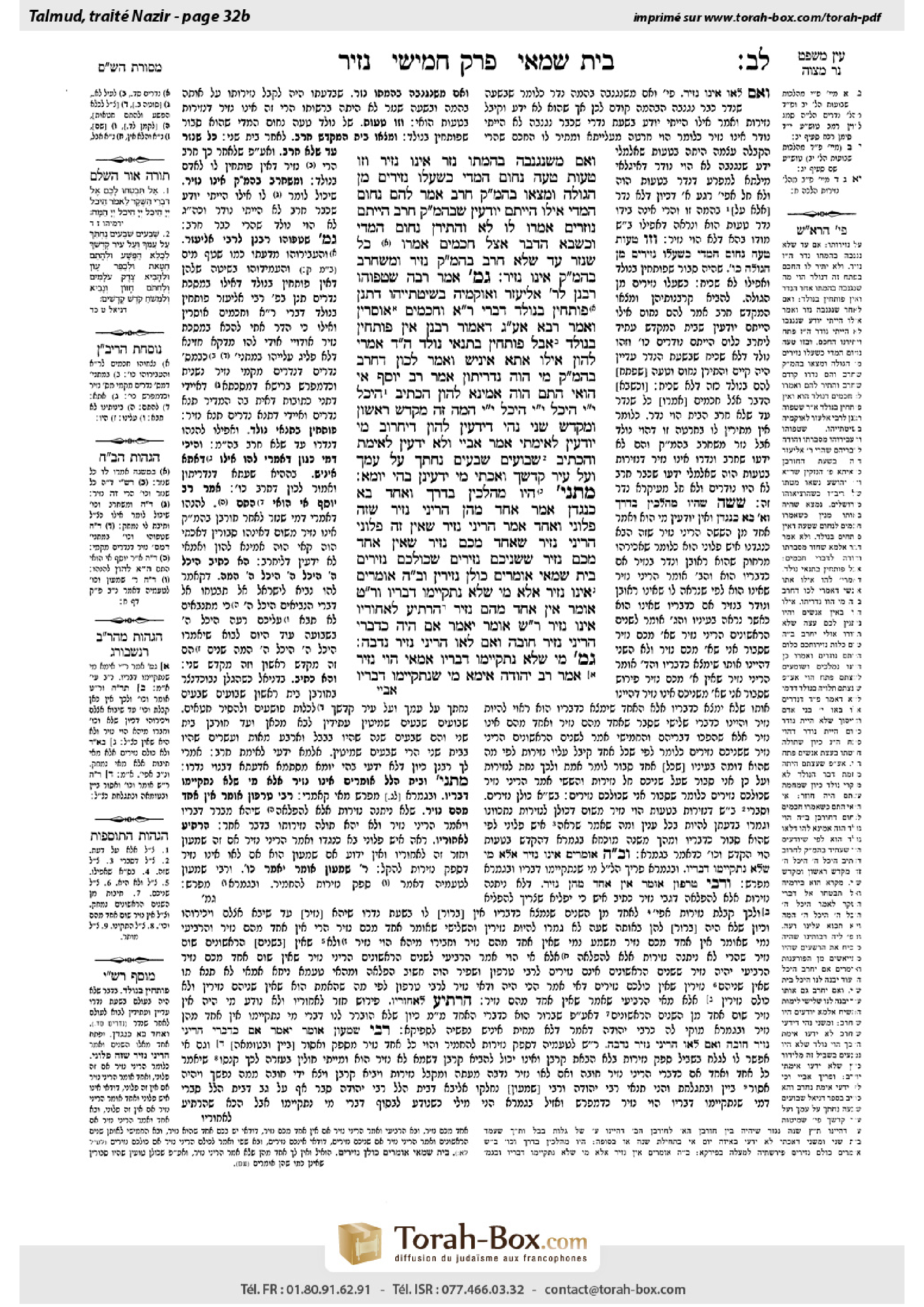
Nazir 32b: Talmud study for Daf Yomi
Daf Yomi is the daily study of one Talmud folio. Explore 37 tractates with scans, Hebrew text, Sefaria English and AI-generated French translations where annotated.
Passage selection and English or AI-generated French translation are available where the scan has annotations. Daf Study is independent of Torah-Box and Sefaria.
Browse Nazir · נזיר · All tractatesNazir 32b text and translations
This page of Nazir includes the Aramaic text, an English translation and an AI-generated French translation, alongside the scan above.
נזיר ל״ב ב · Aramaic and Hebrew text
וְאִם מִשֶּׁנִּגְנְבָה בְּהֶמְתּוֹ נָזַר — אֵינוֹ נָזִיר. וְזוֹ טָעוּת טָעָה נַחוּם הַמָּדִי: כְּשֶׁעָלוּ נְזִירִים מִן הַגּוֹלָה וּמָצְאוּ בֵּית הַמִּקְדָּשׁ חָרֵב, אָמַר לָהֶם נַחוּם הַמָּדִי: אִילּוּ הֱיִיתֶם יוֹדְעִין שֶׁבֵּית הַמִּקְדָּשׁ חָרֵב, הֱיִיתֶם נוֹזְרִים? אָמְרוּ לוֹ: לֹא. וְהִתִּירָן נַחוּם הַמָּדִי.
וּכְשֶׁבָּא הַדָּבָר אֵצֶל חֲכָמִים אָמְרוּ: כׇּל שֶׁנָּזַר עַד שֶׁלֹּא חָרַב בֵּית הַמִּקְדָּשׁ — נָזִיר. וּמִשֶּׁחָרַב בֵּית הַמִּקְדָּשׁ — אֵינוֹ נָזִיר.
גְּמָ׳ אָמַר רַבָּה: שַׁטְפוּהוּ רַבָּנַן לְרַבִּי אֱלִיעֶזֶר וְאוֹקְמֻיהּ בְּשִׁיטְתַיְיהוּ. דִּתְנַן: פּוֹתְחִין בְּנוֹלָד, דִּבְרֵי רַבִּי אֱלִיעֶזֶר, וַחֲכָמִים אוֹסְרִין.
וְאָמַר רָבָא: אַף עַל גַּב דַּאֲמוּר רַבָּנַן אֵין פּוֹתְחִין בְּנוֹלָד, אֲבָל פּוֹתְחִין בִּתְנַאי נוֹלָד. הֵיכִי דָּמֵי? אָמְרִי לְהוֹן: אִילּוּ אֲתָא אִינִישׁ וַאֲמַר לְכוֹן דְּחָרַב בֵּית הַמִּקְדָּשׁ, מִי הֲוָה נָדְרִיתוּן?
אָמַר רַב יוֹסֵף: אִי הֲוַאי הָתָם, הֲוָה אָמֵינָא לְהוֹן: הָכְתִיב ״הֵיכַל ה׳ הֵיכַל ה׳ הֵיכַל ה׳ הֵמָּה״ — זֶה מִקְדָּשׁ רִאשׁוֹן וּמִקְדָּשׁ שֵׁנִי.
נְהִי דְּיָדְעִין לְהוֹן דְּיִחְרוּב, מִי יוֹדְעִין לְאִימַּתִּי?! אָמַר אַבָּיֵי: וְלָא יָדְעִין לְאִימַּת? וְהָכְתִיב: ״שָׁבוּעִים שִׁבְעִים נֶחְתַּךְ עַל עַמְּךָ וְעַל עִיר קׇדְשֶׁךָ״! וְאַכַּתִּי מִי יָדְעִינַן בְּהֵי יוֹמָא?!
מַתְנִי׳ הָיוּ מְהַלְּכִין בַּדֶּרֶךְ, וְאֶחָד בָּא כְּנֶגְדָּן, אָמַר אֶחָד מֵהֶן: ״הֲרֵינִי נָזִיר שֶׁזֶּה פְּלוֹנִי״, וְאֶחָד אָמַר: ״הֲרֵינִי נָזִיר שֶׁאֵין זֶה פְּלוֹנִי״, ״הֲרֵינִי נָזִיר שֶׁאֶחָד מִכֶּם נָזִיר״, ״שֶׁאֵין אֶחָד מִכֶּם נָזִיר״, ״שֶׁשְּׁנֵיכֶם נְזִירִים״, ״שֶׁכּוּלְּכֶם נְזִירִים״.
בֵּית שַׁמַּאי אוֹמְרִים: כּוּלָּן נְזִירִין. וּבֵית הִלֵּל אוֹמְרִים: אֵינוֹ נָזִיר אֶלָּא מִי שֶׁלֹּא נִתְקַיְּימוּ דְּבָרָיו. וְרַבִּי טַרְפוֹן אוֹמֵר: אֵין אֶחָד מֵהֶם נָזִיר.
הִרְתִּיעַ לַאֲחוֹרָיו — אֵינוֹ נָזִיר. רַבִּי שִׁמְעוֹן אוֹמֵר: יֹאמַר ״אִם הָיָה כִדְבָרַי — הֲרֵינִי נְזִיר חוֹבָה, וְאִם לָאו — הֲרֵינִי נְזִיר נְדָבָה״.
גְּמָ׳ מִי שֶׁלֹּא נִתְקַיְּימוּ דְּבָרָיו, אַמַּאי הָוֵי נָזִיר? אָמַר רַב יְהוּדָה, אֵימָא: מִי שֶׁנִּתְקַיְּימוּ דְּבָרָיו.
Nazir 32b · English translation
But if he took a vow of naziriteship after his animal was stolen, he is not a nazirite, as it is retroactively established that his vow was taken in error from the outset, as he relied on an animal he did not possess. And this was the error that Naḥum the Mede erred when he failed to distinguish between an event that occurred before the vow was taken and an event that occurred afterward. The incident in question was as follows: When nazirites were ascending from the exile to sacrifice their offerings, and they found the Temple destroyed, Naḥum the Mede said to them: If you had known that the Temple would be destroyed, would you have taken a vow of naziriteship? They said to him: Certainly not, as there is no remedy for a naziriteship in this case. And Naḥum the Mede dissolved the vow for them.
And when the matter came before the Rabbis, they said: His ruling is incorrect. Rather, whoever took a vow of naziriteship before the Temple was destroyed, like these nazirites from the exile, he is a nazirite, as he committed no error at the time of his vow, and one cannot dissolve vows based a new situation. However, one who stated his vow after the Temple was destroyed is not a nazirite, as he vowed based on an erroneous assumption.
GEMARA: In relation to the mishna’s statement with regard to the dissolution of a vow of naziriteship due to a new situation, the Gemara cites a statement that Rabba said: The Rabbis overwhelmed Rabbi Eliezer until he retracted his ruling and established the halakha in accordance with their opinion. To what does this refer? As we learned in a mishna in Nedarim (64a): They may broach dissolution by asking about a new situation, i.e., a halakhic authority can dissolve a vow due to a new situation that the one who took the vow did not anticipate at the time he took his vow. This is the statement of Rabbi Eliezer; but the Rabbis prohibit this. Since Rabbi Eliezer does not disagree in the case of naziriteship in this mishna, he must have accepted the opinion of the Rabbis.
And Rava said, with regard to the same issue: Even though the Rabbis said that they may not broach dissolution by asking about a new situation, however, they may broach dissolution by asking about the conditions of a new situation, i.e., with situations similar to a new situation. What are the circumstances of this type of broaching dissolution? The halakhic authorities say to the nazirites who took their vows before the destruction of the Temple: If a person had come and said to you before you took your vow that the Temple will be destroyed, would you have vowed? Although the destruction of the Temple itself is a new situation, its potential occurrence existed when they vowed, and therefore if they answered that they would not have vowed had they known this, their vows are dissolved.
Rav Yosef said: If I had been there, when those nazirites arrived, I would have said the following to them, in order to dissolve their vows: Isn’t it written: “The Sanctuary of the Lord, the Sanctuary of the Lord, the Sanctuary of the Lord, are these” (Jeremiah 7:4). This thrice repetition of “Sanctuary of the Lord” is referring to the First Temple and the Second Temple which are destined to be destroyed, leading to a Third Temple. These nazirites should have considered the possibility of the Temple’s destruction, and this can serve as a means of broaching the dissolution of their vows.
The Gemara responds: Although they might have known that the Second Temple would be destroyed, as the verse speaks of three Temples, did they know when it would be destroyed? Would they have considered that it might occur in their lifetimes, preventing them from sacrificing their offerings? Abaye said: And did they not know when? But isn’t it written: “Seventy sevens are decreed upon your people and upon your sacred city” (Daniel 9:24), which indicates that the Second Temple would be destroyed seventy Sabbatical cycles of seven years after the destruction of the First Temple, which is 490 years. The Gemara answers: And still, did we know on which day it would be destroyed? It was therefore impossible to use this factor as a means to broach the dissolution of their vows.
MISHNA: If there were people walking along the way, and one other person was approaching them, and one of those walking said: I am hereby a nazirite if this person approaching us is so-and-so. And another one of them said: I am hereby a nazirite if this is not so-and-so, while a third member of the group said: I am hereby a nazirite if one of you two is a nazirite, and a fourth said: I am hereby a nazirite if neither of you is a nazirite, and another added: I am hereby a nazirite if both of you are nazirites. Finally, the last person said: I am hereby a nazirite if all you who spoke before me are nazirites.
Beit Shammai say that they are all nazirites, as by saying: I am hereby a nazirite, they have accepted naziriteship upon themselves even if their statements turn out to be incorrect. Beit Shammai maintain that a vow of naziriteship taken in error is considered a valid vow of naziriteship. And Beit Hillel say: Only he whose statement was not fulfilled is a nazirite. And Rabbi Tarfon says: Not a single one of them is a nazirite, including those whose statements were correct. Rabbi Tarfon maintains that a vow of naziriteship must be pronounced in an explicit manner, without any hint of uncertainty. In this case, none of them knew for sure the identity of the person coming toward them, and therefore they could not be certain they were nazirites at the time of their vows.
If the person approaching them turned back so that his identity was never discovered, not one of them is a nazirite. The matter was never clarified, and the halakha is lenient in cases of uncertain naziriteship. Rabbi Shimon says that the halakha is stringent with regard to an uncertainty of this kind, and therefore they should proceed as follows in order to avoid any uncertainty: Each of those who took a vow should say: If it was in accordance with my statement, I am hereby an obligatory nazirite, as my condition was fulfilled, and if not, I am hereby a voluntary nazirite, and in this manner they are all nazirites either way.
GEMARA: The Gemara questions the opinion of Beit Hillel: Why is he whose statement was not fulfilled a nazirite? Rav Yehuda said: One must emend the wording of the mishna so that it says: Only he whose statement was fulfilled becomes a nazirite.
Nazir 32b · Traduction française (IA)
Mais s’il a fait vœu de naziréat après le vol de son animal, il n’est pas nazir, car il s’avère rétrospectivement que son vœu était erroné dès le départ, puisqu’il comptait sur un animal qu’il ne possédait pas. Telle fut l’erreur de Naḥum le Mède : il ne distingua pas entre un événement survenu avant le vœu et un événement survenu après. Voici l’incident en question : des naziréens montaient de l’exil pour offrir leurs sacrifices, lorsqu’ils trouvèrent le Temple détruit. Naḥum le Mède leur dit : « Si vous aviez su que le Temple serait détruit, auriez-vous fait vœu de naziréat ? » Ils lui répondirent : « Certainement pas, car, dans ce cas, il n’y a aucun moyen de mettre fin au naziréat. » Naḥum le Mède délia alors leurs vœux.
Lorsque l’affaire fut portée devant les Sages, ils dirent : « Sa décision est erronée. Au contraire, quiconque a fait vœu de naziréat avant la destruction du Temple, comme ces naziréens venus de l’exil, est nazir, car il ne s’est pas trompé au moment de son vœu, et on ne peut pas délier un vœu en raison d’une situation nouvelle. En revanche, celui qui a fait vœu après la destruction du Temple n’est pas nazir, car il a fait vœu en se fondant sur une supposition erronée. »
GUEMARA : À propos de l’affirmation de la Michna concernant la dissolution d’un vœu de naziréat en raison d’une situation nouvelle, la Guemara rapporte ce que Rabba a dit : les Sages accablèrent Rabbi Eliezer jusqu’à ce qu’il revienne sur sa décision et établisse la halakha conformément à leur avis. À quoi cela fait-il référence ? Comme nous l’avons appris dans une Michna de Nedarim (64a) : on peut ouvrir la voie à la dissolution d’un vœu en interrogeant sur une situation nouvelle, c’est-à-dire qu’une autorité halakhique peut délier un vœu en raison d’une situation nouvelle que celui qui l’a prononcé n’avait pas prévue au moment de le faire. Telle est la position de Rabbi Eliezer ; les Sages, eux, l’interdisent. Puisque, dans cette Michna, Rabbi Eliezer ne conteste pas ce principe dans le cas du naziréat, il a nécessairement accepté l’avis des Sages.
Rava a dit au sujet de la même question : bien que les Sages aient dit qu’on ne peut pas ouvrir la voie à la dissolution d’un vœu en interrogeant sur une situation nouvelle, on peut toutefois l’ouvrir en interrogeant sur les conditions d’une situation nouvelle, c’est-à-dire sur des situations analogues à une situation nouvelle. Dans quelles circonstances peut-on ainsi ouvrir la voie à la dissolution ? Les autorités halakhiques disent aux naziréens qui ont fait vœu avant la destruction du Temple : « Si quelqu’un était venu vous dire, avant que vous ne fassiez votre vœu, que le Temple serait détruit, auriez-vous fait vœu ? » Bien que la destruction du Temple elle-même soit une situation nouvelle, la possibilité qu’elle se produise existait au moment où ils ont fait vœu ; par conséquent, s’ils répondaient qu’ils n’auraient pas fait vœu s’ils l’avaient su, leurs vœux seraient déliés.
Rav Yossef dit : « Si j’avais été là, à l’arrivée de ces naziréens, je leur aurais dit ceci pour délier leurs vœux : “N’est-il pas écrit : ‘Le Sanctuaire du Seigneur, le Sanctuaire du Seigneur, le Sanctuaire du Seigneur, voilà ce qu’ils sont’ (Jérémie 7:4) ?” » Cette triple répétition de « Sanctuaire du Seigneur » fait référence au Premier et au Second Temple, destinés à être détruits, ce qui conduira à l’édification d’un Troisième Temple. Ces naziréens auraient dû envisager la possibilité de la destruction du Temple ; cela peut donc servir à ouvrir la voie à la dissolution de leurs vœux.
La Guemara répond : même s’ils avaient pu savoir que le Second Temple serait détruit, puisque le verset parle de trois Temples, savaient-ils quand il serait détruit ? Auraient-ils envisagé que cela puisse se produire de leur vivant, les empêchant d’offrir leurs sacrifices ? Abayé dit : « Mais ne savaient-ils pas quand ? N’est-il pas écrit : “Soixante-dix semaines sont fixées pour ton peuple et pour ta ville sainte” (Daniel 9:24) », ce qui indique que le Second Temple serait détruit soixante-dix cycles sabbatiques de sept ans après la destruction du Premier Temple, soit 490 ans ? La Guemara répond : et pourtant, savions-nous quel jour il serait détruit ? Il était donc impossible d’utiliser cet élément pour ouvrir la voie à la dissolution de leurs vœux.
MICHNA : Des gens marchaient sur la route et une autre personne s’approchait d’eux. L’un de ceux qui marchaient dit : « Je suis nazir si cette personne qui s’approche est untel. » Un autre dit : « Je suis nazir si ce n’est pas untel. » Un troisième membre du groupe dit : « Je suis nazir si l’un de vous deux est nazir. » Un quatrième dit : « Je suis nazir si aucun de vous deux n’est nazir. » Un autre ajouta : « Je suis nazir si vous êtes tous deux naziréens. » Enfin, le dernier dit : « Je suis nazir si vous tous, qui avez parlé avant moi, êtes naziréens. »
Beit Chammaï disent qu’ils sont tous naziréens, car, en disant « Je suis nazir », ils ont accepté le naziréat sur eux-mêmes, même si leurs déclarations s’avèrent inexactes. Beit Chammaï considèrent qu’un vœu de naziréat fait par erreur est un vœu de naziréat valide. Beit Hillel disent : seul celui dont la déclaration ne s’est pas réalisée est nazir. Rabbi Tarfon dit : aucun d’eux n’est nazir, y compris ceux dont les déclarations étaient exactes. Selon Rabbi Tarfon, un vœu de naziréat doit être prononcé de manière explicite, sans la moindre incertitude. En l’occurrence, aucun d’eux ne connaissait avec certitude l’identité de la personne qui s’approchait ; ils ne pouvaient donc pas être certains d’être naziréens au moment où ils ont fait leurs vœux.
Si la personne qui s’approchait d’eux faisait demi-tour, de sorte que son identité ne soit jamais découverte, aucun d’eux n’est nazir. L’affaire n’ayant jamais été éclaircie, la halakha est indulgente dans les cas d’incertitude concernant le naziréat. Rabbi Chimon dit que la halakha est rigoureuse face à une incertitude de cette sorte ; ils doivent donc procéder ainsi afin d’éviter toute incertitude : chacun de ceux qui ont fait vœu dira : « Si ma déclaration était exacte, je suis nazir de manière obligatoire, puisque ma condition s’est réalisée ; sinon, je suis nazir de manière volontaire. » Ainsi, ils sont tous naziréens dans les deux cas.
GUEMARA : La Guemara conteste l’avis de Beit Hillel : pourquoi celui dont la déclaration ne s’est pas réalisée est-il nazir ? Rav Yehouda dit : il faut corriger le texte de la Michna de sorte qu’il dise : « Seul celui dont la déclaration s’est réalisée devient nazir. »
Traduction française générée par IA à partir de l’édition anglaise de Sefaria. Vérifie toujours un passage avec le texte source.
Text from Sefaria: William Davidson Edition - Vocalized Aramaic (CC BY NC); William Davidson Edition - English (CC BY NC).